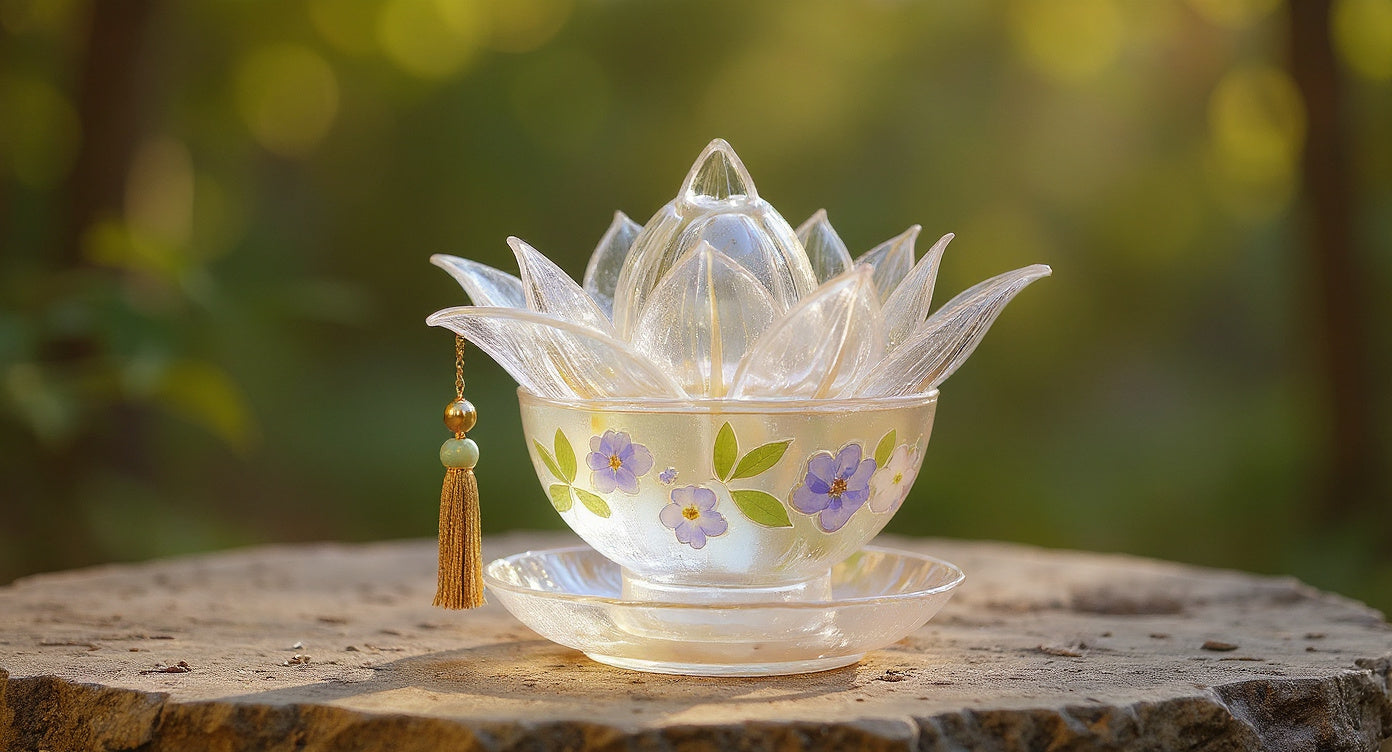
A one-of-a-kind handmade teacup gift box is worth buying when the object does more than look pretty for 3 days. It has to function. It has to feel distinct in the hand. And it has to justify careful handling with details that mass-market floral cups usually don't have.
That is the lane this lotus set is trying to occupy.
The product definition is specific: a translucent lotus-shaped glass teacup with real pressed flower petals and foliage embedded inside the glass walls under clear eco-resin, a layered petal form that builds a 3D blooming lotus silhouette, a jeweled tassel in gold or jade tones at the rim, and a matching floral glass saucer beneath. The capacity given in the product context is 400ml. So this is not a plain cup with a flower print. It is a botanical object built around tea use.
At Pampasroom, that distinction matters because buyers usually aren't deciding between this and a generic mug. They're deciding between functional art and decorative clutter.
What makes this lotus teacup different from a standard floral cup
The short answer is structure.
A standard floral cup usually puts the flower image on the surface. Printed decal. Painted motif. Or a loose dried flower detail that sits on top of the object and does not become part of the object. This lotus teacup is built around visible real pressed petals and foliage sealed under clear eco-resin inside the wall design, with the cup itself formed as a translucent lotus. Different category.
That layered petal form matters more than the photos can show. Flat decoration reads flat. A multi-layered lotus silhouette catches light through the cup wall and saucer, then throws soft petal shadows onto wood or stone surfaces. That's why this kind of piece works best in warm natural light instead of overhead kitchen glare.
And yes, there is a trade-off.
If someone wants a rough-service daily mug for office coffee, this is the wrong purchase. The tassel, saucer, and floral detailing make it a careful-use teacup, not a knock-around cup.
Real pressed flowers change the look, and the maintenance
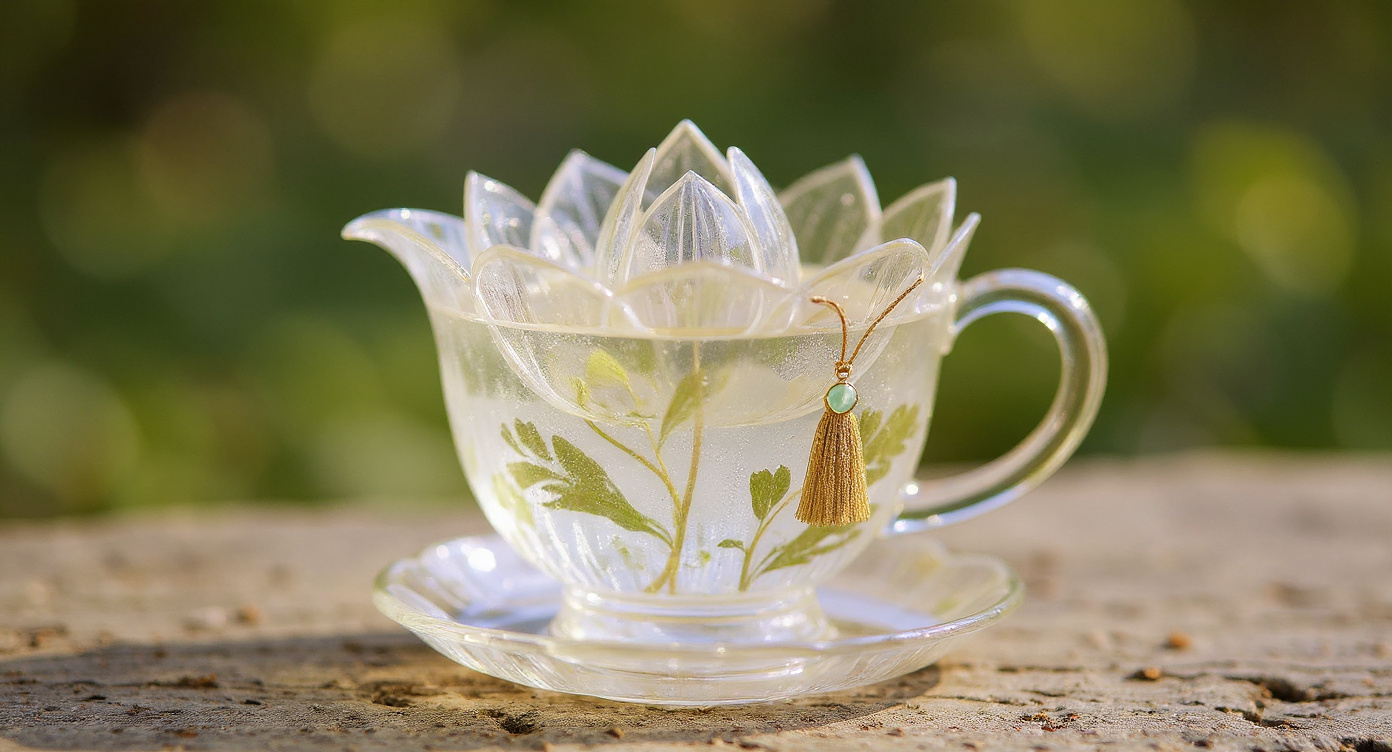
The strongest reason to buy this kind of one-of-a-kind handmade teacup gift box is the use of real botanical material.
Real pressed petals carry vein lines, uneven pigment, and edge variation that printed flowers can't fake well. That underlying craft tradition is part of standard pressed flower craft. In a glass-and-resin lotus cup, those small imperfections are the point. They give the bloom shape some life.
They also guarantee variation.
No two pieces should look identical if real petals and foliage are embedded by hand. Not close. Not if the flowers are actually natural material. Anyone expecting perfect duplication across every cup is asking handmade work to imitate factory work.
That would miss the point.
There is another side to this. Real pressed botanicals can shift in tone over time if exposed to strong UV, heat spikes, or abrasive cleaning. Sealing helps, but it doesn't make the flowers immortal. Honest answer.
About heat-resistant glass and eco-resin safety
This is the part most articles blur. They shouldn't.
The product context says heat-resistant glass and clear eco-resin. Good starting materials. But a buyer should separate three different questions:
1. Is the glass intended for hot tea use? 2. Is the decorative resin isolated from direct drink contact in the finished construction? 3. Has the seller provided material or food-contact documentation for the intended use?
Those are not the same question.
The broader reference standard for hot-use glassware is often borosilicate glass, but not every heat-resistant cup is automatically borosilicate, and not every borosilicate-adjacent claim tells you anything useful by itself. For food-contact questions, the useful benchmark is documentation tied to the actual finished product and intended use, not broad reassurance. The FDA's framework on material safety claims is a good reminder that a claim needs a defined substance and use case, not just a nice phrase on a product page: GRAS framework.
So here's the honest version most sellers skip: if the listing does not provide clear material documentation for hot beverage use, buy it as a careful-use art teacup only if you're comfortable with that uncertainty. Pretty isn't proof.
When I sealed my first batch of preserved blooms into a heat-resistant glass cup, the lesson was immediate: flowers can look delicate while the glass is doing the real structural work, and the success or failure comes down to how those layers are separated and protected.
Useful handling rules are simple.
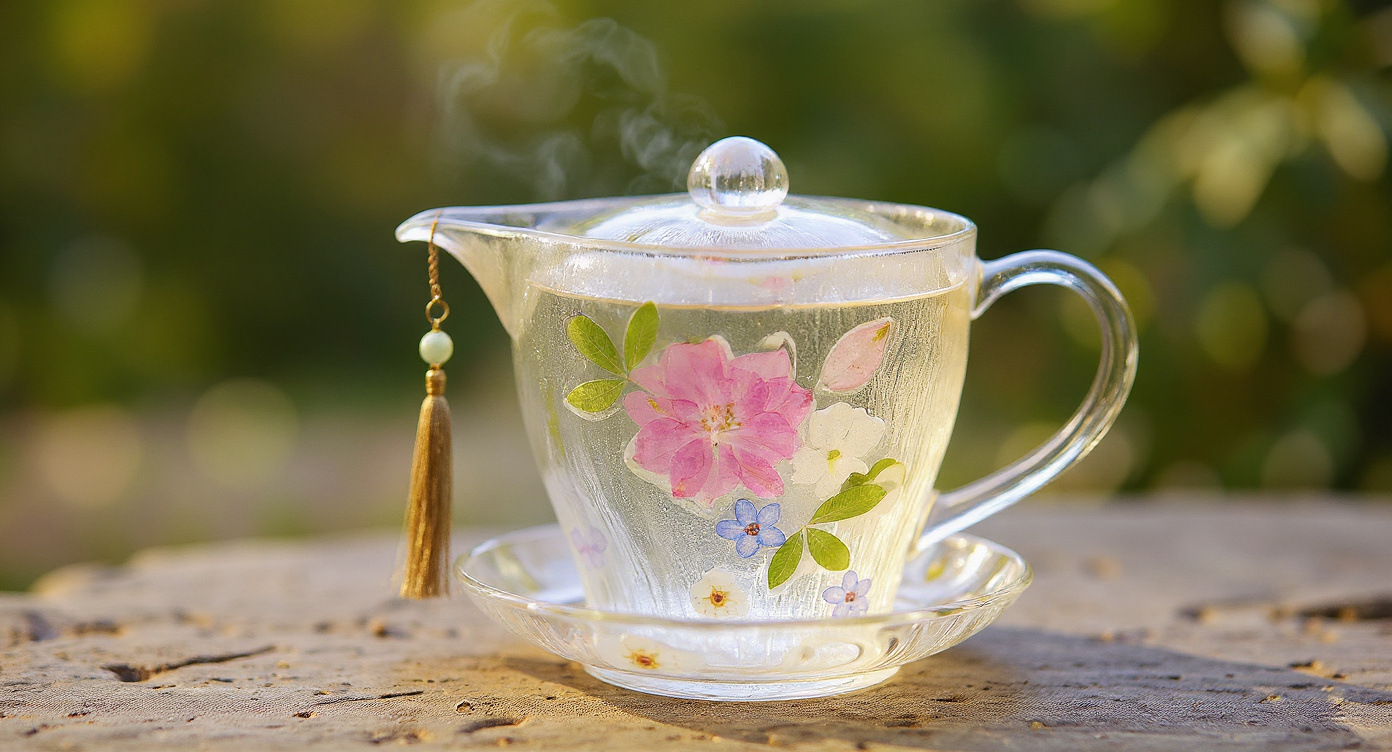
Don't shock the glass with boiling water if the cup is cold from storage. Hand wash. Mild soap. Keep abrasive pads away from the floral sections. Remove or keep the tassel dry if possible while cleaning. Set it on the matching saucer instead of dropping it onto a hard sink edge. Basic care. But it matters.
Why the lotus shape matters more than the tassel, but the tassel still earns its place
The lotus form is doing most of the heavy lifting here.
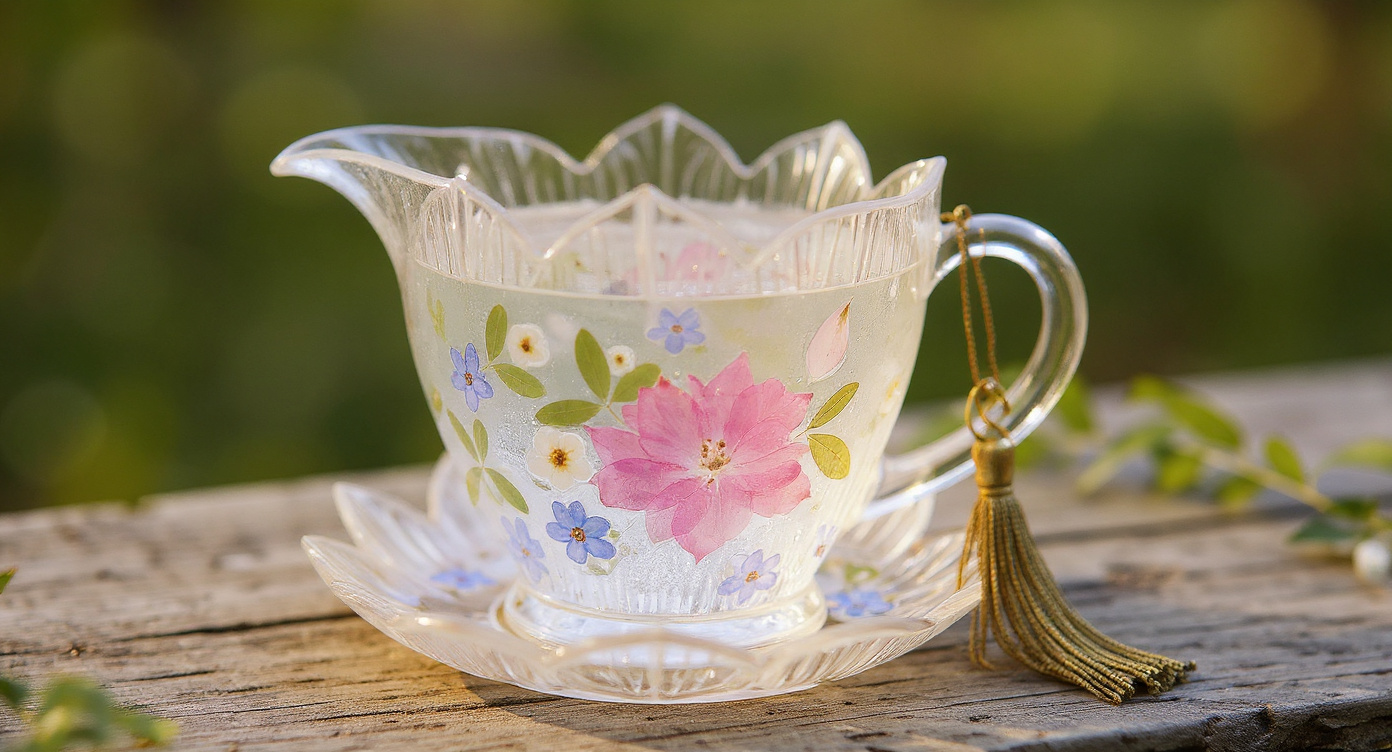
A translucent lotus-shaped teacup with layered petals has a built-in ritual quality because the silhouette changes as the cup fills and empties. Tea darkens the center. Light passes through the outer petals. The effect is subtle, not loud. That suits a botanical editorial aesthetic much better than bright color or heavy ornament.
The tassel is secondary, but not pointless.
This set uses a jeweled tassel in gold or jade tones hanging from the rim. The tassel is removable decorative language. It won't improve heat performance or durability. What it does add is ceremony and gifting presence, especially when paired with the matching floral glass saucer. If someone dislikes hanging ornaments on drinkware, they can treat the tassel as a display accent and remove it for washing or regular tea use.
That flexibility helps.
The broader ritual context is familiar to anyone who pays attention to Chinese tea culture, where the vessel contributes to mood and pacing, not just utility. This cup doesn't need to copy historical ware exactly to benefit from that logic.
Is the 400ml size practical?
Yes, with a caveat.
400ml is generous for a decorative glass teacup. It gives enough volume for herbal tea, flower tea, or a longer green tea session without pushing the piece into oversized mug territory. That said, if someone prefers tiny gongfu cups, 400ml will feel too large for that style.
So the practical answer depends on the tea habit.
For solo steeping at a desk or side table, 400ml makes sense. For formal small-pour service, less so.
Comparison table: what this type of teacup is actually competing with
| Option | Materials and look | Capacity info | Best use | Main trade-off |
|---|---|---|---|---|
| Mass-produced floral glass cup | Usually printed flowers or surface decals | varies by seller | Casual tea use, lower-risk gifting | Less depth, less individuality |
| Handmade resin-decorated cup | Decorative floral effect, often handmade assembly | varies by seller | Display-focused gifting | Use-case and food-contact details may be quote only |
| Ceramic lotus teacup set | Opaque ceramic, lotus-inspired shape | varies by seller | Daily tea with less visual fragility | No light-through botanical effect |
| This Pampasroom lotus glass teacup set | Heat-resistant glass, real pressed petals and foliage under clear eco-resin, matching floral glass saucer, gold or jade tone tassel | 400ml | Giftable tea ritual piece with visible botanical depth | Requires careful handling and clear documentation matters |
| Boutique artisan glass floral cup | Handmade glasswork with decorative floral elements | quote only | Collectible display-use tea ware | Specs and finish vary by seller |
That is the real comparison.
Not cheap versus expensive. More like repeatable product versus object with variation.
Who should buy a one-of-a-kind handmade teacup gift box
This type of gift makes sense for a buyer who wants all of the following in one piece:
- a lotus-shaped translucent glass cup rather than a standard cylinder - visible real pressed flower petals and foliage, not printed graphics - a coordinated set with matching floral saucer - a decorative tassel detail in gold or jade tones - a 400ml cup that can serve tea and still read as a display object
It is a strong fit for birthdays, Mother's Day, thank-you gifts, host gifts, and tea lovers who keep a designated teacup instead of rotating whatever is clean.
It is not a strong fit for someone who values dishwasher convenience above all else. Or for someone who gets annoyed by hand washing. Or for anyone wanting six perfectly matched copies.
Is it worth the price?
The better question is whether the construction details are the reason for the purchase.
If a buyer only wants a flower theme, then no, a one-of-a-kind handmade teacup gift box like this probably isn't worth stretching for. A printed floral cup will do the job for less, and that is fine.
If the buyer wants the exact combination of translucent lotus shape, real pressed petals embedded in the wall design, 400ml capacity, matching floral saucer, and tassel presentation, then the value argument becomes more reasonable because those features are doing different jobs at once. Tea vessel. Botanical display. Gift object.
That combination is narrow. But real.
For readers comparing details, the original product listing is here: Handmade Lotus Glass Tea Set Real Pressed Flowers | Zen Botanical Teacup 400ml | Tassel.
Pampasroom should still be judged with the same standard as any small maker: clear photos, clear care instructions, clear material language, and no vague safety promises standing in for documentation. That is the right standard. Not a harsh one.
FAQ
Are the flowers in this lotus teacup real?
The product context says real pressed flower petals and foliage are embedded inside the glass wall design under clear eco-resin. That is different from printed floral decoration.
Is every cup identical?
No. With real pressed botanicals, variation is expected. Petal placement, shape, and color shifts will differ from piece to piece.
Can this teacup hold hot tea?
The product context states heat-resistant glass and 400ml capacity. That supports hot tea use, but careful handling still matters. Avoid sudden temperature shock, especially if the cup is cold.
Is the resin food-safe?
That depends on the finished construction and supporting documentation. A buyer should look for material information tied to hot beverage use and to the actual product, not just a general resin claim.
How should a glass teacup with pressed flowers be cleaned?
Hand wash with mild soap and a soft sponge. Avoid abrasive scrubbers. Dry the cup and saucer after washing. Keep decorative tassels as dry as possible.
Is the tassel just decorative?
Yes. The jeweled tassel in gold or jade tones is a decorative accent, not a structural part of the cup.
Does the matching saucer matter, or is it just packaging?
It matters. A matching floral glass saucer protects surfaces, gives the cup a stable resting place, and completes the presentation if the teacup is being gifted.
Will the flower colors stay the same forever?
No natural botanical material stays unchanged forever. Sealing helps protect the petals, but strong UV exposure, heat, and rough cleaning can affect color over time.
Is 400ml too large for a decorative teacup?
Not for most solo tea sessions. It is larger than a small ceremonial tasting cup, but still practical for one person drinking tea at a desk, sofa, or side table.
Is this a good everyday cup?
It can be an everyday tea cup for someone who is comfortable with hand washing and careful handling. It is not ideal for rough kitchen routines or dishwasher-first households.
Final take
A one-of-a-kind handmade teacup gift box is worth buying when the piece offers real material detail that mass-produced floral cups usually don't. This lotus set does have that argument: translucent lotus glass form, embedded real pressed petals and foliage, matching floral saucer, tassel accent, and 400ml capacity.
Still, Pampasroom shouldn't be treated as exempt from practical questions. Ask how the hot-use construction is finished. Ask how to clean it. Ask what part of the decoration is sealed away from direct drink contact. If those answers are clear, the piece has a solid case as a giftable botanical teacup rather than a shelf-only ornament.