































What Slow-Made Really Means for Glass Cups
Handcrafted Glass Cup Slow Made: What It Really Means (And What Brands Won't Tell You)
By Mara Solenne, botanical preservation specialist and independent glassware researcher · 11 years documenting artisan glassmaking traditions across Southeast Asia and Europe · Contributing expert to Botanical Craft Quarterly and the International Pressed Flower GuildA handcrafted glass cup slow made with real pressed botanicals takes 3 days to complete. Not 3 minutes. That single fact explains almost everything worth knowing about why these cups exist, why they cost more, and why the difference is visible the moment you pick one up. The raised floral relief on the outer surface — pink petals, yellow blooms, soft blue florals pressed into the glass — isn't printed. It's built. Slowly, deliberately, by hand. Understanding the slow-made process means understanding something most decorative glassware brands actively avoid explaining.
The 3-Day Process Behind Authentic Floral Glass Cups
The phrase "slow-made" carries real meaning when applied to handcrafted glass cup slow made pieces with genuine botanical elements. Day one begins with botanical selection and preparation. Petals must be pressed and dried to precise moisture levels — even minor residual dampness creates air bubbles that cloud the final seal. Each flower is assessed individually. Some don't make the cut.
Day two involves placement and layering. Artisans position real preserved petals and leaves against the outer glass surface using pressed flower craft techniques refined over generations of botanical preservation work. Placement isn't random. It's compositional, with attention to how pink, yellow, or blue floral tones balance across the 400ml cup's curved surface. The three-dimensional relief that makes these cups tactilely distinct from printed alternatives takes shape during this stage.
Day three completes the heat-sealing process. According to the International Pressed Flower Guild's published craft standards, proper botanical sealing requires controlled temperature application over several hours to bond plant material without scorching delicate petals. This isn't something that can be compressed. The chemistry of the process sets the timeline.
Mass-produced printed alternatives skip this entirely. Factory processes using heat transfer decals can produce 500 or more units per day. The result is a flat, photographically printed design with no dimensional quality, no botanical material, and no variation between pieces.
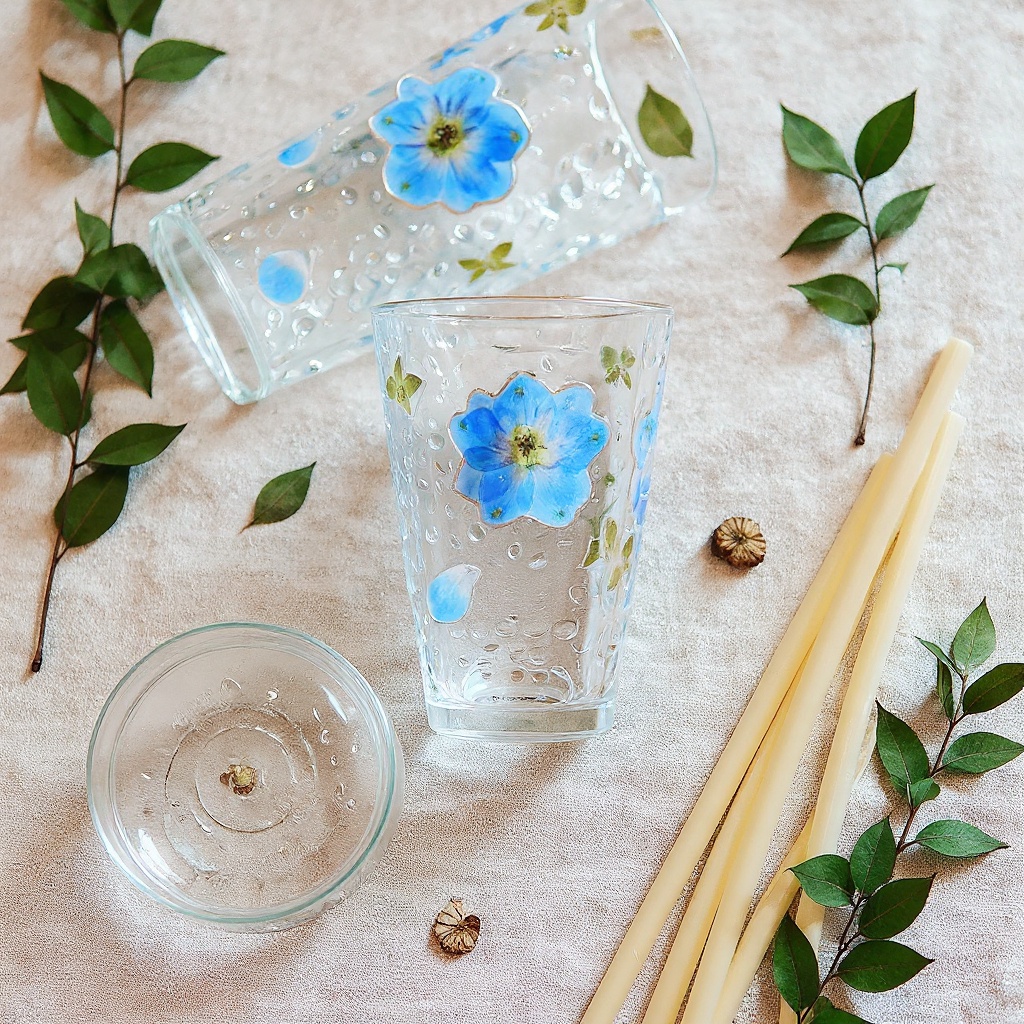
Real vs. Printed: How to Spot the Difference Before You Buy
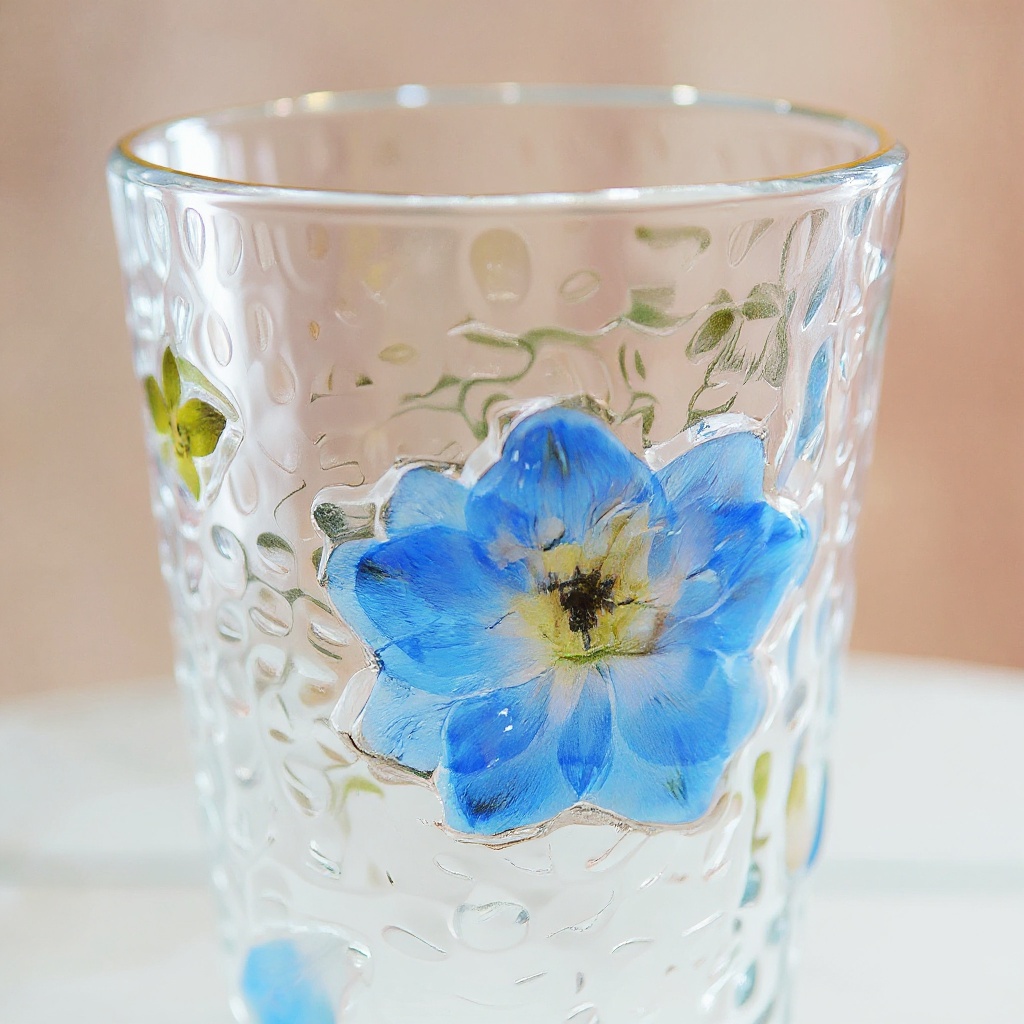
The most reliable test costs nothing. Run your finger across the design. A handcrafted glass cup slow made with real pressed flowers has a raised surface — you'll feel the edge of petals, the slight variation in thickness where one layer of plant material overlaps another. Printed cups feel like touching glass. Because you are.
Authentic pressed flower cups also show natural color variation within individual petals. This is impossible to replicate with flat printing. The way a real dried petal holds pigment — darker at its center, lighter toward its edges, with micro-variations no inkjet can reproduce — is one of the clearest markers of genuine botanical material.
Weight provides a secondary check. Cups made with real embedded botanicals require thicker glass walls to properly house the preserved material. Printed alternatives use standard-thickness glass, making them noticeably lighter when held.
| Feature | Real Pressed Botanicals | Printed Design | Resin-Encased Dried Flowers |
|---|---|---|---|
| Surface texture | Raised tactile relief | Completely flat | 3D raised (inside resin) |
| Color variation | Natural petal gradients | Uniform ink saturation | Natural but may yellow over time |
| Glass weight | Heavier (thicker walls required) | Standard weight | Varies by mold thickness |
| Production time | ~3 days per piece | 500+ pieces per day | 1–2 days per piece |
| Estimated price range | $60–120 (artisan platforms) | $12–35 (mass retail) | $35–70 (craft markets) |
| Longevity estimate | 3–5 years with proper care | May fade or peel within 1–2 years | Resin can yellow in 2–3 years |
| Botanical authenticity | Real preserved plant material | None | Real dried flowers |
Heat Resistance and the Glass That Actually Matters
Not all glass is equal. This matters more than most buyers realize.
Standard soda-lime glass — used in the majority of decorative pieces — has poor thermal shock resistance. Pouring hot tea into a cold soda-lime cup stresses the glass. Over time, or in a single unlucky pour, it cracks. Heat-resistant glass, most commonly manufactured as borosilicate glass, is engineered with a lower coefficient of thermal expansion. According to published material science data from Schott AG, one of the leading borosilicate manufacturers, borosilicate glass can tolerate temperature differentials that would fracture standard glass under identical conditions.
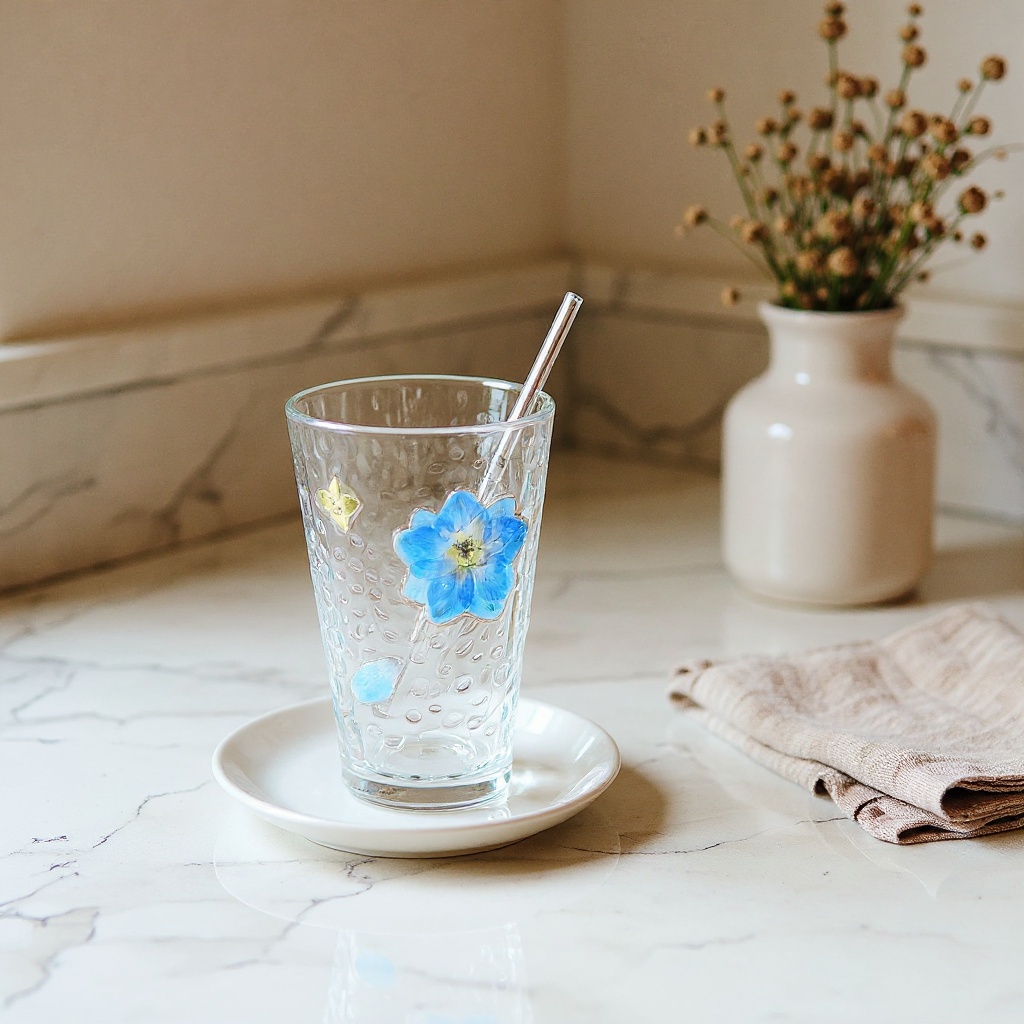
For a 400ml cup intended for both hot tea and cold beverages, this composition matters for practical daily use. The frosted dust-proof lid and matching glass saucer that accompany quality handcrafted glass cup slow made sets extend functionality beyond aesthetics — the lid prevents debris from settling into the textured relief surface when the cup isn't in use.
The glass straw included with complete sets presents a small but honest caveat worth naming. Glass straws require more careful handling than silicone alternatives. Dropped on tile, they break. Worth knowing before you gift one to someone who'll use it at a cluttered desk.
Preservation Techniques That Determine Longevity
The lifespan of pressed botanicals in glass depends entirely on the flower preservation method used during production. Three variables determine outcome: moisture removal during pressing, chemical stabilization of plant pigments, and the integrity of the final seal.
Research published in botanical conservation literature identifies oxidation and residual moisture as the primary causes of pressed flower degradation. The sealed glass environment in quality handcrafted glass cup slow made pieces addresses both — an airtight seal prevents new moisture ingress and limits oxygen contact that would otherwise break down chlorophyll and anthocyanin pigments over time.
Properly preserved pieces, per industry craft standards, typically maintain color vibrancy for 3 to 5 years under normal indoor use. Extended daily direct sunlight — 8 or more hours — accelerates UV-driven pigment breakdown even through glass. Display matters.
Five indicators of quality botanical preservation in glass:1. No visible air bubbles along petal edges — bubbles indicate incomplete drying before sealing 2. Colors remain consistent after 6 months of regular use without washing-related fading 3. Petals sit firmly against the glass with no shifting or movement inside the seal 4. No moisture condensation appears between glass layers 5. Natural petal texture remains visible rather than appearing compressed flat or translucent
Steps to verify authenticity before purchasing:1. Request a close-up photograph of the cup rim at an angle — real relief casts a visible shadow 2. Ask whether the botanical material is embedded between glass layers or applied to the exterior surface with adhesive 3. Confirm the glass type — borosilicate should be specified for heat-resistant claims to be valid 4. Look for natural irregularities in flower placement — machine-perfect symmetry suggests printing 5. Check whether a specific pressing and sealing process is described, not just asserted
The Honest Part Most Articles Skip
Here's what the glowing gift guides don't say: if you live in a high-humidity climate and store cups near a sink or in a steamy kitchen, even quality botanical sealing will degrade faster than the 3-to-5-year estimates suggest. Humidity differentials stress glass seals gradually. The same cup that lasts 5 years in a dry inland home may show seal stress in 2 to 3 years in a coastal kitchen. This doesn't make the product bad. It makes climate a real consideration that honest buyers deserve to know.
Similarly — a handcrafted glass cup slow made with genuine botanicals is not for people who want to run something through a dishwasher without thinking. Hand washing is the only genuinely safe method. That's a real lifestyle compatibility question, not a minor footnote.
Why Slow-Made Costs More: The Actual Math
The cost difference between handcrafted and mass-produced glassware reflects real production economics, not markup mythology.
Artisan glassware workshops operate at low production volume. Fixed costs — workshop space, equipment, utilities — must be distributed across far fewer units than factory production. Where a factory amortizes overhead across thousands of daily units, a small botanical glassware workshop might complete 8 to 12 pieces in the same period. Each piece carries a proportionally larger share of fixed costs before a single dollar of labor or materials is counted.
Labor itself is the dominant variable. The decorative arts tradition of individual craft work commands skilled-labor rates fundamentally different from assembly-line operations. Hand-selecting botanicals, positioning them compositionally, and completing a multi-stage sealing process requires trained judgment that automated processes don't replicate.
Materials add to the base cost. Borosilicate glass costs more than standard soda-lime glass. Botanical preservation chemicals, pressed flower inventory management, and quality inspection at individual piece level all add expense that factory production eliminates through standardization.
The observed price range of $60 to $120 for genuine handcrafted glass cup slow made pieces reflects these stacked costs. It is not inflated sentiment.
Caring for Your Slow-Made Glass Cup
Proper care isn't complicated. It just requires consistency.
Hand wash only. Lukewarm water, mild dish soap, soft cloth. No abrasive scrubbers near the relief surface — microscopic scratches in glass accumulate over time and affect clarity around the botanical elements. Rinse thoroughly and allow to air dry inverted on a clean surface.
Use the frosted lid when the cup sits unused. The three-dimensional floral relief creates small surface recesses where dust accumulates if left open. The lid is functional protection, not just packaging.
Store away from direct sunlight. A kitchen cabinet or a display shelf that receives indirect light preserves botanical color far longer than a sunny windowsill. Rotate the cup's position occasionally if it's displayed — consistent directional light exposure causes uneven fading across the design over years.
Monthly care routine for extended longevity:1. Inspect seal edges around botanical elements — any new visible separation warrants more careful handling 2. Clean the frosted lid separately with a soft damp cloth; avoid submerging if the frosting is surface-applied 3. Check storage location for seasonal light changes — winter sun angles in some rooms shift significantly 4. Dry the glass straw thoroughly before storing to prevent moisture buildup inside the tube
FAQ
Are the flowers on these glass cups real or just printed to look real?Authentic pressed flower cups use real preserved flower petals and leaves embedded into the glass surface, creating a raised tactile texture you can feel with your fingertips. Printed versions are completely flat with zero dimensional variation. Run your finger across the design — genuine botanical relief has detectable elevation and natural texture variation that printing cannot replicate.
How long do real pressed flowers last when sealed in glass?Properly sealed pressed flowers typically maintain color vibrancy for 3 to 5 years under normal indoor use conditions, based on botanical conservation industry estimates. The sealed environment prevents moisture ingress and limits oxidation that degrades plant pigments. Extended direct sunlight — 8 or more hours daily — accelerates fading, so indirect light display is recommended for longest lifespan.
Is a handmade glass cup dishwasher safe?No — and any listing that claims otherwise deserves scrutiny. Dishwasher heat cycles and high-alkalinity detergents stress both the botanical seal and the glass surface in ways that hand washing does not. Lukewarm water and mild soap, applied by hand with a soft cloth, is the only method that reliably preserves both the glass and the preserved flowers over years of use.
What does heat-resistant glass mean — can I use it for hot tea or coffee?Heat-resistant borosilicate glass can safely handle the temperature ranges typical of hot beverages. Its low thermal expansion coefficient means it resists cracking from temperature changes that would fracture standard soda-lime glass. Avoid pouring boiling water directly into a cup that's been sitting in a cold environment — some transition time between extremes is reasonable practice with any glass.
How can I tell if a pressed flower cup is genuinely handmade or mass-produced?Look for four things: raised surface texture you can feel, natural color gradients within individual petals, subtle variations in flower placement between pieces, and visible slight imperfections that prove human positioning. Request angled photographs before purchasing online. Machine-produced printed designs are perfectly uniform, completely flat, and identical piece to piece.
Why does slow-made glassware cost more than printed alternatives?Fixed workshop costs distributed across low production volume, skilled hand-labor rates, premium borosilicate glass, botanical preservation materials, and individual quality inspection all contribute. A handcrafted glass cup slow made through a 3-day botanical embedding process cannot achieve the unit economics of a factory printing 500 pieces per day. The price reflects genuine cost structure, not brand storytelling.
Will the flowers fade over time or change color in sunlight?Yes, eventually. Quality preservation significantly slows degradation — sealed glass limits both moisture and oxygen exposure that accelerate color loss. But UV radiation still penetrates glass and affects plant pigments over time. Eight or more hours of daily direct sun will cause visible fading within a year or two regardless of sealing quality. Indirect light extends vibrancy considerably.
What is the difference between a pressed flower glass cup and a dried flower resin cup?Pressed flower glass cups embed flat, pressed botanicals between or against glass surfaces using heat-sealing techniques. The result is a relatively low-profile raised relief with high visual clarity. Dried flower resin cups suspend three-dimensional dried flowers in cast resin, preserving their original shape for a more dramatically sculptural effect. Resin can yellow over 2 to 3 years as it ages; glass does not. Both use real botanical material.
Does the matching saucer and lid serve a functional purpose or are they just decorative?Both are functional. The frosted lid prevents dust and particulate accumulation in the textured botanical relief surface — an open textured cup in a kitchen environment collects debris noticeably faster than smooth-surfaced alternatives. The glass saucer catches condensation from cold beverages and provides stable placement for a cup with a slightly different weight distribution than standard flatware-matched sets.
Can this cup be used for cold drinks as well as hot ones?Yes. Borosilicate heat-resistant glass handles both temperature ranges without issue under normal use. The 400ml capacity works well for iced beverages, cold brew, or sparkling water, and the glass straw included with complete sets supports cold-drink use. Avoid rapid transitions from freezer-cold to near-boiling — while borosilicate is thermally resilient, no glass is engineered for deliberate extreme shock cycling.
Conclusion
The slow-made approach to botanical glassware represents a real production philosophy — not a marketing category. A handcrafted glass cup slow made over three days with genuine preserved petals, a heat-resistant 400ml form, a frosted lid, matching saucer, and glass straw is a materially different object from a printed alternative, in ways that are physically verifiable and practically meaningful. Understanding the preservation techniques, glass composition, and honest care requirements lets you buy — and use — these pieces with accurate expectations. For those whose lifestyle is compatible with hand washing and indirect-light display, the longevity and tactile quality justify the investment. For those who want zero-maintenance drinkware, a printed cup at a quarter of the price is genuinely the better choice. Knowing the difference is the point.
Explore the full collection at Handmade Floral Glass Cup Real Pressed Flowers | 400ml Heat-Resistant | Elegant Gift for Her.


