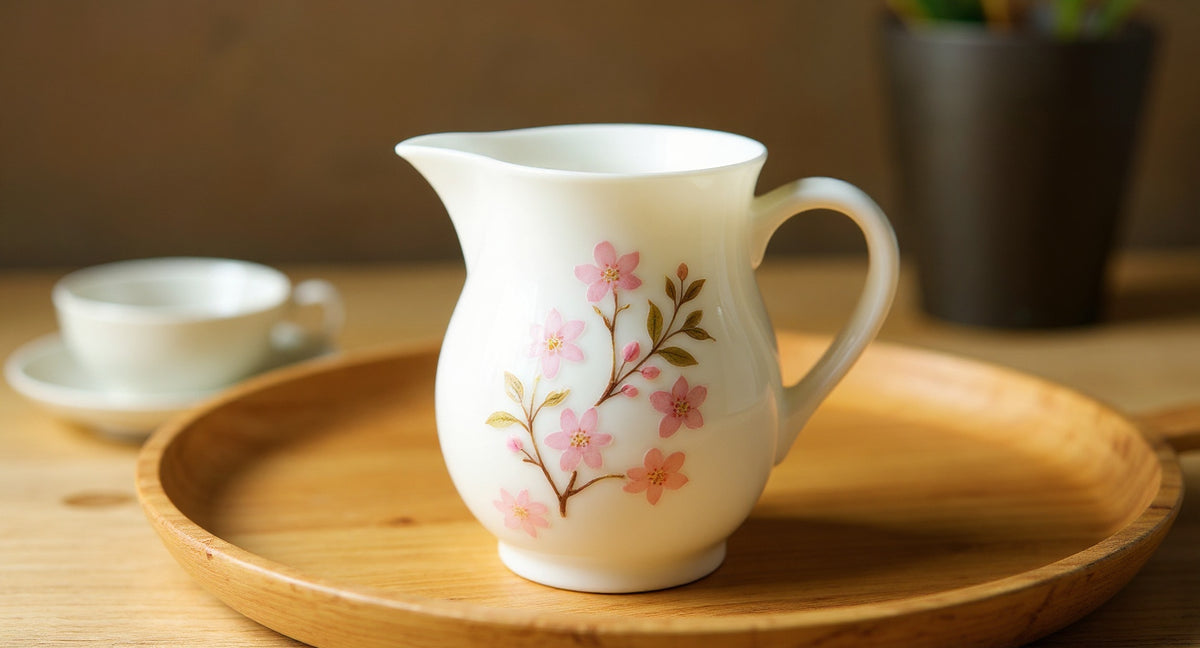
A white porcelain fairness pitcher with embedded cherry blossom petals suits small-volume tea service when botanical craftsmanship matters alongside function. The featured piece is a translucent-white bone china pitcher with an approximate capacity of 150–200ml, a smooth luminous glaze, and real preserved cherry blossom petals beneath the surface, creating a soft pink 3D floral relief. Its main unresolved details are measured working capacity, pouring performance, food-contact documentation, and approved cleaning methods.
Craft, not a brewing upgrade.
The petals distinguish the object from printed floral porcelain. They don't improve extraction, and the supplied heat-resistant description doesn't establish dishwasher or microwave compatibility.
What this floral fairness pitcher is designed to do
A fairness pitcher collects a finished infusion before it is divided among cups. Each serving then comes from the same mixed batch rather than successive pours from a vessel that still contains brewing leaves. It also separates brewing from serving: decant the tea, then distribute it without leaving the infusion on the leaves during that step.
The gongfu tea ceremony provides context for this repeated brewing-and-serving sequence. A fairness pitcher supports that routine, but it won't rescue an over-extracted infusion.
Size comes before the flower detail. The stated 150–200ml capacity is approximate, not a documented working-volume measurement. A brewing vessel that releases an infusion near the upper end of that range could leave insufficient space for comfortable handling.
This won't work if your finished infusion exceeds the pitcher's usable capacity. Choose a larger serving vessel rather than making a brim-full pour part of the routine.
The exact material and floral construction
The handmade bone china fairness pitcher with preserved flowers is described as a handmade bone china vessel containing real preserved cherry blossom petals sealed beneath a glazed surface.
Its identity is specific: translucent white, a smooth luminous glaze, and soft pink petal relief with visible botanical texture. Not a painted blossom motif. Not loose flowers floating in tea.
Bone china belongs to the porcelain family and contains bone ash. Both Encyclopaedia Britannica's bone china reference and the overview of bone china composition and properties explain the material classification. Neither source certifies this finished pitcher or establishes its temperature tolerance.
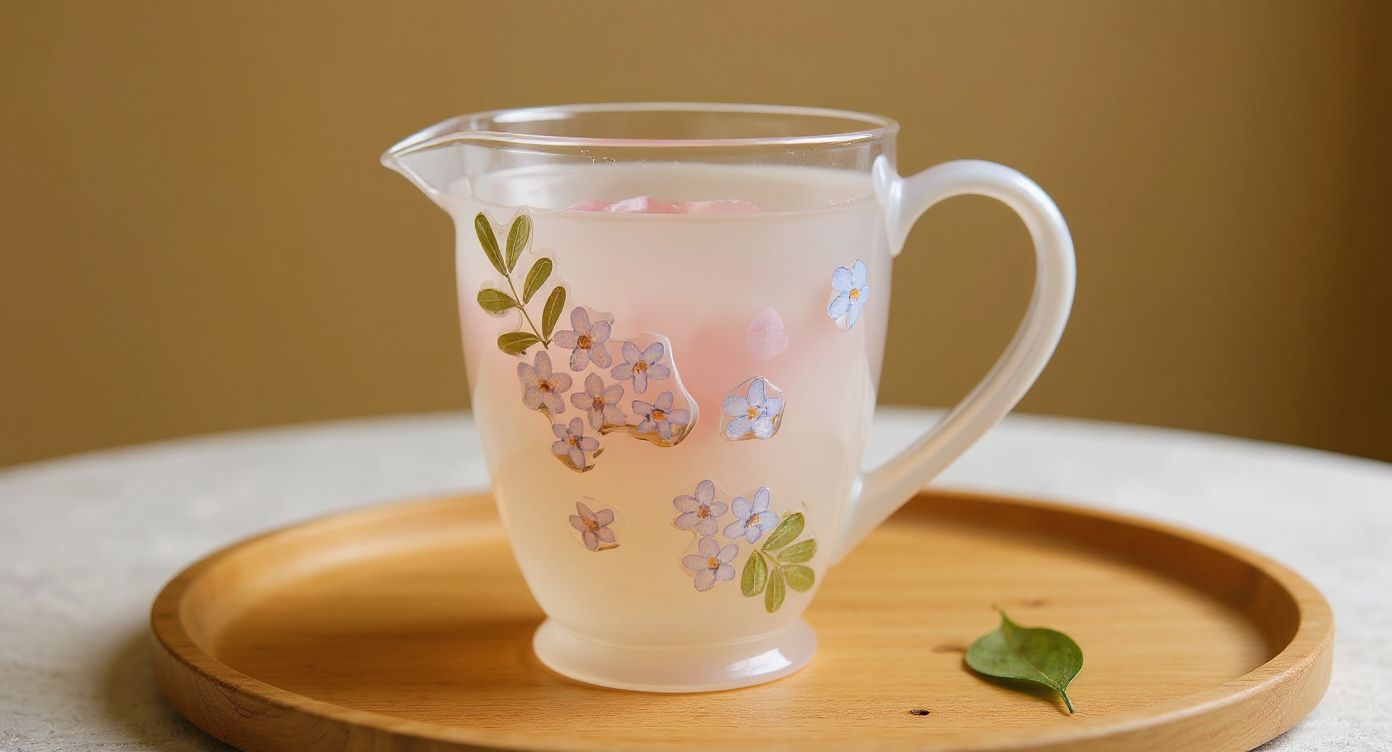
When I sealed my first batch of preserved blooms into a heat-resistant glass cup, the work involved a different vessel material. That experience is relevant to botanical placement, not proof of this pitcher's ceramic construction, glaze safety, or service life.
The distinction matters. Flower preservation covers different methods, and the term alone doesn't identify the treatment used here. The product description establishes the intended construction; it doesn't supply a preservation protocol or long-term test results.
For photographs, the product belongs on a natural wood or stone tea tray under warm, diffused natural light. Minimalist Japandi styling and shallow depth of field should keep attention on the translucent-white body and petal texture. A beautiful photograph can show those features. It cannot prove a clean pour.
What is specified, and what remains unverified?
The following distinction keeps product description separate from performance evidence.
| Product detail | Available information | Evidence limit |
|---|---|---|
| Vessel material | Handmade bone china | No finished-vessel test report supplied |
| Capacity | Approximately 150–200ml | No measured working capacity supplied |
| Floral construction | Real preserved cherry blossom petals sealed beneath the surface | No detailed process documentation supplied |
| Appearance | Translucent-white body, luminous glaze, soft pink 3D floral relief | Appearance does not establish pouring performance |
| Heat resistance | Described as heat-resistant | No rated temperature or thermal-shock result supplied |
| Care and food contact | Product-specific documentation not supplied | Dishwasher, microwave, and food-contact claims remain unverified |
These are evidence gaps, not proof of a defect. They are also not details that a general ceramics reference can fill in.
The FDA's guidance on lead in glazed traditional pottery explains why food-contact suitability deserves documentation. That guidance is background information, not evidence that this pitcher contains lead or that it has passed a particular test.
Before stronger performance claims are published, the product record needs a measured working capacity, a serving-pour demonstration, explicit care instructions, and documentation for the botanical construction and food-contact surfaces. None should be replaced with an inferred result.
Compare the construction, not an unsupported price bracket
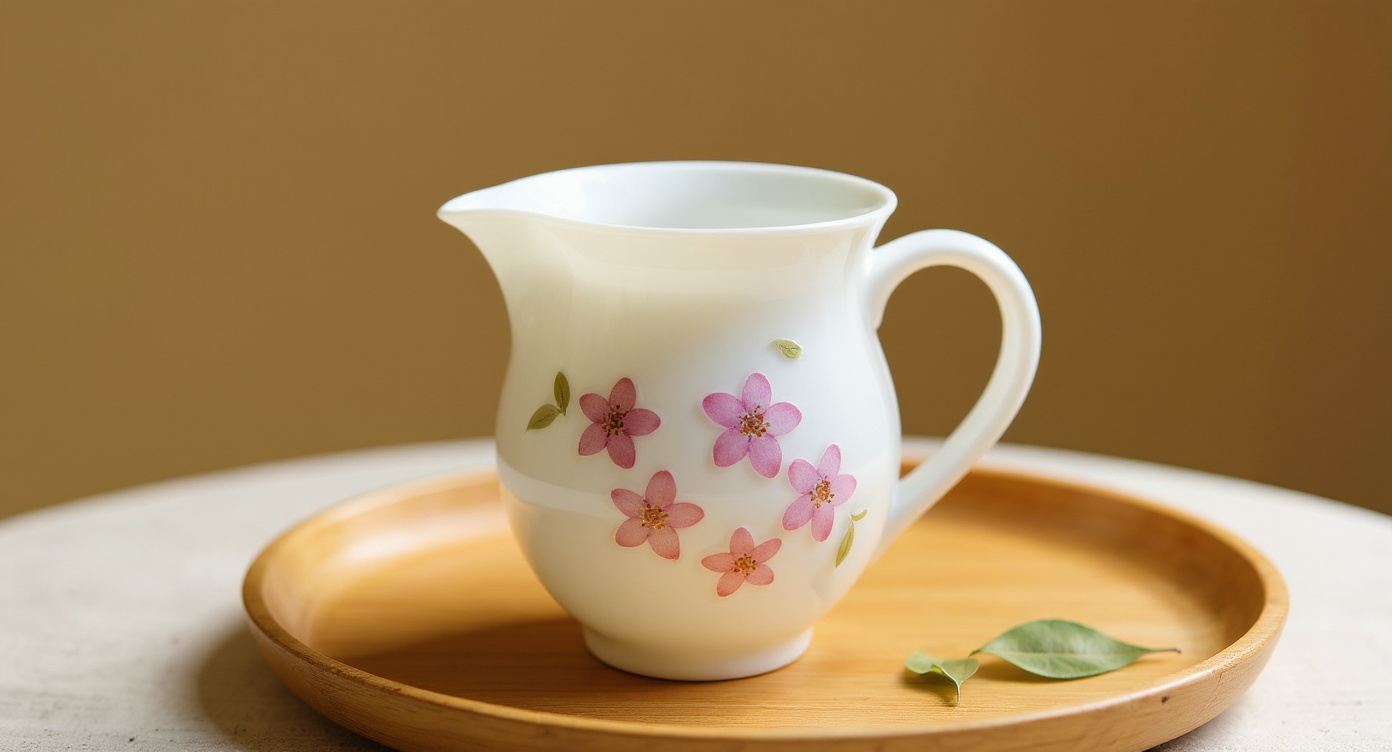
A plain pitcher can serve tea just as well as a decorated one if its capacity and pour suit the brewing routine. The botanical premium needs a different justification: genuine plant material, hand placement, or the recipient's preference for floral craft.
Here's the less comfortable judgement: if dishwasher convenience is essential, the supplied specifications don't justify choosing this pitcher over a simpler vessel with documented dishwasher approval.
No current, like-for-like competitor quotations are available here. Unsupported market price ranges have been removed.
| Option | Decorative construction | Capacity | Price |
|---|---|---|---|
| Plain porcelain fairness pitcher | No floral decoration | varies by seller | varies by seller |
| Printed floral porcelain pitcher | Printed floral decoration | varies by seller | varies by seller |
| Hand-painted ceramic fairness pitcher | Painted floral decoration | varies by seller | varies by seller |
| Featured preserved-flower bone china pitcher | Real cherry blossom petals beneath the glazed surface | Approximately 150–200ml | quote only |
A higher price doesn't establish a better pour. Nor does a lower price establish poor workmanship. Compare working capacity, handling, care documentation, and replacement availability before assigning value to the decoration.
Buying checks that photographs can't answer
A product image is useful for assessing the floral arrangement and surface appearance. For serving performance, request evidence that shows the vessel in use.
1. Match the working capacity to your infusion. Measure the tea released by your usual brewing vessel and request the pitcher's usable volume below the rim. The approximate 150–200ml specification isn't a substitute for that measurement. 2. Request a complete pouring demonstration. The recording should show the stream beginning, the final portion leaving the spout, and the pitcher returning upright. Check for tea running down the outside. 3. Confirm hot-tea handling. Ask how the filled vessel is intended to be held and whether the maker provides temperature or thermal-shock precautions. An empty-vessel photograph doesn't establish a comfortable hot grip. 4. Obtain the construction and care record. Request food-contact information for the interior and rim, approved cleaning methods, and restrictions associated with the preserved petals. Keep those instructions with the pitcher if it is a gift.
A separate strainer may be useful for teas that shed small fragments. Check the opening against your existing strainer; the supplied information doesn't establish that a filter is included.
A cautious care routine while instructions remain unconfirmed
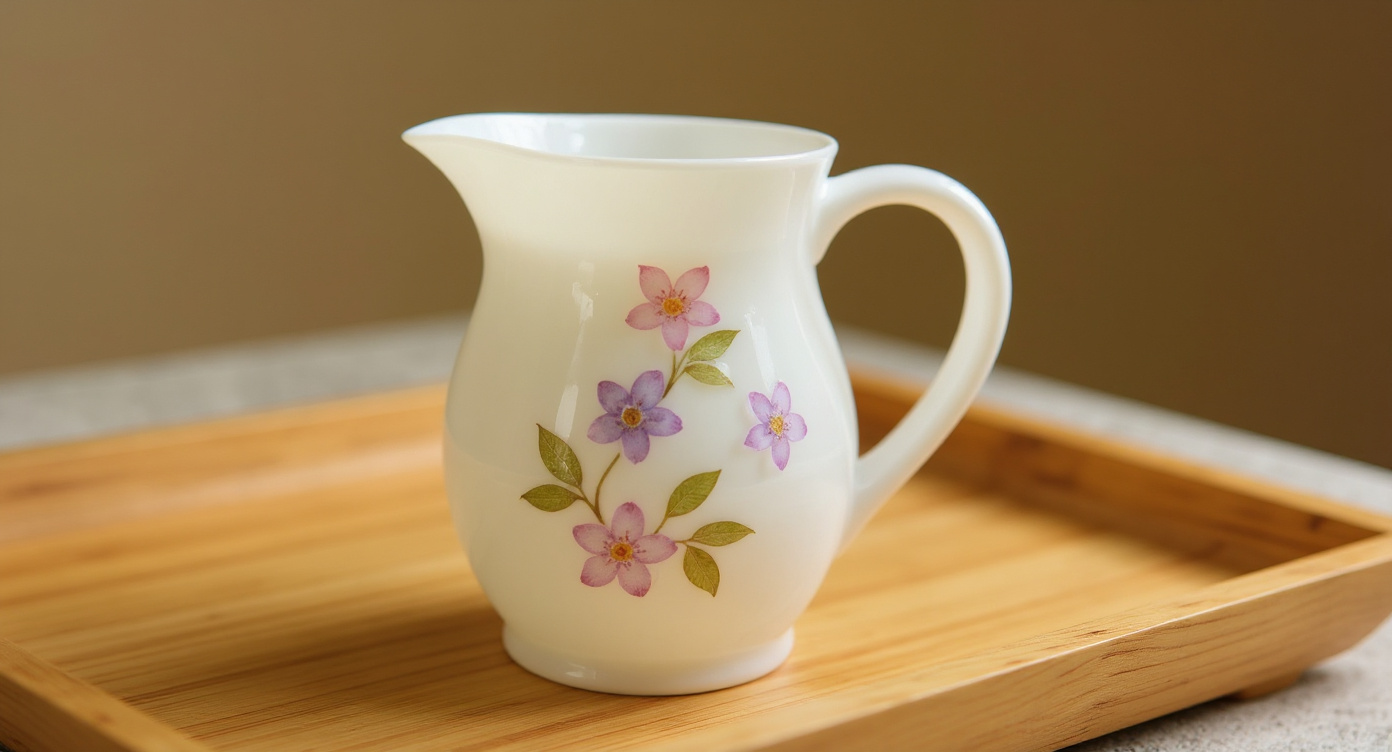
The following is conservative interim guidance, not a maker-approved procedure or a durability guarantee. Product-specific instructions should take precedence when available.
Heat-resistant is not dishwasher-safe. It also doesn't establish that a cold vessel can tolerate an abrupt change to hot liquid.
1. Empty the pitcher after serving. Don't leave tea residue sitting inside between sessions. 2. Allow it to cool before cleaning. Avoid abrupt temperature changes while no thermal-shock limits are documented. 3. Use gentle hand cleaning. Choose a soft cleaning tool and mild detergent. Avoid abrasive pads, aggressive cleaning compounds, and prolonged soaking unless the maker approves them. 4. Rinse and let it dry. Store it where the rim and body won't knock against other ceramics. 5. Inspect the surface before reuse. If a crack, chip, or surface change exposes material beneath the glaze, stop using it for tea until its suitability has been assessed.
No microwave heating without approval. No dishwasher assumption.
The supplied minimal-waste packaging is a packaging detail, not proof of the product's total environmental impact. For gifting, suitability and continued use are stronger reasons to choose it than an unsupported sustainability claim.
FAQ
Is this white porcelain or bone china?
The featured pitcher is specified as bone china, which belongs to the porcelain family. Its appearance is translucent white with a smooth luminous glaze. The material name doesn't establish the finished vessel's working capacity, temperature limit, or food-contact test status.
Are the cherry blossoms real or printed?
The product specification identifies real preserved cherry blossom petals embedded beneath the surface, creating a soft pink 3D floral relief. This is botanical incorporation rather than printed floral decoration. Detailed process documentation has not been supplied.
Will the petals touch the tea?
The specified construction places the petals beneath a sealed glazed surface, not loose inside the serving chamber. A separate food-contact record is still needed to substantiate the suitability of the finished interior and rim.
How much tea does the pitcher hold?
Its stated capacity is approximately 150–200ml. A measured working capacity below the rim has not been supplied. Match it to one finished infusion from your brewing vessel, leaving space for handling rather than relying on a rim-level fill.
Can it go in the dishwasher or microwave?
Neither use is established by the supplied specifications. The heat-resistant description doesn't answer those questions. Until product-specific approval is available, keep it out of the microwave and use cautious hand cleaning.
Does the floral construction improve tea flavour?
No flavour benefit is established. The fairness pitcher's role is to collect and distribute a finished infusion. The preserved cherry blossoms contribute material interest and appearance, not a documented improvement in extraction or taste.
Is it a good gift for a regular tea drinker?
It can be a good fit for someone who brews small infusions, appreciates real botanical materials, and accepts careful handling. It is a weaker choice for someone who needs larger capacity or confirmed dishwasher convenience. Include the care documentation rather than leaving the recipient to guess.
When this pitcher earns its place
Choose the piece for the combination of small-volume tea service and genuine cherry blossom detail. The translucent-white bone china and pink petal relief give it a distinct presence on a wood or stone tea tray, but the practical decision still rests on capacity, pouring, and care.
For broader context on the studio's botanical work, visit Pampasroom. For this purchase, review the preserved cherry blossom bone china fairness pitcher and obtain the missing performance and care details before ordering.
A considered choice. Not a promise that flowers make a better cup of tea.