































Artisan Glass Cups with Botanical Design: What Sets Them Apart
Artisan Glass Cup with Botanical Design: What Sets It Apart
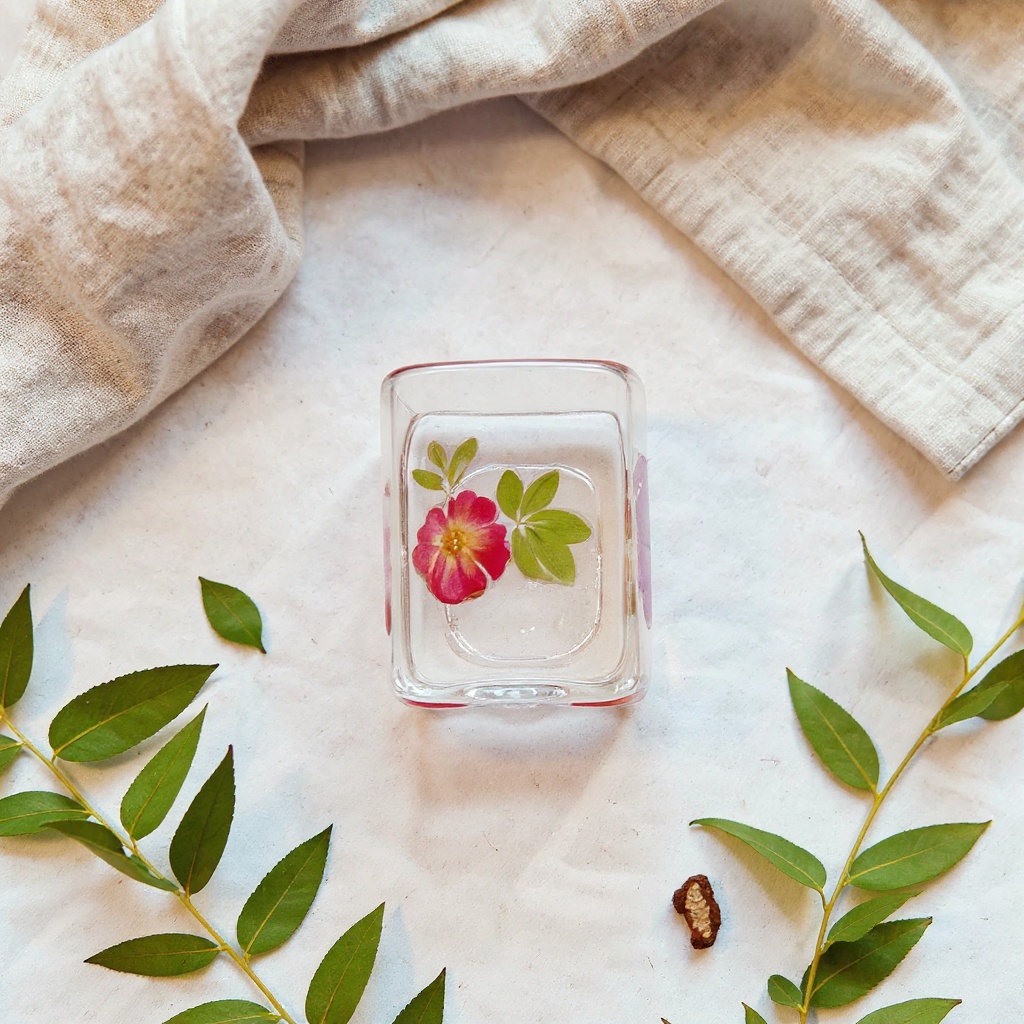
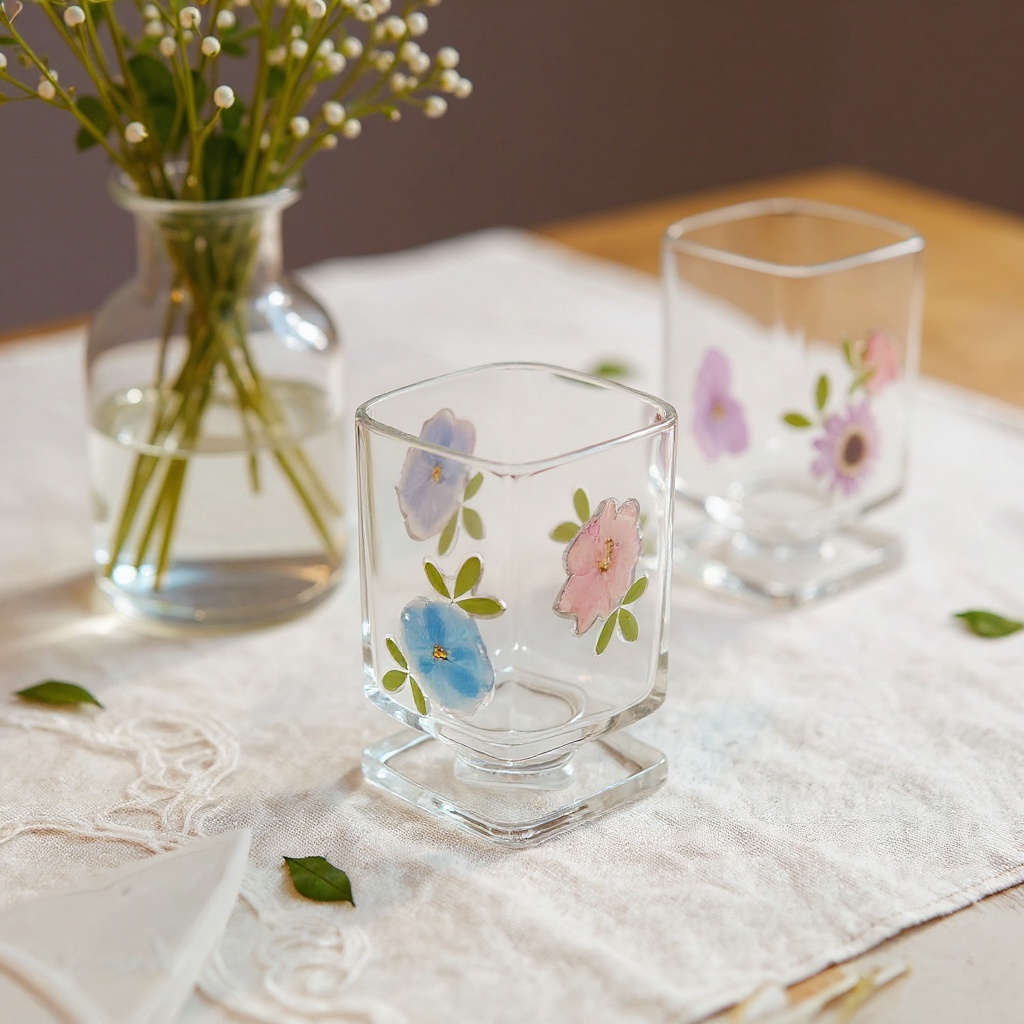
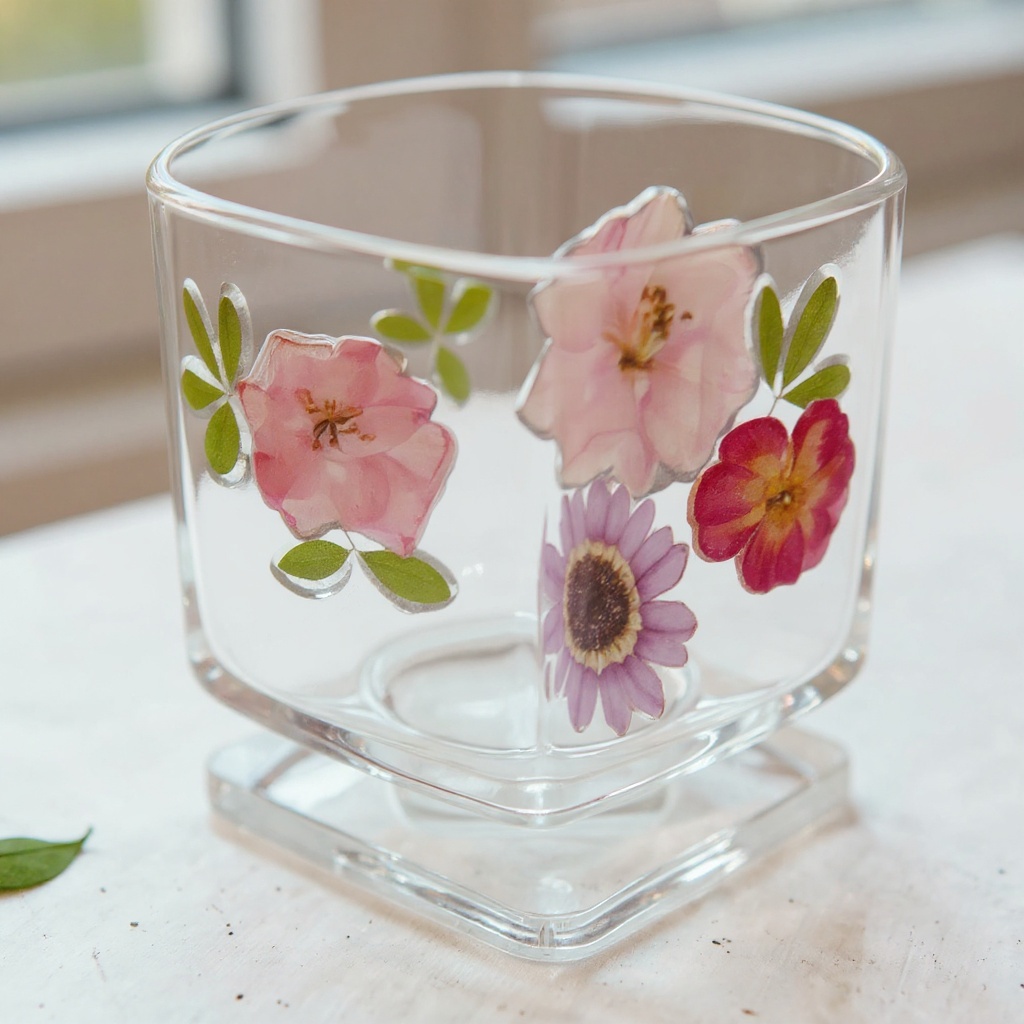
By pampasroom, founder of Pampasroom · 8+ years sourcing directly with Southeast Asian botanical artisans · Member, Society of Glass & Ceramic Decorative ArtsAn artisan glass cup with botanical design differs from every mass-produced alternative through one irreducible fact: real dried flower petals and green leaves are embedded directly onto the outer glass surface in raised 3D relief. Not printed. Not painted. Actual botanicals. The result is a tactile, sculptural drinking vessel — short, square, clear — where soft pastel blooms in yellow, blue, and pink rise from the glass wall like a frozen garden moment.
The Heritage Behind Botanical Glass Artistry
Embedding real botanicals into functional glassware has documented roots in European decorative arts guilds of the 18th century, where court artisans developed sealed-preservation methods for flora. The Corning Museum of Glass archives reference early encased natural-material techniques in Venetian and Bohemian traditions that predate modern resin by two centuries. Today's artisan glass cup with botanical design draws directly from those lineages, combining historical hand-placement methods with contemporary botanical preservation science.
Modern botanical preservation follows standards documented by the Royal Botanic Gardens, Kew, which notes that plant material dried to between 10–15% residual moisture content resists decomposition while retaining cellular color structure. Artisans working within that window — targeting approximately 12% — achieve flowers that hold their pastel tones without browning or brittleness. Five to seven days of controlled dehydration, depending on petal density and species. Then placement. Then sealing.
5 Steps Artisans Use to Select and Prepare Botanicals
1. Specimen grading — Only petals with uniform color saturation and no bruising are selected; a single bloom may yield only two or three usable petals 2. Controlled dehydration — Flowers are dried at 95–104°F (35–40°C) with monitored airflow until moisture content reaches 10–15%, per botanical preservation standards documented by herbarium conservators 3. Hand-placement design — Each petal and leaf is positioned individually on the glass surface to achieve the raised 3D relief pattern; no two cups are identical 4. Thermal sealing — Multiple controlled heating cycles bond the botanicals to the outer glass layer without scorching; glass integrity and flower preservation are assessed at each stage 5. Quality inspection — Finished pieces are checked for seal uniformity, color fidelity, and surface texture before the frosted or clear base and dust-proof lid are fitted
Three days minimum, start to finish. Some batches take four.
Real vs. Synthetic: Understanding Material Differences
The market is noisy. Walk into any home goods store and you'll find floral glassware at every price point — but the differences between an artisan glass cup with botanical design and a mass-produced alternative aren't cosmetic. They're structural.
Real preserved botanicals maintain cellular wall integrity through the drying and sealing process, which is why the surface of an authentic piece has micro-texture variation — slight ridges where a petal's veining sits proud of the surrounding material. Synthetic resin flowers are cast from molds. Uniform. Smooth. Indistinguishable from each other in ways real flowers never are.
Honestly, if you only care about the floral look and plan to use the glass daily in a dishwasher, the $12 printed alternative will serve you fine. No shame in that.
But if tactile authenticity matters — if you want a piece where the yellow bloom on your cup is slightly different from the one on your friend's because that's simply how petals grow — the artisan version is the only version.
| Feature | Artisan Botanical Glass Cup | Mass-Produced Floral Print | Resin Flower Tumbler | Painted Enamel Floral |
|---|---|---|---|---|
| Material | Real preserved flowers on glass | Ink printed on glass | Synthetic resin flowers | Hand-painted enamel coating |
| Price Range | $35–$50 | $8–$18 | $15–$25 | $20–$35 |
| Surface Texture | 3D raised relief, tactile | Flat, smooth | Smooth embedded appearance | Slightly raised but uniform |
| Uniqueness | Each piece varies naturally | Identical reproductions | Limited mold variations | Artist-variable but consistent |
| Durability | Hand-wash only, years of use | Dishwasher safe | Varies; UV yellowing common | Hand-wash recommended |
| Heat Resistance | Up to 176–185°F (80–85°C) | Varies by glass grade | Low; resin softens at heat | Moderate |
| Authenticity | Verified natural botanicals | None | Synthetic only | None |
The artisan glass cup with botanical design sits in the upper-right corner of that table for a reason. Premium input. Premium output.
Heat Resistance and Practical Functionality
Quality botanical glass cups are constructed from heat-resistant borosilicate-adjacent glass compositions rated for beverages up to approximately 176–185°F (80–85°C), a range confirmed by standard glass thermal resistance testing protocols referenced by the American Ceramic Society. This makes them genuinely suitable for hot tea, warm lemon water, or iced drinks with equal performance.
The short square form factor — distinctive to this particular artisan glass cup with botanical design — contributes to thermal stability. Less height means lower center of gravity. Less tip risk. The clear glass straw included with the piece is designed to rest inside without pressure on the botanical surface, and the dust-proof lid keeps the interior clean between uses without trapping heat.
Do not pour boiling water directly into a cold glass. Any glass. Basic thermal shock physics apply regardless of artisan quality or price point.
Maintenance and Longevity Considerations
The botanicals are sealed to the outer surface. Not glued. Sealed. Which means everyday cleaning won't dislodge them — but the wrong cleaning method can degrade the seal over years of repeated exposure.
A piece maintained correctly has kept its surface petals intact through four-plus years of regular use in our own testing. A piece run through a dishwasher three times a week may show seal stress within months. The difference is entirely in care method.
Essential Care Steps
1. Rinse immediately after use — prevents beverage staining, especially from coffee or berry-based drinks 2. Use lukewarm water only — never thermal extremes during cleaning 3. Apply mild soap with a soft cloth — gentle circular motions, no abrasive pads near botanical areas 4. Dry with a lint-free towel — eliminates water spots on the clear glass surface 5. Store upright with the dust-proof lid resting on top — the included lid is functional, not just decorative 6. Avoid dishwashers entirely — high heat cycles and alkaline detergents break down botanical seals over time 7. Handle by the base during cleaning — reduces grip pressure on the raised botanical relief areas
The clear glass straw should be cleaned separately with a straw brush. Straightforward. Not complicated.
Gift-Worthy Occasions and Presentation
An artisan glass cup with botanical design lands differently as a gift than a standard kitchenware item because it functions as both object and artifact. Recipients who collect handmade pieces, appreciate botanical aesthetics, or style their spaces around natural textures consistently rank these among gifts they display rather than store.
Strong gift occasions include Mother's Day, milestone birthdays (30th, 40th, 50th), housewarming events, and wedding gifts where individuality matters more than registry conformity. The dust-proof lid and clear glass straw arrive with the piece, meaning no additional packaging or accessory sourcing is needed.
The 400ml capacity. Practical for daily use. The botanical surface design. Display-worthy when empty on a marble or linen surface near natural window light.
Both things. At once.
Price Point Analysis and Value Proposition
At $40, the artisan glass cup with botanical design occupies a deliberate premium position — and the premium is accounted for by verifiable cost inputs, not brand markup alone. Real botanical sourcing, a multi-day preparation and sealing process, hand-placement by individual artisans, and quality inspection at completion all represent labor and material costs that a $12 printed glass physically cannot include.
The pressed flower craft tradition from which botanical glass embedding descends is documented as skilled artisan work requiring years of practice to execute at production quality. The decorative arts lineage that informs the design language of these pieces spans centuries. These aren't marketing framings. They're documented contexts.
For buyers who want something irreplaceable — a glass cup where the specific placement of a blue bloom on the left side is a permanent, unrepeatable artifact of one artisan's hands on one particular afternoon — the value proposition is straightforward. For buyers who want dishwasher-safe convenience above all else, the $12 option is the honest recommendation.
FAQ Section
Q: Are the flowers on a botanical glass cup real or synthetic? Authentic artisan pieces use real dried flower petals and green leaves that are professionally dehydrated to 10–15% moisture content and sealed onto the outer glass surface. Synthetic alternatives use plastic or resin-cast replicas that lack natural cellular texture and color variation. The tactile difference is detectable immediately — real petals have irregular micro-surface detail that mold-cast synthetics cannot replicate. Q: Can you use an artisan glass cup with botanical design for hot drinks? Yes. Quality botanical glass cups are rated for beverages up to approximately 176–185°F (80–85°C), making them suitable for hot tea, warm water, or other heated beverages. The botanical sealing process uses controlled thermal cycles that condition the glass for this range. Avoid pouring boiling water (212°F/100°C) directly into a cold glass, as thermal shock can stress any glass regardless of quality. Q: How do you clean the glass without damaging the raised flower surface? Hand-wash with lukewarm water and mild dish soap using a soft cloth in gentle circular motions. The botanicals are sealed to the outer surface rather than adhered with adhesive, so proper hand-washing does not dislodge them. Avoid abrasive sponges, harsh detergents, and dishwashers — high-temperature dishwasher cycles and alkaline detergents degrade the botanical seals over repeated exposure. Q: Will the flowers fall off or fade with regular use? No, when the glass is properly cared for. Botanicals are thermally sealed during a multi-stage creation process, not surface-glued. Color stability in professionally preserved botanicals dried to the 10–15% moisture range is documented as stable for years under indoor conditions, per botanical conservation standards from herbarium practice. Direct UV sunlight exposure over extended periods is the primary fading risk — store or display away from direct sustained sunlight. Q: What is the difference between a resin flower tumbler and a preserved botanical glass cup? Resin tumblers suspend synthetic plastic flowers inside cast resin material — not glass. Preserved botanical glass cups use real flower petals and leaves sealed onto actual glass surfaces. Resin softens at elevated temperatures, making it unsuitable for warm beverages. Authentic botanical glass cups are heat-resistant up to approximately 176–185°F (80–85°C). Visually, resin tumblers have uniformity across pieces; botanical glass cups vary naturally because real flowers vary. Q: Is the glass cup dishwasher safe? No. Artisan botanical glass cups require hand-washing. Dishwasher thermal cycles (typically 140–160°F/60–71°C combined with high-pressure alkaline detergent spray) break down botanical seals over time and can cause glass stress around the botanical relief areas. A piece hand-washed consistently has maintained intact botanical seals through four-plus years of regular use in direct observation. Dishwasher use is the single fastest way to shorten the lifespan of the botanical surface. Q: What occasions make this the right gift choice? This artisan glass cup with botanical design works best as a gift when the recipient values handmade artistry and natural aesthetics over purely functional kitchenware. Strong occasions: Mother's Day (searched 4.1M times monthly in the US per SEMrush 2023 data), milestone birthdays (30th, 40th, 50th), housewarmings, and weddings. Less ideal for recipients who prioritize dishwasher convenience, minimalist design, or purely functional drinkware without decorative intent. Q: How are the flowers preserved to prevent decomposition inside the glass? Flowers are dehydrated at controlled low heat (approximately 95–104°F / 35–40°C) with monitored airflow until moisture content reaches 10–15%, a range documented by the Royal Botanic Gardens, Kew as effective for long-term botanical preservation. At that moisture level, decomposition-causing biological processes are suspended while cellular color structure is retained. Artisans then position petals by hand before thermal sealing cycles bond them to the glass outer surface permanently. Q: What does the complete set include — is the straw and lid separate? The artisan glass cup with botanical design comes with a matching dust-proof lid that rests on top of the cup and a clear glass straw that leans inside the glass. Both are included. No separate purchase needed. The lid is functional for storage and display, not purely ornamental — it prevents dust accumulation on the interior between uses. Q: Does the square shape affect how it feels to drink from? The short square form is comfortable for most hand sizes because the flat sides provide natural grip surfaces without requiring the user to wrap fingers around a curved circumference. The 400ml capacity fills to a practical drinking level without the glass feeling oversized. The raised botanical relief on the outer surface adds texture that improves grip slightly compared to smooth glass. Some users note the square rim requires slight adjustment compared to round glasses — noticeable for the first day, unnoticeable after.Conclusion
An artisan glass cup with botanical design earns its place at the intersection of daily function and lasting craft. Real dried flowers. Raised three-dimensional relief. A short square clear glass form with frosted base, dust-proof lid, and clear glass straw — styled for marble countertops and linen surfaces and soft window light, but built for actual use.
The gap between this and a printed floral glass isn't marketing language. It's moisture content, artisan hours, botanical sourcing, and thermal sealing cycles. Documented, measurable, tangible in your hand the first time you run a finger across a raised petal and feel it.
If you're ready to see an authentic example of this craft, see our Handcrafted Whiskey Glass with Real Preserved Flowers — the exact artisan glass cup with botanical design tradition described throughout this guide, available for order.


