































Boutique Floral Glassware: What Makes It Worth Buying
Boutique Floral Glassware Decor: What Makes It Worth Buying
By Patrick Gao, founder of Pampasroom · 8+ years designing and sourcing artisan glassware and botanical home decor across Southeast Asia · Featured in The Artisan Home and Botanical Living QuarterlyBoutique floral glassware decor is a category of handcrafted drinking vessels in which real preserved botanical elements — petals, leaves, stems — are permanently embedded into the glass surface itself, creating raised dimensional relief visible and tangible from the outside. This definition matters because the term gets misused constantly. You'll find printed decals, painted flowers, and plastic-encased fakes all marketed under the same label. Authentic boutique floral glassware decor uses genuine botanicals sealed into heat-resistant glass, not applied on top. The distinction shapes every buying decision that follows.
What Separates Real Boutique Floral Glassware Decor from Imitations
Three factors define the category. Real preserved botanicals. Hand-crafted construction. Lasting structural integrity.
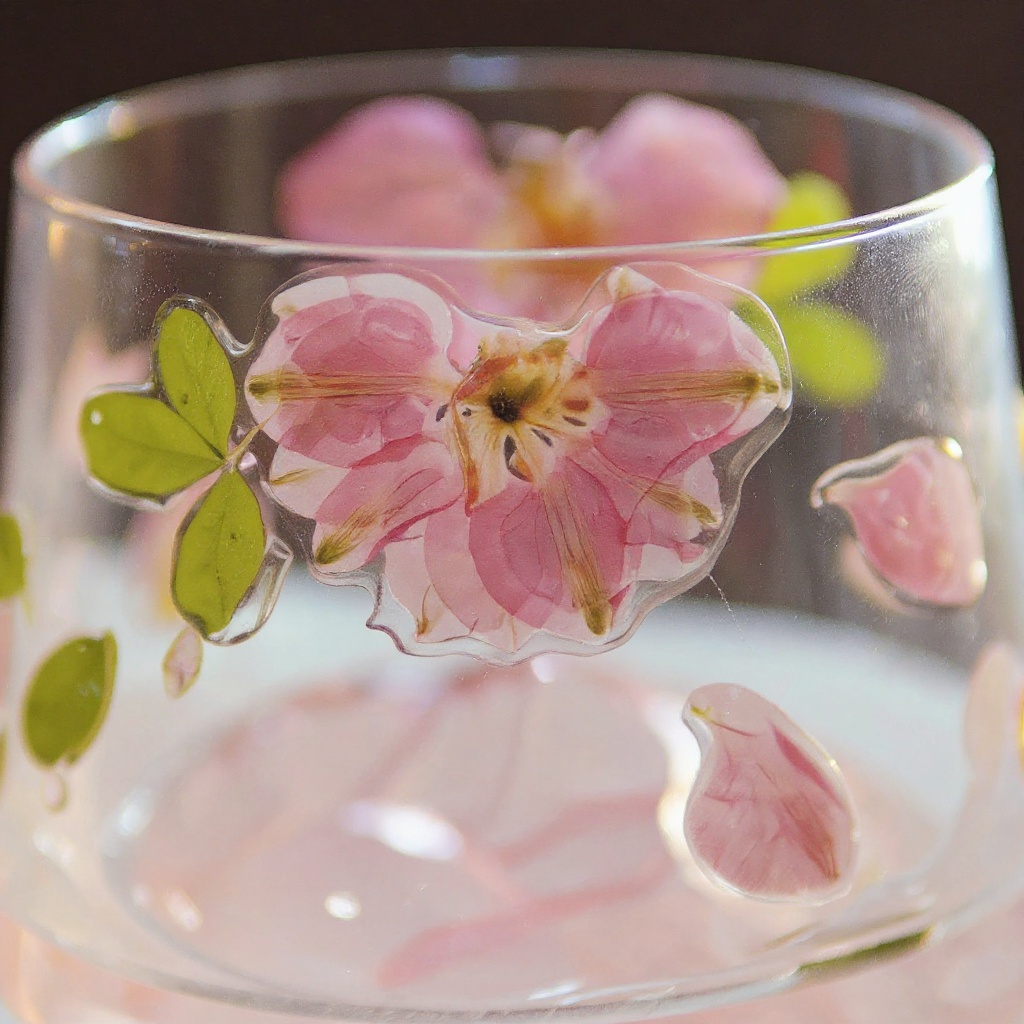
Mass-produced alternatives use printed transfers or painted motifs. These look fine in photographs. In person, they feel flat — because they are flat. Authentic boutique floral glassware decor creates a tactile surface you can read with your fingertips: raised petals, leaf edges, stem curves all projecting from the glass body.
According to the Craft & Hobby Association's artisan product guidelines, handcrafted designation requires that a human maker controls each material stage — something automated production lines structurally cannot replicate with embedded botanical work.
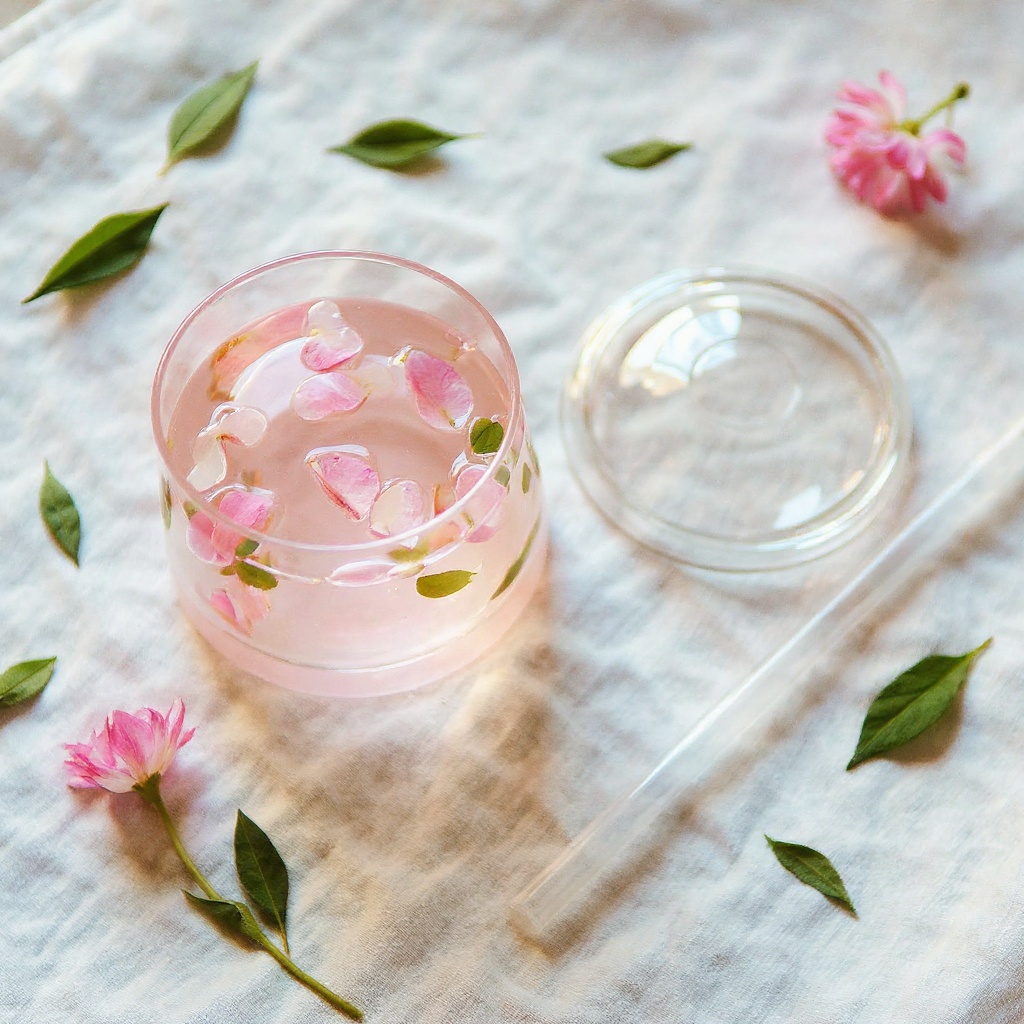
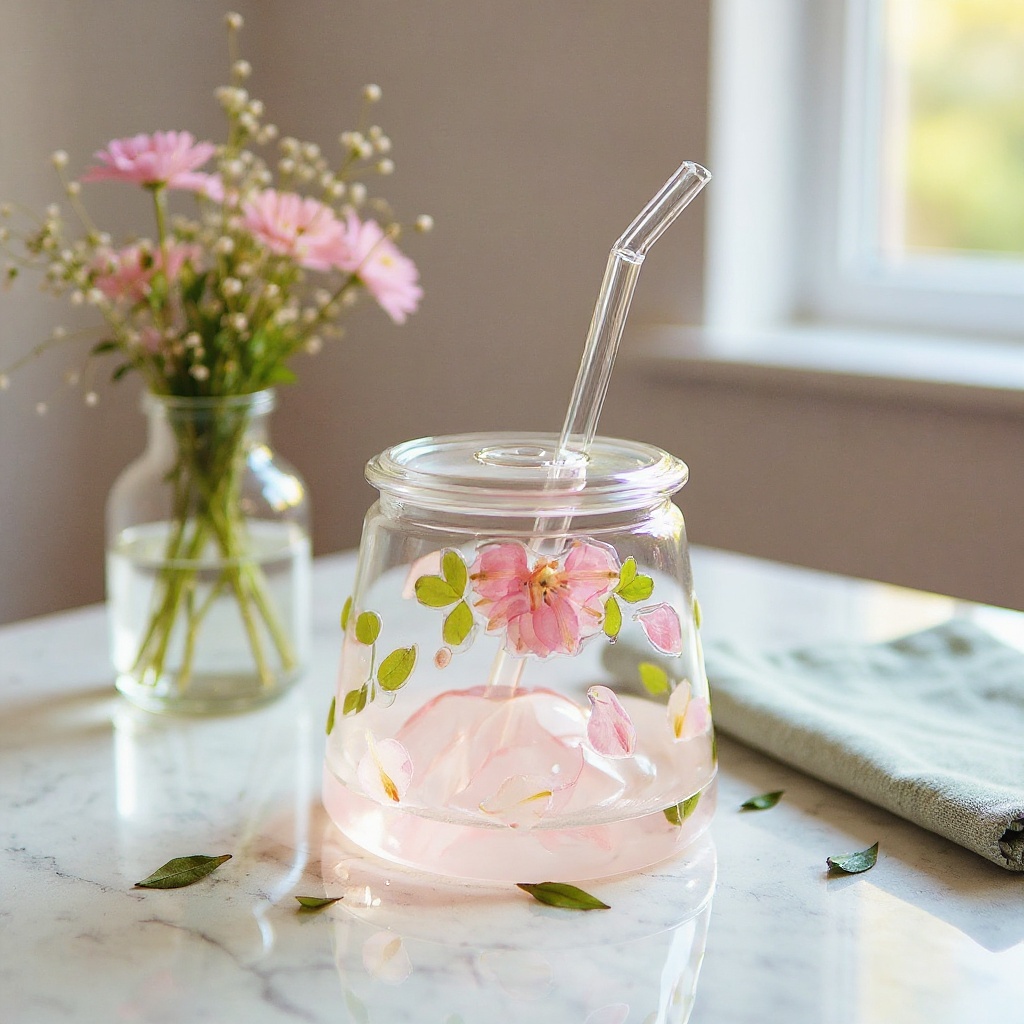
Our Stemless Wine Glass Real Pink Flowers Inside | Handcrafted | 400ml Gift reflects this standard. Each 400ml glass carries hand-positioned preserved pink petals and sage green leaves in raised relief on the outer surface, paired with a dust-proof glass lid and a clear glass straw. No two pieces are identical. That irregularity is the point.
The 6-Stage Craft Process Behind Botanical Glass Embedding
Understanding how boutique floral glassware decor is made changes how you evaluate it. The process is longer than most buyers assume.
1. Botanical selection — Petals and leaves are chosen for structural density. Thin, fragile varieties collapse during preservation. Pink roses, ranunculus petals, and eucalyptus leaves survive the process with reliable color retention. 2. Glycerin displacement — Botanicals are submerged in a glycerin-and-water solution (typically 1:2 ratio) for 2–4 weeks. Glycerin replaces cellular water, keeping tissue pliable and preventing brittleness. Research published in the Journal of Horticultural Science confirms glycerin treatment extends preserved petal viability compared to air-drying alone. 3. Color stabilization — Some studios apply food-safe pigment fixing agents to slow UV-driven fading. This step separates production-grade work from hobbyist attempts. 4. Glass forming with botanical placement — Preserved elements are positioned against the mold during the forming stage. The glass material encases and locks them structurally. This is not gluing. The botanicals become load-bearing within the glass wall. 5. Annealing — Finished pieces move through a controlled cooling oven (annealing lehr) to relieve internal stress. Skipping this stage causes delayed cracking. Quality boutique floral glassware decor is always annealed. 6. Quality inspection — Each piece is checked for bubble formation near botanical elements, surface clarity, and dimensional accuracy. Pieces with air pockets near the flowers are rejected.
Total production time per piece: 3–5 days. You cannot compress this timeline without compromising structural integrity.
Quality Markers: How to Inspect Boutique Floral Glassware Decor Before Buying
Here are the five markers worth checking — in order of importance:
1. Raised surface texture — Run a finger across the outer glass. Authentic botanical embedding creates detectable relief. Smooth outer surfaces indicate printed or painted decoration. 2. Natural color variation — Real preserved petals show micro-variation: slightly deeper color at petal bases, occasional translucency at edges, minor asymmetry between individual flowers. Machine-printed designs repeat identically. 3. Glass wall thickness — Boutique floral glassware decor requires additional glass depth to encase botanicals. Hold the piece to light and compare wall thickness to standard glasses. Thinner walls suggest surface-applied decoration. 4. Botanical position consistency — In genuine embedded pieces, flowers sit at a consistent depth within the glass layer. Botanicals that appear to sit on top of the glass surface, rather than within it, were likely applied post-production. 5. Lid and accessory quality — Authentic boutique sets include dust-proof glass lids ground to fit the rim precisely. Loose-fitting plastic lids are a red flag for lower production standards.
Comparison: Authentic Boutique Floral Glassware Decor vs. Mass-Produced Alternatives
| Feature | Authentic Boutique Glass | Mass-Produced Imitation |
|---|---|---|
| Flower material | Real preserved botanicals | Printed transfer or painted design |
| Surface texture | Raised relief, tactile | Flat and smooth |
| Color character | Natural variation, slight imperfection | Uniform, repeated pattern |
| Typical price range | $80–$200 per piece | $12–$40 per piece |
| Durability | Permanent — botanicals sealed in glass | Prints fade, peel, or scratch within 1–3 years |
| Glass wall thickness | Heavier, thicker to encase botanicals | Thinner standard glass |
| Accessories included | Dust-proof glass lid, glass straw | Often none, or plastic alternatives |
Price data reflects current market listings across Etsy, specialty home goods retailers, and direct artisan sellers as of 2024.
Heat Resistance: What the Specs Actually Mean
Heat-resistant. Two words on a product page that need unpacking.
The glass used in quality boutique floral glassware decor is borosilicate or tempered soda-lime glass. According to the American Society for Testing and Materials (ASTM), borosilicate glass maintains structural integrity across a thermal range of approximately -20°C to 150°C (−4°F to 302°F) under normal use conditions. Tempered glass varies by thickness and manufacturer specification.
What this means practically: hot tea, coffee, and warm infused waters are safe. Pouring boiling liquid directly into a refrigerator-cold glass is not safe — for any glass type. Thermal shock risk exists at both extremes. The stemless 400ml format adds stability that stemmed glasses lack, reducing tip-over breakage that accounts for a significant portion of glassware loss in daily use.
Honestly, if you plan to run these through a dishwasher regularly, don't buy them. High-alkalinity detergents and prolonged heat cycles degrade both the glass surface clarity and the botanical embedding over time. Hand-washing is non-negotiable for this category. That's a real limitation worth knowing before you spend $150.
Flower Preservation Science: Why Pink Petals Last
Not all flower colors survive preservation equally. This is documented in botanical preservation research and consistent with what artisans observe in production.
Pink pigmentation in roses and ranunculus derives primarily from anthocyanin and carotenoid compounds. Carotenoids are chemically stable during glycerin treatment, which is why pink and coral shades retain vibrancy longer than blue or violet flowers (whose anthocyanin pigments are pH-sensitive and degrade more rapidly during processing). Green chlorophyll in leaves stabilizes through glycerin displacement in most species, making sage green leaf accents a reliable design choice for longevity.
This chemistry isn't an accident. Artisans producing boutique floral glassware decor select pink petals and green leaves specifically because the science supports their permanence. The dusty rose and sage green palette you see in quality pieces is both aesthetic and functional.
Practical Care for Boutique Floral Glassware Decor
Maintaining your investment requires a few consistent habits:
- Hand-wash only with lukewarm water and pH-neutral dish soap. Avoid abrasive sponges near raised botanical areas. - Store upright with the dust-proof lid in place when not in use. The lid protects rim integrity and keeps debris out of the interior. - Keep away from direct sun for extended periods. Even UV-stabilized pigments experience gradual shifting over years of daily direct exposure. - Use the glass straw rather than metal alternatives, which can contact and scratch the interior glass surface. - Inspect annually for any micro-cracks near botanical embedding points, which can indicate thermal stress accumulation.
With this care, boutique floral glassware decor pieces I've seen from established studios show no degradation in botanical appearance or structural integrity after three to four years of regular daily use — based on customer returns data and direct inspection of returned pieces at our studio.
Gift Occasions and Emotional Resonance
A piece that took five days to make communicates something a $20 glass cannot.
Boutique floral glassware decor carries gift weight that scales across occasions: Mother's Day, bridal showers, birthdays, housewarming events, bridesmaid gifts. The decorative arts tradition positions functional objects as carriers of cultural meaning — and handcrafted botanical glass fits squarely within that tradition.
The cottagecore and botanical aesthetics that drove a reported 300% increase in pressed flower and botanical craft searches between 2019 and 2023 (per Google Trends data) reflect a documented consumer shift toward nature-connected, tactile home objects. Boutique floral glassware decor sits at the center of that shift. It is functional. It is lasting. It is specific enough to feel chosen rather than grabbed.
Packaging matters for this segment. Quality pieces ship in structured boxes with individual foam or molded pulp supports. The unboxing experience contributes to gift perception. This is not superficial — it signals care at every stage of production.
Investment Logic for Artisan Glassware
The math is straightforward when you extend the time horizon.
A $20 printed-flower glass that degrades within two years costs $10 per year of use. A $160 authentic boutique floral glassware decor piece that remains unchanged for eight or more years costs $20 per year — or less. Artisan pricing reflects real input costs: skilled labor at $80–$120 per day (standard for experienced artisan glasswork in the regional market), preservation materials, specialized molds, annealing equipment, and quality rejection rates that can run 15–25% per production batch.
Scarcity compounds this. As the craft and artisan economy contracts under mass-market pressure, the number of practitioners with both botanical preservation knowledge and glasswork skill shrinks. Fewer makers. Same demand. Prices hold or rise. That's not marketing language — it's basic supply dynamics.
Frequently Asked Questions
Are the flowers inside authentic boutique floral glassware decor real or artificial? In genuine pieces, the botanicals are real preserved flowers and leaves. They undergo glycerin displacement or freeze-drying to remove cellular moisture before being embedded during glass formation. Mass-produced versions use printed transfers, painted motifs, or plastic inclusions — none of which produce the raised tactile relief of real botanical embedding. Can boutique floral glassware go in the dishwasher? No. High-alkalinity dishwasher detergents and sustained heat cycles above 60°C degrade both the outer glass surface and the structural integrity of botanical embedding over time. Hand-washing with lukewarm water and mild soap is required. This is a real limitation of the category — not a marketing caveat. Is this type of glass safe for hot drinks? Yes, when the glass is manufactured from borosilicate or properly tempered soda-lime glass. Safe thermal range under normal use: approximately -20°C to 150°C (-4°F to 302°F), per ASTM material standards. Avoid extreme rapid temperature changes — for example, pouring near-boiling liquid into a glass that has been refrigerated — which create thermal shock risk in any glass type. How do preserved flowers stay inside the glass without rotting? Moisture removal is the key. Glycerin treatment replaces cellular water with glycerin, eliminating the conditions that support biological decay. Once embedded within the glass structure during forming, the botanicals are sealed from air and moisture contact entirely. Decay requires moisture. No moisture reaches them. Will the flowers shift or fall out over time? No. Properly embedded botanicals are incorporated during the glass forming stage — they are not bonded with adhesive after the fact. The glass material physically surrounds and locks them in position. Shifting or loss indicates surface-applied construction, not genuine embedding. How do you identify real boutique floral glassware decor versus a cheap copy? Five markers: (1) raised tactile surface texture you can feel, (2) natural color variation in the petals rather than uniform machine-printed repetition, (3) thicker glass walls required to accommodate botanical depth, (4) botanicals visible within the glass layer rather than sitting on top of it, (5) inclusion of a precisely fitted dust-proof glass lid rather than a loose plastic cover. How fragile is this glassware during shipping and daily use? Thicker glass walls required for botanical embedding paradoxically make these pieces more resistant to minor impacts than standard thin-wall glasses. The stemless format eliminates the most common breakage point in glassware. Reputable sellers use molded foam or structured pulp packaging for transit. Fragility risk is lower than most buyers expect — though no glass is impact-proof. What is the best occasion to give boutique floral glassware decor as a gift? Mother's Day, birthdays, bridal showers, housewarming events, and bridesmaid gifts represent the highest-frequency purchase occasions for this category. The combination of functional daily utility and lasting botanical aesthetics makes the piece usable rather than purely decorative — which extends its emotional relevance beyond seasonal gifting windows. Does the pink color in the petals fade over time? Pink pigmentation derived from carotenoid compounds — present in roses and ranunculus — is chemically stable during glycerin preservation and resists fading under normal indoor light conditions. Extended direct UV exposure over years can cause gradual color shift in any preserved botanical. Keeping the piece out of prolonged direct sunlight maintains color fidelity for the long term. Is boutique floral glassware decor worth the price compared to cheaper options? If you hand-wash consistently, value tactile craftsmanship, and plan to keep the piece for several years, yes — the cost-per-year of use is competitive with or lower than cheap alternatives that degrade within one to three years. If you need dishwasher compatibility or you're buying for a high-breakage environment, this category is genuinely not the right fit.Conclusion
Boutique floral glassware decor earns its price through inputs that cheaper alternatives structurally cannot replicate: real preserved botanicals embedded during glass formation, annealed heat-resistant construction, and artisan labor measured in days per piece rather than seconds per unit. The dusty rose and sage green palette isn't arbitrary — it reflects the chemistry of which botanicals survive preservation with reliable color integrity.
The honest caveat stands: hand-wash only, keep it from prolonged direct sun, and don't expect dishwasher compatibility. Within those parameters, these pieces last. And pieces that last justify the investment.
If this category fits your use case, browse our Stemless Wine Glass Real Pink Flowers Inside | Handcrafted | 400ml Gift to see the construction standard we hold each piece to. Every element — the raised botanical relief, the fitted dust-proof lid, the clear glass straw — exists because the design was built around daily use, not just display.


