
A cottagecore glass cup with flowers feels handmade when the botanicals are real, the surface has physical texture, and the drinkware still works for an everyday iced coffee or tea. Printed petals can look pleasant from a distance, but they don't offer the small variations, raised detail, or slow-made character that make a floral cup feel personal.
The difference matters most for gifting. A decorative tumbler that only photographs well is a weak present; a 400ml glass that holds a useful drink, includes a lid and straw, and carries genuine preserved flowers has a reason to stay in daily rotation.
Real botanicals create the handmade difference
Pressed and preserved flowers are not interchangeable with a printed flower pattern. Printed glassware places ink on the surface, usually in repeated motifs with the same placement on every cup. A real-flower piece begins with actual botanical material, which naturally varies in petal shape, colour depth, and outline.
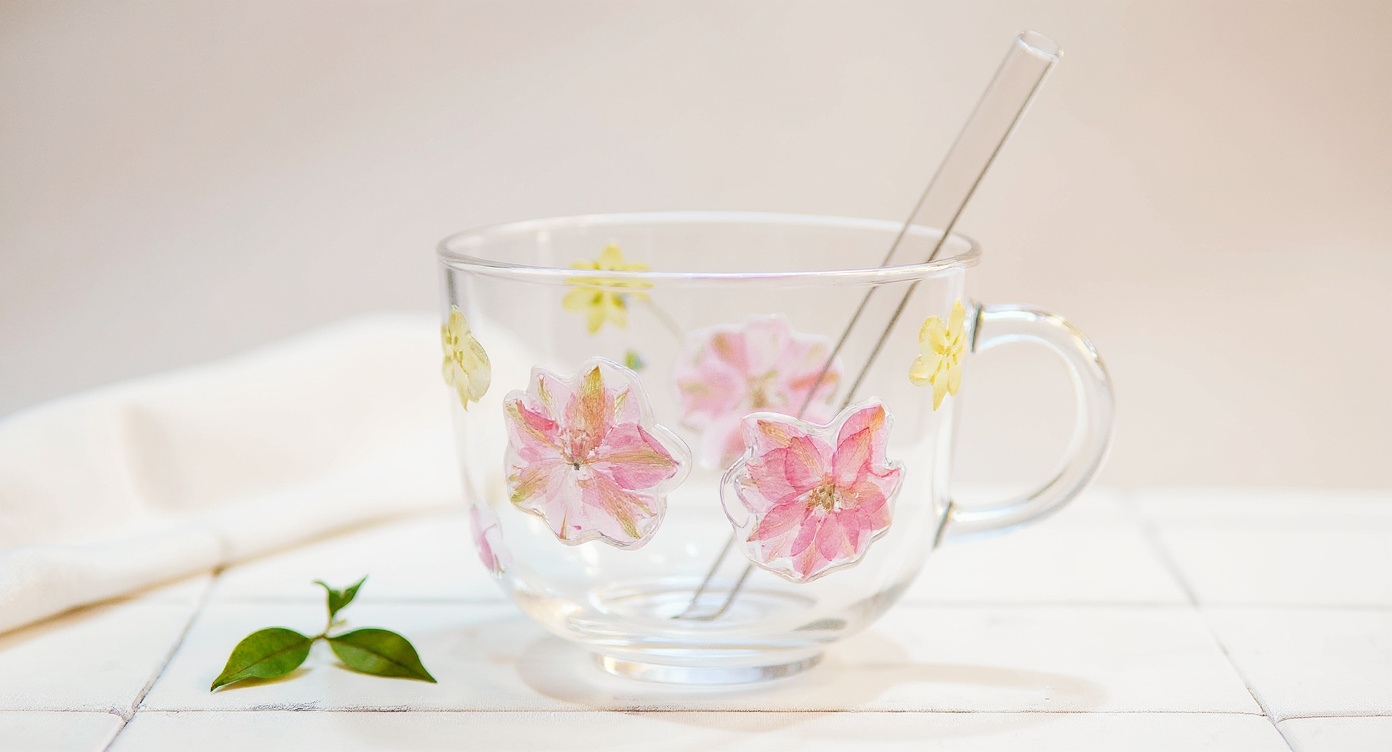
The craft tradition behind flattened botanical work is well established. Pressed flower craft uses plant material as the centre of the composition rather than as a pattern copied by a machine. On a cup, that difference is tactile as well as visual. Real hand-embedded flowers and leaves can create a raised relief that fingers can feel around the outer surface.
That raised surface is the dividing line. A floral print can be attractive, but it remains flat. A cup with preserved flowers attached by hand has uneven edges, organic spacing, and slight individual variation. Those aren't defects. They're evidence that the piece wasn't produced as identical drinkware by the thousand.
The 3-day slow-craft process matters for the same reason. It gives time for selection, positioning, and finishing rather than treating the flower as a graphic element. Buyers looking for cottagecore glassware usually want that natural irregularity. Perfect repetition belongs to printed merchandise.
Real botanicals also answer a common concern: are the flowers actually flowers, or just floral decoration? The answer should be specific. Verified preserved botanicals are genuine flowers and leaves that have been prepared to retain their form for decorative use. Artificial silk flowers and painted motifs are different materials with different ageing behaviour.
A useful 400ml cup, not a shelf ornament
A floral cup still needs to function as drinkware. The practical starting point is capacity: 400ml is large enough for iced coffee with ice, a generous milk tea, fruit tea, or a morning tea without being an oversized novelty vessel. The included dust-proof lid helps limit dust between sips, while a reusable glass straw suits cold drinks and avoids adding a plastic component to the set.
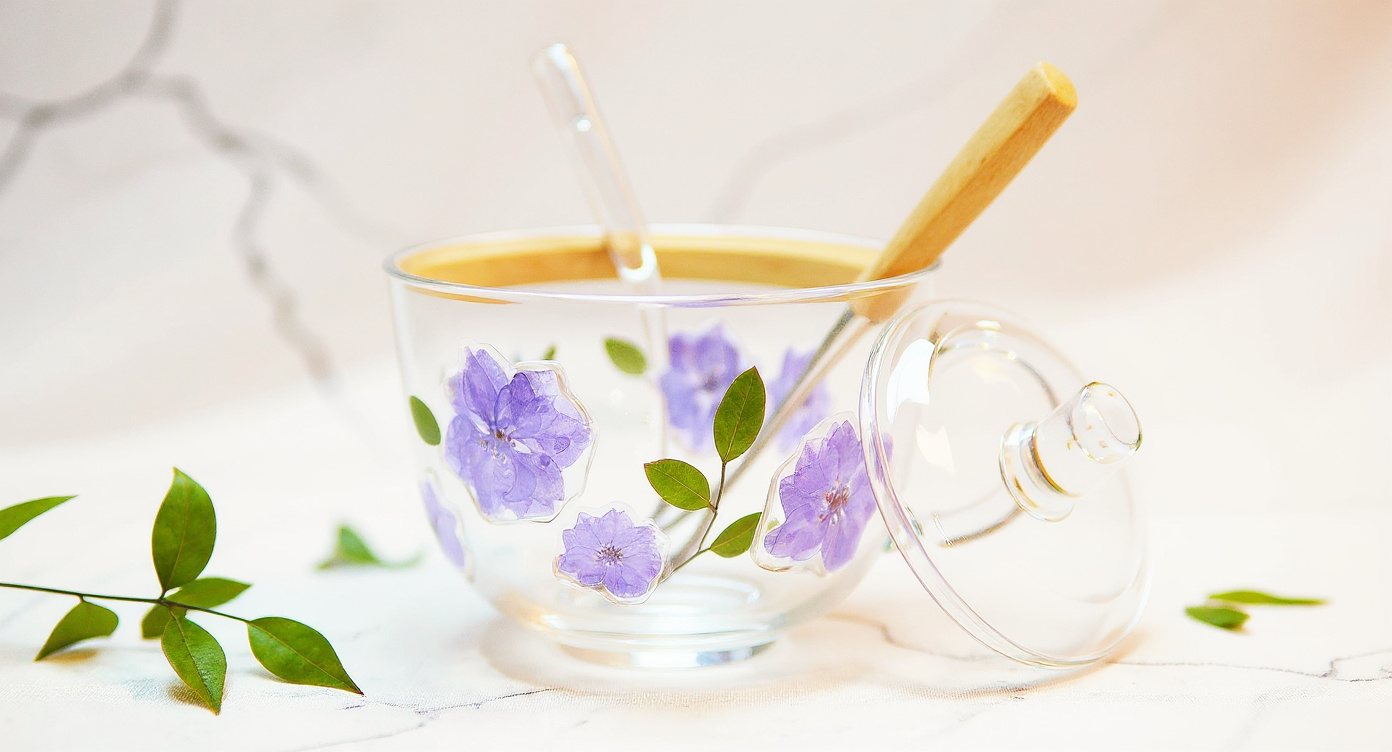
The Handcrafted Floral Glass Cup with Real Preserved Flowers | 400ml Heat-Resistant | Gift-Ready is built around that balance. Its real preserved flowers are hand-embedded on the outer surface, not printed inside the drinking area, and the set includes the matching lid and transparent glass straw. Yellow, blue, and pink options allow a gift to feel considered without turning the choice into a complicated custom order.
Heat-resistant glass is a useful specification, though it should be read accurately. It means the cup is intended to cope better with temperature exposure than ordinary decorative glass, not that it becomes immune to drops, sharp impacts, or extreme thermal shock. Material families vary. Borosilicate glass, for example, is known for thermal resistance, but “heat-resistant” alone doesn't confirm that a particular cup uses borosilicate glass.
For daily use, sensible handling is still the rule. Don't move a chilled cup directly into very hot conditions. Don't use a chipped straw. Don't treat raised floral relief as a handle. Glass is durable when handled properly, but it isn't forgiving of hard knocks against a stone counter or sink edge.
A cottagecore glass cup with flowers earns its place when it can hold a real drink and still feel special on an ordinary Tuesday. The most convincing examples don't require a special occasion to leave the cupboard.
Printed cups, artisan options, and the $68 question
Price alone doesn't tell the whole story, but it does reveal what is being paid for. A $10 printed tumbler and a $68 hand-finished glass cup belong to different categories, even if both show flowers.
| Type of floral drinkware | Typical price stated | Flower treatment | Lid and straw | What the buyer is paying for |
|---|---|---|---|---|
| Mass-produced printed floral glass cup | $10–$25 | Flat printed pattern, no tactile texture | varies by seller | Low-cost decorative drinkware |
| Mid-range artisan option on Etsy | $35–$55 | varies by maker | rarely included | Smaller-batch handmade or decorated work |
| Handcrafted Floral Glass Cup with Real Preserved Flowers | $68 | Real preserved flowers and leaves with raised relief | Included | 3-day handcraft, 400ml heat-resistant cup, dust-proof lid, and reusable glass straw |
The premium is easier to justify when the recipient values real materials and a complete gift set. It is less persuasive for someone who only wants a cheap tumbler with a flower graphic. There is no reason to pay for hand-embedded botanicals if a flat print does the job.
What shouldn't be bought is a product marketed as “handmade floral” when it offers only a decal or a repeated print at a handmade price. Ask one plain question: are real flowers used, and can the raised surface actually be felt? If the seller can't answer clearly, assume the decoration is printed.
A $68 set is more likely to pay off when it will be used repeatedly for cold drinks, displayed as part of a tea ritual, or given to someone who notices the material difference. For a one-time party drink, the trade-off points the other way.
How to choose a floral glass cup that won't feel generic
Buying floral drinkware online can be awkward because photographs flatten texture. Product language, material descriptions, and included components give better clues than styled images alone.
1. Start with the flower claim. Look for wording such as real preserved flowers, hand-embedded botanicals, or pressed flower elements. “Floral design” without a material description usually means a print. 2. Check where the decoration sits. Flowers applied to the outer surface keep the drinking interior clear. This is preferable to loose botanical material inside the cup, where cleaning and food-contact questions become harder to answer. 3. Match capacity to the drink. A 400ml vessel suits iced coffee, tea with ice, lemonade, and other substantial drinks. Tiny cups can be charming, but they are less useful for a normal morning drink. 4. Count the components. A separate lid and reusable straw add value only if they fit the intended routine. For desk use, a dust-proof lid is practical. For a cabinet display piece, it may matter less. 5. Read care instructions for the raised work. Tactile flowers need gentler cleaning than an undecorated tumbler. A seller that gives no care guidance may not have considered how the finish will be maintained. 6. Expect variation. Genuine flowers won't be duplicated exactly across every cup. Identical petal placement is a sign of printing, while small botanical differences are consistent with handcraft.
The strongest gift choice usually has one clear purpose. For a birthday, choose the colour that fits the recipient's home or preferred drink setup. For Mother's Day, the complete cup, lid, and straw set has more immediate usefulness than a decorative glass alone. For boutique café display or flat-lay photography, the raised botanical surface has more depth than a printed pattern.
Care for raised flowers without treating the cup as fragile decor
A hand-finished cup shouldn't be handled like disposable drinkware, but it also shouldn't be relegated to a display shelf. The goal is gentle routine care.
Hand wash the cup using lukewarm water, mild washing liquid, and a soft sponge or cloth. Work around the raised floral areas rather than scrubbing across them with an abrasive pad. Rinse carefully, then dry with a soft towel. This avoids snagging delicate edges and helps prevent residue from building around the relief.
The glass straw deserves its own quick inspection before use. A straw with a crack, chip, or rough edge should be retired. For iced coffee, a glass straw is suitable when it is intact and handled normally. Avoid biting it, and don't force it through packed ice at an angle.
The lid is useful for dust control, not a promise of spill-proof transport. Keep the cup upright, especially when it contains a full 400ml drink. Raised flowers improve grip in places, but they aren't a substitute for holding the cup securely around the glass body.
Preserved flowers are meant to retain their decorative form, but prolonged soaking and harsh cleaning are poor choices. Keep the outside clean, dry it after washing, and reserve abrasive cleaners for neither the relief nor the glass.
FAQ: real flowers, cleaning, and gifting
Are the flowers on floral glass cups real?
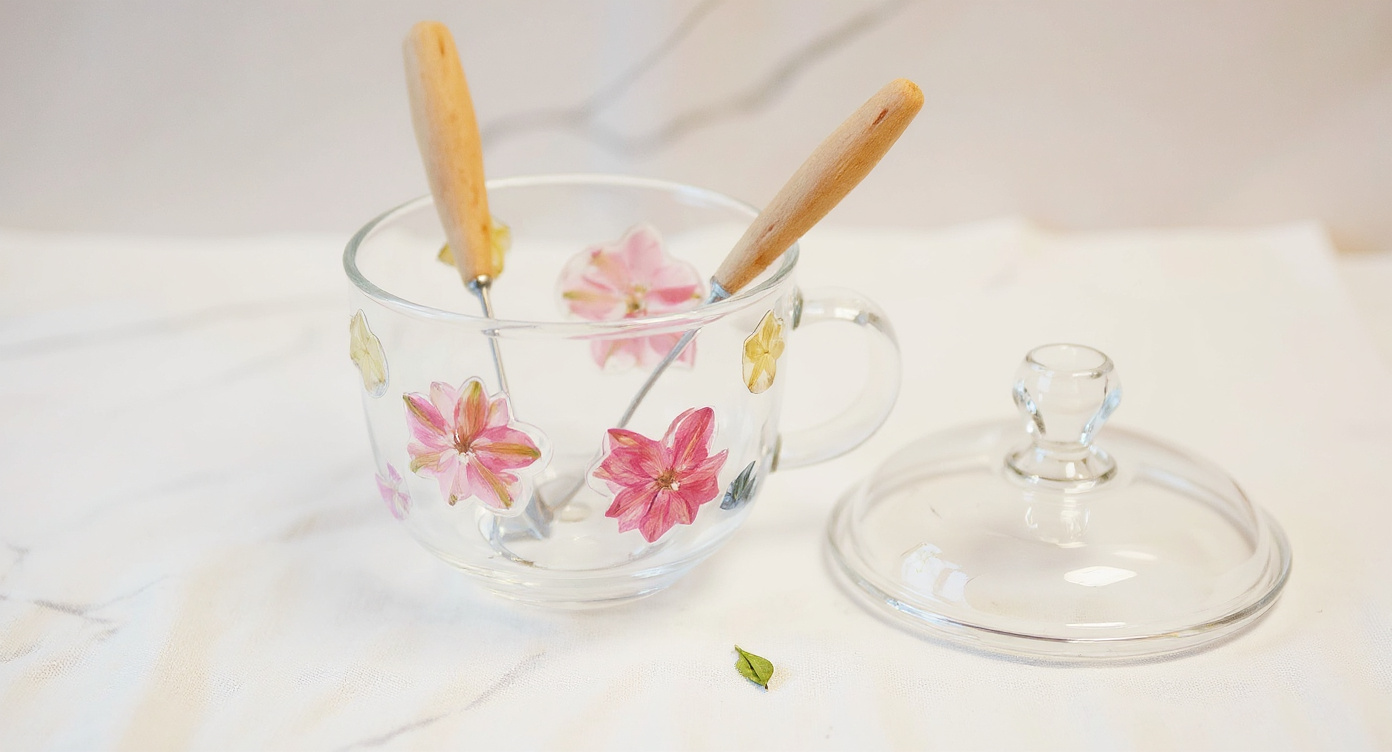
Some are real and some are printed. This cup uses verified preserved flowers and leaves hand-embedded on the outside, creating a raised 3D floral relief. A printed floral cup uses ink or a decal and has no genuine botanical material or tactile flower texture.
Can you drink from a glass cup with flowers on it?
Yes, provided the floral elements are on the outer surface and the drinking interior remains clear and intended for beverages. The 400ml heat-resistant cup is designed for drinks such as tea, iced coffee, and cold beverages, while the preserved flowers sit on the exterior.
Are preserved flowers the same as dried flowers?
They are related, but not identical terms. Dried flowers have had moisture removed through drying methods. Preserved flowers are treated or prepared to retain their appearance for decorative use. Both are real botanical material, but preservation generally aims for longer-lasting shape and colour than simple air drying.
How do you clean a cup with real flowers on the outside?
Hand wash gently with lukewarm water, mild washing liquid, and a soft cloth or sponge. Clean around the raised botanical relief without abrasive scouring. Dry the outer surface carefully rather than leaving moisture around the flower edges.
Do cottagecore glass cups with flowers make good gifts?
They can, especially for someone who enjoys tea rituals, iced coffee, botanical decor, or useful objects with handmade detail. A 400ml cup with a lid and reusable straw feels more complete than decorative glassware alone. The best choice depends on whether the recipient values real botanicals and slower craft over a lower-cost printed design.
What is the difference between printed floral glassware and pressed-flower glassware?
Printed floral glassware uses an image applied to glass. Pressed-flower or real-flower glassware uses actual botanical material as part of the decoration. Printed patterns are uniform and flat; hand-applied flowers have organic variation and may create visible raised texture.
Are glass straws safe to use with iced coffee?
An intact glass straw can be used with iced coffee. Check it for chips, cracks, and rough edges before use, avoid biting it, and don't use it to break up dense ice. Replace it if damage appears.
Why do handmade floral cups cost more than printed flower cups?
Real preserved botanicals require preparation and hand placement, and each cup needs individual finishing. The $68 price also includes a 400ml heat-resistant glass cup, a dust-proof lid, and a reusable glass straw. Printed cups retailing at $10–$25 skip much of that material and labour, while mid-range Etsy artisan options at $35–$55 rarely include both lid and straw.
The right choice for a meaningful everyday gift
The hesitation is reasonable: floral glassware can look overly delicate, and plenty of inexpensive options imitate handmade work with a printed pattern. The deciding details are real preserved botanicals, a raised outer relief, a practical 400ml capacity, and components that support actual use rather than display alone.
For a gift that needs to feel personal without becoming impractical, see the 400ml floral glass cup with real preserved flowers. It offers the tactile, slow-crafted character that printed flower cups miss, while still providing a heat-resistant glass, dust-proof lid, and reusable straw for regular drinks.