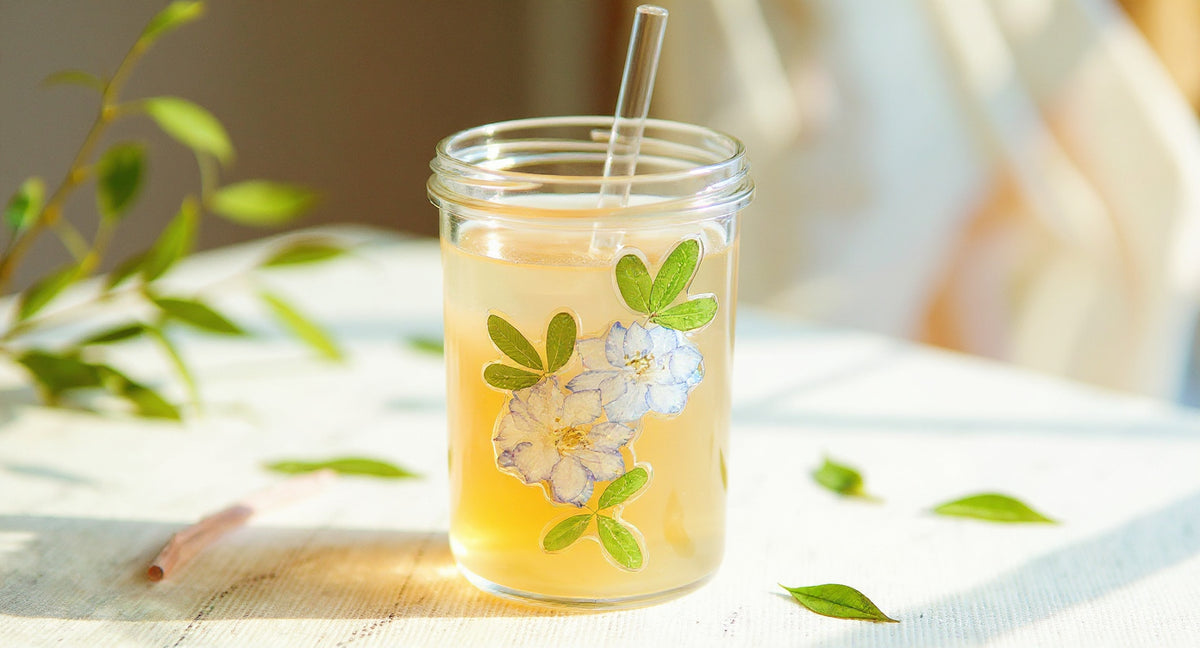
A european style floral glass tea cup is defined less by where it was made than by a decorative tradition: botanical detail, usable glassware, and a sense that the object should be handled rather than treated as disposable. The meaningful distinction is between real preserved botanical material worked into the cup and a flat floral print applied after production.
The term can be vague in listings, so the useful questions are practical ones. Are the flowers real? Are they sealed? Is the glass rated for heat? Does the cup come with a lid and straw, or is it only a display piece? Those answers determine whether a floral cup belongs in daily drink rotation or on a shelf.
What “European style floral glass tea cup” actually means
European-style floral drinkware usually borrows from decorative arts traditions in which useful household objects carry botanical motifs, relief work, or hand-applied ornament. Decorative arts cover the overlap between function and ornament, which is the useful lens here: a cup still needs to pour, clean, and hold temperature safely.
The phrase does not prove a cup was made in Europe, and it should never be used as a substitute for an origin claim. It normally signals a design approach rather than a manufacturing location. For a buyer, provenance and construction are separate questions.
A printed floral tumbler can fit the broad style category, but it doesn't offer the same material character as raised petals and leaves sealed onto the outside. Flat decals are usually quicker to produce, easier to replace, and cheaper. A hand-finished surface asks more of the maker and more of the owner.
This is why a floral glass cup shouldn't be judged only by a product photo. The useful criteria are tactile depth, heat rating, capacity, edge finishing, lid fit, and whether the botanical work remains outside the drinking surface.
Real preserved flowers change the care requirements
Real flowers are the dividing line between handmade botanical drinkware and printed novelty glass. Preservation is a broad set of methods intended to retain plant material beyond its natural fresh lifespan, as outlined in this reference on flower preservation. The method matters because unsealed dried petals can become fragile, absorb moisture, and shed.
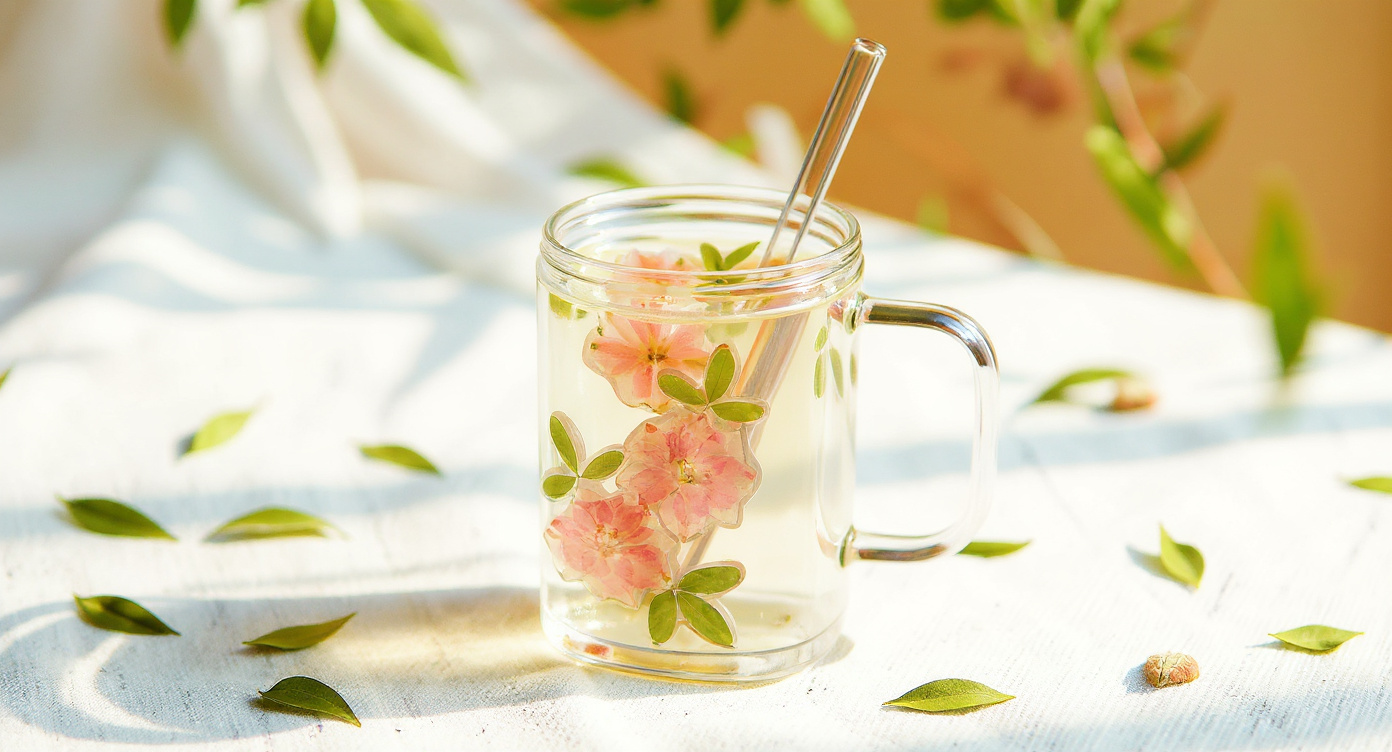
A properly preserved-flower cup keeps the plant material on the exterior, then seals it beneath a protective outer finish. The flowers should not sit loose inside the vessel or directly touch the drink. The cup remains drinkware; the botanical relief remains decoration.
The craft takes time. The Handcrafted Preserved Flower Glass Cup 400ml | Heat-Resistant | Gift-Ready uses real petals and leaves embedded in raised exterior relief through a 3-day handcrafting process. Its approximately 400ml capacity, dust-proof lid, and reusable glass straw make it more practical than a purely decorative piece, while the sealed botanical surface still calls for gentler handling than a plain tumbler.
That difference explains the price gap. A mass-produced printed floral glass cup may sell on Amazon for $12–$25 because the decoration is applied at scale. Real preserved material requires selection, placement, sealing, and curing. The result won't suit someone who wants a dishwasher-proof workhorse with no care expectations. It is better suited to someone who wants the cup itself to feel like part of the gift.
Pressed flower craft offers a helpful comparison. Pressed specimens are generally flattened for mounting, while raised floral relief preserves a more dimensional surface. Dimensional work creates a more tactile object, but it also introduces crevices that need careful cleaning.Six checks before choosing a floral glass cup
A pretty listing can conceal weak construction. Start with the parts that affect use every day, not the decorative language.
1. Confirm the capacity. A 400ml cup holds roughly 13.5 US fluid ounces. That's enough for tea with room below the rim, or an iced coffee with ice and milk. Smaller cups can be pleasant for short tea service but become limiting for cold drinks. 2. Look for a stated heat-resistant glass specification. “Glass” alone says very little. A heat-resistant claim is more useful, though it still doesn't replace sensible handling around rapid temperature changes. 3. Check where the flowers sit. Real petals and leaves should be sealed on the outer surface, away from the beverage and the rim. Avoid any product where loose decorative material can enter the drink. 4. Assess the lid and straw as working parts. A dust-proof lid helps for iced drinks, desk use, and short-term storage between sips. A reusable glass straw is useful for cold brew, iced tea, and drinks with milk, but it should be checked for chips before use. 5. Ask how it should be washed. Raised botanical relief is not compatible with careless scrubbing. If a seller does not provide dishwasher guidance, hand washing is the sensible default. 6. Compare the full set, not the cup alone. A lid, straw, protective packaging, and handmade floral work have value. A lower sticker price can be misleading if those pieces are absent.
| Option | Construction and use | Capacity or format | Price |
|---|---|---|---|
| Printed floral glass cup | Flat printed or decal decoration; generally mass-produced | varies by model | $12–$25 on Amazon |
| Artisan ceramic floral mug | Ceramic vessel with floral decoration; no glass transparency or straw format | varies by model | $35–$55 |
| Handcrafted Preserved Flower Glass Cup | Heat-resistant square-profile glass with real hand-embedded preserved flowers, lid, and glass straw | approx. 400ml | $68 |
The $68 cup occupies a premium handmade category, not a budget-tumbler category. It is more likely to pay off when the buyer values genuine botanical materials, needs roughly 400ml rather than a small teacup, and is willing to hand wash it. It is less compelling for a household that runs every drink through a dishwasher or needs several identical cups for hard daily use.
Serving hot tea without damaging the glass or flowers
Heat-resistant glass is suitable for hot tea, but no temperature rating has been stated for this cup. That means boiling-water claims would be careless. Use hot tea prepared in the normal way, avoid abrupt changes, and don't move the cup directly from a cold refrigerator into hot liquid service.
Thermal shock is the real concern. Glass can fail when one area expands much faster than another. A few habits reduce that risk:
- Let a refrigerated cup return closer to room temperature before adding hot tea. - Avoid placing hot glass onto a wet, cold stone surface. - Don't rinse a warm cup immediately under cold running water. - Leave a little headspace instead of filling to the rim. - Inspect the rim, base, and straw for chips before serving a hot drink.
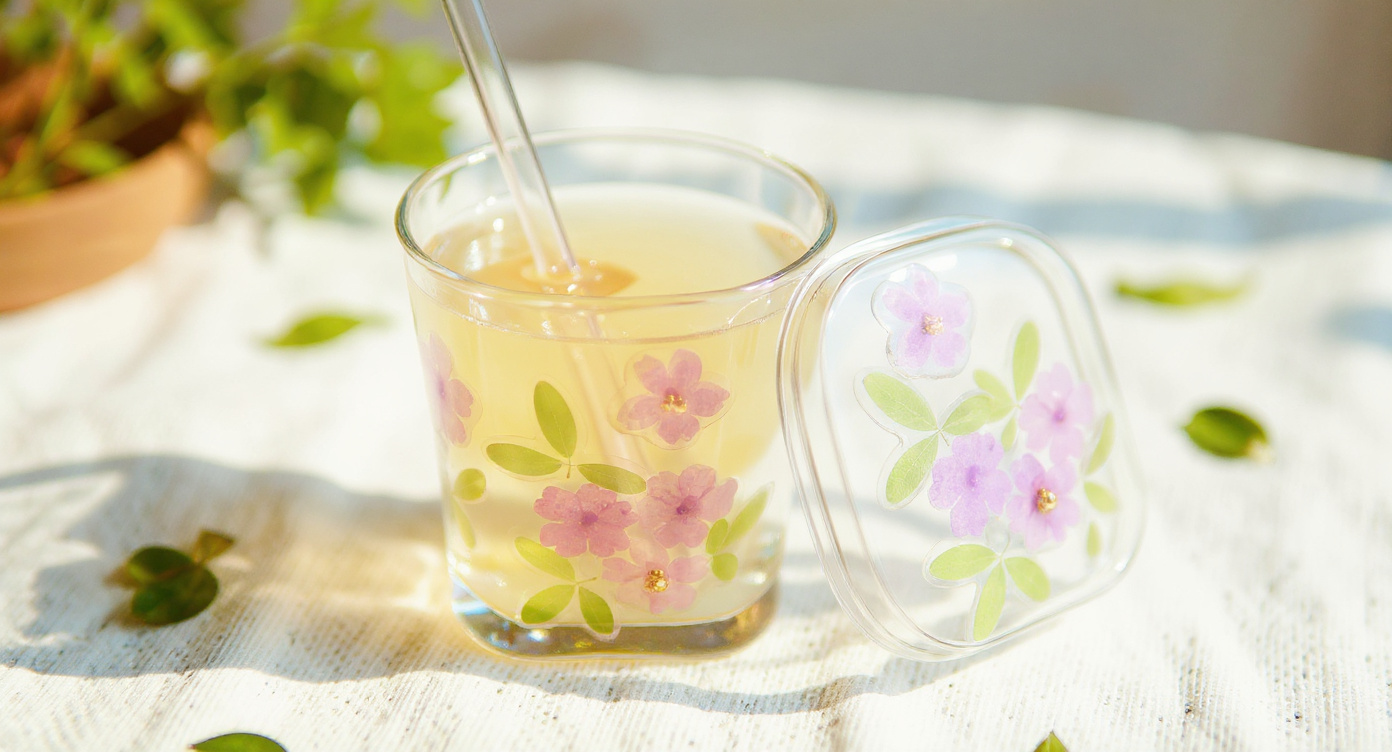
The lid is useful for keeping dust out of an iced drink or for briefly covering tea while it steeps, but it should not be treated as a pressure-sealing travel lid. A glass straw is best reserved for drinks that are already cool enough to sip comfortably. For very hot herbal tea, drinking from the rim is the safer choice.
The square profile also affects use. It gives the cup a different grip and resting footprint from a cylindrical tumbler, but it doesn't turn the vessel into travel drinkware. Carry it upright. The raised exterior decoration deserves the same caution as any hand-finished glass object.
Cleaning raised floral relief without wearing it down
Hand washing is the sensible standard for preserved-flower glassware. Dishwasher detergent, high heat, prolonged soaking, and contact with other dishes are all poor matches for a sealed raised surface, especially where petals and leaves meet the glass.
Use lukewarm water, mild dish soap, and a soft sponge or microfiber cloth. Clean the inside as normal. On the exterior, wipe around the raised work rather than grinding into it with a scouring pad. A soft detailing brush can reach narrow spaces, but it should be used with light pressure.
Do not use abrasive powders, steel wool, stiff pot brushes, bleach-based cleaners, or sharp tools to remove residue. Those methods can scratch glass and compromise a decorative seal. For tea film inside the cup, a brief soak with warm water and mild soap is preferable to aggressive scrubbing.
Dry the exterior by patting rather than rubbing hard across the relief. Store the cup where it won't knock against stacked mugs, heavy bottles, or metal utensils. The gift-ready packaging is useful for transport or seasonal storage, particularly in homes where shelf space is crowded.
FAQ
Are the flowers in preserved-flower glass cups real?
They can be, but not every floral cup uses real botanicals. The Handcrafted Preserved Flower Glass Cup 400ml | Heat-Resistant | Gift-Ready uses real dried flower petals and green leaves hand-embedded in raised relief on the outer surface. Printed cups use ink, decals, or painted motifs instead.
Can a floral glass cup hold hot tea?
A heat-resistant glass cup can be used for hot tea with sensible temperature handling. Avoid sudden transitions from refrigerator-cold to hot liquid, and don't assume a specific maximum temperature unless the maker states one. The botanical decoration should remain on the outside of the vessel.
Are floral glass tea cups dishwasher-safe?
A floral cup with raised preserved flowers should be treated as hand-wash-only unless the maker explicitly confirms dishwasher safety. Dishwasher heat, detergent, and repeated contact with other items can be hard on sealed exterior relief.
How should a cup with raised flowers on the outside be cleaned?
Wash it with lukewarm water, mild soap, and a soft sponge. Wipe gently around raised petals and leaves, then pat dry with a soft cloth. Avoid abrasive scrubbers, soaking for long periods, and harsh cleaning chemicals.
Do preserved flowers fade over time?
They can gradually change with age, especially with sustained direct sunlight, heat, and humidity. Keeping the cup away from a bright windowsill and washing it gently helps preserve the material and the seal around it.
Can a glass tea cup with a straw be used for iced coffee?
Yes. A 400ml cup is a practical size for iced coffee, cold brew, iced tea, or milk-based cold drinks. The included dust-proof lid and reusable glass straw make the format particularly suited to drinks served over ice.
What is the difference between a printed floral cup and a real-flower glass cup?
A printed floral cup has decoration applied flat to the glass surface. A real-flower cup uses actual preserved petals and leaves, arranged by hand and sealed into raised exterior relief. The printed version is usually less expensive and easier to replace; the preserved-flower version offers material depth and requires more careful washing.
When the handmade premium makes sense
The common hesitation is reasonable: a $68 floral cup has to offer more than a floral pattern. It does when the purpose is a personal gift, a daily tea or iced-coffee cup that feels distinct, or a functional object that also earns display space. The 3-day handcrafting process, real preserved botanical relief, approximately 400ml capacity, glass straw, and dust-proof lid are the features doing the work.
It won't be the right choice for every routine. A printed $12–$25 glass is the rational pick for frequent replacement, large households, or dishwasher-first cleaning. A $35–$55 ceramic mug makes more sense for someone who wants a handle and uses only hot drinks. Handmade glass has a narrower use case, but a more specific one.
For anyone looking for a gift that doesn't feel mass-produced, while still needing a cup for tea, cold brew, or iced coffee, the concern about real flowers and delicate care has a clear answer: choose sealed botanical work and hand wash it. See the Handcrafted Preserved Flower Glass Cup 400ml | Heat-Resistant | Gift-Ready for a 400ml option built around that balance.