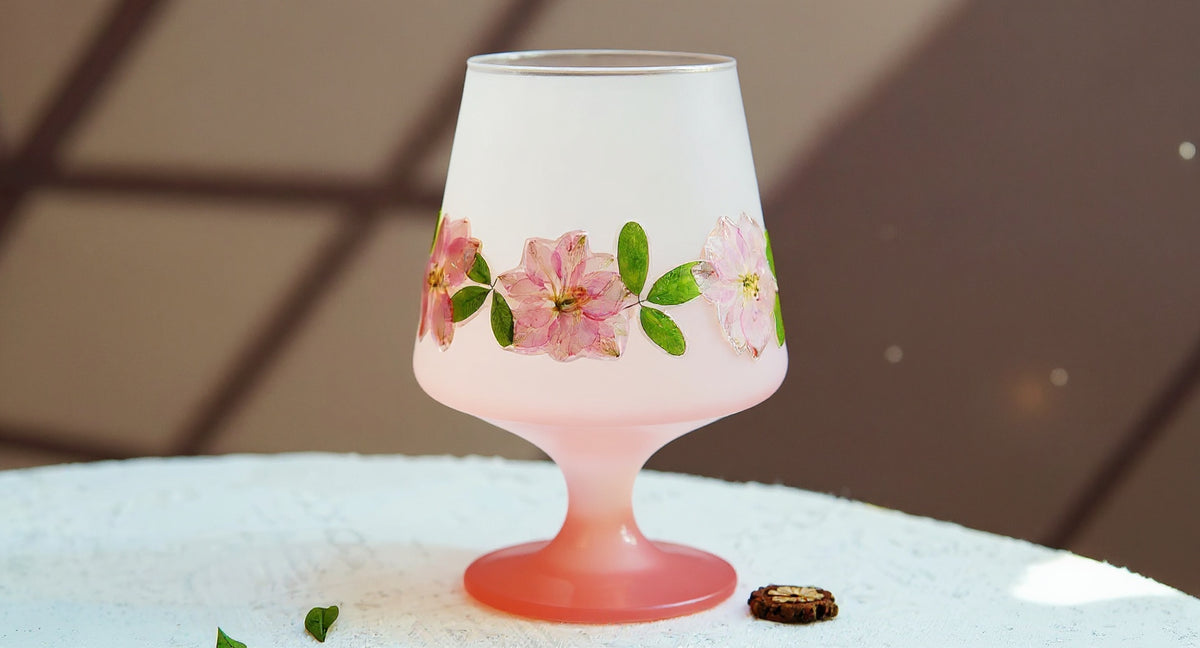
For frosted glass with pressed flowers, use gentle hand washing with mild detergent, lukewarm water and a soft cloth. Avoid prolonged soaking, abrasive cleaners and the dishwasher unless the maker confirms those methods for the finished piece. Before pouring hot drinks, check its service-temperature limit. A glass vessel and its decorative resin coating can have different care requirements.
The featured piece is a slender frosted glass stem cup with a soft pink-to-clear ombre gradient. Real dried flower petals form three-dimensional raised decoration, encased in glossy eco resin. Think pink roses, baby's breath or similar botanicals, rather than a flat floral print. The stated capacity is 400ml; the exact botanical selection isn't confirmed for each cup.
Real petals. Raised texture. A little more care.
What “frosted glass with pressed flowers” means here
The search phrase covers several kinds of floral glassware. Here, it describes a frosted stem cup with real botanical decoration under resin, not a window panel, etched floral pattern or printed drinking glass.
“Pressed flowers” also needs a distinction: pressing produces flattened botanical material, while this cup's defining feature is raised floral relief. Its petals shouldn't be described as a flat pressed-flower layer when the product identity specifies three-dimensional decoration.
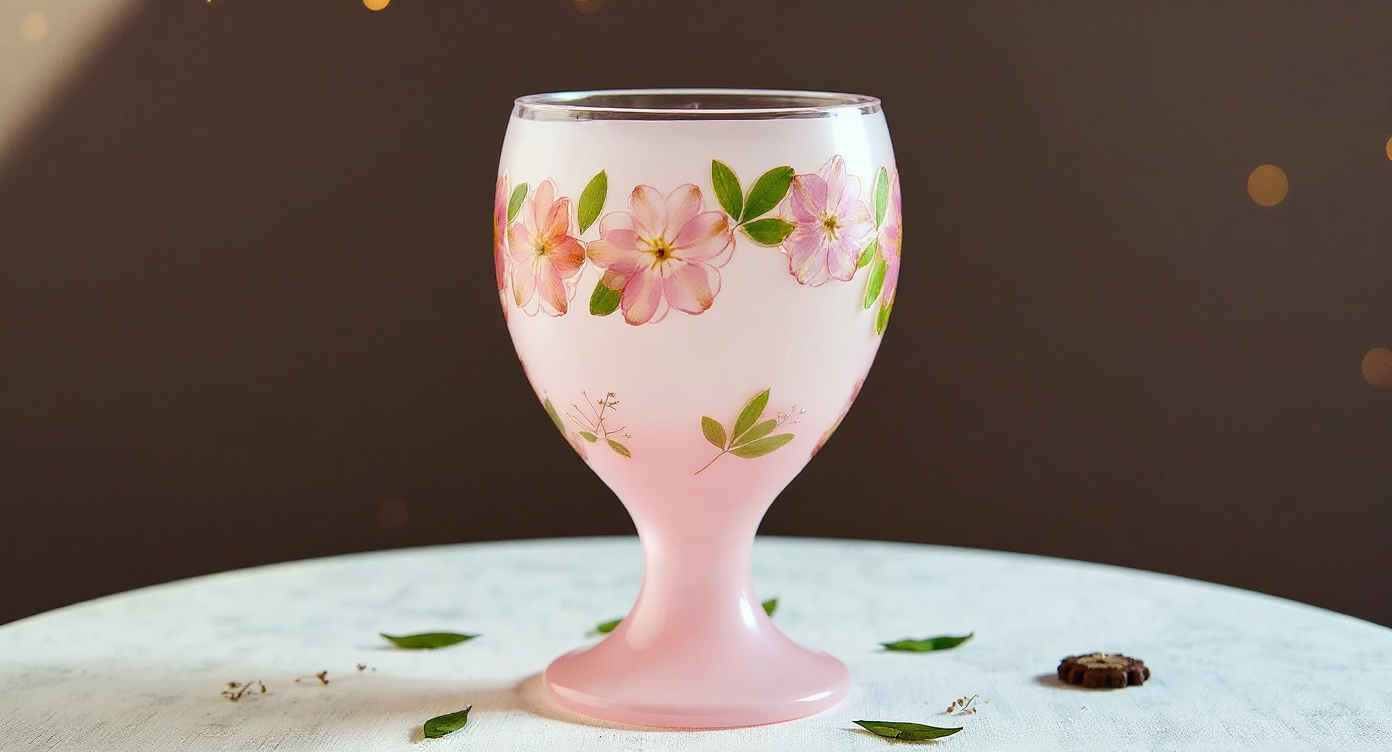
The finish matters as much as the flowers. Frosting gives the glass a diffused appearance, the pink-to-clear ombre supplies its colour transition, and the glossy resin creates contrast over the raised petals. On marble or linen in warm natural light, with a soft bokeh background, those differences remain visible without elaborate styling.
Let the texture do the work.
When I sealed my first batch of preserved blooms into a heat-resistant glass cup, the construction brought glass, botanical material and a coating into the same object. That experience doesn't establish a temperature rating or food-contact approval for this featured cup. Those details need documentation for the finished product.
What is confirmed, and what still needs checking?
The Handcrafted Pink Ombre Stem Glass has a stated 400ml capacity and real preserved floral decoration sealed in eco resin. Its slender stem, frosted pink-to-clear gradient and raised petals distinguish it from printed floral stemware.
The available description doesn't establish the resin formulation, exact coating boundaries, food-contact documentation, glass composition or maximum service temperature. Don't convert those gaps into assurances.
“Eco” isn't a food-safety certificate.
The following comparison separates the supplied construction from alternatives without inventing prices or care ratings. Unspecified details are marked “varies by seller.”
| Floral glassware option | Decoration | Surface appearance | Price | Care specification |
|---|---|---|---|---|
| Featured preserved-flower stem cup | Real dried or preserved petals encased in glossy eco resin | Frosted pink-to-clear ombre with raised floral relief | varies by seller | varies by seller |
| Printed floral glass | Printed floral design | varies by seller | varies by seller | varies by seller |
| Etched floral glass | Floral design etched into glass | varies by seller | varies by seller | varies by seller |
| Glass with flattened pressed-flower decoration | Flattened botanical material | varies by seller | varies by seller | varies by seller |
A floral print can be the better purchase if the household needs dishwasher-compatible drinkware and the printed product has that approval. Real petals aren't an upgrade for every use. They offer actual botanical material and texture, but those qualities don't prove greater durability or easier cleaning.
For other studio pieces, start at the Pampasroom website and compare each product's construction and care information. A shared floral appearance doesn't mean shared temperature limits.
Food-contact suitability depends on the finished cup
Resin on an exterior decoration is a different situation from resin inside the bowl or on the drinking rim. The placement needs confirmation; it isn't safe to infer it from a photograph.
The FDA's food-contact substances guidance explains the regulatory category for substances used in materials that contact food. In the European Union, Regulation (EC) No 1935/2004 sets requirements for materials and articles intended to contact food. Neither source certifies this particular cup.
Useful documentation should identify the coating and its permitted conditions of use. It should also connect that information to the completed vessel, including its rim and interior, rather than offer a general statement about resin.
A cured coating isn't the whole answer. Neither is glass underneath it.
Pre-purchase checks for floral resin glassware
1. Confirm the contact surfaces. Ask whether resin reaches the interior or drinking rim, and request a clear description or photographs showing the coating boundaries. 2. Request drinking-use documentation. Ask what supports the finished cup's suitability for beverages and which drinks are permitted. 3. Identify the resin. Request the formulation or product identification and the applicable food-contact information, rather than relying on “eco resin.” 4. Check heat and cleaning limits. Ask for the maximum service temperature and written instructions covering washing, soaking and dishwasher use. 5. Check practical fit. Confirm height, bowl diameter, weight and packaging if storage space or gift presentation matters. The stated capacity alone won't answer those questions.
This won't work if the intended use depends on a temperature or cleaning method the maker hasn't approved. For example, an unspecified heat limit isn't enough for freshly boiled tea, even when a product listing mentions herbal tea.
Until drinking suitability is confirmed, display use is the cautious choice. A decorative object doesn't have to become a drinking vessel to justify its place on a shelf.
A gentle hand-washing routine
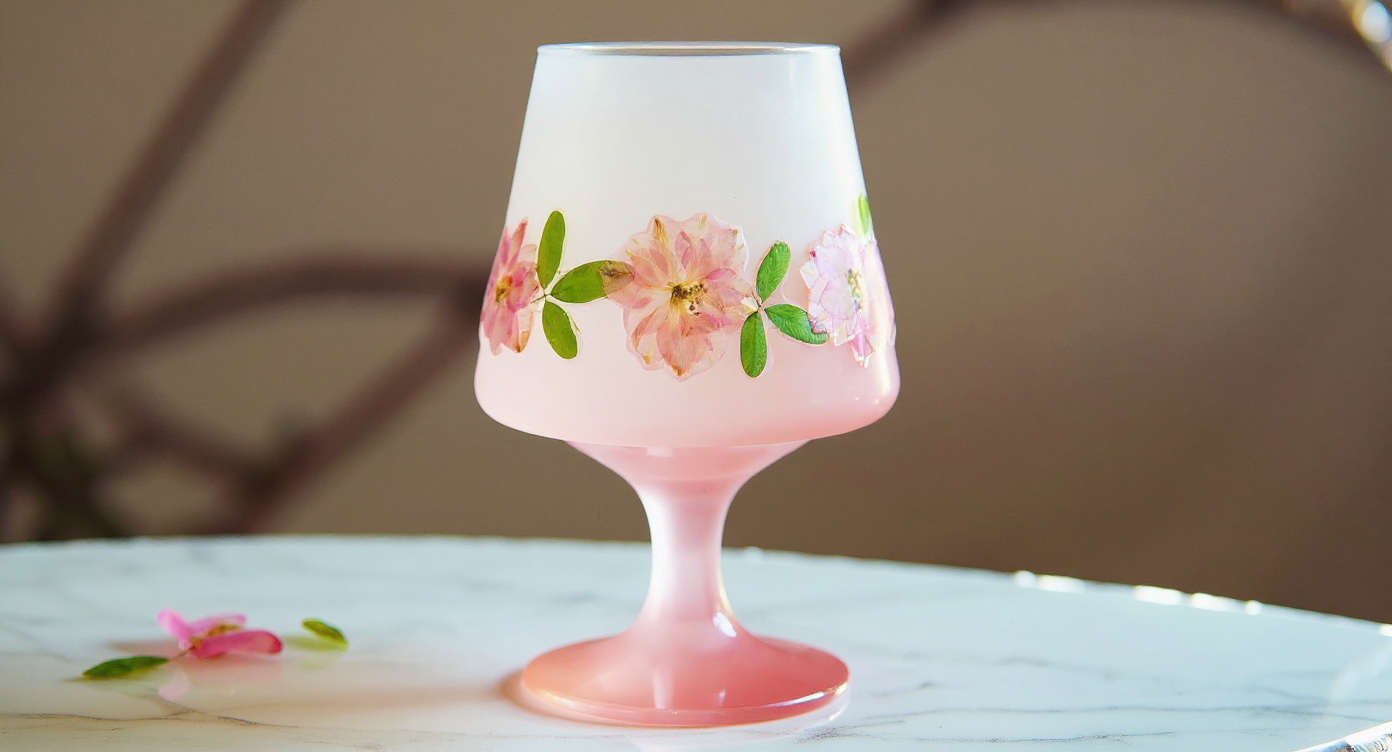
For frosted glass with pressed flowers and raised resin decoration, the conservative approach is brief, controlled washing rather than soaking or machine cleaning. Follow the maker's written instructions where they provide more specific limits.
The aim is straightforward: clean the cup without catching a raised edge, scratching the finish or putting force through the slender stem. No hard scrubbing.
1. Inspect before use. Check the rim, bowl, stem and coating for chips, cracks, loose petals or lifting edges. Stop beverage use if damage appears. 2. Empty the cup after use. Leaving residue to dry can make cleaning harder and encourage more rubbing across delicate surfaces. 3. Use mild detergent and lukewarm water. Avoid boiling water and abrupt changes between hot and cold; no thermal-shock rating is supplied. 4. Support the bowl. Use a soft cloth or nonabrasive sponge without twisting the bowl against the stem. Work around the raised petals rather than scrubbing across them. 5. Rinse without soaking. Don't leave the decorated cup submerged with other washing-up unless the maker permits it. 6. Dry without pulling at the decoration. Use a soft cloth, then let moisture on the surface dissipate. Don't force a towel beneath a resin edge. 7. Store with clearance. Keep neighbouring glasses from knocking against the floral relief. Avoid stacking and prolonged exposure to direct sunlight or heat.
Skip scouring pads, abrasive powders and solvent cleaners. The glass might tolerate a treatment that its frosting, colour finish or resin coating does not.
These steps are precautionary guidance, not evidence of a tested lifespan. If the surface becomes tacky, the coating lifts or the rim chips, stop using the cup for beverages and contact the seller. Household glue isn't a documented food-contact repair.
Choosing and styling a floral gift
This cup suits a recipient who values real botanical details and accepts hand washing. A birthday, bridal gift or housewarming can be a good setting, provided the care information travels with the piece.
The honest trade-off: if effortless dishwasher cleaning is essential, this isn't a sensible drinking-glass choice without explicit dishwasher approval. Its raised floral construction is the reason to choose it, not a reason to overlook care requirements.
For presentation, use a marble or linen surface, warm natural lighting and a soft bokeh background. Keep the setting simple enough to show the slender stem, frosted gradient and glossy petals. That styling supports the cup's elegant, feminine mood without implying that photographs prove durability.
Capacity deserves restraint too. The 400ml specification describes the vessel, not a recommended wine serving or a confirmed comfortable fill level. Dimensions and weight remain separate buying questions.
FAQ
Are the flowers real or printed?
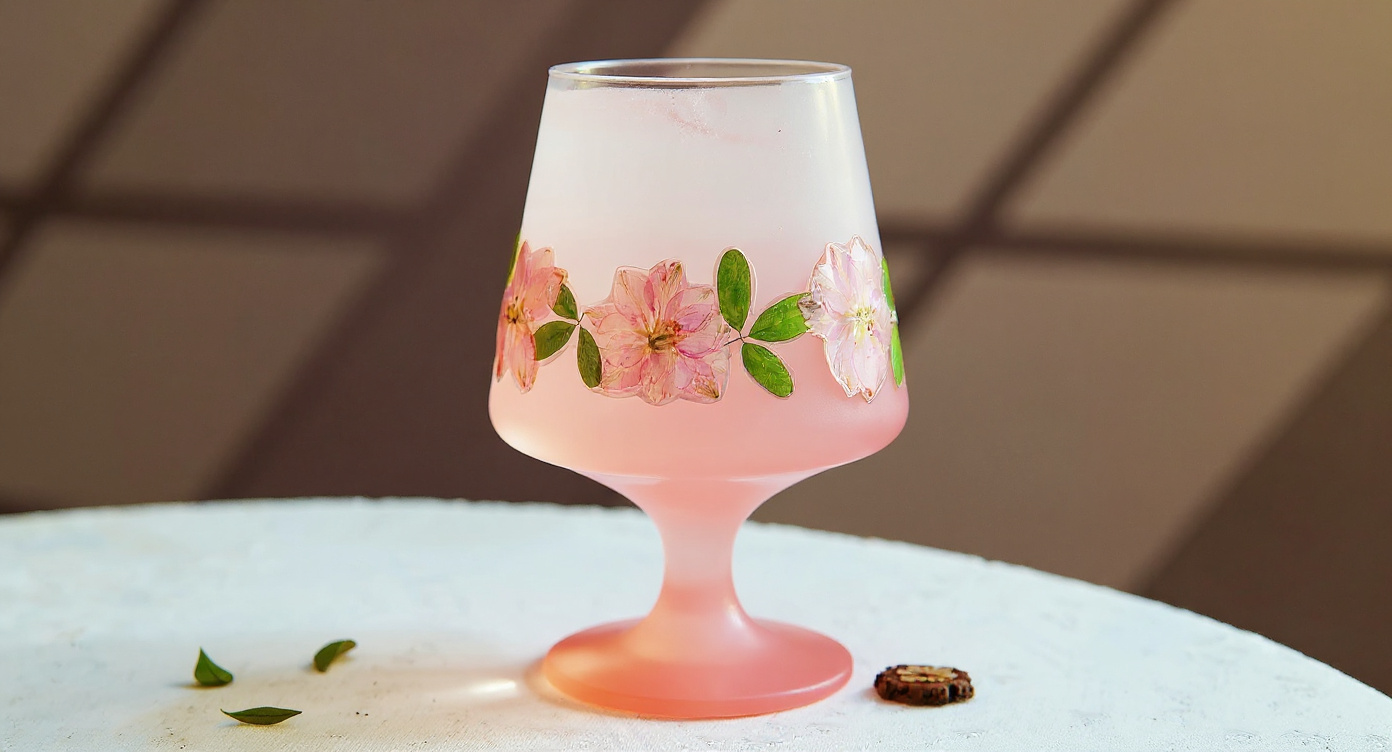
The featured cup uses real dried or preserved flower petals encased in glossy eco resin. Its floral decoration has raised relief rather than a printed image. Pink roses, baby's breath or similar botanicals fit the product identity, but the exact species in each piece needs confirmation.
Are these flowers pressed flat?
Not as a defining feature. Although “frosted glass with pressed flowers” is a useful search phrase, this cup is defined by three-dimensional raised petals. A flat pressed-flower layer and raised botanical decoration shouldn't be treated as the same construction.
Is eco resin food-safe?
The term “eco resin” doesn't establish food-contact suitability. Ask for the resin identification, coating boundaries and documentation for the finished cup's intended use. In particular, confirm whether any resin reaches the drinking rim or interior.
Can the cup go in the dishwasher?
No dishwasher approval is supplied. Use gentle hand washing as the conservative approach, without prolonged soaking or abrasive cleaning. A dishwasher-safe claim for the base glass wouldn't establish approval for the resin-decorated finished piece.
Can it hold hot tea?
Hot-drink suitability isn't established by the available specifications. No maximum service temperature or heat-resistant glass specification is supplied for this featured cup. Confirm the finished vessel's permitted temperature before pouring hot tea.
What does the 400ml capacity mean?
It is the stated cup capacity, not a recommended wine serving. It doesn't establish height, bowl diameter, weight or a comfortable fill level. Ask for those details if cupboard clearance, handling or packaging matters.
What should happen if the glass chips or the resin lifts?
Stop beverage use and contact the seller. Don't sand a chipped rim, peel away the coating or apply an unspecified adhesive. Display use may also be unsuitable if loose material or sharp glass remains exposed.
Will the flowers keep their colour forever?
No permanent-colour or lifespan guarantee is supplied. Protected storage and gentle cleaning are sensible precautions, but they don't establish how long this particular resin-and-botanical assembly will retain its appearance.
The right reason to choose raised floral stemware
Choose this cup for its real petals, tactile relief and soft frosted ombre, with care requirements treated as part of the purchase. Not as an afterthought.
The 400ml preserved-flower stem glass offers that specific botanical construction. Before choosing it for drinks, request the coating-placement, food-contact and temperature guidance from Pampasroom. Those answers matter more than reassuring adjectives.