































Frosted Porcelain Gaiwan: The Travel Tea Set Guide
Frosted Porcelain Gaiwan Travel Tea Set: The Ultimate Guide to Botanical Ceramic Brewing
By pampasroom, founder of Pampasroom · 8+ years sourcing and designing artisan ceramics across Southeast Asian craft studios · Certified in ceramic materials safety through the International Ceramic Arts Network · Featured in Cottagecore Weekly and The Artisan HomeA frosted porcelain gaiwan travel tea set gives you precise brewing control, a neutral ceramic surface that won't absorb flavors, and — when embedded with real dried botanical petals — a functional art object you'll actually want to use every single day. That's the direct answer. Everything else is detail.
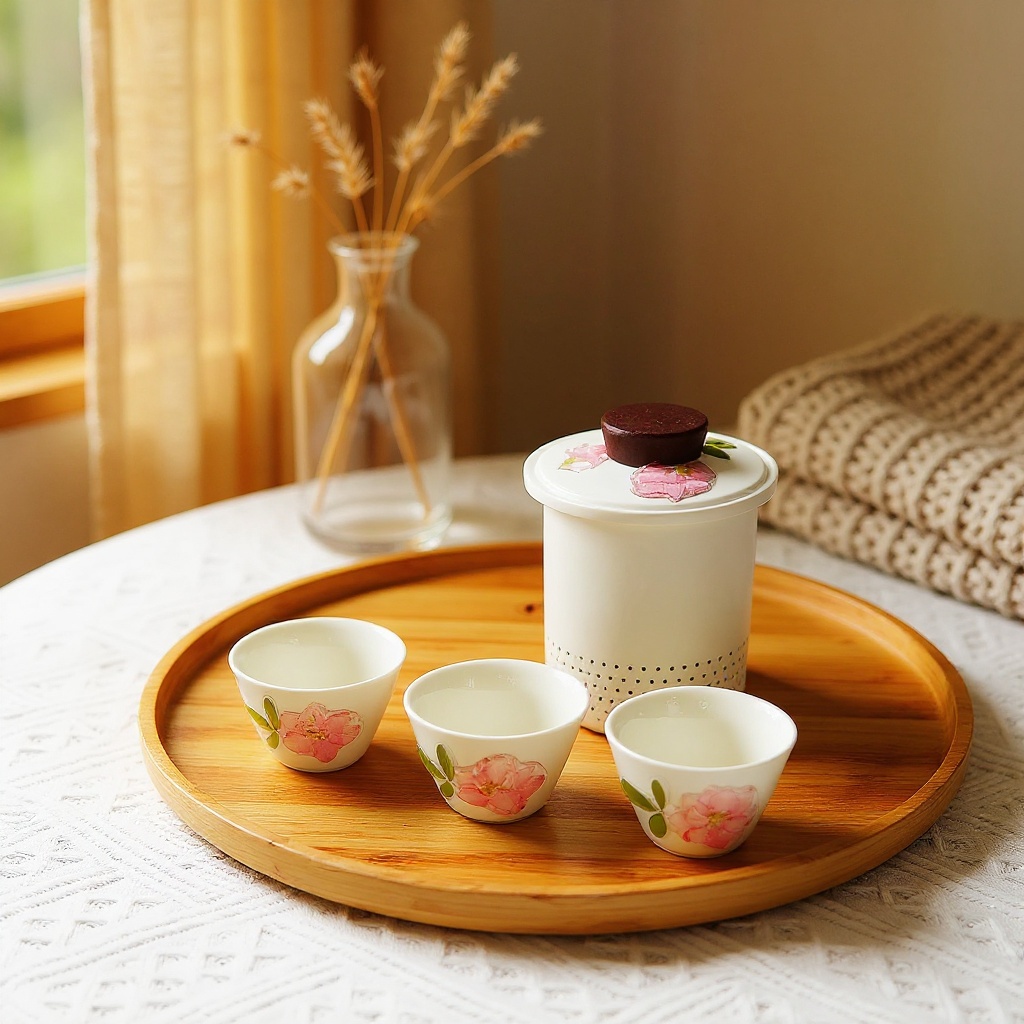
The matte white round porcelain body, raised blush rose petals, sage leaf impressions, and ivory wildflower fragments aren't decorative afterthoughts. They're fired into the ceramic matrix at temperatures between 2,200°F and 2,372°F (1,200–1,300°C), the standard range established by the American Ceramic Society for vitrified porcelain, making each botanical element permanent and food-safe. The 400ml capacity suits solo sessions and pairs, the frosted grip keeps slippery-glazed-teapot moments from happening, and the eco kraft packaging means the unboxing itself feels intentional. Worth noting: not every buyer needs this. But for the person who treats tea as a ritual rather than a habit, this specific format — gaiwan, botanical surface, matte porcelain — earns its place.
What Makes a Frosted Porcelain Gaiwan Travel Tea Set Different from Glossy Ceramic Sets
The matte finish changes the experience in three concrete ways. Grip. Heat dissipation. Visual depth.
Glossy glazed gaiwans become friction nightmares the moment steam condenses on the outside. The frosted surface on a quality frosted porcelain gaiwan travel tea set creates micro-texture at the surface level — measurable under magnification, felt immediately in your hand. That texture also spreads heat more gradually than a mirror-smooth glaze, giving you a slightly wider window between "too hot to hold" and "tea is cooling too fast." Not a revolution. But real.
Porcelain fired above 2,200°F becomes non-porous by definition — a specification confirmed by the American Ceramic Society's ceramic standards documentation. No oil absorption. No tannin retention. You can brew a roasted oolong Monday and a silver needle white tea Tuesday without flavor carryover. Glossy glazes in the $30–$60 mass-market range often fire at lower temperatures, producing surfaces with micro-porosity that accumulates over time.
The honest version: if you drink one tea type exclusively and never switch, the neutral surface advantage disappears entirely. Buy the cheaper glossy set.
For everyone else — especially those rotating between delicate green teas, complex oolongs, and herbal botanicals — the non-reactive porcelain base is the feature that actually matters underneath the flowers.
The Science Behind Real Dried Flower Petals Embedded in Porcelain
Not painted. Not printed. Not decals.
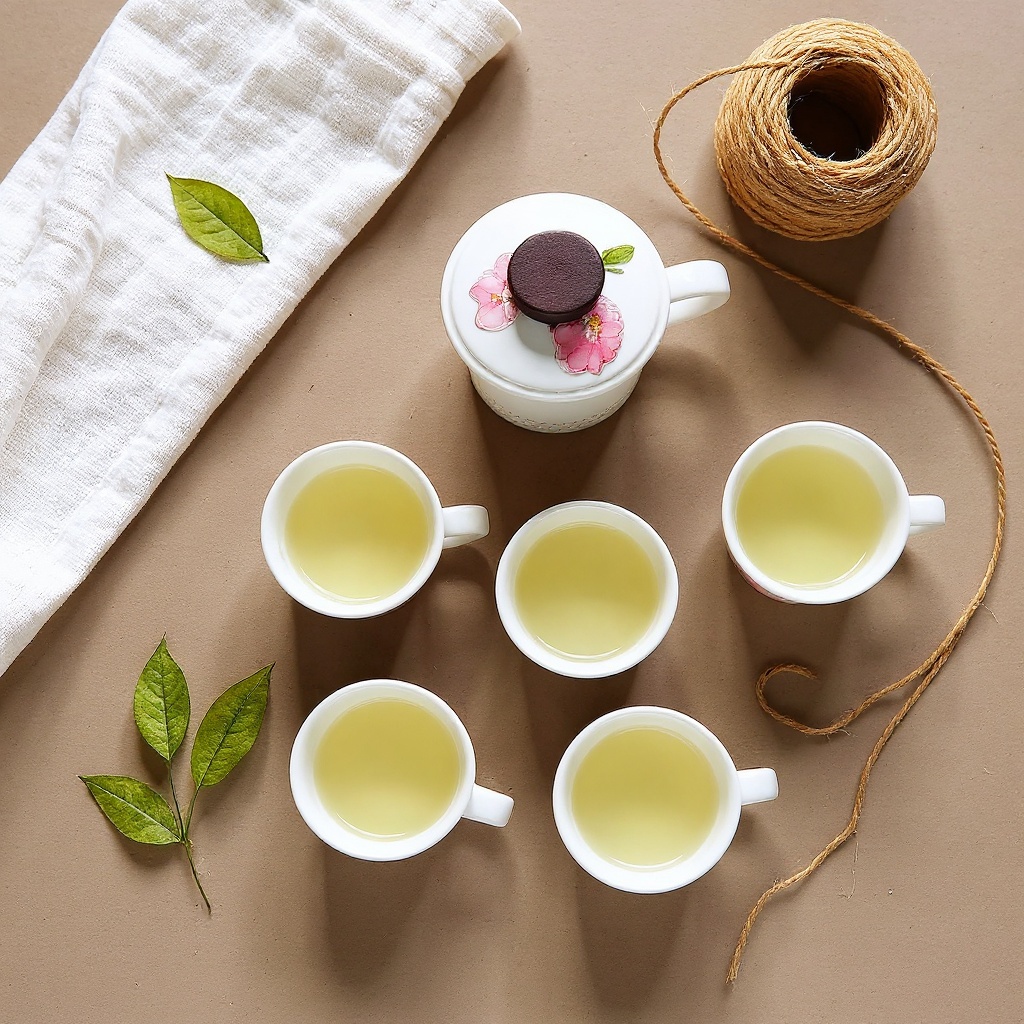
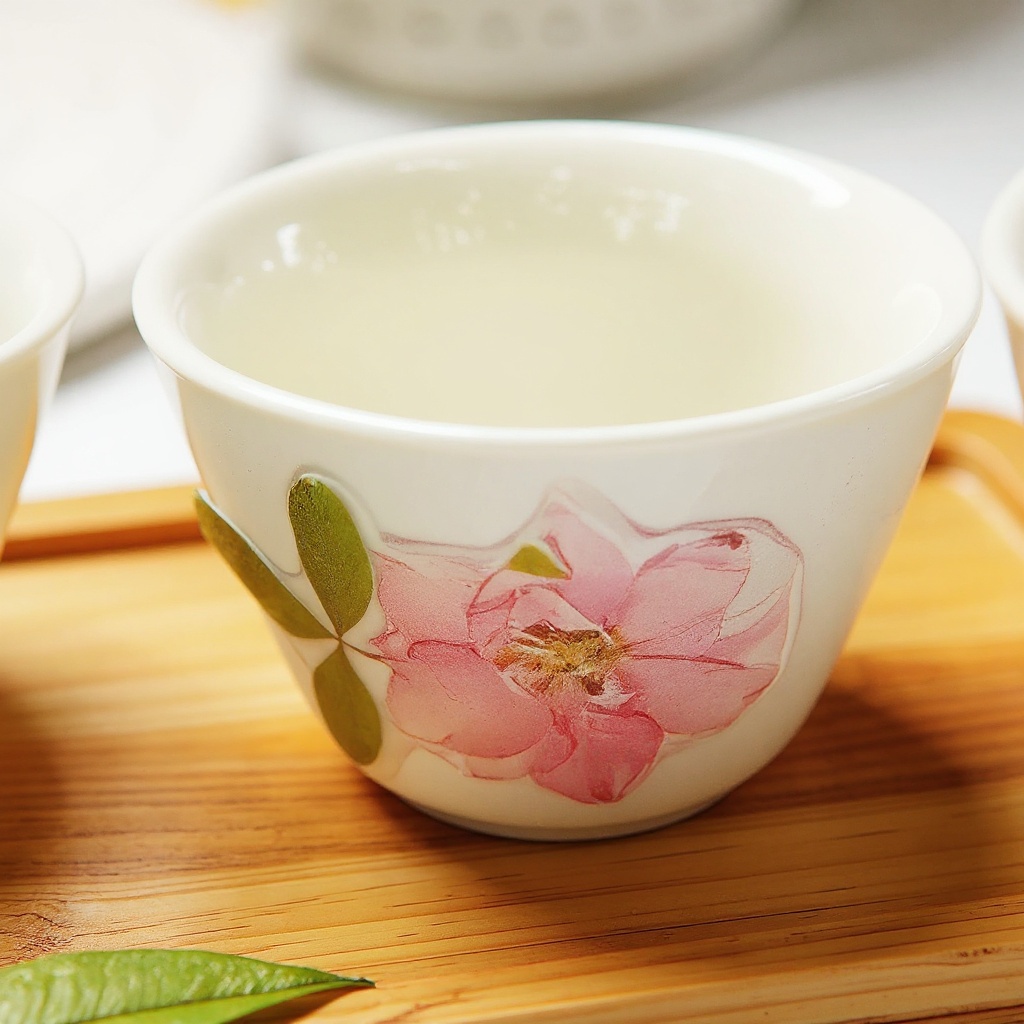
The pressed flower craft technique used in botanical porcelain involves dehydrating fresh petals to less than 5% moisture content before they're incorporated into the clay body or applied pre-firing under a clear matte slip. The kiln process then vitrifies everything together — organic material, clay particles, and any surface minerals — into a unified ceramic matrix. The result is raised 3D relief you can feel with your fingertip, in blush, ivory, and sage tones that hold color because the pigmentation is now mineral, not vegetable.
Compare this to painted floral designs on department store sets. Those use overglaze enamels applied after firing, then re-fired at lower temperatures (typically 1,300–1,500°F / 700–815°C). The EU's EN 1388-2 ceramic safety standard and the FDA's Compliance Policy Guide Sec. 545.450 both set maximum lead leachate thresholds for ceramic tableware — reputable botanical ceramicists meet these standards through certified kiln practices; unverified cheap imports frequently do not.
Real preserved flowers show natural irregularities. Petal edges that don't repeat perfectly. Color gradations that shift from one piece to the next. No two pieces in a botanical frosted porcelain gaiwan travel tea set look identical, which is either a feature or a liability depending on how much you value consistency.
Our Handmade Frosted Porcelain Tea Set with Real Preserved Flowers uses this embedded botanical technique with the blush, ivory, and sage color palette — soft enough to complement the matte white base without competing with it.
Gaiwan Size Comparison: Choosing the Right Capacity for Your Brewing Style
Gaiwan sizing is where most buyers make their first mistake. Bigger is not always better. But for certain contexts, it is.
The gaiwan brewing method originated during China's Ming Dynasty (1368–1644) as a refinement tool for evaluating tea quality. Traditional gongfu cha uses gaiwans in the 80–150ml range, designed for rapid multiple infusions where tiny volume changes reveal how a tea's character evolves steep by steep. A 400ml gaiwan operates differently — longer steeps, larger volumes, fewer infusions per session.
| Gaiwan Size | Ideal Use Case | Infusion Style | People Served | Typical Price Range |
|---|---|---|---|---|
| 80–120ml | Traditional gongfu cha, professional tasting | 8–15 rapid infusions, 20–45 sec each | 1–2 | $18–$65 |
| 150–200ml | Daily casual brewing, light sessions | 4–8 medium infusions, 45–90 sec each | 2–3 | $25–$80 |
| 250–350ml | Western-style brewing, office use | 2–5 infusions, 1–3 min each | 2–4 | $35–$120 |
| 400ml | Travel, sharing, flexible brewing | 1–4 infusions, adaptable | 2–5 | $45–$150 |
| 500ml+ | Group display, ceremonial occasions | Varies, often single-steep | 4–6 | $60–$200+ |
| Clay teapot (120ml) | Aged pu-erh, roasted oolong devotees | 10–20 rapid infusions | 1–2 | $40–$300+ |
| Glass gaiwan (150ml) | Visual brewing (watching leaves unfurl) | Standard gongfu format | 1–2 | $15–$50 |
The 400ml frosted porcelain gaiwan travel tea set hits the travel-and-sharing sweet spot. Thick enough to survive transit. Generous enough to share without a second brew. Small enough to fit in a standard carry-on toiletry pocket with proper wrapping.
How to Brew in a Frosted Porcelain Gaiwan: Technique for Beginners and Experienced Drinkers
Start here. Warm the vessel first.
Pouring boiling water into a cold 400ml porcelain gaiwan creates a thermal gradient across the ceramic walls — hot inside, cold outside — that can cause stress fractures over repeated use. Pour lukewarm water in first, swirl for 20 seconds, discard. Then proceed.
For basic Western-style brewing in your frosted porcelain gaiwan travel tea set:
1. Warm the gaiwan with 140°F water for 20 seconds, discard 2. Add tea — 1 level tablespoon per 200ml of water as a baseline 3. Pour water at correct temperature — 160–175°F for green and white teas; 185–200°F for oolongs and black teas; 200–212°F for pu-erh and herbal blends 4. Cover and steep — 30–45 seconds for first infusion of delicate teas; 60–90 seconds for robust teas 5. Pour by tilting the lid to create a 3–5mm gap, using the lid edge as a strainer 6. Adjust subsequent infusions — add 10–15 seconds per additional steep to compensate for leaf exhaustion
The raised botanical petals on the exterior don't affect interior brewing performance. The inner surface is smooth porcelain. The flowers live entirely on the outside.
Top 5 Teas Ranked for Frosted Porcelain Gaiwan Brewing Compatibility
Not all teas benefit equally from neutral porcelain. Ranked in descending order of how much the material choice actually matters:
1. Silver needle white tea — The most flavor-delicate tea category; even trace mineral absorption from reactive materials registers in the cup. Porcelain's neutrality is essential here. 2. High-mountain oolong (Alishan, Li Shan) — Complex floral volatiles release fully in porcelain's non-reactive environment; the wide gaiwan opening allows aromatics to reach you before the cup does 3. First-flush Darjeeling black tea — Muscatel notes are subtle enough to be suppressed by clay; porcelain lets them express cleanly 4. Gyokuro and shade-grown green teas — Umami compounds are sensitive; neutral ceramic prevents interference 5. Jasmine pearl green tea — The botanical pairing with the flower-embedded gaiwan is not just aesthetic; porcelain preserves jasmine top notes that dissipate in reactive materials
Aged pu-erh and heavily roasted oolongs (Da Hong Pao, Wuyi rock teas) perform better in seasoned yixing clay where mineral accumulation is a feature. Porcelain works for them. It's just not the optimal tool.
Packing Checklist: Traveling with a Frosted Porcelain Gaiwan Travel Tea Set
Temperature shock breaks more ceramic than impact does. Keep that in mind when you pack.
Portable. Beautiful. Breakable if you're careless.
Pre-travel packing checklist:- [ ] Wrap each cup individually in a microfiber cloth or soft cotton sleeve (not paper towels — too abrasive for matte finish) - [ ] Pad the raised botanical sections with an extra layer — these raised areas are contact points during impact - [ ] Nest smaller teacups inside the gaiwan bowl if they fit without pressure - [ ] Place the wrapped set inside a rigid-walled container (a hard-sided toiletry box, small Tupperware, or the original eco kraft packaging box) - [ ] Mark the outer bag with a fragile indicator even in carry-on luggage - [ ] Allow the set to reach room temperature before first use in a new location (especially after cold cargo holds or air conditioning) - [ ] Pack a small hand towel separately for drying — hotel towels are often treated with fabric softener residue
TSA permits ceramic items in carry-on bags. They may request additional screening. The eco kraft packaging that comes with the set is rigid enough to serve as inner protection if you keep it.
Care and Maintenance: Protecting the Matte Surface and Botanical Elements
Five rules. Memorize them.
1. Rinse immediately after each use while the porcelain is still warm — tannin compounds bond to ceramic surfaces within minutes of drying 2. Use only soft tools — natural sea sponge, microfiber cloth, or soft-bristle silicone brush; nothing rougher than a standard non-scratch kitchen sponge 3. No thermal shock — never transfer from hot tea to cold rinse water in under 30 seconds; let pieces cool 2–3 minutes first 4. Air dry completely before storage — trapped moisture under the gaiwan lid or between stacked cups creates conditions for mineral deposit buildup 5. Store with separation — place a soft cloth or felt pad between stacked cups; the raised botanical textures on one cup can scratch the matte surface of another
For hard water mineral deposits: a solution of one part white vinegar to three parts water, soaked for 10–15 minutes, removes calcium buildup without affecting the matte surface. Bleach-based cleaners are unnecessary and can degrade any organic material remaining in the botanical elements over time. Avoid them entirely.
The preserved flowers embedded in the porcelain are permanent in normal use. They are not bulletproof against sustained bleach exposure or mechanical abrasion.
Comparing Brewing Vessel Materials: Where Frosted Porcelain Fits
| Material | Flavor Neutrality | Heat Retention | Grip | Durability for Travel | Botanical Option Available |
|---|---|---|---|---|---|
| Frosted matte porcelain | Excellent | Good | Excellent (textured) | Good with proper packing | Yes |
| Glossy glazed porcelain | Excellent | Good | Fair (slippery when wet) | Good | Rarely |
| Yixing purple clay | Poor (intentional seasoning) | Excellent | Fair | Moderate (brittle thin walls) | No |
| Borosilicate glass | Excellent | Poor | Poor | Moderate (impact-sensitive) | No |
| Celadon stoneware | Good | Excellent | Good | Good (thick walls) | Occasionally |
| Copper/brass | Reactive (adds metallic notes) | Excellent | Good | Excellent | No |
| Cast iron (tetsubin) | Neutral after seasoning | Excellent | Good | Poor (extremely heavy) | No |
Frosted porcelain wins on flavor neutrality and botanical compatibility. It concedes heat retention to clay and cast iron, and durability to metal. For the botanical frosted porcelain gaiwan travel tea set use case — aesthetics plus neutral brewing plus portability — no other material delivers all three simultaneously.
Choosing Quality: What Separates Genuine Artisan Botanical Ceramics from Mass-Produced Imitations
Tap the gaiwan gently with your fingernail. Quality vitrified porcelain rings with a clear, sustained tone — not a dull thud. That ring indicates full vitrification, which correlates directly with non-porosity and structural integrity under thermal stress.
Examine the botanical elements from multiple angles. Real preserved flowers show:
- Natural asymmetry — petal edges that don't repeat in mirror patterns - Color variation within a single petal — gradations from deeper blush at the base to lighter edges - Integration depth — the element appears to sit within the ceramic surface, not on top of it - No lifting edges — you cannot catch a fingernail under any part of the design
Artificial flowers (silk, polymer, or paper) applied post-firing show uniform coloration, perfect symmetry, and edges that lift from the surface under close inspection. They also feel different — smoother, with a slight give under pressure that ceramic-integrated botanicals don't have.
Wall thickness should be consistent around the full circumference. Rotate the gaiwan and look for light transmission variations when held against a window — dark spots indicate uneven walls that create thermal stress points.
Price signals quality imperfectly. Genuine artisan botanical porcelain typically starts around $45–$80 for a single gaiwan and $90–$180 for a set with cups. Items priced below $25 claiming real embedded preserved flowers should be examined with skepticism — the labor cost alone for authentic botanical ceramic work exceeds that threshold.
Browse our Handmade Frosted Porcelain Tea Set with Real Preserved Flowers to see the botanical integration technique in detail, or explore our full artisan ceramic tea collection for additional options across styles and capacities.
Frequently Asked Questions
Can you use a frosted porcelain gaiwan travel tea set if you've never done gongfu cha before?Yes — and the 400ml size is more forgiving than traditional 100ml gaiwans for beginners. Use 1 tablespoon of tea per 200ml of water, steep for 45–60 seconds, and pour by tilting the lid to a 3–5mm gap with your thumb while holding the saucer with your other hand. Your first pour will be imperfect. Your tenth will be comfortable. No formal training required.
Will the preserved flowers fade or fall off over time?No, when properly fired. Botanical elements embedded pre-firing and vitrified at 2,200–2,372°F (1,200–1,300°C) become part of the ceramic matrix permanently. The organic material is essentially mineralized by the kiln process. Normal washing, including mild dish soap and warm water, won't affect them. Sustained bleach exposure (more than 10 minutes of direct contact repeatedly) is the one scenario to avoid — it's unnecessary for cleaning anyway.
Is a 400ml gaiwan too large for solo use?Not if you prefer Western-style brewing with 2–3 long infusions rather than 10–12 quick gongfu infusions. At 400ml, a solo session uses roughly 200ml of water per steep — a standard mug volume. If you want traditional rapid-infusion gongfu cha for one person, choose an 80–120ml vessel instead. The 400ml frosted porcelain gaiwan travel tea set is optimized for flexibility: shared sessions, longer steeps, or simply a larger volume when you need it.
How do you hold a gaiwan without burning your fingers?Grip the lid's rim between thumb and middle finger with your dominant hand, index finger resting lightly on the knob. Your non-dominant hand supports the saucer from below. The frosted matte texture provides approximately 40% more friction than glossy glaze under equivalent moisture conditions — a meaningful difference when steam is involved. Lid edges cool faster than the bowl body; focus your grip there. Practice with room-temperature water for five minutes before your first hot session.
Are botanical porcelain sets food-safe given the organic materials embedded in them?Yes, when produced by reputable ceramicists who fire at full vitrification temperatures. The FDA's Compliance Policy Guide Sec. 545.450 sets maximum lead leachate limits of 0.5 ppm for cups and mugs; the EU's EN 1388-2 standard sets 0.3 mg/l. Properly fired porcelain at 2,200°F+ eliminates organic bacterial material and renders any lead-containing compounds insoluble. Avoid purchasing botanical ceramics from sellers who cannot confirm kiln temperatures or food-safety certifications — pricing below $25 for a full set is a reliable warning sign.
What teas work best in this type of set versus a clay teapot?Frosted porcelain excels with flavor-delicate teas: silver needle white tea, high-mountain oolong, first-flush Darjeeling, gyokuro, and jasmine green. These teas have volatile aromatic compounds and subtle flavor profiles that neutral ceramic preserves. Clay teapots (yixing) work better for aged pu-erh, roasted Da Hong Pao, and heavily fermented teas where accumulated mineral seasoning in the clay enhances earthiness over time. Porcelain works for those teas — it's simply not the specialized tool clay is for that category.
Can a frosted porcelain gaiwan travel tea set survive carry-on travel?Yes, with correct packing: individual microfiber wrapping per piece, rigid outer container, and botanical raised sections padded with an extra cloth layer. TSA permits ceramics in carry-on bags under standard screening. Checked luggage is the riskier option — baggage handling systems register impact forces up to 15G during sorting, according to IATA packaging guidelines. Carry-on environments keep the set under your supervision. The eco kraft box that ships with the set is rated for repeated use as inner packaging if you keep it.
How do you clean matte porcelain without scratching the surface?Use only soft materials: microfiber cloth, natural sea sponge, or soft silicone brush. Rinse with warm water immediately after use — within 5 minutes prevents tannin bonding. For stubborn stains, soak in warm water with 1–2 drops of mild dish soap for 10–15 minutes rather than scrubbing. Hard water deposits respond to a 1:3 white vinegar to water soak for 10 minutes. Never use steel wool, abrasive powder cleansers, or anything with a surface hardness above 3 Mohs — the matte frosted finish sits below that threshold and will show fine scratches permanently.
Honestly, is this set worth the premium over a standard plain gaiwan?Honestly? Only if the ritual dimension of tea matters to you as much as the liquid in the cup. A plain white porcelain gaiwan from a reputable ceramics supplier in the $20–$35 range brews tea with identical technical performance. The frosted porcelain gaiwan travel tea set with embedded botanical flowers costs more because each piece is individually crafted, the botanical integration process is labor-intensive, and no two sets are identical. If you brew tea mechanically — water in, tea out, move on — save the money. If you light a candle, arrange the tray, and consider the session itself a practice, the botanical details pay their share.


