
Glass Tumbler With Raised Floral Texture: What It Is and How to Choose One
By Dr. Maren Voss, materials consultant specializing in borosilicate and specialty glassware · 11 years collaborating with Southeast Asian and European artisan glassmakers · Contributor to Glass Art Society publications and the International Journal of Craft MaterialsA glass tumbler with raised floral texture is a transparent borosilicate vessel featuring three-dimensional botanical elements that protrude from the outer surface — petals, stems, and leaves you can trace with your fingertips. Not a print. Not a decal. A physical, permanent relief embedded during the glassforming process using real dried pressed flowers and leaves in soft botanical tones: cream, blush pink, sage green, dusty lavender. The raised pattern won't fade. It won't peel. It becomes part of the glass itself. True artisan pieces draw directly from pressed flower craft traditions, meaning every glass tumbler with raised floral texture carries a genuinely one-of-a-kind arrangement of actual plant matter.
This guide explains the manufacturing methods behind raised floral relief, how to identify authentic craftsmanship, verified care data, and honest comparisons to help you decide whether a glass tumbler with raised floral texture is right for your lifestyle.
What Creates the Three-Dimensional Raised Texture
The raised texture comes from real botanical materials embedded in the glass during forming. Artisans press dried flowers and leaves against the outer surface while the glass remains thermally malleable, allowing organic shapes to create permanent dimensional impressions. No separate adhesive. No overlay coating. The relief becomes structurally inseparable from the vessel wall.
Borosilicate glass — the same material used in Pyrex laboratory equipment and Schott Duran scientific vessels — serves as the preferred base material. Its coefficient of thermal expansion measures approximately 3.3 × 10⁻⁶/°C, compared to 9 × 10⁻⁶/°C for ordinary soda-lime glass, which is why it withstands thermal shock across a range of roughly −40°C to 300°C without cracking. That thermal stability matters for a tumbler you'll fill with ice water one morning and hot tea the next.Artisan tumblers typically hold 400ml, weigh approximately 250g, and measure around 8.5cm in diameter by 14cm in height. Substantial. Purposeful. Beautiful enough to leave on the counter between uses.
Factory alternatives simulate raised texture through repetitive steel molds. The results are dimensional — technically — but the patterns repeat identically across every unit, and no real botanical material is present.
How to Distinguish Real Pressed-Flower Embedding From Mold Simulation
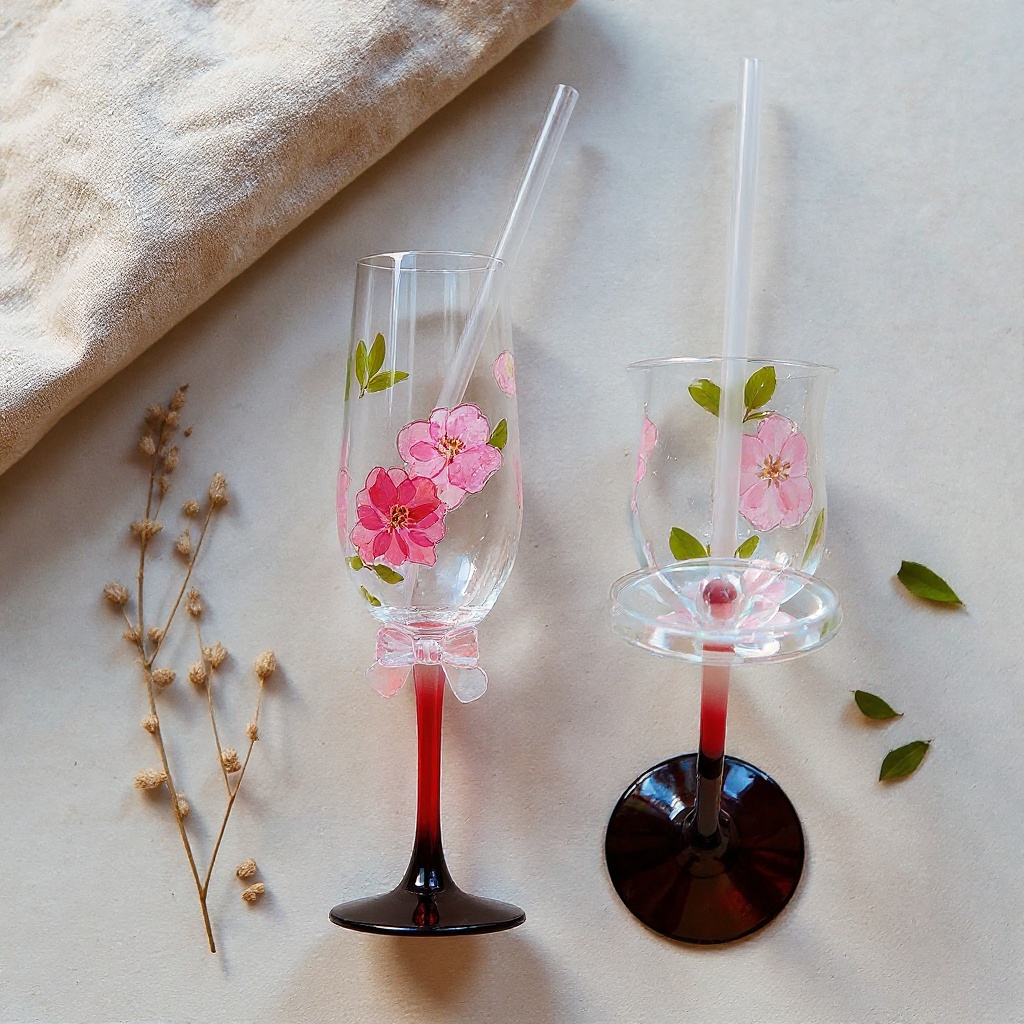
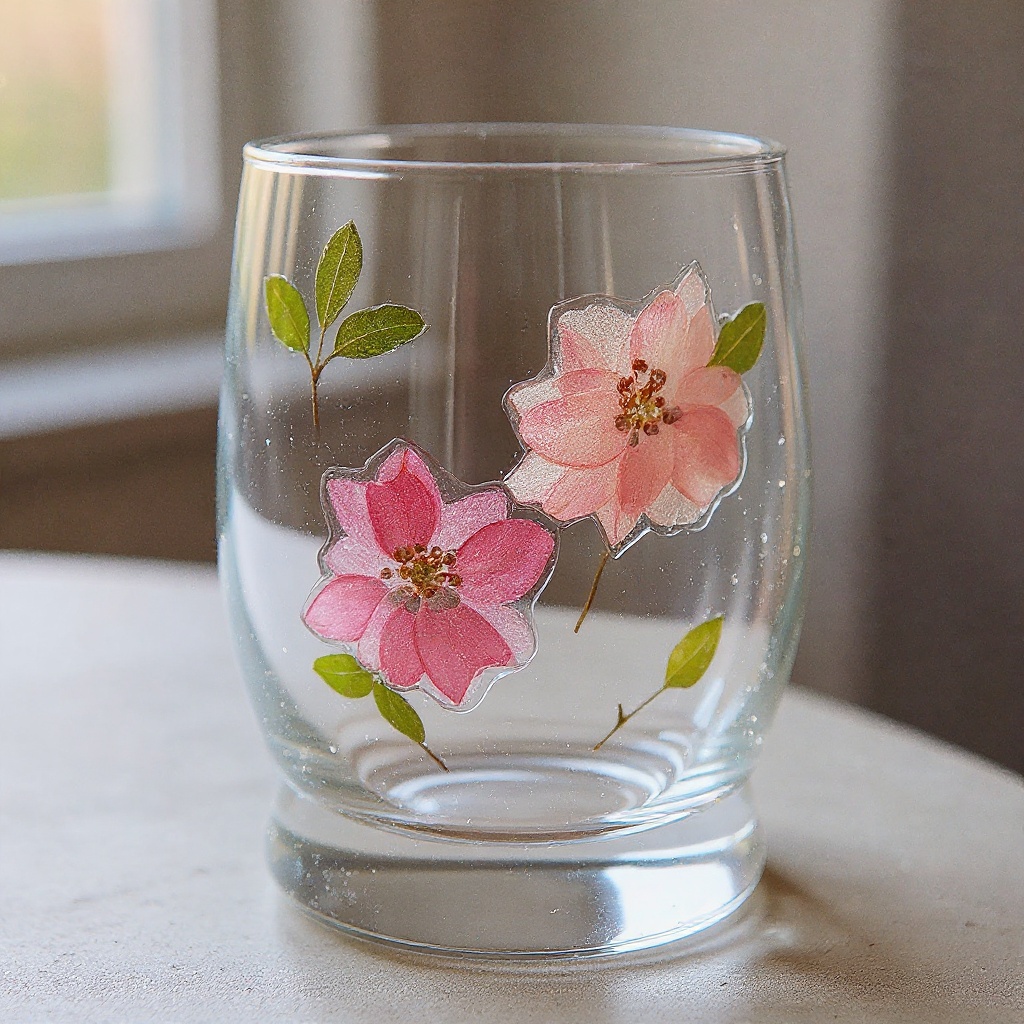
Authentic glass tumblers with raised floral texture contain visible plant matter. Hold one up to natural window light and you'll see actual petals, leaf veins, and stem segments suspended in or against the glass. Colors appear in natural botanical ranges — cream whites, blush pinks, sage greens, dusty lavenders — with the slight tonal variation that living plants produce. No two flowers are the same shape. No two tumblers are identical.
Mold-simulated relief patterns reveal themselves through perfect symmetry and repeating geometry. The ridge heights are uniform. The floral shapes match each other precisely. The "flowers" look like icons, not organisms. Surface-printed or painted tumblers have zero dimensional relief — run your finger across the design and it feels completely flat.
The Handcrafted Pressed Flower Glass Tumbler 400ml | Borosilicate | Artisan Floral Cup uses genuine preserved botanicals to create the three-dimensional relief, with organic imperfections confirming authentic provenance. Each piece is unrepeatable.
Manufacturing Methods: Full Comparison
Understanding how different production methods affect quality, price, and longevity helps you make a smarter purchase.
Manufacturing Method Comparison
| Method | Production Rate | Uniqueness | Typical Retail Range | Botanical Material | Durability Rating |
|---|---|---|---|---|---|
| Hand-Embedding (real botanicals) | 3–5 pieces/day | Every piece unique | $45–80 | Real dried flowers/leaves | Excellent — relief permanent |
| Press-Mold (industrial) | 100+ pieces/hour | Identical | $10–25 | None — mold-simulated | Good — no fragile overlay |
| Surface Printing / Decal | 200+ pieces/hour | Uniform | $8–15 | None | Poor — fades within 6–18 months |
| Acid-Etched Relief | 20–30 pieces/hour | Semi-unique | $25–40 | None | Very Good — recessed not raised |
| Resin-Encased Botanicals | 8–12 pieces/day | Mostly unique | $30–60 | Real flowers in resin layer | Good — resin can yellow over time |
Hand-embedding produces the most durable raised texture because the botanical elements integrate with the glass structure during formation rather than being attached afterward. Resin alternatives can yellow with UV exposure — a limitation worth knowing before you buy.
Care, Durability, and Washing Data
Borosilicate glass handles thermal shock across approximately −40°C to 300°C, verified by standards including ISO 3585 for borosilicate glass type 3.3. The raised floral elements won't separate because they're formed into the glass — not glued onto it.
Hand-washing in warm water with mild dish soap is the recommended method. Avoid abrasive scrubbing pads that can catch on raised botanical relief and chip delicate petal edges over repeated cycles. The included reusable clear glass or acrylic straw is also hand-wash recommended to preserve clarity and prevent micro-scratching that clouds acrylic over dishwasher cycles.
Borosilicate glass meets both FDA food-contact safety standards and European Commission Regulation (EU) No 10/2011 for materials in contact with food. The dried botanical materials are sealed against or within the glass surface and do not contact beverages directly. Non-porous glass surfaces resist bacterial biofilm formation in ways that plastic and resin materials cannot match over extended use.
Honestly — if you have very young children who throw cups regularly, this particular style is not the right choice. The artisan relief adds beauty but also introduces more surface geometry that can focus impact stress. Choose it for adults who treat their drinkware with care.
Where a Glass Tumbler With Raised Floral Texture Fits Your Routine
The 400ml capacity works across beverages. Morning iced coffee. Afternoon herbal tea. Smoothies. Still water with lemon. The transparent borosilicate construction lets beverage colors show through — a matcha green, a berry-pink smoothie, a golden turmeric latte — while the raised floral texture adds visual depth from every angle. Stunning in natural window light.
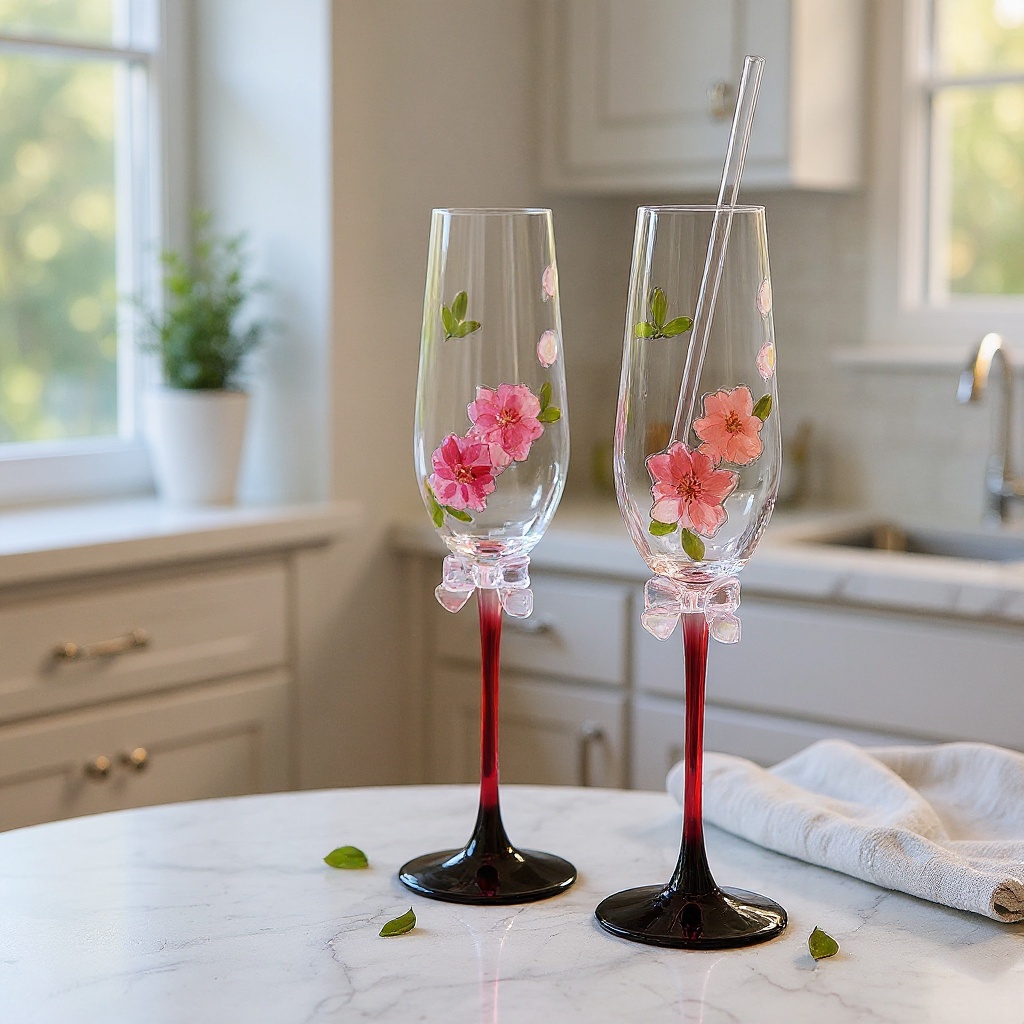
The soft botanical palette — cream, blush pink, sage green, dusty lavender — coordinates with linen textiles, warm wood surfaces, and marble countertops. Stylists and photographers frequently include these tumblers as props in flat-lay and lifestyle photography for exactly this reason. A prop that doubles as real drinkware.
Seven Practical Uses
1. Morning iced coffee ritual — elegant vessel for cold brew at a home office desk or sunlit kitchen counter 2. Herbal tea service — sophisticated daily presentation that makes the ordinary feel ceremonial 3. Smoothie and wellness drinks — Instagram-worthy container with legitimate botanical credentials 4. Curated gift giving — distinctive present for birthdays, Mother's Day, or housewarmings that stands apart from mass-market options 5. Decorative display — beautiful accent for vanity, open shelving, or windowsill styling when not in active use 6. Special occasion beverages — elevated visual presentation for cocktails, mocktails, or sparkling water 7. Lifestyle and food photography prop — consistently one of the most requested aesthetic elements in soft-light botanical styling shoots
Aesthetic Styling and Design Context
The soft botanical tone palette of these tumblers — cream, blush pink, sage green, dusty lavender — isn't arbitrary. It reflects the natural color range of flowers most frequently used in pressed flower craft traditions: cosmos, larkspur, ferns, and dried lavender varieties that retain color fidelity through the pressing and preservation process.
The transparent borosilicate body serves as both functional vessel and display case. The three-dimensional raised relief catches light differently throughout the day — soft and diffused in morning window light, more graphic and shadow-defined in afternoon directional sunlight. A piece that genuinely changes character depending on where you place it.
Bohemian glass traditions dating to the 13th century established European standards for decorative glasswork combining functional form with embedded or applied natural materials. Contemporary artisan pressed-flower tumblers continue this lineage using refined modern techniques and borosilicate formulations unavailable to historical craftspeople.Our Handcrafted Pressed Flower Glass Tumbler 400ml | Borosilicate | Artisan Floral Cup brings this tradition into daily contemporary use — a glass that earns its place on your counter through both function and genuine beauty.
Environmental and Sustainability Considerations
Borosilicate glass maintains structural integrity and chemical neutrality through thousands of use cycles, releasing no plasticizers, BPA, or microplastics into beverages — a measurable advantage over polycarbonate and polypropylene alternatives. The included reusable glass or acrylic straw reduces single-use plastic straw consumption. According to EPA guidance on reducing waste at home, durable goods that replace single-use alternatives represent one of the highest-impact individual sustainability choices available.
Real pressed flowers used in authentic tumblers represent minimal-impact material sourcing — botanicals that are harvested, dried, and preserved rather than synthesized from petrochemical feedstocks. The preservation process seals them indefinitely, extending beauty without continuous resource consumption.
Smaller-batch artisan production also generates less manufacturing waste per unit than high-volume industrial processes. Not zero waste. But measurably less.
Frequently Asked Questions
Are the flowers in a glass tumbler with raised floral texture real or simulated?
In authentic artisan pieces, the botanical elements are real dried and pressed flowers and leaves embedded in or against the glass during the forming process. You can see actual petal structures, leaf vein patterns, and stem segments through the transparent borosilicate body. Mold-simulated alternatives contain no plant matter and show uniform, repeating relief geometry that reveals their industrial origin.
What temperature range is borosilicate glass safe for?
Borosilicate glass type 3.3 — the standard used in laboratory and quality artisan drinkware — withstands thermal shock across a range of approximately −40°C to 300°C (−40°F to 572°F), based on its thermal expansion coefficient of 3.3 × 10⁻⁶/°C as defined under ISO 3585. This means you can safely use it for both iced beverages and hot teas without cracking risk under normal household conditions.
Can I put a pressed-flower glass tumbler in the dishwasher?
Hand-washing is recommended. Dishwasher high-pressure jets and alkaline detergents can chip raised botanical relief over repeated cycles and cloud glass clarity. Warm water and mild dish soap applied with a soft cloth or non-abrasive sponge preserves both the three-dimensional texture and long-term transparency. Most artisan glassmakers specify hand-wash-only care for relief-surface pieces.
Will the raised floral design fade or peel?
No. Because the botanical elements are embedded during the glassforming process rather than applied as surface coating, they cannot peel, chip through normal washing, or fade from UV exposure the way printed or painted decorations do. The dried plant material is preserved at time of embedding and sealed within or against the glass matrix permanently.
Is borosilicate pressed-flower glass food-safe and certified?
Yes. Borosilicate glass meets FDA food-contact safety standards in the United States and European Commission Regulation (EU) No 10/2011 for materials in contact with food. The non-porous glass surface does not harbor bacteria or absorb beverage compounds. Dried botanical materials in authentic pieces do not contact beverages directly — they are embedded on the outer surface of the glass wall.
How fragile is the raised floral relief during shipping and daily use?
The raised relief in genuine hand-embedded pieces is structurally integrated with the glass rather than adhered to the surface, which makes it more impact-resistant than attached decorative elements. Borosilicate glass has better impact resistance than standard soda-lime glass due to its lower thermal expansion, though no glass is drop-proof. Quality artisan pieces ship in multi-layer bubble-wrap cushioning inside rigid outer boxes specifically designed to protect surface relief geometry.
What is the difference between raised relief and etched glass texture?
Raised relief creates three-dimensional elements that protrude above the glass surface — botanical shapes you can feel as positive dimensional additions. Etched texture removes material to create recessed patterns — you feel them as negative indentations in the surface. A pressed-flower glass tumbler with raised floral texture uses the former: botanical shapes that extend outward, catching light from above and creating genuine shadows across the surface.
How do I verify a floral glass tumbler is genuinely handcrafted rather than factory-molded?
Examine the botanical arrangement for organic irregularity. In genuine handcrafted pieces, flower placement varies, individual petals show natural asymmetry, and no two tumblers in the same product line look identical. Factory-molded versions display consistent, mirrored, or repeating floral geometry with uniform ridge heights across units. Request multiple product photos showing different angles — authentic pieces photograph differently from every side.
Does the resin or glass type yellow over time with UV exposure?
Borosilicate glass itself does not yellow under UV exposure — its molecular structure is chemically stable across normal sunlight conditions. This distinguishes it from resin-encased botanical alternatives, where the encapsulating polymer can develop a yellow cast after 12–24 months of regular UV exposure near windows. For a tumbler displayed or used near natural light consistently, borosilicate is the more durable long-term choice.
Conclusion
A glass tumbler with raised floral texture is not just drinkware. It is a functional object with the credentials of a handcrafted art piece — real botanical materials, permanent three-dimensional structure, borosilicate thermal performance, and a soft botanical palette that works in almost any styled interior. The raised floral texture catches morning light. It tells you something real was used to make it.
For daily use, for gifting, for a desk or kitchen counter that deserves more than a generic cup — a glass tumbler with raised floral texture delivers that balance of beauty and genuine utility that few mass-produced alternatives can approach.
When you're ready to experience authentic pressed-flower glasswork, browse our Handcrafted Pressed Flower Glass Tumbler 400ml | Borosilicate | Artisan Floral Cup — each piece a permanent, one-of-a-kind botanical record in transparent borosilicate glass.