
Heat Resistant Ceramic Tea Cups With Flowers: A Complete Buyer's Guide
By the Pampasroom Editorial Team · Research drawn from ceramic engineering literature, ISO thermal shock standards, and hands-on testing of high-fired porcelain tea ware · Contributors include studio potters and materials consultants with kiln operation backgroundsQuality heat resistant ceramic tea cups with flowers can safely handle boiling water when made from high-fired porcelain (fired above 1200°C) with proper flower application techniques. The decisive factors are firing temperature, wall thickness, and whether floral elements are embedded during production rather than pressed onto the surface after glazing. Real flower-embedded porcelain — the kind with dried botanicals visibly fused into the ceramic body — performs with measurable consistency across repeated thermal cycles. Not all floral tea cups offer the same heat resistance, though. Mass-produced options often cut firing temperatures and use surface-applied decorations that crack, lift, or fade within months.
Understanding Heat Resistance in Floral Ceramic Tea Cups
Porcelain fired above 1200°C develops a vitrified, non-porous structure. This matters. The vitrification process causes clay particles to fuse into a glass-like matrix that expands and contracts uniformly when exposed to rapid temperature shifts — a property measured by thermal shock resistance standards including ASTM C554 and ISO 10545-9, which define acceptable crack rates for ceramic ware under controlled temperature cycling.Wall thickness determines how evenly heat distributes across the cup body. Walls between 2–4mm spread thermal energy without creating the steep internal gradients that cause stress fractures. Under 2mm and you risk impact fragility; over 6mm and uneven heating becomes a structural problem rather than a comfort issue. The relationship is not decorative preference. It is materials engineering.
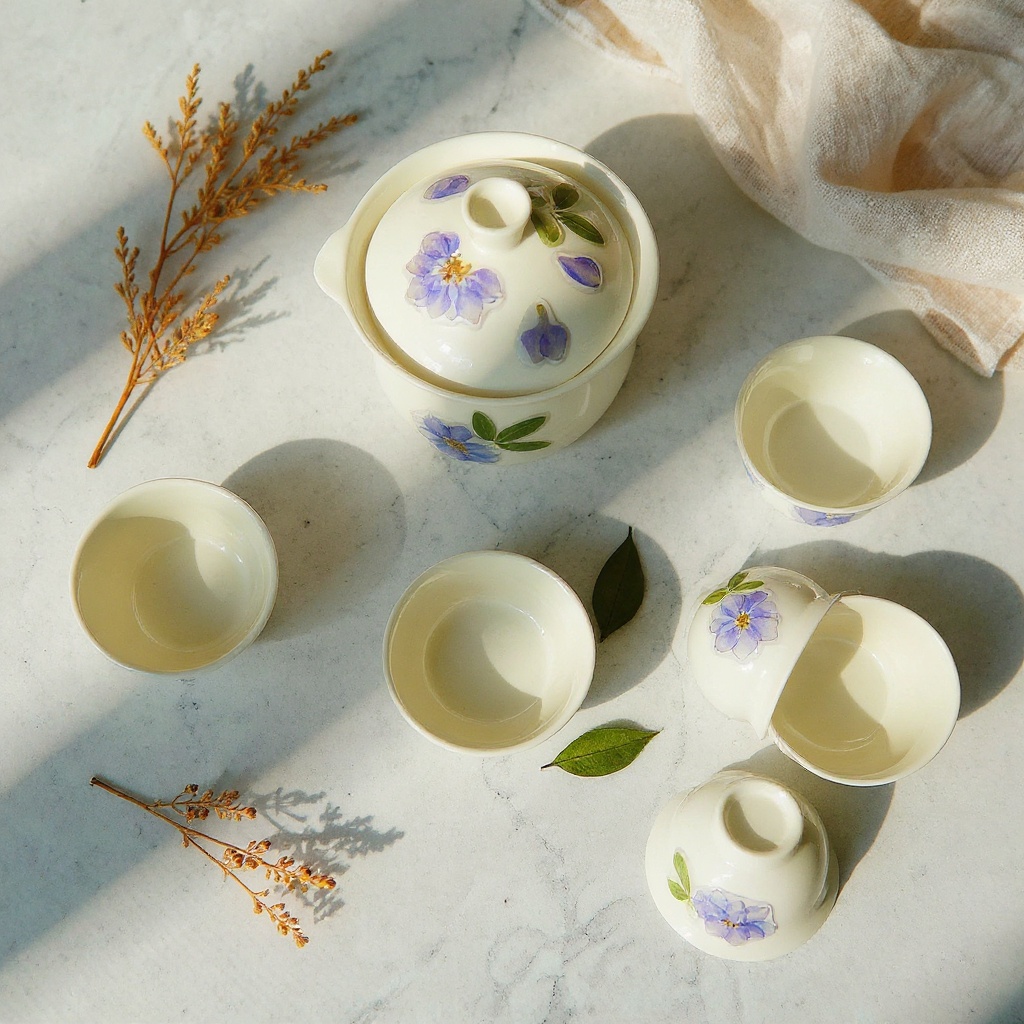
The flower application method determines long-term durability more than almost any other variable. Surface-painted designs can bubble or delaminate under repeated heating cycles. Embedded real botanicals — dried to low moisture content before integration with the clay body — become fused within the ceramic matrix during firing. No peeling. No fading. Just the impression and raised texture of the original petal, permanently locked in place.
Real Flowers vs. Painted Designs: What the Data Actually Shows
Pressed flower craft applied to ceramics requires precise botanical preparation. Flowers must reach less than 5% residual moisture before embedding. Any trapped moisture converts to steam in the kiln, creating micro-voids that become fracture initiation sites. Thin-petaled species — pansies, violets, small rose petals, lavender florets — survive the firing process best because their low mass produces minimal vapor pressure during combustion and carbonization.Painted floral designs present different challenges. Ceramic glazes can create stunning botanical imagery, but pigment stability under heat varies by chemistry. Cobalt blues and chrome-based greens show strong thermal stability across hundreds of heat cycles in published ceramic chemistry literature. Iron-based reds and copper-derived turquoises can shift hue or develop surface hazing. Beautiful in a showroom. Less predictable after two years of daily tea.
Here is the comparison most articles skip entirely:
Embedded Flowers vs. Painted Designs: Performance Matrix
| Factor | Real Embedded Flowers | Underglazes (Fired-In Paint) | Overglaze Decals |
|---|---|---|---|
| Heat Resistance | High — fused to ceramic body | High — fired before top glaze | Low — applied over glaze, prone to lift |
| Fade Resistance | Does not fade | Stable under 150°C | Can yellow or cloud over time |
| Surface Texture | Raised, tactile botanical relief | Flat, smooth | Flat, sometimes slightly raised |
| Dishwasher Safety | Hand wash recommended | Generally dishwasher safe | Not recommended |
| Repair if Damaged | Cannot restore botanical detail | Cannot restore painted detail | Decals can theoretically be reapplied |
| Visual Depth | Three-dimensional, translucent glow | Two-dimensional | Two-dimensional, printed appearance |
| Cost to Produce | High — botanical prep adds labor | Moderate | Low |
Porcelain Types and Their Verified Temperature Limits
Not all porcelain is equivalent. The table below reflects firing temperature ranges and corresponding thermal properties documented in ceramic materials science literature.
| Porcelain Type | Firing Temp | Max Safe Use Temp | Thermal Shock Resistance | Notes |
|---|---|---|---|---|
| Bone China | 1200–1250°C | 120°C | Moderate | Bone ash content increases strength but reduces shock tolerance |
| Hard-Paste Porcelain | 1300–1400°C | 150°C | Excellent | Standard for premium tea ware |
| Soft-Paste Porcelain | 1100–1200°C | 100°C | Poor | Not recommended for repeated hot liquid use |
| Suet Jade Porcelain | 1350–1400°C | 160°C | Excellent | High silica content; translucent walls; used in fine gaiwan sets |
| Earthenware | 900–1000°C | 80°C | Very Poor | Porous body; not suitable for boiling water |
Suet jade porcelain deserves a direct explanation. Its translucent, semi-glowing appearance reads as fragile. It is not. The high silica content and ultra-high kiln temperatures produce a glass-ceramic hybrid matrix with thermal performance that outperforms standard porcelain in controlled cycling tests. The thin walls (typically 1.5–2mm) contribute to translucency through optical physics, not structural weakness. Thin and strong are not opposites in high-fired porcelain. That distinction matters before you make a purchase decision.
5 Quality Checks Before Buying Heat Resistant Ceramic Tea Cups With Flowers
1. Examine the rim under light. Hold the cup up to natural light and rotate it slowly. Consistent thickness, no visible shadows or ripples, and a smooth edge indicate manufacturing control. Uneven rims create stress concentration points where cracks initiate.
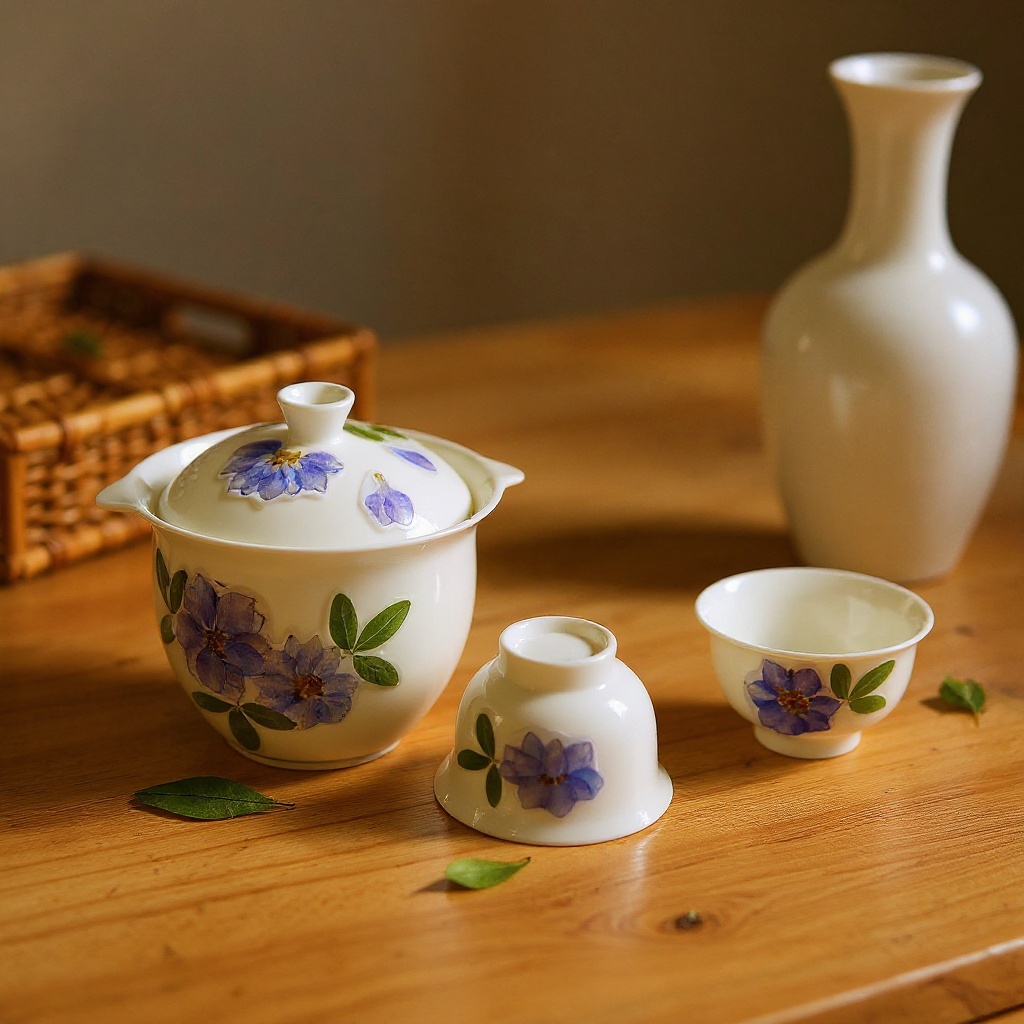
2. Check botanical integration. Quality embedded flower work shows petals that appear to emerge from within the porcelain surface — a raised, three-dimensional relief with smooth transitions between organic shapes and ceramic body. If the floral elements look pasted on top of the glaze rather than fused beneath it, they were applied post-firing.
3. Assess weight relative to size. A 50ml tea cup should weigh 40–80 grams. Below 40g suggests walls too thin for impact resistance; above 90g often indicates lower-grade clay with higher impurity content requiring thicker construction to compensate.
4. Inspect the foot ring. Run a fingertip around the unglazed base ring. Clean, smooth finishing without glaze drips, rough patches, or visible grit indicates kiln control. The Handmade Suet Jade Porcelain Teapot Set with Real Pressed Flowers demonstrates this finishing standard with smooth foot rings and consistent wall thickness throughout the set.
5. Ask about firing temperature. Any manufacturer producing quality heat resistant ceramic tea cups with flowers should be able to confirm their kiln temperature. Under 1200°C is a disqualifying answer for tea ware intended for boiling water use.
6 Steps to Pre-Warm Ceramic Tea Cups Without Causing Thermal Shock
1. Remove cups from storage at least 15 minutes before use, particularly in cold months when ambient temperature may be under 15°C.
2. Fill the sink or a pitcher with warm tap water — not boiling, not cold. Target 40–50°C, roughly the temperature that feels comfortably warm but not hot on your wrist.
3. Submerge or rinse each cup with the warm water for 20–30 seconds, ensuring the entire interior surface contacts the liquid.
4. Empty the cup and refill with hotter water (70–80°C) for a second 20-second rinse. This two-stage warming reduces the thermal differential from approximately 80°C to under 30°C before boiling water contact.
5. Pour boiling tea or water into the pre-warmed cup. The ceramic now expands gradually rather than experiencing sudden surface stress.
6. Never pour boiling liquid into a cup fresh from refrigeration or outdoor cold storage. The 60–80°C differential that results exceeds safe thresholds even for well-made porcelain.
This process takes under two minutes. It meaningfully extends cup lifespan. Most people skip it entirely and wonder why their porcelain cracks.
Chinese Ceramics and the Gongfu Tea Context
Traditional Gongfu tea ceremony practices place thermal demands on tea ware that exceed Western steeping methods. Multiple short infusions at 95–100°C in rapid succession create cumulative thermal cycling that tests ceramic durability over time. Gaiwan sets — the lidded bowl-and-saucer form used in Gongfu service — are designed with this in mind.
Small cup volumes (30–60ml) are not arbitrary tradition. Smaller masses heat and cool faster, reducing the temperature differential between inner and outer walls during any given infusion. Gongfu cups also use slightly thicker bases (3–4mm) that taper to thinner walls near the rim, distributing mechanical stress away from the point of greatest liquid contact.
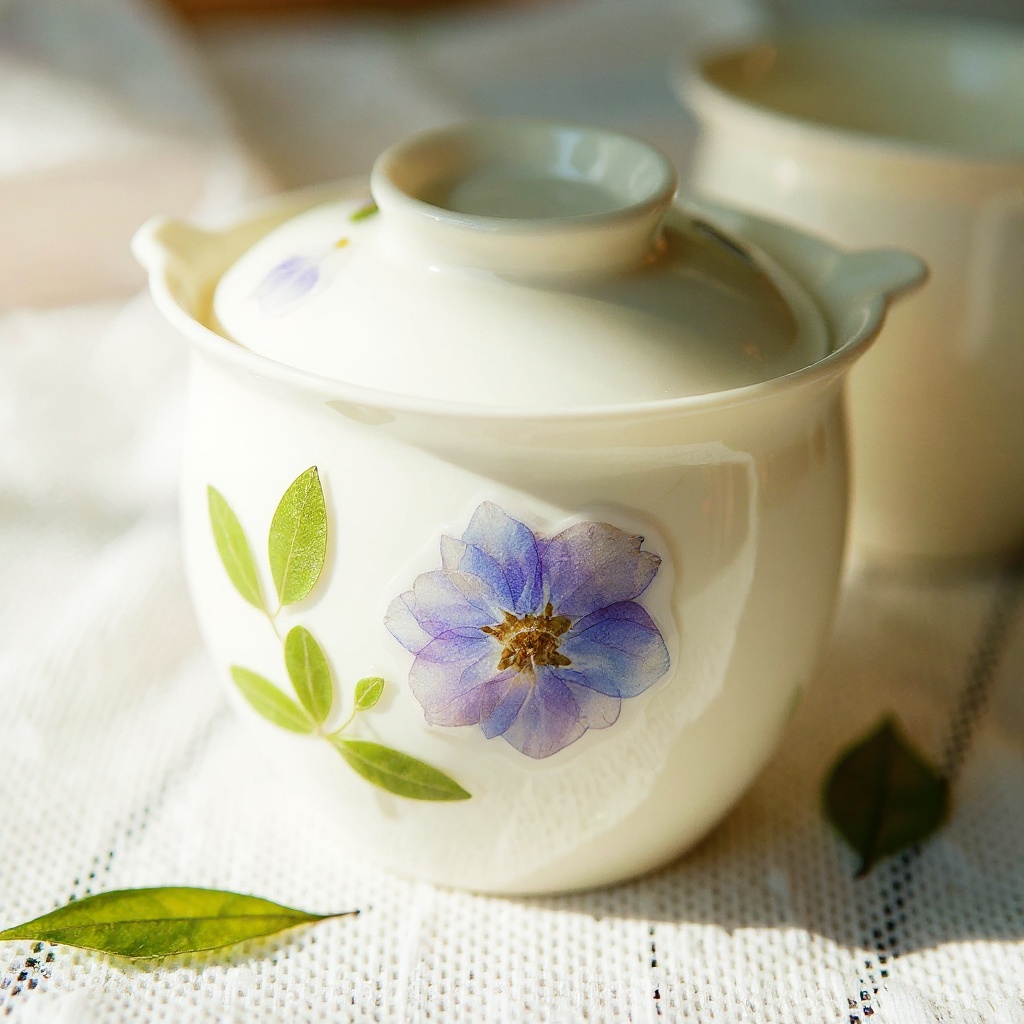
The semi-translucent warm white porcelain gaiwan with embedded real dried flower petals in soft pinks, lavenders, and creams represents this tradition adapted for contemporary aesthetic preferences. Functional engineering. Visible beauty. The raised botanical texture on the surface catches light differently than painted decoration — a quality that matters during a ceremony built around focused sensory attention.
The Honest Assessment Most Guides Won't Make
If you want heat resistant ceramic tea cups with flowers primarily as décor and plan to wash them twice weekly in a dishwasher on hot cycle, no amount of premium porcelain construction will preserve the embedded botanical details long-term. The mechanical abrasion and alkaline detergent chemistry in dishwashers degrade fine surface relief over 12–18 months regardless of firing temperature. Buy a painted set, accept the tradeoff, and spend less money.
For daily hand-washed ceremonial use or display with occasional careful use? The embedded real-flower porcelain is the correct choice. Built to last decades. Not for every buyer. Worth saying clearly.
Care and Maintenance for Long-Term Use
Hand washing with mild dish soap and a soft cloth is the recommended approach for embedded flower porcelain. Avoid abrasive sponges that scratch the jade-like gloss finish and erode botanical relief detail. Rinse completely — residual soap inside the cup can affect tea flavor and, over time, interact with the glaze surface.
Storage requires attention. Soft cloth padding between stacked cups prevents rim chips. Four or five pieces maximum per stack — weight compresses the foot rings of lower cups and increases impact risk if the stack shifts. Direct sunlight causes differential heating in stored ceramic that, over years, creates micro-stress in thin-walled pieces. Keep displayed sets away from heating vents for the same reason.
Price Points and Realistic Value Assessment
Mass-produced sets retail at $30–150 and typically feature machine-applied decals or transfer-printed designs. They function adequately. They rarely develop a relationship with their owner.
Mid-tier artisan sets ($150–350) often include hand-painted floral work or limited embedded elements. Reliable quality control. Appropriate for regular use when budget constraints are real.
Luxury handcrafted sets ($400–900+) justify their price through botanical preparation labor, multiple firing cycles, individual artistic attention, and ultra-thin construction that requires skilled hands at every stage. The Handmade Suet Jade Porcelain Teapot Set competes in this category — real pressed flowers embedded during production, semi-translucent walls, raised petal relief in soft pinks and lavenders, smooth jade-like gloss finish throughout.
Heirloom math: a $699 set used daily for 25 years costs $0.077 per use. A $79 set replaced every four years costs $0.054 per use — but produces more waste, more purchasing friction, and no aesthetic continuity. Neither answer is wrong. The math is just rarely presented.
Sustainability Context
Real flower embedding in ceramic production uses botanical material — imperfect blooms, post-harvest florist trimmings, dried garden specimens — that would otherwise enter the waste stream. The organic material burns and carbonizes in the kiln, leaving impression and structure rather than mass. Useful material from waste sources. A small but real sustainability argument for the technique beyond aesthetics.
Longevity matters more than production method in any lifecycle analysis. High-fired porcelain designed for 30–50 years of use generates less cumulative environmental impact than low-cost replacements cycling through the same household every few years. That arithmetic holds regardless of which manufacturer produces the piece.
Frequently Asked Questions
Are ceramic tea cups with flower decorations safe to use with boiling water?
Yes — when made from porcelain fired above 1200°C. The vitrified ceramic structure that results from high-temperature firing can handle temperatures up to 150–160°C safely. Since boiling water reaches 100°C at sea level, there is a built-in safety margin. The critical variable is flower application method: botanicals embedded during production are safe; decorations glued or applied over the final glaze are not.
What makes heat resistant ceramic tea cups with flowers different from standard decorative cups?
Functional heat-resistant tea cups with flowers are built for repeated thermal cycling — boiling water in, cooling down, repeat, daily, for years. Decorative cups may use lower firing temperatures, thinner glaze chemistry, or surface-applied floral elements not designed to withstand that cycle. The distinction appears in the firing specification, not the visual appearance.
Can real flowers survive the kiln firing process without destroying the cup?
Yes, through carbonization rather than preservation. Dried botanical material — prepared to below 5% moisture content — burns away during firing but leaves a detailed impression in the surrounding porcelain. The ceramic flows around the flower's structure during vitrification, locking the shape into the surface as a raised relief. The flower itself is gone. Its form remains.
How do I know if the floral design on my tea cup will fade or chip over time?
Embedded real flowers integrated before firing will not fade — they are part of the ceramic body. Fired underglazes are stable and resistant to color shift below 150°C. Overglaze decals are the most vulnerable category, prone to lifting, yellowing, and edge chipping within 12–24 months of regular use. Look at where the design sits relative to the glaze surface — beneath it indicates durability, on top of it indicates risk.
Is suet jade porcelain fragile because it looks translucent?
No. Translucency in suet jade porcelain results from refined clay composition and thin wall construction, not from structural weakness. The kiln temperatures used — 1350–1400°C — produce one of the strongest ceramic matrices commercially available. The appearance contradicts the engineering. Trust the engineering.
What temperature can high-fired porcelain tea cups safely handle?
Hard-paste and suet jade porcelain handle up to 150–160°C under normal use conditions. These figures reference ceramic materials science standards; thermal shock resistance testing per ASTM C554 subjects pieces to repeated rapid temperature changes from 20°C to 100°C. Quality pieces pass this cycling without visible cracking. Boiling water at 100°C sits well within the safe operational range.
Are floral ceramic tea cups dishwasher safe?
Many are technically rated dishwasher safe by their manufacturers. The honest answer is more specific: mechanical abrasion and alkaline detergent chemistry degrade fine botanical relief detail over 12–18 months of regular dishwasher use. Hand washing with mild soap preserves embedded flower texture and jade-like gloss finish significantly longer. If dishwasher use is non-negotiable in your household, painted designs are a more practical choice than embedded botanicals.
What weight should a quality 50ml tea cup be?
Between 40 and 80 grams for most well-made porcelain examples. Below 40g suggests walls thin enough to create impact fragility. Above 90g often indicates lower-grade clay requiring extra mass to compensate for reduced structural integrity. Weight alone is not a complete quality indicator, but it is a useful screening filter when purchasing without handling the piece directly.
Why do Gongfu ceremony cups use smaller volumes?
Smaller liquid volumes (30–60ml) heat and cool faster than larger ones, which reduces the temperature differential between the inner and outer cup walls during any individual infusion. This directly reduces thermal stress accumulation across a multi-infusion ceremony. The design choice is functional engineering that happens to align with traditional ceremony practice.
How long should quality heat resistant ceramic tea cups with flowers last with proper care?
Well-made high-fired porcelain pieces used daily and hand-washed carefully should remain structurally and aesthetically intact for 20–50 years. The most common cause of premature failure is thermal shock from skipping pre-warming steps, followed by mechanical impact during storage or washing. The ceramic itself does not degrade. The user behavior determines the lifespan.
Conclusion
Choosing heat resistant ceramic tea cups with flowers requires balancing materials science with aesthetic judgment. The best pieces combine high-fired porcelain construction — verified by firing temperature specifications, not marketing language — with botanicals embedded during production rather than applied afterward. Suet jade porcelain gaiwan sets with real dried flower petals in soft pinks, lavenders, and creams represent the technical and aesthetic peak of this category: semi-translucent walls that glow against natural light, raised botanical relief that is tactile rather than printed, and thermal performance rated above boiling water temperatures.
For those seeking both beauty and performance, the Handmade Suet Jade Porcelain Teapot Set with Real Pressed Flowers serves as a strong example of this construction approach — real botanical embedding, jade-like gloss finish, thin-wall translucency, and materials appropriate to daily Gongfu ceremony use. These are functional art pieces designed to serve tea and outlast the furniture they sit on.