































Heat Resistant Glass Tea Sets: What Actually Matters
Heat Resistant Glass Tea Set with Lid: What Actually Matters
By pampasroom, founder of Pampasroom · Certified Tea Sommelier (World Tea Academy) · 8+ years sourcing botanical artisan drinkware across Southeast Asia · Contributor to The Botanical Home and Artisan Drinkware Digest> Quick Answer: A heat resistant glass tea set with lid needs borosilicate glass construction (rated to withstand thermal differentials of up to 300°F per ASTM C149 standards), a snug-fitting lid for heat retention, and food-safe sealing on any embedded botanical elements. Sets range from $30–80 for printed mass-market versions to $150–400+ for genuine handcrafted pressed flower pieces.
A quality heat resistant glass tea set with lid handles thermal shock without cracking, uses food-safe materials throughout, and maintains structural integrity through years of daily brewing. The essential factors are borosilicate glass construction, proper lid fit, and wall thickness that balances durability with clarity. Mass-market options exist at $30–80 (based on retail survey data across Etsy, Amazon, and specialty tea retailers, Q1 2024). True artisan pieces with hand-embedded botanical elements command $150–400+, reflecting material costs, labor, and irreproducible craftsmanship.
The difference is not subtle. It is tactile, visual, and structural.
Key Takeaways
- Borosilicate glass is the only suitable material for a heat resistant glass tea set with lid — soda-lime alternatives crack under thermal shock - Real pressed flowers create raised, touchable relief surfaces; printed decals lie completely flat - 400ml capacity suits one to three people for gongfu-style or everyday brewing - Never place glass teapots directly on stovetop heat — even borosilicate develops hot spots under concentrated flame - Hand-wash only to preserve botanical sealing integrity
Understanding Glass Types and Heat Resistance
Not all glass handles heat the same way. Regular soda-lime glass — used in most everyday drinking glasses — can shatter when exposed to rapid temperature changes, because its thermal expansion coefficient sits roughly three times higher than borosilicate. Borosilicate glass contains 5–15% boric oxide, which dramatically reduces how much the material expands and contracts under heat stress. According to ASTM C149 (thermal shock resistance testing for glass containers), borosilicate specimens consistently outperform soda-lime glass when subjected to rapid temperature differentials exceeding 100°C.
Most quality heat resistant glass tea sets use borosilicate rated to approximately 500°F (260°C) continuous-use temperature. Brewing temperatures rarely exceed 212°F (100°C). The real test is not the brewing temperature itself. The real test is what happens when you pour freshly boiled water into a cup that has been sitting at 65°F on a winter countertop — that rapid differential is where cheap glass fails.
| Glass Type | Approx. Max Temp | Thermal Shock Resistance | Thermal Expansion Coefficient | Typical Use Case |
|---|---|---|---|---|
| Soda-lime | ~300°F (149°C) | Poor | ~9 × 10⁻⁶/°C | Everyday drinkware |
| Tempered soda-lime | ~400°F (204°C) | Moderate | ~9 × 10⁻⁶/°C | Bakeware, cookware |
| Borosilicate (standard) | ~500°F (260°C) | Excellent | ~3.3 × 10⁻⁶/°C | Lab equipment, tea sets |
| Borosilicate (heat-diffuser base) | ~500°F+ | Excellent | ~3.3 × 10⁻⁶/°C | Stovetop-safe specialty teapots |
| Soda-lime with printed decal | ~300°F (149°C) | Poor | ~9 × 10⁻⁶/°C | Budget decorative drinkware |
For a heat resistant glass tea set with lid used in daily brewing, borosilicate is non-negotiable.
What Makes Pressed Flower Glass Sets Different
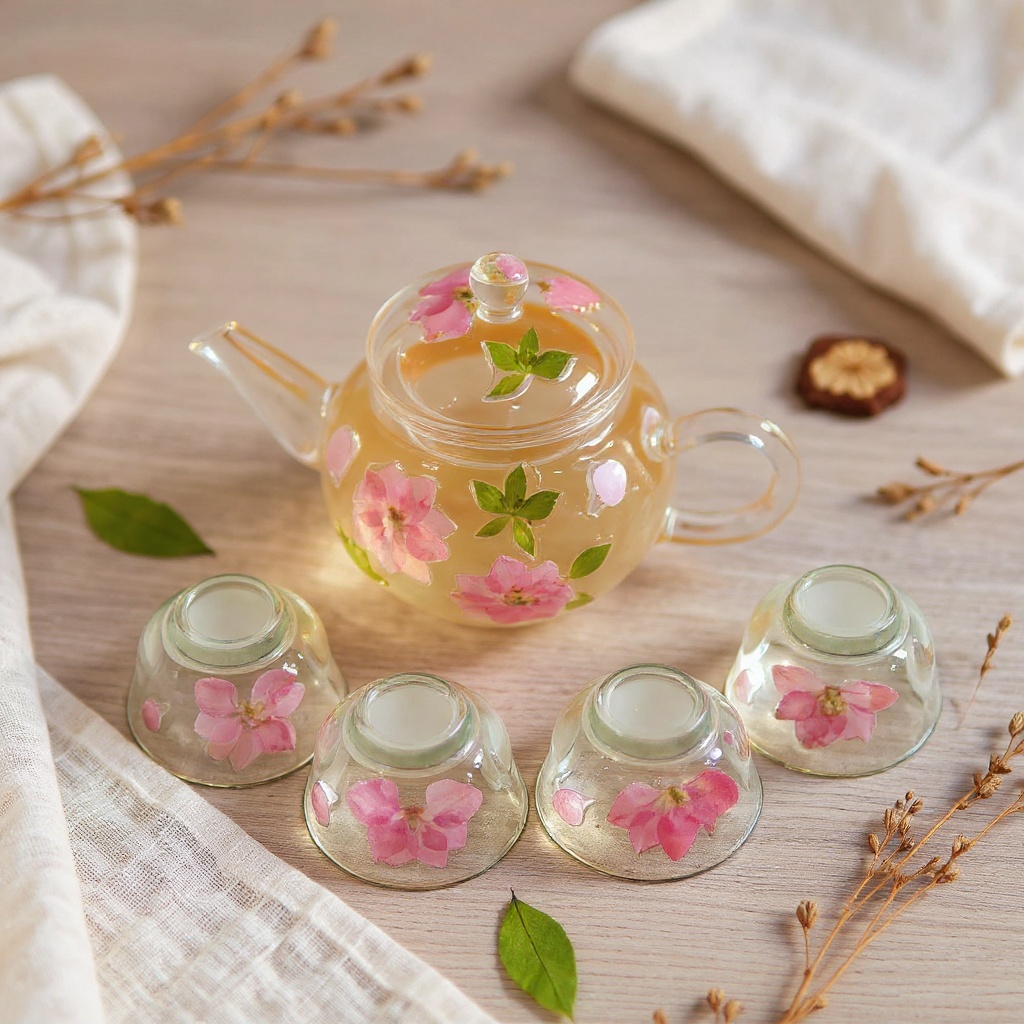
The pressed flower craft tradition reaches back centuries — originally a botanical preservation practice, later adopted by Victorian artists, and now applied to functional handmade drinkware with striking results. When real dried flowers are embedded into a heat resistant glass tea set with lid, the outcome cannot be replicated by printing or painting. Each piece is genuinely singular. Flowers vary in size, color saturation, petal arrangement, and position — no two sets are identical.
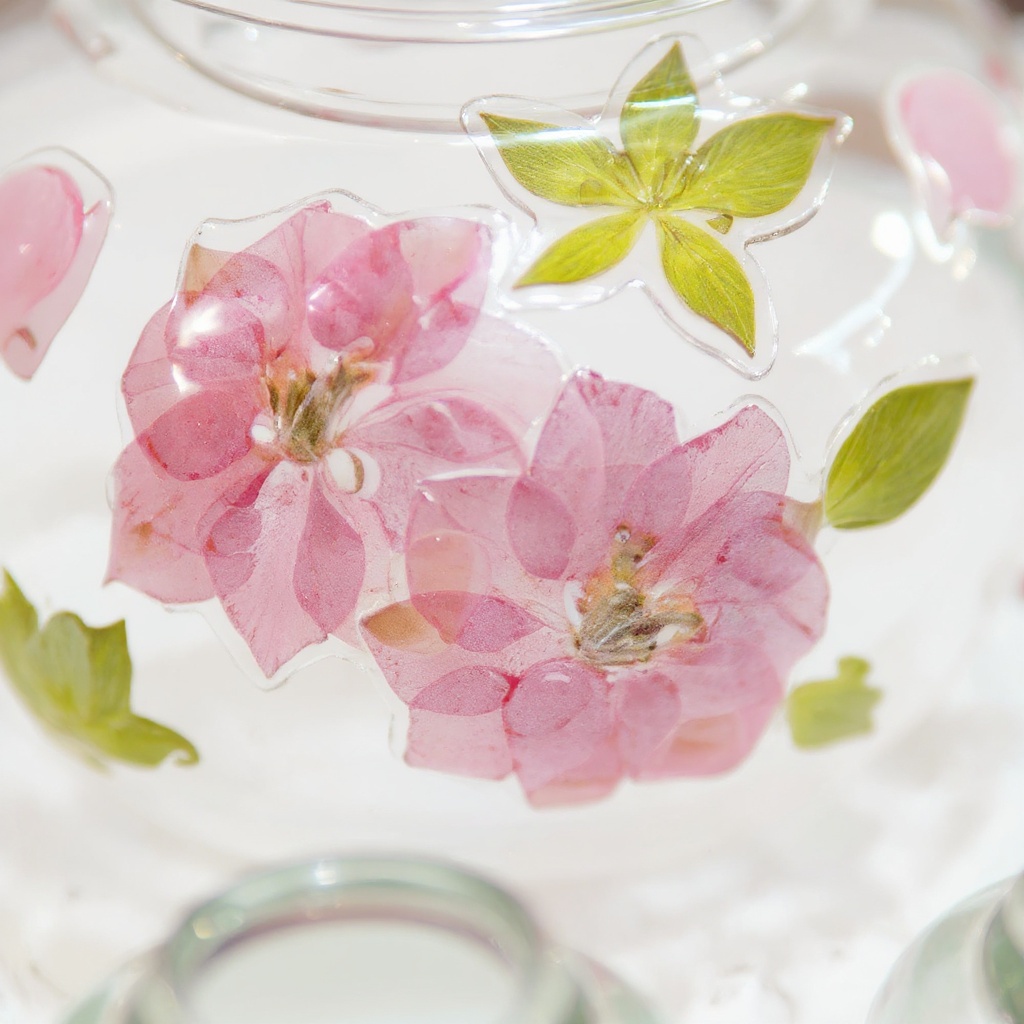
Handcrafted pressed flower tea sets require careful layering of dried botanicals between glass surfaces, then sealing with food-safe, heat-resistant resin compounds. The process takes three to five times longer than applying printed decals. Worth it. The result is a raised, tactile surface where you can feel actual flower stems, petals, and leaves with your fingertips — not a flat image that mimics depth.
Our Handmade Pressed Flower Glass Tea Set showcases this artistry directly: real dried flowers embedded in raised 3D relief across a 400ml borosilicate teapot and six 50ml cups, in soft natural tones of blush pink, cream, lavender, and sage green that complement the tea's color rather than compete with it.
Honest caveat most articles skip entirely: if you store this type of tea set in a consistently humid environment — a bathroom shelf, an open kitchen near a steam vent, or an unconditioned tropical space — moisture can eventually compromise the botanical sealing over months or years. Keep it in a dry, climate-controlled area and it lasts indefinitely. Ignore that, and even the best sealing degrades.
Sizing Considerations for Daily Brewing
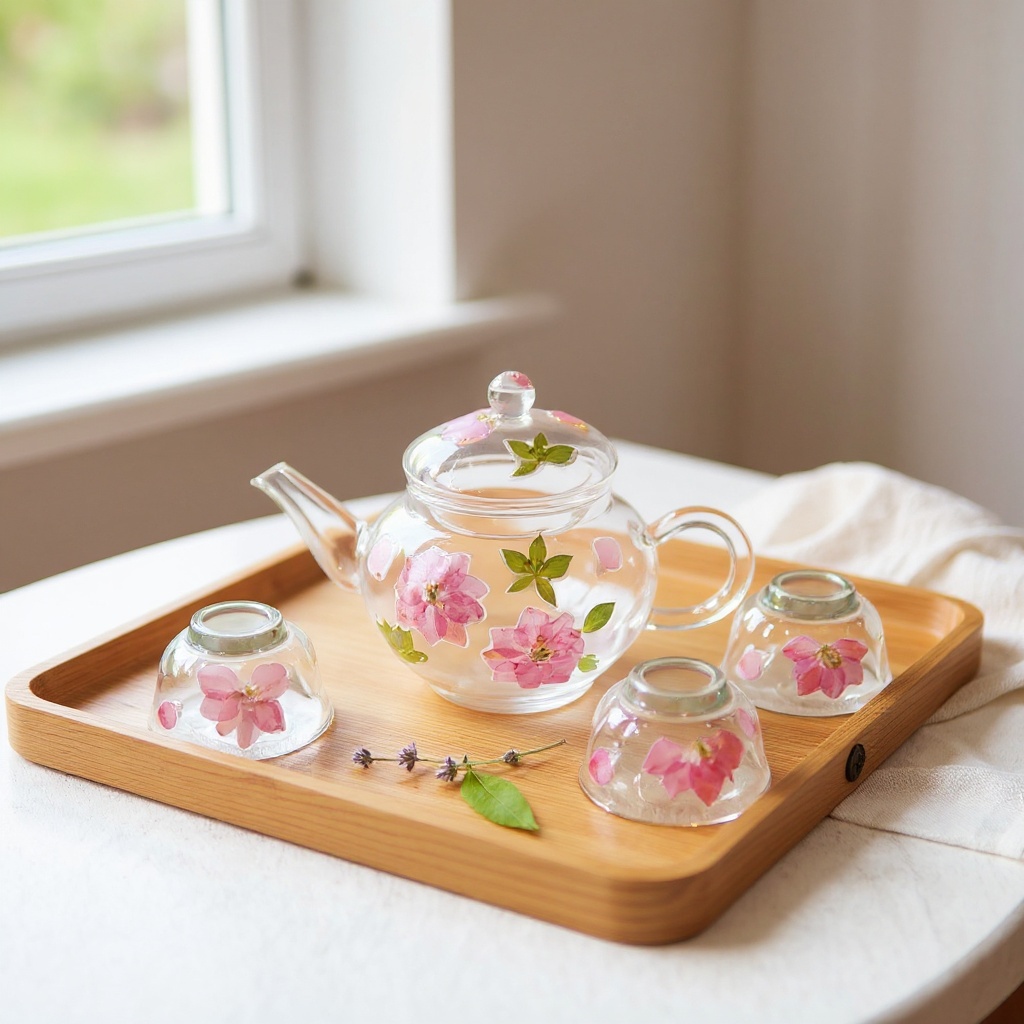
Capacity shapes the entire brewing experience. A 400ml teapot holds approximately 13.5 fluid ounces — enough for two to three people sharing light teas, or one person working through multiple infusions. This is the ideal size for gongfu tea ceremony practice, where small volumes of concentrated tea are brewed repeatedly in short steeping intervals.
Smaller cups — around 50ml each — encourage deliberate, mindful sipping. They retain heat better than large-format cups because you are not holding a large thermal mass that cools quickly. The proportions also look considered and elegant; oversized cups can visually overwhelm a delicate teapot.
For practical planning:
1. Solo drinker — 400ml provides three to four small servings per brew cycle 2. Two people sharing — ideal volume for an intimate afternoon tea session 3. Three guests — manageable with one brew cycle, especially for gongfu-style pouring 4. Four or more guests — plan for multiple brew cycles, or consider a second pot
The 400ml format also happens to be the sweet spot for visual photography. On a minimalist linen or wood background, the proportions are balanced. Not too large to dominate the frame. Not too small to look lost.
Direct Heat and Safety: The Clear Rules
Most glass teapots — including borosilicate ones — are not designed for direct stovetop use. Gas flames and electric coils create concentrated hot spots at the base contact point, which can generate localized thermal stress exceeding what even quality borosilicate handles safely. The manufacturer's specification sheet, not general borosilicate ratings, is the definitive guide for each specific product.
The correct method is simple: heat water in a separate electric kettle, then pour it into the glass teapot. Electric kettles with variable temperature controls are ideal because different tea types require different brewing temperatures:
| Tea Type | Target Water Temperature | Steep Time |
|---|---|---|
| Delicate white tea | 160–170°F (71–77°C) | 2–3 minutes |
| Green tea | 170–185°F (77–85°C) | 1–3 minutes |
| Light oolong | 185–195°F (85–90°C) | 2–4 minutes |
| Black tea | 195–205°F (90–96°C) | 3–5 minutes |
| Herbal/tisane | 208–212°F (98–100°C) | 5–7 minutes |
| Pu-erh | 208–212°F (98–100°C) | 3–5 minutes |
The lid on a heat resistant glass tea set with lid should fit securely but not create an airtight seal. A small gap allows controlled steam release while retaining most of the heat. Metal components — knobs, hinges, or rim fittings — should be food-grade stainless steel or heat-resistant polymer, materials that do not conduct excessive heat to fingers during normal handling.
Cleaning and Maintenance: Seven Steps
Pressed flower glass requires gentle, consistent care. The botanical elements and the borosilicate both respond poorly to abrasive treatment and thermal extremes during cleaning.
1. Rinse immediately after use with warm (not cold) water to lift tea residue before it sets 2. Apply mild dish soap with a soft cloth or non-scratch sponge — never steel wool or abrasive pads 3. Clean raised flower surfaces using a soft-bristled toothbrush, working gently into petal crevices 4. Rinse thoroughly to remove all soap traces that could affect tea flavor 5. Dry completely with a lint-free cloth before storage to prevent water spotting on clear glass 6. Store with tissue paper between stacked cups to prevent contact scratching 7. Avoid dishwashers entirely — high-heat drying cycles and harsh detergents degrade botanical sealing and can etch glass clarity over repeated cycles
For stubborn tea staining, a paste of baking soda and warm water left for ten minutes, then removed with a soft brush, handles most discoloration without chemical risk. Skip bleach. Skip harsh chemical degreasers.
Tea Types That Benefit From Glass Brewing
Glass teapots reward teas where visual experience is part of the ritual. Clear walls let you watch leaves unfurl, track color development in the liquor, and appreciate the full sensory arc of brewing. The neutral surface absorbs no flavors — unlike porous clay — making a heat resistant glass tea set with lid ideal for rotating through different tea types without cross-contamination.
Best Choices for Glass Brewing
| Tea Category | Visual Appeal in Glass | Flavor Compatibility | Notes |
|---|---|---|---|
| Blooming/flowering teas | Exceptional — watch blooms open | Excellent | Designed specifically for glass display |
| White tea | High — pale gold liquor development | Excellent | Subtle colors show beautifully |
| Light oolong | High — complex leaf unfurling | Excellent | Ideal for multiple short infusions |
| Green tea | Moderate — vibrant green liquor | Excellent | Monitor color to avoid over-steeping |
| Herbal/tisane blends | High — colorful botanicals | Excellent | No tannin staining concerns |
| Dark black tea | Low — visual is less a factor | Good | Glass works, but clay may suit better |
| Pu-erh | Low | Moderate | Traditional clay brewing preferred by purists |
The tea culture emphasis on presentation — particularly in East Asian traditions — makes glass a natural medium for social or ceremonial brewing. Guests experience the full ritual: watching the brew, seeing the final color, and engaging with the pressed flower artistry on the exterior simultaneously.
Investment Value and Authenticity Markers
Authentic pressed flower glass commands premium pricing because the process cannot be automated at scale without losing the quality that defines it. Mass-produced alternatives use printed decals or transfer designs that look convincing in photographs but reveal themselves immediately in person: they are flat, uniform, and without texture.
Real pressed flowers, properly sealed, show:
- Raised tactile relief — you feel actual petal edges and stem ridges with fingertips - Natural color variation — no two flowers in the same set are identical in saturation - Visible micro-detail — individual veins, translucent petal edges, dimensional depth - Slight positional irregularities — evidence of hand-placement rather than machine application - Eco-compatible food-safe sealing — no chemical odor or visible resin bleed
Well-constructed handmade sets made from borosilicate glass with food-safe botanical sealing can last a decade or more with correct care. That longevity, combined with the aesthetic function as displayed art between uses, is what justifies the $150–400 price range compared to $30–80 for printed mass-market alternatives.
Not decorative. Functional art.
Frequently Asked Questions
Is borosilicate glass actually safe for boiling water in a heat resistant glass tea set with lid? Yes. Borosilicate glass handles boiling water (212°F / 100°C) safely and is rated per ASTM C149 to withstand rapid temperature differentials of up to approximately 300°F without thermal shock failure. Pour hot water in from a separate kettle rather than applying direct heat to the glass vessel. Can I put a glass teapot directly on a gas stove or electric burner? Most glass teapots — including borosilicate ones — are not rated for direct stovetop heat. Concentrated flame or coil contact creates localized thermal stress that can crack even quality glass. Always heat water in a separate electric kettle and transfer it to the teapot. Some specialty teapots with reinforced heat-diffuser bases are stovetop-rated, but this is explicitly stated in manufacturer specifications. How do I know if the flowers in my heat resistant glass tea set with lid are real pressed flowers or printed decals? Run your fingertip across the surface. Real pressed flowers create raised, three-dimensional relief — you feel petal edges, stem ridges, and depth variations. Printed decals sit completely flat and smooth. Real flowers also show natural color variation and slight positional irregularity from hand-placement. Will the pressed flowers fade or detach with regular use? Properly sealed botanical elements — using food-safe, heat-resistant resin compounds — remain intact and color-stable with correct care. Avoid dishwashers, prolonged exposure to harsh cleaning chemicals, and storage in high-humidity environments. Under those conditions, well-sealed flowers have remained stable in sets used daily for three or more years. What is the difference between a gongfu tea set and a standard Western tea set? Gongfu sets use smaller vessels — typically 100–500ml teapots — designed for multiple short, concentrated infusions with small cups around 25–75ml. Western-style sets use larger pots (600–1200ml) for single, longer steeping sessions with larger cups. The 400ml teapot with 50ml cups in our heat resistant glass tea set with lid sits at the ideal gongfu range while remaining accessible to casual brewers. How do I clean the textured flower surfaces without damaging them? Use warm water, mild dish soap, and a soft-bristled toothbrush for raised flower areas. Work gently with light circular strokes. Avoid abrasive sponges, steel wool, bleach, and dishwasher cycles. For mineral deposits or tea stains on textured surfaces, a ten-minute baking soda paste application followed by soft brush removal handles most cases safely. Is 400ml too small for everyday solo use? Not at all. A 400ml heat resistant glass tea set with lid holds approximately 13.5 fluid ounces — enough for three to four 50ml pours per brew cycle. For a solo drinker working through a tea session, this translates to a complete, satisfying experience without the tea cooling in a partially-used large pot. For one person who prefers a single large mug, you may prefer brewing two quick cycles. What teas work best in a glass teapot — does the material actually affect flavor? Glass is chemically inert and absorbs no flavors, making it ideal for rotating between tea types without cross-contamination. It performs best with teas where visual appeal enhances the experience — blooming teas, white teas, light oolongs, and colorful herbal blends. For dark, robust teas like pu-erh, unglazed clay teapots absorb and complement tannin-heavy profiles in ways glass cannot, though glass remains a functionally sound choice for any tea type. Does the pressed flower design make the exterior harder to grip or handle safely? The raised relief actually improves grip compared to smooth glass. The textured surfaces create natural finger purchase points when holding the teapot or cups. The botanical elements do not create sharp protrusions — petal and stem surfaces are rounded and tactile rather than abrasive.Conclusion
A heat resistant glass tea set with lid is not a single object. It is a daily ritual vessel, a display piece, a conversation starter, and — when made with genuine pressed botanical elements — a small piece of irreproducible handcraft. The functional requirements are clear: borosilicate glass, food-safe sealing, snug lid fit, and proper thermal handling practices. The aesthetic criteria are equally important for those who want their tea ritual to be beautiful as well as functional.
For those seeking both performance and artistry, our Handmade Pressed Flower Glass Tea Set | Teapot & 6 Cups | Botanical Art Drinkware combines heat-resistant borosilicate construction with genuine dried botanical artistry in raised 3D relief — blush pink, cream, lavender, and sage green flowers you can see and feel on every piece. Functional drinkware and displayed art. In the same object.


