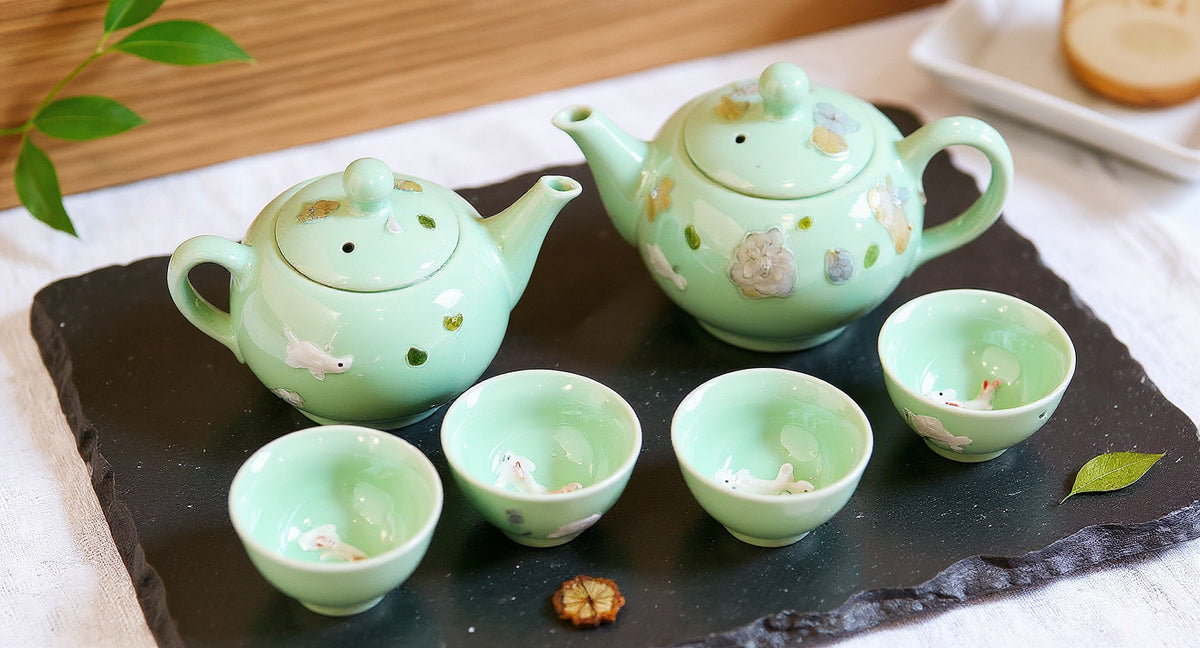
A high-fired porcelain tea set can last for years of regular use when the clay body is properly vitrified, the glaze is intact, and the decorative work stays out of the brewing path. A six-cup set lasts best when it is treated as gongfu ware for short, repeated pours rather than as a miniature version of a large Western tea service.
The practical test is straightforward: inspect the glaze, understand the pot-to-cup volume, and be cautious around any added botanical or resin detail. A well-made set should make tea service slower and more deliberate, not make cleaning or food safety uncertain.
High firing creates a dense tea vessel, not an indestructible one
Porcelain is a ceramic, but it is generally made from a finer, more vitrified clay body than ordinary earthenware. High firing helps reduce porosity, strengthens the body, and gives porcelain its clean, non-absorbent drinking surface. The broader history of Chinese ceramic production includes many firing methods and clay bodies, so the word “ceramic” alone doesn't say much about how a tea set will perform.
What matters in day-to-day use is the finished surface. A fully glazed porcelain interior is easy to rinse after green tea, oolong, black tea, or herbal infusions because it does not intentionally absorb flavor in the way an unglazed clay pot can. That makes porcelain a sensible choice for someone who drinks several tea types from the same vessel.
High firing also has limits. It does not make a thin teapot immune to thermal shock, impact, or a hard knock against a stone counter. Porcelain can survive regular use beautifully, then fail from one abrupt temperature change. Never pour boiling water into a pot that has just come from a cold cupboard or rinse a hot pot under cold tap water.
A useful inspection routine takes less than a minute:
1. Hold each cup under bright, indirect light and look for hairline cracks around the rim and base. 2. Run a clean fingertip around the lip of the cup to check for chips or rough glaze edges. 3. Examine the teapot lid seating. It should rest securely without a pronounced wobble. 4. Check the spout and handle junctions, where impact damage often begins. 5. Look closely at raised decoration to confirm it remains sealed and has no lifting edges. 6. Stop using any vessel that develops a crack through the drinking surface or a sharp chip on the rim.
Celadon refers to a family of ceramic glazes associated with iron-based coloration and a long East Asian ceramic tradition. The reference entry on celadon is useful background because celadon describes glaze tradition rather than a guarantee of one exact clay formula, firing schedule, or durability level.
A 200 ml pot serves a gongfu table, not six mugs
A high fired porcelain tea set 6 cups format is designed for repeated rounds of small pours. It is not meant to fill six large cups in one pass.
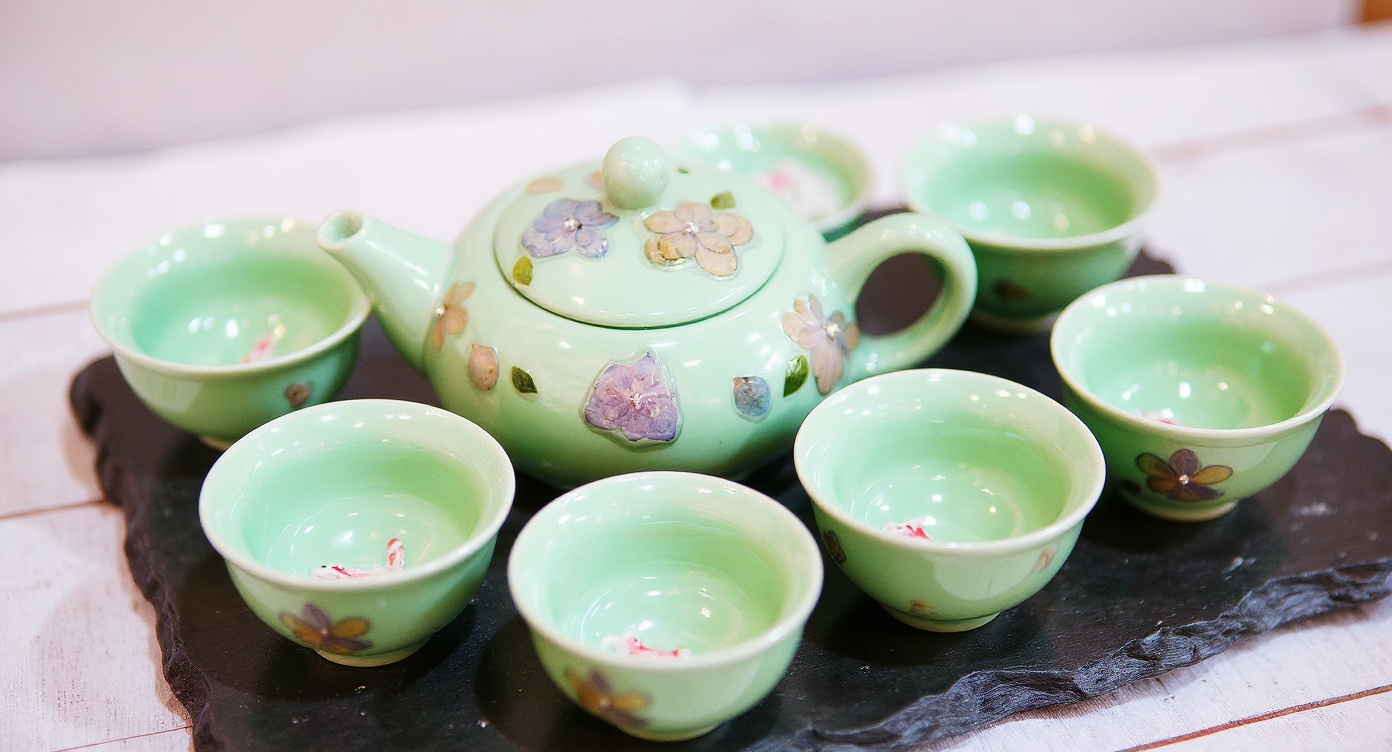
The arithmetic makes that clear. A teapot holding about 200 ml can theoretically fill four 45 ml cups with roughly 20 ml left over. Six 45 ml cups hold 270 ml in total, which is 70 ml more than the stated teapot capacity. Once leaves expand inside the pot, the practical yield per infusion may be a little lower still.
That isn't a flaw. Gongfu tea service is based on multiple short infusions, often served in rounds. The pot is refilled, steep times are adjusted, and guests taste how the tea changes from one infusion to the next. The small cup is part of the method. The gongfu tea ceremony reference describes a tea practice centered on controlled brewing and concentrated appreciation rather than one oversized pour.
For two people, a 200 ml pot is generous. For four people, it works well when cups are passed and refilled in sequence. For six people, it suits a slower gathering where each person receives smaller servings over several rounds. It won't suit a host who needs six full servings simultaneously or wants a pot that can serve a long breakfast table without refilling.
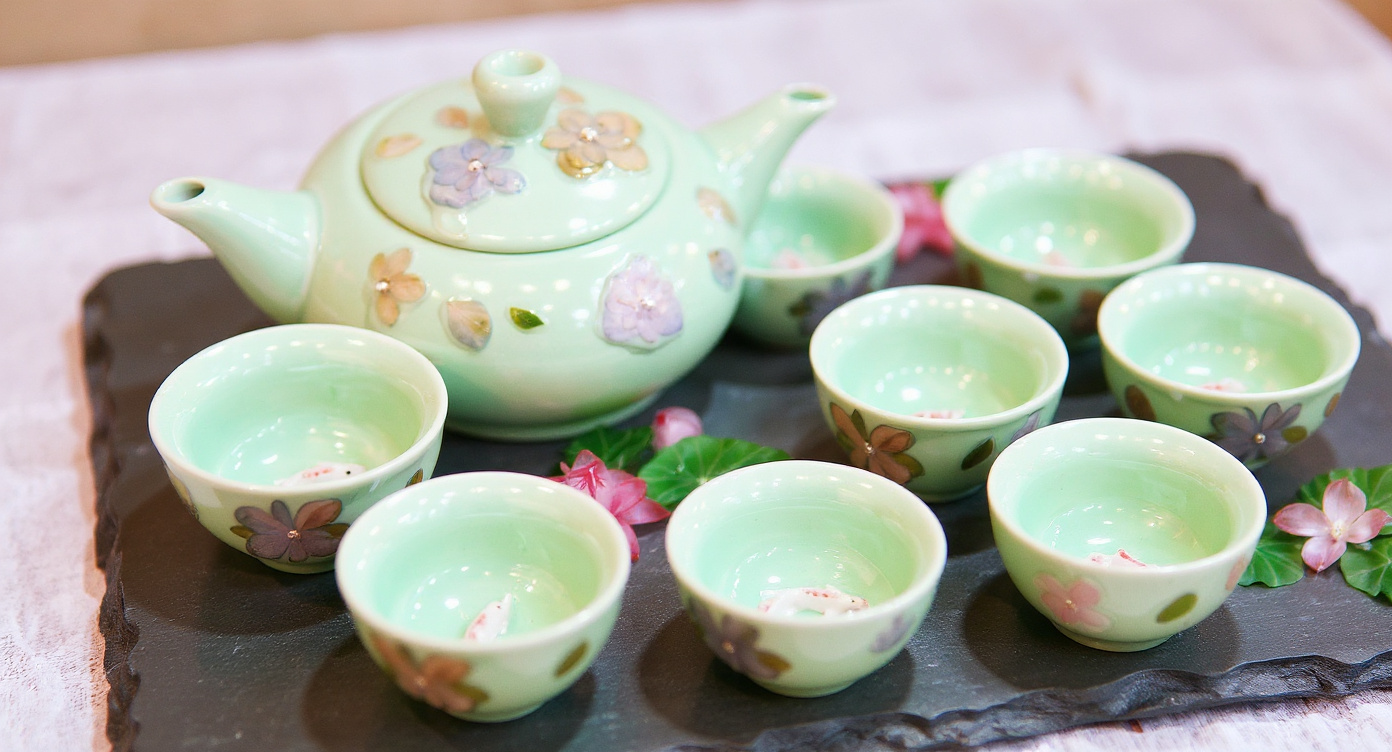
The Handmade Celadon Tea Set 3D Koi Fish Porcelain Teapot & 6 Cups follows this small-pour format: one approximately 200 ml teapot and six approximately 45 ml cups. Each cup includes a sculpted koi inside the bowl, an element that becomes more noticeable as tea fills the cup and the surface reflection changes.
Pressed flowers need a sealed, exterior-only role
Real flowers on tea ware need more scrutiny than printed decoration. A printed floral decal sits under or within a fired glaze system. Pressed petals are organic material, so they require a protective layer that prevents direct exposure to moisture, cleaning agents, and handling.
On this set, winter jasmine petals are hand-embedded on the exterior and sealed in food-safe eco-resin. The location matters. The flowers are not in the cup interior where tea sits, and they are not described as part of the pouring path. That is the appropriate arrangement for botanical embellishment on functional tea ware.
“Food-safe” should not be interpreted as permission to treat resin like fired porcelain. The glazed porcelain interior can be rinsed normally after tea. The floral exterior should be cleaned gently, without abrasive pads, prolonged soaking, dishwasher heat, or harsh degreasers. Raised areas are more vulnerable to abrasion than a flat glaze, even when the resin seal is smooth.
Resin-sealed flowers also create a practical ownership trade-off. They add material complexity and tactile texture, but they require more careful washing than plain porcelain. A buyer looking for machine-wash convenience should choose undecorated, fully glazed porcelain instead. A buyer who values real botanical material and is willing to hand wash has a stronger reason to choose a set with sealed petals.
There is no reliable shortcut for judging a botanical finish by appearance alone. The questions worth asking are specific:
- Are the flowers beneath a continuous seal? - Is the decoration confined to the exterior? - Does the maker identify the seal as food-safe? - Are there exposed petal edges, cracks, or lifting areas? - Does the care method avoid dishwasher heat and abrasive scouring?
If the resin surface becomes cloudy, cracked, sticky, or detached, the piece should be removed from beverage service until its condition can be assessed. Decorative damage is not merely cosmetic when the finish is part of a sealed botanical construction.
Plain porcelain wins on convenience, while botanical ware wins on character
The sensible comparison is not “cheap versus expensive.” It is plain utility versus labor-intensive decoration, smaller-format brewing, and collectible details. Mass-produced sets can be perfectly serviceable. They are usually the better pick for daily office tea, crowded households, or situations where dishwasher use matters more than hand-finishing.
| Tea set type | Typical stated price range | What it usually prioritizes | Main compromise |
|---|---|---|---|
| Mass-produced Chinese porcelain set | $30–$150 | Easy replacement, standard shapes, broad availability | Less material or decorative individuality |
| Mid-range artisan set | $200–$400 | Smaller-batch workmanship and more distinctive forms | May still use conventional surface decoration |
| Handcrafted botanical or 3D koi set on Etsy | $300–$600 | Decorative complexity and gift appeal | Price and finish quality vary widely by seller |
| This 200 ml pot with six 45 ml cups | varies by seller | High-fired celadon porcelain, sealed real pressed flowers, sculpted cup interiors | Requires gentle hand washing and slow-pour service |
A high fired porcelain tea set 6 cups arrangement is more likely to pay off for someone who actually enjoys repeated infusions, serves two to six people in small rounds, and accepts that delicate exterior work needs a softer cleaning routine. It is less compelling for large-volume breakfast tea, children’s use, restaurant turnover, or any setting where a dropped cup is an ordinary weekly event.
The 3D koi detail has a different role from the pressed flowers. It sits inside each cup and becomes part of the tea-drinking moment rather than part of the exterior display surface. Koi are deeply established in ornamental pond culture and art, and the background on koi explains their long cultural association with domesticated carp. The detail here is sculpted rather than cartoon-printed, which matters because it keeps the cup usable as a small tea vessel rather than turning it into novelty ware.
FAQ: safety, cup size, and care
Is high-fired porcelain safe for tea?
High-fired porcelain is generally a suitable material for tea when the drinking surface is fully glazed, intact, and made for food contact. The key checks are a smooth interior glaze, no cracks through the cup bowl, and no chips on the rim. For this set, the winter jasmine and eco-resin are on the exterior, while tea contacts the porcelain interior.
What is the difference between porcelain and ceramic tea sets?
Porcelain is a type of ceramic. In practical tea use, porcelain is often denser, finer, and less porous than low-fired earthenware. “Ceramic” is a broad category that can include earthenware, stoneware, and porcelain, each with different firing ranges, clay bodies, and glaze behavior.
Why are gongfu tea cups so small?
Small cups support concentrated tea, short infusions, and repeated tasting. A 45 ml cup lets the drinker notice changes in aroma, texture, and bitterness from infusion to infusion without committing to a large volume that cools before it is finished.
How many people does a 200 ml teapot serve?
A 200 ml teapot fills about four 45 ml cups in one full pour before allowing for tea leaves and normal pouring loss. It can still serve six people in gongfu style because tea is poured in multiple rounds. For six full portions at once, a larger pot is needed.
Can porcelain tea sets go in the dishwasher?
Plain, fully glazed porcelain is often more dishwasher-tolerant than decorated tea ware, but dishwasher suitability should only be claimed when the maker states it. This set has sealed real flower petals on the exterior, so hand washing is the sensible choice. Dishwasher heat, detergent, and contact with other items can wear raised resin decoration over time.
How do you clean a tea set with raised floral decoration?
Rinse the porcelain interior soon after use with warm water. Wipe the floral exterior gently with a soft damp cloth or a soft sponge, then dry it without rubbing aggressively over raised areas. Avoid soaking, scouring pads, bleach, strong citrus cleaners, and abrasive powders.
Are resin-sealed pressed flowers food-safe on tea ware?
They can be appropriate when the resin is identified as food-safe, the flowers are completely sealed, and the botanical work is kept away from the drinking surface and pouring path. The pressed winter jasmine on this set is described as exterior decoration sealed in food-safe eco-resin. If the seal is cracked or peeling, the affected piece should not continue in normal beverage use.
Will the koi detail make the cups hard to clean?
A sculpted detail in the cup bowl needs a little more attention than a completely flat interior. Rinse immediately after tea, use a soft sponge if needed, and avoid hard brushes that could scrape the glaze around the raised form. Tea residue is easiest to remove before it dries.
A better fit for slow tea than high-volume hosting
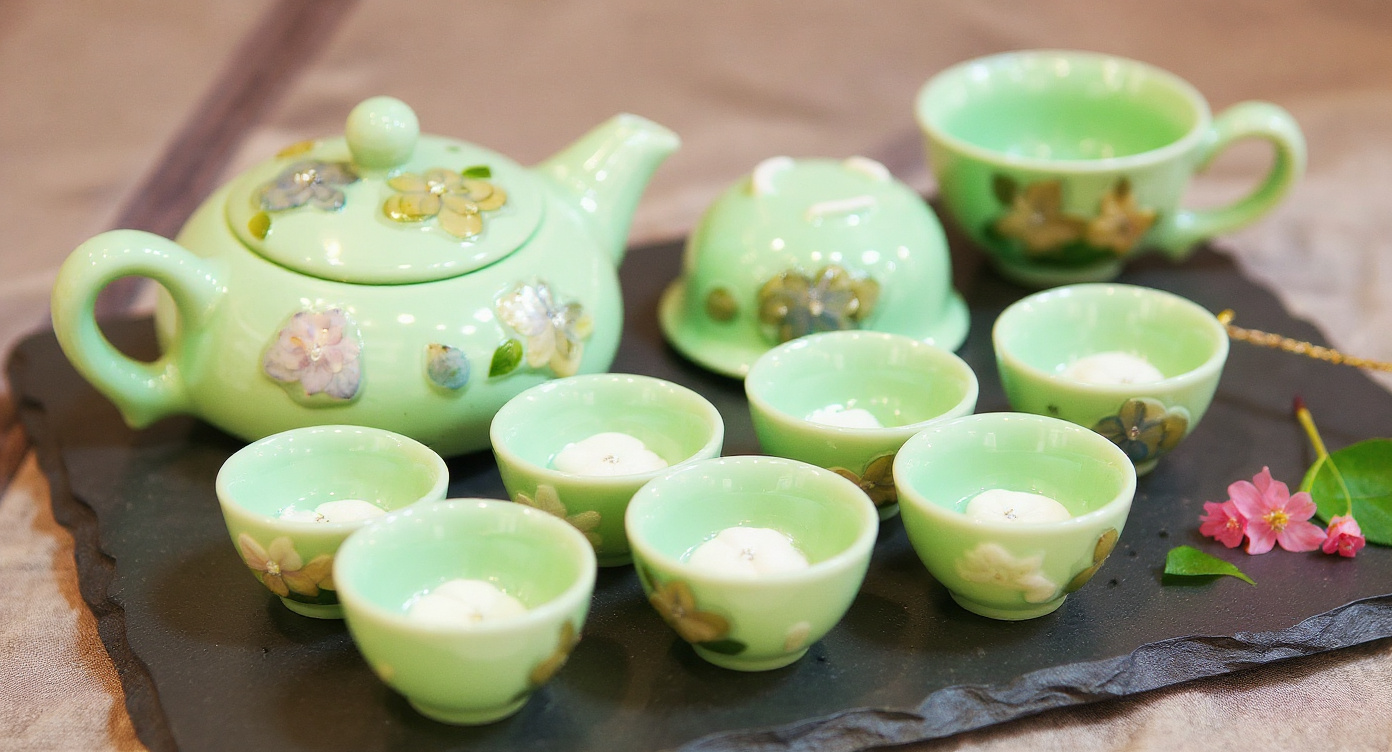
Fragility, uncertain floral finishes, and undersized teapots are reasonable concerns because decorative tea sets can sometimes prioritize display over use. This set addresses the material question with high-fired celadon porcelain, a glazed tea-contact surface, exterior-only pressed winter jasmine sealed in food-safe eco-resin, and a defined 200 ml pot with six 45 ml cups.
For someone who wants six large servings in one pour or dishwasher-proof utility, plain porcelain and a larger teapot make more sense. For a slower gongfu ritual, a meaningful gift, or a small gathering where each infusion gets attention, the Handmade Celadon Tea Set with real pressed flowers and six koi cups is a natural fit, provided it is hand washed and handled as the detailed porcelain work it is.