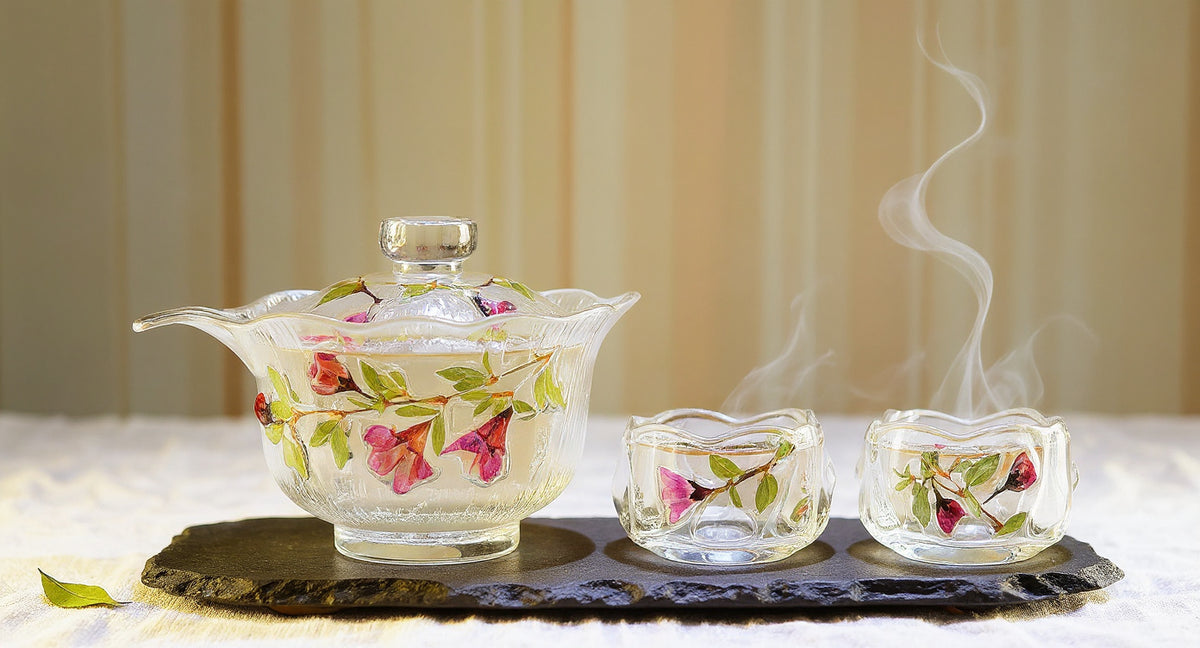
For anyone searching “buy handmade gaiwan online unique gift,” the practical answer is to check capacity, heat-resistant glass, the construction of any decorative work, and how much of a usable tea service is included. A handmade gaiwan can be a memorable present, but only if it suits the recipient’s brewing habits rather than merely looking special in a listing.
A gaiwan is a lidded brewing bowl used to steep tea leaves directly, then pour the infusion into cups or a sharing pitcher. It gives the brewer close control over leaf quantity, water temperature, and short infusion times, which is why it remains central to gongfu tea preparation.
Buy handmade gaiwan online unique gift: five checks before ordering
Handmade tea ware needs a more careful read than factory-made ceramic. A product photo can’t show how a lid seats, whether the stated capacity works for one or several drinkers, or whether decorative materials are part of the functional vessel.
Use this five-point check before choosing a gift.
1. Start with actual capacity, not the apparent size. A 140ml gaiwan is designed for compact gongfu sessions, usually with repeated short steeps. It is not a large mug-sized brewer. For one person drinking several infusions, it’s a sensible volume. For a group expecting full cups immediately, it will feel small.
2. Confirm which pieces are included. A gaiwan by itself makes a thoughtful gift for an experienced tea drinker. A set with a pitcher and matching cups is easier for someone building a complete ritual. The difference matters, particularly when a recipient doesn’t already own a fair cup.
3. Read glass claims precisely. “Heat-resistant” is useful information, but it is not the same as a stated thermal-shock rating. No maximum temperature or temperature-change range is supplied for this set, so it should be warmed gradually rather than filled from cold with freshly boiling water.
4. Look at where florals and other surface details sit. Preserved botanical material sealed onto the exterior is preferable to loose decoration that could contact tea or detach during washing. It also means the brewer should avoid aggressive scrubbing around the raised finish.
5. Check the shipping and replacement terms on the seller’s product page. Glass is breakable. A gift buyer should know the packing, delivery, and damage-reporting policy before ordering, especially for a multi-piece set.
The most useful gift isn’t always the largest or most ornate option. A 140ml gaiwan paired with small cups creates a deliberate brewing pace, while a 400ml pitcher gives the brewer somewhere to combine and serve the liquor after each infusion.
A 140ml gaiwan is built for short, focused infusions
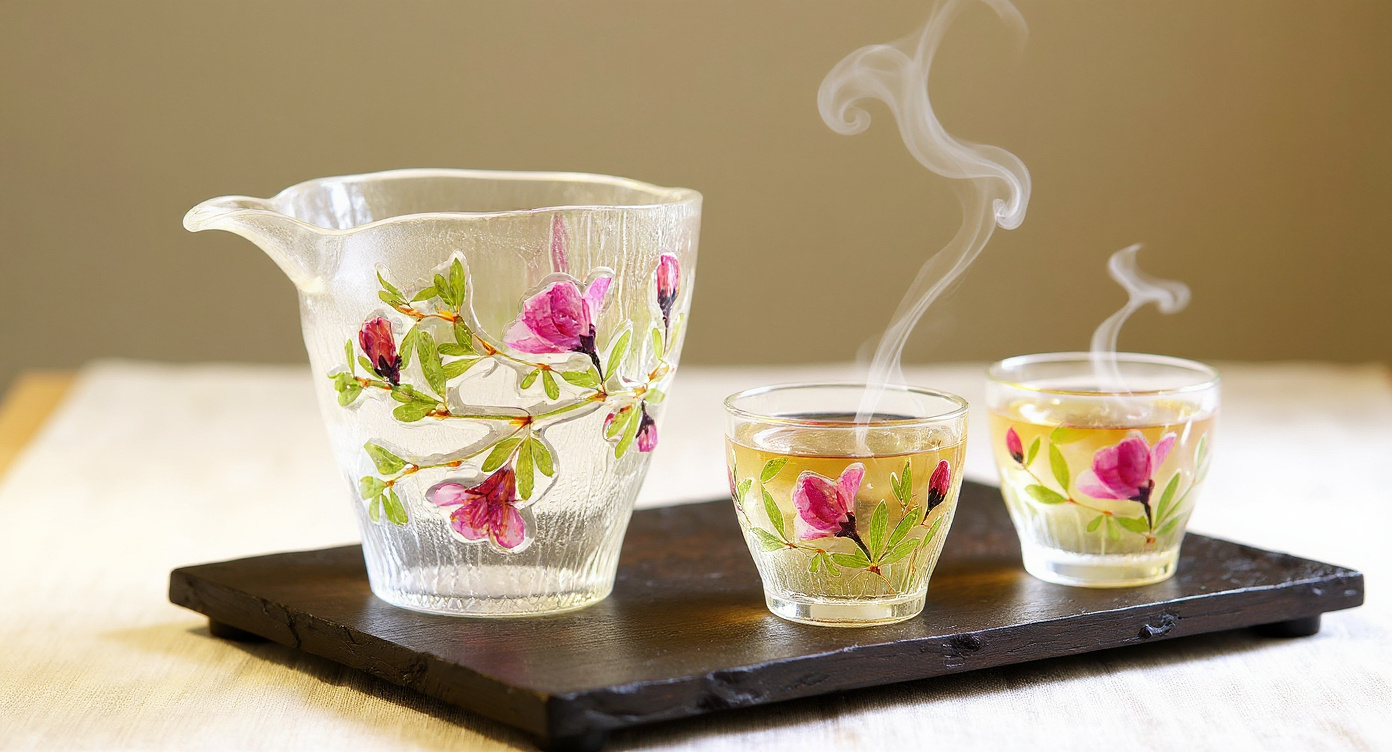
The Handmade Rose Petal Glass Tea Set | Lotus Gaiwan 140ml | Preserved Floral Gongfu Ceremony Gift includes a 140ml lotus-shaped gaiwan, a 400ml fair cup pitcher, and four to six 45ml tea cups. Those measurements describe a genuine gongfu-style service rather than a general-purpose pot for several large mugs.
A 140ml brewing bowl works best with teas that reward repeated infusions: oolong, pu-erh, white tea, green tea brewed at a lower temperature, and fragrant black teas. The small volume keeps each steep manageable. A brewer can make one infusion, pour it out fully, and adjust the next steep rather than leaving leaves submerged in a large pot.
The 45ml cups reinforce that use. They are tasting cups, not everyday tumblers. Four to six cups allow a small table to share an infusion, while the 400ml pitcher provides more capacity than the gaiwan itself. That extra capacity is practical because it holds the brewed liquor after decanting, preventing leaves from continuing to steep in the gaiwan.
A recipient who drinks one oversized mug of tea each morning may not use this format often. A recipient who enjoys loose-leaf tea, tea trays, slow afternoon brewing, or sharing small pours is more likely to appreciate it.
| Tea ware option | Typical capacity or format | Price information supplied | Best fit |
|---|---|---|---|
| Mass-produced ceramic gaiwan | Varies by model | $20–$80 | A low-risk introduction to gongfu brewing |
| Mid-range artisan ceramic set | Varies by maker | $150–$300 | A functional handmade set with less emphasis on botanical surface work |
| Comparable handmade glass floral sets on Etsy | Varies by seller | $200–$500 | Gift buyers seeking handmade glass and floral detail |
| Handmade Rose Petal Glass Tea Set | 140ml gaiwan, 400ml pitcher, 4–6 x 45ml cups | $114.065714285714 | A complete small-format glass tea service with preserved botanicals |
The price comparison needs context. A lower-priced ceramic gaiwan can be the better purchase for someone who wants an everyday workhorse and doesn’t care about a coordinated service. A full handmade glass set makes more sense when the gift needs to function as tea ware and remain suitable for display between brewing sessions.
Glass brewing shows the tea, but demands gentler handling
Glass gaiwans are good for brewing tea because they make leaf expansion and liquor color easy to observe. That visibility can help a newer brewer learn how quickly a green tea opens or how a tightly rolled oolong changes across several infusions. It is also useful for judging when a pale tea has reached the desired strength.
The trade-off is heat. Glass transfers the sensation of hot tea quickly to the fingers, and a gaiwan requires the brewer to hold the rim and lid while pouring. A 140ml vessel limits the weight, but it doesn’t remove the need for technique. Filling below the rim, keeping fingers on the cooler upper edge, and pouring decisively are more useful than attempting a slow, hesitant trickle.
This set is specified as heat-resistant, lead-free transparent glass with a hammered ice-ripple texture. Those are meaningful material details. They do not establish a dishwasher rating, microwave rating, or a guaranteed resistance to sudden temperature change. Treat it as fine glassware: warm it with a little hot water first, empty that water, then begin brewing.
A practical brewing sequence is short.
1. Warm the gaiwan, pitcher, and cups with hot water, then discard it. 2. Add loose leaf tea, using the tea’s own brewing guidance as the starting point. 3. Pour water gently into the gaiwan, leaving enough space to handle the lid. 4. Steep briefly, then pour through the lid gap into the 400ml pitcher. 5. Serve from the pitcher into the 45ml cups so each pour is consistent. 6. Repeat, extending later steeps gradually instead of making the first infusion excessively long.
This won’t work well for someone who wants to abandon tea leaves in water for twenty minutes. A gaiwan rewards attention. That is the point of the format.
Preserved florals belong outside the brewing surface
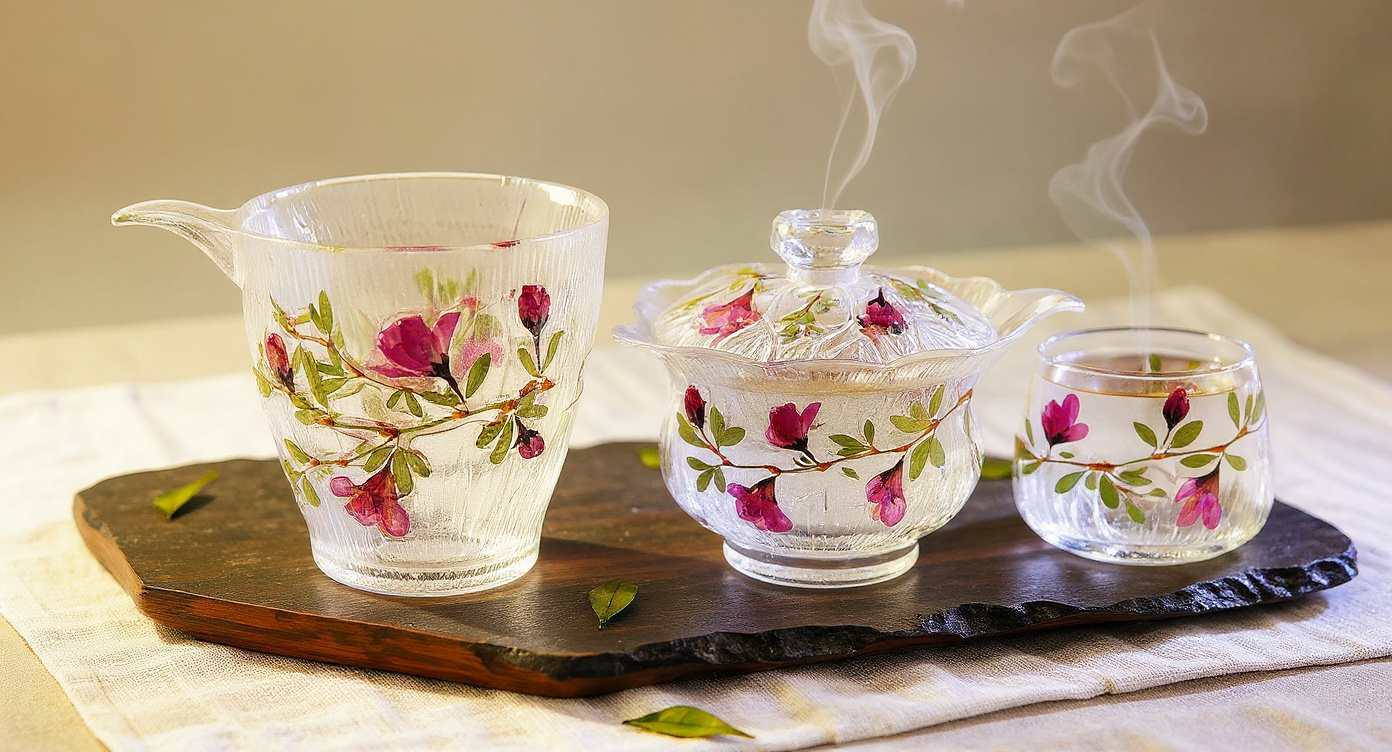
The defining construction detail is not merely that the set has botanical decoration. It uses real preserved rose petals and botanical foliage sealed onto the exterior in raised 3D relief. The tea contacts the lead-free glass interior, while the preserved materials remain outside the brewing area.
That distinction matters for both cleaning and durability. Preserved flower craft commonly relies on drying and stabilising botanical material before it is arranged or protected, as outlined in this background on pressed flower craft. In a tea set, the sensible question is not whether real botanicals are present, but whether they are protected from direct contact with water, tea residue, and abrasion.
The sealed exterior technique addresses the right concern, though it does not make the floral work indestructible. Raised surface details can be damaged by abrasive pads, crowded cupboards, or repeated contact with hard utensils. This is not a set to toss into a sink with cutlery.
For long-term care, hand washing is the cautious choice. Use warm water, a soft sponge or cloth, and mild washing liquid if needed. Do not scrub the raised botanical relief. Dry each piece before storing it, and avoid stacking cups directly against textured surfaces without a soft divider.
The same caution applies to display. A tea tray, shelf, or enclosed cabinet is better than a high-traffic countertop where handles, metal spoons, and other hard objects repeatedly knock against the glass.
Gift value comes from the whole tea ritual, not novelty alone
A gaiwan makes a stronger gift when it gives the recipient a clear way to use it. The 140ml gaiwan, 400ml fair cup, and four to six small cups create a complete serving sequence: brew, decant, share. That makes the set more approachable than a decorative object with no obvious purpose.
It also fits several occasions without pretending to suit everyone. A housewarming gift can become part of an evening tea routine. A wedding gift can serve as a shared ritual piece. For a tea lover who already owns basic equipment, handmade glass and preserved botanical exterior work provide a different material experience from standard ceramic ware.
The traditional role of a gaiwan also carries useful context. A gaiwan consists of a bowl, lid, and saucer or base, and can be used for brewing or drinking tea, as explained in the reference entry on the gaiwan. The lid is functional, helping hold leaves back during pouring and allowing the brewer to control the flow.
What should not be bought? A fragile, highly detailed gaiwan is a poor choice for a recipient who wants dishwasher convenience, drinks only bagged tea in large mugs, or has no interest in short infusions. A simple ceramic pot or infuser mug would be more practical in those cases.
For someone who already enjoys loose leaves, careful pouring, and small servings, the trade-off changes. The floral glass construction is more likely to pay off when the set will be used deliberately and stored with care.
FAQ: buying and caring for a handmade gaiwan
What is a gaiwan used for?
A gaiwan is used to brew loose-leaf tea directly in a lidded bowl. The lid holds back leaves while tea is poured into cups or a pitcher. It is especially associated with gongfu brewing, which uses relatively high leaf-to-water ratios and multiple short infusions.
Is a glass gaiwan good for brewing tea?
Yes, provided the brewer is comfortable handling hot glass and using short steeps. Glass makes leaf movement and tea color easy to see. Heat-resistant glass is suitable for hot tea use, but it should still be warmed gradually and protected from abrupt temperature shifts.
What size gaiwan should I buy?
A 100ml to 150ml gaiwan suits solo brewing or serving a small group in tasting cups. The 140ml gaiwan in this set sits squarely in that range. Larger vessels are better for drinkers who want greater volume per infusion rather than a traditional gongfu rhythm.
Are handmade gaiwans safe for hot water?
Safety depends on the material and the maker’s stated use. This set is specified as heat-resistant, lead-free glass. Since no temperature limit or thermal-shock specification is supplied, avoid moving it directly from cold conditions to boiling water, and do not assume it is safe for every appliance or cleaning method.
What is the difference between a gaiwan and a teapot?
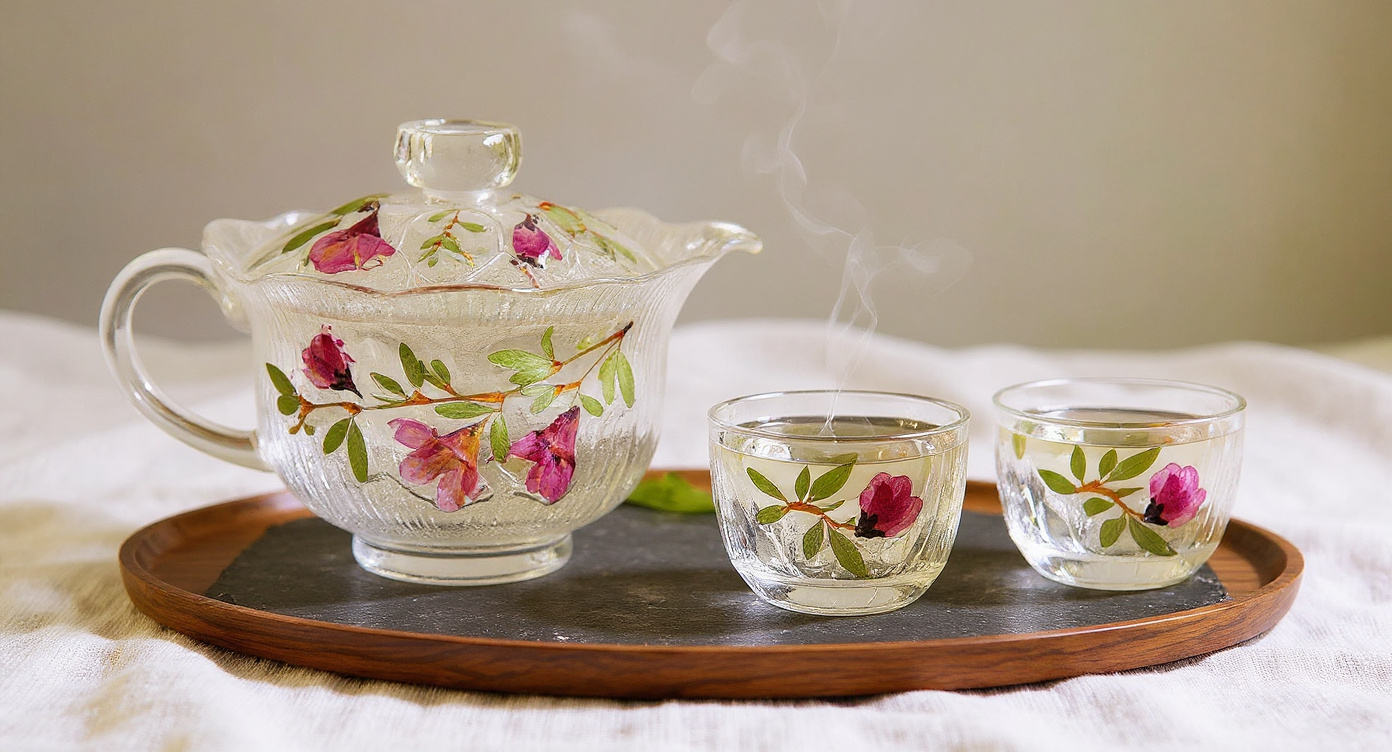
A gaiwan is an open brewing bowl with a lid, designed for direct control while pouring. A teapot usually has a handle, spout, and enclosed body. A gaiwan is quicker to empty between infusions, while a teapot can be easier for larger-volume serving.
Can you use a gaiwan for green tea?
Yes. Green tea can work very well in a gaiwan because the brewer can keep steeps brief and observe the leaves. Use cooler water than for many dark teas, based on the tea supplier’s guidance, and avoid overfilling the bowl.
How do you clean a glass gaiwan?
Hand wash it with warm water and a soft cloth or sponge. Rinse promptly after brewing so tea residue does not dry inside the bowl. Avoid abrasive cleaners and rough pads, especially around the preserved botanicals sealed in raised relief on the exterior.
Is a gaiwan a good gift for a tea lover?
It can be an excellent gift for someone who uses loose-leaf tea and enjoys brewing as a small ritual. A complete set is especially useful because it includes cups and a pitcher, rather than requiring the recipient to source compatible pieces separately.
A considered choice for a careful tea drinker
The main concern with a handmade glass gaiwan is reasonable: delicate tea ware needs thoughtful shipping, gentle cleaning, and a recipient who will actually use its small-format brewing style. The Handmade Rose Petal Glass Tea Set | Lotus Gaiwan 140ml | Preserved Floral Gongfu Ceremony Gift answers that concern with a complete 140ml, 400ml, and 45ml-piece service, heat-resistant lead-free glass, and preserved botanicals sealed outside the tea-contact surface. For a gift that should feel personal without becoming impractical, see the preserved floral gongfu tea set and check the current shipping details before ordering.