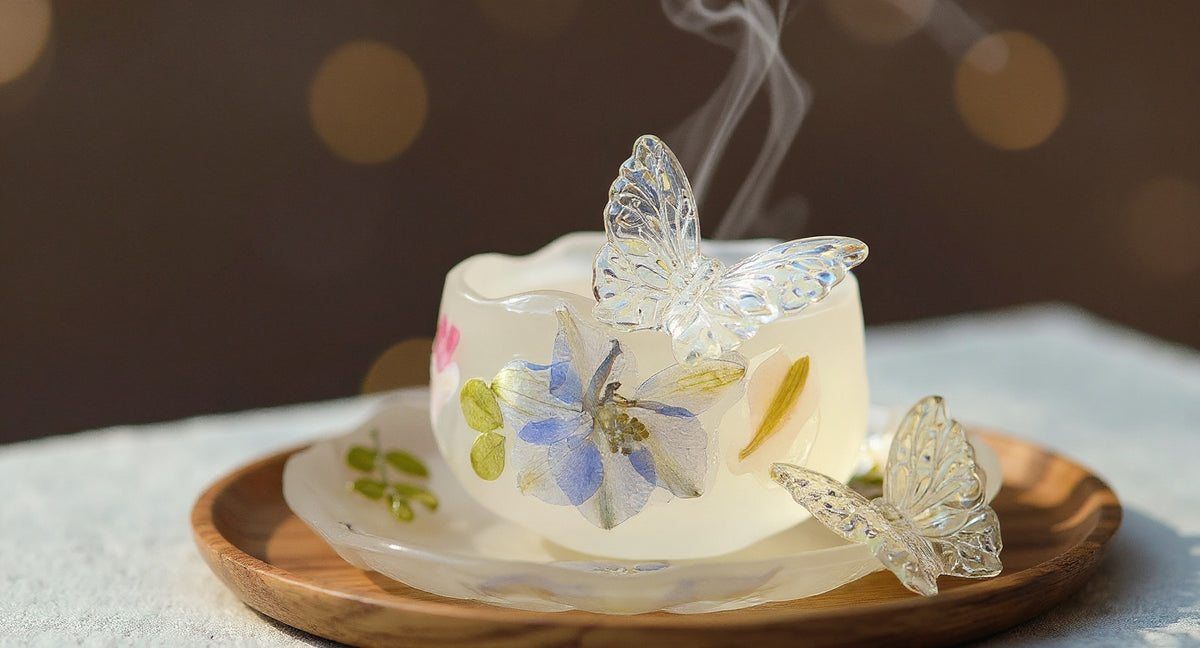
Choose a 3D butterfly tea cup handmade gift by checking three things before anything else: where the resin sits in relation to the tea, whether the cup’s small capacity suits the recipient’s tea habit, and whether the maker gives clear hand-wash care instructions. A handmade cup with real petals is a poor gift if it becomes a shelf object after one nervous use.
The strongest examples sit between functional teaware and botanical craft. A 45-65ml cup is deliberately small, intended for repeated pours rather than a large mug of breakfast tea. That format suits Gongfu-style brewing, where tea is steeped in compact vessels and served across several short infusions, as outlined in this reference on the Gongfu tea ceremony.
Start with the drinking surface, not the decoration
A cup can contain resin without being a resin drinking vessel. That distinction matters. The Handmade Pressed Flower Tea Cup Set | Real Petal Resin | Butterfly 45-65ml is described as a handcrafted glass tea cup and saucer with preserved petals and butterfly accents sealed beneath a resin coat. Glass is the stated cup material; the resin is part of the sealed decorative construction.
For hot tea, the critical question is simple: does the beverage contact bare glass, or does it touch a resin-coated interior? A seller should be able to answer directly. “Eco-friendly resin” describes an environmental positioning, not automatically a food-contact or heat-safety certification. Resin is a broad family of cured polymer materials, not one single substance, as the reference entry on resin makes clear.
A sensible gift buyer should look for these practical details:
1. A glass drinking surface. The interior should be smooth and free from lifting, cracks, tackiness, or exposed decorative edges. 2. Sealed botanical material. Petals and butterfly accents need a continuous cured layer around them so moisture cannot reach organic material. 3. A defined use case. A cup intended for tea should be presented as teaware, not merely as a trinket dish or display piece. 4. Hand-wash guidance. Resin and embedded botanicals should not be assumed dishwasher-safe unless that exact claim is made. 5. A realistic heat limit. Avoid pouring boiling water directly into any handcrafted glass-and-resin piece unless the maker specifically states it is designed for that temperature. 6. No surface damage. A raised tactile exterior can be part of the handmade construction, but the rim and inner bowl need to remain comfortable and intact.
This is where a gift can either feel considered or careless. A floral print on factory ceramic is easy to replace. Hand-embedded botanical work depends on sealing quality and care habits. The pressed flower craft tradition is built around preserving dried plant material, but no dried flower remains unchanged forever when exposed to light, heat, moisture, and abrasion.
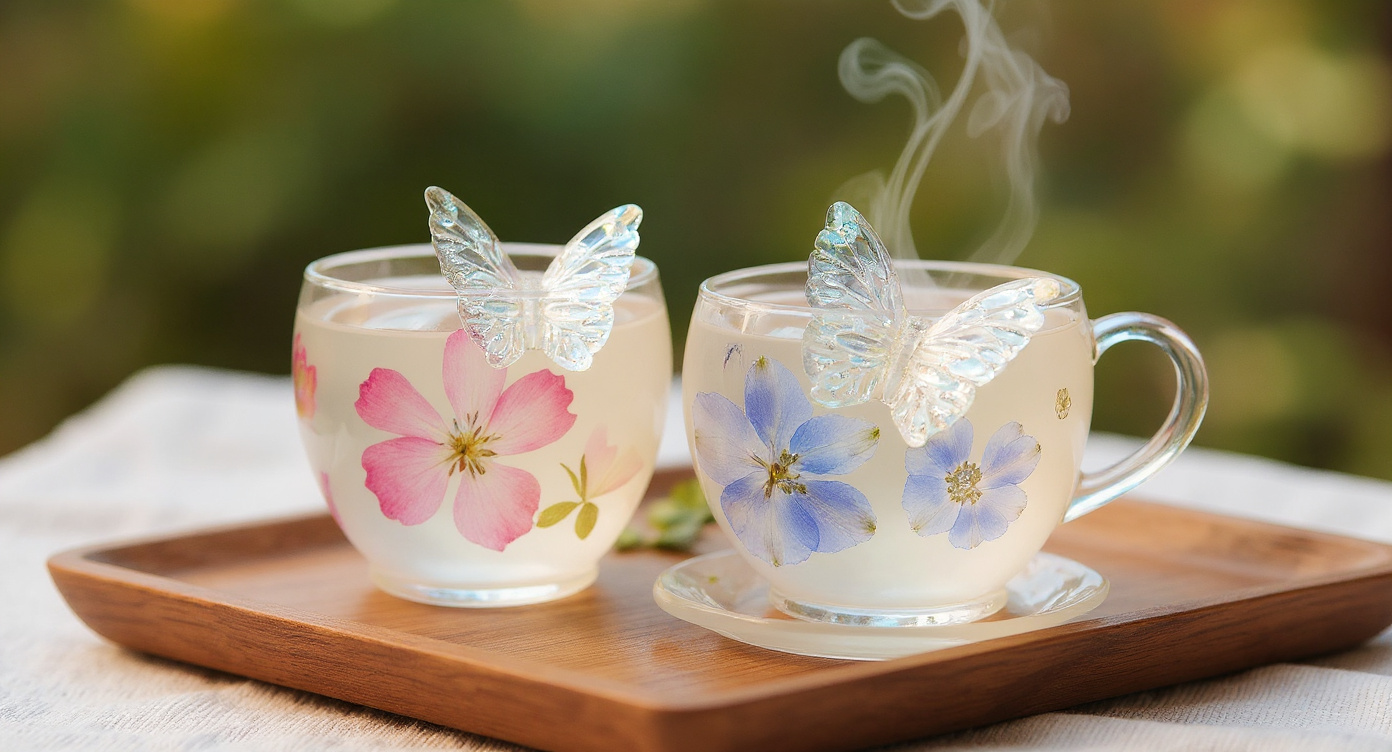
Why a 45-65ml cup changes the tea ritual
A 3d butterfly tea cup handmade gift makes most sense for someone who already enjoys small-pour tea, or who would appreciate learning that style. At 45-65ml, this is not a one-cup solution for a large black tea with milk. It is a small tasting cup, sometimes called a master cup or personal Gongfu cup, intended to make a single infusion feel deliberate.
For loose-leaf tea, that capacity has advantages. It cools quickly enough to sip. It encourages shorter, repeated pours. It also lets the drinker compare infusion one with infusion three instead of treating tea as a single steep-and-forget drink.
| Cup type | Typical capacity | Best use | Material and construction | Price information available |
|---|---|---|---|---|
| Handmade pressed-flower glass cup and saucer | 45-65ml | Gongfu tea, short tea rituals, gift giving | Handcrafted glass with preserved petals and butterfly accents sealed in resin | $71.4085714285714 |
| Mass-produced floral-print ceramic cup | Not stated | Casual tea and coffee drinking | Printed ceramic | $15-$60 |
| Handmade resin cup from Etsy sellers | Not stated | Decorative or small-batch tea use, depending on construction | Varies by maker | $80-$200 |
| Studio-crafted Japanese chawan | Not stated | Bowl-style tea preparation | Varies by studio and clay | $300-$800 |
The capacity is the point, not a compromise. A 45ml pour is small enough for aromatic oolong, Dancong, aged white tea, sheng pu-erh, or any tea where several infusions reveal changes. A 65ml cup gives a little more room without turning the ritual into mug drinking.
For an everyday tea drinker who usually makes one 300ml cup at a time, the format can feel impractical. That doesn’t make it inferior. It means the gift should match the person. A recipient who drinks tea while rushing out the door may need a larger, plain mug. Someone who sets aside ten minutes for loose-leaf tea is far more likely to use this size regularly.
The broader history of tea culture is full of vessel choices shaped by preparation method. Cup size has never been a neutral detail.
What makes the petal-and-resin construction last
The durability question has two parts: the glass body and the encapsulated botanical layer. Glass can handle ordinary tea use, but it still dislikes sudden temperature shock. Resin sealing can protect dried petals from handling and occasional splashes, yet it should not be treated like industrial cookware coating.
The stated multi-day sealing process matters because botanical inclusions need to be dry and stable before encapsulation. Residual moisture can create clouding, separation, or localized defects over time. A good seal should feel fully cured, smooth where it needs to be smooth, and firmly bonded around the petals rather than brittle at their edges.
No handmade botanical piece can promise zero change across decades. Dried petals can gradually lose intensity with prolonged ultraviolet exposure. The practical response is not panic. Keep the cup away from direct sun, don’t soak it, and don’t leave it on a hot radiator or windowsill.
Avoid a handmade resin tea cup if any of these conditions apply:
- The buyer needs dishwasher-safe daily tableware. - The recipient regularly pours near-boiling water into a cup without warming it first. - The cup will live in a sunny display location for most of the year. - The maker cannot explain whether the resin is outside the drinking surface. - The gift is meant for a person who wants one large serving of tea or coffee.
A small amount of care is the trade-off for real preserved plant material. It is not the right category for someone who wants a dishwasher basket full of interchangeable cups.
A gift should fit the recipient’s tea habit
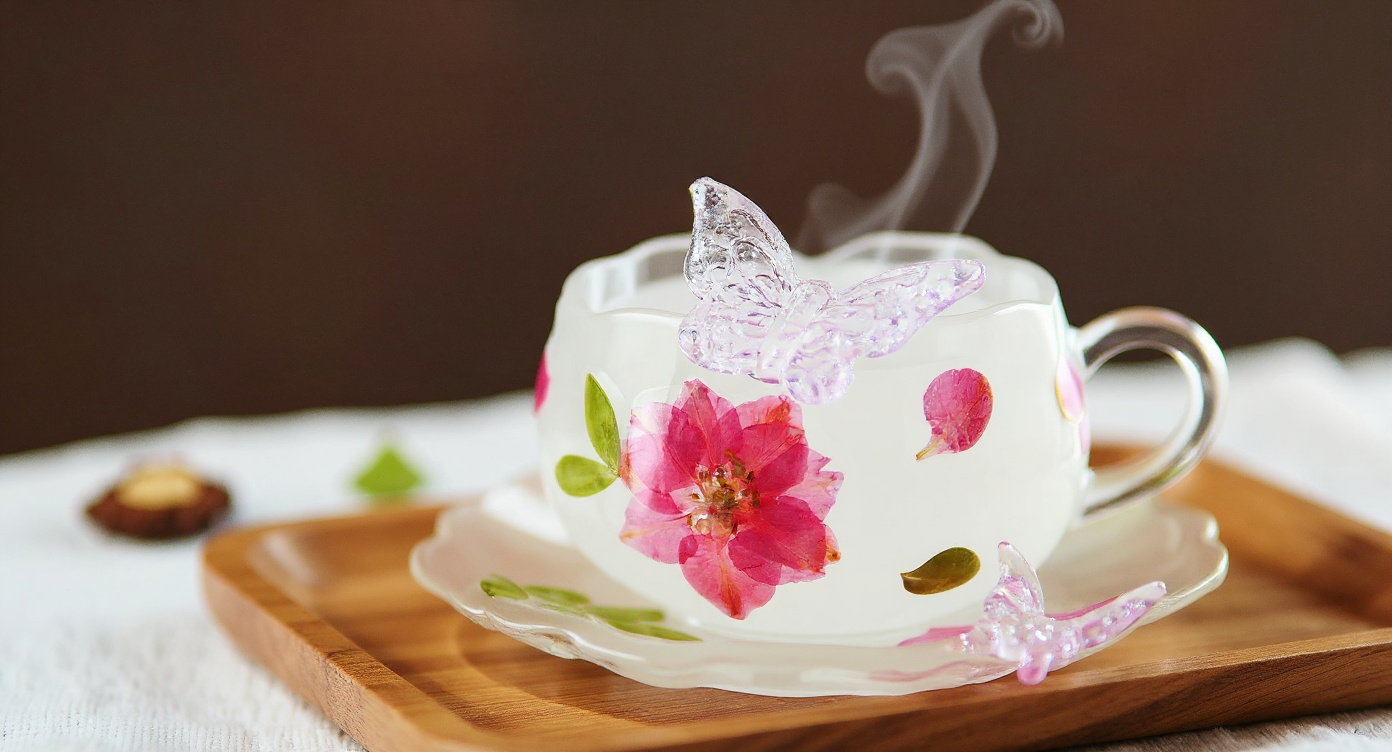
Handmade gifts work best when they acknowledge a person’s routine rather than merely their taste. The floral-and-butterfly construction gives each cup a distinct arrangement because natural petals do not repeat with machine precision. That makes it suitable for birthdays, Mother’s Day, a tea-loving friend, or someone building a dedicated tea tray.
The gift is less persuasive when the recipient has no interest in tea, keeps only oversized mugs, or expects every household object to survive dishwasher cycles. A carefully made 45-65ml cup can become a meaningful ritual object, but it won’t convert everyone into a Gongfu drinker.
For the right recipient, the useful part is its specificity. The cup and matching saucer form a contained tea setting. The small serving volume slows the pace. The preserved botanical material gives the object a handmade character that printed ceramic cannot reproduce.
Presentation should stay practical. Include a note that it is designed for hand washing, explain that it is a small-format tea cup, and pair it with a modest amount of loose-leaf tea if the recipient is new to Gongfu brewing. There is no need to overcomplicate it with a full tea-service kit.
Care rules that protect the resin and flowers
Hand washing is the baseline. Use lukewarm water, a soft sponge, and a mild detergent. Dry the cup soon after washing rather than leaving water pooled around the saucer or decorative exterior.
Skip the dishwasher, microwave, soaking basin, abrasive scrubber, and harsh cleaning powders. Those are all unnecessary risks for a glass piece with resin-sealed botanical details. Thermal shock is another concern: don’t move a cold cup straight into very hot water, and don’t rinse a hot cup under cold water.
For tea stains inside a glass cup, begin with warm water and gentle soap. If staining persists, use a soft cloth with a small amount of baking soda only on the plain glass interior, avoiding prolonged contact with the resin-coated areas. Never use bleach, acetone, alcohol-heavy solvents, or a scouring pad on decorative resin.
The saucer deserves the same care. It may not contact tea as often, but it receives drips, heat, and repeated contact with the cup base. Drying both pieces after use reduces the chance of water sitting at edges where handmade sealing transitions occur.
FAQ: tea use, safety, and gifting
Are resin tea cups safe for hot tea?
Safety depends on the exact resin, its cure state, its food-contact suitability, and whether it touches the drink. A cup with a glass interior and resin-sealed decoration on the exterior has a different risk profile from a cup whose whole drinking surface is resin. Don’t assume that “resin” or “eco-friendly” alone confirms suitability for hot beverages. Ask the maker where the resin is applied and follow the stated care instructions.
Can you drink from a resin cup?
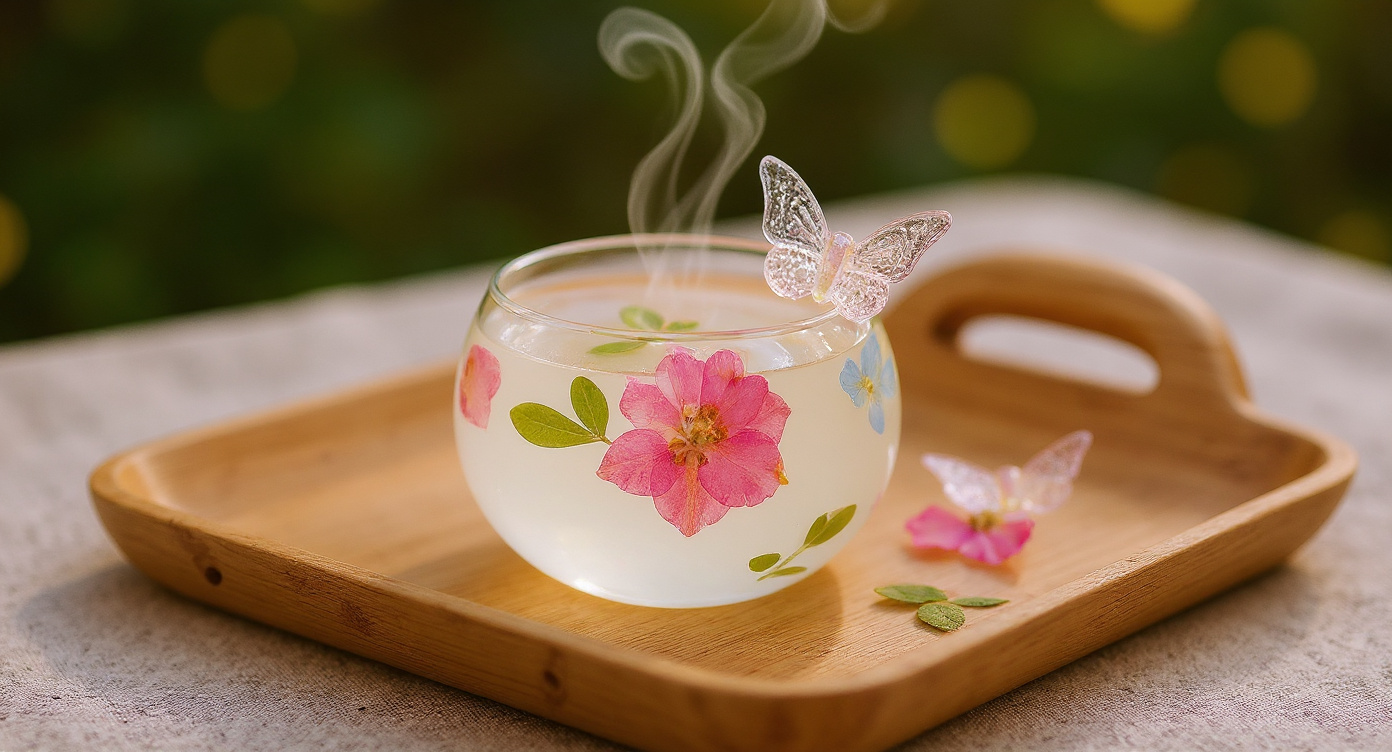
Only if the maker explicitly states that the specific resin construction is suitable for beverage contact and the intended temperature range. For the Handmade Pressed Flower Tea Cup Set | Real Petal Resin | Butterfly 45-65ml, the product is described as a handcrafted glass tea cup with botanical and butterfly details sealed in resin. The sensible approach is to treat the glass interior as the drinking surface and avoid using damaged pieces.
How do you clean a resin tea cup with dried flowers?
Hand wash it with lukewarm water, mild dish soap, and a soft sponge. Don’t soak it for long periods, put it in a dishwasher, or scrub it with abrasive pads. Dry it promptly with a soft towel, especially around the base and the decorative exterior.
Do pressed flowers in resin fade over time?
They can. Dried botanical material is vulnerable to prolonged light exposure, especially direct sun and ultraviolet light. Resin helps protect petals from handling and moisture, but it does not make natural pigments permanent. Store the cup away from a sunny window when it is not being used.
Are handmade tea cups dishwasher safe?
Not by default. A dishwasher combines heat, detergent, water pressure, and repeated cycles, all of which can be hard on resin-sealed decoration and handmade finishes. Unless a maker specifically states dishwasher safety, hand washing is the safer choice.
What size cup is best for Gongfu tea?
A small cup is standard for Gongfu-style tea because the drinker receives many short pours instead of one large serving. A 45-65ml format is a practical personal range for tasting and repeated infusions. It is particularly suitable for aromatic teas that change across successive steeps.
Is a 45-65ml tea cup too small for everyday tea?
It is too small for someone who wants a single large serving. It is not too small for daily Gongfu tea, focused tasting, or a short afternoon ritual. The right answer depends on how tea is actually brewed and consumed, not on a universal cup-size rule.
What makes a handmade tea cup a good gift?
A good handmade tea cup matches the recipient’s habits, is clear about its care needs, and has a material story that feels specific rather than generic. Real preserved petals, a matching saucer, and a small Gongfu capacity give this type of gift a purpose. The best choice is one the recipient will use, not merely admire.
When this kind of gift earns its place
The concern with botanical resin teaware is reasonable: nobody wants petals that fade quickly, a coating that chips, or a cup too small to use. Those concerns are best answered by choosing a glass-based cup, respecting hand-wash care, keeping it out of strong sun, and giving it to someone who genuinely enjoys small-pour tea.
For a tea drinker who values a slower serving ritual and wants preserved floral material in a usable piece of teaware, see the Handmade Pressed Flower Tea Cup Set | Real Petal Resin | Butterfly 45-65ml. Its 45-65ml capacity, matching saucer, glass construction, and sealed real-petal details make sense when the goal is a careful handmade gift rather than another general-purpose mug.