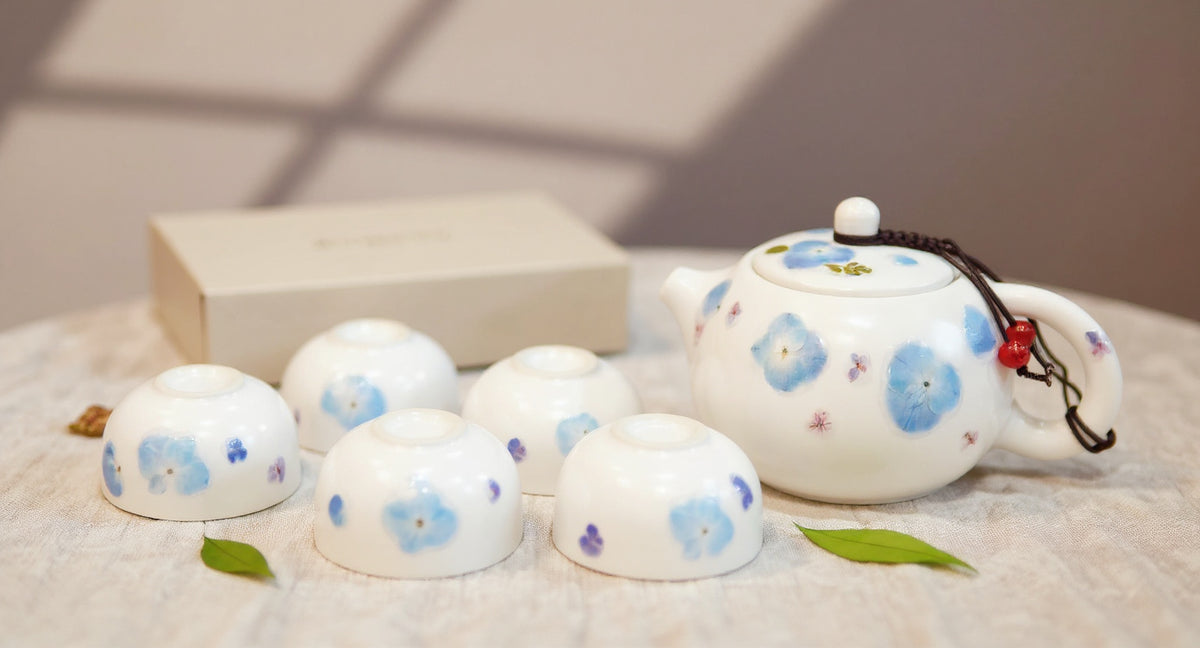
Choose a tea set gift by checking the vessel count, usable capacity, porcelain firing, food-contact safety, and whether the box actually protects the pieces in transit. A tea ceremony set with gift box included makes a stronger present when it feels complete for the recipient's brewing style rather than decorative but impractical.
A good set doesn't need a huge pot or six oversized cups. For gongfu-style tea, smaller vessels are usually the point: tea is brewed in short, concentrated rounds and shared across several pours. The best gift sets make that ritual easy while giving the recipient something with enough material quality and character to keep using.
Botanical craft changes what the gift means
A gift box matters, but it isn't the main event. It should hold each piece securely, separate the cups from the pot, and make the set feel ready to give without a last-minute search for wrapping paper. The tea ware still has to earn its place once the box is opened.
Sets featuring botanical material need a closer look than ordinary printed floral porcelain. Pressed-flower work is a recognised craft built around preserving plant material in a flattened form, as outlined in this reference on pressed flower craft. When real preserved petals are embedded into tea ware, variation is expected. No two placements, petal edges, or pieces will be identical. That difference is a feature, not a production defect, provided the botanical element is properly sealed and doesn't interfere with the drinking surface.
For a wedding, housewarming, Mother's Day, or a person building a deliberate tea corner at home, a handmade botanical set carries more meaning than a generic pattern applied by transfer print. It gives the recipient a working tea service and an object with material evidence of handwork. The trade-off is care: raised botanical relief should not be treated like a plain, dishwasher-proof restaurant cup.
Hydrangeas are especially suited to botanical work because their clustered florets have a recognisable pressed form. The botanical classification of hydrangeas is less relevant to tea brewing than preservation and sealing, but it explains why the flower is so widely used in decorative botanical crafts.
What a tea ceremony set with gift box included should contain
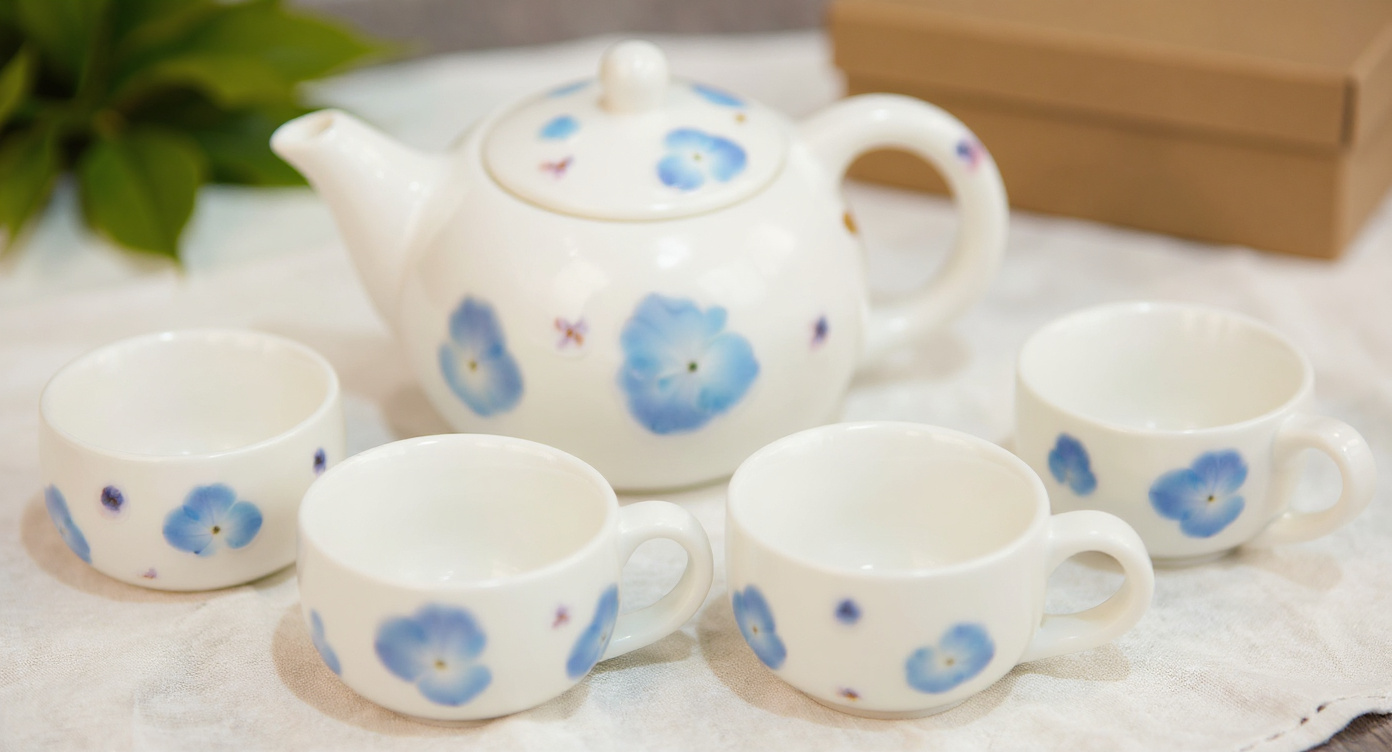
For a practical shared session, start with the arithmetic. A set should include a teapot, enough cups for its stated purpose, and packaging that keeps all parts protected. A 200ml pot paired with four 45ml cups is coherent: four cups filled to roughly 40ml use about 160ml, leaving room for normal pouring control rather than forcing every cup to the rim.
The Handmade Porcelain Tea Set Real Pressed Blue Hydrangeas | 1 Pot 4 Cups | Botanical Art Teaware includes one approximately 200ml teapot and four approximately 45ml cups. That is a sensible format for a small tea session, not a set designed for serving large mugs of breakfast tea. Its high-fired porcelain body and hand-embedded preserved petals make it a better fit for considered gifting than for a household that needs anonymous daily tableware.
Check these points before choosing any boxed tea set:
1. Count the actual serving pieces. A pot and four cups serves four people in small pours. A listing that calls itself a set but includes only two cups is better suited to a pair than a group ritual. 2. Match pot capacity to cup capacity. A 200ml pot with 45ml cups is proportionate. A tiny 80ml pot packaged with large 100ml cups creates awkward, incomplete servings. 3. Look for firing information. High-fired porcelain is generally denser and less porous than lower-fired earthenware. Porcelain is valued for its vitrified ceramic body, which is one reason it works well for tea ware. 4. Ask where decoration sits. Relief, petals, paint, or glaze should not create a rough or questionable drinking edge. A safe gift is one that can be used without the recipient having to guess which surfaces contact tea. 5. Assess the box as protective packaging. A rigid gift box with individual spacing is useful. A thin carton with loose pieces isn't a gift-ready solution, regardless of how polished the listing photographs look. 6. Decide whether the recipient brews gongfu tea. Small cups and a 200ml pot are excellent for oolong, pu-erh, and repeated infusions. They aren't ideal for someone who wants one 350ml serving before work.
The product is priced at $114.08. That places it above many generic floral sets while remaining below the supplied price range for many artisan and collector categories. Price alone doesn't define value. The deciding question is whether the recipient values handmade material variation, botanical inclusion, and a compact four-person format.
| Type of tea set | Typical price stated in available context | What it usually offers | Main compromise |
|---|---|---|---|
| Mass-produced floral ceramic set | $30-$120 | Widely available decorative tea ware | Repeated patterns and less individual character |
| Handmade Porcelain Tea Set Real Pressed Blue Hydrangeas | $114.08 | One approximately 200ml pot, four approximately 45ml cups, high-fired porcelain, preserved botanical relief, gift box | Needs gentler care than plain undecorated everyday ware |
| Mid-range artisan set on Etsy | $150-$400 | Handmade or small-batch work | Specifications and finish vary by seller |
| Jingdezhen collector-style pieces | $600-$1,200 | Collector-oriented porcelain | High entry price and often less suited to casual gifting |
Capacity matters more than cup count alone
Four cups sounds straightforward, yet their 45ml capacity is what makes this configuration useful for gongfu tea. Gongfu brewing uses a relatively high leaf-to-water ratio with brief infusions, poured out in multiple rounds. The gongfu tea ceremony reference describes the method's emphasis on controlled brewing rather than one large steep.
A 200ml teapot sits at the upper end of a compact personal-or-small-group format. It can serve one person through several tiny cups, two people comfortably, or four people in smaller shared servings. It won't replace a large 700ml family pot, and it shouldn't try to. Large pots make more sense for black tea served once. A smaller teapot gives better control when an oolong or roasted tea changes from infusion to infusion.
There is one practical limit. A 200ml pot should not be filled to its absolute maximum if the tea expands heavily. Rolled oolong, aged compressed tea, and whole-leaf blends need room to open. Starting with a restrained leaf amount and short pours prevents the first infusion from becoming harsh or spilling when the lid is replaced.
Porcelain quality and food-contact safety deserve direct questions
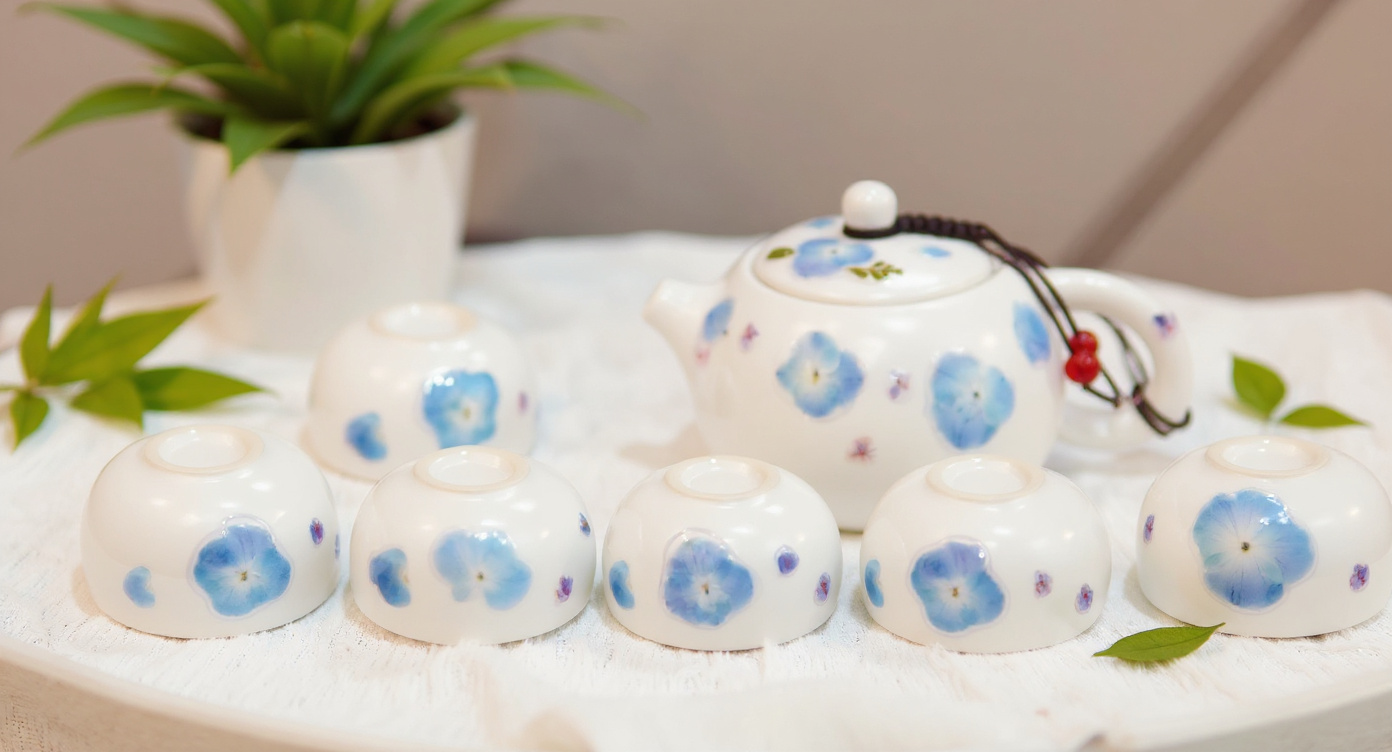
High-fired porcelain is a strong starting material for tea ware. Proper firing creates a hard ceramic body with low porosity, helping it resist odours and making flavour carryover less of a concern than with unglazed, absorbent clay. Porcelain also handles hot tea well, though any ceramic piece can crack under abrupt thermal shock.
For botanical tea ware, the important distinction is between decorative material that is merely attached and material that has been sealed for safe use. The Handmade Porcelain Tea Set Real Pressed Blue Hydrangeas uses eco-friendly, food-safe sealing materials over its preserved petals. That addresses the core concern, but careful use still matters. Do not scour raised relief with an abrasive pad, and do not assume that a decorative hand-finished surface is dishwasher safe unless the maker states it plainly.
A sensible care routine is short and uneventful:
- Rinse the pot and cups soon after tea service, before residue dries. - Use warm water and a soft cloth or soft sponge. - Keep metal scrubbers and abrasive powders away from any tactile botanical area. - Avoid moving porcelain directly from a cold cupboard into near-boiling water. - Dry each piece fully before returning it to its gift box.
This won't work well for someone who wants a set that can be stacked carelessly, machine-washed daily, and replaced without thought. The appeal is the opposite: a functional tea service that rewards a little attention.
Choosing between decorative, artisan, and everyday sets
The wrong way to buy a tea set is to select the highest cup count at the lowest price. More pieces can mean more storage, more breakage risk, and a format nobody uses. A two-cup set can be excellent for a couple. Four small cups are better for a host who regularly shares tea. Six or more cups make sense only when there is a realistic reason to serve that many people at once.
Gift value also depends on how much interpretation the recipient has to do. A boxed set with a clearly matched pot and four cups needs little explanation. It can be opened and used for a first tea session immediately. A mismatched assortment of cups and a large pot may be technically functional, but it rarely feels like a complete gift.
For a recipient who prefers simple, durable daily service, plain high-fired porcelain is the safer choice. For someone who values handmade objects, dried botanicals, slow rituals, or distinctive home pieces, botanical porcelain has more emotional weight. Neither is universally better. The useful choice follows the recipient's habits, not the buyer's assumption that elaborate decoration automatically means luxury.
FAQ
What comes in a tea ceremony set?
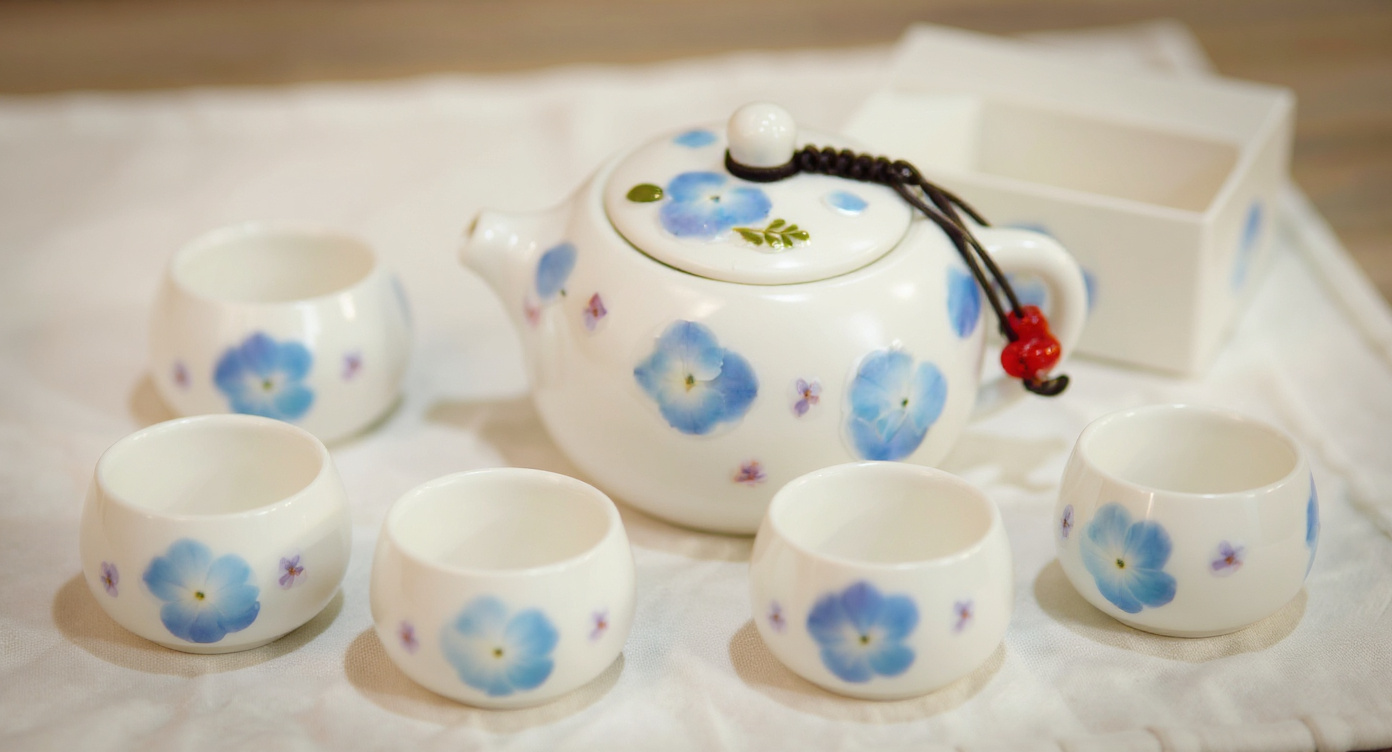
A tea ceremony set can include a teapot or gaiwan, small cups, a tea tray, a fairness pitcher, tea tools, or a travel case. There is no single fixed inventory. The essential minimum for a usable session is a brewing vessel and cups. This particular set contains one approximately 200ml teapot and four approximately 45ml cups, presented in a gift box.
What is the best tea set to give as a gift?
The best set matches the recipient's actual tea habits. A compact porcelain pot with four small cups suits someone who enjoys oolong, gongfu brewing, or sharing a few slow pours with friends. A handmade botanical set is more likely to pay off when the recipient values material detail and keeps meaningful home objects, rather than treating cups as disposable kitchen basics.
How many cups should a tea set have?
Two cups suit a couple or solo tea drinker who likes to alternate pours. Four cups are the most flexible middle ground for gifting because they work for one person, a pair, or a small gathering. Six cups are useful for larger groups, but only if the pot is large enough to serve them without repeated partial pours.
What size teapot is best for gongfu tea?
For one or two people, a 100ml to 150ml pot is common and gives close control over each infusion. For a small group, 150ml to 250ml is practical. A 200ml teapot is well suited to four small 45ml cups, especially when pours are kept below the rim.
Are porcelain tea sets good for everyday use?
High-fired porcelain can be excellent for regular tea because it is hard, relatively non-porous, and doesn't usually retain tea flavours strongly. Everyday use is realistic when care instructions support it. A hand-finished set with raised botanical detail should be washed gently and protected from sudden temperature changes, so it is better for intentional daily tea than rough household use.
Can tea be drunk from cups decorated with real flowers?
Only when the maker states that the decorative treatment and sealing materials are food-safe. Real flowers alone are not a safety claim. For this set, the preserved hydrangea petals are sealed with eco-friendly, food-safe materials. Keep the drinking rim clean and avoid abrasive cleaning that could damage the sealed surface.
How should a porcelain tea set be cleaned?
Rinse soon after use with warm water. For deeper cleaning, use a small amount of mild dish soap and a soft sponge, then dry carefully. Avoid bleach, abrasive powders, metal scrubbers, and sudden swings between cold and very hot water. If the set has embedded botanical relief, clean around textured areas patiently rather than scrubbing hard.
Do tea sets come in gift boxes?
Many do, but packaging quality varies sharply. Some boxes are simple shipping cartons, while others are designed to present and protect the set. A tea ceremony set with gift box included is most useful when the packaging keeps the pot and cups separated, makes gifting easier, and remains practical for storage between uses.
A gift that can become part of a tea ritual
The common worry with a tea-set gift is giving something attractive that ends up stored away because it is too fragile, too generic, or poorly sized for real tea. A compact pot, four small cups, high-fired porcelain, and food-safe sealed botanical work solve that problem for someone who enjoys measured brewing and thoughtful objects. For that kind of recipient, see the Handmade Porcelain Tea Set Real Pressed Blue Hydrangeas | 1 Pot 4 Cups | Botanical Art Teaware as a gift that is made to be used, not merely unboxed.