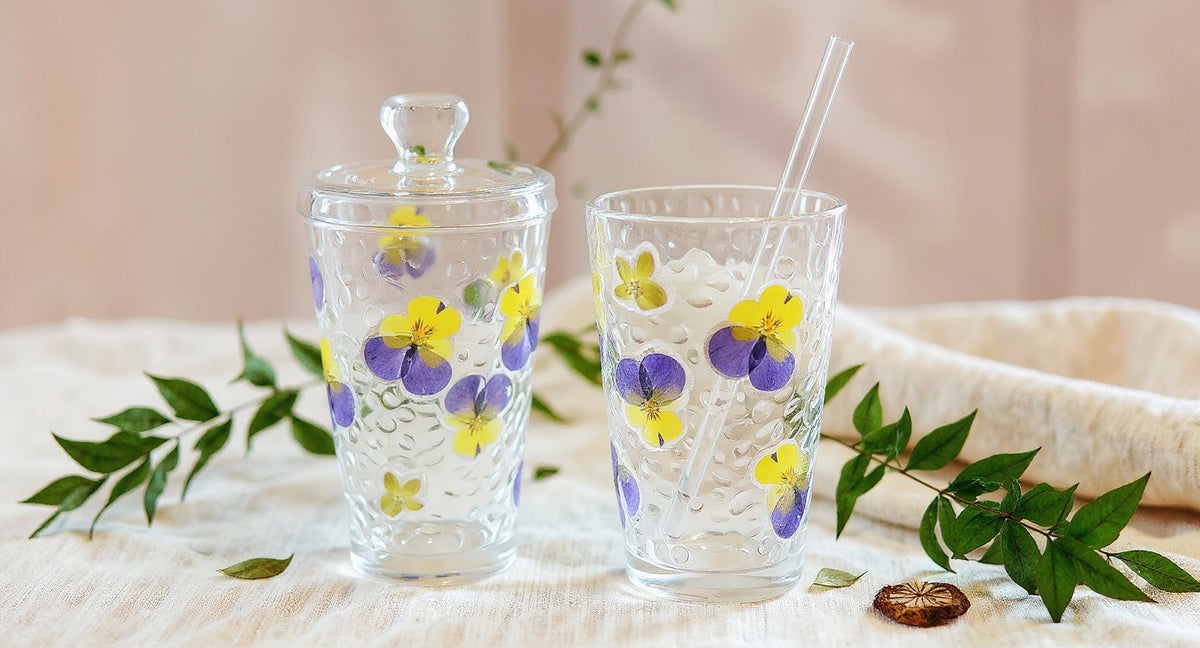
A vintage European style floral glass tumbler is usually recognized by its botanical decoration, proportion, tactile detail, and the way the glass is made rather than by flowers alone. Real vintage examples tend to show deliberate craft choices: curved or weighty glass, restrained botanical motifs, small production irregularities, and decoration that belongs to the object rather than sitting on it like a flat graphic.
The difficult part is that “vintage style” and genuinely old are not the same thing. A newly made floral cup can borrow the romance of European table glass while using contemporary heat-resistant glass, a lid, and a reusable straw. That isn't a flaw. It just needs to be described honestly.
The floral details that separate decorative glass from novelty drinkware
Look at the flowers first. Botanical glass with a vintage feel tends to use leaves, petals, stems, or small blooms in a composed arrangement rather than a repeating all-over print. The decoration should have variation. Petal edges aren't mathematically identical, leaves don't all sit at the same angle, and the placement should feel considered rather than copied around a cylinder.
A raised surface is one of the strongest clues that a floral tumbler is more than printed drinkware. On a real botanical cup, a fingertip can detect relief where petals or leaves meet the glass surface. Printed flowers remain smooth because ink is applied as a two-dimensional image. Painted flowers can have slight texture, but the result is usually still visibly brush-applied rather than built from actual preserved plant material.
The distinction matters because pressed botanical work is a material process, not just a decorative theme. Pressed flower craft depends on drying plant material in a way that retains its recognizable form, though colour, thickness, and fragility vary from one specimen to another. That natural variation is exactly what gives a handmade floral cup its character.
Watch for these six details when assessing a floral glass:
1. Visible relief: Petals and leaves should create a tactile, three-dimensional surface rather than a perfectly smooth wall. 2. Irregular botanical forms: Real preserved flowers have uneven edges, fine veins, and small differences in size. 3. Thoughtful placement: Better work uses open space. Every inch doesn't need to be crowded with decoration. 4. Glass thickness appropriate to use: A drinking vessel needs enough substance at the rim and base to be practical, not merely decorative. 5. No repeated digital motif: Identical flowers appearing at identical intervals usually point to a printed transfer or mass-produced pattern. 6. A usable form: A tumbler should still hold comfortably, stand securely, and accommodate ordinary drinks without turning into a display-only object.
A floral cup can be charming without being antique. The important question is whether the construction supports the price and intended use.
Pressed flowers, painted flowers, and printed flowers are different objects
A great deal of confusion comes from product descriptions that use “floral glass” for three very different kinds of cup. They can look similar in a thumbnail. In the hand, they are not close.
| Type of decoration | What it looks and feels like | Typical production approach | Price information supplied |
|---|---|---|---|
| Printed floral tumbler | Smooth glass with flat flowers, often repeated | Ink, decal, transfer, or printed coating | $15–$40 on Amazon/AliExpress |
| Painted floral glass | Surface colour applied by hand or machine | Paint or enamel added after the glass is formed | varies by seller |
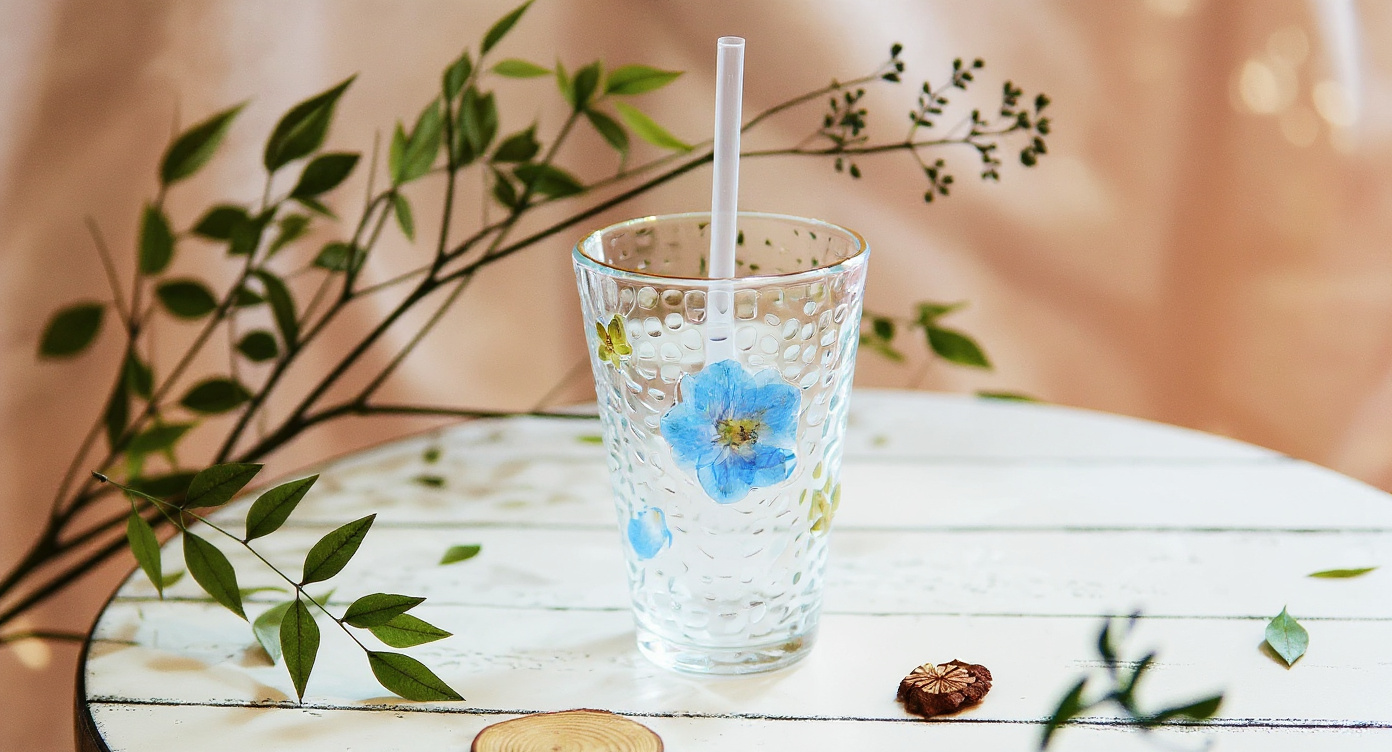
| Hand-embedded preserved botanicals | Raised petals and leaves with natural irregularity | Individual preserved plant material applied during handcraft | $60–$150 for mid-tier artisan Etsy options |
| Studio glass art with botanical detail | Collectible, materially complex, often one-off work | Studio-scale handmade process | $300–$800+ |
Printed cups have their place. They are inexpensive, easy to replace, and sensible for casual party use. They are not the right choice for someone looking for the visual depth of real plant material or the slight variation associated with hand-applied work.
Painted floral glass occupies the middle ground. A good painted cup can be attractive and durable when the decoration is properly cured, but paint remains paint. It won't reproduce the papery edge of a dried petal or the slight raised line of a leaf. The botanical effect is illustrative, not physical.
The flower preservation process explains why real botanicals are more demanding to use. Plant material must be dried and stabilized before it can become part of a decorative object. Fresh flowers carry moisture and decay; preserved flowers are selected and prepared for their lasting visual qualities. That preparation helps account for why handmade floral glass takes more time than a printed tumbler.
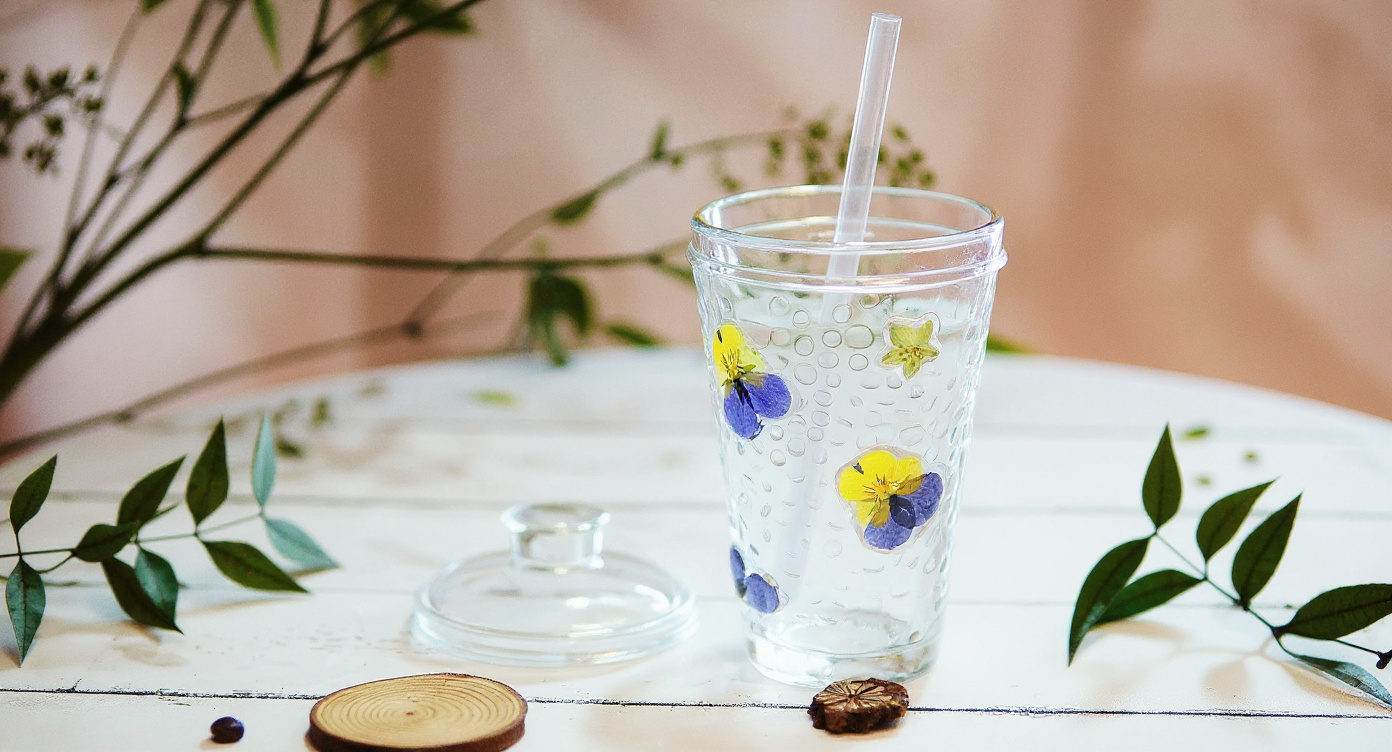
The Handmade Pressed Flower Glass Cup Set 400ml | Real Floral Drinkware with Lid & Straw | Vintage Boho Gift takes the real-botanical route. Its 400ml heat-resistant glass tumbler is hand-embedded with preserved petals and leaves, producing a raised floral surface rather than a flat pattern. The work is described as taking 3 days, and no two cups are identical. A 400ml pressed-flower tumbler with lid and reusable glass straw makes sense for iced coffee, fruit-infused water, and cooled floral tea where the decoration can remain visible.
Shape, rim, and capacity tell part of the story
Older European drinking glasses weren't all goblets and cut crystal. Everyday tumblers existed in straight-sided, gently tapered, faceted, and low rounded forms, often made to serve water, wine, cordials, or table drinks. What gives a floral tumbler a European-inspired feel is usually restraint in the silhouette. The shape should support the decoration, not compete with it.
A cylindrical or lightly tapered tumbler works well for botanical decoration because the eye can travel around the vessel. It also serves a practical purpose: a lid can sit securely, a straw can be positioned without obstructing the drink, and the cup can hold a reasonable portion without becoming awkwardly wide.
At 400ml, this type of glass sits in useful everyday territory. It is large enough for an iced coffee with ice, a cold tea with fruit, or water with citrus slices. It is not a tiny ornamental juice glass, and it is not an oversized insulated travel tumbler. That middle capacity is one reason the form works for a home café setup or desk drink.
Rim treatment matters too. A drinking rim should be smooth and comfortable, with no botanical material where lips meet glass. Decorative work belongs on the exterior. This protects the user experience and keeps the floral surface from interfering with ordinary washing.
The lid and glass straw are modern additions, not claims of antique authenticity. They make a vintage European style floral glass tumbler more practical for contemporary use, especially for drinks left on a desk, vanity, or side table. A dust-proof lid helps keep an uncovered drink cleaner, but it does not make the cup leakproof or travel-safe.
“Vintage” should describe the influence, not invent an age
A floral tumbler may be genuinely vintage, vintage-inspired, antique, or simply floral. Those labels shouldn't be treated as interchangeable.
A genuinely vintage drinking glass needs evidence beyond style: a maker's mark, traceable origin, a dated set, verified packaging, a known production period, or credible seller documentation. Wear can be informative, but scratches and cloudiness are not proof of age. A modern cup can be distressed, and an old glass can be exceptionally well kept.
For new handmade pieces, “European-inspired” is the more accurate language. The influence may come from decorative tableware traditions, botanical ornament, and the long European history of art glass. Murano glass, for example, is closely associated with Venetian glassmaking and demonstrates how much craft value can be attached to colour, form, and handworked detail. That history should not be used to claim that every floral tumbler was made in Murano or belongs to a historical collection.
The 18th-century royal glass-art reference works best as an inspiration point: ornate domestic objects, layered decoration, and the idea that functional glass could also be a treasured household piece. It does not turn a modern lidded 400ml tumbler into an 18th-century artifact. The honest appeal lies in taking that decorative instinct and applying it to a usable contemporary cup.
This is also where price expectations need to be realistic. A $15 printed cup and a hand-embedded botanical vessel are not comparable merely because both have flowers on them. The trade-off is clear. Printed glass is cheaper and easier to replace; handmade botanical glass offers material variation, slower production, and a more collectible result. It is more likely to justify a premium when the buyer values those differences and intends to keep the piece rather than treat it as disposable seasonal drinkware.
Care habits that protect raised botanical decoration
Heat-resistant glass is useful, but it should not be confused with indestructible glass. Raised floral decoration deserves gentler handling than a plain dishwasher tumbler, particularly around the exterior surface and where the lid meets the glass.
For daily use, hand washing is the sensible default. Use lukewarm water, a mild dish soap, and a soft sponge or cloth. Avoid abrasive scrub pads, stiff bottle brushes on the decorated exterior, and soaking the cup for extended periods if the exterior botanical layer is exposed to repeated moisture. Clean the straw with a suitable narrow straw brush, then rinse thoroughly.
Avoid sudden temperature changes. Don't pour boiling liquid into a cold glass straight from a chilly cupboard, and don't place a hot cup immediately into cold water. Thermal shock is one of the ordinary ways glass cracks, even when the material is described as heat-resistant.
A few practical boundaries help:
- Keep the cup for stationary use rather than tossing it loose into a crowded bag. - Treat the dust-proof lid as a cover, not a seal for commuting. - Do not use harsh bleach, abrasive powders, or scouring cream on the floral exterior. - Let very hot drinks cool slightly before filling the tumbler. - Store the glass where other cups cannot rub continuously against the raised petals.
A small amount of care is the price of keeping the tactile surface intact. This won't work as the household's hardest-working dishwasher glass. It is better suited to intentional daily drinks, a slow afternoon tea, or a gift that is meant to remain special after the first photograph.
FAQ
How can you tell if a floral glass tumbler is vintage?
Start with evidence, not the floral pattern. A confirmed vintage tumbler may have a maker's mark, original packaging, a documented production period, matching pieces from a known set, or reliable provenance. Style alone can only establish that it looks vintage-inspired. Raised petals, handwork, and minor irregularities may indicate artisan construction, but they do not establish age.
What is the difference between pressed flowers and printed flowers on glass?
Pressed flowers are real plant material that has been dried and preserved before being used as decoration. They tend to show natural variation in petal shape, leaf veining, thickness, and colour. Printed flowers are ink or transfers applied as a flat image. The glass remains smooth, and the motif can usually be repeated exactly from cup to cup.
Are floral glass tumblers dishwasher safe?
A plain printed tumbler may be dishwasher safe if its maker explicitly says so. A handmade cup with raised preserved flowers should generally be hand washed to reduce abrasion, prolonged heat exposure, and detergent contact with the exterior decoration. If no dishwasher guidance is supplied, hand washing is the safer choice.
Can you put hot drinks in a glass tumbler with a straw?
Heat-resistant glass can handle warm or hot drinks within its intended use, but very hot liquid and a glass straw require care. Let the drink cool to a comfortable drinking temperature before using the straw, and avoid sudden temperature changes. A lid with a straw opening is best treated as a dust cover, not a spill-proof hot-drink lid.
What are vintage floral drinking glasses called?
Names vary by shape and period. Common descriptions include floral tumblers, botanical drinking glasses, decorated glassware, pressed-flower glass cups, painted floral glasses, and vintage-inspired table glass. “Vintage” should only be used as an age claim when the item has evidence supporting it.
How do you clean a glass cup with raised flower decorations?
Wash it by hand with mild soap, lukewarm water, and a soft cloth or sponge. Clean around raised areas carefully rather than scrubbing across them with an abrasive pad. Rinse well and dry with a soft towel, especially around the botanical surface. Avoid long soaking sessions, abrasive cleansers, and harsh chemical products.
Are handmade floral glass cups good gifts?
They can be excellent gifts for someone who values useful objects with individual character. A 400ml cup with a lid and reusable straw suits iced coffee, cold tea, water, and home café rituals, while the hand-embedded floral detail gives it a more personal feel than a standard printed mug. It is less suitable for someone who wants dishwasher-proof, replaceable drinkware with no special care requirements.
A floral tumbler should earn its place in daily use
The attraction of floral glass is easy to understand. The risk is ending up with a cup that photographs well but feels generic, fragile, or impractical after a week. Look for real material detail, a comfortable 400ml capacity, heat-resistant glass, a usable lid and straw, and clear care expectations. Skip flat printed designs when the goal is texture and individuality; choose them only when low cost and easy replacement matter more than handcraft.
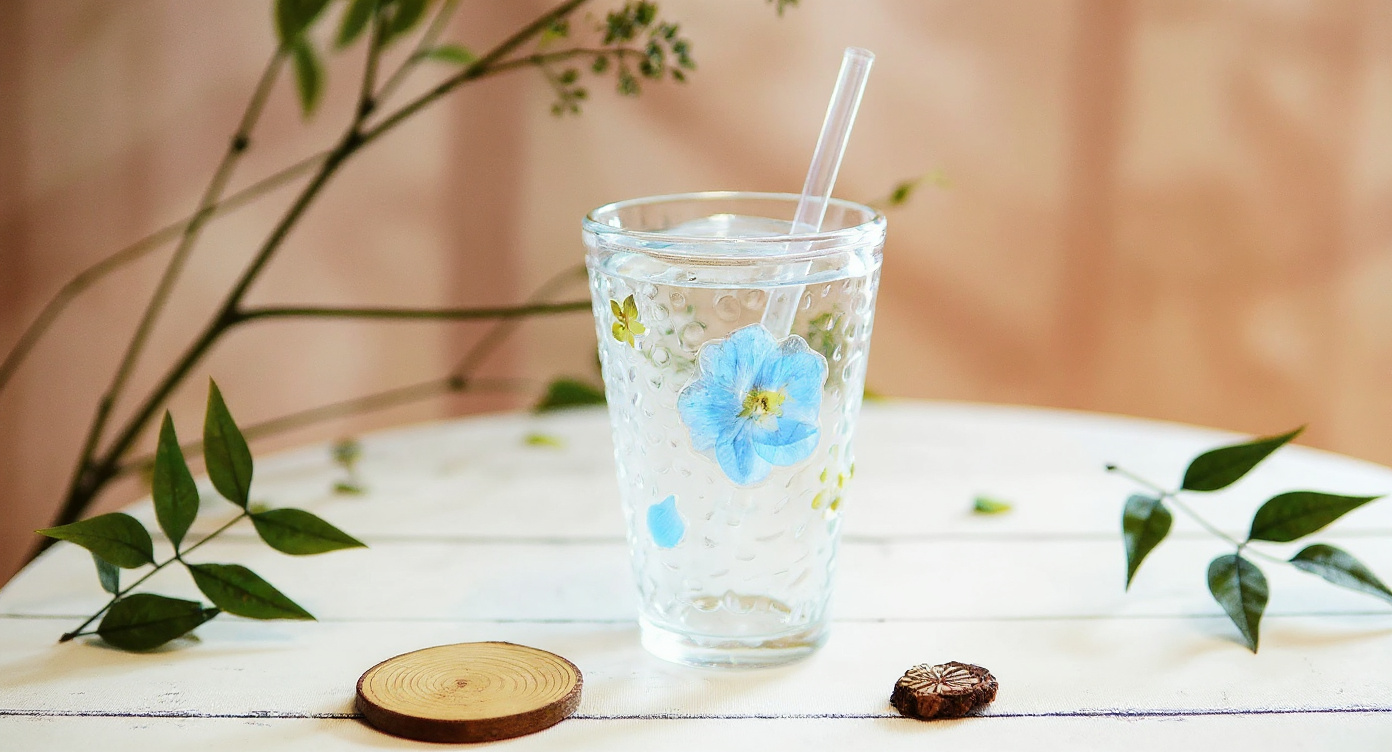
For anyone trying to find a gift or daily cup that doesn't feel mass-produced, the Handmade Pressed Flower Glass Cup Set 400ml | Real Floral Drinkware with Lid & Straw | Vintage Boho Gift answers that problem with preserved petals, leaves, a tactile floral exterior, and a form meant for actual drinks. Each cup's variation is part of the point. To compare the yellow and blue floral options and see the full set details, see the Handmade Pressed Flower Glass Cup Set 400ml | Real Floral Drinkware with Lid & Straw | Vintage Boho Gift.