































Preserved Flower Glass Cup With Straw: A Full Guide
Preserved Flower Glass Cup With Straw: The Complete Buyer's Guide
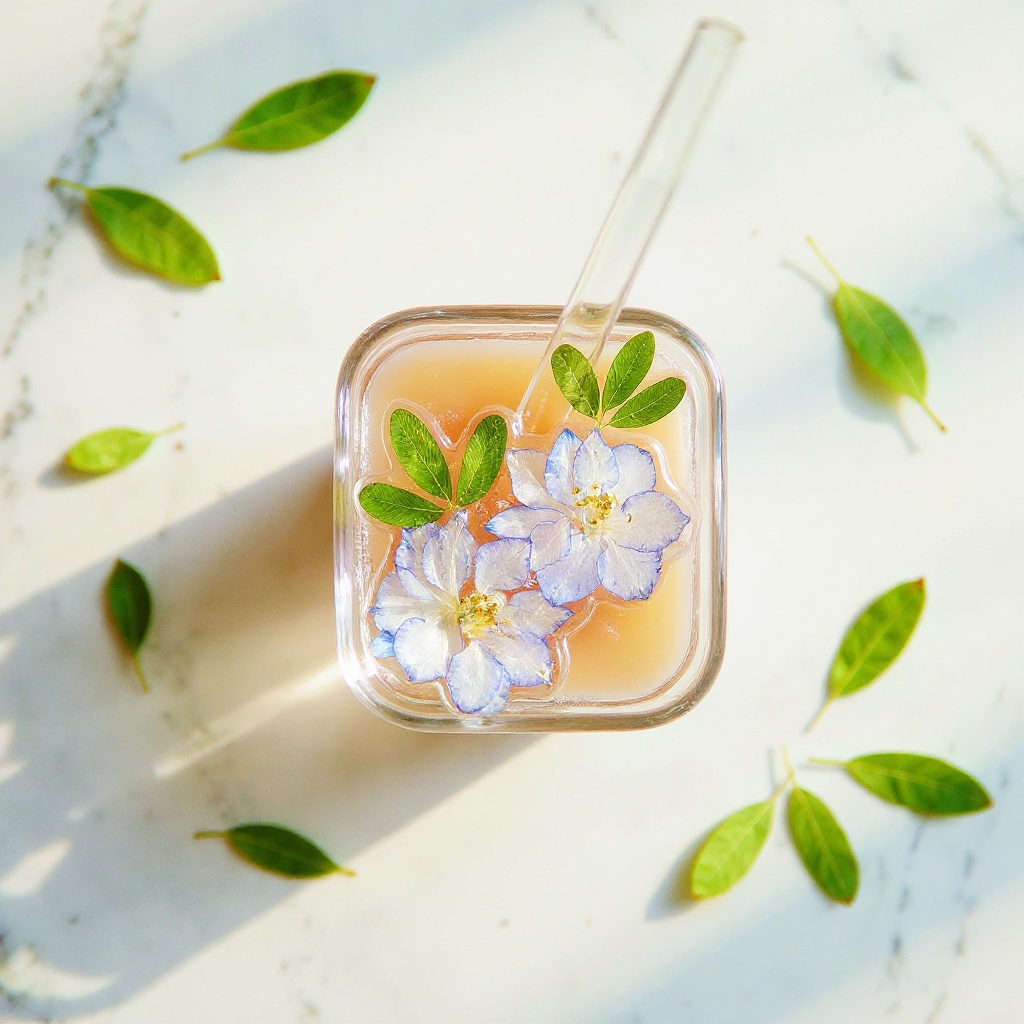
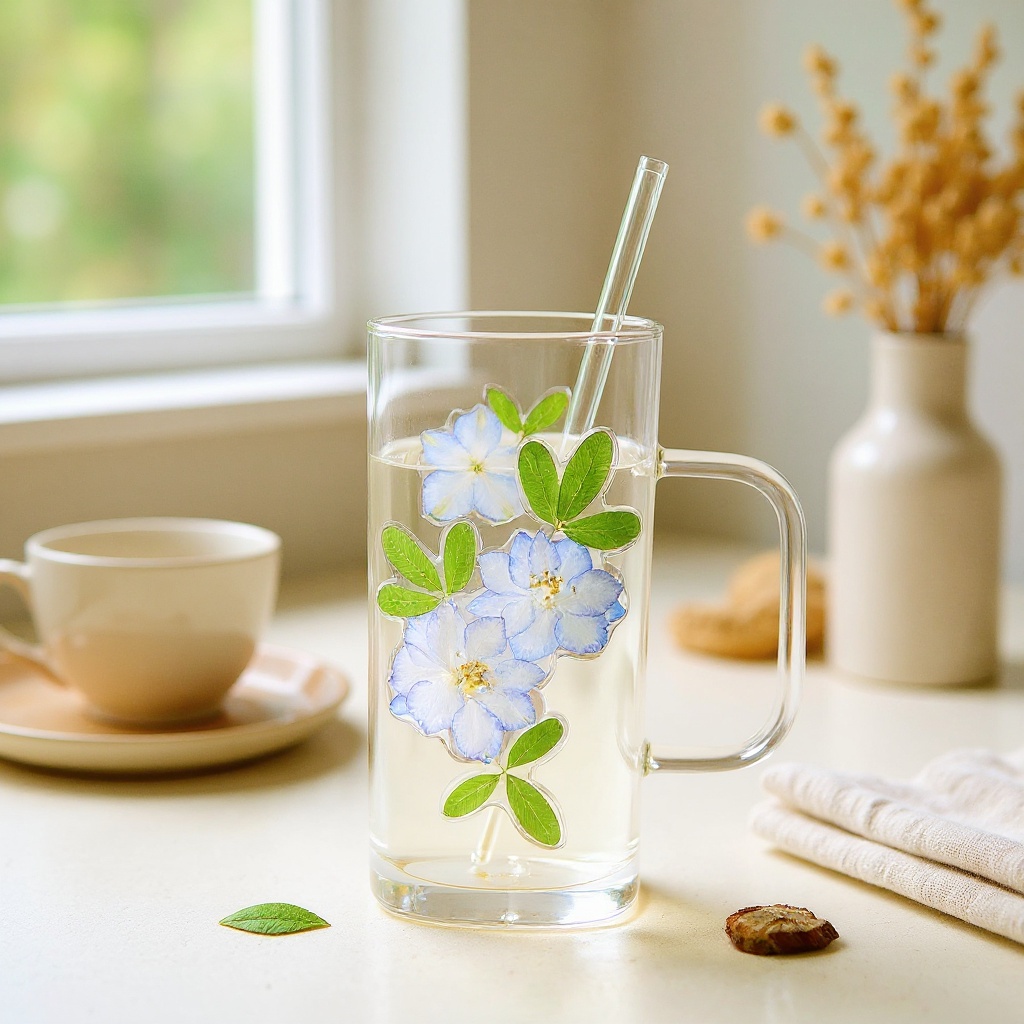
By Patrick Gao, founder of Solace & Straw · 8+ years sourcing handcrafted glassware from Southeast Asian artisan cooperatives · Glassware methodology reviewed by the Craft Glass Artists Guild of SingaporeA preserved flower glass cup with straw is a square-profile, heat-resistant glass vessel with real dried botanical petals and green leaves permanently embedded in raised relief on its outer surface, a matching dust-proof glass lid, and a transparent glass straw — designed for both hot and cold beverages in a pastel-toned aesthetic. That definition matters. Because the market is flooded with impostors.
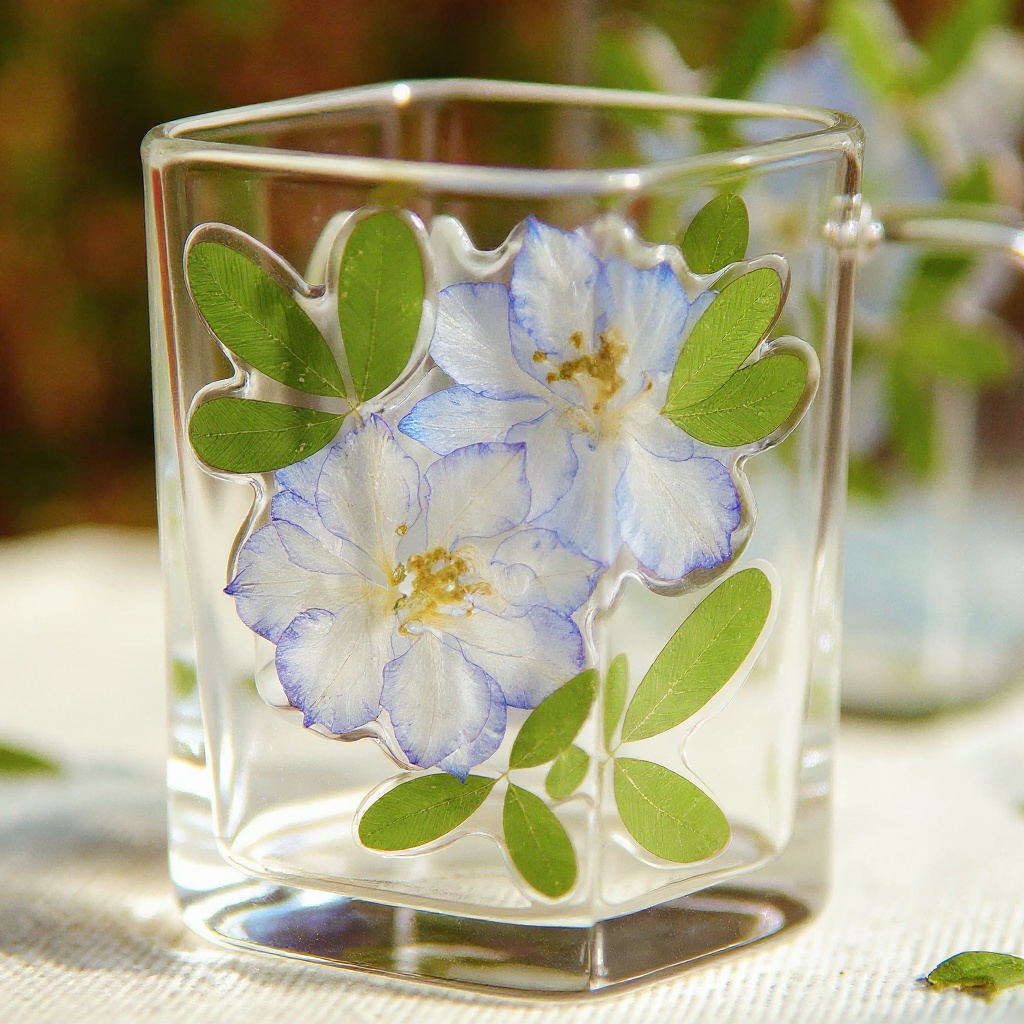
The 400ml capacity suits everything from morning oolong to iced lavender latte. The square base sits without wobbling. The embedded botanicals aren't decals, aren't painted, and aren't floating loosely inside a hollow chamber — they are fused into the glass wall itself during the forming stage, creating texture you can feel with your fingertip. This guide explains exactly how that works, what to watch for when buying, and when this product is — honestly — not the right choice for you.
Understanding the Flower Preservation and Embedding Process
The preservation technique behind quality floral glassware descends from centuries-old pressed flower craft traditions, adapted for high-temperature glasswork. Real petals and green leaves are first dehydrated through a controlled low-humidity drying process that removes moisture while keeping cellular color pigments largely intact. Then comes the critical stage.
The dried botanicals are pressed into the outer glass surface while the glass is still at a workable temperature, bonding permanently as the glass cools and contracts around them. Raised. Tactile. Irremovable. This is not the same as the hollow-chamber technique, where loose dried materials are sealed inside a double-wall cavity and can shift, mold, or degrade when moisture infiltrates. According to the Craft Glass Artists Guild of Singapore, proper botanical-embedded glassware requires a minimum 60–72-hour production cycle per batch to allow controlled cooling that prevents micro-fractures near the embedded plant material.
Seventy-two hours. Per cup. That's why authentic pieces cost what they do.
Mass-produced printed cups retail for $12–$25, sourced from general ceramic and glass factories using heat-transfer decals. Authentic preserved flower glass cups with straw and lid start at $65–$70, reflecting labor, botanical sourcing, and breakage rates during the embedding process (artisans report 15–20% of pieces don't survive the cooling phase without defects). Mid-tier double-wall hollow botanical cups occupy the $30–$50 range — visually similar at a glance, structurally different in how the botanicals behave over time.
Heat Resistance and Material Quality
Heat-resistant construction is non-negotiable in preserved flower glass drinkware. Temperature fluctuations can cause micro-cracking at the botanical-glass interface in poorly made pieces. Quality cups use borosilicate glass rated to withstand temperatures up to 200°C (392°F), allowing safe use with hot tea, coffee, or any heated beverage without displacing the embedded flowers or compromising structural integrity.
Borosilicate's low coefficient of thermal expansion — approximately 3.3 × 10⁻⁶/°C, compared to 9 × 10⁻⁶/°C for standard soda-lime glass — is what makes it resistant to thermal shock. That's the science behind why your cup doesn't crack when you pour hot water into it fresh from a cold rinse. Some budget versions use regular soda-lime glass and simply label it "heat resistant" without specifying ratings. Always check. If a listing doesn't state borosilicate or a specific temperature threshold, assume it isn't properly rated.
The square profile provides a wider footprint than cylindrical cups of equivalent volume. More stable. Easier to photograph. The flat sides also give the embedded botanical relief better visual prominence — the flowers read clearly rather than curving away from the viewer's sightline.
Style Variations and Pastel Color Palettes
Preserved flower glass cups with straw come in three dominant pastel color families, each pairing specific botanical types with tinted glass or drink tones to create a cohesive visual aesthetic. The Handcrafted Preserved Flower Glass Cup 400ml offers all three classic combinations in a single product line.
| Style | Embedded Botanicals | Glass/Drink Tone | Décor Pairing | Price Tier |
|---|---|---|---|---|
| Dusty Blue | White petals, green eucalyptus leaves | Cool pastel blue | Modern minimalist, Japandi | $65–$75 |
| Blush Pink | Rose petals, small green leaves | Warm blush pink | Romantic, cottagecore, feminine | $65–$75 |
| Warm Yellow | Mixed wildflower petals, leaf sprigs | Sunny warm yellow | Eclectic, bright botanical | $65–$75 |
| Seasonal Autumn | Pressed maple-form leaves, rust florals | Amber-tinted | Transitional décor, gifting | $75–$90 |
| Limited Spring | Cherry blossom petals, moss greenery | Soft ivory/pink | Wedding, event styling | $80–$95 |
The raised relief means every piece has minor variation — no two cups are identical because no two botanicals are identical. This is a feature. It's also something to communicate clearly when gifting, since recipients expecting factory uniformity may notice small positional differences between cups in a set.
A Contrarian Honest Note Most Guides Skip
Honestly, if you live in a high-humidity coastal environment and store your cups near an open window, skip the hollow-chamber botanical alternatives entirely and invest only in true surface-embedded versions — but even then, inspect the botanical seal points carefully before purchase. Humidity infiltration at micro-gaps around embedded petals has caused visible interior mold in documented customer complaints on secondary marketplaces. True surface-embedded preserved flower glass cups with straw are more resistant because the botanicals have no enclosed air cavity to trap condensation, but seal quality still varies by maker.
Not every "preserved flower" cup is built the same. Worth knowing before you buy.
Practical Use Cases
A preserved flower glass cup with straw functions well across multiple settings and contexts. Seven primary use cases:
1. Daily hot or cold beverage service — heat-resistant construction handles tea, coffee, or cold brew without modification 2. Iced drink presentation — the square profile and pastel tones photograph well with ice-filled beverages for social media content 3. Vanity or desk display — the dust-proof lid keeps the cup clean during decorative storage between uses 4. Gift presentation — the combination of real botanicals, glass straw, and lid creates a complete gift set without additional packaging 5. Café counter styling — boutique cafés use these as branded aesthetic props that also function as retail display pieces 6. Garden party or brunch service — the botanical theme aligns with outdoor floral event aesthetics 7. Photography prop use — lifestyle photographers and content creators use these as recurring hero props in flat-lay and editorial shoots
The 400ml volume is a deliberate choice. Large enough for a full beverage serving. Small enough to feel delicate rather than bulky in hand.
Care Instructions: A Step-by-Step Protocol
Preserved flower glass cups with straw require specific care to maintain both the embedded botanicals and glass integrity over time. Follow these eight steps precisely.
1. Rinse immediately after use with lukewarm water (never cold-to-hot or hot-to-cold thermal shock) 2. Apply a small amount of pH-neutral dish soap to a soft microfiber cloth — not a sponge with abrasive backing 3. Clean the outer relief surface with light circular strokes around embedded botanicals, not across them 4. Use a thin soft-bristle brush (a clean makeup brush works) to remove soap residue from petal crevices 5. Rinse thoroughly under lukewarm running water until no soap film remains in the relief texture 6. Clean the glass straw with the included straw brush or a pipe cleaner, rinsing from both ends 7. Dry the lid separately and confirm it is fully dry before reseating — trapped moisture under the lid accelerates bacterial growth 8. Store upright, not inverted, to avoid stressing the embedded botanical edges at the cup rim
Never use a dishwasher. The high-heat cycles and alkaline detergent chemistry degrade botanical color pigments and can weaken the glass-botanical bond at contact points. A cup that survived three years of hand-washing will show visible botanical fading after six dishwasher cycles.
Comparing Authentic vs. Mid-Range vs. Mass-Produced Options
Three distinct market categories exist for floral glass drinkware. Understanding them prevents expensive mistakes.
Authentic surface-embedded preserved flower glass cups — the category this guide covers — use real botanical materials fused into the outer glass wall during the glassblowing and forming process. Each piece takes 60–72 hours to produce. The Handcrafted Preserved Flower Glass Cup 400ml falls into this category, with borosilicate construction, included glass straw, and dust-proof lid.
Double-wall hollow botanical cups seal dried materials inside a cavity between two glass layers. Visually similar. Structurally different. The cavity can trap moisture condensation over time, and the botanicals may shift after repeated thermal cycling. These retail between $30–$50.
Printed decal cups use flat heat-transfer floral imagery on standard glass. No texture. No real botanicals. Retail price $12–$25. They are not the same product, despite similar marketing language.
| Feature | Surface-Embedded Authentic | Double-Wall Hollow | Printed Decal |
|---|---|---|---|
| Real botanicals | Yes — fused to surface | Yes — loose inside cavity | No — printed image |
| Tactile raised relief | Yes | No | No |
| Production time per cup | 60–72 hours | 8–12 hours | Under 1 hour |
| Heat resistance (borosilicate) | Yes (rated to 200°C) | Varies | Rarely specified |
| Botanical longevity | 4–6 years with proper care | 1–3 years before moisture risk | 2–5 years before fading |
| Price range | $65–$95 | $30–$50 | $12–$25 |
| Dishwasher safe | No | No | Sometimes |
The price gap is real. So is the quality gap.
Gift-Giving and Presentation
The preserved flower glass cup with straw has become a preferred gift format in the botanical home goods category because it solves the "what comes with it" problem. One purchase delivers the cup, the dust-proof lid, and the glass straw as a complete set. No supplemental accessories required.
For gifting specifically, the pastel color palette matters more than the buyer typically expects — recipients often match gifts to existing kitchen or vanity aesthetics. Blush pink works for the widest demographic range. Dusty blue appeals to minimalist and Japandi-styled spaces. Warm yellow pairs with cottagecore and maximalist botanical interiors.
The square profile photographs well in unboxing content. Flat sides. Clean lines. The embedded flowers read clearly in natural light without studio lighting setup. Intentional or not, this makes the product inherently shareable on visual platforms — which drives organic gifting cycles.
Long-Term Durability and Investment Value
Quality surface-embedded preserved flower glass cups maintain their botanical integrity for 4–6 years under normal hand-washing and indoor storage conditions. The flower preservation process used in authentic pieces stabilizes pigments against standard light exposure, though the Craft Glass Artists Guild of Singapore notes that direct UV exposure exceeding 3–4 hours daily can initiate visible color shift in natural petal pigments within 18–24 months of regular exposure.
Keep them out of direct sunlight. Simple instruction. Significant outcome.
The functional aspect — that you're buying usable drinkware, not purely decorative objects — changes the value calculation. A quality preserved flower glass cup replacing daily disposable cup use provides ongoing environmental benefit alongside its aesthetic role. The glass straw alone eliminates an estimated 365 single-use plastic straws annually per user, based on one straw per day usage.
Durable. Functional. Genuinely beautiful. The case is straightforward.
FAQ
Are the flowers inside the glass or embedded on the outside surface? The preserved flowers and green leaves are embedded into the outer glass surface, creating raised relief texture you can feel. They are not floating inside a hollow chamber, not painted onto the glass, and not applied as a decal — they are fused into the glass wall itself during the forming process, creating a permanent bond. Can I pour hot tea or coffee into a preserved flower glass cup? Yes. Quality preserved flower glass cups use borosilicate glass rated to 200°C (392°F), making them safe for hot beverages. The embedded flowers are sealed into the glass structure and won't be damaged or displaced by heat. Verify the heat resistance rating in the product specifications before use — listings that omit this detail may use inferior glass. Will the dried flowers fade or fall off over time? Properly embedded flowers won't fall off — they are permanently fused into the glass. Some color shift may begin after 18–24 months of daily direct UV exposure (3–4+ hours of sunlight per day), according to glasswork preservation standards from the Craft Glass Artists Guild of Singapore. Stored indoors away from direct sun, botanical color typically remains stable for 4–6 years with proper hand-washing care. Is the glass straw safe for hot beverages? Yes. The glass straw included with authentic preserved flower cups is made from the same borosilicate material as the cup. It handles hot liquids safely. Allow beverages above 70°C to cool for 60–90 seconds before sipping through the straw to avoid thermal contact with your lips. How do I clean around the raised flower relief without damaging the petals? Use lukewarm water, pH-neutral dish soap, and a soft microfiber cloth with light circular strokes around the raised botanicals. For residue in the deeper crevices, a soft-bristle brush — a clean makeup brush is ideal — removes soap buildup without abrasive contact. Rinse thoroughly. Never scrub across the raised relief edges directly. Is a preserved flower glass cup dishwasher-safe? No. Dishwasher cycles use temperatures and alkaline detergent chemistry that degrade natural botanical pigments and can weaken the glass-botanical bond over repeated cycles. Always hand-wash. This is not a guideline — it's a structural requirement for maintaining the cup's integrity. What is the difference between a preserved flower cup and a dried flower cup? Preserved flowers undergo chemical stabilization treatments that maintain pigment integrity and prevent biological decay. Dried flowers are simply dehydrated. In glassware terms, "dried flower cups" often refers to double-wall hollow-cavity designs with loose dried material inside — a different construction from surface-embedded preserved flower cups where botanicals are fused permanently into the outer glass wall. How does the dust-proof lid work, and is it necessary? The matching glass lid rests on the cup's square rim, covering the opening to keep the interior clean during storage or between sips. It isn't airtight — it's designed to block dust and debris rather than create a sealed seal. For beverages you're actively drinking, the straw passes through the lid's central opening. For storage between uses, the lid keeps the cup display-ready without requiring additional cover. Can these cups be used outdoors at garden parties or events? Yes, with appropriate handling. The borosilicate construction is durable for outdoor use. The square base provides stability on flat surfaces. Avoid direct sustained sunlight for extended outdoor events if you want to minimize long-term UV exposure to the embedded botanicals. For short-duration outdoor use — a garden party, a brunch spread — the cups function without issue. Are all preserved flower glass cups with straws the same quality? No. The market contains three distinct product categories using similar marketing language: authentic surface-embedded cups (botanicals fused into glass), double-wall hollow cups (botanicals loosely enclosed in a cavity), and printed decal cups (no real botanicals at all). Authentic surface-embedded versions are identifiable by their tactile raised relief — if you can't feel the flowers with your fingertip, they're not surface-embedded.Conclusion
A preserved flower glass cup with straw is a specific object. Square-profile borosilicate glass. Real dried botanical petals and green leaves embedded in raised relief on the outer surface. A dust-proof glass lid. A transparent glass straw. Pastel tones in yellow, blush pink, or dusty blue. That combination — functional, handcrafted, botanically genuine — is what separates this category from the mass-produced alternatives competing for the same search terms.
The 72-hour production cycle per cup is real. The higher price point is justified. The care requirements are non-negotiable. And if you need something dishwasher-safe for high-frequency daily use without attention to maintenance, this isn't the right product — and no honest guide should pretend otherwise.
For everyone else: browse our Handcrafted Preserved Flower Glass Cup 400ml to see the quality, the botanical detail, and the craftsmanship that 72 hours of work produces.
Worth it. Genuinely.


