
A pressed flower glass tumbler costs $65 to $800 because each piece takes three days of hand layering, heating, and cooling — not because of markup. Here's what that time actually buys, and where the craft falls short once it leaves the studio.
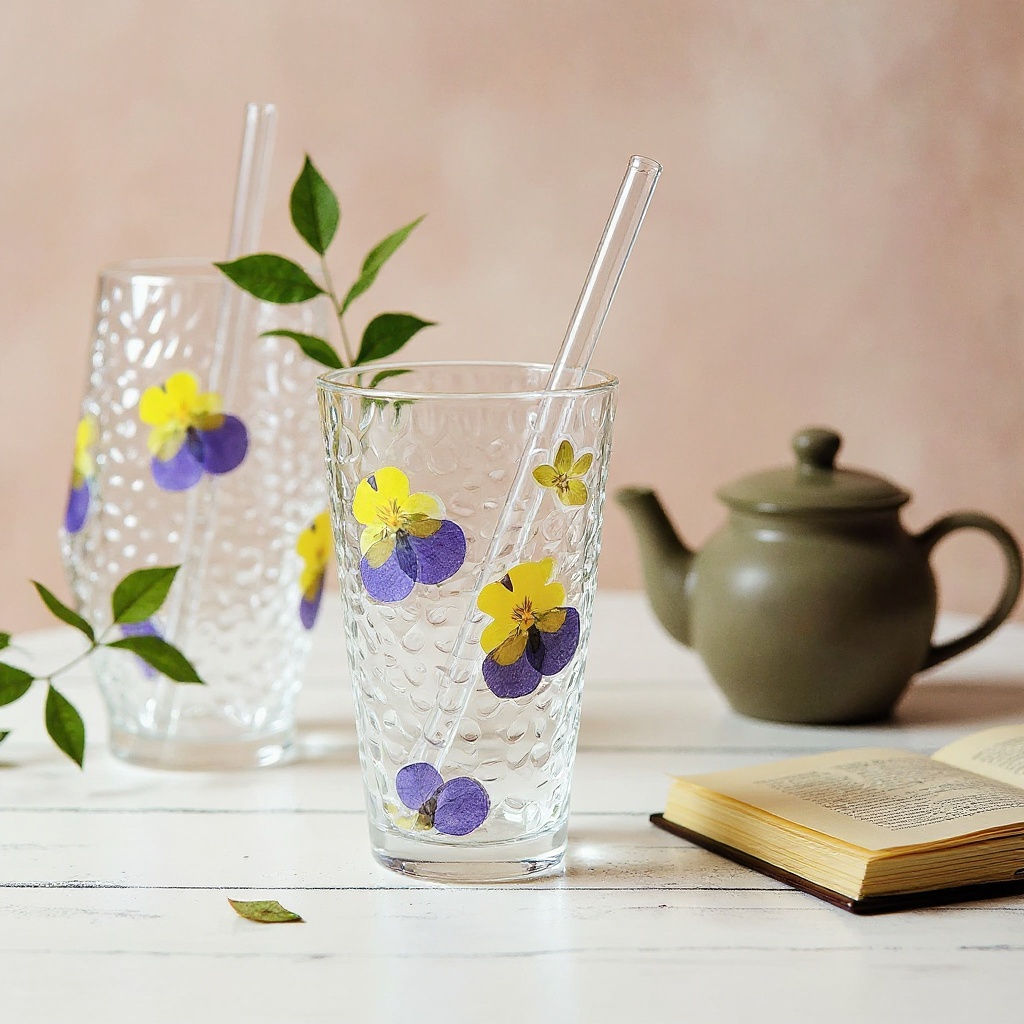
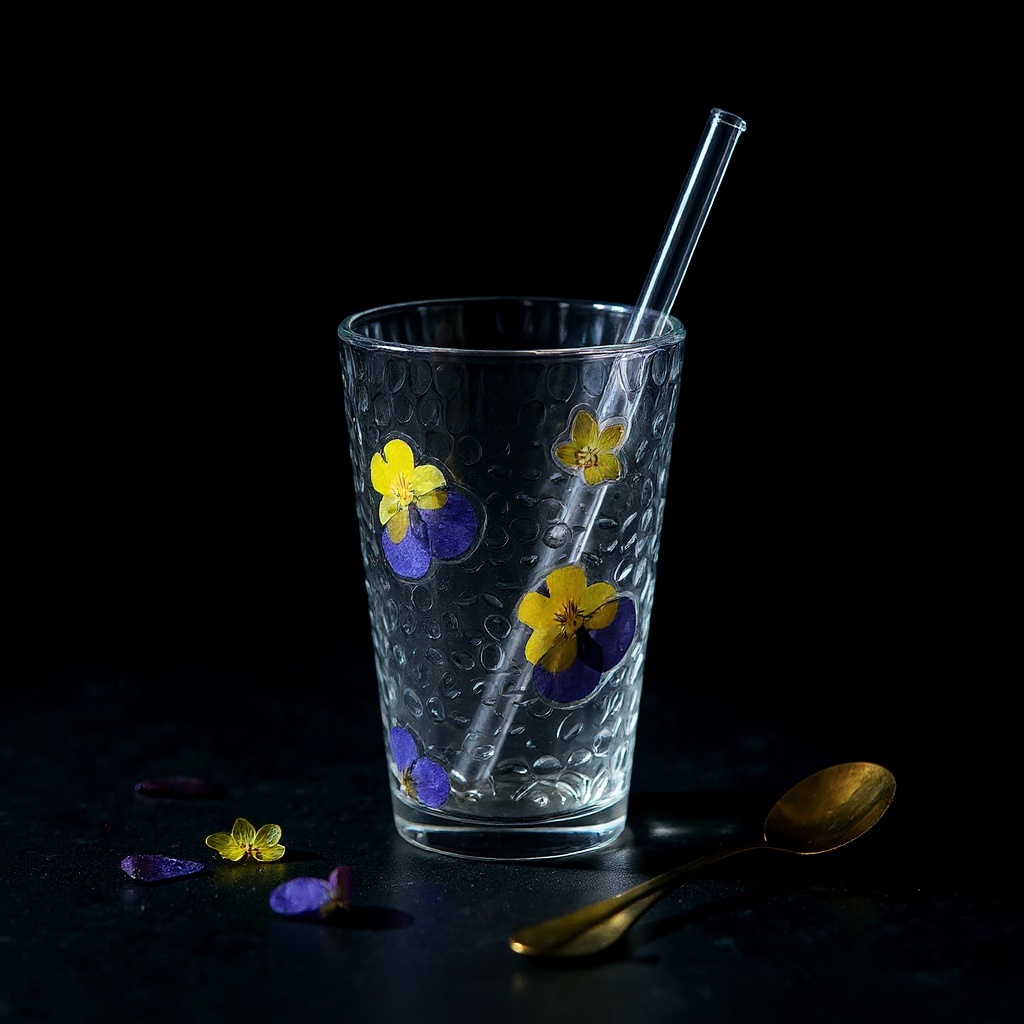
The cup itself: clear glass, dried petals and green leaves raised right off the surface so you can feel the texture with a fingertip, a matte dust-proof lid, a clear glass straw. Set it on linen or marble next to dried pampas grass or a sprig of eucalyptus and it photographs like a cottagecore still life. That's the whole appeal. Function is secondary.
Why Three Days Makes All the Difference
Glass artists don't rush this. They can't. The pressed flower craft requires precise timing at nearly every stage, and skipping a step shows up later as a crack, a brown petal, or a bubble trapped under the glass where a leaf should be crisp.
Day one is petal prep. Real flowers get pressed between absorbent paper for 24 to 48 hours depending on thickness — pansies need less, roses need more, and nobody has fully automated the judgment call in between. Too fast and they brown. Too slow and they crumble. Small yellow blooms like buttercups and violas hold up best for beginners; blue delphinium and cornflower petals bruise if you press too hard.
Day two is the glass work. Artisans heat clear glass to roughly 1,000°F and place each petal by hand while the glass is still workable. One wrong placement means starting over with new glass. There's no fixing it mid-process.
Day three is cooling, and this is where most failures actually happen. Rush the cooldown and thermal shock cracks the piece straight through, sometimes hours after it looked fine. The glass needs 12 to 16 hours to cool gradually and reach real strength.
| Day | Stage | Temp Range | Duration | Most Common Failure |
|---|---|---|---|---|
| 1 | Petal pressing | Room temp | 24-48 hrs | Browning or crumbling |
| 2 | Glass heating | ~1,000°F | 4-6 hrs | Petal scorching |
| 2 | Petal placement | ~900-950°F | 1-2 hrs | Misalignment, air bubbles |
| 3 | Slow cooling (annealing) | 1,000°F down to room temp | 12-16 hrs | Thermal shock cracking |
| 3 | Final inspection | Room temp | 1 hr | Rejected for visible flaws |
What Separates Real Embedding from Cheap Imitations
Mass-produced floral cups use printed designs or decals. Flat. No shadow, no give under your thumb.
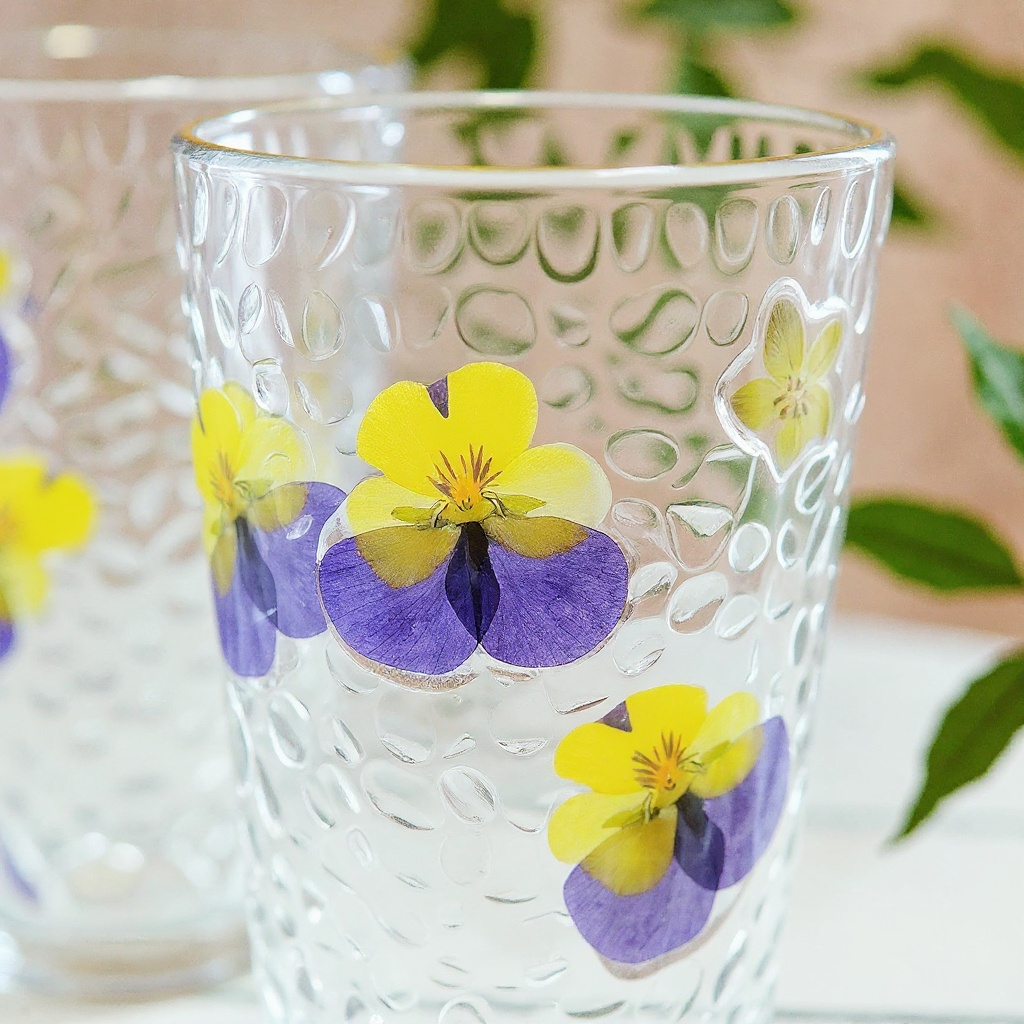
Real embedded petals sit between glass layers, not on top, and create a raised surface with actual depth. Light hits them and throws shadow the way it would on a pressed flower in a book — not on a sticker.
| Feature | Real Embedded Petals | Printed/Decal Versions |
|---|---|---|
| Texture | Raised, tactile surface | Completely flat |
| Light refraction | Depth and shadow | None |
| Durability | Won't peel; glass wears first | Can fade or chip within months |
| Price range | $65-$800+ | $15-$40 |
| Production time | 3+ days per piece | Hours, mass batch |
| Uniqueness | No two identical | Thousands of identical copies |
The glassblowing technique behind this dates back centuries; historical accounts tied to European court glasswork in the 1700s describe similar botanical inlays, though documentation from that era is thin and mostly anecdotal. Modern artisans have refined the process for cups you actually drink from, not just display.
The Hidden Cost of Botanical Preservation
Flower prep adds expense buyers rarely see. Fresh botanicals need proper preservation before they can survive contact with molten glass at all.
A typical batch involves:
1. Sourcing flowers at peak bloom — timing you can't control 2. Initial pressing with specialized equipment 3. Moisture removal without color loss 4. Quality sorting — small studios we've talked to report rejecting close to a third of petals at this stage, though rates vary by flower type 5. Glycerin treatment for flexibility 6. Final inspection before glass work begins 7. Storage in controlled humidity until use
That prep alone runs 2-3 days before glass work even starts. Commercial flower suppliers charge premium prices for preservation-ready botanicals, and honestly, that's the line item most buyers underestimate.
Here's the part most articles won't tell you: if you live somewhere genuinely humid — coastal Florida, parts of Southeast Asia — skip this purchase entirely, or at least don't expect it to age well. Glycerin-treated petals can weep faint discoloration into the glass within a year in high-humidity homes, no matter how skilled the artisan was. It's a display piece in that climate, not a daily cup.
Why Heat-Resistant Glass Matters for Daily Use
Regular soda-lime glass cracks if you pour hot tea into a cold cup. Every time.
Borosilicate glass — the type used in quality botanical drinkware — handles thermal shock better because it expands and contracts less when temperatures swing. Our Handmade Pressed Flower Glass Cup Set uses borosilicate for this reason, rated safely up to 180°F for hot beverages.
The dust-proof lid and glass straw aren't just styling. Botanical glass often sits out as a display piece between uses, and the lid keeps the rim clean without you having to rinse it every single day.
How Artisan Pricing Compares to Mass Market
A $65 pressed flower glass cup breaks down roughly like this:
- Materials (glass, flowers, supplies): $12-15 - Labor (3 days at skilled craftsperson rates): $35-40 - Studio overhead and equipment: $8-10 - Profit margin: $10-12
Mass-produced alternatives run $15-25 with printed designs and soda-lime glass. Mid-tier Etsy listings, $60-150, often use resin casting instead of true glass embedding — worth checking listing photos closely for texture before buying. Murano glass artists charge $300-800+ for comparable botanical work, which puts handmade pressed flower tumblers in an accessible-luxury middle ground.
Where Botanical Glass Works Best (And Where It Doesn't)
Good for:
- Floral tea ceremonies and slow mornings - Iced drinks, fruit-infused water - Flat-lay photography props on linen or marble - Gifts for cottagecore or boho-leaning friends - Display pieces that get used occasionally
Not good for:
- Daily coffee grinding through a dishwasher cycle - Homes with toddlers and a habit of dropping cups - Anyone who just wants function, full stop - People who need dishwasher-safe convenience
Hand-washing only. Harsh detergents dull the glass and flatten the way light plays through the petals over time.
Frequently Asked Questions
How long do pressed flowers last in glass? Properly embedded flowers hold color for 10-15 years when kept out of direct UV. The glass itself acts as a barrier against oxygen and handling. Do real flower petals fade inside glass over time? Yes, slowly. UV exposure drives most of the fading, so keep the piece off a sunny windowsill if you want it to last. Is pressed flower glass safe to wash in a dishwasher? No. Heat and harsh detergent can damage both the glass seal and the embedded botanicals. Hand-wash with mild soap. Can you use a pressed flower glass cup for hot drinks? Borosilicate versions handle up to 180°F safely. Skip pouring boiling water straight into a cold cup — that thermal jump is what cracks glass, botanical or not. Why do handmade botanical crafts sometimes fail or crack during the process? Temperature control, mostly. Cool the glass too fast, or use petals with too much residual moisture, and thermal stress cracks it — sometimes not until hours later. Can you refill or reuse a pressed flower glass cup once the petals fade? Yes. The glass itself doesn't degrade with fading petals; it still works fine for cold drinks even after the botanicals lose vibrancy. Will the glass straw scratch or cloud over time? Glass straws hold up better than acrylic against scratching, but they can develop faint mineral haze from hard water. A vinegar soak every few weeks clears it. Is the embedded petal cup food-safe for daily drinking? Yes, the petals are sealed inside the glass layer and never touch your beverage directly. The straw and rim are the only surfaces that contact liquid.Is Slow Craft Worth the Investment?
Three days per cup. No shortcuts, no machine replication of exactly where a petal lands in molten glass.
If you want drinkware that also functions as a small piece of decorative art, this delivers on both. If you want something you can toss in the dishwasher and forget about — this isn't it, and that's fine too.
Browse our handmade pressed flower glass cup collection to see the raised petal texture up close before deciding.