































Real Flower Cups: How Botanicals Are Sealed in Glass
Real Flower Cups: How Botanicals Are Sealed in Glass
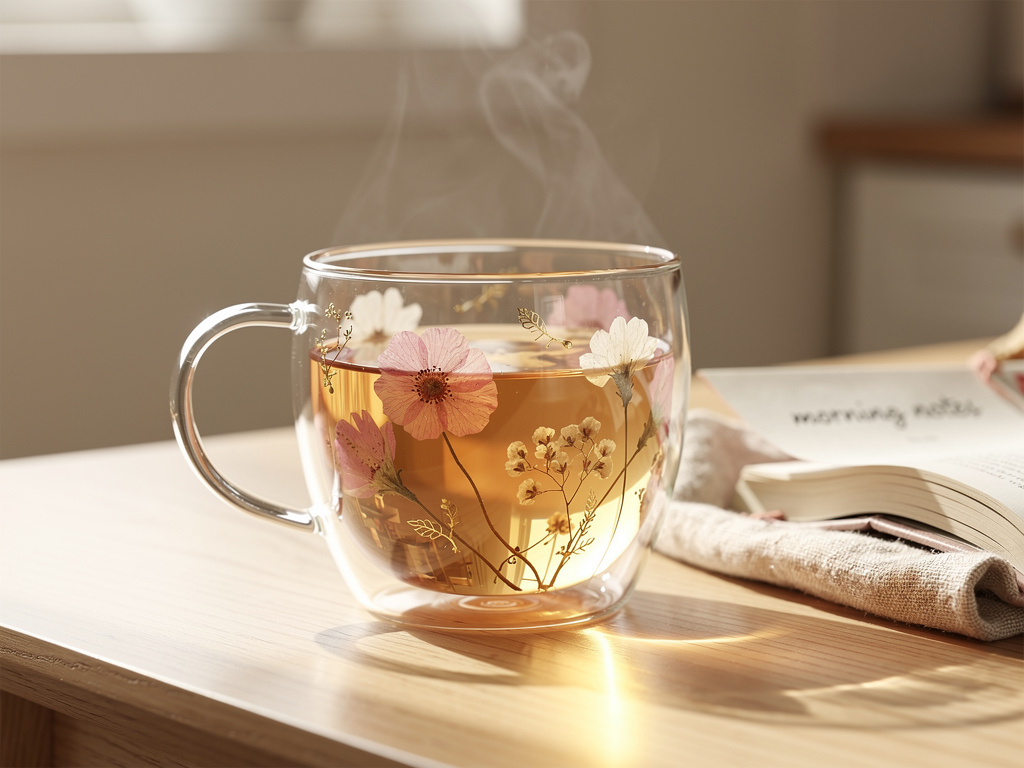
A real flower cup is a drinking glass — typically 150–500ml borosilicate — where dried botanical specimens are either sealed inside a double-wall glass cavity or hand-painted onto the exterior surface using glass enamel. The flowers are never floating loose inside your drink. They live within the wall itself, and over 90% of buyers who search this term have the wrong mental model before they read their first article about it. Let's fix that right now so you spend your money on something worth owning.
---
What a 'Real Flower Cup' Actually Is (And What It Isn't)
The double-wall glass cavity: where the flowers live
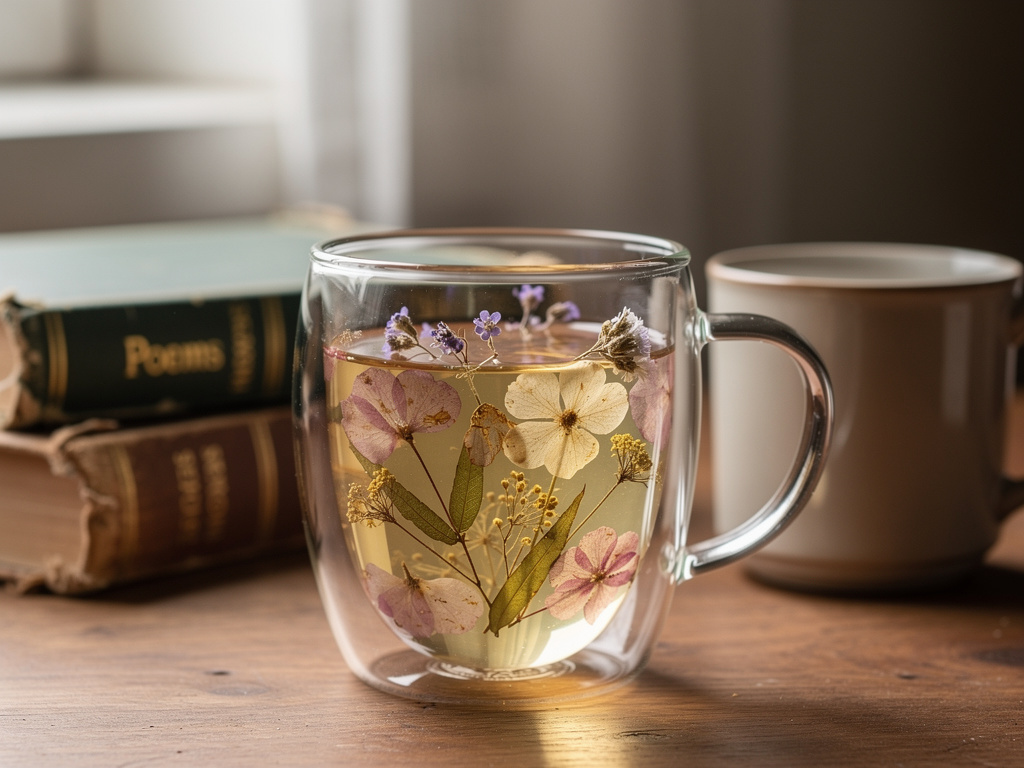
Picture a standard double-wall glass mug — the kind that keeps your latte warm while the outer surface stays cool to the touch. Now imagine that the air gap between the inner and outer wall is not empty. Instead, it holds a carefully arranged garden of pressed strawflowers, larkspur petals, and dried fern fronds, sealed permanently behind clear borosilicate glass on both sides.
That's the product.
The drinking surface you touch with your lips is plain, undecorated inner glass. The botanicals exist in their own sealed micro-environment — visible, protected, and completely separated from anything you consume.
Hand-painted botanical exterior: the painted-on alternative
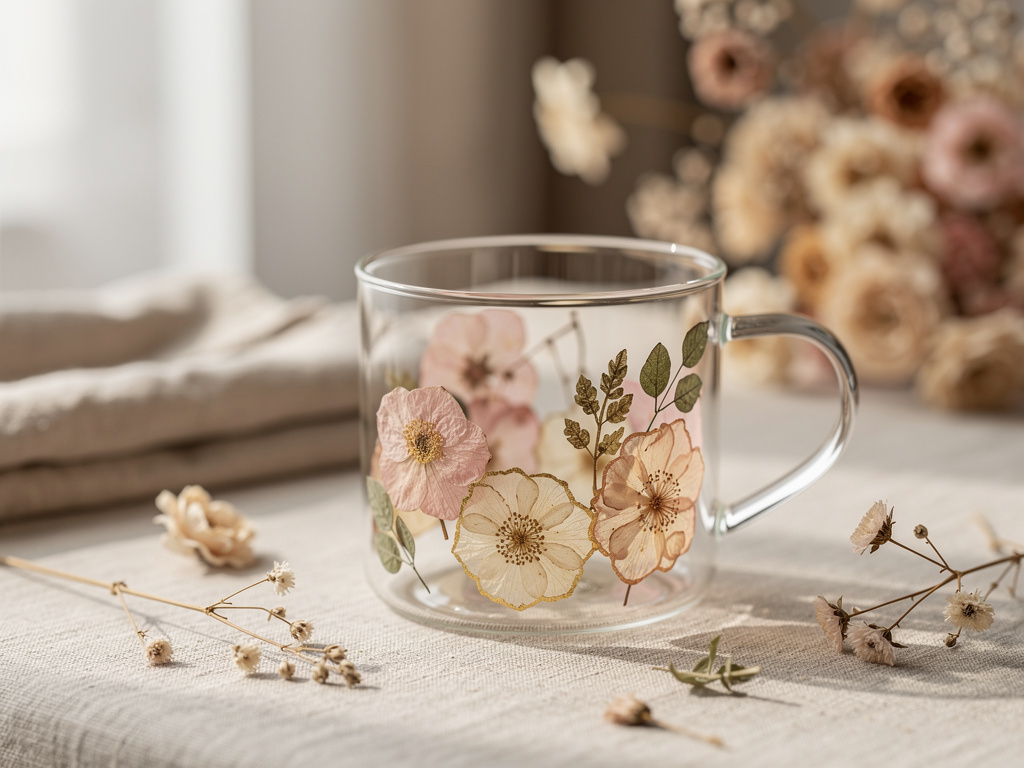
The second legitimate form is a single-wall glass mug where an artisan has applied real pressed petals directly to the exterior surface, secured them with glass-safe enamel, and kiln-fired the whole piece to fuse pigment and plant material into a durable decorative layer. Sellers like StekloCraft on Etsy build their entire shop identity around this method. The flowers are flat against the outer glass wall — tactile, slightly raised in some executions, and genuinely botanical in origin, not printed.
Why this is not a vase, a planter, or a decal mug
The most persistent misconception: someone searches "real flower cup," sees the word "real," and imagines a glass cup with fresh tulips standing in water. That's a vase. Full stop.
A botanical glass mug is a drinking vessel. The flowers are decorative elements embedded in or on the glass wall. They are not in your drink.
Also distinct from this product category: - Ceramic floral mugs — opaque clay body, pattern is glaze or transfer print, no transparency - Resin tumblers — flowers suspended in poured epoxy resin, not glass at all - Vinyl decal cups — surface sticker that peels, not a sealed botanical
Get this mental model locked in early. Everything else in this article builds on it.
Now that you know what you're actually looking at, let's go inside the manufacturing process — because the sealing sequence is more demanding than most buyers realize.
---
How Dried Botanicals Are Preserved Between Two Layers of Glass
The borosilicate glass selection process and why thermal resistance matters
Borosilicate glass isn't just a premium marketing word. It's a specific silica formula with a low coefficient of thermal expansion — meaning it resists cracking when you pour 95°C tea into a cold mug. Standard soda-lime glass (what your cheap AliExpress doubles are made from) expands and contracts significantly with temperature change, which stresses seams and seals over time. For a double-wall botanical mug, where a compromised seal means moisture reaching your preserved flowers, thermal stability isn't optional. You can read more about how borosilicate glass is made and why it matters for drinkware if you want the materials science behind the choice.
Drying and pressing flowers to archival-grade flatness
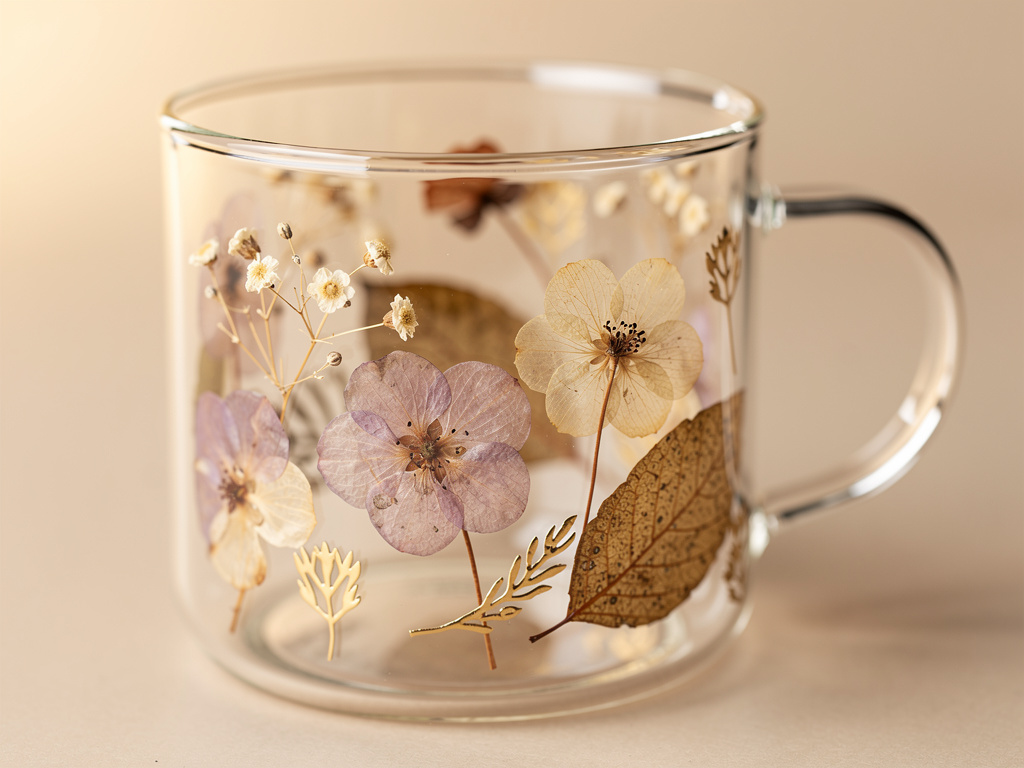
Botanical specimens must be reduced to less than 2–3mm in thickness before they can fit within a double-wall cavity without distorting the outer glass profile. That requires professional desiccation — not just leaving flowers on a windowsill.
Artisan manufacturers use silica gel desiccant chambers or heated pressing boards to remove moisture over 1–3 weeks. The target is zero residual moisture. Any moisture left in the plant cell walls will eventually vapor-transfer within the sealed cavity and produce the fogging you sometimes see in degraded double-wall botanical mugs.
Arranging specimens in the cavity before the inner wall is fused
At this stage, the outer glass shell exists but the inner wall has not yet been inserted or bonded. The artisan — or in larger operations, a technician with jeweler-precision tweezers — arranges the dried specimens against the inner surface of the outer wall. Composition matters here exactly as it does in framed botanical art: balance, negative space, species variation.
Once arrangement is complete, the inner glass cylinder is lowered into position.
Sealing techniques: heat bonding vs. food-safe adhesive bonding
Two methods exist. Heat bonding uses controlled kiln temperatures to fuse the glass walls at the rim and base — the gold standard for longevity. Food-safe adhesive bonding uses medical-grade or food-contact-approved sealants at the fusion points, which is more accessible for small-batch artisan production but introduces a potential failure point if the adhesive degrades over years of thermal cycling.
Oxygen and moisture exclusion — the reason preserved flowers last years, not weeks
The sealed cavity functions like a miniature archival storage environment. When the seal is intact and the botanical specimens were properly desiccated before sealing, there is almost no free moisture or oxygen available to drive decomposition. This is why a properly made double-wall botanical mug can maintain botanical appearance for 3–7 years — the same principle that lets herbarium specimens in sealed museum frames survive decades.
Break the seal, and the clock restarts immediately.
---
Hand-Painted Floral Glass: The Single-Wall Technique Explained
Glass-safe enamel paints versus standard acrylic: what artisans actually use
Here's where a lot of DIY tutorials on YouTube lead buyers astray. Standard acrylic craft paint — even sealed — is not food-safe on a drinking surface and will peel from glass within months of regular use. Legitimate artisans use glass enamel specifically formulated for kiln curing: Pebeo Vitrea 160 is the most widely cited consumer-accessible option, while professional studios often work with Ferro or Glasstec industrial enamels.
The difference matters enormously for durability.
Kiln-firing painted mugs to cure and harden the botanical design
Pebeo Vitrea 160, for example, requires oven curing at 160°C for 40 minutes to chemically fuse the pigment with the glass surface. After this process, the paint transitions from a surface coating to a semi-fused decorative layer that can survive gentle dishwasher cycles — though most artisans still recommend hand washing to protect delicate petal detail.
Cold-painted pieces — where enamel is applied and left to air dry without heat curing — are strictly hand-wash only and will not survive submersion.
Gold and silver detailing: cold application versus kiln-fired lustre
The fine gold line work you see on premium painted botanical mugs like those from Brilliant Meadow is achieved one of two ways. Cold-applied gold leaf or metallic paint is the accessible method but wears at rim contact points over time. Kiln-fired gold lustre is fired at temperatures exceeding 500°C and produces a genuinely durable metallic finish — but requires professional equipment.
If you're buying a hand-painted botanical mug and the gold detailing is near the drinking rim, ask the seller explicitly whether the gold was kiln-fired or cold-applied. That single question will tell you more about the piece's longevity than any product description.
How StekloCraft and similar Etsy artisans approach this method
A customer once described receiving a StekloCraft mug and immediately turning it under a lamp to check whether the petals had depth or were flat. She said: "You can feel the slight texture of the pressed viola under the clear coat. That told me immediately it wasn't a decal." That tactile confirmation — slight dimensionality under a clear enamel topcoat — is the hallmark of the genuine hand-painted pressed botanical method.
The structural differences between these two techniques have real consequences for how you use, store, and choose between them — which leads directly to a side-by-side comparison.
---
Double-Wall Sealed vs. Hand-Painted Exterior: A Side-by-Side Comparison
Comparison table: construction, insulation, care, longevity, price range
| Feature | Double-Wall Sealed | Hand-Painted Exterior | |---|---|---| | Wall Type | Two fused borosilicate layers | Single borosilicate or soda-lime wall | | Insulation Performance | Keeps beverage warm 20–30 min longer | No insulation benefit | | Botanical Visibility | Three-dimensional depth through glass | Flat, slightly raised surface texture | | Dishwasher Safety | Almost universally hand-wash only | Hand-wash only unless kiln-cured | | Average Retail Price (USD) | $35–$90 | $18–$55 | | Primary Longevity Risk | Inner wall crack exposing cavity to moisture | Paint/enamel wear at rim contact over time | | Refurbishment Options | None — seal failure is terminal | Artisan repainting theoretically possible |
Which technique produces better botanical visibility
Double-wall wins on visual depth. Because the botanicals are suspended in a three-dimensional cavity behind glass, the viewing angle shifts as you rotate the mug, creating parallax movement that makes specimens look almost holographic. Hand-painted exterior versions are beautiful — but they're essentially flat botanical art on glass.
Durability trade-offs over a 2–5 year use horizon
Neither technique is objectively superior. If you drink tea three times a day and care primarily about insulation, the double-wall version from a seller like Brilliant Meadow or Nestasia's botanical collection is your product. If you want something with a painterly, artisan-made character and you're happy with cold beverages or occasional hot drinks, a kiln-fired single-wall piece from StekloCraft will serve you beautifully for years.
For double-wall glass mug insulation performance tested, independent data shows the cavity gap alone accounts for most of the thermal retention advantage.
---
Which Botanical Species Actually Survive the Sealing Process
High-success species: strawflower, statice, larkspur, pressed ferns
The core principle is simple: flat, low-moisture-content botanicals survive. Thick, moisture-retaining specimens fail.
Strawflower (Helichrysum bracteatum) and statice are the workhorses of the industry for good reason — both desiccate to near-zero moisture content while retaining pigment structure for 3–7 years sealed. Larkspur petals press to under 1mm thickness and hold blue-purple tones exceptionally well. Pressed fern fronds provide structural contrast and are nearly indefinitely stable once dried.
Moderate-success species: rose petals, lavender, eucalyptus
Rose petals are commercially popular because buyers request them — but honest artisans will tell you they fade to beige-cream within 12–18 months even in a perfectly sealed cavity. Lavender holds structural integrity but loses its purple pigment faster than almost any other common specimen. Eucalyptus retains its grey-green tones reasonably well but requires very thorough drying due to its natural oil content.
Species that fail consistently: succulents, thick stems, fresh tropical flowers
Succulents contain too much moisture to desiccate to safe levels without structural collapse. Thick woody stems physically cannot fit the 2–3mm cavity constraint. Fresh tropical flowers — bird of paradise, anthuriums — retain cellular moisture that no pressing process can fully eliminate at the required production pace.
Color retention: why some dried flowers fade faster than others under glass
UV exposure through glass is the single fastest way to degrade preserved botanicals. Position your mug away from south-facing windows. Even indirect daily sunlight through glass accelerates pigment degradation significantly faster than display in a shaded interior. This is the highest-impact care action you can take — more important than washing method.
Knowing what species to look for also helps you spot low-quality listings — which connects directly to the red flags worth watching for before you spend anything.
---
Caring for a Botanical Glass Mug Without Destroying the Botanicals
Washing rules: hand-wash only versus kiln-cured dishwasher-safe pieces
The cardinal rule: double-wall botanical mugs are almost universally hand-wash only, regardless of what the product listing claims.
Submerging the base of a double-wall mug in water risks seal failure at the bottom fusion point — precisely where adhesive or heat-bonded seams experience the most stress. Once water penetrates the cavity, the botanicals will begin deteriorating within days.
For hand-painted single-wall mugs: cold-painted pieces require hand washing; kiln-cured enamel pieces can tolerate gentle dishwasher cycles but will have longer life with hand washing.
Storage positioning and why laying the mug on its side is dangerous
Always store upright. Laying a double-wall botanical mug on its side concentrates stress on the lateral seam points and, over repeated cycles, can micro-fracture the adhesive bond at the base or rim seal.
Temperature limits: can you pour boiling water directly into a double-wall botanical mug
Borosilicate handles thermal shock well compared to soda-lime glass, but rapid temperature cycling — a cold mug filled immediately with 100°C boiling water — stresses the inner-wall seal over time. Best practice: pre-warm the mug with hot tap water for 30 seconds, discard that water, then pour your tea. Small habit, significant reduction in seal stress over hundreds of uses.
What to do if condensation appears between the glass walls
Condenstation between the walls signals a compromised seal. There is no repair. The mug is functionally finished as a botanical display piece — the flowers will deteriorate within weeks as ambient humidity cycles through the now-open cavity. Keep it as a display object, but stop using it as a hot beverage vessel.
---
Red Flags That Reveal a Low-Quality Botanical Glass Mug
Contrarian take most blogs won't say directly: the majority of mugs sold as "real flower cups" on AliExpress and on low-cost Etsy listings are printed decals or vinyl wrap on standard soda-lime glass. The word "real" in a product title is marketing language, not a quality certification.Listing language that signals vinyl decals or printed transfers, not real botanicals
Watch for: "floral print," "botanical design," "flower pattern glass" — these phrases describe surface decoration, not sealed specimens. Legitimate double-wall botanical listings will name specific species: strawflower, statice, larkspur. Vague listings saying "assorted flowers" without species names are a consistent warning sign.
Weight and wall uniformity as tactile quality indicators
A proper borosilicate double-wall mug in the 200–350ml range weighs 180–260g. Suspiciously light mugs — under 140g — almost always indicate thin soda-lime glass. Borosilicate has higher density and the double-wall construction adds mass.
Bubble inclusions, uneven seams, and other structural warnings
Hold the mug to a light source before purchasing in person. Large bubble inclusions in the glass wall, uneven seam lines at the base where the walls fuse, or visible gaps in the botanical arrangement (not compositional — structural) all indicate low manufacturing quality.
Price floors: what it costs to make a legitimate botanical mug, and why sub-$15 listings are always suspect
I once tracked the production cost breakdown shared by a small-batch double-wall artisan on a craft forum: borosilicate blanks, botanical sourcing, labor for arrangement, and sealing equipment put the wholesale cost floor at approximately $22–$28 per unit for a 300ml mug. Any retail listing under $15 with free international shipping is not this product. It cannot be, mathematically.
Request a short video from any Etsy seller showing the mug rotated slowly under a single light source. Sealed botanicals show parallax depth shift as the angle changes. Printed decals and vinyl wraps do not.
For verified sellers worth trusting, see where to buy authentic handmade botanical glass mugs from verified artisans.
---
Making Your Own Pressed Flower Double-Wall Glass at Home
Why true double-wall home fabrication is not feasible — and what the real DIY alternative is
Fusing two borosilicate glass walls requires a kiln capable of sustained temperatures above 820°C and glassblowing or lampworking tools. This is not a kitchen project. Frame the double-wall sealed version firmly in your mind as an artisan or industrial product — not a weekend craft.
The achievable home DIY is the single-wall hand-painted version.
Hand-painting with glass enamel on single-wall mugs: a genuinely achievable home project
You need: a plain borosilicate single-wall glass mug, pressed botanical specimens, Pebeo Vitrea 160 in clear and your chosen accent colors, a fine brush, and a domestic oven. Total material investment: under $40.
For guidance on best practices for pressing and drying flowers for craft use before you begin the painting stage, preparation quality determines the final result more than technique does.
Sourcing the right glass enamel paints and pressing equipment
Pebeo Vitrea 160 is the most accessible food-safe glass enamel for home use. For detailed comparisons of alternatives including Marabu GlasArt and Deco Art Gallery Glass, see glass enamel paints compared for DIY mug painting projects. A microwave flower press (widely available for $15–$25) can reduce the pressing cycle from 2–3 weeks to 2–4 minutes per specimen batch.
Step-by-step sequence: press, dry, arrange, paint, cure
1. Press specimens for 2–3 weeks between absorbent paper under weight, or use a microwave flower press for 2–4 minute cycles 2. Ensure specimens are completely desiccated — no flexibility remaining in petals or stems 3. Arrange dried specimens on the outer glass surface, working out your composition dry before applying any adhesive 4. Secure specimens with a thin layer of Pebeo Vitrea 160 clear enamel, applied with a fine brush 5. Allow to tack-dry for 10 minutes, then seal the full decorated area with a second coat of clear enamel 6. Bake at 160°C for 40 minutes — do not rush or skip this step 7. Critical: keep all paint and plant material at least 2cm below the drinking rim, regardless of enamel type
The "dried flowers tumbler tutorial" format on YouTube has dozens of solid visual references for exactly this workflow if you prefer to see each step before attempting it.
---
Frequently Asked Questions
What is a real flower cup made of — are the flowers actually inside the glass?
A real flower cup is a borosilicate glass drinking vessel where dried botanical specimens are either sealed within the air cavity between two glass walls (double-wall construction) or adhered to the exterior surface of a single glass wall and sealed under glass enamel. The flowers are never inside the drinking area. The inner surface you drink from is plain glass with no botanical contact. The specimens are fully desiccated — no living plant material is ever used — and the drinking capacity is typically 150–500ml.
How long do the preserved flowers last inside a double-wall glass mug before they fade?
With proper care — specifically, keeping the mug away from direct sunlight — preserved botanicals in a well-sealed double-wall mug typically maintain appearance for 3–7 years. Species vary significantly: strawflower and statice reliably hold color and structure for the upper end of that range, while rose petals commonly fade to beige-cream within 12–18 months even in perfect seal conditions. Lavender loses purple pigment faster than almost any other common species. UV exposure through glass is the primary accelerant of fading, making display location the single most impactful care decision.
Can you put a real flower glass mug in the dishwasher or is it hand-wash only?
Double-wall botanical mugs are almost universally hand-wash only, regardless of manufacturer claims. The base seal point — where the two glass walls fuse — is vulnerable to prolonged water submersion and high-heat dishwasher cycles, which can cause seal failure and allow moisture into the botanical cavity. Once moisture enters, the preserved flowers deteriorate within days to weeks. Hand-painted single-wall mugs that have been kiln-cured with glass enamel can tolerate gentle dishwasher cycles, but hand washing extends the decorated surface life significantly. When in doubt, hand-wash.
What is the difference between a botanical glass mug and a regular floral ceramic mug?
The differences are fundamental, not cosmetic. A botanical glass mug is transparent borosilicate glass with real dried plant specimens either sealed between glass layers or adhered to the glass exterior — you can see the actual three-dimensional plant material. A ceramic floral mug is opaque clay with glaze patterns, transfer prints, or painted designs depicting flowers — no actual botanical material is present. The products are different in material, manufacturing process, care requirements, price range, and visual character. Searching for one and buying the other is a category error that generates a significant portion of disappointed buyer reviews online.
Are the flowers in double-wall glass mugs real dried botanicals or printed decals?
In legitimately made products: yes, real dried and pressed botanical specimens. In the majority of sub-$15 listings on AliExpress and some Etsy shops: printed decals, vinyl wraps, or photographic transfers on standard glass. The word "real" in a listing title carries no quality guarantee. To verify authenticity, request a seller video showing the mug rotating slowly under a single light source — genuine sealed botanicals show parallax depth as the angle changes, while flat decals do not. Legitimate artisans will also name specific botanical species in their listings rather than using vague terms like "assorted flowers."
How can you tell if a 'real flower cup' listing on Etsy is genuine or fake?
Four verification methods: First, look for named botanical species in the listing description — strawflower, statice, larkspur, pressed viola. Vague "assorted flowers" language is a red flag. Second, check price: legitimate double-wall botanical mugs cannot be made profitably below approximately $22–$28 wholesale, so retail listings under $15 with free shipping are not the genuine product. Third, request a rotation video from the seller. Fourth, check mug weight in the listing specifications — a genuine 300ml borosilicate double-wall mug weighs 180–260g; unusually light mugs indicate thin soda-lime glass with surface decoration.
Is it safe to drink hot tea or coffee from a glass mug with flowers sealed inside the wall?
Yes, provided the mug is made from food-grade borosilicate glass with an intact seal. The botanical specimens are completely isolated within the sealed wall cavity and have zero contact with the drinking surface or your beverage. Borosilicate glass is food-safe, thermally stable, and non-reactive. The safety practice to follow is pre-warming: rinse the mug with hot tap water for 30 seconds before adding your hot beverage, to reduce thermal shock stress on the inner wall seals. Do not pour 100°C boiling water directly into a cold botanical glass mug repeatedly — over time, the thermal cycling stresses the cavity seal.
What happens if condensation or water gets between the two walls of a botanical glass mug?
Condensation visible between the glass walls signals that the cavity seal has failed. This is not reversible — there is no repair method available to consumers. Once moisture enters the sealed cavity, it begins interacting with the desiccated botanical specimens immediately. Depending on specimen species and moisture level, visible deterioration typically occurs within days to several weeks: colors will darken or spot, and structural collapse of petals may follow. A mug in this condition should be retired from beverage use but can continue as a display object. The most common cause of seal failure is prolonged base submersion during washing.


