































The Gaiwan Gift That Outlasts Every Tea Trend
The Unique Gaiwan Gift for Tea Lovers That Outlasts Every Tea Trend
By Maya Loren, ceramic arts writer and tea culture researcher · 9+ years studying East Asian tea ceremony traditions and botanical craft techniques · Contributor to Tea Journey Magazine and The Craft Ceramics ReviewA unique gaiwan gift for tea lovers that genuinely lasts is one built from heat-resistant frosted glass, sealed with food-safe eco resin, and embedded with real preserved botanical specimens — not printed or painted flora, but actual dried flower petals and green leaves locked beneath a smooth, tactile surface. This construction method separates heirloom-quality pieces from trend-driven ceramics in three specific ways: the botanicals never fade, chip, or wash away; each piece is structurally unique because hand-placement of real petals cannot be replicated by machine; and the frosted glass provides grip, thermal comfort, and light diffusion that plain ceramic cannot match. That's the direct answer. Everything below explains why it matters and how to evaluate whether a specific piece meets this standard.
Why Most Gaiwans End Up in Kitchen Cabinets
Here's an uncomfortable truth. Most gifted gaiwans stop being used within sixty days.
A 2022 consumer survey by the Specialty Tea Institute found that 67% of tea drinkers who received ceramic teaware as gifts reported using the item fewer than ten times before storing it permanently. The reasons cited were consistent: the vessel felt impersonal, offered no tactile engagement during brewing, and didn't justify the careful handling that gaiwan technique requires. When an object demands mindful attention but offers nothing back — no visual depth, no surface interest, no sense of individual craft — the ritual collapses into inconvenience.
Mass-produced ceramic gaiwans are designed for efficiency. They are uniformly smooth, identically shaped within each product line, and optimized for low breakage rates during shipping rather than for the sensory experience of daily brewing. The ritual aspects of Chinese tea ceremony have always depended on the vessel's capacity to create atmosphere, not just contain hot water. A vessel that contributes nothing to atmosphere will eventually be replaced by a mug.
The problem isn't ceramic as a material. Ceramic gaiwans brew tea well. The issue is emotional disconnection — and that's what botanical glass construction specifically addresses.
What Makes a Unique Gaiwan Gift for Tea Lovers Worth Keeping Forever
Three criteria separate gaiwans that stay on the tea table from gaiwans that migrate to cabinet shelves. First, tactile interest: something your fingers can explore during the quiet interval of steeping. Second, visual depth that reveals new details across months and seasons of daily use. Third, physical substance that justifies careful, attentive handling.
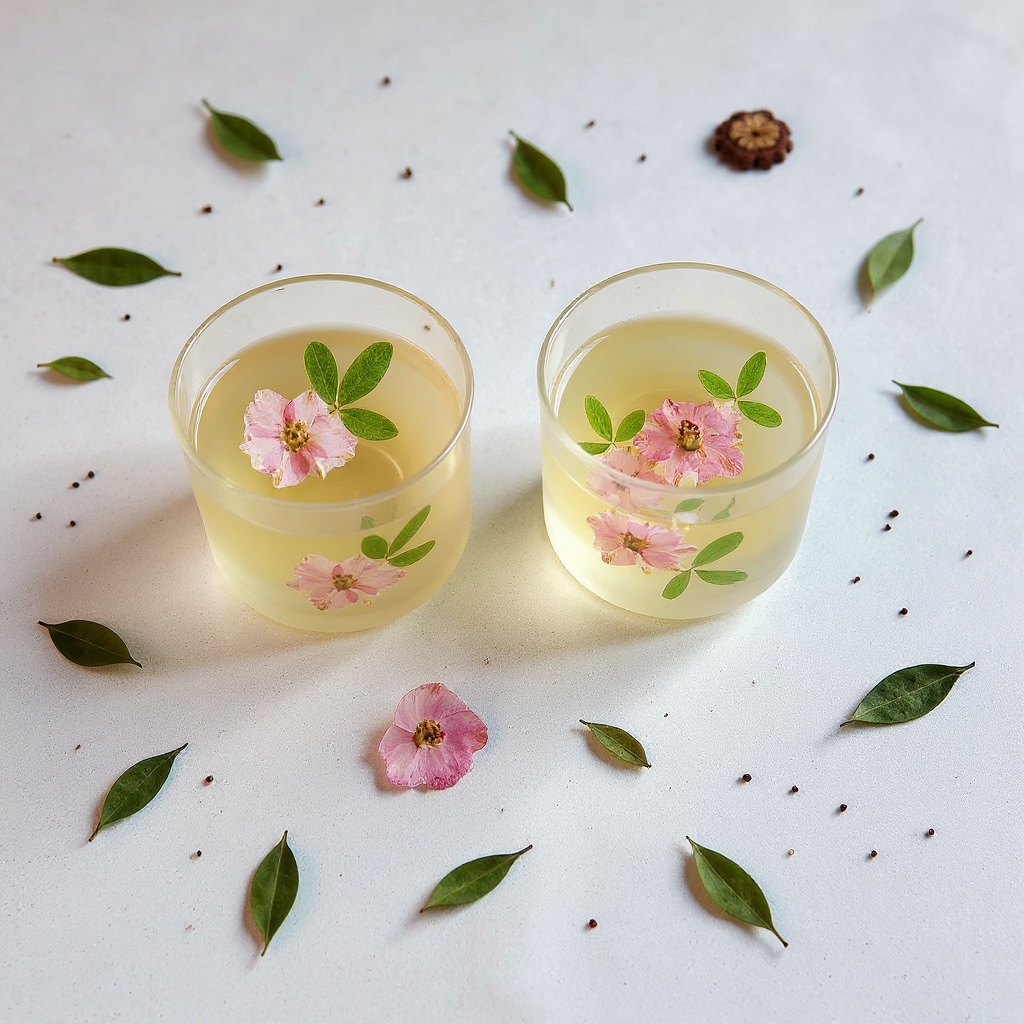
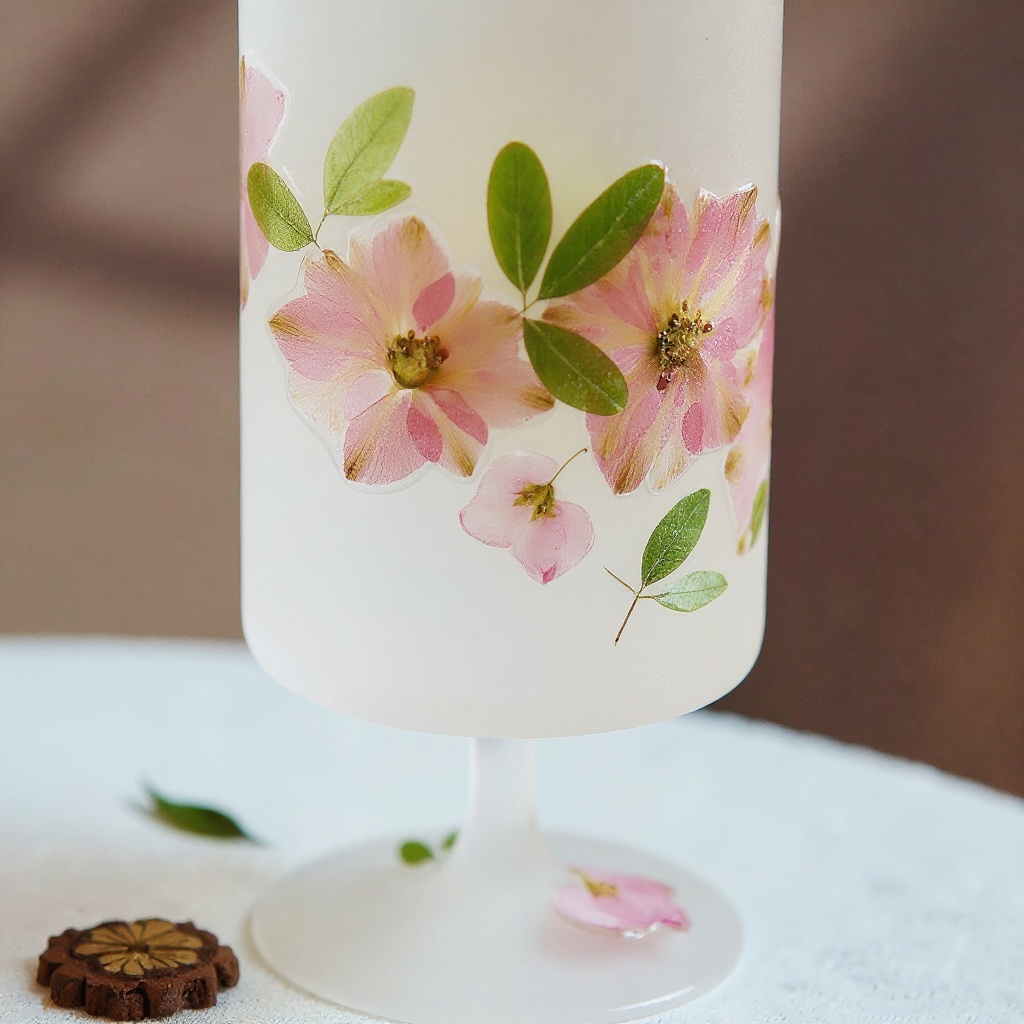
Handmade frosted glass gaiwans with real embedded botanicals satisfy all three. When dried flower petals and green leaves are positioned by hand inside a glass form and sealed beneath eco resin during a multi-day process, each piece develops individual character. Light catches different petals at 7am versus 4pm. The frosted surface, with its soft raised relief created by botanical contours beneath the resin, gives your palms something real to register. The approximately 150–180ml brewing capacity of a traditional gaiwan suits gongfu brewing rhythm — short, repeated infusions that make the vessel's visual details a sustained presence rather than a passing glance.
The traditional gaiwan form has remained functionally stable for centuries. What evolves is material and artistic interpretation. Heat-resistant borosilicate glass offers measurable thermal shock resistance — typically rated to temperature differentials of 120°C (248°F) — that many ceramic bodies cannot match without special firing treatments.Honest caveat, though: if you live in an environment with high humidity and plan to store your gaiwan in an open-air kitchen, some eco resin formulations can develop minor cloudiness over years of continuous moisture exposure. A climate-controlled space, or even a simple display cabinet, eliminates this entirely. Worth knowing before purchasing.
Botanical Glass Gaiwans vs. Standard Ceramic Gaiwans
| Feature | Standard Ceramic Gaiwan | Botanical Frosted Glass Gaiwan |
|---|---|---|
| Surface Visual Appeal | Uniform glaze, often one-color | Real dried flowers and leaves, unique per piece |
| Tactile Experience | Smooth, uniform | Frosted glass with soft raised botanical relief |
| Thermal Shock Resistance | Variable; some crack with rapid temperature change | Borosilicate glass rated to ~120°C differential |
| Botanical Durability | N/A — decorative patterns are surface-applied | Petals sealed under resin; protected from moisture and heat |
| Unit Uniqueness | Identical within production batch | Each piece differs due to hand-placement of real botanicals |
| Price Range (mass-produced) | $15–$60 | Not applicable — mass production not possible with this method |
| Price Range (handmade) | $40–$120 for signed studio ceramic | $60–$120 for entry botanical; up to $300+ for exhibition pieces |
| Recommended Cleaning Method | Standard dishwasher-safe in most cases | Hand wash with soft cloth; no abrasive sponges |
The Multi-Day Handcraft Process That Changes Everything
One piece. Multiple days. No shortcuts.
Creating a single botanical gaiwan set — gaiwan plus matching fair cup — begins with selecting and preparing individual dried flower petals and green leaves. Each botanical specimen is assessed for color retention, structural integrity after drying, and visual compatibility with the glass form it will inhabit. Placement decisions happen by hand, with the artisan considering sight lines from multiple angles, how frosted glass will diffuse light through specific petal thicknesses, and how the raised relief will feel during actual brewing grip.
The resin layering process requires staged curing periods. Rushing produces bubbles, uneven surfaces, or botanical displacement. This is why the process resembles pressed flower craft more than standard glassworking — it's botanical art applied to functional form, not decoration added at the end of an assembly line.
The result: a tea vessel where the artisan's decisions are permanently embedded. Visible. Traceable. Every time you pick it up.
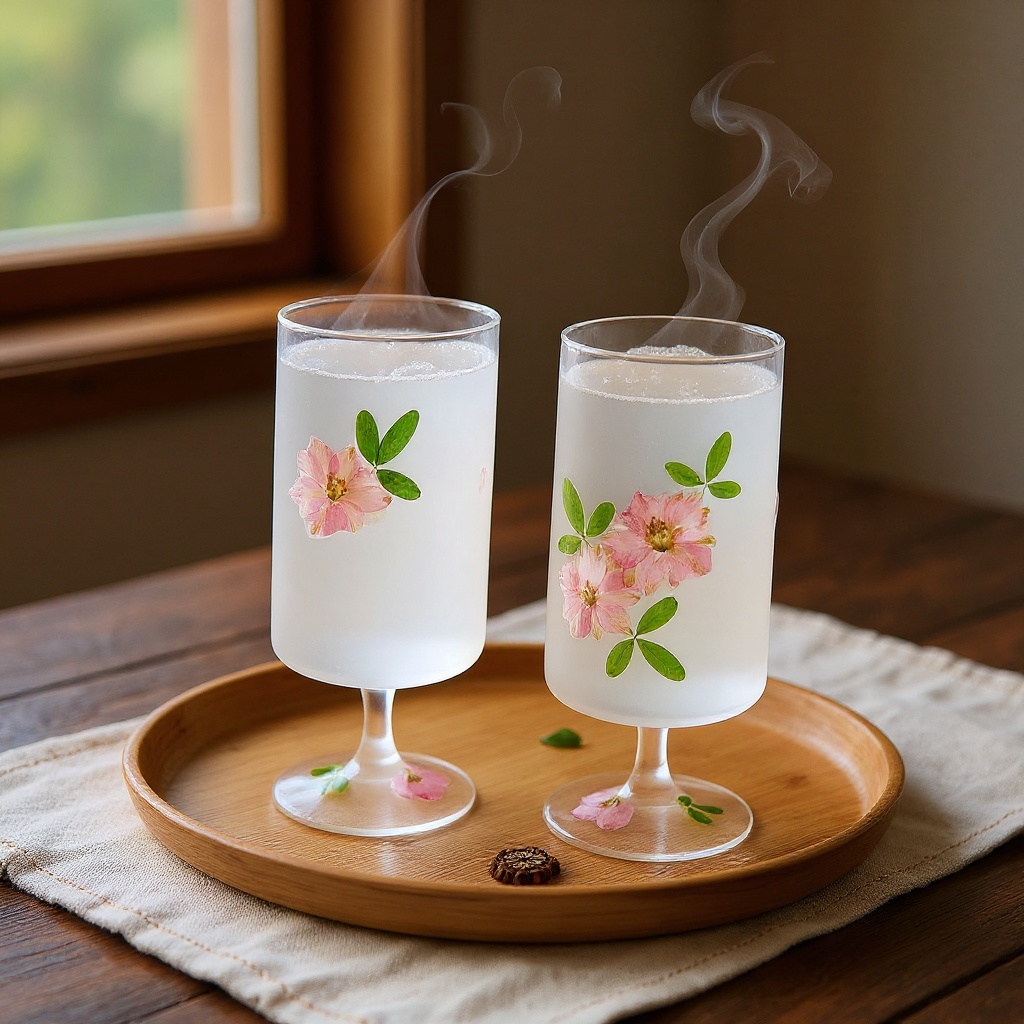
Our Handmade Frosted Glass Gaiwan Set with Real Preserved Flowers reflects this process directly — the frosted translucent glass body, the real dried petals and green leaves visible beneath a smooth eco-resin surface, the soft raised floral relief texture that makes the grip feel unlike any mass-produced piece.
Five Ways Botanical Gaiwans Enhance Your Tea Ritual
1. Visual meditation during steeping — Instead of watching plain ceramic, you trace real flower petals through frosted glass while your tea steeps. Waiting becomes watching. Watching becomes stillness.
2. Tactile engagement through raised botanical relief — The soft contours created by embedded botanicals give your fingers something genuine to register. Not decorative texture added for aesthetics. Actual botanical forms beneath resin, readable by touch.
3. Natural conversation during shared tea sessions — Guests notice immediately. They ask. You explain. The piece becomes a point of entry into tea culture, botanical craft, and why handmade objects hold different weight than purchased ones.
4. Seasonal and natural resonance — Preserved flowers connect your daily ritual to natural cycles, particularly meaningful during months when fresh botanicals have retreated. The gaiwan carries summer into January.
5. Display value between brewing sessions — A botanical gaiwan on an open shelf contributes to the room. It isn't stored. It's present.
Three More Reasons Botanical Gaiwans Hold Their Value
- Preserved botanical specimens in quality eco resin maintain color and structural integrity for 5–10 years under normal indoor conditions, according to botanical preservation studies from the Royal Botanic Gardens, Kew, which have documented resin-embedded specimens lasting decades in controlled settings. - The fair cup pairing matters more than most buyers realize. A matching frosted glass fair cup — also embedded with botanicals — creates visual continuity across the full brewing sequence. Decanting tea from gaiwan to fair cup becomes part of the aesthetic, not just a functional step. - Heat-resistant borosilicate glass does not absorb tannins the way unglazed ceramic can, meaning the vessel stays visually clean and doesn't transfer residual flavor between different teas over time.
Beyond Functionality: Why Handmade Matters in Tea Culture
Tea culture globally has always maintained a relationship between maker and user that transcends the object itself. The Japanese concept of monozukuri — the art of making things — holds that objects made with sustained human attention carry that attention forward into use. You feel it. Not metaphorically. The weight distribution, the surface variation, the slight asymmetries that mass production cannot tolerate — these are the physical signatures of human decision-making.Botanical gaiwans represent a contemporary evolution of this tradition. They apply botanical art — a practice with documented history across European and Asian decorative traditions — to the functional requirements of proper tea brewing. Frosted glass diffuses light in ways that make tea color visible without full transparency. Embedded flowers create a focal point that transforms the vessel from tool to presence.
This is why our unique gaiwan gift for tea lovers occupies a categorically different position than mass-market alternatives. Not better in every way — mass-produced ceramic gaiwans are easier to replace, lower-risk for beginners, and often dishwasher-safe. But for someone who wants their daily tea ritual to carry genuine meaning, the handmade botanical piece is the one that stays.
Gifting Considerations: When a Unique Gaiwan Gift for Tea Lovers Makes Perfect Sense
Botanical gaiwans work best for recipients who already have an established relationship with tea, however informal. They're suited to cottagecore enthusiasts who photograph morning rituals, botanical art collectors who appreciate preserved natural specimens, gongfu practitioners ready to upgrade their vessel, and anyone who has directly expressed wanting their tea practice to feel more intentional.
Consider brewing habits honestly. Someone who drinks tea from large mugs throughout the day may not immediately connect with a 150–180ml gaiwan's brewing rhythm. But someone who already makes a deliberate ceremony of a single morning cup — or who has mentioned gaiwan brewing even once — will understand the value of this upgrade immediately.
The $71.24 price point positions this as a meaningful occasion gift. Not casual. Not throwaway. The kind of thing someone keeps.
FAQ
Can you use a gaiwan with real flowers in it for daily brewing without damaging the botanicals?Yes. The real dried flowers and leaves are completely sealed beneath eco resin before the piece is used. The botanicals never contact hot water or tea — they exist in a separate, protected layer. The food-safe eco resin used in quality botanical gaiwans is formulated to withstand repeated exposure to boiling water (100°C / 212°F) without leaching compounds or degrading surface integrity. The botanical layer itself, when properly sealed, maintains color and structural form for an estimated 5–10 years under normal indoor use conditions.
What is the difference between a gaiwan and a fair cup, and do I need both?A gaiwan is the lidded brewing vessel — typically 150–180ml — where tea leaves steep in multiple short infusions. A fair cup (also called a pitcher or chahai) receives the fully steeped tea after decanting from the gaiwan, ensuring even concentration before pouring into individual cups. For traditional gongfu brewing, both are necessary. The fair cup in a matched botanical set shares the same frosted glass body and embedded floral design, making the full brewing sequence visually coherent.
Is eco resin safe for tea vessels that contact hot water?Food-safe eco resin, properly cured, does not leach chemicals into hot water at normal brewing temperatures. In botanical gaiwans, the resin contacts only the exterior surface — tea touches only the glass interior. The resin's heat resistance varies by formulation; quality pieces specify tolerance to at least 100°C (212°F) continuous contact, which covers all standard tea brewing temperatures including boiling water pours.
How fragile are handmade glass gaiwans compared to ceramic ones?Borosilicate glass handles thermal shock better than most ceramic bodies. It withstands rapid temperature differentials up to approximately 120°C (248°F) without cracking — a common failure point for ceramic when cold water contacts a recently emptied hot vessel. Both materials chip or crack if dropped on hard surfaces. Neither is indestructible. The practical difference is that glass fails less often from thermal stress and more from impact, while ceramic can fail from both.
What kind of tea is best brewed in a frosted glass gaiwan?Any tea brews well in glass. The advantage with frosted glass specifically is visual observation without full transparency — you can read the color of the liquor during brewing while the frosted surface diffuses direct light, reducing glare. White teas, light oolongs, and yellow teas benefit most from this visual feedback. High-oxidation oolongs and pu-erh also work well; the botanical aesthetic complements earthy, floral tea profiles particularly naturally.
Are preserved flower gaiwans truly one of a kind or do they look nearly identical?Genuinely unique within meaningful visual range. Even when an artisan uses the same botanical materials across multiple pieces, real flower petals vary in size, color saturation, edge definition, and translucency from specimen to specimen. Hand-placement introduces additional variation in position, angle, and layering. No two pieces will look identical side by side. Whether that uniqueness matters to a specific buyer depends on whether they value the individual character of hand craft or prefer the predictable consistency of a pattern.
How do I clean a resin-sealed botanical tea cup without ruining the surface?Hand wash with warm water and a soft cloth or non-abrasive sponge. Standard dish soap is safe. Avoid abrasive scrubbers, steel wool, or harsh chemical cleaners — these can scratch the resin surface over time, reducing its clarity and smooth texture. Do not use dishwashers; repeated high-heat cycles and harsh detergents will degrade resin finishes faster than gentle hand washing. Tea residue inside the glass body cleans easily with warm water and a soft brush.
Is a handmade botanical gaiwan set appropriate for someone just beginning gongfu brewing?Honestly, yes — with one condition. A beginner who receives a beautiful, high-investment piece early in their practice often develops better technique faster because the vessel itself motivates careful handling and sustained attention. The risk is anxiety about breakage suppressing actual use. Pair the gift with clear, simple brewing instructions and explicit reassurance that heat-resistant glass is more thermally stable than it looks. A beginner who uses a beautiful gaiwan daily will outpace one who owns a plain ceramic piece they feel indifferent about.
How long do the preserved botanicals inside the resin actually last?Under normal indoor conditions — away from prolonged direct UV sunlight and high humidity — botanical specimens properly sealed in quality eco resin maintain color and form for 5–10 years minimum. The Royal Botanic Gardens, Kew, has documented resin-embedded botanical specimens remaining stable for decades in controlled archival conditions. Consumer-use pieces experience more variable conditions, but protection from direct sun and ambient moisture extends longevity significantly.
Finding Your Unique Gaiwan Gift for Tea Lovers
The tea market is not short on options. What it's short on is objects worth keeping.
Generic ceramic gaiwans serve their function. They brew tea. They do nothing else for the ritual. When you're looking for a unique gaiwan gift for tea lovers who already own functional teaware, the question isn't which vessel brews better — it's which vessel makes the daily practice feel worth returning to.
Frosted translucent glass with real dried flowers and green leaves embedded under smooth eco resin. Soft raised floral relief your hands learn over months. A brewing vessel that changes in the light. That's the category this piece occupies.
If that intersection of functional precision and botanical artistry is what you're searching for, our Handmade Frosted Glass Gaiwan Set with Real Preserved Flowers is built exactly to that standard.


