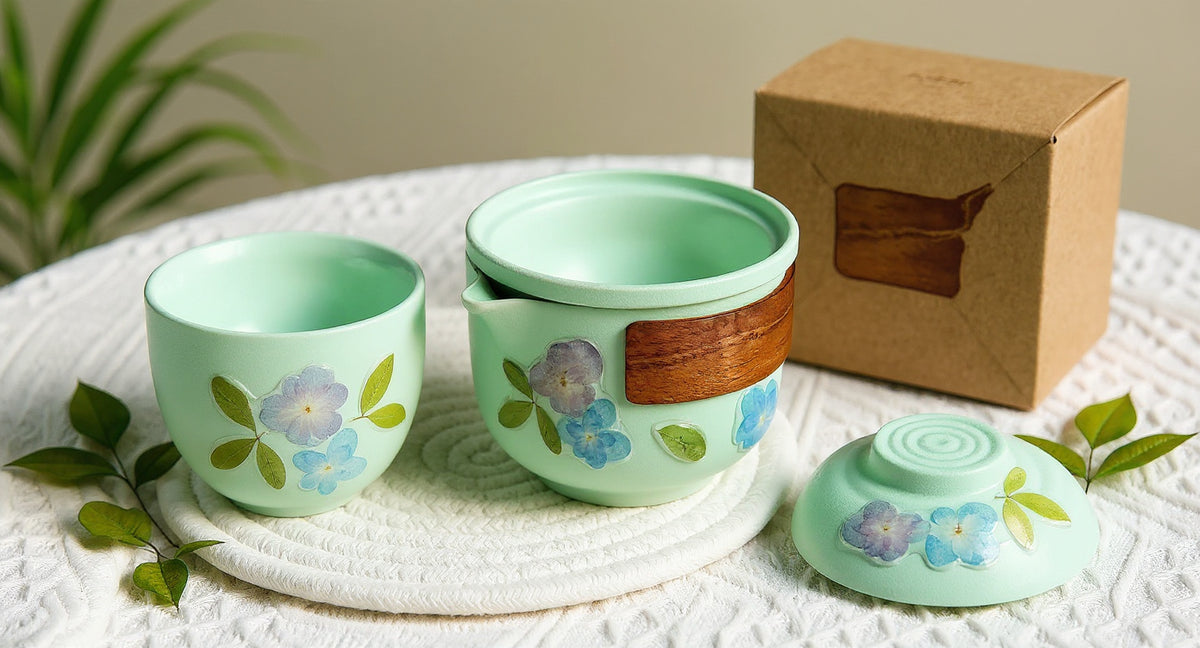
A traditional Chinese tea set with modern design works when it keeps the brewing logic intact and removes decoration that interferes with use. The gaiwan still needs a secure lid, a rim that can be held safely, and enough control to pour cleanly without turning tea into a display-only ritual.
Modern does not have to mean angular, machine-made, or stripped of character. It can mean honest porcelain, a useful capacity, fewer unnecessary pieces, and surface detail that doesn't get in the way of the tea. The strongest contemporary sets respect the practical intelligence of traditional gongfu brewing rather than treating Chinese tea ware as a decorative theme.
A gaiwan is already a remarkably modern brewing tool
The gaiwan is one of the most efficient pieces of tea ware ever developed. It combines brewing vessel, filter, and serving control in three parts: bowl, lid, and saucer. Loose leaves expand in the bowl, the lid holds them back during pouring, and the saucer gives the fingers somewhere safer to rest.
A gaiwan is especially useful because it doesn't impose a strong flavour history on every tea. Unglazed clay can be excellent for a dedicated tea category, but porcelain stays comparatively neutral. That matters when one week includes floral dancong, roasted oolong, ripe pu-erh, and green tea. A glazed or frosted porcelain vessel doesn't need to be reserved for one leaf type.
The basic method is direct:
1. Warm the bowl, lid, and cup with hot water, then discard it. 2. Add loose tea leaves. For gongfu brewing, the leaf-to-water ratio is usually much higher than it is for a large Western-style teapot. 3. Pour water at the temperature suited to the tea, leaving enough headroom to fit the lid without overflow. 4. Steep briefly, then tip the lid slightly to create a narrow pour gap. 5. Decant fully into a cup or sharing pitcher so the leaves don't keep extracting in the hot water. 6. Repeat in short infusions, adjusting time rather than stuffing more leaf into the bowl.
The process belongs within the broader Chinese tea ceremony tradition, but it doesn't require ceremonial formality every morning. A gaiwan can handle a two-minute everyday brew as easily as a series of 15-second gongfu infusions.
Capacity changes the experience. A roughly 400ml gaiwan is larger than the compact 80ml to 150ml vessels commonly used for concentrated gongfu sessions. It makes more sense for one person who wants a generous mug-sized serving, two people sharing casually, or a slower breakfast tea where repeated tiny pours would become tiresome.
Botanical craftsmanship can be modern without becoming novelty ware
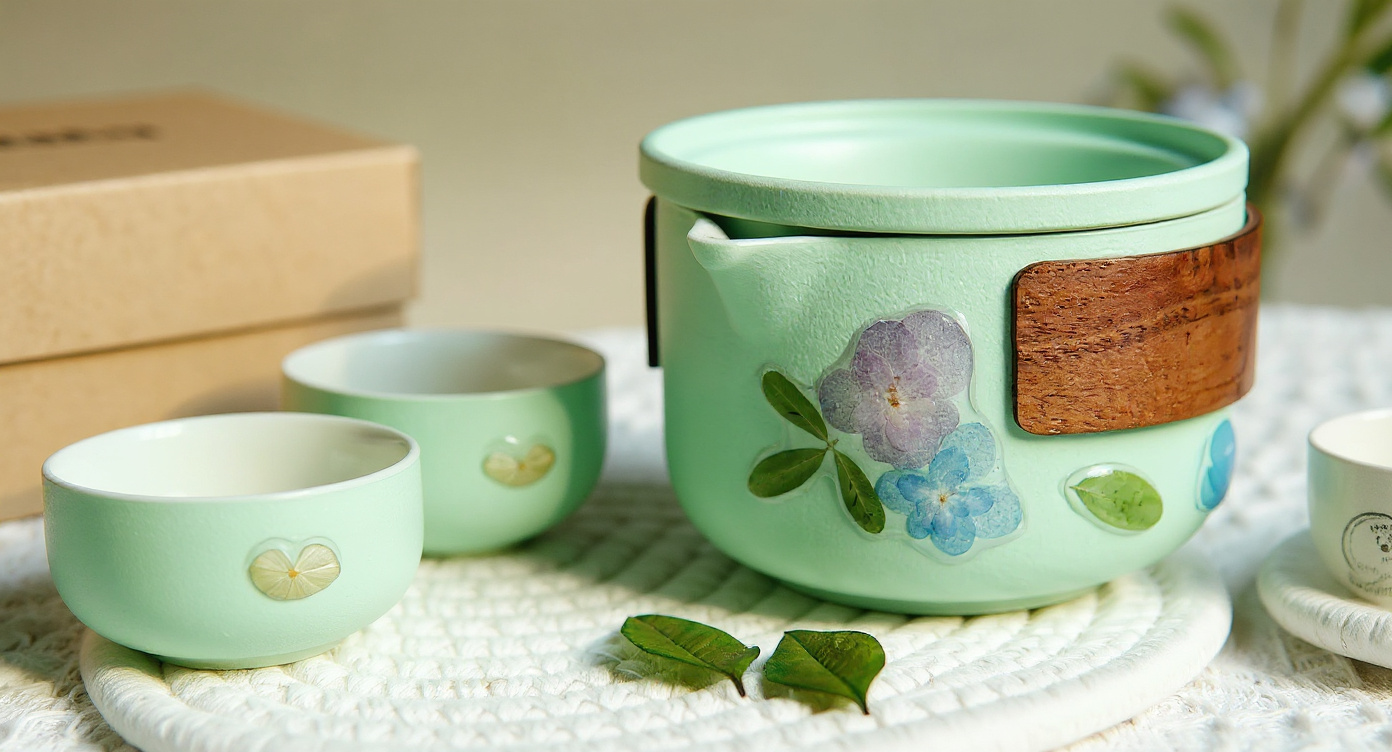
The problem with much floral porcelain is obvious: printed decals often turn a functional tea set into gift-shop decoration. They may be cheap, bright, and easy to replace, but they don't add much material interest. Raised botanical work is different because it is part of the object rather than an image applied to it.
The Handmade Travel Tea Set | Real Flower Porcelain Cups | Eco-Friendly Gift uses a roughly 400ml porcelain gaiwan with real preserved flower petals embedded on the exterior. Roses, daisies, or wildflowers are hand-worked into raised relief rather than reproduced as painted or printed floral patterns. Each piece takes several days to complete, which is the relevant distinction here. The appeal isn't that the cup resembles a flower. It is that the botanical material gives every finished piece variation that molding can't reproduce exactly.
Preserved flower work has a long craft lineage. Pressed flower craft is based on retaining botanical material for decorative use, though the longevity of any individual flower depends on how it is preserved, sealed, stored, and exposed to light. No responsible maker should promise that natural petals will remain visually unchanged forever.
For this kind of tea ware, the useful modern move is restraint. A frosted porcelain surface and hand-embedded botanical relief can provide character without adding metallic trim, oversized handles, printed slogans, or elaborate accessories that make packing harder. The cup remains a brewing vessel first.
There is a trade-off. Raised floral relief requires more care than smooth, mass-produced porcelain. It isn't the best choice for a backpack where it can rattle against a thermos, loose keys, or a metal infuser. It is better suited to deliberate travel, a padded tea pouch, a weekend stay, or a small outdoor tea session where the vessel is packed separately.
What separates useful contemporary tea ware from expensive clutter
A traditional Chinese tea set with modern design should improve the act of brewing, not merely photograph well. The following comparison makes the differences clearer.
| Type of tea ware | Material and construction | Typical price information supplied | Best use | Main compromise |
|---|---|---|---|---|
| Mass-produced floral porcelain set | Usually molded porcelain with printed or repeated floral decoration | $30–$120 | Casual gifting, occasional tea | Less individual character; decoration may feel generic |
| Mid-range handmade set | Handmade ceramic or porcelain, maker-dependent finish | $150–$400 | Regular home use and gifting | Handmade detail varies widely by studio |
| Boutique studio ceramic | Limited-run artisan ceramic with distinctive surface work | $600–$1,200 | Collecting, special gifting, display and tea use | Higher replacement cost if broken |
| Handmade Travel Tea Set with real flower porcelain cups | Frosted porcelain gaiwan with hand-embedded preserved petals and raised exterior relief | current listing varies | Intentional personal use, travel with protection, one-of-a-kind gifting | Needs careful packing and gentler cleaning |
Price alone doesn't determine whether a set is well made. A $30 set can make excellent tea if the lid fits, the rim pours cleanly, and the porcelain is properly finished. Conversely, an expensive set can be frustrating if its lid is awkward, its bowl is too hot to hold, or its decoration creates crevices that are difficult to clean.
What should matter most is the relationship between function and material:
- Lid control: The lid should sit securely enough to strain leaves while still allowing a controlled pour. - Rim clearance: There must be enough space between bowl, lid, and fingers to handle hot tea safely. - Porcelain neutrality: Porcelain is a sensible all-purpose material for people who rotate through different teas. - Capacity: A 400ml bowl fits everyday drinking better than a tiny gongfu vessel, but it won't provide the concentrated multiple-infusion format many oolong drinkers prefer. - Surface treatment: Raised exterior work should stay outside the tea path, where it can add tactile detail without affecting the brew. - Packing reality: A travel set needs protection more than it needs a marketing label. Foam, fabric, or a fitted padded case matters more than a compact box.
The sets that aren't worth buying are the ones that force a false choice between function and decoration. A cup shouldn't be so precious that it never sees tea, and it shouldn't be so flimsy that taking it away from home feels reckless.
Brewing choices matter more than matching every accessory
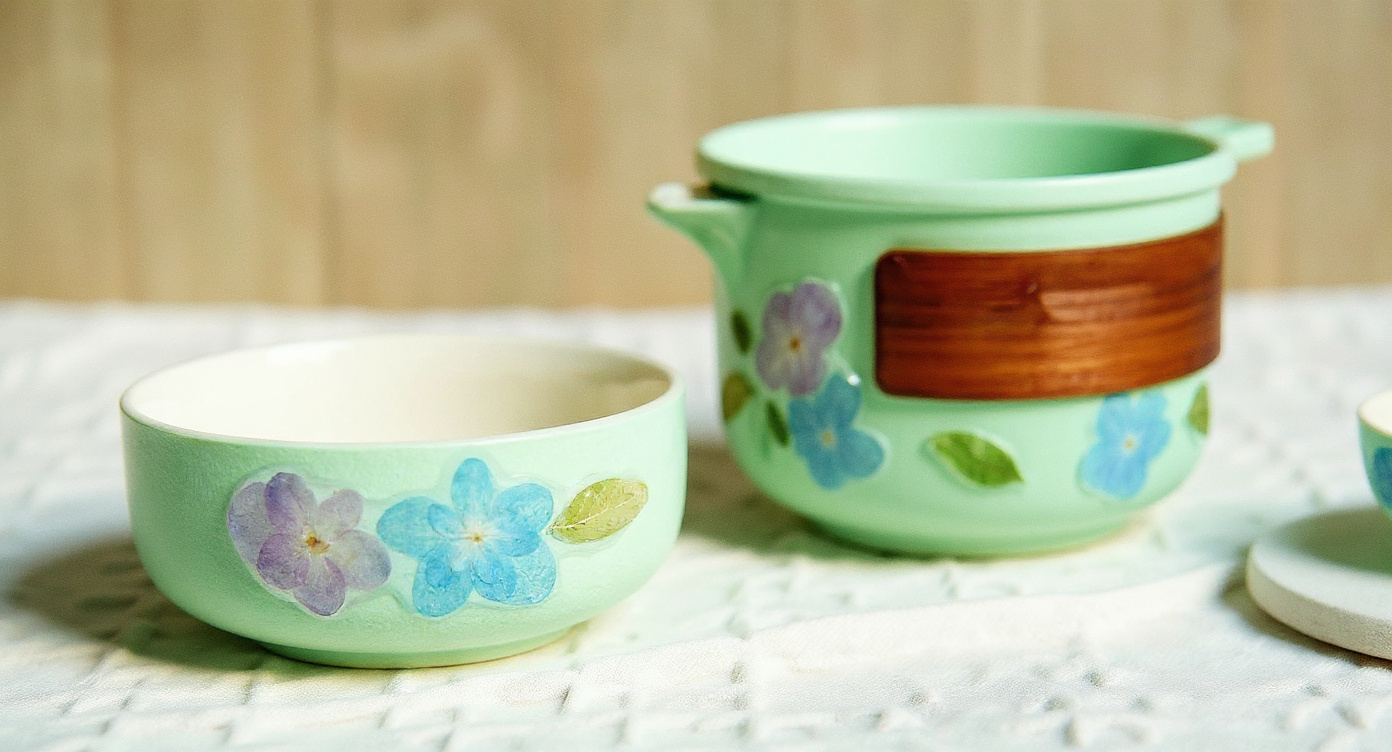
A complete gongfu arrangement may include a gaiwan or small teapot, fairness pitcher, tasting cups, tea tray, tea towel, scoop, strainer, and water vessel. For daily use, that is often more equipment than necessary. A gaiwan and one cup can brew excellent tea with no tray, no matching canister, and no dedicated shelf.
The 400ml format changes brewing strategy. Rather than using the dense leaf load common in small gongfu sessions, use a more moderate amount and shorter-to-medium steep times. A rolled oolong needs room to open. A tightly compressed pu-erh may need a quick rinse before its first proper infusion. Green tea generally wants cooler water than roasted oolong or black tea, since boiling water can pull bitterness from delicate leaves quickly.
Porcelain helps here because it gives a relatively clean read on the tea. The reference entry on porcelain describes it as a ceramic material formed from kiln-fired mineral components. In practical brewing terms, a finished porcelain gaiwan is valued for its smooth non-porous brewing surface and its ability to avoid carrying strong aromas from one tea session into the next.
A few combinations tend to work particularly well:
- Light oolongs benefit from short, repeated infusions that reveal floral and creamy notes gradually. - Wuyi rock oolongs and roasted tieguanyin suit hotter water and can handle several quick steeps. - Ripe pu-erh works well in porcelain when the drinker wants to taste the tea directly instead of adding clay's influence. - Black tea is forgiving in a larger gaiwan, especially for a morning brew intended for one large cup. - White tea can be brewed gently and repeatedly, though very delicate leaves may need cooler water and longer steeps.
This won't work as neatly for every tea drinker. Someone committed to 90ml gongfu brewing and six to ten tightly controlled infusions may find a 400ml gaiwan oversized. Someone who wants one loose-leaf brew at breakfast may find it exactly right.
Protecting porcelain and preserved botanical details in transit
Travel tea ware fails in transit for predictable reasons: direct contact between pieces, vibration, pressure from heavier items, and poorly supported lids. Porcelain is hard but brittle. A small chip at the rim can make a gaiwan unpleasant to use, while damage to raised exterior detail is harder to ignore than a mark on a smooth cup.
Pack the bowl, lid, and saucer as separate objects. Never nest the lid loosely inside the bowl and assume a gift box will protect it. The lid can become a ceramic projectile inside the cup during a car ride or flight.
For a piece with preserved botanical elements, care also means limiting unnecessary abrasion. Avoid rough scouring pads, abrasive powders, and extended soaking. Wash the interior gently after tea, rinse away residue before it dries, and dry the exterior by pressing with a soft cloth rather than rubbing aggressively over textured areas.
Direct sunlight is the other concern. Natural botanical materials can fade with prolonged UV exposure, even when they are preserved. Keep the tea set out of a permanently sunny windowsill, and store it in a cabinet, padded pouch, or covered shelf when it isn't being used. The eco-conscious minimal-waste packaging is useful for gifting and initial storage, but long-term travel protection should be assessed by padding and fit, not by whether the box looks substantial.
For birthdays, housewarmings, and Mother's Day, this care requirement isn't a drawback if the recipient values handmade objects. It is part of the ownership decision. A one-of-a-kind porcelain piece deserves a different packing standard from an inexpensive stackable mug.
FAQ
What is included in a traditional Chinese tea set?
A traditional Chinese tea set can be as simple as a gaiwan, lid, saucer, and cup. Larger gongfu arrangements may also include a fairness pitcher, tasting cups, tea tray, tea tools, strainer, and tea towel. There is no single mandatory inventory. The right set depends on whether tea is brewed solo, shared with guests, or prepared in a formal tea setting.
What is a gaiwan used for?
A gaiwan is used to brew loose-leaf tea directly in a lidded bowl. The lid holds back leaves during pouring, while the bowl allows the drinker to control infusion time closely. It works especially well for teas that reveal different flavours over repeated short brews.
Are gaiwans difficult to use?
They take a few sessions to get comfortable with, mainly because the bowl can become hot and the pour requires lid control. They are not difficult once the grip is learned. Start with water below the rim, leave a small opening under the lid, and pour with a steady wrist rather than a rushed tipping motion.
What tea is best brewed in a gaiwan?
Oolong, pu-erh, white tea, black tea, and many green teas all work well in porcelain gaiwans. Porcelain is especially versatile because it doesn't strongly retain aromas. The key variable is water temperature and steep time, not the fact that the tea is brewed in a gaiwan.
Can you use a gaiwan for everyday tea drinking?
Yes. A gaiwan can be an everyday brewer, particularly in a larger capacity such as roughly 400ml. It works for a single substantial serving or for pouring into a separate cup. Small gongfu gaiwans are better for concentrated multi-infusion sessions, while larger versions are more practical for breakfast or desk-side tea.
How do you hold a gaiwan without burning your fingers?
Hold the saucer from underneath with the thumb and middle finger, then use the index finger to steady the lid knob. Keep the lid slightly offset to form a pour gap. Do not fill the bowl to the rim, and allow a few seconds after pouring boiling water before lifting it. The outer edge should be used, not the hottest center of the bowl.
What is the difference between a gongfu tea set and a regular tea set?
A gongfu tea set is designed for high leaf-to-water ratios, short repeated infusions, and small servings. It often includes a small gaiwan or teapot, fairness pitcher, and tasting cups. A regular tea set usually focuses on one larger brew, often with a teapot and larger cups. Neither is inherently better. They serve different drinking habits.
How should porcelain tea ware be packed for travel?
Wrap the gaiwan bowl, lid, and saucer separately in soft cloth or padded sleeves. Place each piece in a fitted case or rigid box with no room to move. Keep it away from heavy items, and never place metal tea tools inside the bowl. For raised botanical porcelain, avoid rough fabric that can snag or rub textured surfaces during transit.
A tea set should earn its place in daily use
The usual hesitation is sensible: handmade porcelain can feel too fragile for travel, and botanical details can raise fair questions about fading and cleaning. A tea set is more likely to pay off when it will be used carefully, packed with real protection, and valued as functional craft rather than treated as disposable tableware.
For someone who wants a practical gaiwan with natural material detail rather than printed floral decoration, see the Handmade Travel Tea Set | Real Flower Porcelain Cups | Eco-Friendly Gift. It suits slow morning tea, considered gifting, and portable sessions where a padded case is part of the plan.