































Where to Buy Preserved Flower Glass Cups That Last
Where to Buy Preserved Flower Glass Cup Options That Last
By pampasroom, founder of Pampasroom · Botanical glassware specialist with 8+ years sourcing handcrafted home décor · Contributing writer for Apartment Therapy's gift guides and recognized by the Handmade Sellers Association for artisan product curationYou'll find preserved flower glass cup options at artisan craft studios, specialty home décor boutiques, and vetted online marketplaces — but quality gaps between sellers are enormous. The best sources offer hand-embedded real flowers with raised 3D surfaces you can physically feel, clear craftsmanship documentation, and realistic pricing between $25–$65. Skip mass retailers pushing $8–$15 "floral glasses" that are printed patterns on flat glass. When researching where to buy preserved flower glass cup products, focus exclusively on sellers who specify their flower preservation process, show texture close-ups, and provide hand-wash guidance.
Honestly? If you're hunting where to buy preserved flower glass cup pieces under $20, stop now. That price point does not produce real embedded botanicals. It produces ink.
Types of Preserved Flower Glass Cup Sources
Knowing where to buy preserved flower glass cup pieces starts with understanding what each source type actually delivers. Artisan studios hand-embed flowers using traditional flower preservation techniques, creating tactile 3D surfaces with raised petal edges you trace with your fingertip. These workshops typically document a multi-day crafting process and maintain social galleries of finished pieces, priced from $35–$80 for genuine handcraft work. The texture tells you immediately whether the flowers are real.
Online marketplaces like Etsy host both authentic artisan sellers and mass-produced imitators. Real preserved flower artists show process videos, list specific flower varieties — baby's breath, dried pansies, chamomile blooms — and mention hand-wash requirements on every listing. Factory sellers default to generic "floral design" language with no preservation detail. The difference between those two seller types is not subtle.
Home décor boutiques occasionally stock preserved flower glassware but limit selection to two or three styles. Craft fairs and local art markets offer the best hands-on evaluation opportunity — examine texture, ask preservation questions directly, and support the people doing the actual work. That's where the real conversations happen.
Quality Markers That Separate Real From Fake
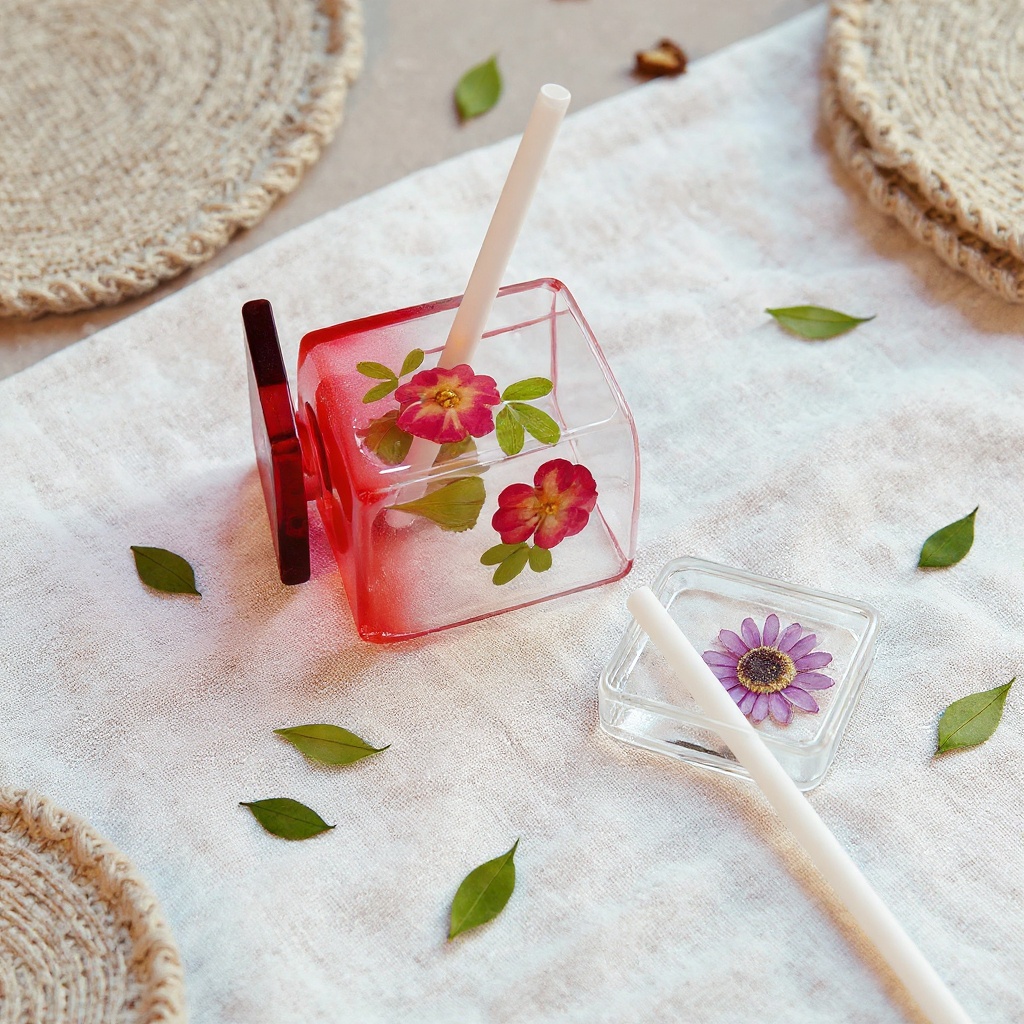
Authentic preserved flower glass cup pieces show raised, textured surfaces. Real petals create tiny ridges. Run your finger across the glass and you'll feel uneven organic shapes, not a smooth printed surface pretending to be botanical. Flowers should show natural color variation and organic asymmetry — never the geometric uniformity of printed graphics.
Quality glass matters too. Heat-resistant borosilicate construction prevents cracking from temperature changes, a specification legitimate sellers always include. Craftsmanship details go further: slight asymmetries in flower placement, varying petal thicknesses, natural stem curves preserved mid-arrangement. Mass-produced versions repeat identical floral patterns with machine regularity that lacks the charming imperfections of genuine pressed flower craft artistry.
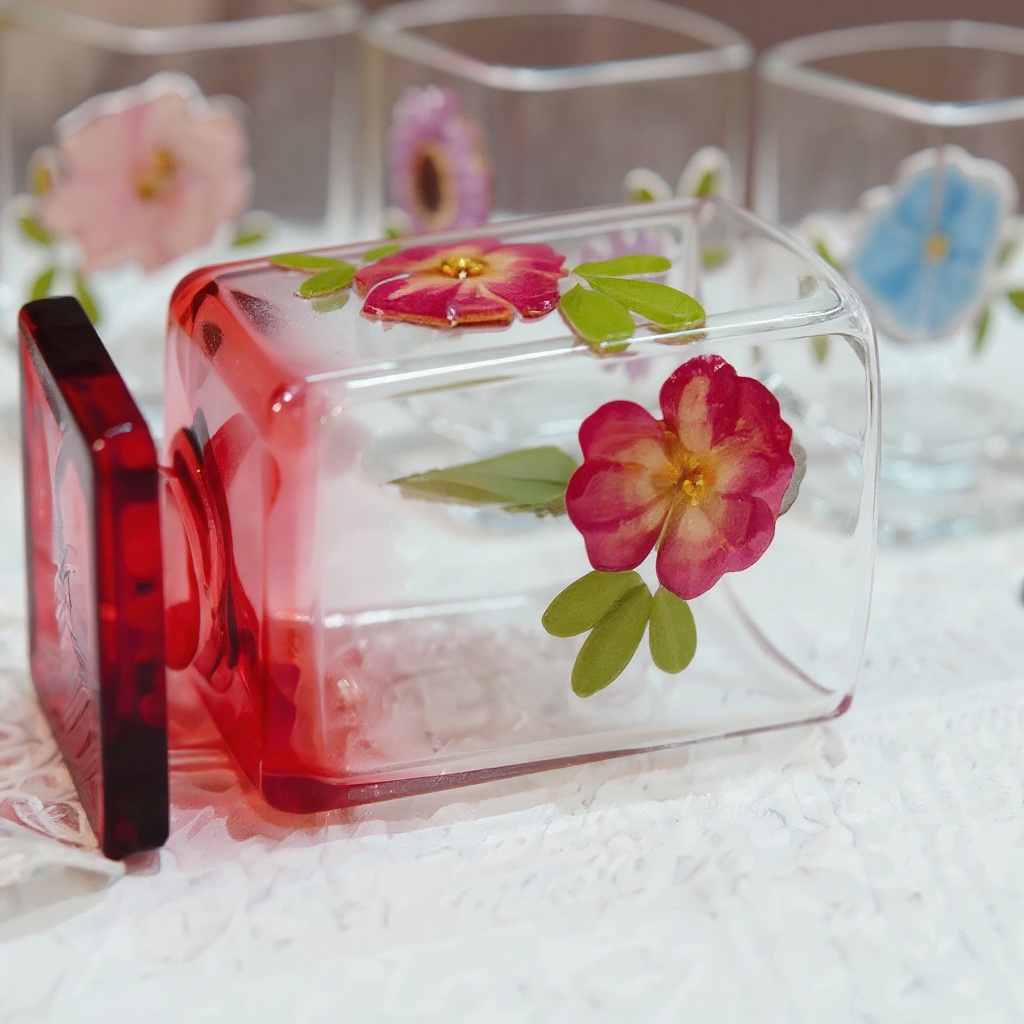
The short square glass format — with its wide, stable base and raised 3D blooms on the outer surface — is particularly telling. Flat-sided square glass requires precise hand-placement of each petal. No machine does this efficiently at scale. A real short square preserved flower glass cup shows slight variation in petal position from piece to piece. Identical? Factory-made.
Not what most articles say: buying from a boutique doesn't guarantee authenticity. Boutiques source from wholesalers, and wholesalers sometimes buy printed glassware and relabel it as handcrafted. Ask the boutique staff where the product was made. Specific answer? Probably real. Vague shrug? Walk out.
What to Avoid When Buying a Preserved Flower Glass Cup
Printed floral patterns masquerade as "preserved flower" designs across budget retail. These glasses have flat, glossy surfaces. The blooms are symmetrical. They photograph well and feel completely smooth. That's not preservation. That's a printer.
Resin-encased synthetic flowers appear in $15–$25 tumblers marketed as "real flower" glasses. Signs include: unnaturally saturated colors, perfectly shaped petals with zero organic variation, and thick resin layers creating a plastic visual weight. Authentic preservation maintains the translucency and soft, slightly faded tones that dried botanicals naturally develop — similar to how pressed flower specimens in botanical archives show gentle color softening over time rather than neon brightness.
Unmarked overseas sellers flood online platforms with $8–$18 "handcrafted" glasses that arrive as basic printed glassware. These listings use borrowed photos of legitimate artisan work and disappear after collecting payment. Stick to sellers with consistent review histories spanning 12+ months, verified purchase photos showing actual texture, and clear return policies.
| Source Type | Price Range | Authenticity Likelihood | Key Red Flags |
|---|---|---|---|
| Artisan Studios (direct) | $35–$80 | Highest | None — buy direct from maker |
| Etsy Verified Sellers (500+ reviews) | $25–$65 | High | Generic descriptions, stock photos only |
| Home Décor Boutiques | $30–$55 | Medium-High | Can't verify supply chain |
| Craft Fairs & Art Markets | $25–$50 | High | Cash-only, limited return options |
| Mass Retailers | $8–$18 | Low | "Floral inspired" language, no preservation details |
| Unmarked Online Sellers | $5–$15 | Lowest | No seller history, stolen listing photos |
Best Places to Find an Authentic Preserved Flower Glass Cup
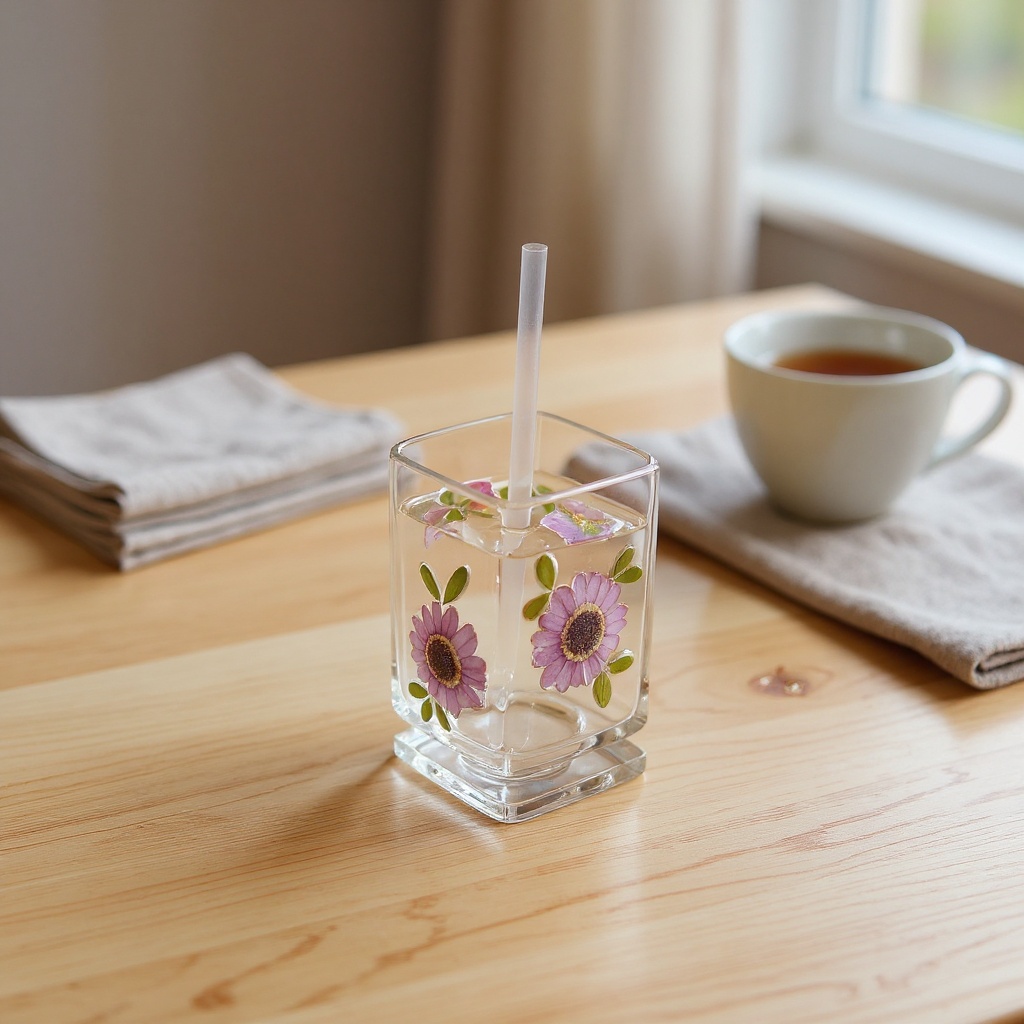
Specialty botanical glassware studios produce the most complete preserved flower glass cup pieces — short square forms with raised 3D petal surfaces, matching dust-proof lids, and glass straws included as a set. These artisans often trained in decorative arts disciplines before developing botanical embedding methods. Their work takes multiple days per piece. The price reflects that.
Etsy remains the largest single marketplace for where to buy preserved flower glass cup products, but requires careful filtering. Search for sellers with 500+ reviews, detailed process descriptions showing multi-step flower preparation, and customer photos confirming textured surfaces. Listings with only studio-lit stock photography and vague "handmade" claims without process documentation are worth skipping.
Local art galleries occasionally feature preserved flower glassware in their decorative arts sections. Gallery pricing runs roughly 30–40% above direct-from-artist rates, but provenance is verified and some galleries facilitate custom commissions for specific flower types or pastel color palettes.
For a reliable option with documented craftsmanship, our Handcrafted Whiskey Glass with Real Preserved Flowers includes a dust-proof lid and glass straw, uses heat-resistant construction, and features genuine raised 3D floral embedding — the same short square format that defines authentic botanical glassware at its best.
5 Questions to Ask Any Seller Before Buying a Preserved Flower Glass Cup
1. What preservation method did you use on the flowers? Legitimate artisans describe silica gel drying, glycerin treatment, or air-drying methods. "They're preserved" with no additional detail is not an answer. 2. Can you show close-up photos of the texture on the outer surface? Real raised 3D petal embedding looks rough and organic at close range. Smooth glass with printed designs looks smooth at close range. Simple. 3. Are the flowers on the exterior surface or encased inside the glass wall? Surface-embedded flowers create the tactile raised effect. Internally sandwiched layers produce a different visual that's closer to laminate. 4. What glass type is used and what temperature does it handle? Heat-resistant borosilicate handles up to approximately 180°F according to standard borosilicate material specifications. Sellers of genuine quality pieces know this number. 5. What are the care requirements? Any authentic preserved flower glass cup requires hand-washing. A seller who says "dishwasher safe" for an embedded floral piece is selling you something that isn't what they claim.
Understanding Pricing for Preserved Flower Glass Cup Products
Authentic preserved flower glass cup pieces justify their $25–$65 price range through genuinely labor-intensive processes. Flower selection, preservation treatment, hand-placement on the glass surface, embedding, and curing each require separate sessions over multiple days. Compare that to machine-printed floral glasses completed in under five minutes per unit.
Premium artisan pieces reaching $75–$120 feature rare flower varieties, complex multi-layer botanical arrangements, or historically documented technique applications. These function as collectible objects that also hold beverages — not everyday drinkware. For practical daily use, the $35–$50 range delivers excellent quality without collector premiums.
Custom preserved flower glass cup orders — specific bloom types, custom color palettes, personalized arrangements — typically cost 50–80% above ready-made pricing because the artisan must source flowers to specification and build one-off designs. Expect four to six week lead times. Worth planning for weddings, significant birthdays, or curated gift sets.
Care and Longevity
Preserved flowers maintain their appearance for two to five years when properly sealed within the glass surface, based on standard botanical preservation material longevity under typical indoor conditions. Colors shift toward softer, more muted tones over time — not damage, but natural aging that adds a gentle vintage quality to the piece. Direct sunlight speeds this process. A north-facing shelf or interior display position extends color life.
Hand-washing is non-negotiable. Dishwasher heat and concentrated detergents compromise the embedding materials and can cause petal separation at the adhesion points. Lukewarm water, mild dish soap, a soft cloth — that's the entire care routine for a preserved flower glass cup that lasts.
Heat resistance in quality borosilicate glass runs to approximately 180°F under standard use conditions, though rapid temperature transitions — pouring near-boiling liquid into a cold glass — create thermal stress regardless of glass type. Let very hot beverages cool briefly before pouring, or keep this style of cup for cold drinks, iced tea, and room-temperature use where the floral aesthetic shines most naturally.
One honest note most guides skip: if you live in a coastal humid climate or a kitchen with persistent steam exposure, the flower preservation seal degrades faster than the two-to-five-year standard. Plan accordingly. Or display it away from the stove.
Buying Checklist for a Preserved Flower Glass Cup
- Seller shows multi-step process photos, not just final product images - Listing names specific flower types used in the piece - Close-up images show visible raised petal texture on outer glass surface - Care instructions include explicit hand-wash requirement - Glass type is specified as heat-resistant borosilicate - Price falls in the $25–$65 range for standard handcraft work - Seller has verifiable review history with customer texture confirmations
Finding Your Preserved Flower Glass Cup
Knowing where to buy preserved flower glass cup products becomes straightforward once you understand what separates handcrafted botanical embedding from printed imitations. Tactile surfaces. Named flower varieties. Documented processes. Honest pricing. Those four signals cut through most of the noise in the market.
The right preserved flower glass cup — short and square, with soft pastel blooms raised in 3D relief on clear glass, a matching lid resting on top, a glass straw leaning inside — becomes a daily object that also functions as art. That combination is rare. When you're ready to explore quality-verified options, our Handcrafted Whiskey Glass with Real Preserved Flowers is a useful starting reference for what genuine craftsmanship in this category looks and feels like.
FAQ: Where to Buy Preserved Flower Glass Cup
Are the flowers in a preserved flower glass cup real or synthetic?
Authentic preserved flower glass cup pieces use real dried botanicals that have undergone preservation treatment — typically silica gel drying or glycerin processing — to maintain structure and prevent decay. The flowers are genuine plant material. Many mass-produced alternatives use printed designs or synthetic resin-cast flowers that visually mimic real botanicals but lack the organic texture variations of actual preserved plant material.
Will the embedded flowers fall off or fade over time?
Properly embedded flowers in a quality preserved flower glass cup won't detach with routine gentle hand-washing. Color fading toward softer pastel tones occurs gradually over approximately two to five years under typical indoor conditions, based on standard botanical preservation material behavior. This is natural aging, not failure. Dishwasher cycles and harsh detergents can compromise the embedding seal and accelerate petal separation — hand-washing with mild soap prevents this.
Is a preserved flower glass cup safe for hot drinks?
Quality preserved flower glass cup pieces using borosilicate glass handle hot beverages to approximately 180°F under standard conditions. Rapid thermal transitions — pouring near-boiling liquid into a room-temperature glass — create stress regardless of glass composition. A brief cooling period before pouring protects both the glass and the flower embedding materials from thermal shock damage.
Why does a preserved flower glass cup cost more than printed floral glasses?
Authentic preserved flower glass cup pieces require multi-day handcraft work: flower selection, preservation treatment, individual petal placement on the glass surface, embedding, and curing. Each piece is made individually by an artisan. Printed floral glasses are mass-produced through automated printing in under five minutes per unit. That production time difference explains the gap between $8–$18 printed options and $25–$65 genuine handcraft pricing.
Can I put a preserved flower glass cup in the dishwasher?
No. A preserved flower glass cup requires hand-washing to protect both the embedded botanical materials and the preservation treatment sealing them to the glass surface. Dishwasher heat cycles and concentrated detergents degrade the embedding compounds and can cause petal separation. Lukewarm water with mild soap applied with a soft cloth is the correct care approach.
How long do preserved flowers last inside the glass?
Preserved flowers in a sealed glass surface maintain their structural appearance for approximately two to five years under normal indoor display and use conditions. Color softening toward muted, vintage tones begins earlier — this is characteristic of dried botanical material and is considered desirable aging rather than deterioration. Avoiding direct sunlight and steam exposure extends the lifespan toward the higher end of that range.
What should I look for in the glass itself, not just the flowers?
The glass type matters as much as the floral work. A genuine preserved flower glass cup uses heat-resistant borosilicate glass — sellers of authentic pieces always specify this. The short square format should feel substantial, not lightweight. Wall thickness on quality pieces runs noticeably heavier than mass-produced printed glassware. The dust-proof lid should sit flush and feel fitted rather than loose, and the glass straw should match the clear aesthetic of the vessel.
Is a preserved flower glass cup a practical everyday item or purely decorative?
Both. A well-made preserved flower glass cup functions as standard drinkware for cold beverages, iced tea, fruit-infused water, and cocktails while serving as a displayed object when not in use. The matching lid and glass straw make it a complete functional set. The botanical surface is sealed and does not contact the liquid inside — the flowers are embedded on the exterior glass surface only.
How do I verify a seller is genuine before purchasing a preserved flower glass cup?
Ask for close-up photos showing the raised 3D texture of the outer surface. Request the seller name the specific flower varieties used. Confirm the glass type is borosilicate. Check that care instructions explicitly require hand-washing. Review customer photos in the feedback section for texture confirmation. Sellers who answer these questions with specifics are selling real preserved flower glass cup products. Sellers who deflect or respond with vague "handcrafted" assurances typically are not.


