































Artisan Floral Glass Teacup Sets: A Buyer's Guide
Artisan Floral Glass Teacup Sets: How to Choose the Right One
By pampasroom, founder of Pampasroom · 8+ years collaborating with botanical preservation specialists and handcraft glass studios across East Asia · Contributor to The Artisan Home and independent ceramics and glass trade publicationsLook for three things in an artisan floral glass teacup set: real embedded botanicals you can feel with your fingertip, heat-resistant frosted glass with a wall thickness of at least 4mm, and a raised surface texture that confirms hand-placement rather than printing. An artisan floral glass teacup set built around genuine preserved plum blossom petals and leaves embedded on a frosted milky-white exterior — like the Handmade Frosted Pearl Plum Blossom Tea Set — takes 3–5 days to craft per piece. Mass-produced alternatives using decals or vinyl prints retail between $15–$60 on major platforms. Authentic handcrafted sets range from $150–$500 depending on botanical complexity and glass specification, a range consistent with pricing surveys across independent artisan glass marketplaces and Etsy's handmade glass category reports (2023).
What Makes an Artisan Floral Glass Teacup Set Different from Mass Production
The difference is tactile before it is visual. Run your finger across the surface of a genuine artisan floral glass teacup set. The petals rise. There is resistance. Mass-produced cups feel flat — because printed decals and vinyl transfers sit on top of the glass rather than within it, and they peel within months of regular hand washing.
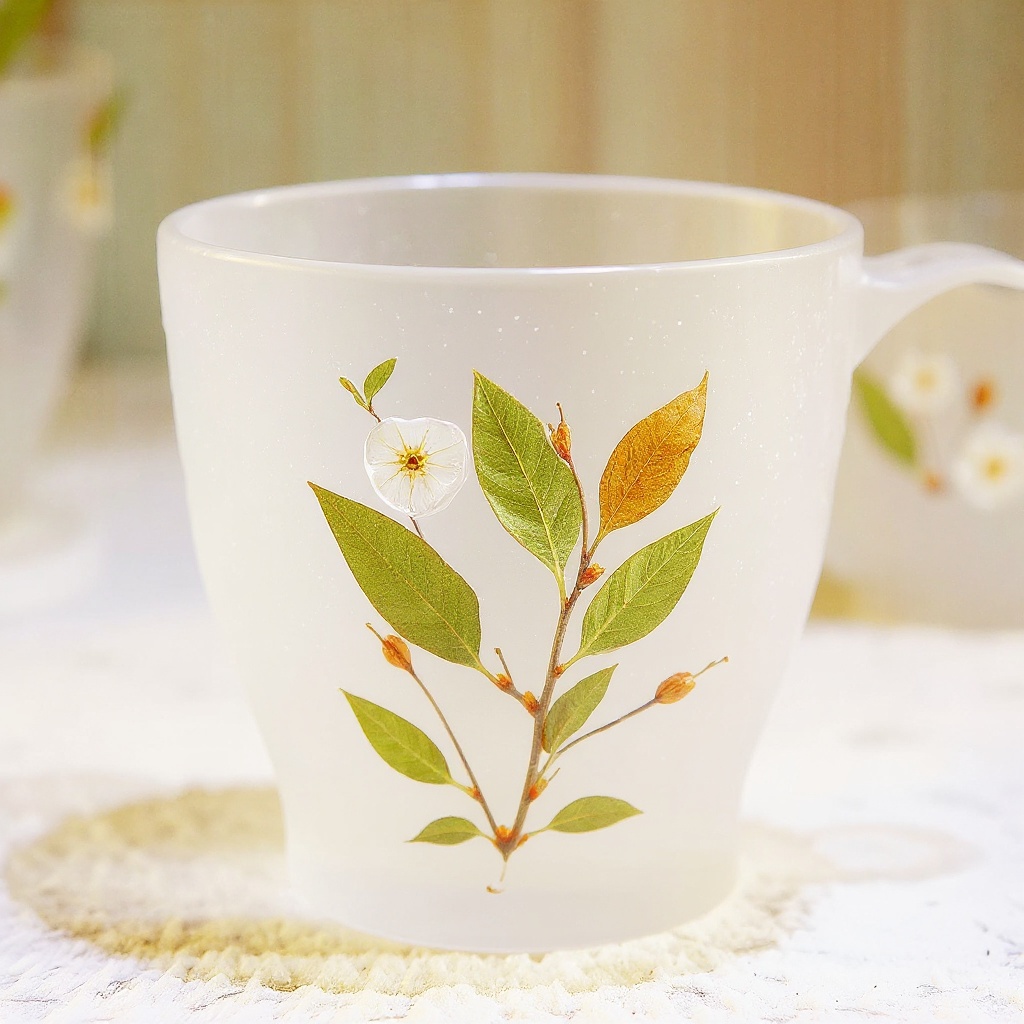
Authentic artisan floral glass teacup sets embed real preserved botanicals directly onto the exterior glass surface during or after forming, then seal them under a protective clear layer. Each petal placement is done by hand. You cannot automate the way a plum blossom petal curves at its edge or how a tiny dried leaf rests against the frosted pearl surface at a natural angle. This is why two cups from the same production batch are never identical — slight variations in petal position, the density of the frosted finish, the exact height of a raised leaf. Beautiful inconsistency. A marker of the real thing.
The plum blossom carries deep significance across East Asian artistic tradition — symbolizing perseverance through cold, hope at the edge of winter. When preserved correctly and hand-applied to a frosted milky-white glass surface, the dried petals maintain their papery translucency and natural blush coloration for years. This is not decoration. It is preserved nature, held in glass.
Mass production cannot replicate this. Period.
Real Preserved Flowers vs. Artificial: A Practical Identification Guide
This distinction matters more than most buyers realize before they purchase.
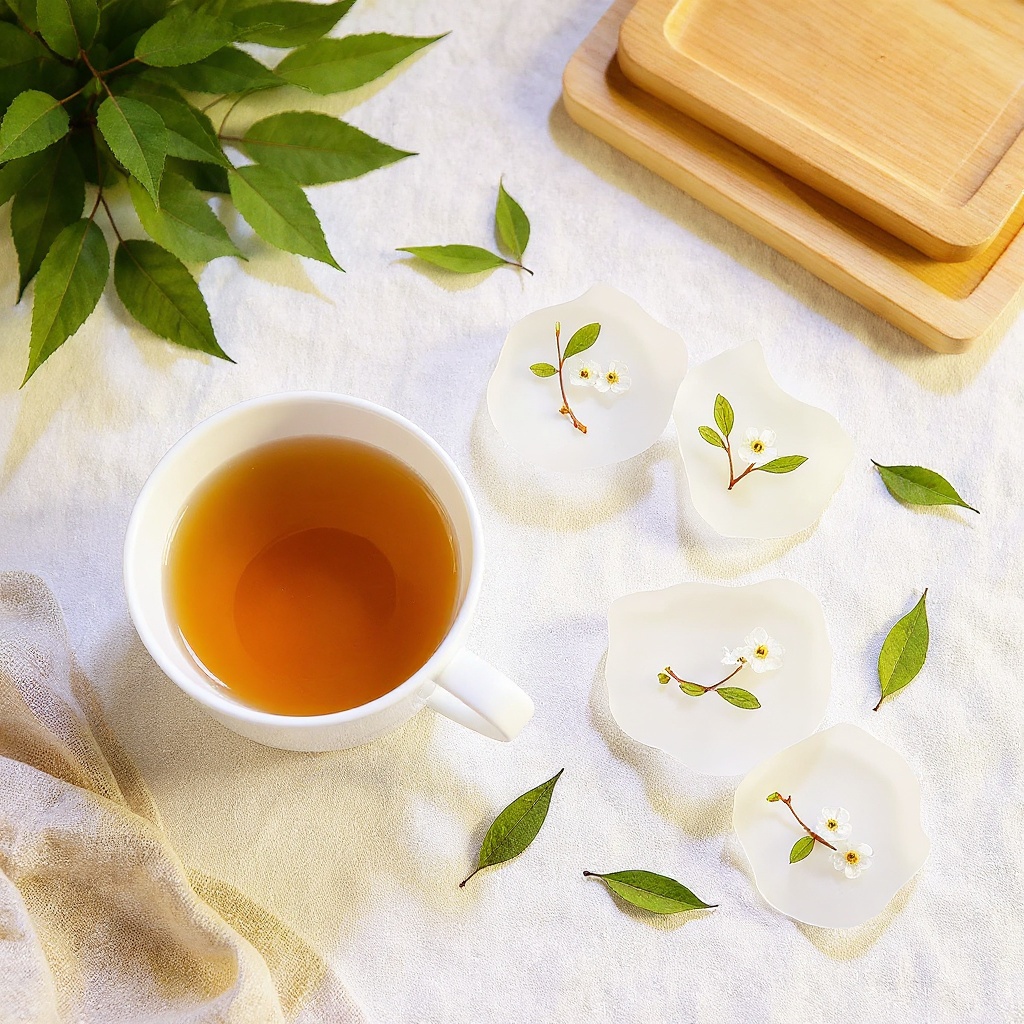
Real preserved flowers — whether treated with glycerin, silica gel desiccation, or freeze-drying — retain organic irregularities that synthetic alternatives cannot reproduce at scale. Each petal has natural color gradients. Edges are slightly uneven. Under close inspection, cell structure is sometimes visible as subtle surface texture. The pressed flower craft tradition, which dates to Victorian botanical illustration practices, informs modern preservation techniques that produce botanicals durable enough to last 5–10 years when properly embedded and sealed.
Artificial alternatives include resin-cast flower replicas, silk botanicals, and high-resolution printed images laminated under glass coatings. Resin casts look convincing in photographs. In person, they are uniform — every petal the same size, the same color value, the same surface texture. Uniformity is the giveaway. Nature does not produce identical petals.
Quick identification checklist before purchasing:1. Ask the seller for a close-up macro photograph of a single petal — real botanicals show color variation and organic edge irregularity 2. Request confirmation of the preservation method used (glycerin, silica, or freeze-dry are all legitimate; "resin encased" indicates artificial replicas) 3. Look for slight differences between cups in the same set — real handwork produces natural variation 4. Check whether the surface texture is raised and tactile, or smooth and flat 5. Verify that the product description specifies "real" or "genuine" dried or preserved botanicals, not "botanical-inspired" or "floral design" 6. If price is under $80 for a set claiming real preserved flowers, treat the claim with skepticism — preservation processing and hand-placement labor alone exceed that cost threshold
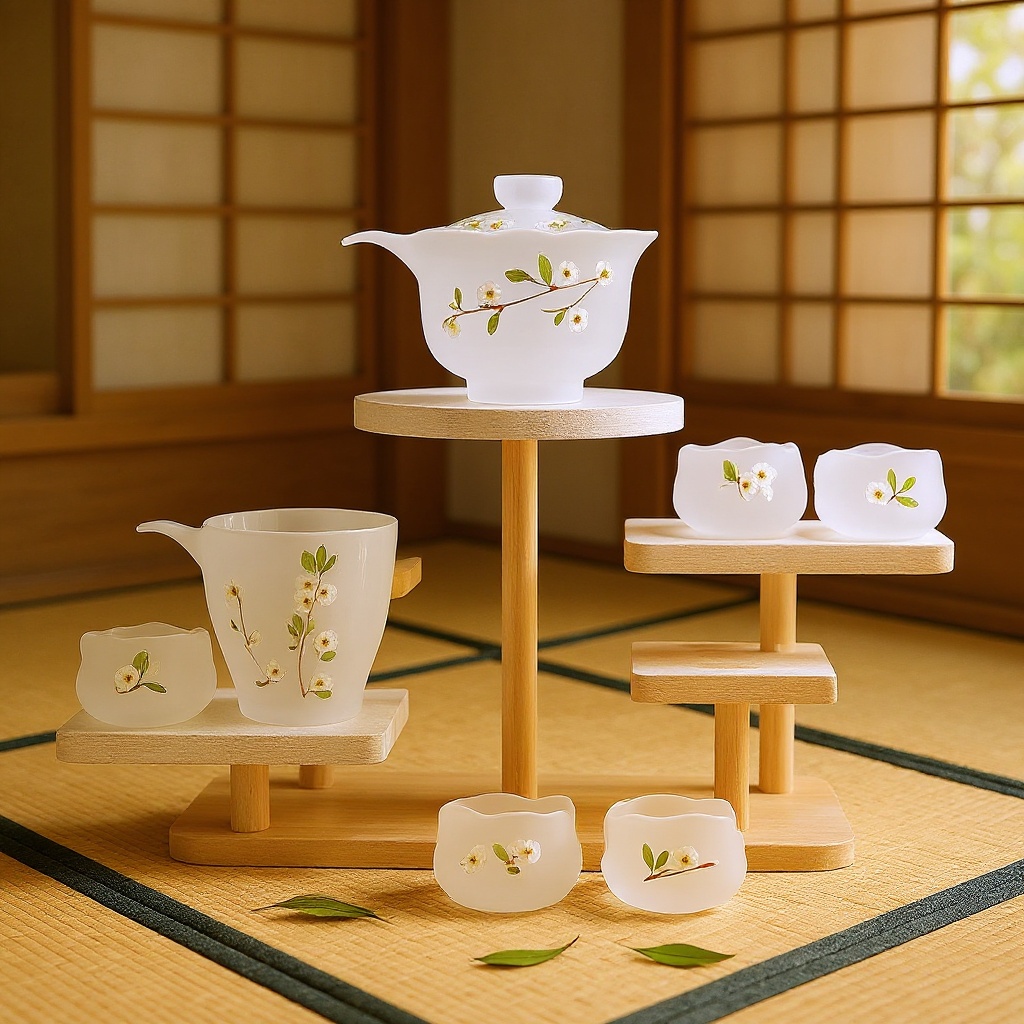
The Handmade Frosted Pearl Plum Blossom Tea Set uses genuine preserved plum blossom petals and tiny leaves, hand-embedded on the frosted exterior with a raised texture confirmed by touch. This is the standard worth holding any artisan floral glass teacup set against.
Glass Types and Heat Resistance: What the Specs Actually Mean
Not all glass handles hot tea equally. Borosilicate glass is the benchmark for thermal resistance — the same material used in laboratory equipment — capable of handling temperature changes across a range from near-freezing to above 300°F without stress fracturing. Standard soda-lime glass, used in most budget glassware, struggles above 180°F and is susceptible to thermal shock when hot liquid meets a cool surface.
Frosted glass adds production complexity. The frosting process — achieved through acid etching or sandblasting — creates the soft pearl-white finish characteristic of premium artisan pieces, but it slightly reduces surface hardness. Quality artisan makers compensate with thicker glass walls. Four to six millimeters of wall thickness provides both improved heat retention for your tea and structural resilience that thinner frosted glass cannot match.
| Glass Type | Heat Resistance | Typical Wall Thickness | Best Use | Approximate Price Range |
|---|---|---|---|---|
| Standard Soda-lime | Up to 180°F | 2–3mm | Cold beverages, room temp | $5–$25 |
| Tempered Glass | Up to 250°F | 3–4mm | General hot drinks | $15–$60 |
| Borosilicate | Up to 300°F | 3–5mm | Daily hot tea, coffee | $40–$150 |
| Artisan Frosted (soda-lime base) | Up to 200°F | 3–4mm | Warm tea, display | $60–$180 |
| Artisan Frosted (borosilicate base) | Up to 275°F | 4–6mm | Daily hot tea use | $120–$500 |
| Mass-produced printed glass | Up to 180°F | 2–3mm | Decorative, light use | $15–$60 |
| Specialty treated artisan frosted | Up to 285°F | 4–6mm | Premium daily + gift | $150–$500 |
Capacity matters for practical use. Most artisan floral glass teacup sets hold 300–450ml — appropriate for a single generous serving of loose-leaf tea. The 400ml capacity found in sets like the Handmade Frosted Pearl Plum Blossom Tea Set hits the right balance between visual elegance and functional volume for daily tea culture rituals. Smaller 200ml cups suit concentrated teas or ceremonial servings. Larger than 500ml and the floral design can feel visually overwhelmed by the glass volume.
Care and Maintenance: Protecting Your Investment Without Overcomplicating It
Hand washing. Every time. No exceptions.
Dishwasher detergents contain enzymes and oxidizing agents that degrade organic botanical materials and attack the adhesion layer holding embedded flowers to glass surfaces. Even cycles marketed as "delicate" generate mechanical vibration that stresses the bond between embedded petals and glass. One dishwasher cycle will not destroy a quality artisan piece. Fifty will. The degradation is cumulative and invisible until it isn't.
Step-by-step care routine for artisan floral glass teacup sets:1. Fill a basin with lukewarm water — not hot, not cold — and a small amount of pH-neutral dish soap 2. Submerge the cup and clean interior surfaces with a soft cloth or non-abrasive sponge 3. Clean the exterior with light circular motions, paying attention to raised botanical areas where residue can accumulate 4. Rinse with lukewarm water, avoiding sudden temperature changes 5. Place upside down on a clean dry cloth and air dry fully before storing — never use heat to accelerate drying 6. Store in a padded compartment or the original eco kraft paper gift box away from direct sunlight 7. For tea staining on the interior, dilute white vinegar with water at a 1:3 ratio and let sit for 10 minutes maximum — extended acid exposure affects both glass and preserved botanicals
Avoid placing hot cups directly on cold stone, marble, or metal surfaces. Thermal shock creates micro-fractures in the glass wall that weaken structural integrity over time, even when invisible to the eye.
Design Philosophy and Cultural Influences Behind Plum Blossom Glass
The frosted pearl milky-white glass teacup aesthetic draws from several convergent design traditions. Japanese wabi-sabi philosophy embraces imperfection and transience — preserved botanicals that were once living, now held in permanent pause, express this philosophy with unusual directness. The raised plum blossom petals on a frosted surface echo the Japanese aesthetic of mono no aware: the gentle ache of beautiful things that pass.
Minimalist Japanese flat lay styling — warm natural light, earthy linen or raw wood backgrounds, steam rising from warm tea — is not arbitrary. It removes visual competition so the cup itself becomes the focus. The frosted pearl surface diffuses light rather than reflecting it, creating a warmth that clear glass cannot replicate. Soft. Quiet. Present.
European botanical glass traditions tend toward denser, more ornate arrangements with multiple species. Scandinavian interpretations favor single-species displays with significant negative space. The plum blossom approach — sparse petals and small leaves on a generous frosted surface — belongs more clearly to the East Asian minimalist tradition, where restraint is not absence but precision.
The eco kraft paper gift box that accompanies quality artisan sets is itself a design choice, not just packaging. It reinforces the natural, handmade narrative and presents cleanly against linen or wood surfaces in gift photography.
Pricing Factors and Honest Value Assessment
Here is something most buying guides will not say plainly: if you use your teacup twice a week while watching television and leave it in a dish rack overnight, a $40 printed glass cup will serve you fine. Artisan floral glass teacup sets justify their price for buyers who find daily ritual meaningful — who want the weight of a considered object in their hands during a quiet morning, who gift things that communicate genuine thought. That is a real value. It is not a universal one.
For the buyers for whom it does apply, the pricing factors are legitimate:
1. Handcraft time — 3–5 days per piece, including botanical preparation, placement, sealing, and curing 2. Botanical sourcing and preservation — real dried plum blossom petals require sourcing, treatment, and quality selection; preservation processing adds measurable cost before any glass work begins 3. Specialized glass materials — frosted borosilicate or treated glass costs more per unit than standard soda-lime blanks 4. Skilled labor and years of practice — consistent petal placement at the quality level visible in premium sets requires craft experience that cannot be shortcut 5. Small-batch production — limited runs mean no economy-of-scale cost reduction; each batch involves individual quality control 6. Eco-friendly packaging — kraft paper boxes with biodegradable protective materials cost more than plastic packaging but align with the product's values 7. Longevity — well-maintained artisan frosted glass teacup sets with properly embedded botanicals last 10+ years, making a $200 set roughly $0.05 per use over a decade of daily use
For a $250 artisan floral glass teacup set used daily for 10 years, the cost-per-use is approximately $0.07. A $50 mass-produced set replaced every 18 months costs $0.09 per use over the same period — and delivers none of the aesthetic experience. The math favors quality. It always does at sufficient time horizons.
Sustainability Considerations
The artisan glass industry's environmental profile is genuinely mixed, and honest assessment requires acknowledging both sides. Glass is infinitely recyclable in its pure form, but embedded botanicals and adhesive sealing layers complicate recycling stream processing — this is a real limitation that most product pages omit. Real dried flowers contain no synthetic materials, which is an advantage over resin-cast alternatives that use petrochemical stabilizers. Many artisan makers source botanicals from small organic farms or harvest from cultivated garden stock, reducing transportation-related emissions versus commercially imported synthetic flowers.
EPA guidelines for greener products encourage full lifecycle consideration from raw materials through end-of-life. Eco kraft paper packaging scores well on that framework — recycled content, no bleaching, no plastic components. The "slow living" movement has legitimately embraced artisan teacups as objects of mindful consumption: fewer purchases, longer functional lives, greater daily satisfaction. The philosophical alignment between botanical preservation and intentional living is not marketing language. It is coherent.Honestly, though — if you live in a high-humidity climate with limited storage space and no dedicated display area, the care requirements for an artisan floral glass teacup set will become a source of stress rather than pleasure. Consider your actual living situation before investing.
Internal Links: Explore the Full Collection
The Handmade Frosted Pearl Plum Blossom Tea Set is the specific product this guide is built around — 400ml capacity, genuine preserved plum blossom petals and tiny leaves raised on a frosted milky-white exterior, eco kraft paper gift box included.
Frequently Asked Questions
Are the flowers on artisan floral glass teacup sets real or artificial?Quality artisan floral glass teacup sets use real dried and preserved botanicals — plum blossom petals and leaves treated to remove moisture while retaining organic structure, color, and texture. Real preserved flowers show natural color variation, irregular petal edges, and visible surface texture when examined closely. Artificial alternatives including resin-cast replicas and silk botanicals appear uniform in size and color across a set, which is the clearest distinguishing feature. Each cup in an authentic set will have slight botanical differences because real hand-placement of organic materials produces natural variation.
Can I put an artisan floral glass teacup in the dishwasher?No. Hand washing is required for artisan floral glass teacup sets with embedded botanicals. Dishwasher detergents contain enzymes and oxidizing agents that break down preserved organic materials over repeated cycles. Machine vibration stresses the adhesion layer bonding petals to the glass surface. Use lukewarm water, a small amount of pH-neutral dish soap, and a soft cloth. Rinse with water at similar temperature and air dry completely before storing.
How long do preserved botanicals last when embedded in glass?Properly preserved flowers embedded and sealed in quality frosted glass maintain their appearance for 5–10 years with careful daily use. The primary factors affecting longevity are preservation method quality, glass sealing integrity, cleaning routine (hand wash only), storage away from direct sunlight, and avoidance of thermal shock. Glycerin-treated and freeze-dried botanicals generally outlast silica-only treatments in embedded applications.
Why are artisan floral glass teacup sets significantly more expensive than printed glass alternatives?The cost difference reflects handcraft time (3–5 days per piece), genuine preserved botanical materials requiring sourcing and treatment, specialized frosted glass production with above-standard wall thickness, skilled hand-placement labor, small-batch production with individual quality control, and eco-friendly packaging. Mass-produced alternatives use automated printing or decal application on standard glass blanks, reducing production time to minutes per unit and enabling bulk pricing that artisan production cannot match.
Is frosted borosilicate glass safe for hot tea?Yes, borosilicate glass with a frosted finish is safe for hot beverages when wall thickness meets the minimum threshold for thermal resilience — typically 4mm or above for artisan frosted pieces. Standard borosilicate handles temperature ranges from near-freezing to above 300°F without stress fracturing. Avoid placing hot glass directly on cold stone or metal surfaces, which creates rapid localized temperature differential and increases micro-fracture risk over time.
How do I clean a frosted glass teacup without damaging the raised botanical design?Use lukewarm water with a small amount of pH-neutral dish soap and a soft cloth or non-abrasive sponge. Clean raised botanical areas with light circular motions — do not scrub. For interior tea staining, a 1:3 dilution of white vinegar in water applied for no more than 10 minutes is effective without chemical damage to glass or botanicals. Rinse thoroughly with lukewarm water and air dry fully. Avoid abrasive pads, bleach-based cleaners, and extended acid contact.
Are artisan floral glass teacup sets suitable for daily use, or primarily for display?Quality artisan floral glass teacup sets with properly embedded and sealed botanicals are designed for regular use when care instructions are followed. The determining factors are glass wall thickness — 4mm minimum for daily hot tea — and botanical sealing quality. Pieces built on borosilicate bases with thorough sealing hold up to daily use. Thinner glass or inadequately sealed botanicals are better suited to display or occasional use. Checking specifications before purchase is the most reliable way to distinguish daily-use pieces from decorative-only ones.
What is the difference between resin flower cups and real preserved flower cups?Resin flower cups use synthetic botanicals cast in clear resin, producing uniform, chemically stabilized results. Every petal in a resin piece is identical in size, color saturation, and surface texture because it was cast from the same mold. Real preserved flower cups embed authentic organic botanicals — in the case of plum blossom tea sets, actual dried petals and leaves — that retain natural irregularities, color gradients, and organic cell-surface texture. The physical difference is apparent when comparing two cups from the same set: real botanical sets show natural variation between pieces; resin sets do not.
What should I look for in an eco-friendly gift packaging option for artisan glass teacups?Look for kraft paper construction using recycled content, no plastic inner wrapping, biodegradable protective padding such as kraft paper crinkle fill or molded pulp inserts, and a box designed for reuse as long-term storage rather than single-use presentation. Quality artisan producers include packaging that functions as a dedicated storage case between uses, extending the practical life of the packaging itself and reducing waste over time.


