































Tea Ceremony Sets With Preserved Petals Explained
Tea Ceremony Set with Preserved Petals: A Complete Guide
By pampasroom, founder of Pampasroom · 8+ years collaborating with East and Southeast Asian ceramic artisans specializing in handmade porcelain · Featured in Cottagecore Weekly and The Artisan HomeA tea ceremony set with preserved petals combines traditional Chinese gongfu tea brewing with real dried flowers embedded directly into the porcelain surface. Unlike painted or printed floral designs, these sets feature actual flower petals — carefully preserved and sealed during the ceramic firing process — creating raised botanical relief patterns visible on gaiwans and teacups. Each tea ceremony set with preserved petals is uniquely beautiful. And fully functional. The preserved petals maintain their natural colors and textures while being permanently protected within the porcelain glaze, making every piece a convergence of handcraft and daily ritual.
This guide covers everything: how these sets are made, what to look for when buying, how to care for them, and the honest trade-offs nobody else will tell you.
What Makes a Tea Ceremony Set with Preserved Petals Different from Regular Porcelain
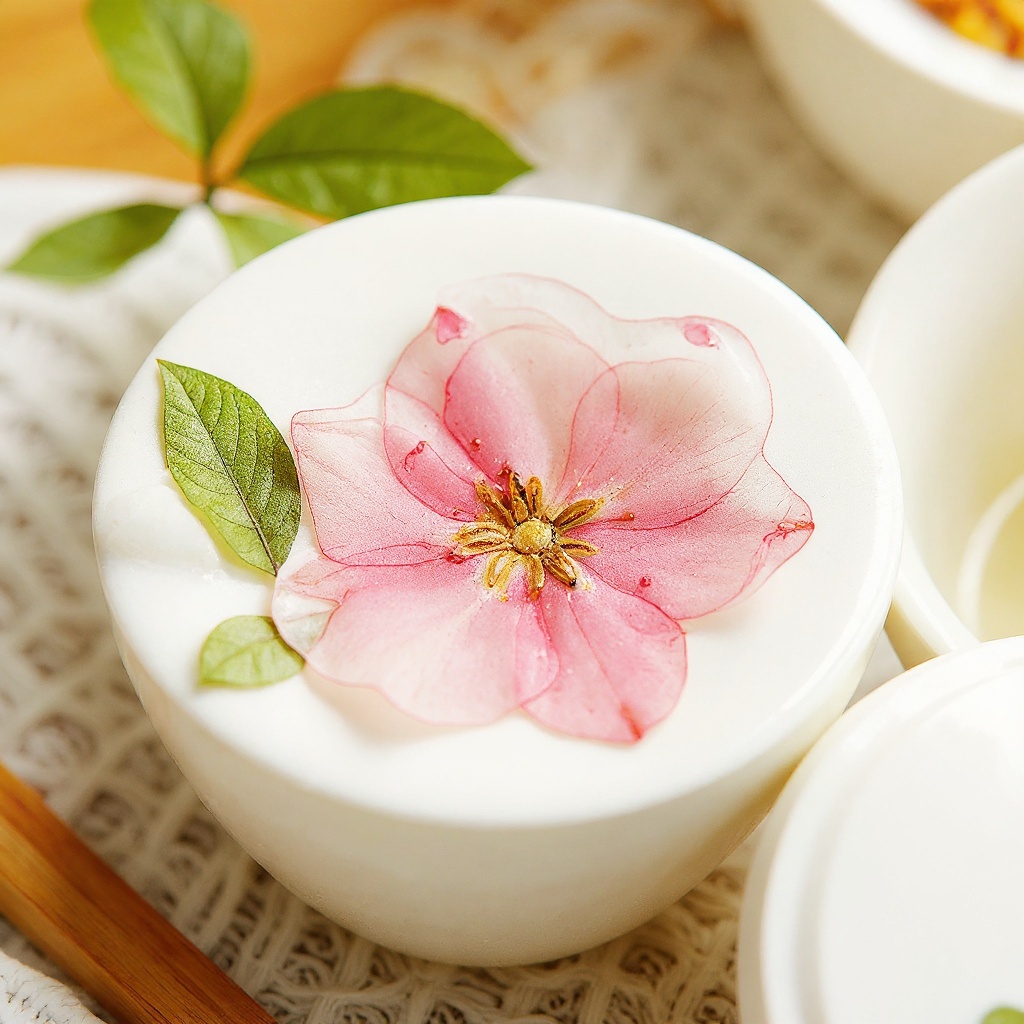
The key distinction lies in how flowers become part of the ceramic itself. Regular tea sets rely on surface decorations — painted designs, transfers, or glazes — that sit on top of the porcelain. With a tea ceremony set with preserved petals, real flowers are positioned on unfired ceramic and then sealed during the kiln process. This creates a raised relief where you can feel the flower's texture through the protective glaze layer. Texture that no decal can fake.
According to ceramic materials research published by the American Ceramic Society, organic materials embedded in clay bodies undergo carbonization during bisque firing, leaving behind a carbon-preserved structural imprint that subsequent glaze firing then encases and seals permanently. This is not decoration applied after the fact — it is geology, compressed into porcelain.
Different flower types respond differently to high-heat firing. Delicate petals like cherry blossoms need careful temperature control. Sturdier flowers like chrysanthemums can withstand more aggressive firing schedules. Each piece emerges with slight variations in petal placement and color intensity, making mass production structurally impossible.
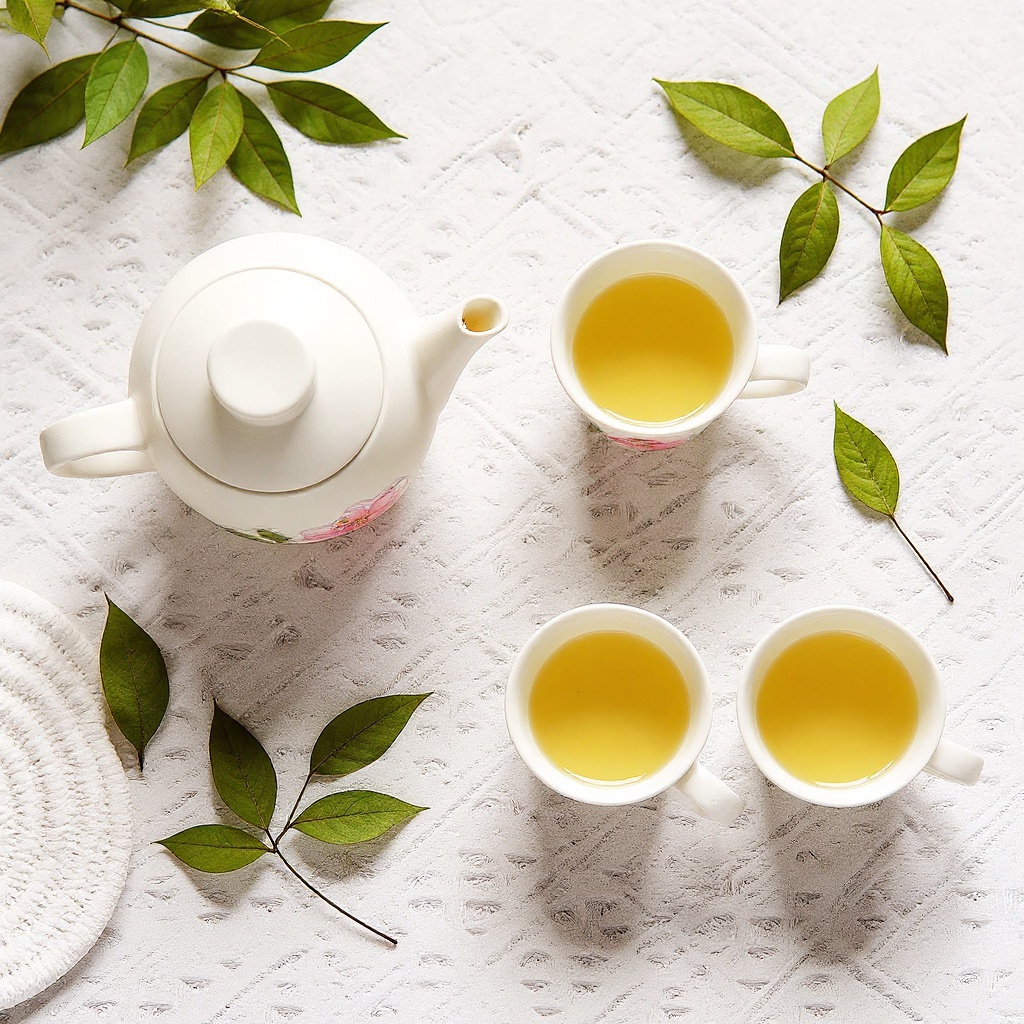
The Art of Embedding Real Flowers in Porcelain
Creating a functional tea ceremony set with preserved petals starts with flower selection. Artisans choose petals based on their ability to maintain structure during firing — rose petals, cherry blossoms, and small leaves are popular. Flowers are first dried using controlled dehydration methods that remove moisture while preserving cellular structure and natural pigments.
The ceramic body must be leather-hard — partially dried but still workable — when petals are applied. Each flower is positioned by hand, gently pressed into the surface. The piece then undergoes bisque firing at approximately 1,832°F (1,000°C), a standard earthenware bisque temperature documented in ceramic science literature, followed by glaze application and a final glaze firing that typically reaches 2,192–2,372°F (1,200–1,300°C) for high-fire porcelain. The pressed flower craft techniques used have evolved from traditional botanical preservation methods into something far more permanent.
Timing during glaze application is critical. Too thick, and the flowers disappear completely. Too thin, and they're not properly sealed for food safety. Master ceramicists — like Jingdezhen-trained porcelain artists who have spent decades refining glaze viscosity ratios — develop their own formulas through years of kiln experimentation that no instruction manual can compress.
Here are the key stages of the production process:
1. Flower selection and dehydration — petals are dried to remove moisture while preserving structure 2. Clay body preparation — porcelain is thrown or hand-built and allowed to reach leather-hard stage 3. Petal placement — each flower is hand-positioned and gently pressed into the surface 4. Bisque firing — first firing at approximately 1,832°F carbonizes organic material, preserving shape 5. Glaze application — a calibrated glaze layer is applied by hand to seal petals 6. Final high-fire kiln — second firing at 2,192–2,372°F fuses glaze and locks petals permanently 7. Quality inspection — each piece is examined for petal placement, glaze coverage, and structural integrity
Gaiwan vs. Regular Teacup Sets: Functional Differences
A gaiwan serves as both brewing vessel and drinking cup, consisting of three parts: the bowl, lid, and saucer. This design allows precise control over steeping time and temperature, making it central to traditional Chinese tea ceremony practices. Regular Western teacup sets separate brewing (in a teapot) from drinking (in cups), which limits your ability to adjust each individual serving.
The 400ml capacity typical of quality gaiwans accommodates multiple short steepings — the hallmark of gongfu brewing where the same tea leaves yield 6–8 successive infusions, each revealing different flavor compounds as the leaf unfurls progressively. The wide opening of a gaiwan also lets you observe tea leaf expansion and color changes throughout the process. You watch the tea breathe.
For a tea ceremony set with preserved petals, the gaiwan format showcases the botanical elements beautifully. The Handmade Frosted Porcelain Tea Set | Real Preserved Flowers | 400ml Gaiwan Kit features delicate petals in raised relief across both the gaiwan and accompanying 100ml cups, creating visual harmony during tea service.
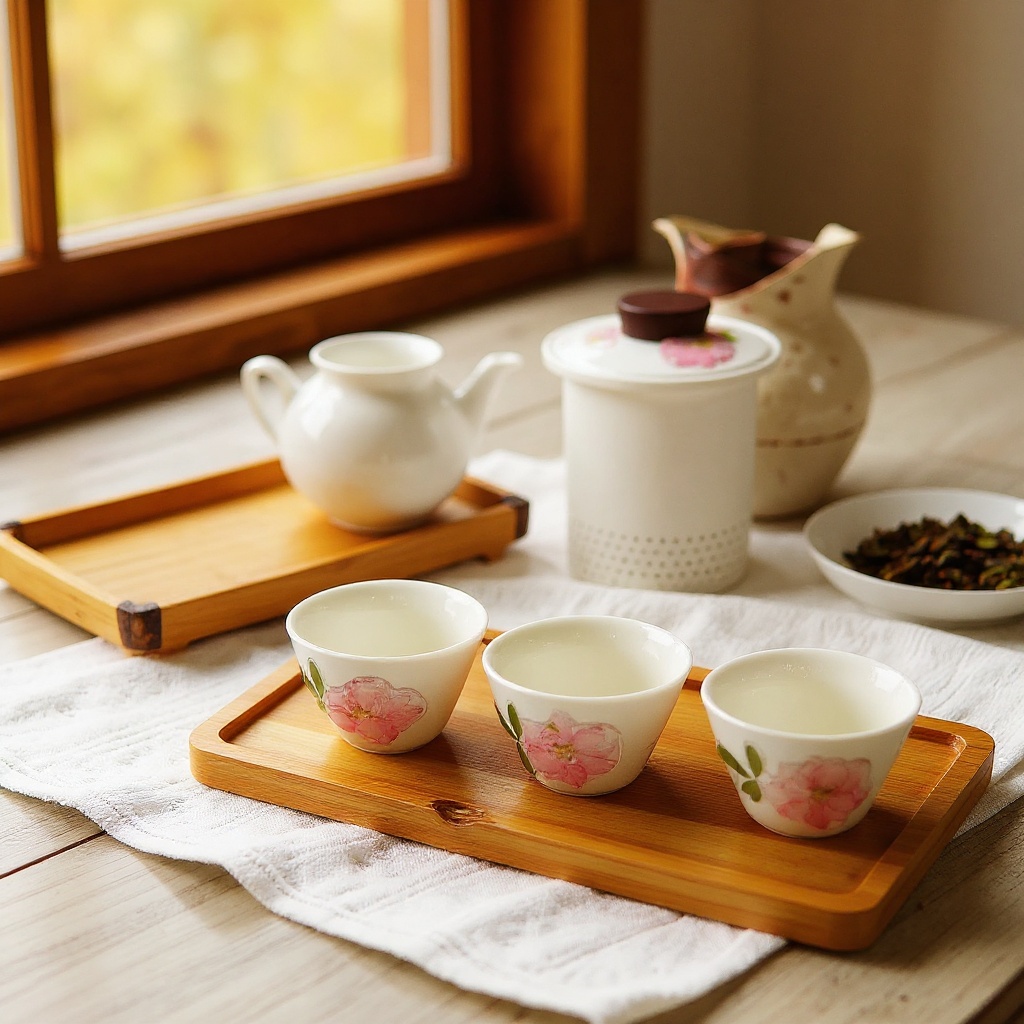
Quality Indicators: Real vs. Fake Preserved Flowers in a Tea Ceremony Set
| Feature | Real Preserved Flowers | Printed / Painted Flowers | Molded Relief (No Flowers) |
|---|---|---|---|
| Texture | Raised relief you can feel | Flat surface | Raised but uniform |
| Variation | Each piece slightly different | Identical patterns | Identical patterns |
| Transparency | Petals show depth beneath glaze | Opaque designs | Opaque, no layering |
| Edges | Organic, irregular shapes | Perfect, uniform lines | Perfect, geometric |
| Color tone | Muted, natural (blush, sage, ivory) | Bright, saturated | Painted over mold |
| Price range | $150–$400+ | $30–$150 | $40–$180 |
| Uniqueness | One-of-a-kind | Mass-produced | Mass-produced |
Authentic tea ceremony sets with preserved petals reveal their quality through close inspection. Real petals create subtle shadows and depth beneath the glaze. Their edges show the organic irregularity of natural growth. Colors lean toward muted, natural tones — soft blush, gentle sage, warm ivory — rather than the bright, artificial-looking hues common in mass-produced pieces.
Run your finger across the surface. Real flowers create slight elevation changes that printed designs simply cannot replicate. No two real flowers land in exactly the same spot or orientation. That inconsistency is not a defect — it is the proof.
Signs of Quality Glaze Application on Botanical Porcelain
Not every preserved petal tea set is glazed with equal care. Knowing what to look for protects your investment.
1. Uniform sheen without pooling — quality glaze flows evenly; thick pools around petal edges indicate rushed application 2. No visible pinholing — tiny craters in the glaze surface suggest underfiring or glaze that was too viscous 3. Petal edges sealed, not floating — the glaze should flow over the petal perimeter completely, with no lifted edges 4. Consistent matte frosted finish — on frosted pieces, the surface should feel like fine-grain satin, not chalky or uneven 5. Interior glaze coverage — the inside of cups and the gaiwan bowl should be fully glazed for food safety 6. No crazing on new pieces — fine surface cracking (crazing) on a brand-new set indicates thermal mismatch between clay body and glaze
Care and Maintenance for Your Tea Ceremony Set with Preserved Petals
A tea ceremony set with preserved petals requires gentler handling than standard porcelain. Hand washing with mild soap and warm water protects both the botanical details and the matte frosted finish. The raised petals can trap soap residue, so thorough rinsing is essential. A soft brush — a clean watercolor brush works well — reaches between raised petal edges without scratching.
Avoid temperature shock. Warm the gaiwan gradually with lukewarm water before adding boiling water for tea. Sudden temperature changes can stress the glaze around embedded flowers, potentially causing hairline cracks over time. This is not unique to botanical sets — it applies to any fine porcelain — but the raised surface elements make crack propagation slightly more consequential here.
Storage should protect delicate raised elements from chipping. Many artisan sets come with fitted travel cases or individual fabric pouches. Display your set away from windows; prolonged direct sunlight causes gradual color shift in any natural botanical material over years.
Honest note most articles skip: If you use your gaiwan daily, the matte frosted finish will develop a very slight patina over months of handling — oils from skin create subtle variations in how the surface reflects light. Some people love this as a sign of use. Others find it bothers them. If you want the set to stay pristine-white for display purposes, handle it with clean, dry hands or wear thin cotton gloves during ceremonies.Investment Value: Why Handmade Tea Ceremony Sets with Preserved Petals Cost More
The price difference between mass-produced and artisan tea ceremony sets with preserved petals reflects labor that cannot be automated. Standard porcelain tea sets can be machine-molded and decorated with transfers or screen printing, allowing factories to produce hundreds of identical pieces daily. Botanical sets require individual attention at every stage.
Handmade preserved flower sets typically range from $150–$400, with premium studio pieces reaching $600–$1,200. The time investment alone — from flower selection through multiple firings — can span several weeks per set. Each piece must pass inspection for proper petal placement, glaze coverage, and firing quality before being approved.
The uniqueness factor also drives value. No two pieces can be identical when working with real botanical materials, making each tea ceremony set with preserved petals effectively a one-of-a-kind functional art piece.
Choosing the Right Tea Ceremony Set with Preserved Petals for Your Needs
Selecting your tea ceremony set with preserved petals depends on your primary use case and aesthetic preferences. Consider these five key factors:
1. Capacity requirements — 400ml gaiwans suit 2–3 people for gongfu sessions; smaller 200ml versions work better for solo practice 2. Flower types — rose petals and cherry blossoms offer a romantic aesthetic; eucalyptus and herbs provide earthier, botanical character 3. Glaze finish — matte frosted surfaces hide water spots but show skin oils over time; glossy glazes are easier to wipe clean but highlight every fingerprint 4. Portability needs — travel kits with protective cases cost more but enable tea ceremony anywhere; display sets prioritize visual beauty over durability 5. Budget range — entry-level preserved flower sets start around $150; investment pieces from established ceramic artists exceed $500
The frosted white finish with soft botanical tones — blush, ivory, sage — has become particularly sought-after for its versatility. These neutral palettes complement both traditional Asian tea settings and contemporary Western interiors, making them strong choices for gifts or personal ritual.
Sources / Further Reading
- American Ceramic Society — ceramic materials science and organic burnout in kiln firing - Pressed Flower Craft — Wikipedia - Gaiwan — Wikipedia - Chinese Tea Ceremony — Wikipedia - Porcelain — Wikipedia - FDA Guidelines on lead and cadmium limits in ceramic foodware (FDA CPG Sec. 545.450)


