































Artisan Glass Cups vs Mass-Produced: What You Actually Get
Artisan Glass Cups vs Mass-Produced Alternatives: What You Actually Get
By pampasroom, founder of Pampasroom · 8+ years studying decorative glasswork, botanical preservation techniques, and artisan craft supply chains across Southeast Asia and Europe · Research contributor to independent homeware sustainability studiesWhen comparing artisan glass cup vs mass-produced alternatives, you are looking at fundamentally different objects. Artisan pieces use premium borosilicate glass, involve multi-day handcraft processes, and feature real preserved botanicals embedded under food-safe resin. Mass-produced options rely on printed decal designs, standard soda-lime glass, and factory assembly lines. The price gap reflects these differences: handcrafted pieces typically cost $50–$150 while factory versions range from $8–$25. But price tells only part of the story.
Honestly, if you drink from your cup carelessly, toss it in the dishwasher daily, and replace tableware every year without a second thought, a $12 factory mug is probably fine for you. This article is for everyone else.
Material Quality: The Foundation That Matters
The glass itself sets the two categories apart. Factory manufacturers typically use soda-lime glass, which contains roughly 70% silica and is prone to thermal shock. Pour hot coffee into a cold soda-lime cup and you are gambling with fractures. Borosilicate glass, the standard for quality artisan work, incorporates approximately 12–15% boron trioxide, giving it a thermal expansion coefficient roughly three times lower than soda-lime glass — a material property documented in glass science literature and confirmed by manufacturers including Schott AG.
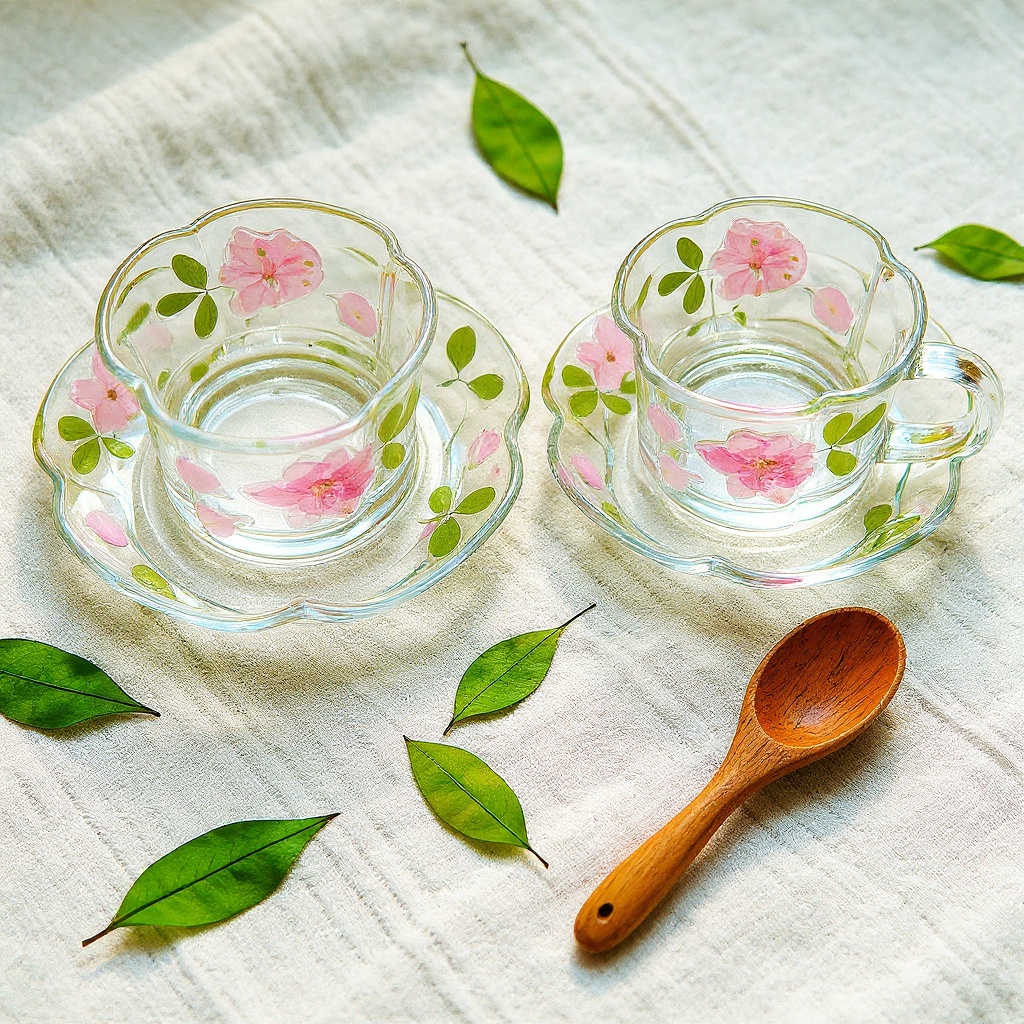
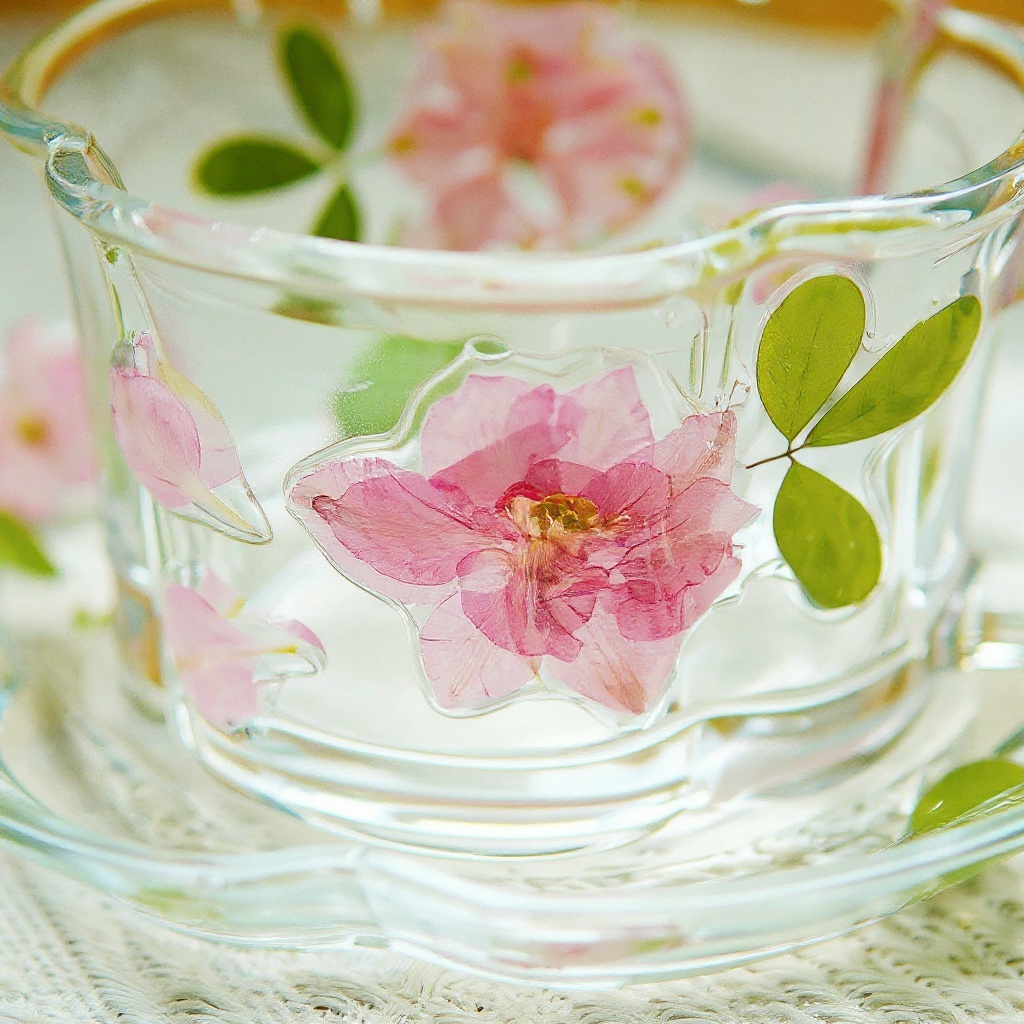
Mass-produced cups often feature fired decal transfers. Flat. Peelable over time. The floral image you see on a $12 option is essentially a digital graphic applied to the surface. Artisan pieces like the Handcrafted Pressed Flower Relief Glass Coffee Cup & Saucer embed real dried pink and blush flower petals and green leaves under a smooth resin layer, creating a three-dimensional raised relief on the exterior surface that cannot wear away the way a printed transfer can. The 200–250ml capacity suits both espresso-based drinks and loose-leaf tea service.
Manufacturing Process: Speed vs Craftsmanship
Factory glass production is optimized for volume. According to glass industry trade data published by organizations including the Glass Packaging Institute, automated molding lines in mid-scale facilities can produce thousands of units per shift. Workers execute a single task in a sequence; no one person sees the full piece come together. Quality control typically operates on statistical sampling rather than individual inspection.
Artisan glasswork follows a completely different timeline:
1. Botanical selection — real flower petals are chosen for color, shape, and structural integrity 2. Drying and preservation — petals undergo dehydration to remove moisture without destroying form 3. Resin preparation — food-safe resin layers are mixed and staged for application 4. First resin pour — a base layer is applied and allowed to cure in a controlled environment 5. Botanical placement — dried petals and leaves are positioned by hand on the exterior surface 6. Sealing pour — a final resin layer encases the botanicals under a smooth, protective finish 7. Curing and inspection — each piece cures fully before individual visual and structural review
This is the pressed flower craft tradition applied to functional glass art. Not decoration. Preservation.
Design Authenticity and Uniqueness Factors
| Feature | Mass-Produced | Artisan Handcraft |
|---|---|---|
| Design source | Stock digital pattern | Real dried botanicals |
| Surface treatment | Flat fired decal | Raised 3D relief under resin |
| Reproduction | Identical across entire batch | Natural variation in each piece |
| Color consistency | Uniform, computer-matched | Organic tonal shifts from petal origin |
| Texture on exterior | Smooth or embossed mold | Sculptural botanical texture |
| Longevity of design | Fades with repeated washing | Encased; protected indefinitely |
| Collectibility | Commodity replacement item | One-of-a-kind functional art piece |
When you examine artisan glass cup vs mass-produced alternatives side by side, the difference is tactile before it is visual. Run your fingertip across the exterior of a genuine botanical relief cup. You feel petals. You feel leaf veins. Real.
Factory pieces rely on digital files repeated without variation. The flowers look artificially perfect because they are computer-generated graphics designed to appeal to the broadest possible demographic. Authentic artisan work celebrates the opposite. Natural imperfection. Asymmetry. The specific pink and blush tones in preserved botanicals shift based on the original flower's growing conditions, harvest timing, and preservation method — variations that no print file can replicate.
How to Identify Authentic Borosilicate Glass
Not every product labeled "borosilicate" is what it claims. Use these physical and sourcing checks:
- Weight test: Borosilicate glass is slightly lighter than soda-lime glass of equivalent wall thickness due to lower density (approximately 2.23 g/cm³ vs 2.5 g/cm³ for soda-lime, per Schott material data sheets) - Thermal test: Fill with near-boiling water while the piece is at room temperature; borosilicate shows no stress fractures or audible cracking - Rim clarity: Quality borosilicate has a faint blue-green tint at thick rim edges under natural light; standard glass appears more yellow-green - Manufacturer disclosure: Reputable artisan sellers name their glass supplier or specify glass composition; vague listings that say only "high quality glass" are a warning sign - Price floor: Raw borosilicate sheet and tube stock costs significantly more than soda-lime at wholesale; a cup priced under $15 claiming borosilicate should prompt verification - Third-party certifications: Look for references to food-contact safety testing or compliance with standards such as EU Framework Regulation (EC) No 1935/2004 for materials in contact with food
Verify before you buy. Every time.
Durability and Longevity Considerations
Most people assume expensive means fragile. Wrong assumption here.
Borosilicate glass withstands temperature differentials that would fracture standard glass — a property confirmed by materials science research and standard industry testing protocols. The resin coating on artisan pieces adds a secondary layer of impact resistance on the exterior surface. UV-stable, food-safe resin formulations used in quality craft work maintain optical clarity without yellowing, according to product data from major resin suppliers including ArtResin and similar professional-grade manufacturers.
Mass-produced cups are engineered for replacement cycles, not longevity. Fired decal prints show visible wear with repeated high-heat dishwasher cycling — the adhesion between the decal layer and the glass surface degrades over time with thermal and detergent exposure. Thin glass walls are more vulnerable to impact fracture from everyday handling. This is not an accusation. It is simply how commodity tableware economics work.
A well-maintained artisan borosilicate piece with properly cured resin can serve as functional tableware for a decade or more. Not a guess. A structural reality.
Price Analysis: Understanding the Value Equation
The sticker shock looks different once you understand the cost drivers.
Mass-produced floral cups cost $10–$25 because factories optimize for volume. Borosilicate glass raw material costs roughly four to six times more per kilogram than standard soda-lime glass at wholesale — a differential reflected in pricing data from industrial glass raw material suppliers. Hand-preservation of botanicals requires trained skill, controlled drying environments, and time that automation cannot compress. Food-safe resin application requires curing periods measured in hours, not seconds.
Artisan pricing reflects genuine cost structures:
- Premium borosilicate glass: 4–6× raw material cost vs standard glass (industry wholesale data) - Botanical drying and preservation: skilled labor, specialized equipment, multi-day process - Resin application and curing: controlled environment, multiple pours, cure time per layer - Individual quality inspection: every piece examined, not batch-sampled - Limited production volume: no economy-of-scale compression available - Skilled artisan compensation: reflects years of technique development
At $88, quality artisan pieces occupy the accessible luxury tier. Comparable handcrafted glass art from established studios or galleries typically runs $150–$300. The Handcrafted Pressed Flower Relief Glass Coffee Cup & Saucer sits below that ceiling while meeting the same material and craft standards.
Gift Value and Emotional Impact
A factory mug communicates convenience. The recipient knows it. They have probably received twelve of them.
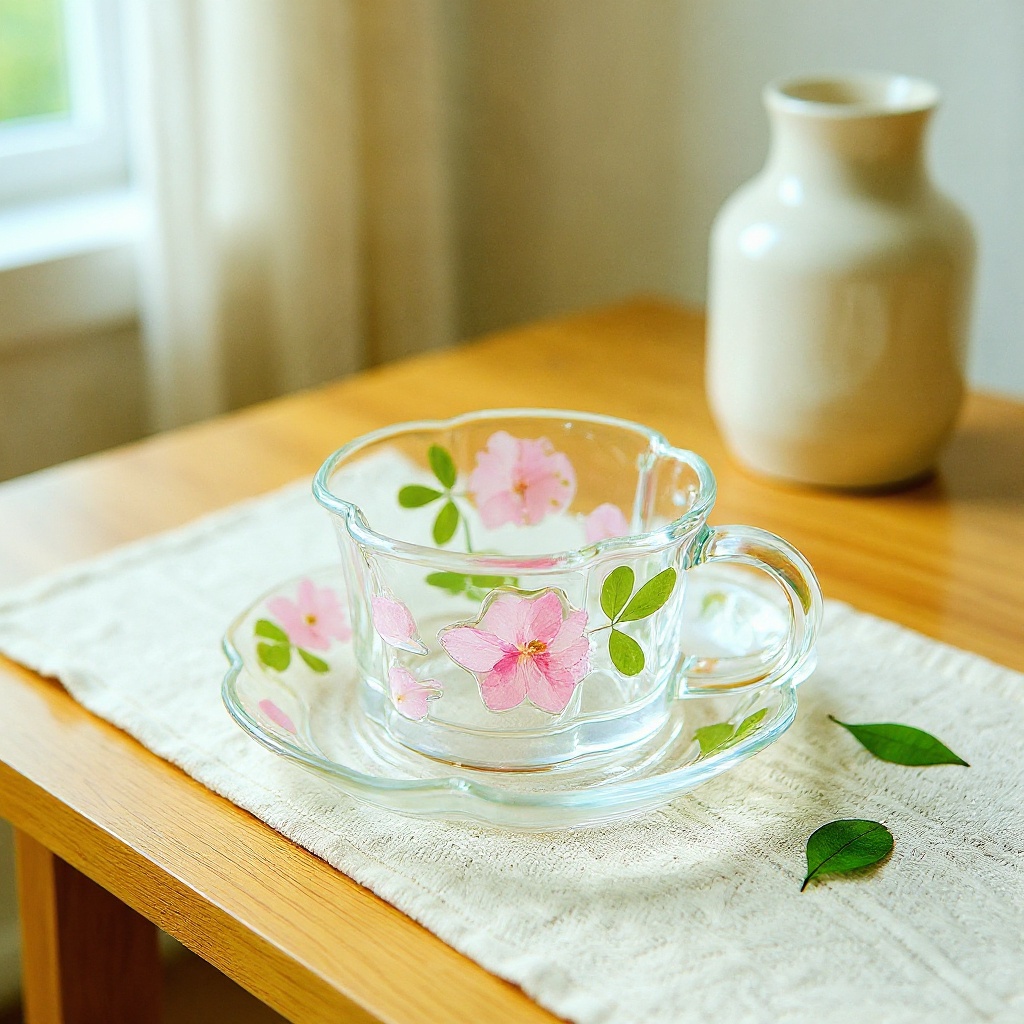
Handcrafted pieces tell a different story. The real preserved flowers create an immediate visual conversation — soft natural light catches the textured floral surface, casting gentle shadows across the raised botanical relief in ways that no flat print can produce. For occasions like weddings, Mother's Day, or milestone birthdays, a preserved flower glass cup becomes a keepsake rather than replaceable tableware. It gets placed somewhere visible. It gets kept.
For tea enthusiasts specifically, the Handcrafted Pressed Flower Relief Glass Coffee Cup & Saucer delivers both ritual and aesthetics — the clear borosilicate glass shows the color of the brew while the botanical exterior transforms the act of holding the cup into something worth noticing.
The emotional weight carries forward. Recipients display artisan pieces. They save them for particular mornings. The cup becomes a cherished possession rather than something that migrates to the back of the cabinet.
Care and Maintenance Differences
Caring for mass-produced cups means accepting inevitable replacement. Dishwasher-safe in theory. Degrading in practice with each high-heat cycle.
Artisan pieces with resin-embedded botanicals require slightly more attention but reward that attention with lasting beauty. Specific guidance:
- Wash by hand with warm soapy water and a soft cloth - Avoid abrasive scrubbers or steel wool — they scratch resin surfaces - Do not soak in water for extended periods - Store away from direct prolonged UV exposure to preserve botanical color - The borosilicate glass body handles hot beverages without thermal stress
For borosilicate glass cup with dried flowers maintenance, gentle handling preserves both the structural integrity and the aesthetic that makes these pieces worth owning long-term.
Frequently Asked Questions
Is the resin coating on floral glass cups food-safe for hot drinks? Food-grade epoxy resin used on quality artisan pieces is formulated to meet indirect food contact safety standards, including compliance frameworks such as FDA 21 CFR and EU Regulation (EC) No 1935/2004. The resin appears only on the exterior surface of the cup; hot beverages contact only the glass interior. The exterior surface does not touch your drink. Verify that any piece you purchase specifies food-safe or food-grade resin — not all manufacturers use appropriate formulations, and the labeling distinction matters. How do you clean a glass cup with a raised resin floral surface? Hand wash using warm water and a small amount of dish soap applied with a soft cloth or cellulose sponge. The raised botanical relief texture is sealed under the resin layer, so grit does not embed in the flowers themselves. Rinse thoroughly and air dry upright. Do not use abrasive pads, baking soda pastes, or steel wool — these create micro-scratches in the resin surface that accumulate over time and reduce optical clarity. What is the difference between borosilicate and regular glass for hot beverages? Borosilicate glass has a thermal expansion coefficient of approximately 3.3 × 10⁻⁶/K, compared to roughly 9 × 10⁻⁶/K for standard soda-lime glass — figures documented in Schott AG material specifications and academic glass science literature. In practical terms, this means borosilicate expands and contracts far less with temperature change, making it resistant to thermal shock fracture. Soda-lime glass can crack when subjected to sudden temperature differentials such as pouring boiling water into a cold cup. Borosilicate handles this without structural failure. Are preserved flowers inside glass cups real or synthetic? Authentic artisan pieces use real dried flower petals that have been preserved through dehydration processes — silica gel drying, air drying, or professional botanical pressing. Real petals show natural asymmetry, subtle color gradients, and slight dimensional variation between individual pieces. Synthetic alternatives have uniform edges, consistent artificial color, and no organic variation. Some mass-produced items labeled "botanical" use artificial flowers or printed botanical imagery rather than actual plant material. Read product descriptions carefully and look for seller disclosure of the preservation method used. Why does an artisan glass cup cost $50–$150 when a printed mug costs $10? The cost difference maps directly to material and labor inputs. Borosilicate glass costs approximately four to six times more per kilogram than soda-lime glass at wholesale. Real botanical preservation requires skilled time — selection, drying, placement — that cannot be automated. Food-safe resin application involves multiple pour-and-cure cycles measured in hours. Individual inspection of each piece adds labor that batch sampling cannot replace. A factory mug with a printed design requires none of these inputs. The price gap is not markup. It is a direct reflection of what the object actually contains. Can a glass cup with resin decoration go in the dishwasher? Borosilicate glass itself is technically dishwasher-compatible. However, the resin exterior coating is not designed for repeated high-heat dishwasher cycling. Commercial dishwashers operate at 65–85°C with alkaline detergents — conditions that degrade resin surface finish over multiple cycles. Hand washing is the correct method for any resin-decorated piece. This is not a fragility warning. It is simply the correct care protocol for the material. How long do preserved flowers last inside a glass cup? Dried flower petals properly encased in cured, UV-stable resin are protected from the primary degradation factors: moisture, oxidation, and physical abrasion. Under normal indoor conditions away from prolonged direct sunlight, the botanical material maintains color and structural form for years without measurable deterioration. UV exposure is the primary long-term risk — strong direct sunlight accelerates color fading in organic plant pigments even through resin. Display in indirect natural light to preserve color longest. How do I tell if a seller is actually selling handmade pieces versus factory items relabeled as artisan? Genuine artisan sellers can describe their process in specific technical terms: which glass type they use and why, how they dry and preserve botanicals, how many resin pours each piece requires, and what curing conditions they use. They typically show natural variation between individual pieces in their photos rather than showing identical products with identical petal placement. Warning signs include large identical inventories, stock photos appearing across multiple unrelated sellers, vague material descriptions using only phrases like "high quality" without specifics, and prices that cannot realistically cover the described materials and labor. Ask specific questions. Authentic makers answer them without difficulty.Finding Quality in a Market Full of Imitations
The explosion of online marketplaces has flooded the market with products that blur the line between artisan and mass-produced. Many sellers use terms like "handmade" and "artisan-crafted" to describe factory items with minimal human involvement. Learning to identify authentic craftsmanship protects you from paying artisan prices for factory output.
When evaluating artisan glass cup vs mass-produced alternatives, look for specific indicators of genuine handcraft: technical descriptions of the preservation process, named glass composition, realistic production timelines, and photographs showing natural variation between individual pieces. Authentic makers explain their techniques because they perform them.
The artisan glass cup vs mass-produced alternatives question ultimately comes down to what you want from an object you will hold every day. Factory items are efficient. Interchangeable. Replaceable.
Artisan pieces are none of those things.
And that is exactly the point.


