































Best Rattan Baskets 2025: 7 Types Worth Buying
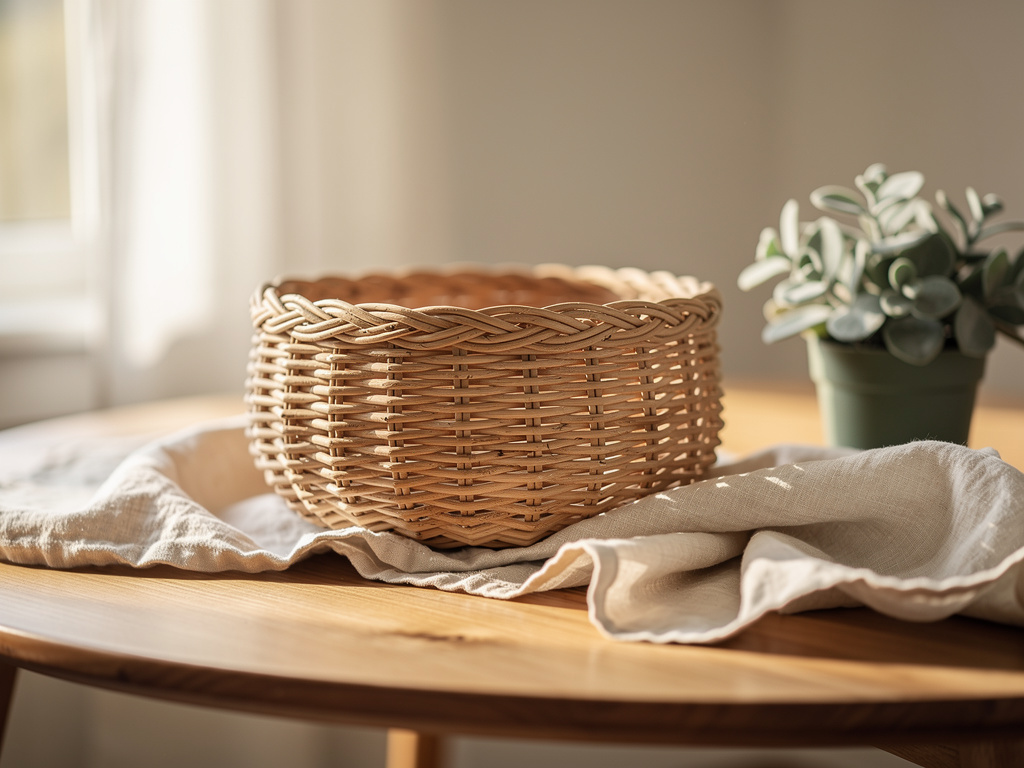
Best Rattan Baskets 2025: 7 Types Worth Buying
The best rattan basket for most homes is an open-weave storage basket made from solid-core rattan — and if you've been calling everything at HomeGoods "wicker," you've likely already bought the wrong thing twice. Genuine rattan baskets last 10–20 years. The paper-rope imposters most retailers sell last closer to two. This guide cuts through the confusion, covers 7 specific types, and tells you exactly what to look for before spending a dollar.
The Best Rattan Basket Types at a Glance
Why Rattan Outperforms Most Basket Materials
Rattan is not wicker. That single misconception costs shoppers money every year.
Rattan is a climbing palm vine harvested primarily in Southeast Asia. It has a solid core, which is why it holds structural shape under weight in a way that paper rope, bamboo, or seagrass simply cannot match. Wicker, by contrast, is a weaving technique — not a material. You can weave wicker from almost anything: newspaper, synthetic resin, jute, or yes, rattan. When a mass-market retailer labels something "wicker," that tells you nothing about what's actually in your hands.
For natural home organization ideas, rattan earns its reputation because of rigidity, longevity, and an aesthetic warmth that fabric bins and plastic containers never quite replicate.
The 7 Types This Guide Covers
This guide evaluates seven distinct types: open-weave storage baskets, lidded rattan baskets, laundry baskets, handled market baskets, hanging wall baskets, decorative nesting sets, and belly/round rattan baskets. Each has a different best use case, a different price ceiling, and different quality signals to inspect before buying. By the end, you'll know which type fits your home — and which ones to skip entirely.
5 Real Differences Between Rattan and Wicker Baskets
What Rattan Actually Is (Most People Get This Wrong)
Rattan grows as a vine — sometimes reaching 200 meters in length — and is harvested, dried, and either kept as full poles or split into flat strips called cane. Both forms are used in basket weaving. The solid-core structure is what makes rattan mechanically superior to hollow bamboo or compressed paper fiber for load-bearing storage.
I once received a question from a customer who'd bought what she was certain was a "real rattan" basket from a well-known online marketplace. When it arrived, she noticed it dented with thumb pressure. Real rattan doesn't do that. What she had was a paper-rope coil wrapped around a wire frame — a product that photographs identically to genuine rattan and costs one-third as much to manufacture.
What Wicker Means — and Why the Distinction Matters
Wicker describes the over-under weaving method. That's the whole definition.
This means a wicker basket could be made from rattan, willow, seagrass, water hyacinth, paper pulp, or resin. When you see "wicker" on a product listing at Walmart or on Amazon from an unspecified third-party seller, you have no actual information about durability, moisture resistance, or how long it'll hold up under a stack of throw blankets.
For a deeper look at material distinctions, the wicker vs seagrass vs rattan explained breakdown covers every major natural basket material side by side.
> Callout: Most baskets labeled "wicker" at mass retailers are actually paper fiber or bamboo. If the price is under $18 and it's labeled wicker, assume paper until proven otherwise.
How to Tell Them Apart at a Glance
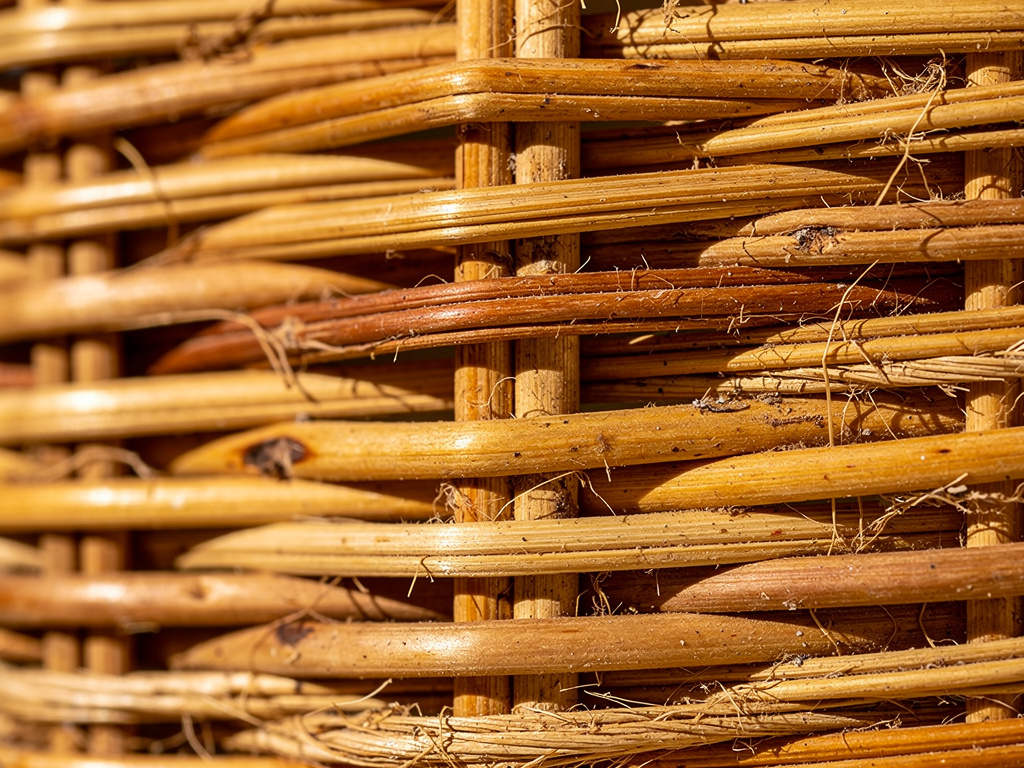
Press your thumbnail firmly against a strand. Genuine rattan resists without creasing. Paper rope dents immediately. Real rattan also shows a slightly glossy, smooth surface with faint grain lines. Paper fiber looks uniformly matte and often has a visible spiral wrap. Bamboo shows flat, feathered edges at cut points. Once you know what you're looking for, spotting impostors takes about 10 seconds.
Five practical differences separate real rattan from wicker-labeled alternatives: durability (rattan holds shape 2–3x longer under weight), moisture resistance (rattan tolerates humidity; paper wicker warps and softens), price (genuine rattan costs more upfront but costs less per year of use), repairability (individual rattan strands can be rewoven by a craftsperson), and finish options (rattan accepts stain, paint, and lacquer; paper wicker cannot be refinished without disintegrating).
Now that you know what you're buying, here's how the seven types actually stack up against each other.
Rattan Basket Comparison Table: 7 Types by Use Case
How to Read This Table
Price ranges reflect genuine rattan construction at mid-range retailers like World Market and West Elm — not paper-fiber products masquerading as rattan on AliExpress.
| Type | Best For | Avg Price Range | Weight Capacity | Moisture Tolerance | Est. Lifespan | |---|---|---|---|---|---| | Open-weave storage | Shelves, general storage | $25–$65 | 15–25 lbs | Moderate | 10–15 years | | Lidded rattan | Toy storage, clutter concealment | $40–$90 | 20–30 lbs | Moderate | 10–15 years | | Laundry rattan | Bedroom, bathroom laundry | $50–$120 | 30–40 lbs | Moderate-High | 8–12 years | | Handled market basket | Shopping, gifting, produce | $20–$55 | 10–20 lbs | Low-Moderate | 12–20 years | | Hanging wall basket | Decor, small plant display | $15–$45 | 5–10 lbs | Low | 7–12 years | | Decorative nesting set | Whole-home organization | $55–$140/set | 15–25 lbs | Moderate | 10–15 years | | Belly/round rattan | Accent decor, magazine storage | $35–$80 | 10–20 lbs | Moderate | 10–18 years |
Which Type Fits Your Specific Need
Nesting sets offer the best value per basket when you're organizing multiple rooms — a three-piece set from The Container Store or World Market typically costs 30–40% less than buying equivalent baskets individually. Laundry baskets specifically need a reinforced, double-wrapped rim; without it, the rim collapses within a year under the weight of a loaded basket tipped sideways. This is the single most overlooked quality signal when buying a rattan laundry basket.
Open-weave storage baskets from IKEA's KAKELBÄR line sit at the accessible end of genuine rattan. West Elm's handwoven styles occupy the investment tier. Both are actual rattan — but the difference in strand thickness and joinery is visible immediately in person.
Where to Buy Affordable Rattan Baskets Without Getting Burned
Budget Tier: Under $30 per Basket
IKEA's KAKELBÄR basket is the most honest budget rattan option on the market. It's real rattan, the weave is consistent, and at roughly $12–$20 depending on size, it's hard to argue with. The tradeoff is thinner strands and a simpler rim finish — expect 5–8 years of use with care rather than 15.
Amazon third-party sellers are a genuine minefield. The red flags: listings with "rattan-style" in the title, product photos that look stock-generated, and no mention of strand thickness or country of artisan origin. AliExpress sells the same paper-core-wrapped-in-rattan-skin product that dozens of Amazon resellers repackage — if the basket costs $11 shipped internationally, it is not real rattan.
Mid-Range Tier: $30–$80 per Basket
At Home stores and World Market hit the sweet spot. World Market in particular sources genuinely woven rattan at prices that don't require a West Elm budget. Joinery at this tier is noticeably better — corners are bound rather than stapled, rims are double-wrapped, and the base is woven rather than cardboard-inserted.
The Container Store's rattan options offer the added benefit of consistent sizing, which matters if you're fitting baskets into built-in shelving with specific dimensions.
Investment Tier: $80+ Handwoven Baskets
West Elm's handwoven rattan baskets and Serena & Lily's coastal-adjacent styles are genuinely different objects from budget-tier products. Strand thickness is often 2–3x that of IKEA equivalents. Some Etsy artisan sellers — particularly those importing directly from Indonesian or Filipino craftspeople — produce baskets at this price point that will outlast almost anything you can buy at retail.
Anthropolgie sells aesthetically distinctive rattan styles, though their quality varies by collection — always check the product description for material specifics before assuming it's rattan.
What Reddit Users Actually Found at Thrift Stores
Here's the contrarian take most buying guides skip: vintage rattan from thrift stores is frequently better quality than new mass-market rattan. Baskets made in the 1970s and 1980s used thicker-gauge strands and traditional hand-knotting at joints. The honest buying signal at a thrift store is simple — check the base. Quality rattan has a fully woven base. If you flip it over and see cardboard or a plastic disc glued inside, walk away regardless of how the exterior looks.
Knowing where to buy is only half the equation. How long any basket lasts depends on three factors most buyers never consider.
How Long Do Rattan Baskets Last? 3 Factors That Decide It
Factor 1: Weave Density and Strand Thickness
Count strands per inch on the basket body. Six or more strands per inch indicates quality construction. Fewer than four means the basket will flex and distort under moderate loads within a few years. Strand thickness matters equally — premium rattan uses strands 4–6mm wide; budget products often use 2mm strands that snap under repeated flexing.
Factor 2: How the Rim Is Finished
The rim is where rattan baskets fail first.
A double-wrapped rattan rim — where a secondary strand is coiled tightly over the structural rim — distributes stress across two layers instead of one. A bare rim secured with visible staples or minimal binding will fray and split within 2–3 years of regular use. This is especially critical for laundry baskets, which experience lateral stress every time you carry them loaded. For guidance on maintaining any rattan piece long-term, the how to care for rattan furniture guide applies equally to baskets.
Factor 3: Environment and Maintenance Habits
Rattan tolerates humidity but not standing water. Bathroom use is fine with periodic conditioning. Applying linseed oil or tung oil once a year keeps strands supple and prevents the brittleness that causes cracking. Direct, sustained sunlight is the fastest way to destroy rattan — UV exposure causes low-quality rattan to become brittle within two years. Position rattan baskets away from south-facing windows or apply a UV-protective clear finish annually.
Well-maintained genuine rattan lasts 10–20 years. Neglected cheap rattan lasts 2–3 years. Maintenance is not optional — it's the variable that separates a good purchase from a replacement cycle.
Are Rattan Baskets Actually Good? 6 Honest Pros and Cons
4 Reasons Rattan Baskets Earn Their Price
Genuine rattan baskets are worth buying — with the caveat that "rattan" on a label guarantees nothing without inspection.
Pro 1: Rattan is biodegradable and, when sourced from certified operations, sustainably harvested. It grows significantly faster than hardwood alternatives. Pro 2: The natural rigidity holds shape under load better than fabric bins, wire frames, or flimsy plastic. Pro 3: The texture adds warmth to minimalist, Scandinavian, or Japandi interiors in a way that synthetic materials can't replicate. Pro 4: Genuine rattan is versatile across storage, decor, planting, and gifting uses — a handled market basket from a World Market can function as a gift basket, a bread basket, a produce holder, and a bathroom storage piece across its lifetime.For context on how rattan fits into a broader sustainable material strategy, the sustainable home decor materials guide compares it against bamboo, seagrass, and reclaimed wood.
2 Legitimate Drawbacks to Know Before Buying
Con 1: Rattan is not waterproof. You cannot store wet items directly in a rattan basket without a liner — moisture absorption leads to mold and structural softening over time. Con 2: Open-weave rattan snags fine fabrics. Cashmere sweaters, silk scarves, and delicate knitwear pulled from an open-weave rattan basket will eventually catch and pull. Use a cotton liner for clothing storage.On the plant question: you cannot add soil directly to a rattan basket. The moisture will destroy the weave within one growing season. A fitted plastic nursery pot or a waterproof liner inserted into the basket solves this completely — the rattan becomes a decorative sleeve, and the plant lives in its liner.
All of this matters most when buying for laundry use, where the demands on a basket are highest and the margin for poor construction is lowest.
Laundry Basket That Lasts: What Makes Rattan Work for Laundry
Minimum Specs for a Laundry Rattan Basket
A rattan laundry basket that actually survives daily use needs three non-negotiable structural features: a double-wrapped reinforced rim, a fully woven base (not a cardboard or plastic insert), and a minimum 50-liter capacity. Below that capacity, the basket is too small for a realistic laundry load and users overfill it, stressing the rim.
Most baskets labeled "rattan laundry basket" under $25 are seagrass or paper rope. Both absorb moisture from damp clothing and degrade from the inside out — you won't see the damage until the base suddenly gives way.
Top 3 Rattan Laundry Basket Features to Prioritize
A customer once told me she'd replaced her laundry basket four times in six years before switching to a $75 woven rattan option from World Market. She's had it three years with zero degradation. The math on longevity almost always favors buying once at mid-range over replacing budget versions repeatedly.
Feature 1: Handles must be integrated into the weave — not rope handles attached to the exterior. Attached rope handles tear free within months under a full laundry load. Feature 2: At least three woven feet elevate the base off damp bathroom floors, preventing moisture wicking through the base. Feature 3: Liner compatibility — a removable, washable cotton liner protects the interior weave from direct contact with damp clothing and is the single easiest way to extend a laundry basket's lifespan.For a complete room-by-room approach to basket selection, best storage baskets for every room covers sizing, material, and placement across every space in a home.
Frequently Asked Questions
What is the difference between wicker and rattan baskets?
Wicker is a weaving method, not a material. Rattan is the raw material — a solid-core palm vine harvested in Southeast Asia. A rattan basket is woven using the wicker technique, but a wicker basket might be made from paper rope, seagrass, bamboo, or resin. This distinction matters practically: genuine rattan is more durable, moisture-tolerant, and repairable than paper or bamboo alternatives that retailers commonly label as wicker. When shopping, always confirm the material, not just the weaving style.
Are rattan baskets good for home storage?
Yes — genuine rattan baskets are excellent for home storage. They hold shape under 15–30 pounds without bending, add visual warmth to shelving and interiors, and last 10–20 years with basic maintenance. The caveat is that "rattan" on a label doesn't guarantee you're getting real rattan. Verify by pressing a fingernail into a strand: real rattan resists denting. Paper fiber dents immediately. For fine fabric storage, use a cotton liner to prevent snagging on open-weave designs.
How long do rattan baskets last?
Well-made genuine rattan baskets last 10–20 years. Cheap paper-fiber or thin-strand rattan alternatives typically fail in 2–3 years. Three factors determine lifespan: weave density (6+ strands per inch is quality), rim construction (double-wrapped rims outlast stapled rims significantly), and maintenance habits. Annual conditioning with linseed or tung oil keeps strands flexible. Avoiding direct sustained sunlight prevents UV brittleness. Avoiding standing water prevents mold. A basket meeting all three criteria can realistically last a generation.
Where can I buy affordable rattan baskets without sacrificing quality?
IKEA's KAKELBÄR line offers genuine rattan at under $20 — the most honest budget option available. World Market and At Home stores hit the mid-range sweet spot at $30–$80 with noticeably better joinery and thicker strands. For investment-tier buying, West Elm and artisan Etsy sellers (particularly those sourcing directly from Indonesian craftspeople) produce baskets that justify $80–$150 price points. Thrift stores are underrated: vintage rattan from the 1970s and 1980s often uses higher-gauge construction than modern mass-market equivalents.
Can you plant soil directly in a woven rattan basket?
No. Planting soil directly into a rattan basket will destroy the weave within one growing season. Moisture from soil and watering causes rattan to soften, mold, and structurally fail from the interior. The correct approach is to insert a fitted plastic nursery pot or waterproof liner into the basket. The plant lives in its liner; the rattan functions as a decorative sleeve. This setup is both practical and visually indistinguishable from a planted basket — and it preserves the basket indefinitely.
What type of laundry basket actually lasts?
A rattan laundry basket with a double-wrapped reinforced rim, a fully woven base (not a cardboard insert), and integrated handles lasts 8–12 years with normal use. Minimum capacity should be 50 liters for a realistic laundry load. A removable cotton liner protects the interior weave from damp clothing and extends lifespan significantly. Avoid any laundry basket under $25 labeled "rattan" — at that price point, the material is almost certainly seagrass or paper rope, both of which degrade rapidly from moisture exposure.
How do I tell if a basket is real rattan or paper fiber?
Three quick tests: First, press your thumbnail firmly into a strand — real rattan resists without creasing; paper fiber dents immediately. Second, examine the surface — genuine rattan has a slightly glossy finish with faint grain lines; paper fiber appears uniformly matte with a visible spiral wrap. Third, check the price and origin — baskets under $18 from unspecified third-party Amazon or AliExpress sellers are almost never genuine rattan. Flip the basket over and inspect the base: real rattan has a woven base; impostors often have a cardboard or plastic insert glued inside.
Do rattan baskets hold up in bathrooms or humid spaces?
Rattan handles moderate humidity well — better than paper rope or bamboo alternatives — but is not waterproof. For bathroom use, elevate the basket on woven feet to avoid moisture wicking through the base, use a removable liner to prevent direct contact with damp items, and condition the basket with linseed or tung oil once a year to maintain strand flexibility. Avoid placing rattan in spaces with standing water or direct steam exposure. With these precautions, a quality rattan basket performs reliably in bathrooms for 8–12 years.


