































Decorative Tea Sets Worth Displaying Every Day
Decorative Tea Set for Display Shelf: Sets Worth Displaying Every Day
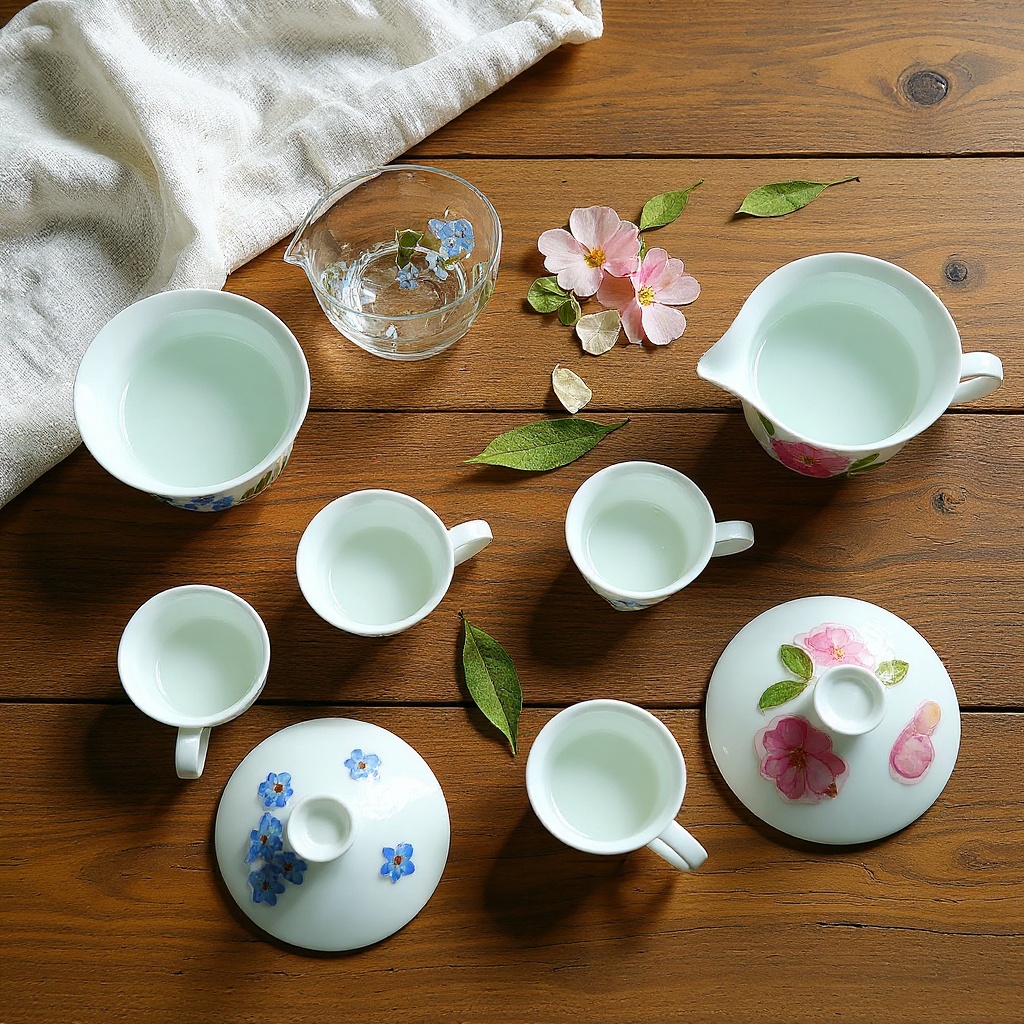
By Patrick Gao, founder of Pampasroom · 8+ years working directly with Southeast Asian rattan artisans · Featured in Cottagecore Weekly and The Artisan HomeA decorative tea set for display shelf use must do two things at once: hold tea and hold attention. The best options combine semi-translucent warm-white porcelain, 3D raised preserved flower petals in pale pink, blush, and ivory tones, and proportions scaled to real shelves—a 150ml gaiwan paired with 50ml teacups works for most spaces. These aren't sets you hide in a cabinet. They're the kind of objects that make guests stop mid-sentence.
The Handmade Bone China Tea Set Preserved Flowers | Gongfu Gaiwan | Eco Floral Art from Pampasroom defines this category: real preserved botanicals embedded in fine porcelain, a spa-like botanical aesthetic, and functional gongfu proportions that work for actual brewing. It's the reference point for everything in this guide.
What Makes a Decorative Tea Set for Display Shelf Genuinely Display-Worthy
Material quality is the starting point. Not the finish line. Bone china incorporates bone ash into the clay body, producing strength and a cool, bright translucency. Suet jade porcelain—also called mutton-fat porcelain—uses specific clay compositions and high-temperature firing to achieve a warmer, softer glow when natural light passes through it. The difference is visible. Hold both to a window and suet jade looks lit from within; bone china looks cleaner and crisper. Neither is better. They're different aesthetic languages.
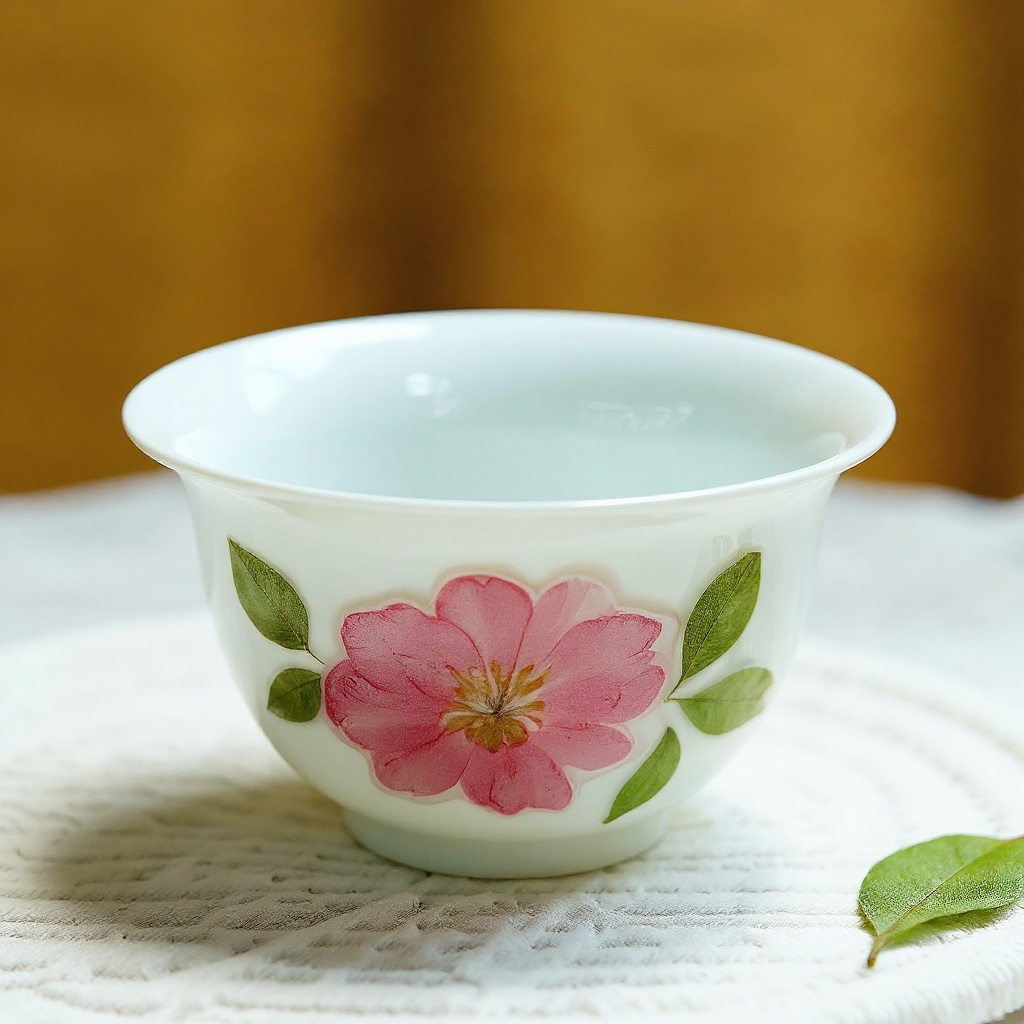
Raised 3D botanical relief is what separates display-worthy pieces from decorative ones that simply photograph well. According to ceramics conservator and educator Ingrid Möller, writing in Ceramic Arts Network, surface-embedded organic elements that are sealed during the glaze-firing process show significantly greater longevity than post-fire surface applications—the botanical material is effectively protected by the glaze layer rather than sitting exposed on top of it. Run your finger across a quality preserved-flower gaiwan. The petals should feel present. Slightly raised. Casting micro-shadows that shift as your room's light changes through the day.
Colors tell you everything. Authentic preserved botanicals in this category appear muted: pale blush, ivory, dusty rose. Not hot pink. Not synthetic coral. If the flowers look like they belong on a birthday cake, they probably don't belong on your shelf.
Signs of Quality Craftsmanship to Look For
1. Petals are raised, not painted — press your fingertip gently; you should feel slight texture 2. Translucency is visible at the rim — hold the gaiwan lid to indirect light; quality porcelain glows 3. Color palette is muted and organic — pale pink, blush, ivory; no saturated or artificial tones 4. Base is warm white, not stark white — warm whites age gracefully; stark whites show every mark 5. Weight feels intentional — too light signals thin walls and fragility; too heavy suggests poor clay density 6. Glaze is consistent at the foot ring — uneven glaze pooling at the base indicates rushed production 7. Lid fit is snug but not tight — it should release steam precisely, not rattle or seal completely
Red Flags When Buying a Decorative Tea Set for Display Shelf
Not every botanical tea set delivers what it promises. Some fail within months.
1. Flowers appear to float on the surface — this means they were glued after firing, not embedded during formation; they'll peel 2. Glaze has a plastic sheen — quality porcelain reflects soft light; a hard mirror-like finish usually indicates low-fire ceramic with commercial glaze 3. No country-of-origin or artisan information — legitimate handcraft pieces come with provenance; anonymous sets are mass-produced 4. Colors are listed as "vibrant" or "bright" — preserved botanical aesthetics are muted by design; bright colors signal artificial materials 5. Product photos show only one lighting angle — quality semi-translucent porcelain looks different from every angle; one-angle photography hides flat, opaque ceramic
Honestly, if you're buying a decorative tea set for display shelf use in a south-facing room with no curtains, the preserved flowers will fade faster than any manufacturer's estimate suggests. Indirect light is non-negotiable for longevity. No amount of quality preservation compensates for three hours of direct afternoon sun daily.
Size and Proportion for Shelf Display
Proper sizing keeps your decorative tea set for display shelf from overwhelming the space—or disappearing into it. A traditional gongfu tea ceremony setup uses specific proportions refined over centuries: gaiwans between 120–180ml, teacups between 30–60ml. These measurements govern flavor extraction and serving rhythm. They're not arbitrary.
For shelf placement, depth matters as much as width. Standard floating shelves run 8–12 inches deep. You need 3–4 inches of clearance around the set for visual breathing room. Without it, the arrangement reads as clutter.
| Shelf Dimensions | Recommended Set Size | Gaiwan Capacity | Cup Count | Notes |
|---|---|---|---|---|
| 12" × 8" | Compact duo | 100–120ml | 2 cups | Solo ritual; minimal staging |
| 16" × 10" | Standard set | 150–180ml | 4 cups | Most common artisan size |
| 20" × 12" | Full ceremony set | 200–250ml | 6 cups | Allows supporting objects |
| 24" × 14" | Display collection | Multiple pieces | 8+ cups | Gallery-style arrangement |
| 30" × 16"+ | Curated vignette | Mixed sizes | Varied | Include botanicals, risers |
The 150ml gaiwan with four 50ml cups hits a proportional sweet spot. Functional for two to three guests. Visually balanced on a standard shelf. Neither competing with the wall behind it nor shrinking against it.
Preserved Flower Details: What Lasts and What Doesn't
The longevity question matters more than most buyers realize before purchase.
According to the professional standards outlined by the International Flower Preservation Institute, botanical materials sealed within a protective medium—such as a ceramic glaze layer—retain color stability significantly longer than surface-applied or open-air preserved arrangements, provided UV exposure remains limited. For indoor display away from direct sunlight, properly embedded preserved flowers in quality porcelain maintain natural color and texture for 3–5 years under normal conditions. After that, gradual softening of pale tones is typical—not sudden fading, but gentle patination that many collectors find adds character.
Cheaper production methods apply dried flower fragments to the fired surface using adhesive before a final glaze coat. This process is faster and less expensive. It also produces petals that sit slightly proud of the glaze in a way that feels different to the touch—less integrated, more applied. These pieces typically show color shift within 12–18 months under the same conditions.
The botanical palette in this guide's reference product—pale pink, blush, ivory—is specifically selected for preservation stability. Deeper pigments require more aggressive chemical preservation processes that compromise the organic feel of the finished piece.
Styling Your Decorative Tea Set for Display Shelf Arrangements
The staging matters as much as the set itself.
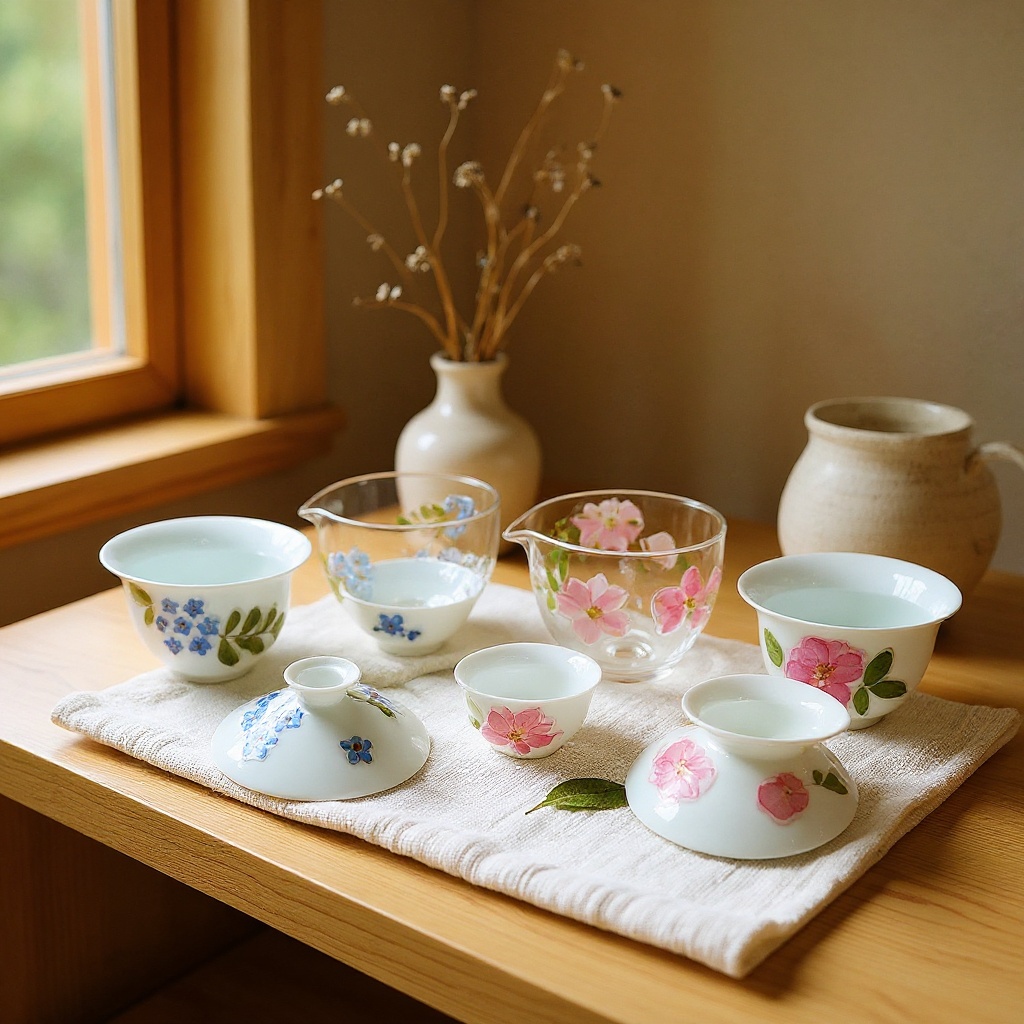
Natural linen cloth or aged wood surfaces work because they add textural contrast without competing with the porcelain. Aged wood's warm grain tones echo the ivory notes in the preserved flowers. Linen softens the overall composition and grounds the porcelain without introducing color competition. Avoid glass shelves—they create doubling reflections that fragment the visual focus. Avoid high-gloss lacquered surfaces for the same reason.
Here are seven principles that actually hold up in practice:
1. Layer heights deliberately — use small wooden risers or stacked books to create foreground-midground-background depth 2. Leave negative space — unfilled shelf space isn't wasted; it lets the eye rest and the tea set breathe 3. Group in odd numbers — three or five objects read as intentional; four reads as symmetrical and stiff 4. Match color temperatures — warm-white porcelain pairs with cream, raw linen, honey wood tones; avoid cool grays 5. Echo botanical motifs — a small sprig of dried cotton flower or eucalyptus branch extends the set's visual language 6. Control light direction — gentle indirect light from the side highlights raised petal texture; overhead direct light flattens it 7. Keep scale consistent — every supporting object should be smaller than the gaiwan; the set must read as the focal point
A common mistake. People add too many supporting objects because the shelf feels empty at first. It won't. Give the composition three days before adding anything else.
Functional Use vs. Display-Only: An Honest Assessment
Chinese ceramics have been functional art for over a thousand years. The division between display pieces and usable ones is largely a modern retail invention. Quality preserved-flower gaiwans handle hot water well—the botanical elements are sealed beneath or within the glaze, not sitting in the path of liquid or heat.The real functional considerations:
- Heat retention — thicker porcelain walls hold temperature longer; very thin "display" pieces may cool too quickly for gongfu brewing - Pour control — the gaiwan lid notch and pour angle matter; test-pour with cold water before committing to a full ceremony session - Handle ergonomics — lidded gaiwans require a three-finger grip; practice before hot liquid is involved
Sets designed exclusively for display sometimes sacrifice the notched lid, the proper rim diameter, or the balanced weight distribution. Our Handmade Bone China Tea Set Preserved Flowers | Gongfu Gaiwan | Eco Floral Art maintains functional gongfu proportions alongside its botanical artistry. You don't have to choose between the two—but verify specifications before assuming every decorative set shares this commitment.
Investment Value and Pricing Comparison
The market spans a wide range. Understanding what drives price differences prevents both overpaying and false economy.
| Price Range | Construction | Typical Materials | Expected Lifespan | Best Suited For |
|---|---|---|---|---|
| $30–$60 | Mass-produced | Standard ceramic, painted decal | 2–4 years | Casual use, low commitment |
| $85–$150 | Artisan-crafted | Bone china or suet jade, embedded botanicals | 10–20 years | Enthusiasts, daily display |
| $200–$400 | Studio pieces | Hand-thrown porcelain, unique botanical art | Lifetime with care | Collectors, significant gifts |
| $500–$900 | Museum-quality | Limited edition, master artisan | Generational | Investment collecting |
| $900+ | Gallery works | Signed, documented provenance | Generational+ | Serious collectors only |
The $85–$150 range is where genuine craftsmanship becomes accessible. A $150 set used for tea weekly and displayed daily over five years costs approximately $0.58 per use—a calculation based on 260 weekly uses over the period, before factoring in daily display value. Three $40 replacement sets over the same period cost more and deliver less in material quality, visual consistency, or resale value.
Mid-range artisan pieces hit the value ceiling. Above $400, you're paying for scarcity and documentation as much as craftsmanship.
Care and Maintenance for Long-Term Display Appeal
Consistency beats intensity. A simple routine keeps preserved flower porcelain beautiful for years.
Daily: Rinse with lukewarm water immediately after use. No temperature shocks—going from hot tea directly to cold rinse water stresses fine porcelain. Dry with a soft cotton cloth before returning to the shelf. Weekly: Inspect raised botanical elements for any debris caught in the relief texture. A soft-bristled artist's brush (size 6–8 watercolor brush) clears dust from petal crevices without applying pressure to the raised surface. Monthly: Soak pieces for five minutes in lukewarm water with two drops of unscented dish soap. Rinse completely. Air dry on a folded cotton towel in a single layer—never stack pieces while wet. Never: Dishwasher. Abrasive cleaners. Steel wool. Bleach. Extreme temperature transitions. These aren't precautions for fragile objects. They're baseline requirements for any quality porcelain investment.Storage for pieces rotating between display and active use: wrap individually in unbleached cotton muslin or acid-free tissue. Never plastic bags—they trap moisture against the porcelain surface. Store in stable temperature environments. Away from exterior walls that experience temperature swings.
FAQs
Can you use a decorative tea set for display shelf arrangements for actual tea brewing, or is it just for display?Quality preserved-flower porcelain sets are fully functional for gongfu brewing. The botanical elements are sealed within or beneath the glaze layer, protecting them from heat and liquid contact. Verify that the specific set you're considering maintains proper gaiwan proportions (120–180ml) and a well-fitted lid before brewing. Sets built to display-only specifications sometimes omit the notched lid or balanced weight distribution needed for comfortable pouring. The Pampasroom gaiwan set maintains both functional proportions and botanical artistry.
How do you clean a tea set with raised flower decorations without damaging the petals?Hand wash exclusively using lukewarm water and two drops of unscented dish soap. Use a soft-bristled brush—a size 6 watercolor brush works well—to clean around raised petals without pressing directly on them. Rinse thoroughly with lukewarm water (avoid cold water on warm porcelain). Air dry completely on a cotton towel before displaying or storing. Dishwashers, abrasive sponges, and temperature extremes will degrade both the glaze surface and the preservation integrity of embedded botanical elements.
What is suet jade porcelain and how is it different from regular bone china?Suet jade porcelain—also called mutton-fat porcelain—achieves its warm white, semi-translucent quality through specific high-kaolin clay compositions and precise high-temperature firing, without bone ash. Bone china incorporates calcined bone ash (typically 25–50% of the clay body) for strength and a cooler, brighter translucency. Suet jade produces a softer, warmer glow when backlit; bone china produces a crisper, more brilliant light transmission. For preserved botanical aesthetics and the muted spa-like color palette described in this guide, suet jade's warmer tone is the more complementary material.
How long do preserved flowers embedded in porcelain actually last?According to professional preservation standards from the International Flower Preservation Institute, botanical elements sealed within a protective medium maintain color stability significantly longer than open-air preserved arrangements, provided UV exposure stays limited. For indoor display away from direct sunlight, properly embedded preserved flowers in quality porcelain maintain natural color and texture for 3–5 years. After year three, expect gradual softening of pale tones rather than sudden fading. Direct sunlight accelerates this timeline considerably—a south-facing windowsill display will show visible change within 12–18 months regardless of initial quality.
What size gaiwan is best for a home gongfu tea ceremony?For home gongfu brewing with two to four guests, a 150ml gaiwan offers the best balance of control and capacity. Smaller gaiwans (80–120ml) suit solo sessions or highly concentrated teas like aged pu-erh. Larger gaiwans (200ml+) work for groups but sacrifice the precise steeping control that gongfu technique depends on. The 150ml capacity allows proper leaf expansion, manageable pour control with a three-finger grip, and proportionally matched 50ml teacups that distribute flavor evenly across a small gathering.
How do you style a decorative tea set for display shelf without it looking cluttered?Start with the set alone on the surface and live with it for two to three days before adding anything. Negative space isn't emptiness—it's visual breathing room that makes the porcelain the clear focal point. When you do add objects, limit supporting elements to two or three items maximum: a linen cloth, one wooden riser, one small botanical element. Group in odd numbers, vary heights deliberately, and ensure every supporting item is smaller than the gaiwan. Warm-toned aged wood or raw linen surfaces complement warm-white porcelain better than glass or high-gloss finishes.
Is an $85–$150 artisan tea set worth it compared to a $30 mass-market set?For display purposes specifically, yes—with one honest qualification. A $30 ceramic set with printed botanical decals looks like a $30 set on a shelf. The flat, uniform surface and saturated colors read as generic against natural materials. A $85–$150 preserved-flower bone china set creates shifting visual texture as light moves through your room, a quality no printed decal replicates. The cost-per-use over a five-year weekly-use period favors the artisan set at roughly $0.58 per use versus replacing cheaper sets every two to three years. For purely casual use with no display intention, the mass-market option is honest enough.
What surfaces and materials look best displayed alongside white porcelain tea sets?Aged wood and natural linen are the strongest complements to warm-white porcelain. Aged wood's grain and tonal variation echo the organic character of preserved botanicals. Raw linen adds textural contrast without introducing competing color. Bamboo and unbleached cotton work similarly. Avoid high-gloss lacquer, mirrored surfaces, or glass shelves—reflective surfaces fragment the visual focus and undermine the muted, grounded aesthetic that makes botanical porcelain sets distinctive. For color, limit the palette to cream, ivory, honey, and soft earth tones. One accent in pale sage or dusty blush can echo the flower palette without overwhelming it.
Can humid climates damage a preserved flower tea set on display?This is worth asking before purchase. Botanical elements sealed within a complete glaze layer are largely protected from ambient humidity—the ceramic acts as a barrier. However, if the glaze has any micro-cracks (a condition called crazing, common in rapid-cool-fired pieces), moisture can reach the organic material and accelerate degradation. In climates with sustained humidity above 80%, inspect pieces carefully for crazing before buying, and consider a small silica gel packet near—not touching—your display arrangement during monsoon or high-humidity seasons.
Where to Buy
The Handmade Bone China Tea Set Preserved Flowers | Gongfu Gaiwan | Eco Floral Art at Pampasroom represents the category this guide describes: semi-translucent warm-white porcelain, 3D raised preserved flowers in pale pink and blush, gongfu-proportioned gaiwan and teacups, and a botanical spa aesthetic that works on aged wood or natural linen equally well.
Conclusion
A decorative tea set for display shelf use earns its place twice: once in the morning light when the preserved petals cast micro-shadows against your shelf, and again during the ceremony itself. Quality. Proportion. Botanical detail that reads as handmade because it is. These aren't interchangeable qualities—they compound each other.
Suet jade porcelain or fine bone china, preserved flower relief in muted organic tones, a 150ml gaiwan with matched teacups, and the right surface to display it on. That's the complete picture. Every other decision follows from getting those foundations right.


