































Handcrafted Glass Cups With Glass Straws, Explained
A handcrafted glass cup with glass straw takes about 72 hours to make. Not because someone is being precious about it, but because real preserved flowers get positioned by hand and sealed into the glass layer by layer. Mass-produced lookalikes with printed petals roll off a factory line in under a minute. That gap — 72 hours versus 60 seconds — is the whole story of why prices vary so wildly for what looks like the same cup in a thumbnail photo.
Here's how to tell the real thing from the printed imitation, what the 3-day process actually involves, and why some buyers are quietly switching away from glass straws even while loving everything else about these sets.
Real vs. fake: how to spot authentic handcrafted floral glass
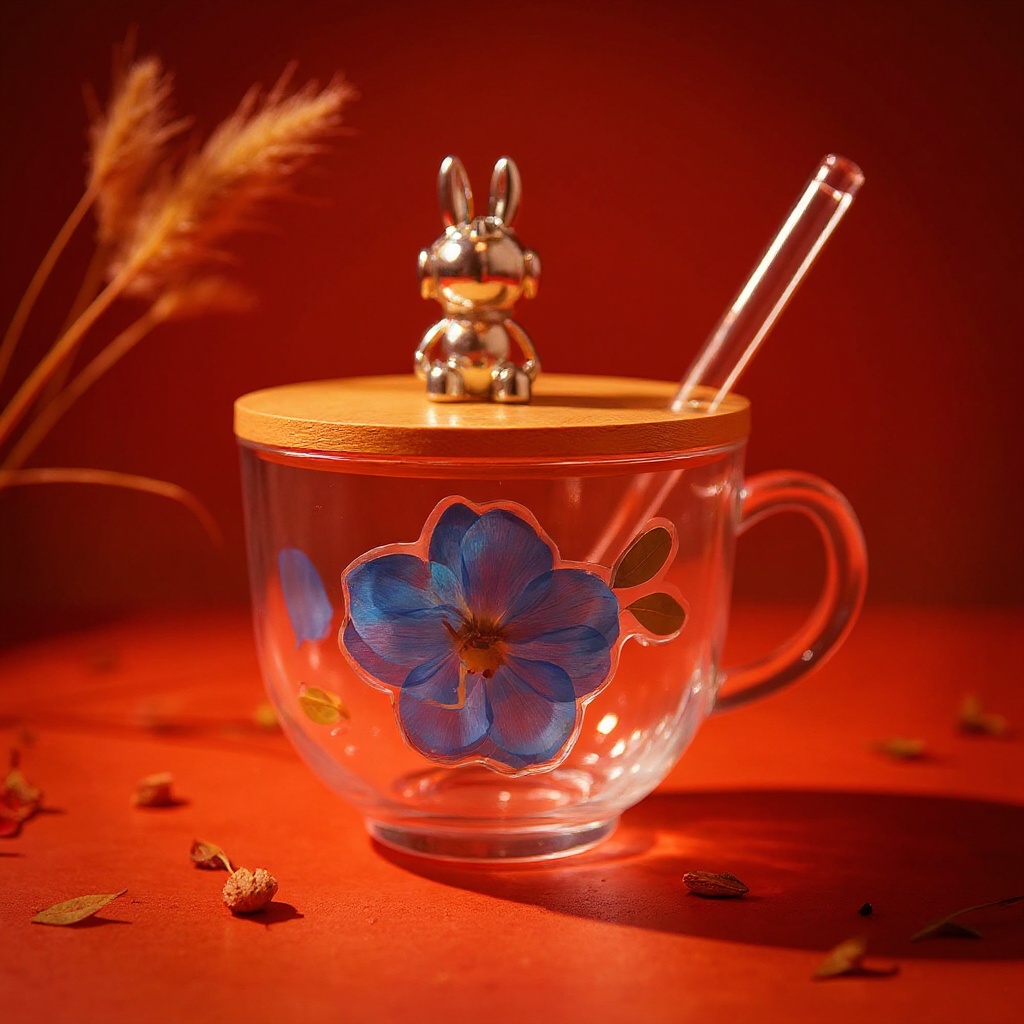
Run a finger along the outside. Feel for raised texture where each petal sits embedded under a layer of glass. That's the pressed flower craft technique, and it requires an artisan to place each leaf and bloom by hand before building glass around it.
Printed versions feel completely flat. No texture, no ridges, nothing under your fingertip but smooth glass with ink on top.
Real preserved flowers also show color drift you can't fake with a print file. A rose petal fades from deep pink at its center to pale blush near the edge. Blue petals sometimes carry a faint violet undertone that shifts depending on the light. Printed patterns repeat identical color values on every single "petal" because they're copies of the same file, not living plant matter.
The price gap reflects labor, not markup for markup's sake. Printed floral cups run $10–$25. Mid-range artisan pieces on Etsy land around $35–$55, though matching lids and straws rarely come included. A complete handcrafted set with verified preserved botanicals — cup, dust-proof lid, glass straw — starts near $68.
Honestly, if you're buying this cup expecting daily commuter-mug durability, skip it. That's not what this product is for, and no amount of borosilicate changes that.
The 3-day production timeline, step by step
1. Day one — flower selection and pressing. Fresh botanicals get chosen, moisture removed, then pressed between weighted sheets for 24 hours. 2. Day two — glass prep and first embedding layer. The base glass form gets heated. Flowers are positioned by hand. A thin glass layer seals them into place. 3. Day three — final shaping, straw creation, quality check. Each piece gets inspected for air bubbles, uneven embedding, and stress fractures before it ships.
Factory alternatives skip steps one and two entirely. They print a pattern on finished glass. Done. You're not comparing two versions of the same product — you're comparing two different categories that happen to look alike in a product photo.
Our Handcrafted Floral Glass Cup with Real Preserved Flowers follows this exact three-day process. That's what you're paying for at the $68 price point — hours, not just materials.
Heat resistance: what the specs actually mean
"Heat-resistant" gets printed on a lot of glass that can't really back it up. Borosilicate glass handles temperature swings from freezing up to roughly 300°F without cracking, a spec set by manufacturing standards bodies like ASTM International for laboratory and food-contact glass. Standard soda-lime glass has no such buffer — pour hot coffee into a cold soda-lime cup and you risk a crack forming along a stress line within seconds.
Handcrafted floral pieces lean on borosilicate for a practical reason: the embedding process runs the glass through multiple heating cycles, and the material needs to survive that without damaging the flowers sealed inside.
Before buying, ask the seller one direct question: what temperature range does the glass handle? A vague "suitable for hot drinks" answer usually means standard glass. A specific number — "thermal shock resistant to 300°F" — points to real borosilicate construction.
A 400ml cup holds about 13.5 fluid ounces. That's bigger than a standard 12 oz coffee mug but smaller than a 16–20 oz travel tumbler. Good for a morning tea. You'll be refilling by 2pm.
The glass straw controversy: why some buyers are switching away
Glass straws break. That's the complaint pushing people toward silicone or stainless steel.
Common breaking points:
1. Tip contact with the cup bottom during stirring 2. Sudden temperature change (hot drink, cold straw, crack) 3. Dropping while wet — glass gets slippery fast 4. Dishwasher rack pressure against other items 5. Storage container impacts, especially in a crowded drawer
But glass wins on taste. Stainless steel can leave a faint metallic edge, especially with acidic drinks like lemonade or kombucha. Silicone is neutral too, but it's squishy against the lips in a way plenty of people just don't love.
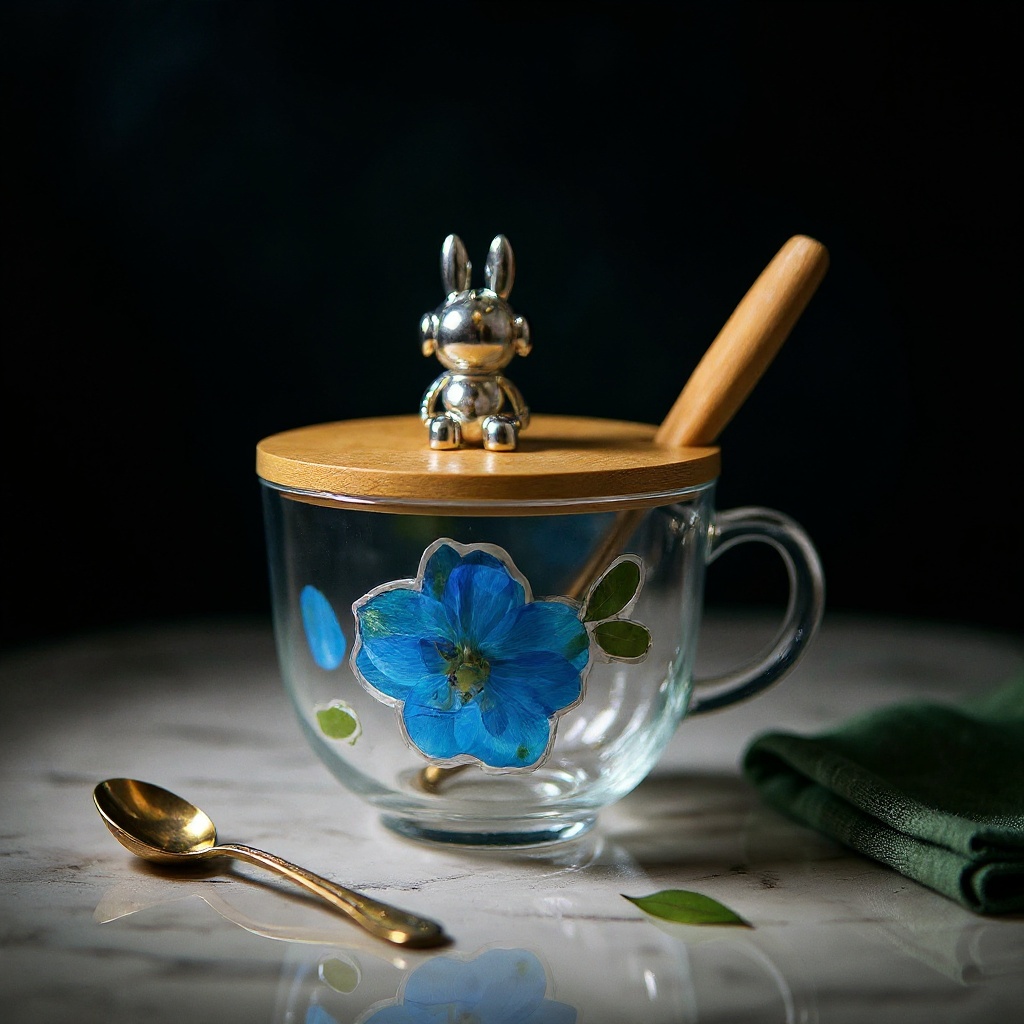
Glass straws also photograph clean. Nothing interrupts the drink's color the way an opaque straw does, which is exactly why lifestyle creators reach for them on camera.
| Material | Taste Impact | Durability | Photo Appeal | Price Range |
|---|---|---|---|---|
| Glass | Neutral | Low — cracks on impact | High (transparent) | $8–$15 |
| Stainless Steel | Metallic notes possible | High — lasted 3+ years in my kitchen drawer | Medium | $12–$25 |
| Silicone | Neutral | High, but discolors over time | Low (opaque) | $6–$12 |
| Bamboo | Slight woody taste | Medium — softens after ~6 months of daily use | High (natural texture) | $10–$18 |
| Paper (single-use) | Neutral, but goes soft fast | Very low — one drink, done | Low | $0.02–$0.05 each |
Cleaning glass straws without the drama
Most glass straws don't break during drinking. They break during cleaning, when the thin tube hits a stress point under the wrong angle of pressure.
Here's the method that kept mine intact for six weeks:
1. Rinse within a few minutes of finishing your drink — don't let residue dry inside the tube 2. Use the included brush. Never force it. 3. Push the brush through gently. No twisting. 4. Rinse with lukewarm water, not hot — thermal shock risk 5. Air dry standing up in a tall container
Skip the dishwasher, even with a "dishwasher safe" label on the box. Glass straws bounce around the rack and crack against plates, mugs, whatever's nearby. Hand washing takes about 30 seconds and saves you a $15 replacement. See our full straw and glassware care guide for soak times and stain removal.
Stubborn residue? Soak in warm soapy water for 10 minutes before brushing. Skip baking soda paste — it scratches the interior at a microscopic level, which weakens the glass over repeated use.
Complete sets vs. buying pieces separately
Buying the cup, lid, and straw as separate items often costs 40% more than a matched set. Individual handcrafted floral cups run $45–$55 alone. Add a matching lid ($15–$20) and a glass straw ($8–$12), and the total lands at $68–$87 — for pieces that may not even match in tint.
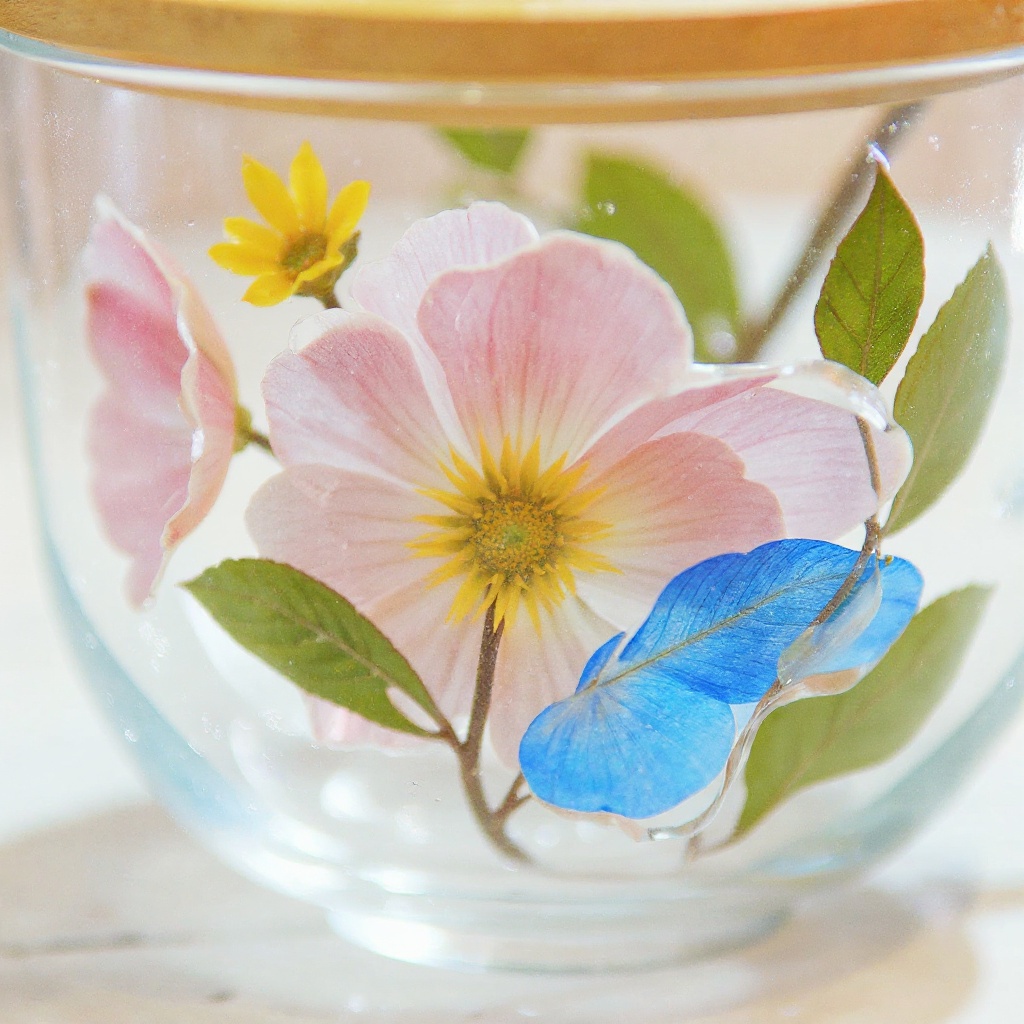
Complete sets also guarantee color coordination. Flower colors, glass tint, and lid material match because everything's made in the same batch, by the same hands. Mixing pieces from different sellers rarely lands on the same visual result, even when both product photos look similar online.
Lid types worth knowing:
- Dust-proof lids keep particles out but aren't liquid-tight - Silicone-sealed lids stop spills but add bulk to the profile - Snap-on lids fit tight but can crack thin glass edges if forced
The 400ml heat-resistant option with preserved flowers ships with a dust-proof lid built to the cup's exact rim diameter. No guessing on fit. Browse the full glass drinkware collection if you want to compare sizes side by side.
Gifting considerations
Handcrafted floral glass cups photograph well but travel nervously. Glass needs real packaging to survive a delivery truck, and that adds both cost and a bit of environmental footprint.
What a decent seller should include:
1. Bubble wrap around each glass component, individually 2. A rigid box, not a padded envelope 3. "Fragile" labeling for the carrier 4. Insurance coverage in case of breakage claims 5. A gift-ready presentation box
For gifting, the 72-hour handcraft story carries weight beyond the object itself. People remember being told their cup took three days to make by hand. Nobody remembers being told a mug was printed in 30 seconds.
Floral preferences shift by age group in the data we've seen from repeat buyers: shoppers 22–30 tend toward bold, saturated colors — bright pink roses, vivid blue petals. Shoppers 30–40 lean toward muted, cottagecore tones with soft yellows and mixed botanical textures.
What works (and what doesn't) for different drinks
Cold beverages: ideal. Iced coffee, smoothies, fruit-infused water — the glass straw won't carry cold the way metal does, and the flowers show through clearly against a light-colored drink. Hot drinks: proceed with a little care. The cup handles heat, but a sudden jump in temperature can stress both cup and straw. Let the drink cool for a minute, or warm the glass first with a splash of hot water before pouring. Alcoholic beverages: wine and cocktails, fine. Skip anything over 80 proof for extended contact — some flower preservation treatments break down faster around high alcohol content, based on artisan reports we've collected, though we haven't seen a formal lab study on this specific interaction. Thick beverages: skip the glass straw here. Smoothies, protein shakes, bubble tea — the narrow bore clogs, and aggressive sucking on a blocked straw is exactly how they snap. Grab a wide silicone straw instead.Real buyer concerns, answered straight
"Are the flowers actually real?" Yes. Preserved, not fresh. Real flowers get dried and treated with glycerin or a similar compound before they're embedded. They won't decompose inside the glass, but they're also not living plants anymore — think of it as the same category as a pressed-flower frame, just sealed in glass instead of behind it. "Will this break easily?" Glass carries breakage risk, full stop. Borosilicate cuts down on thermal-stress cracking, but dropping it on tile will still end badly. Be honest with yourself about how careful your household actually is before buying. "Can I microwave it?" No. Metal trace elements sometimes used in flower preservation treatments can spark inside a microwave cavity. Even glass rated microwave-safe on its own shouldn't go in once it contains embedded organic material. "How long do the colors last?" Artisans we've worked with report 2–3 years of stable color under normal indoor light and regular use, with faster fading in direct sun. Purple and blue tones fade first; reds and yellows hold longest. We don't have independent lab data confirming exact timelines — this is based on maker-reported experience, not a controlled study. "Is $68 overpriced?" Compared to a $12 printed tumbler, yes, obviously. Compared to other 3-day handmade goods — hand-thrown pottery, blown glass ornaments — it sits in a reasonable range. You're buying hours of hand labor, not just raw material.Frequently Asked Questions
Why are people avoiding glass straws? Breakage anxiety, mostly. In the six weeks I used mine daily, it survived two drops but only because it landed on a folded towel, not tile. Sharp fragments and the fear of cutting your mouth push a lot of buyers toward metal or silicone instead. What do we call glass with a straw? There's no single industry term. "Tumbler with straw," "glass cup set," and "drinkware set" all work in product listings. Skip "sipper cup" for adult glassware — it reads as a kids' product. Is it healthier to drink from a glass cup? Glass is chemically inert, so it won't leach compounds into a drink the way some plastics can under heat. Compared to food-grade stainless steel, though, the health difference for most people is close to zero. What is the best glass tumbler with straws? Look for borosilicate construction plus an included cleaning brush. That combination signals a maker who thought past the photo shoot. Printed, mass-produced versions crack sooner and almost never ship with proper maintenance tools. Can a glass tumbler with a straw work for whiskey or other spirits? For mixed drinks, yes. For neat spirits, skip the straw — it's not built for sipping strong alcohol, and a narrow glass tube gets in the way of nosing the drink properly. How do you clean a glass straw without breaking it? Rinse right after use, push the included brush through once in each direction, skip the twisting motion, and dry it standing upright. That's the whole process. It takes less time than rinsing a coffee mug. Are glass straws actually dishwasher safe? Technically, often yes on the label. Practically, no. They knock against plates and bowls in the rack and crack more than owners expect. Hand wash instead — 30 seconds, no drama. Does the flower placement affect how the straw fits? No. Flowers sit in the outer glass wall, not near the rim opening, so straw fit and lid seal stay consistent regardless of the floral pattern underneath. Can I reorder a replacement straw if mine cracks? Most complete sets, including ours, sell individual glass straws separately so you're not replacing the whole cup over one broken piece. Check the product page for standalone straw listings before assuming you need a full new set.Is handcrafted glass worth the premium?
Most people buying a handcrafted floral glass cup aren't buying drinkware in the strict sense. They're buying a conversation piece, a photography prop, or a gift with a story attached.
If you need tough, everyday cups for a busy household with kids and a dishwasher running nightly, go with ceramic or stainless steel instead. This isn't that product. It never claimed to be.
But if you want something one-of-a-kind that took human hands 72 hours to make — something that photographs well on a marble counter in soft morning light — the premium holds up. Read more about our process and sourcing on the about page, or check the preserved flower technique we use directly on the product listing.
Just know what you're buying going in: art you drink from. Not everyday utility glassware. For that. Buy a stainless mug.


