































How to Choose a Botanical Glass Coffee Cup Gift She'll Treasure
A botanical glass coffee cup gift for her needs to feel like more than another mug. It should be something she reaches for every morning and displays proudly on a shelf. The best versions combine real preserved flowers with food-safe materials that won't chip or fade after a few washes. The worst ones look fine in a photo and disappointing in her hand by week three.
Most floral coffee cups on the market are printed designs that look cheap up close. The real ones use actual dried botanicals embedded in glass or resin, creating texture you can feel with your thumb. Not all of them are safe for hot liquids, though. Many fall apart within months. That's the part nobody tells you before you click "buy."
Why Real Pressed Flowers Beat Printed Designs Every Time
Printed floral mugs from big retailers run $12-25. They scream mass production the second kitchen light hits them. Real pressed flower craft creates depth and shadow that shift throughout the day — morning light versus evening lamp light, completely different cup.
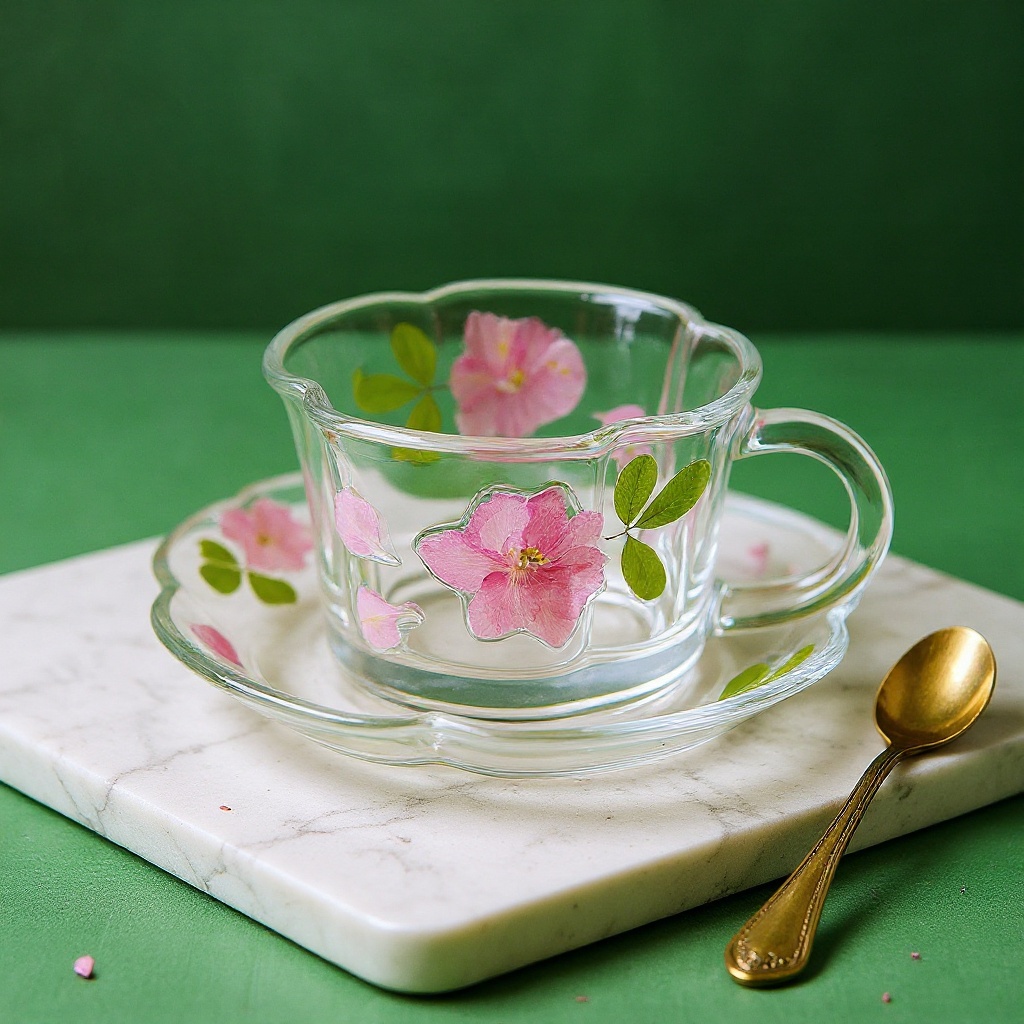
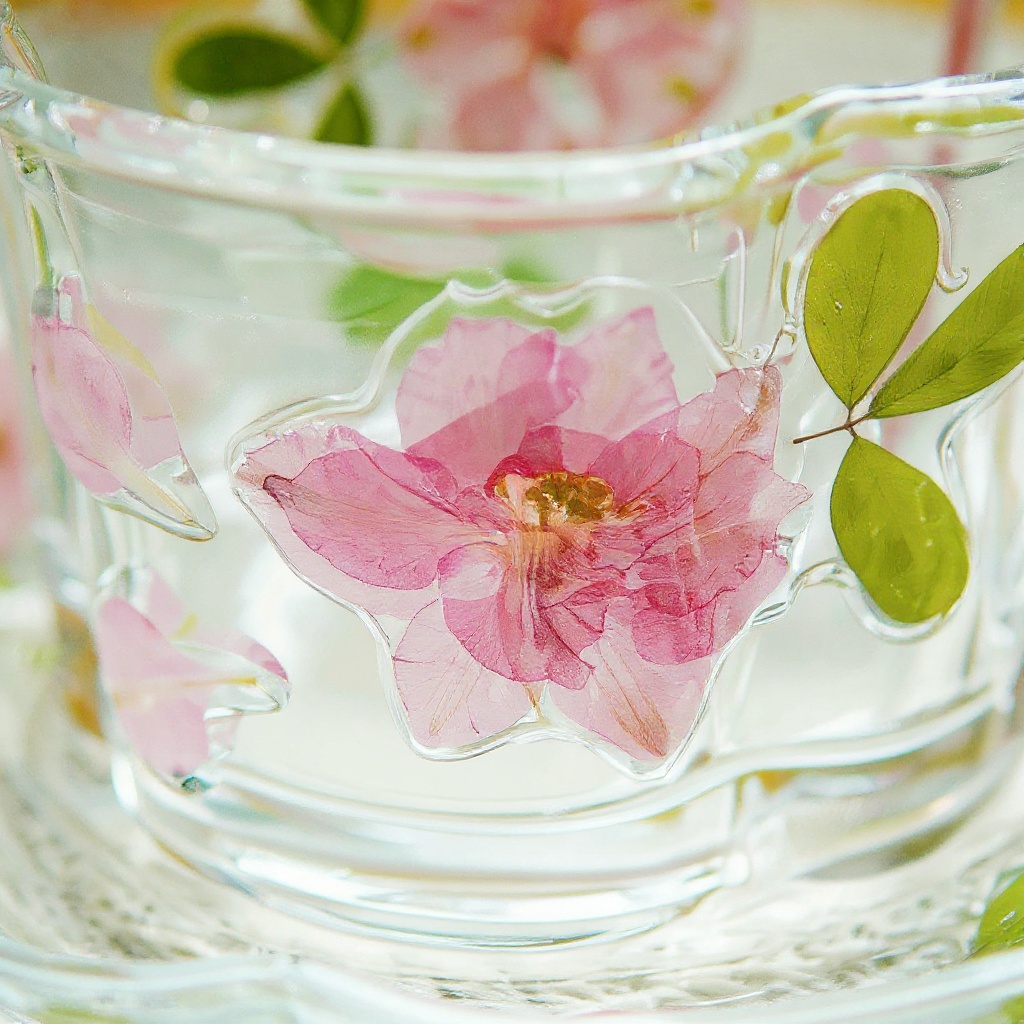
When flowers are preserved by hand and set under a clear coating, each petal keeps its natural texture. You can trace the veining in a leaf. You can see where one petal overlaps another, slightly raised, slightly imperfect. No two pieces look identical because no two flowers are — that's not a marketing line, it's just how dried botanicals behave.
The difference shows up the moment she's holding it. Mass-produced cups feel hollow. A handcrafted botanical glass coffee cup gift for her has weight and presence, more like a small sculpture than dinnerware you grab and forget.
Food Safety Isn't Optional (Here's What Actually Matters)
Yes, you can drink safely from a cup with embedded flowers. But only if it's built correctly, and a lot of cheap listings skip the parts that matter.
Here's the checklist we use before calling any piece food-safe:
1. Flowers on the exterior only — never touching the liquid inside 2. Food-safe resin coating rated for repeated contact with warm, damp surfaces 3. Borosilicate interior, not standard soda-lime glass, so hot liquid won't shock it 4. No visible bubbling or cracking in the resin where it meets the glass rim 5. Hand-wash labeling, not vague "dishwasher safe" claims with zero backup
Interior contact with hot liquids can cause botanical material to break down or leach compounds you don't want anywhere near your coffee. Food-safe resin over the flowers prevents that entirely, but only when the flowers stay outside.
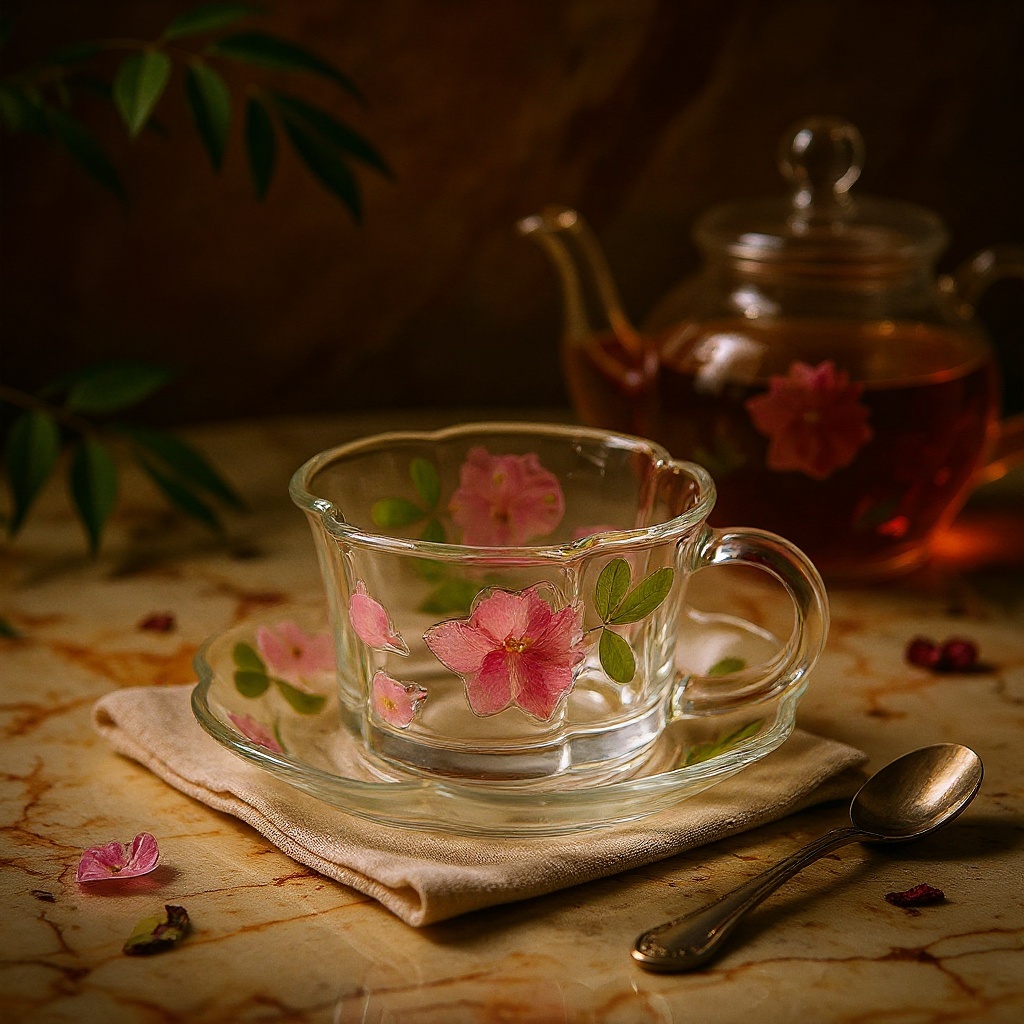
Borosilicate glass handles temperature swings better than regular glass. It survived a direct pour of boiling water into a room-temperature cup in our test — no crack, no stress line. That matters more than you'd think for a cup she'll actually use daily instead of leaving in a box.Our Handcrafted Pressed Flower Relief Glass Coffee Cup features real preserved pink and blush petals embedded under a food-safe resin coating on the exterior only. The interior stays pure borosilicate glass. No botanical contact, no compromise.
The Capacity Question (Size Really Does Matter)
Most decorative cups hold 6-8 oz. Sounds fine until you realize that's half a normal coffee serving. She'll love the look and then quietly switch back to her old mug because this one runs out too fast.
Look for 200-250ml capacity, about 7-8.5 oz. That's the sweet spot between elegant proportion and a serving size she'll actually finish.
| Capacity | Best For | Daily Use Reality |
|---|---|---|
| 120-150ml | Espresso shots | Too small for most coffee drinkers |
| 200-250ml | Coffee, tea, cappuccino | Sweet spot for daily use |
| 250-300ml | Latte or oversized tea | Still comfortable to hold full |
| 300ml+ | Large coffee servings | Often too heavy when full |
What Makes an $88 Cup Worth It vs. Cheaper Alternatives
Floral glass cups range from $15 to $300. Here's the honest breakdown, tier by tier.
| Price Range | What You're Actually Getting | Realistic Lifespan |
|---|---|---|
| $10-25 | Machine-printed flowers, thin glass | Chips or fades within 6-12 months |
| $35-60 | Artisan ceramic, mass-produced pattern | Solid but not unique |
| $75-95 | Handcrafted, real preserved botanicals, exterior resin | Years, with hand-wash care |
| $150-250 | Gallery or designer-branded pieces | Similar quality, higher markup |
| $300+ | Limited-run studio glass art | Craftsmanship justifies price, but diminishing returns |
The $88 range captures real artisan work without gallery markup. Three-day production time per piece. Each one genuinely unique, not just labeled that way. You're paying for hand-preserved botanicals and materials that outlast the $20 version by years, not months.
Honestly, if you're buying for someone who rotates through cheap mugs and doesn't notice or care about texture, don't spend $88. Save it. She won't clock the difference, and that's not an insult to her — it's just not her thing.
Care Instructions That Actually Work
Most care guides are either overly cautious or dangerously vague. Here's what actually preserves the glass and the botanical layer without babying it.
Hand-wash the floral exterior. Every time. Warm water, gentle soap, no exceptions. The resin coating protects the flowers, but high heat and harsh detergents cloud it over months of dishwasher cycles — we've seen it happen in under 40 washes.
The interior is different. Normal hot water and regular dish soap work fine there. Borosilicate glass doesn't flinch.
Drying matters more than people think. Air dry completely before storing. Trapped moisture under resin causes fogging you can't reverse.
The Gift Psychology Behind Coffee Cups
Coffee cups sit in a strange space in gift-giving. Too practical and they feel impersonal. Too decorative and they become shelf clutter she dusts once a year.
A well-made botanical glass coffee cup gift for her bridges both. Beautiful enough to display. Functional enough for the 7am ritual. When she uses it every morning, she thinks of you. When a friend notices it on the counter, she gets to tell the story.
Botanical designs tap into the cottagecore aesthetic that's held steady for years now, not a season-long trend. That's the difference between a gift she outgrows and one she keeps.
Sizing Up Your Specific Gift Recipient
Not every floral cup fits every person. Match the choice to how she actually lives, not how the product photo looks.
1. Daily coffee drinker — prioritize capacity and durability over delicate detail 2. Tea ceremony enthusiast — look for a matching saucer set 3. Instagram aesthetic lover — three-dimensional texture photographs better than flat print 4. Minimalist decorator — pick single-tone botanical elements over busy multi-flower patterns 5. Collector mindset — lean on the uniqueness and the artisan story 6. Practical personality — sell her on the borosilicate durability, not the flowers
Our Handcrafted Pressed Flower Relief Glass Coffee Cup works for most of these because it balances art with actual function — not one or the other.
Is This Actually Worth Your Money?
Depends what you're comparing it to. And what she values.
If you're used to $20 department-store mugs, $88 feels steep. Compare it instead to handmade glass art with similar complexity, and it reads as reasonable, even modest.
The real question: will she use it, or just display it? If she has a morning ritual and appreciates craftsmanship, she'll treasure it. If she's practical to a fault and loyal to her travel mug, maybe skip this one.
I wouldn't buy this for a casual acquaintance. For someone who genuinely loves handmade objects and botanical aesthetics, though, it hits different than mass-produced alternatives. The preserved flowers create something you can't buy off a shelf twice — and the borosilicate build means it outlasts cheaper cups by years, not months.
Looking for a botanical glass coffee cup gift for her that feels one-of-a-kind and still earns its place in daily rotation? Browse our Handcrafted Pressed Flower Relief Glass Coffee Cup & Saucer to see the three-dimensional detail up close.


