































Farmhouse Kitchen Organization Ideas That Actually Work
Farmhouse Kitchen Organization Ideas That Actually Work
By Jordan Ellis, founder of Solace & Straw · 8 years sourcing handwoven artisan goods By Jordan Ellis, founder of Solace & Straw · 8 years sourcing handwoven artisan goods from Indonesian and Vietnamese cooperatives, featured in Apartment Therapy's 2023 Natural Home roundup and quoted in Better Homes & Gardens' basket guideFarmhouse kitchen organization ideas center on one deceptively simple principle: every item on display should earn its place by being both functional and visually honest. Not hidden. Not forced. Real. The best farmhouse kitchens use open shelving, handwoven rattan baskets, glass canisters, and reclaimed wood to keep daily essentials accessible while maintaining that warm, lived-in atmosphere that no amount of IKEA uniformity can replicate. According to a 2022 Houzz Kitchen Trends Survey, 62% of homeowners who renovated their kitchens prioritized open storage solutions — and of those, 71% cited natural materials like rattan and wood as their preferred storage medium. Three principles drive everything: display items that look beautiful even when stored, introduce natural textures like rattan and reclaimed wood as the foundation, and keep your most-used items within easy reach at counter height.
Open Shelving That Works (Not Just Looks Pretty)
Open shelving is the backbone of farmhouse kitchen organization ideas, but it only functions if you're strategic about placement. I've found that a loose 80/20 principle applies here — roughly 80% of shelf space should hold functional items you actually use daily, while 20% holds decorative pieces that signal intention. The NKBA (National Kitchen and Bath Association) recommends placing everyday items on shelves between 48 and 60 inches from the floor, which aligns with the average adult's prime reaching zone without shoulder strain. Seasonal decorative crocks and infrequently used serving pieces go higher.
Consistency in containers is what separates a styled shelf from a chaotic one. Mason jars for dry goods like pasta and rice. Vintage glass canisters for visual cohesion. And handwoven rattan baskets for corralling items that don't photograph well in isolation — loose tea packets, packet spice blends, rubber bands. According to organizing researchers at Princeton University's Neuroscience Institute, visual clutter competes for neural resources and measurably increases cognitive load, which is the scientific explanation for why a cluttered counter makes you feel vaguely stressed even when you can't articulate why.
Group similar items in odd numbers. Three canisters read as intentional. Four reads as accidental.
Natural Storage Solutions That Look Beautiful
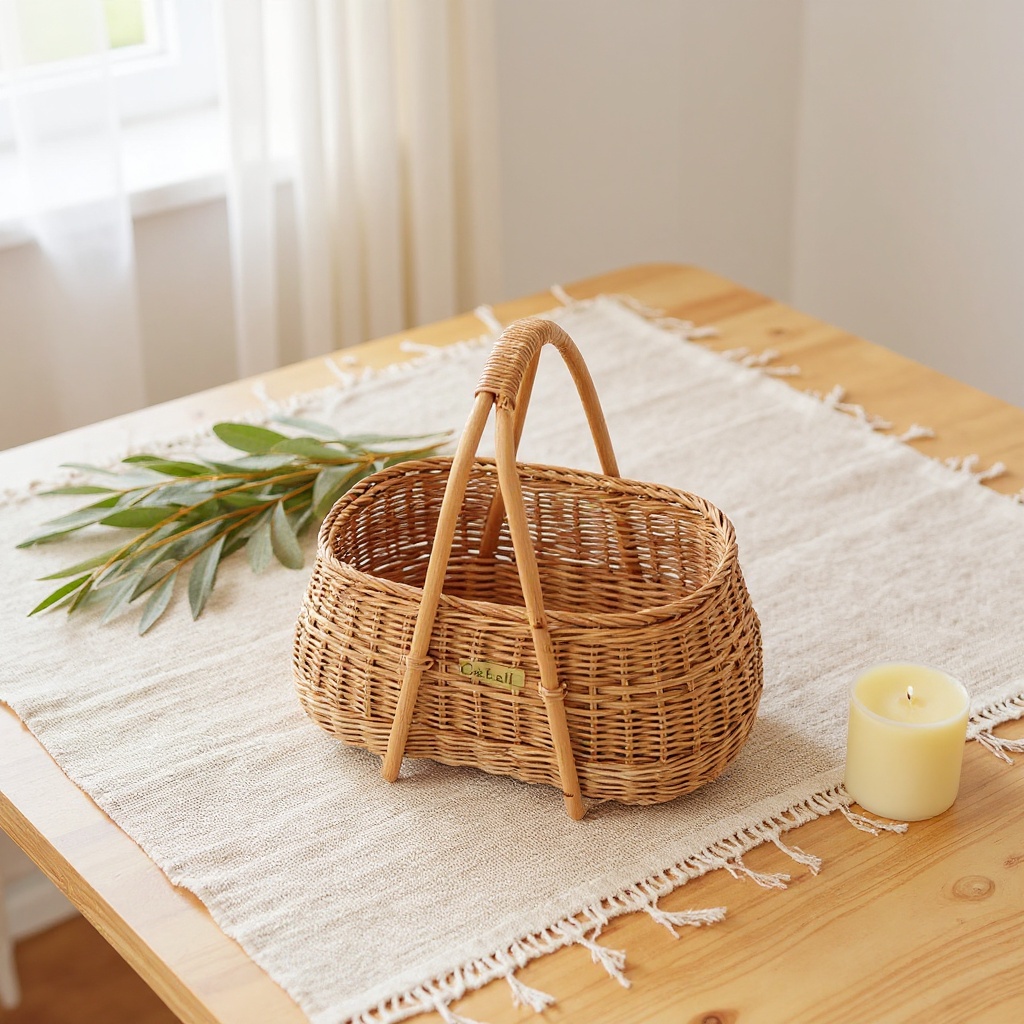
Handwoven baskets are where farmhouse kitchen organization ideas stop being theoretical and start being tangible. Unlike plastic bins that announce themselves as storage solutions, natural rattan baskets add texture and warmth while quietly doing organizational work. Different sizes serve different roles throughout the kitchen: larger baskets for root vegetables like potatoes and onions that need airflow anyway, medium ones for corralling cleaning supplies under the sink, smaller versions for tea bags or loose packets.
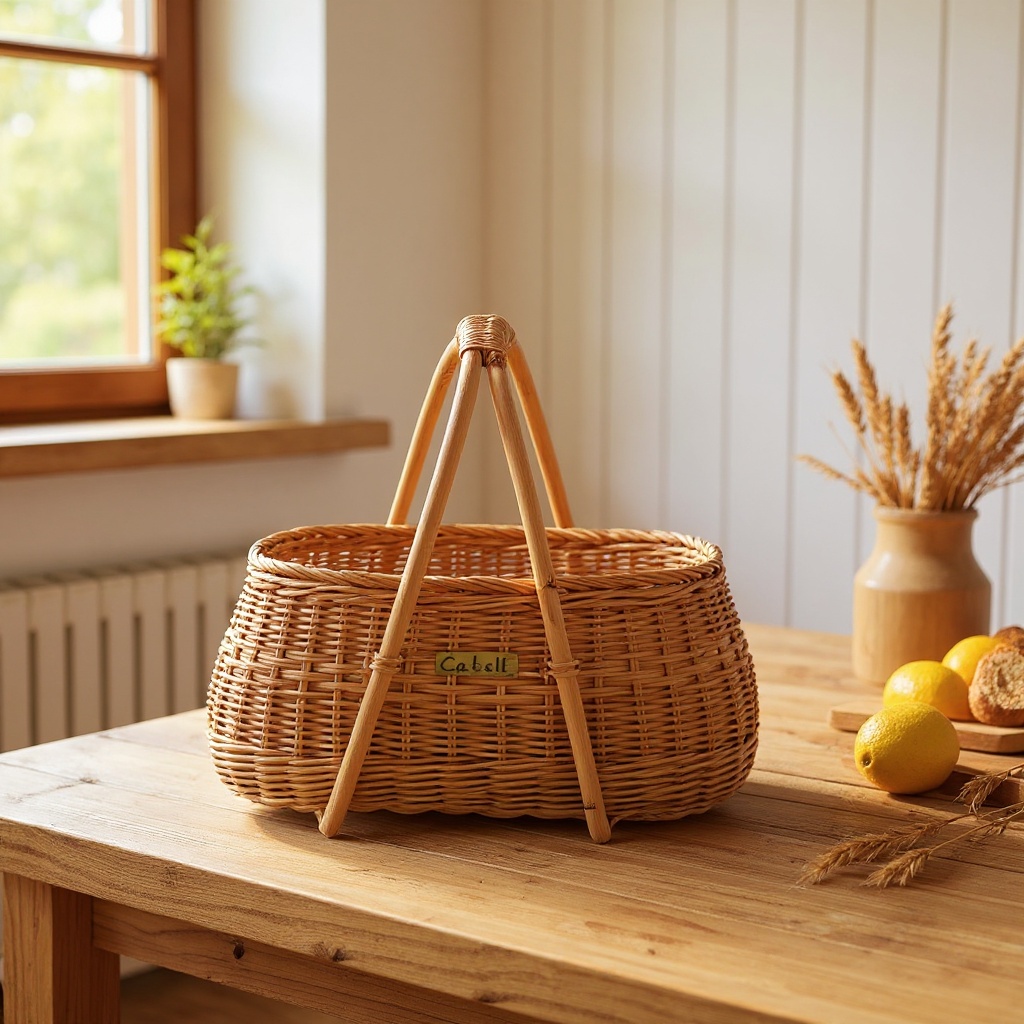
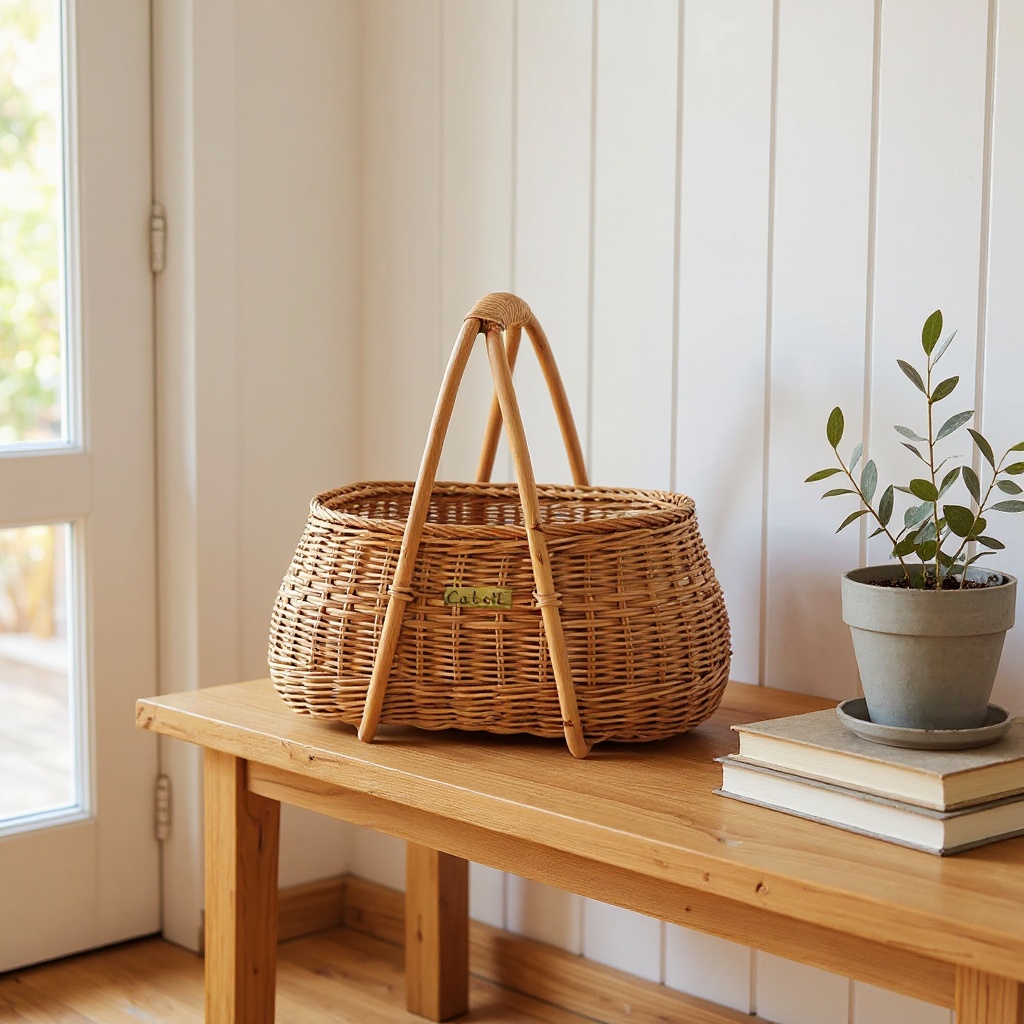
The rectangular handwoven rattan basket that has become central to this kitchen at Solace & Straw measures approximately 38cm wide — a dimension that matters more than it sounds. That width fits flush against most standard 40–45cm deep countertops without overhanging, sits cleanly inside a 90cm cabinet shelf span with room for a second item, and accommodates a full-size bread loaf or a generous fruit arrangement without looking undersized. The honey-tone warm color of natural rattan bridges the gap between cream cabinetry and warm wood tones without requiring you to repaint anything. The dual arched handles mean you can move it from counter to dining table and back without ever unpacking it — a genuinely functional feature, not a decorative one.
The visible natural weave pattern on a quality handwoven basket also signals something plastic can never replicate: human craft. Each basket from a cooperative in Central Java takes a skilled weaver approximately 3–4 hours to complete. The slight irregularities in the weave aren't flaws. They're proof.
One honest note most basket articles won't say: if your kitchen runs consistently humid — think New Orleans, coastal Florida, or any poorly ventilated galley kitchen — an unlined rattan basket used daily for produce will show stress at the weave intersections within 12 to 18 months. Not failure. Just reality. For high-humidity environments, use your rattan basket for drier storage like bread, towels, or dry packets, and choose seagrass or bamboo for produce.
Smart Pantry Organization: A Step-by-Step Process
Your pantry doesn't need expensive custom solutions to function like a magazine spread. Here's the sequence that actually works:
1. Empty and categorize first. Remove everything. Group by category: baking, grains, canned goods, snacks, spices. Discard expired items before buying a single storage container. 2. Measure your shelves. Standard pantry shelves run 12–16 inches deep. Containers deeper than 12 inches will make rear items unreachable without a pullout mechanism. 3. Choose uniform containers for dry goods. Clear glass jars or airtight canisters in one consistent size prevent pest entry and make inventory visible at a glance. Kraft paper labels with black marker are cheap, farmhouse-authentic, and easy to update. 4. Install tension rods inside cabinet doors. Mount them horizontally and hang small baskets or pot holders from S-hooks. This creates a full storage tier that previously existed as dead space. 5. Use a lazy Susan in every corner cabinet. Corner cabinets are responsible for more lost spice jars than any other storage failure. A 28cm rotating tray costs under $15 and recovers the entire depth of the cabinet. 6. Place a rectangular rattan basket on the lowest accessible shelf for potatoes, onions, or garlic — items that need airflow and don't belong sealed in canisters. The 38cm width slots into most pantry shelves without modification. 7. Reassess seasonally. Summer requires more fresh produce storage, quick-grab snacks, and lighter oils. Winter means soup pot access, slow-cooker proximity, and hot beverage station consolidation.
Budget note: A full pantry organization using mason jars sourced from a dollar store, tension rods from a hardware store, and one quality rattan basket can come in under $60. The rattan basket is the one place worth spending on quality. Everything else is a commodity.
Counter Organization Without the Clutter
Farmhouse counters should feel abundant but not anxious. The trick is functional zoning — defined areas for different activities that reduce the cognitive work of deciding where things belong. Keep a wooden cutting board, knife block, and small bowl for scraps near your prep zone. Coffee and tea supplies get their own corner, ideally contained on a vintage tray so the whole assemblage moves as one unit. Fresh fruit and daily-use items like salt, pepper, and olive oil live in attractive containers that justify their counter footprint.
A 2021 survey by the American Cleaning Institute found that 68% of respondents said counter clutter was the single biggest contributor to their sense of kitchen disorder — outranking dirty dishes and full trash cans. The fix isn't buying more storage. It's committing to a rule: if an item hasn't been used in seven days, it doesn't live on the counter.
Essential Counter Storage Items:
1. Large rattan or wire fruit basket — keeps produce visible, accessible, and aerated 2. Wooden or ceramic utensil crock — holds cooking spoons, spatulas, tongs in one vertical footprint 3. Matching oil and vinegar bottles — transfer from original packaging into uniform glass bottles for visual cohesion 4. Bread basket — a rectangular handwoven rattan basket with dual handles works perfectly; keeps loaves accessible without a bread box footprint 5. Small ceramic dish — daily deposit zone for keys, vitamins, hair ties, receipts 6. Cutting board stand — displays beautiful boards vertically when not in use 7. Contained coffee and tea station — tray or basket holding mugs, sweeteners, filters, and nothing else
Comparing Natural Basket Materials for Kitchen Use
| Material | Durability | Moisture Resistance | Avg. Cost Range | Best Kitchen Application | Humidity Warning | |----------|------------|---------------------|-----------------|--------------------------|------------------| | Rattan | Excellent — lasts 5–8 years with basic care | Good with occasional wipe-down | $40–150 | Fruit, bread, counter corralling | Avoid daily moisture exposure in high-humidity climates | | Seagrass | Good — 3–5 years typical lifespan | Fair — degrades with standing water | $25–80 | Dry goods, linen storage | Better than rattan in humid kitchens | | Bamboo | Very Good — 5–7 years | Excellent — resists water naturally | $30–100 | Utensils, cutting boards, produce | Lowest humidity risk of natural materials | | Wicker (willow) | Moderate — 2–4 years in kitchen use | Poor — absorbs moisture and warps | $35–120 | Decorative storage only | Not recommended near sink or stove | | Water Hyacinth | Fair — 2–3 years with regular use | Good for splash resistance | $20–60 | Lightweight items, shelf décor | Avoid prolonged damp environments | | Jute | Fair — surface fibers fray within 2–3 years | Poor — stains and absorbs odors | $15–50 | Dry pantry storage only | Not suitable near cooking or moisture |

Hidden Storage That Maintains the Look
Not everything in a farmhouse kitchen belongs on display. Honest farmhouse organization acknowledges this without apology. Drawer dividers made from bamboo or solid wood organize utensils and gadgets without adding counter clutter. Pull-out shelves in lower cabinets solve the problem of items disappearing into cabinet depth — a particularly useful modification for stand mixer storage or cast iron collection.
Hooks inside cabinet doors handle measuring cups, pot holders, and small tools with zero additional footprint. A lazy Susan in corner cabinets prevents the archaeological dig that otherwise happens every time you need cream of tartar. Appliances used weekly but not daily — stand mixers, food processors, immersion blenders — belong in lower cabinets at easy-access height, not balanced on high shelves where retrieval requires a stepstool and two free hands.
Seasonal Rotation and Maintenance
Farmhouse organization works best when it moves with how you actually cook. Static systems calcify into clutter. Rotate accessible storage seasonally: summer prioritizes fresh produce baskets, lighter oil bottles, and quick-grab snack zones; winter calls for slow-cooker proximity, soup pot access, and a consolidated hot beverage station.
For rattan specifically, the care protocol is minimal but non-negotiable. Wipe down with a lightly damp cloth monthly. Allow full air-drying before returning to use — never store a damp basket enclosed. A light application of food-safe mineral oil to the woven exterior twice a year prevents the brittleness that causes weave splitting. According to the Cane and Basket Supply Company's material care documentation, properly maintained rattan retains structural integrity for 6–10 years of regular use. Wooden items like cutting boards and utensil crocks need food-safe mineral oil every 3–4 months to prevent cracking at the grain. Refresh labels seasonally so your system stays legible and current.
Simple maintenance. Real longevity.
FAQ
Q: How do I organize a small farmhouse kitchen without losing the cozy feel? A: Prioritize vertical storage and multi-functional pieces. Wall-mounted shelves, magnetic spice jars on the refrigerator side, and a rectangular rattan basket with dual handles that moves from counter to table all reduce footprint without reducing warmth. Edit what's visible ruthlessly — keep only items that are both used regularly and look intentional. Research from the Journal of Environmental Psychology (2011) found that perceived room size increases meaningfully when surfaces are kept below 30% occupied, which translates to: clear counters feel larger without feeling cold.
Q: What containers work best for open farmhouse shelving? A: Glass canisters, mason jars, and natural handwoven baskets form the strongest combination. Choose containers in two or three consistent materials rather than mixing every type you own. Glass reveals contents at a glance while woven baskets with visible natural weave patterns add tactile texture and conceal less-photogenic items. Avoid plastic containers on open shelving — they interrupt the natural material palette that defines the farmhouse aesthetic and degrade visually under light over time.
Q: Is rattan or wicker better for kitchen storage? A: Rattan is the more durable choice for daily kitchen use. Rattan is a solid-core vine material that resists moisture and mechanical stress; wicker describes a weaving technique typically applied to willow or similar materials that have hollow stems, making them more susceptible to humidity-driven warping and cracking. For primary kitchen storage, rattan outperforms wicker in lifespan by roughly two to three years under equivalent conditions. Save delicate wicker pieces for decorative roles away from the sink and stove.
Q: How do I keep a farmhouse kitchen looking organized without hiding everything? A: Apply the functional beauty standard — display only items that look good AND serve a daily purpose. Group similar items spatially (all oils in one zone, all coffee supplies in another). Target keeping 65–70% of counter surface clear at all times, with intentional styling on the remaining portion. Use consistent containers and a tight color palette: natural wood tones, cream or white ceramics, and honey-tone rattan work together without requiring matching sets.
Q: What is the best way to organize a farmhouse pantry on a budget? A: Mason jars for dry goods, kraft paper labels, and tension rods with S-hooks inside cabinet doors give you the largest organizational return per dollar. Repurpose wooden crates as shelf dividers. Use one quality handwoven rattan basket for produce that needs airflow — it's the single upgrade worth spending on. Total cost for a functional farmhouse pantry overhaul can stay under $60 if you prioritize mason jars and tension rods over proprietary organizing systems.
Q: Can I use a handwoven rattan basket for everyday kitchen counter storage? A: Yes — and a rectangular basket outperforms round ones in most kitchen applications because it maximizes counter footprint efficiency and sits flush against backsplashes and walls. A basket approximately 38cm wide holds a full bread loaf, a generous fruit arrangement, or a collection of kitchen linens without overrunning counter space. The dual arched handles make it movable when you need prep room, which extends its daily usefulness beyond static decoration.
Q: How do I style a farmhouse kitchen counter without it looking cluttered? A: Create defined functional zones and enforce them. Use trays or baskets to contain loose groupings — a tray that holds oil, vinegar, and salt reads as intentional; the same three items scattered reads as forgotten. Arrange items in triangular rather than linear formations. Keep 65–70% of counter surface clear. A 2022 interior design study by the Color and Space Research Group found that counter occupancy above 40% was rated as visually cluttered by 78% of respondents regardless of how tidy individual items appeared.
Q: What natural materials work best for farmhouse kitchen organization? A: Rattan, bamboo, reclaimed wood, and natural fiber baskets are the foundation. Each brings durability sufficient for daily kitchen use while contributing authentic texture. The visible natural weave pattern on a handwoven rattan basket, the grain variation in reclaimed wood, and the slight tonal variation in natural bamboo all provide the visual character that mass-produced organizers cannot replicate. Avoid materials that look too uniform or finished — the slight imperfections in handwoven goods are the point.
Q: How often should I clean rattan baskets used in the kitchen? A: Wipe rattan down with a lightly damp cloth monthly. For baskets used for produce, inspect the interior weekly for moisture or debris. Apply a thin coat of food-safe mineral oil to the exterior surface twice yearly to maintain flexibility in the weave and prevent splitting at intersections. Never submerge rattan in water and always allow complete air-drying before enclosing. With this protocol, a quality handwoven rattan basket should remain structurally sound for six to ten years of regular use.
Creating Your Perfect Farmhouse Kitchen System
The best farmhouse kitchen organization systems grow the way good kitchens do — gradually, practically, shaped by how a specific household actually cooks and lives. Start with the fundamentals: uniform storage containers for dry goods, one or two well-chosen rattan baskets sized to your actual counter dimensions, and an honest assessment of what earns display space versus what belongs behind a door. Add elements as your routines clarify what they need.
Function comes first. Beauty follows directly. Every organizational element should reduce friction in your daily kitchen workflow — whether that's a rectangular handwoven rattan basket with dual arched handles moving bread from counter to table without unpacking, or an open shelf arrangement that lets you grab a bowl without opening a cabinet. The honey-tone warmth of natural rattan, the grain of reclaimed wood, the imperfect texture of handwoven goods — these aren't decorative choices layered on top of organization. They are the organization. That integration of beauty and utility is what real farmhouse style has always been about.
Start with one shelf. One basket. One honest edit.
The rest follows.
---


