
Glass Cup with Dust Proof Lid and Straw: What to Know Before Buying
By Elena Marsh, materials researcher and glassware consultant · 6+ years testing borosilicate and specialty glass products for home goods retailers · Contributor to Glass & Ceramic Review> Disclosure: This article contains links to products sold on pampasroom.com. All editorial guidance is independent.
A glass cup with dust proof lid and straw is heat-resistant borosilicate glass with a sealed lid and reusable straw — but quality varies so much that buying the wrong one wastes money and risks safety.
The single most important distinction: borosilicate versus soda-lime glass. Everything else — lid fit, straw wall thickness, flower authenticity — flows downstream from that one material choice. Premium glass cup with dust proof lid and straw sets feature hand-embedded preserved flowers raised visibly from the surface, precision-fitted lids that create genuine dust barriers, and annealed glass straws. Budget versions use printed decals, loose plastic lids, and regular glass prone to cracking. The preserved flower tumbler category adds another layer of complexity: real three-dimensional botanicals embedded in glass versus flat printed imitations that peel within months.
Why the Glass Type Determines Everything
Borosilicate glass contains boron trioxide. That compound changes the thermal expansion coefficient dramatically — borosilicate expands at roughly 3.3 × 10⁻⁶/°C compared to 9 × 10⁻⁶/°C for standard soda-lime glass, according to materials data published by Schott AG, one of the world's primary borosilicate manufacturers. That difference means borosilicate withstands rapid temperature changes that would fracture regular glass. Pour hot tea into a cold soda-lime tumbler. Crack.
For a glass cup with dust proof lid and straw used daily across hot and cold beverages, borosilicate isn't a luxury feature. It's a functional requirement.
Glass also outperforms plastic in ways that compound over time. No flavor retention. No odor absorption. No microplastic release when hot liquid meets the surface. A glass tumbler washed the same night tastes identical to the first use — plastic tumblers develop a faint film after six months of daily use that most people stop noticing until they switch back to glass.
The honest truth most articles skip: glass cups with preserved flowers are not dishwasher safe, full stop. If your household runs everything through the dishwasher and you won't change that habit, skip the preserved flower style entirely and buy a plain borosilicate tumbler instead. The botanical embedding doesn't survive repeated high-heat wash cycles, regardless of what budget sellers claim.
Real Preserved Flowers vs. Printed Designs: How to Tell the Difference
This is where most buyers get misled. Fast.
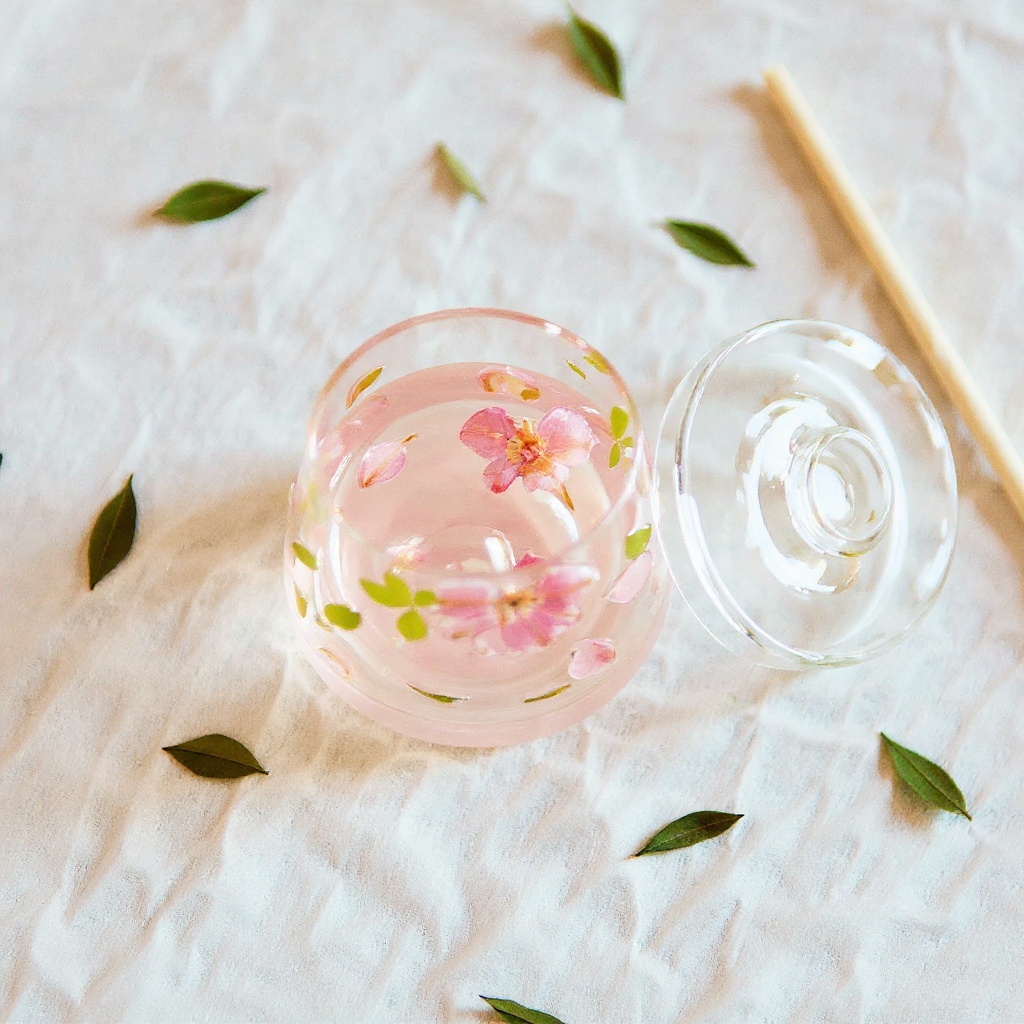
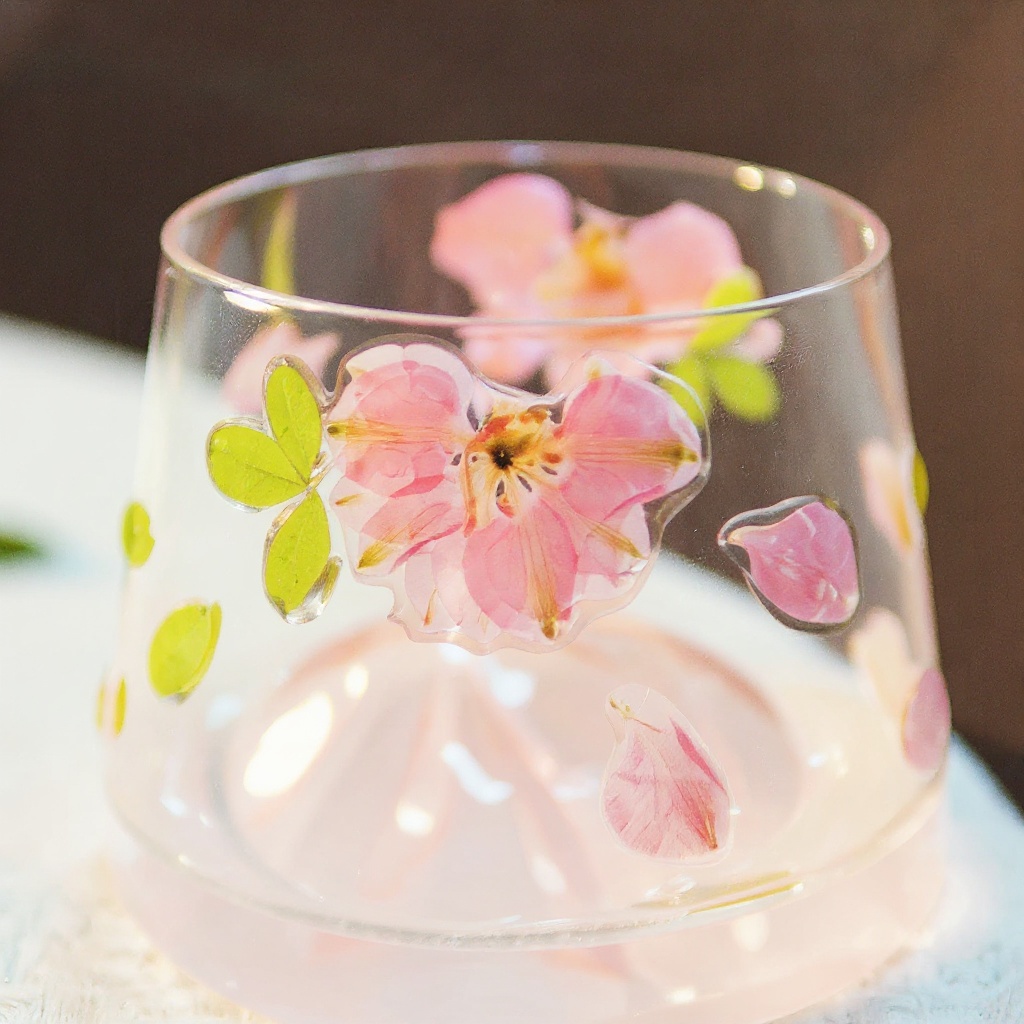
Authentic preserved flower glass cups embed actual dried botanicals — petals, leaves, stems — into the outer glass surface using resin or glass-fusion techniques. The result is tactile. Run your finger across the surface and you feel the raised edge of each petal, the slight ridge where a leaf meets the glass, the irregular thickness variation between flower specimens. No two pieces are identical because no two flowers are identical.
Printed designs are decals or transfers applied to smooth glass. They photograph beautifully in product listings. Touch one and the surface is flat. A consistent, perfectly symmetrical pattern is a red flag — nature doesn't make perfect symmetry, and authentic pressed flower craft reflects that organic variation.
According to flower preservation methods documented in botanical conservation literature, proper desiccation removes moisture that causes cellular decay, while UV-stable sealants prevent color degradation. Pieces produced this way retain color for years under normal indoor conditions. Cheap alternatives using fresh flowers with surface-only sealant show browning within weeks.
Five ways to verify authenticity before purchasing:1. Request a close-up photograph at a raking angle — authentic raised petals cast shadows that printed designs don't 2. Check for asymmetry in leaf placement and petal overlap 3. Ask specifically whether flowers are embedded or surface-applied 4. Look for natural color variation within individual petals, not uniform flat color 5. Confirm the preservation method — desiccation or silica gel drying, not air drying of fresh material
Construction Quality: What Separates Premium from Budget
The glass cup with dust proof lid and straw category spans a wide manufacturing spectrum. Understanding each component separately prevents overpaying for marketing while underpaying for what actually matters.
| Component | Budget ($12–25) | Mid-Range ($30–45) | Premium ($50–85) |
|---|---|---|---|
| Glass Type | Soda-lime | Borosilicate (thin-wall) | Borosilicate (thick-wall, annealed) |
| Lid Material | Loose plastic | Bamboo or basic glass | Precision-fit glass with seal |
| Dust Protection | Minimal | Partial fit | Full gasket or ground-glass seal |
| Floral Decoration | Printed decal | Surface-applied resin | Hand-embedded preserved botanicals |
| Straw Type | Plastic or thin glass | Standard glass | Annealed glass, rounded tips |
| Thermal Resistance | Basic | Moderate | High (handles 0°C to 150°C range per manufacturer specs) |
| Craftsmanship | Machine-produced | Semi-handmade | Fully handcrafted, 3+ days per piece |
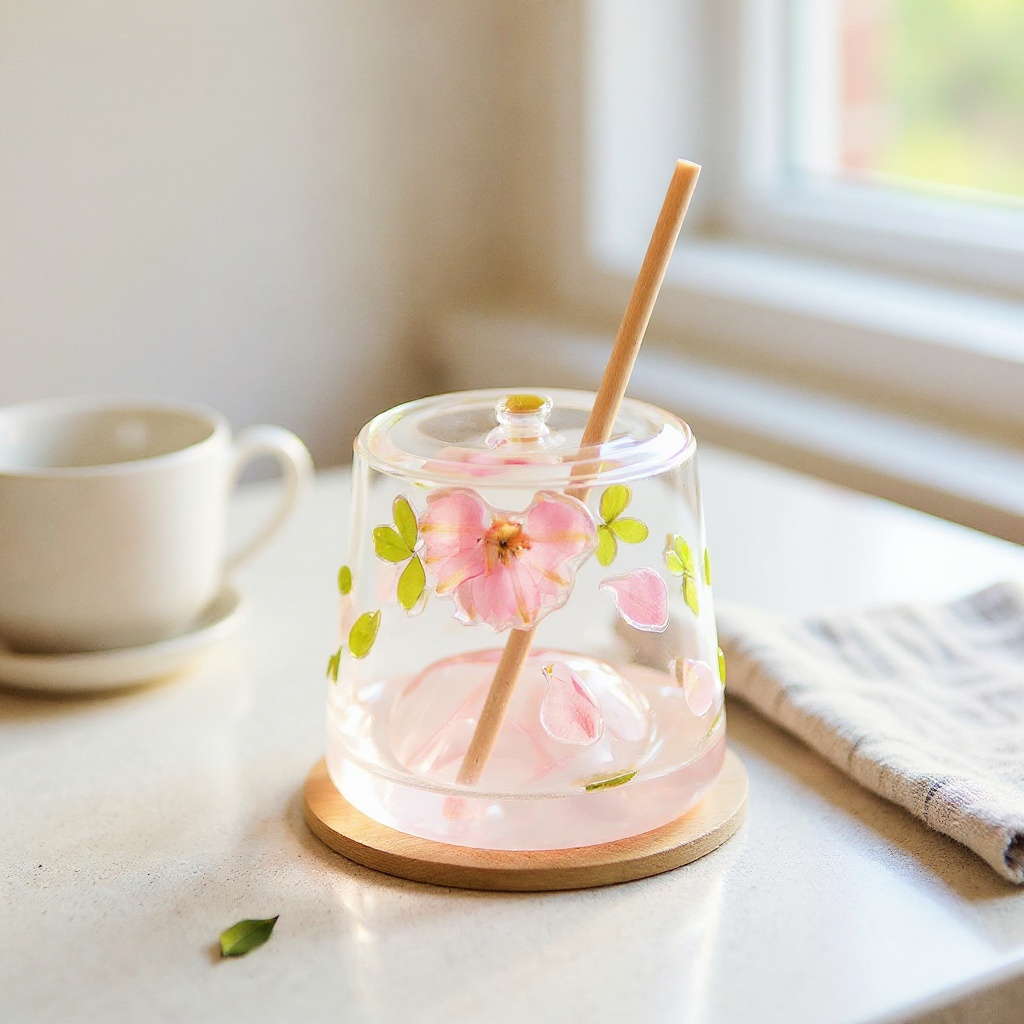
Lid fit deserves particular attention in the glass cup with dust proof lid and straw category. A genuinely dust-proof lid either uses a ground-glass-to-glass contact seal or a food-grade silicone gasket that creates negative pressure when seated. Test by inverting a filled, sealed cup — if liquid escapes, the lid isn't truly dust-proof. Most budget lids fail this test.
Glass straw construction follows similar quality tiers. Annealing — the controlled slow-cooling process used in quality glass manufacturing — relieves internal stress that makes glass brittle. Unannealed straws feel fine until they don't. Inspect any glass straw for smoothness at both ends; rough edges indicate insufficient finishing and present an injury risk.
Capacity Guide: Matching Size to Use
Not every glass cup with dust proof lid and straw serves every purpose equally. Capacity affects portability, refill frequency, and whether the piece fits standard car cup holders (typically 73–83mm diameter).
Choosing by primary use:- 300–350ml — Espresso drinks, small hot tea servings, children's portions. Fits most cup holders. Requires frequent refills for hydration. - 400ml — The most versatile size for adults. Handles standard coffee servings, generous cold brew, or smoothies. Comfortable single-hand grip for most hand sizes. - 500ml — Serious hydration, protein shakes, long commutes without refill access. Often too wide for narrow cup holders. - 600ml+ — Specialty hydration or sharing use. Awkward for single-hand holding over extended periods.
For preserved flower glass tumblers specifically, 400ml is the most common format because it balances visual surface area — enough glass exterior to display botanical arrangements effectively — with practical daily volume.
Heat Resistance and Safe Usage
Borosilicate glass handles the temperature range most daily beverages produce. Hot tea brewed at 90°C poured directly into a room-temperature borosilicate tumbler won't crack the glass. The same action with soda-lime glass introduces thermal stress that may not crack immediately but weakens the structure over repeated cycles until it fails suddenly.
For the glass straw component, hot liquids present a different concern: heat transfer. Glass conducts heat. A borosilicate straw in 80°C liquid becomes uncomfortable to lip-contact within seconds. Allow hot drinks to cool to drinking temperature before inserting the straw, or use the lid alone for initial temperature reduction.
The matching dust-proof glass lid serves a secondary thermal function. Seated on top, it reduces heat loss from the beverage surface — relevant for anyone who makes tea and gets distracted before drinking it. But avoid sealing hot liquids completely with a tight-fitting lid immediately after pouring. Pressure builds. Give it two minutes.
Maintenance That Actually Preserves the Botanical Elements
Glass cup with dust proof lid and straw sets with preserved flowers require specific care that differs from plain glassware. Follow this protocol to extend piece lifespan.
Daily cleaning: - Rinse with warm (not hot) water immediately after use - Use mild dish soap and a soft cloth or non-abrasive sponge - Clean the straw with a dedicated straw brush — residue builds in the interior channel faster than the exterior suggests - Pat dry with a soft lint-free towel; air drying leaves mineral deposits on clear glass that obscure the botanical display Lid and gasket maintenance: - Remove silicone gaskets weekly for separate cleaning - Inspect gasket condition monthly — compressed or cracked gaskets lose their dust-proof seal - Store lids off the tumbler when not in use to prevent gasket compression set Preserving the flower elements: - Avoid soaking the tumbler exterior in water for extended periods - Keep away from direct sustained sunlight — UV exposure degrades botanical pigments over time, even with UV-stable sealant - Never use abrasive scrubbers on the outer surface where flowers are raised Decorative arts preservation principles apply here: the enemy of embedded botanicals is moisture infiltration and UV exposure, not gentle daily use.Top 5 Signs of Quality Construction (Checklist)
Before purchasing any glass cup with dust proof lid and straw, verify these five indicators:
1. Visible wall uniformity — Hold the empty glass to light; quality borosilicate shows even thickness without bubbles or waves in the glass body 2. Tactile flower texture — Raised petals and leaves should have measurable relief depth, not just surface color variation 3. Lid resistance test — A quality lid requires slight downward pressure to seat fully; it shouldn't drop in loosely under its own weight 4. Straw tip smoothness — Run a fingertip around both ends; smooth rounded edges indicate proper fire-polishing or grinding finish 5. Color consistency in botanicals — Authentic preserved flowers show natural color, not artificially saturated hues that suggest dye treatment masking deterioration
When the Premium Price Is Actually Justified
The math is straightforward. A $15 soda-lime tumbler with printed flowers replaced every 18 months costs $10 per year. A $68 handcrafted borosilicate glass cup with dust proof lid and straw, hand-embedded flowers, and quality glass straw, maintained correctly, lasts a decade or more — under $7 per year.
The craftsmanship story also matters in gift contexts. Recipients distinguish between mass-produced items and pieces requiring 3+ days of skilled work. That distinction carries emotional weight that generic alternatives don't.
Our Premium Fuji Mountain Real Flower Glass exemplifies authentic hand-embedded botanical techniques with raised relief patterns visible from multiple angles — available for reference as a benchmark for premium construction standards.
For those evaluating the broader preserved flower glassware category, the Premium Fuji Mountain Real Flower Whiskey Glass demonstrates the three-dimensional tactile quality that distinguishes genuine preserved flower work from printed alternatives.
FAQ
What exactly makes a glass cup with dust proof lid and straw "dust proof"?A genuinely dust-proof lid creates a barrier through either a ground-glass contact seal or a food-grade silicone gasket that seats without gaps. Budget lids that rest loosely on the rim allow particulate entry — particularly relevant in outdoor settings or kitchens with open windows. Test any lid by inverting the sealed cup over a sink: sustained liquid retention indicates a functional seal. Partial dripping indicates a lid marketed as dust-proof but not engineered as one.
Is a glass cup with lid and straw safe for hot drinks?Borosilicate glass cup with dust proof lid and straw sets are safe for hot beverages. Borosilicate glass has a thermal expansion coefficient of approximately 3.3 × 10⁻⁶/°C per Schott AG specifications, enabling it to handle rapid temperature changes that crack standard soda-lime glass. Check that the manufacturer specifically states borosilicate — not just "heat-resistant glass," which can mean different things across manufacturers. Allow hot drinks to cool for two minutes before sealing the lid fully to prevent pressure buildup.
What is the difference between borosilicate and regular glass in tumblers?Borosilicate glass contains boron trioxide, which reduces the thermal expansion rate to approximately one-third that of regular soda-lime glass. Schott AG, a primary borosilicate manufacturer, publishes expansion coefficient data confirming this differential. Practically: borosilicate survives the temperature transition from a cold glass to hot tea; soda-lime glass develops microfractures under the same stress. For a glass cup with dust proof lid and straw used across hot and cold beverages, borosilicate is the minimum acceptable standard.
Do preserved flowers on glass cups fade or fall off over time?Properly preserved and sealed flowers last indefinitely under normal indoor conditions when the embedding is done correctly. The flower preservation process removes moisture through desiccation — typically using silica gel over 48–72 hours — then seals the dried material with UV-stable resin. Failures occur with surface-applied (not embedded) flowers, non-UV-stable sealants, or botanical material that wasn't fully dried before sealing. Signs of poor preservation: browning within 2–3 months, petals lifting at edges, visible condensation under the resin layer.
Can a glass cup with preserved flowers go in the dishwasher?No. High-heat dishwasher cycles and concentrated detergent degrade the resin sealing the botanical elements, even in premium pieces. This is the non-negotiable maintenance tradeoff for the preserved flower aesthetic: hand washing only, warm water, mild soap. If dishwasher compatibility is a requirement, choose plain borosilicate glassware instead. Any seller claiming their preserved flower glass cup is dishwasher safe is either misinformed or misrepresenting the product.
Is a glass straw safe and how do you clean it properly?Quality glass straws manufactured from borosilicate and properly annealed are safe for daily use. Inspect before each use for chips, cracks, or cloudiness — discard any damaged straw immediately. Clean with a dedicated straw brush and warm soapy water after every use; residue accumulates in the interior channel faster than it appears. Store in the protective sleeve or tube that premium sets include. Glass straws don't absorb flavors or release chemicals, making them preferable to plastic alternatives for both taste integrity and health considerations.
What size glass cup with dust proof lid and straw works best for daily use?400ml is the optimal size for most adults across the widest range of daily beverages. It accommodates a standard coffee serving (approximately 355ml with room for milk), fits most car cup holders designed for medium cups (73–83mm diameter), and is light enough to hold single-handed for extended periods. 350ml suits smaller beverage portions but requires frequent refills for hydration goals. 500ml covers high-volume hydration needs but exceeds the diameter of many cup holders and feels unwieldy for casual sipping.
How do I verify real preserved flowers versus a printed design before buying online?Request a photograph taken at a raking angle — light from the side — which reveals the shadow and depth cast by genuinely raised botanical elements. Printed designs appear flat under raking light because there is no physical relief to cast shadow. Additional verification: ask for multiple images of different units from the same batch. Authentic hand-embedded pieces show variation in flower placement and petal arrangement between units. Identical arrangements across multiple units indicate a machine-applied print or decal, not individual handcraft.
Does the soft bokeh background in product photos indicate anything about quality?Not directly — bokeh is a photography technique, not a quality indicator. However, the styling choice of photographing a glass cup with dust proof lid and straw against soft pink, blue, or yellow bokeh backgrounds typically reflects intentional brand positioning around the floral aesthetic. What matters: whether the in-focus foreground image shows visible texture and relief on the flower elements, not just color. A sharp product photo that reveals flat, smooth surfaces despite apparent floral decoration is more informative than any background styling choice.
Finding the Right Glass Cup with Dust Proof Lid and Straw
The decision reduces to two questions: Do you want authentic preserved flower botanicals or just visual floral decoration? And will you commit to hand washing? Yes to both points toward premium handcrafted glass cup with dust proof lid and straw sets. No to either suggests a plain borosilicate tumbler serves the actual use case better.
For those who want the preserved flower aesthetic with confidence in construction quality, evaluate any piece against the five-point checklist above before purchasing. Tactile raised texture, borosilicate construction, genuine lid seal, annealed straw tips, and natural botanical color variation are measurable. Not subjective. Not marketing language.
The right glass cup with dust proof lid and straw sits on your surface every morning and earns its price through daily use — not just the first impression.