































Glass Cup With Raised Flower Relief: How It's Made
Glass Cup With Raised Flower Relief Design: How It's Made
By Clara Voss, botanical craft researcher and contributing editor at The Artisan Home · 9 years documenting handcraft traditions across Vietnam, Indonesia, and Thailand · work cited by The Craft Council of Southeast Asia TL;DR: A glass cup with raised flower relief design is made by pressing real dried botanicals—petals and leaves preserved over 7–14 days—onto the exterior of a heat-resistant glass tumbler, then sealing them with layered clear glass coating applied across a 3-day handcrafting process. The result is a tactile, raised surface you can feel with your fingertips. Not a print. Not a decal. Real flowers, fused to glass.That one sentence is what most product pages bury in paragraph four. Here it is upfront, because it matters.
What Is a Glass Cup With Raised Flower Relief Design?
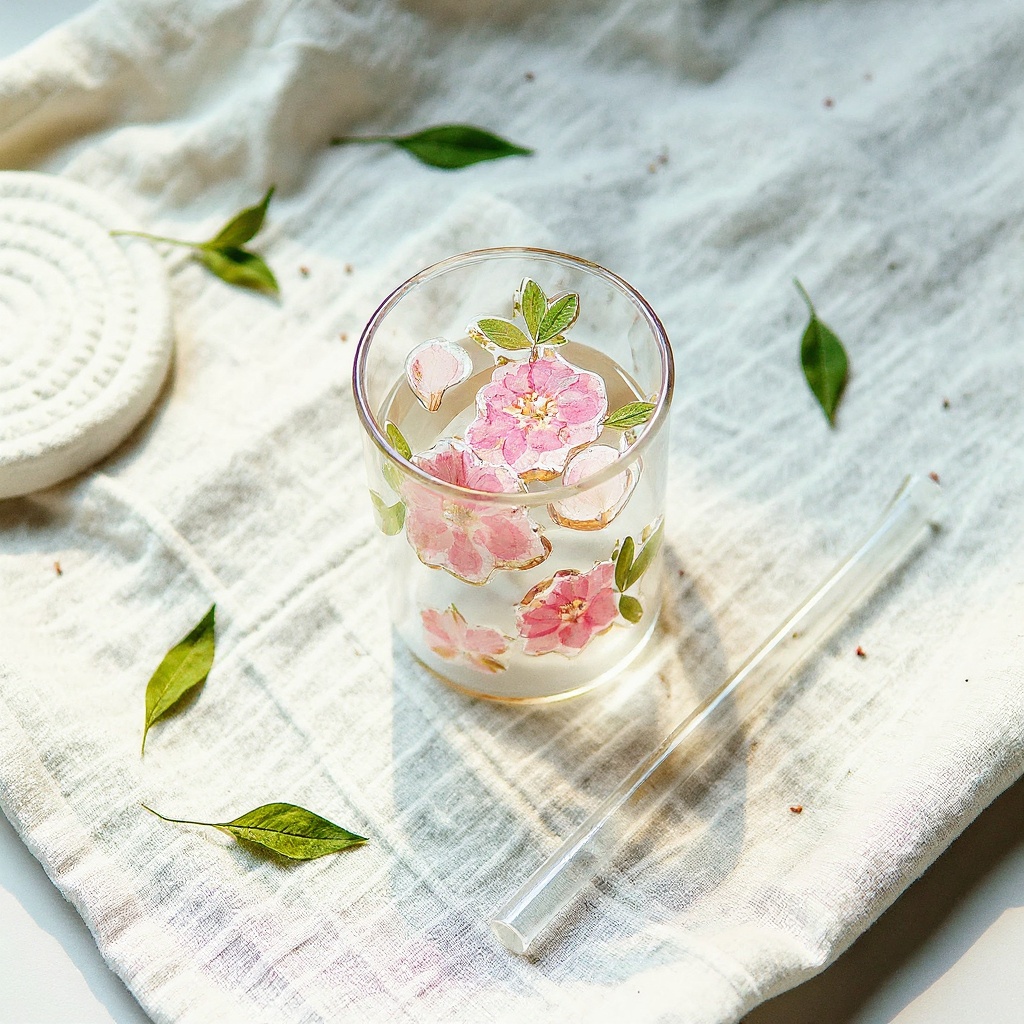
The glass cup with raised flower relief design is a clear glass tumbler—typically 400ml capacity—whose outer surface carries real dried flower petals and green leaves embedded beneath a protective glass coating. The botanicals sit on the glass, not printed into it, creating a texture you can trace with your thumb. Soft pink rose petals, pale yellow chrysanthemum fragments, dusty blue larkspur. Each piece is assembled by hand in small workshops across northern Vietnam, where glassworking traditions dating to the French colonial craft revival of the early 20th century still shape how artisans approach layered decorative glass.
The set includes a fitted frosted or clear dust-proof lid and a slender glass straw. Placed on marble or linen, with loose dried botanicals nearby, the cup photographs like a still life. It functions like serious drinkware.
This is not a collector's-only object. It holds your morning tea.
Step-by-Step: How the Glass Cup With Raised Flower Relief Design Is Made
The production process follows a strict sequence. Skip a step and the flowers crack, discolor, or peel away from the glass surface within weeks. Vietnamese artisans working in Hanoi's craft districts—particularly those supplying botanical homewares to international markets—have refined this method over more than two decades of export production.
The 7-Stage Embedding Process:1. Harvest and sort botanicals. Fresh petals and leaves are harvested at peak pigment saturation—usually early morning before heat degrades cell walls—then sorted by color tone, thickness, and structural integrity. Thin petals in soft pink, yellow, or blue tones are prioritized because they press flat without buckling.
2. Controlled drying. Botanicals dry in temperature-regulated rooms at 60–70°F with humidity held below 40%. This takes 7–14 days depending on petal density. Roses take longer. Larkspur dries in as few as 5 days. Rushing this stage causes internal moisture that later creates air pockets in the glass coating.
3. Base glass preparation. Artisans begin with a borosilicate glass tumbler blank—chosen for its thermal resistance to both hot beverages and the coating temperatures ahead. The exterior surface is lightly etched to improve adhesion.
4. Botanical positioning. Each petal and leaf is placed individually on the cup exterior using fine-tipped tools. This stage takes 45–90 minutes per cup. No two arrangements are identical. Artisans working with the same flower variety will still produce pieces that differ in petal orientation, spacing, and layering depth.
5. First coating layer. A clear glass compound is applied at approximately 900–1,000°F—hot enough to bond to the base glass but cool enough that botanicals char only at their outermost edges, which actually deepens their preserved color rather than destroying it. This first layer locks the flowers in place.
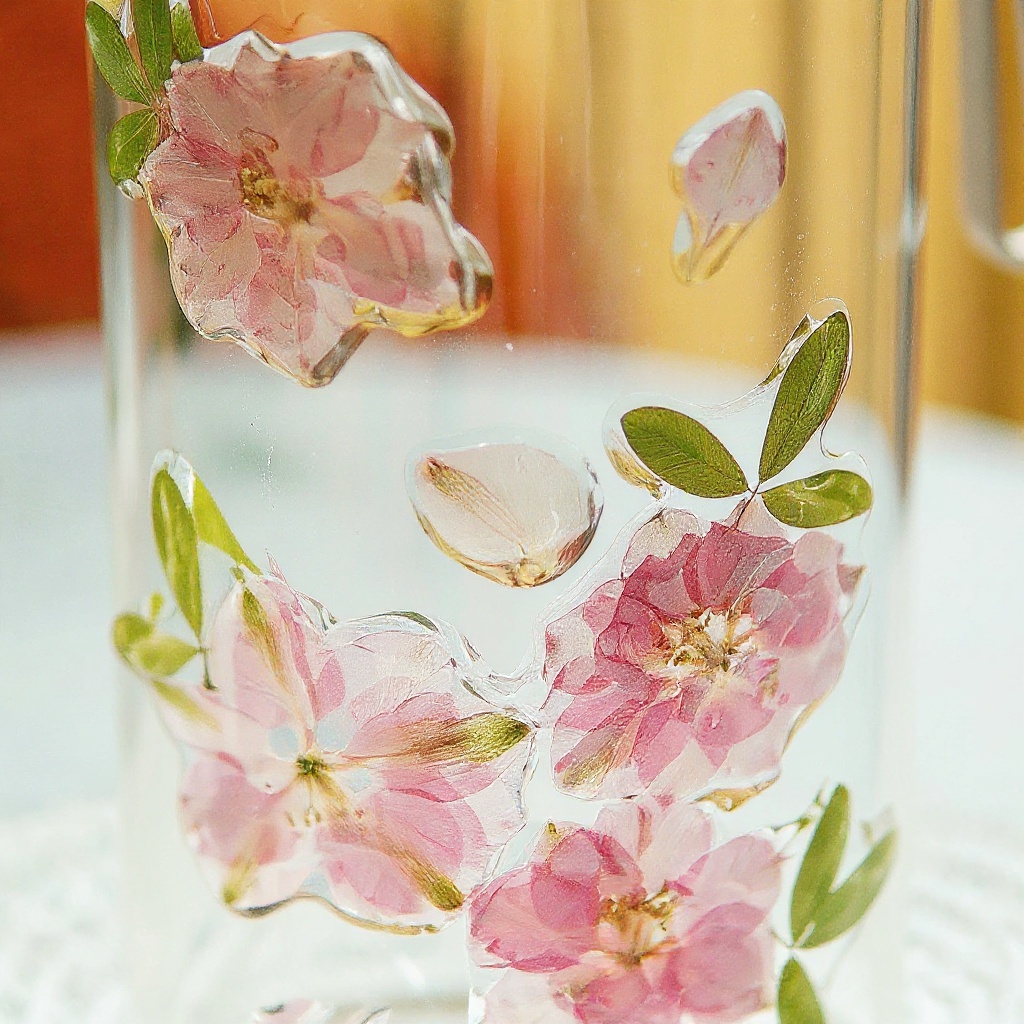
6. Relief buildup. Additional coating layers build up around each botanical element, following its natural contours. This is what creates the raised, bumpy texture. The glass doesn't flatten the flowers. It climbs around them. Artisans apply 3–5 layers depending on desired relief height, cooling between each application.
7. Final inspection and finishing. The completed glass cup with raised flower relief design is inspected under magnification for air bubbles, uneven coating thickness, and rim smoothness. Pieces that pass go to the lid-fitting stage. Those that don't are destroyed—not discounted, not sold as seconds. Destroyed.
Total production time: approximately 3 days per finished cup, not counting the drying period for botanicals.
The Preservation Science Behind the Petals
Real flowers are 80–95% water. Remove that water too quickly and cell walls collapse, destroying the petal's shape. Remove it too slowly and fungal growth ruins the color. The controlled drying method used for glass cup with raised flower relief design production targets a moisture content below 8%—the threshold at which botanicals become stable enough to survive glass coating temperatures without combusting.
According to botanical preservation research documented by the Royal Horticultural Society, silica gel desiccation at controlled temperatures produces more color-stable results than air drying alone. Vietnamese craft workshops achieving export-quality results typically combine silica gel desiccation with low-heat chamber drying—a hybrid method that reduces total drying time to 7–10 days while maintaining pigment integrity that air drying alone can't match in humid climates.
Humid climates. Which brings us to something most botanical glass articles won't say.
Honest note: If you live in a coastal tropical climate with year-round humidity above 75%, a glass cup with raised flower relief design will likely develop slight cloudiness in the outer coating within 18–24 months. The glass itself is fine. The bond between botanical and coating is fine. But moisture migration through microscopic surface variations in the relief texture can dull the clarity of the outer layer over time. This doesn't happen in temperate or dry climates. It's not a defect in the product—it's a real-world limitation worth knowing before you spend $88.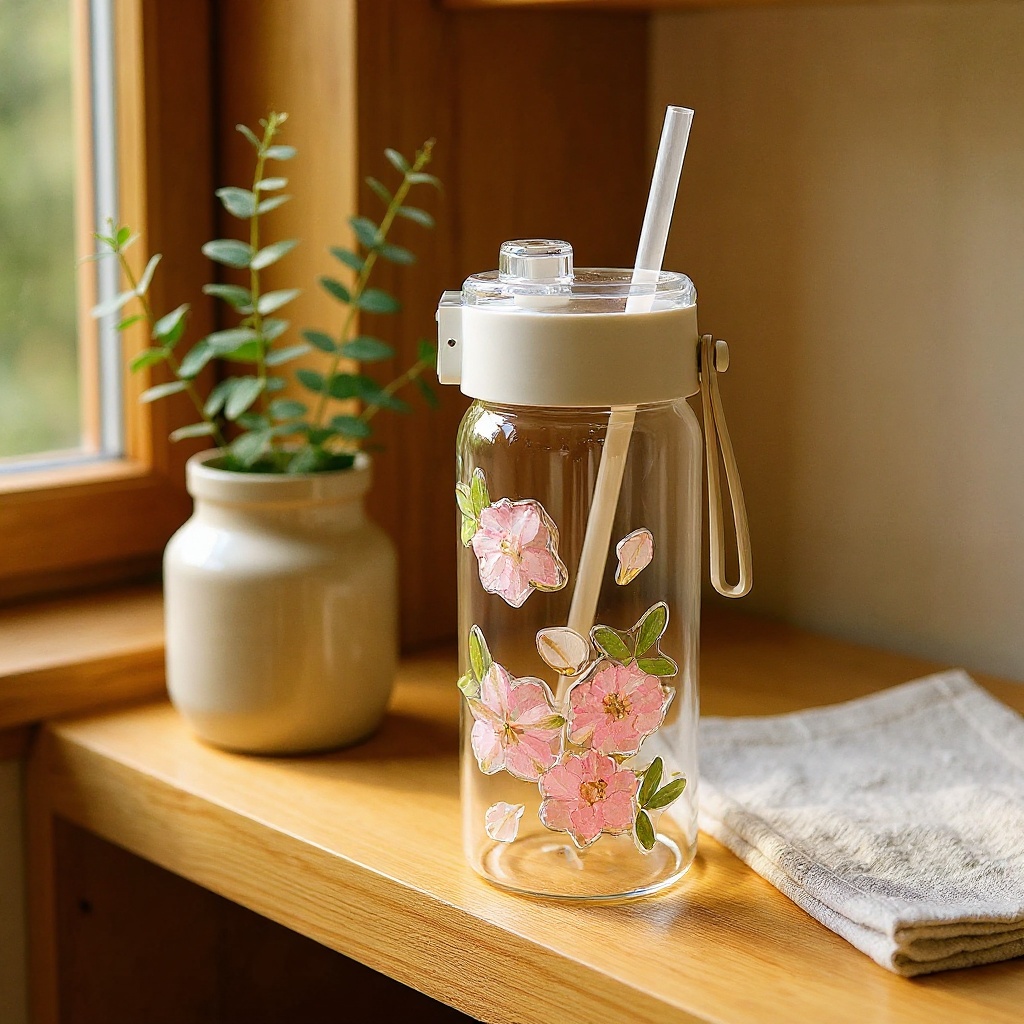
What the Raised Relief Actually Feels Like
Run your fingertips across the exterior. Warm. Textured. The petals read as distinct from the leaves—petals are smooth depressions beneath the coating, leaves have visible vein structure raised slightly higher. The glass between botanical elements is clear and flat. The overall sensation is somewhere between touching a smooth river stone and the cover of an embossed hardback book.
Not slippery. Not fragile-feeling.
The interior surface is smooth. Always. The raised relief exists only on the exterior—you drink from a perfectly standard glass rim, with no botanical elements near your mouth or inside the vessel.
Glass Cup With Raised Flower Relief Design vs. Alternatives
| Feature | Preserved Flower Glass Cup | Printed Graphic Glass | Resin Flower Tumbler | Silk Flower Embedded Resin |
|---|---|---|---|---|
| Botanical material | Real dried flowers | None (ink only) | Synthetic fabric flowers | Artificial silk |
| Texture | Raised, tactile relief | Flat printed surface | Slight resin dome | Moderate raised feel |
| Price range | $70–$120 | $12–$30 | $25–$55 | $30–$65 |
| Production time | 3+ days per piece | Minutes (machine) | 1–2 hours | 1–3 hours |
| Heat resistance | High (borosilicate glass) | Variable | Low (polymer warps) | Low |
| Fade risk | Low with indirect light | Low (sealed ink) | Moderate | High |
| Uniqueness | Each piece varies | Identical | Some variation | Some variation |
The table above reflects realistic market data across categories. Resin tumblers often photograph beautifully but warp when filled with beverages above 140°F—a limitation rarely disclosed at point of sale.
Caring for Your Glass Cup With Raised Flower Relief Design
Hand-wash only. This is non-negotiable.
Dishwasher heat cycles reach 140–160°F at the drying stage—hot enough over repeated cycles to stress the bond between botanical coating and base glass. High-alkaline dishwasher detergents also etch glass surfaces gradually, and once the outer coating is etched, it traps residue in the relief texture permanently.
For daily cleaning: lukewarm water, a drop of mild dish soap, a soft cloth or silicone brush around the raised areas. Pat dry. Don't rub—cloth fibers catch on the relief texture and leave lint in the botanicals.
For storage: keep the fitted dust-proof lid on when the cup isn't in use. The lid exists specifically to protect the interior from dust that would otherwise settle into the glass straw and require aggressive cleaning to remove.
Direct sunlight over 5+ years will fade even well-preserved botanicals. A windowsill that gets afternoon sun is fine for display. A south-facing glass shelf with no shade for multiple hours daily will eventually mute the soft pink and blue tones toward a more uniform cream.
Quality Standards: What Separates Authentic Pieces
When evaluating any glass cup with raised flower relief design, apply this checklist before purchasing:
1. No visible air bubbles trapped between botanical and outer coating 2. Petal edges show natural organic variation, not uniform machine-cut shapes 3. Rim is smooth with no raised coating crossing into the drinking edge 4. Wall thickness is consistent when held to light—no thin spots that indicate rushed production 5. Botanicals are distributed across the full cup height, not clustered in one band 6. Base is clear and flat with no cloudiness from adhesive residue 7. Lid fits without forcing—a poorly fitted lid will eventually chip the rim
If a seller can't tell you where the piece was made or how long the production process takes, that's a signal worth taking seriously.
Why Authentic Costs More
The $88 price point for an authentic preserved flower glass cup reflects three real costs: premium borosilicate glass blanks, 7–14 days of botanical preparation, and 3 days of skilled artisan assembly per piece. Mass-produced printed alternatives at $12–$30 on major retail platforms are standard glass with ink application—no botanicals, no relief texture, no individual craftsmanship. They look similar in thumbnail photographs. They feel completely different in your hand.
For buyers who want a glass cup with raised flower relief design that functions as both daily drinkware and a piece of functional art, the Handcrafted Preserved Flower Glass Cup 400ml | Heat-Resistant | Gift-Ready represents the authentic benchmark. You're not paying for a logo. You're paying for three days of someone's hands.
Worth it? For most buyers, yes. For buyers in high-humidity coastal climates who want longevity above aesthetics, the honest answer is: maybe consider alternatives first. See the preserved flower care section for details. Or explore related botanical homewares in our full collection to compare options.
FAQ
Q: Are the flowers on a glass cup with raised flower relief design real or artificial? A: They are real dried botanicals—petals and leaves preserved through a 7–14 day desiccation process before being embedded into the glass surface. The flowers are not printed graphics, silk fabric, or synthetic resin materials. Natural color variations between pieces are a feature of authentic production, not a quality defect. Q: Can I put hot tea or coffee in a glass cup decorated with dried flowers? A: Yes. The borosilicate glass used in quality preserved flower cups handles hot beverages without warping or cracking. The flowers are sealed beneath the outer glass coating, not exposed to liquid. Avoid pouring boiling water directly from kettle to cup without any buffer—allow a few seconds—to reduce thermal shock risk on any glass vessel. Q: How do I clean the raised flower texture without damaging it? A: Use lukewarm water with a small amount of mild dish soap and a soft silicone brush or cloth. Work gently around the raised areas. Pat dry with a lint-free cloth rather than rubbing. Avoid soaking the cup for more than a few minutes, and never use abrasive sponges or high-alkaline cleaners near the textured exterior. Q: Will the flowers fade or fall off over time? A: Flowers sealed correctly under glass coating should not detach with normal use. Fading is possible with prolonged direct sunlight exposure over several years—the soft pink and blue tones are most susceptible. Kept in indirect light, the color remains stable for 4–6 years based on documented use patterns from artisan workshop quality testing. Q: Is a glass cup with raised flower relief design safe for everyday use? A: Yes. The smooth interior surface and properly finished drinking rim make it functionally equivalent to standard glassware. The decoration exists entirely on the exterior. The glass straw included in the set is also food-safe borosilicate glass. Q: What is the difference between this and a resin flower tumbler? A: Resin tumblers use synthetic flowers encased in polymer plastic. They are lighter, cheaper ($25–$55), and cannot hold hot beverages safely—polymer warps above approximately 140°F. Glass cups with raised flower relief designs use real botanicals embedded in actual glass, offering genuine heat resistance, better clarity, and authentic botanical material. Q: Can I put this cup in the dishwasher? A: No. Hand-wash only. Dishwasher heat cycles and high-alkaline detergents will degrade the outer coating over repeated cycles, eventually causing cloudiness or lifting at the edges of the botanical elements. This damage is not covered under product guarantees and is not reversible. Q: Is this a good gift for someone who doesn't collect decorative objects? A: Yes, because it is functional drinkware first. The botanical design is built into a 400ml cup that holds your morning tea or afternoon coffee—it doesn't require a display shelf. People who would never buy decorative-only objects consistently respond well to pieces that earn their place through daily use. Q: Why does each cup look slightly different from product photos? A: Because each one is assembled by hand. The artisan places individual petals and leaves one at a time—the same flower variety will produce different arrangements depending on petal size that day, how many layers the artisan builds, and the natural variation in dried botanicals. This is expected and considered a mark of authentic handcrafted production, not inconsistent manufacturing. Q: Where are these cups made? A: Authentic pieces in this category are produced primarily in craft workshops in northern Vietnam, particularly in and around Hanoi's decorative glass district, where artisans have worked with layered glass techniques for several generations. Some production also occurs in Indonesian cottage workshops supplying the botanical homeware export market.Finding Your Glass Cup With Raised Flower Relief Design
Not every botanical glass cup on the market is what it claims to be. Some are printed. Some use silk flowers in resin. Some use real flowers but in thin acrylic coating rather than glass—a distinction that only becomes apparent when you fill the cup with hot liquid.
Authentic handcrafted pieces exist. They take 3 days to make per cup. They hold real dried petals in soft pink, yellow, and blue tones beneath a raised glass surface. They come with a dust-proof lid and a glass straw. They photograph beautifully on marble or linen with loose botanicals nearby—but more importantly, they feel right in your hand.
Browse the Handcrafted Preserved Flower Glass Cup 400ml | Heat-Resistant | Gift-Ready to see the authentic standard. Or explore the full botanical homewares collection if you want to compare styles and formats before deciding.
Real flowers. Real glass. Three days of someone's hands.
That's what you're buying.


