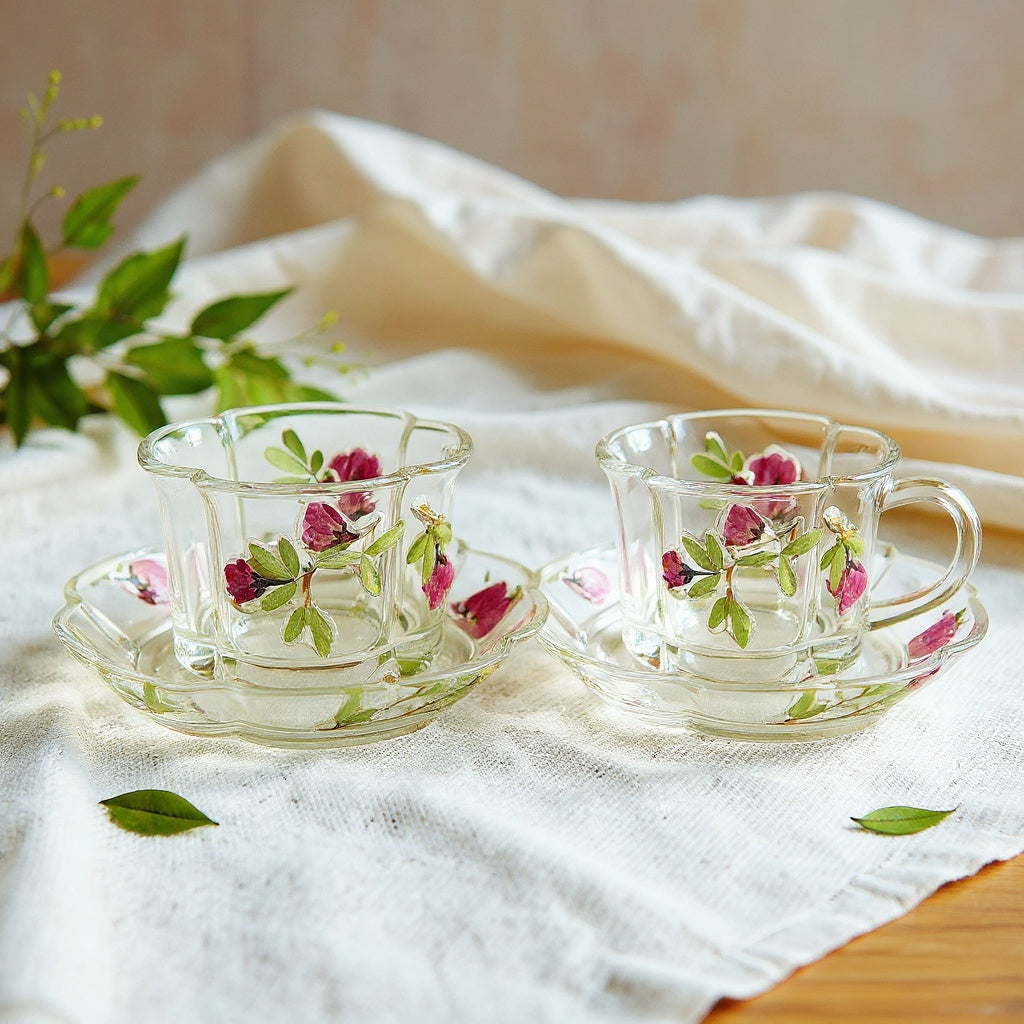
Glass Teacup With Nature Floral Design: The Complete Buyer's Guide
By pampasroom, founder of Pampasroom · 8+ years studying botanical preservation techniques in artisan glassware production · Contributor to Glass Arts Review and The Botanical Home JournalA glass teacup with nature floral design is a clear borosilicate or soda-lime glass vessel that has real dried flower petals and green leaves physically embedded into its outer surface during the glassmaking process, creating a raised 3D relief that is both visible and tactile. The technique works by positioning preserved botanicals against a formed glass layer, then fusing additional molten glass over them to seal the florals permanently — no decals, no printing, no surface paint. What results is a functional drinking cup where the garden comes to you, petal by pressed petal.
This guide covers how authentic pieces are made, what separates them from printed imitations, how to care for them properly, and what the market actually looks like across price tiers.
What Is a Glass Teacup With Nature Floral Design?
A glass teacup with nature floral design belongs to a category of functional botanical art. The defining characteristic is real botanical matter — dried petals, skeletal leaves, or herb fragments — sealed beneath an outer glass layer so the material cannot shift, fall out, or contact the beverage. The outer surface shows visible, touchable texture: raised ridges where petals curl, slight bumps where leaf veins pressed into the glass. You feel the garden when you hold the cup. That tactile dimension is what separates authentic pieces from printed alternatives entirely.
The matching saucer in a proper set carries the same embedded botanicals, often extending the design as a continuous botanical arrangement when the cup is placed down. Styled on linen, surrounded by fresh clippings, these pieces anchor the cottagecore aesthetic because they are literally made from nature — not designed to resemble it.
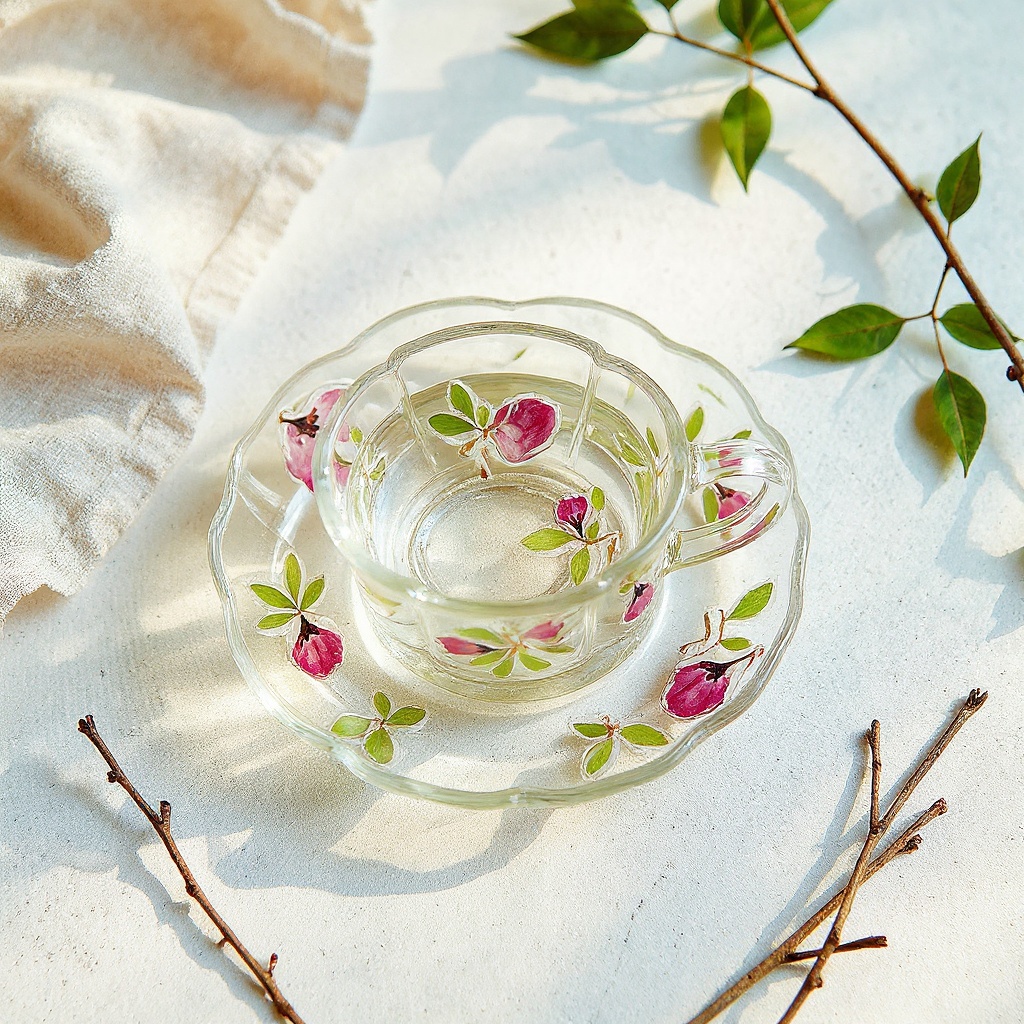
The Art of Embedded Floral Glasswork
Creating an authentic glass teacup with nature floral design requires multiple production days per piece. The pressed flower craft tradition informs the first stage: botanicals are dried completely, pressed flat, and inspected for moisture content. Any residual moisture causes steam pockets during firing, which crack the glass or burn the botanical to an unrecognizable char.
Perfect dryness. Non-negotiable.
Artisans heat the base glass form and position each petal and leaf by hand, working against time as the glass begins cooling. A second application of molten glass seals everything. According to the Corning Museum of Glass, standard lamp-working and fusing techniques operate between 1,400°F and 2,100°F depending on glass type, though botanical embedding in thinner decorative glassware typically occurs at lower controlled temperatures to prevent full combustion of organic material — artisans working with botanical inclusions often cite working temperatures in the 900°F–1,100°F range for the sealing layer specifically. The result is a permanent inclusion: the flowers are inside the glass wall, not on top of it.
This explains the price. Days of skilled labor. One crack and the piece is lost.
Mass-Produced vs. Handcrafted: What You're Really Buying
The market for floral glass teacups spans an enormous range, and the differences are structural — not cosmetic. Understanding each tier helps you avoid paying artisan prices for decal work.
| Type | Typical Price Range | Floral Method | Surface Texture | Uniqueness Level |
|---|---|---|---|---|
| Mass-produced (major retailers) | $12–$55 | Printed decals or transfers | Flat, smooth | Identical copies |
| Mid-range Etsy artisan | $75–$180 | Mixed: some real, some resin-encased | Slight raised texture | Limited variation |
| Premium handcrafted botanical | $220–$600+ | Real embedded botanicals, fired glass | Fully raised 3D relief | One-of-a-kind |
| Vintage pressed flower glass | $90–$750 | Various historical techniques | Variable | Completely unique |
| Resin-encased botanical (not glass) | $35–$120 | Real flowers in resin coating | Raised but plastic feel | Moderate variation |
| Studio artist commissions | $400–$1,200+ | Custom botanicals, signed | Gallery quality | Fully unique |
Mass-produced versions rely on ceramic transfers or heat-applied decals. The cottagecore aesthetic created explosive demand for botanical homeware, and many manufacturers responded with printed patterns that pass visual inspection in product photography but feel completely flat under your finger. No ridge. No petal curl. Just ink.
Handcrafted pieces like our Handmade Glass Cup & Saucer Set with Real Pressed Flowers use genuine preserved botanicals embedded during production. Each set is functionally unique because flower size, shape, and placement vary by nature — the same artisan cannot produce two identical pieces even working from the same botanical batch.
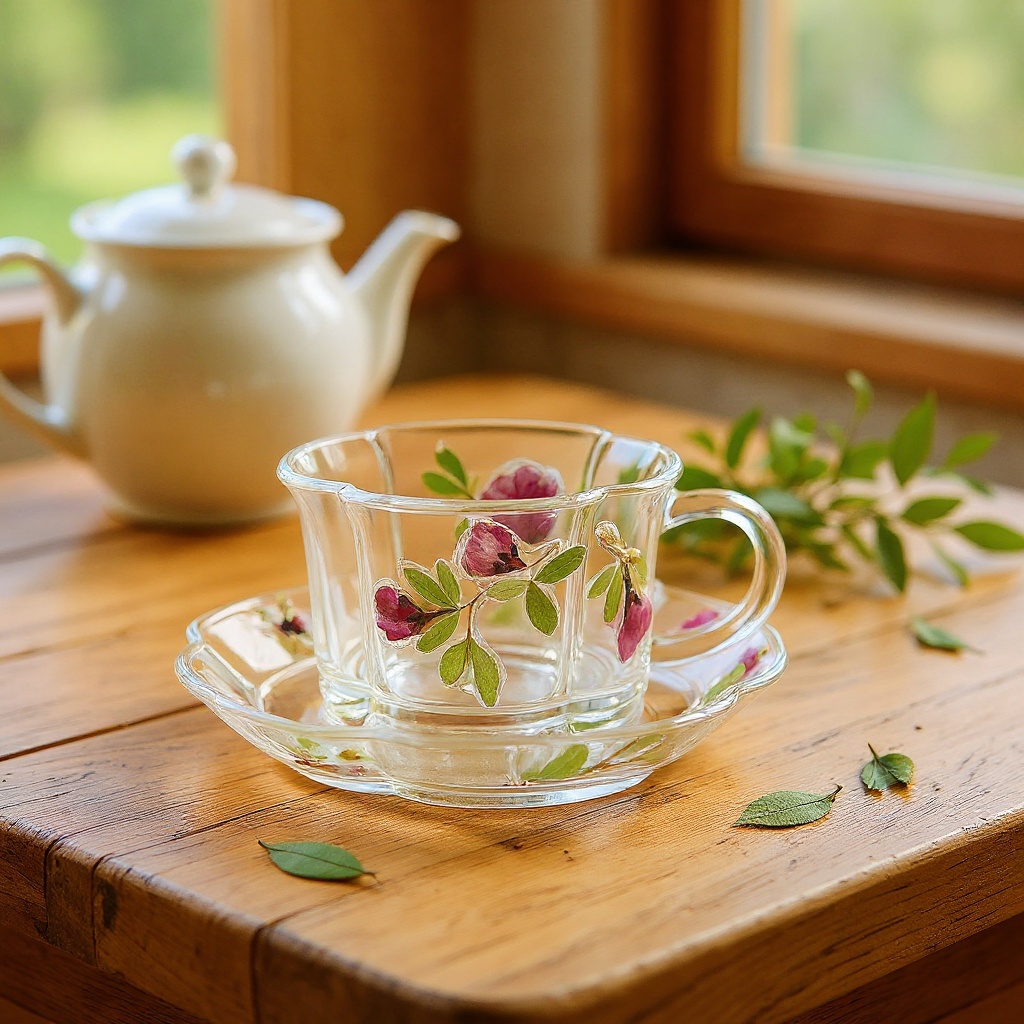
7 Ways to Spot Real Embedded Botanical Glass
The authentication process matters. Here is a numbered checklist for evaluating any piece before purchase:
1. Run a fingertip test. Real embedded botanicals create genuine topographic variation — you feel ridges, petal edges, and leaf veins as distinct raised surfaces. Decals feel flush with the glass. 2. Look for natural imperfection. Authentic pressed petals show slight tears, uneven edges, and color graduation within a single petal. Computer-generated prints use solid fills and perfect symmetry. 3. Check color variation within individual petals. A real purple petal has lighter zones near the base and darker saturation toward the tip. Printed versions apply uniform color. 4. Examine the glass thickness around botanical areas. Where flowers are embedded, the outer glass wall is slightly thicker to accommodate the sealed layer. Hold it to light and look for subtle depth variation. 5. Ask for the underside of the saucer. Authentic sets embed botanicals in the saucer as well. Decal manufacturers often skip the saucer entirely or apply a minimal printed accent. 6. Request a macro photograph. Genuine embedded work shows botanical structure — visible cell patterns in pressed leaves, petal membrane texture. Decals show pixelation or uniform surface sheen under magnification. 7. Assess price against claimed method. Pieces priced under $60 claiming real embedded flowers warrant specific scrutiny — the labor cost alone typically pushes authentic work above this threshold.
Honestly, some well-made resin-botanical pieces in the $80–$120 range offer better durability for daily use than true fused glass versions. Resin is more impact-resistant. If you're buying for daily functional use and live with children or pets, that's worth knowing — most guides won't say it.
Durability and Care: Making Your Investment Last
Real pressed flower glass requires specific handling. The embedded botanicals are sealed permanently, so they won't shift or fall out. The raised 3D relief surface is the vulnerability — chips along raised petal edges compromise the visual design and can create rough surfaces on the cup exterior.
Care steps, specific and ordered:
1. Hand-wash only, using water between 68°F and 104°F (20°C–40°C). Temperatures above 140°F can induce thermal stress in thinner glass walls. 2. Use a soft microfiber cloth. No abrasive sponges, no scrubbing pads. 3. Avoid standard dish detergents with citrus solvents, which can dull glass clarity over time. Mild pH-neutral soap works. 4. Dry immediately after washing to prevent mineral deposits from tap water. 5. Store cups individually, not stacked. Stacking transfers weight directly onto raised botanical areas. 6. Keep away from windowsills with prolonged direct UV exposure. While the glass layer provides some UV buffering, research on botanical preservation indicates that UV exposure above 350nm wavelengths accelerates pigment degradation in organic plant material even under glass — the same principle that causes museum curators to use UV-filtering glass for pressed botanical collections.
The embedded flowers won't fade in normal indoor conditions. That's not a marketing claim — it's basic preservation logic. Sealed from air, protected from UV by the glass layer, the dried botanicals have no oxidation pathway.
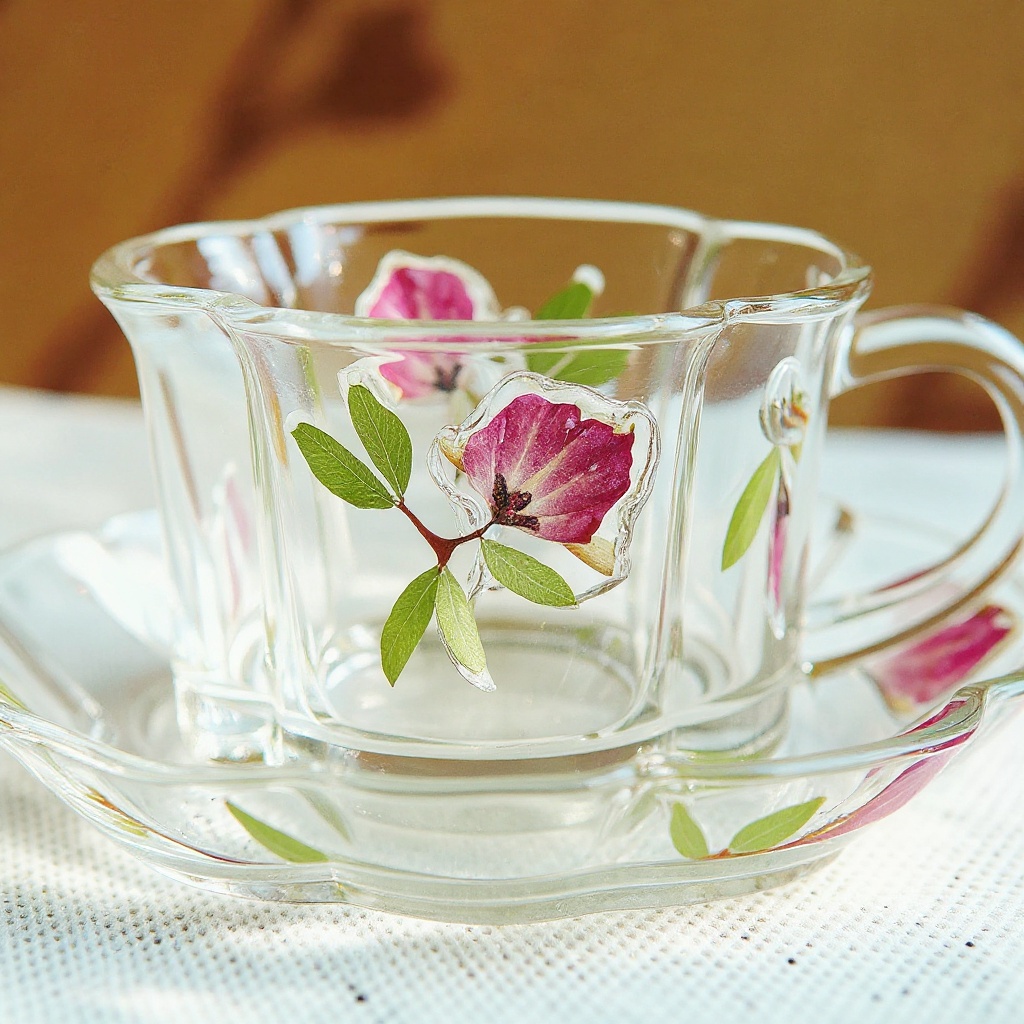
Tea Flavor Profiles: How Glass Shapes the Experience
Glass changes your tea. Not metaphorically. Materially.
Ceramic and unglazed stoneware absorb microscopic amounts of tannins and oils over hundreds of brew cycles, developing a seasoned flavor profile that dedicated tea drinkers either prize or avoid depending on their preference. Glass absorbs nothing. The non-porous surface means your chamomile tastes like chamomile, your Darjeeling tastes like Darjeeling, and yesterday's jasmine green doesn't ghost into today's white peony.
The 200ml capacity common in artisan botanical sets hits a practical midpoint — large enough for a real serving, small enough that you finish before significant heat loss occurs. Glass does conduct heat away faster than thick ceramic walls, which means your tea cools to drinking temperature sooner. For many people, especially those who consistently burn their tongue on ceramic mugs, this is an advantage rather than a flaw.
Best pairings for a glass teacup with nature floral design:
1. Jasmine green tea — Floral visual meets floral aroma; the visual context amplifies the sensory experience 2. Chamomile herbal blend — Garden-to-cup coherence; the dried flowers in your hand echo the dried flowers in your cup 3. White peony (Bai Mu Dan) — Delicate, clean flavors pair with delicate visual work; glass preserves the tea's subtle sweetness 4. Earl Grey with bergamot — Citrus oils won't stain glass the way they can mark unglazed ceramic over time 5. Lavender-mint blend — Aesthetic alignment with the cottagecore botanical context 6. Rose hip and hibiscus — The deep red color viewed through transparent glass creates a visual effect that ceramic cups simply cannot offer 7. Single-origin oolongs — Complex, clean flavors benefit from the non-absorptive glass surface; you taste the terroir, not the vessel
Investment Value and Market Context
Handcrafted floral glass teacups occupy a specific position in the artisan home goods market. They are functional objects with collectible characteristics — one-of-a-kind production, identifiable craft techniques, and aesthetic alignment with a documented cultural trend. The global home décor market was valued at approximately $727 billion in 2023 according to Grand View Research, with artisan and handmade segments showing above-average growth driven in part by social media visual culture.
For individual pieces, investment value depends on the artisan's reputation, the complexity of the botanical arrangement, the rarity of flower varieties used, and documented provenance. Mass-produced items depreciate immediately. Documented artisan work from recognized makers has shown stable or appreciating resale value on secondary platforms like Chairish and 1stDibs for comparable decorative glass categories.
Photographic context matters too. A glass teacup with nature floral design placed on linen with fresh botanical cuttings in soft natural light produces images that perform consistently well in visual-first platforms. That's not vanity — for many buyers, the social documentation of beautiful objects is part of the purchase's total value.
Frequently Asked Questions
Are the flowers on floral glass teacups real or printed? Authentic glass teacups with nature floral designs use real dried and pressed flowers and leaves embedded during the glassmaking process. The botanicals are sealed under an outer glass layer, creating permanent 3D relief you can feel with your finger. Many mass-produced versions use printed decals or ceramic transfers that appear similar in photographs but feel completely flat on the surface. Always request a tactile description or macro photograph before purchasing online. How do you clean a glass cup with embedded flowers without damaging it? Hand-wash using water between 68°F and 104°F (20°C–40°C) with pH-neutral mild soap and a soft microfiber cloth. Avoid abrasive sponges, citrus-based detergents, and dishwashers. The embedded flowers are permanently sealed and won't be damaged by gentle washing, but the raised relief areas on the cup exterior can chip if scrubbed. Dry immediately after washing to prevent mineral deposits. Will the pressed flowers fade over time inside the glass? Under normal indoor conditions, properly embedded botanical flowers will not fade perceptibly. The glass layer blocks most UV exposure, and the sealed environment eliminates the oxidation that degrades exposed dried botanicals. Museum conservators use similar sealed-glass principles for pressed botanical collections. Avoid prolonged direct sunlight exposure and temperatures above 104°F to maintain color long-term. What is the difference between a decal teacup and a handmade botanical glass cup? Decal teacups use printed transfers adhered to the glass surface. They appear flat under touch, can peel or wear at edges over time, and are produced identically at scale. Handmade botanical glass cups embed real pressed flowers during the glassmaking process, creating raised 3D relief that varies naturally from piece to piece. The production time difference is significant — decal application takes minutes; botanical glass embedding requires multiple days per piece. Is a glass teacup with real flowers safe to drink from? Yes, when properly constructed. The pressed botanicals are sealed entirely within glass layers and never contact the beverage. The interior drinking surface is plain glass. Always verify that the manufacturer uses food-safe glass materials and confirm that the interior surface shows no botanical inclusions or surface treatments. Reputable makers clearly document food-safe construction. What tea tastes best in a glass teacup compared to ceramic? Glass preserves pure, unaltered tea flavors because the non-porous surface absorbs nothing. Delicate teas — white teas, light green teas, and floral herbal blends — show the greatest difference compared to ceramic, which can carry residual flavor from previous brews. Glass also cools faster than thick ceramic walls, making it better suited for teas served at moderate temperatures rather than near-boiling. Are floral glass teacups dishwasher safe? Most authentic pressed flower glass teacups are not dishwasher safe. Dishwasher water temperatures typically reach 140°F–160°F, and the combination of high heat, water pressure, and harsh alkaline detergents creates thermal and chemical stress on thin decorative glass. The raised botanical relief areas are particularly vulnerable to impact against dishwasher racks. Hand-washing is the standard care requirement for botanical glass; always follow the specific manufacturer's guidance. What makes a handmade glass teacup worth the higher price over mass-produced versions? The price reflects real production differences: days of artisan labor versus minutes of automated production, one-of-a-kind botanical arrangement versus identical printed copies, and permanent embedded florals versus surface decals that can wear. You are purchasing a functional art object with unique botanical characteristics, not a manufactured commodity. For buyers who want daily-use kitchenware at minimum cost, mass-produced versions serve that purpose adequately — the premium price is justified only when the artisan craft and uniqueness matter to you. Can I use a botanical glass teacup for beverages other than tea? Yes. The interior glass surface is the only surface that contacts your beverage, and it is identical to standard glass. Coffee, herbal infusions, warm water with lemon, or cold beverages all work without issue. The botanical inclusions are exterior features. The visual impact of clear beverages — particularly golden or amber-colored teas — is often cited as a specific reason buyers choose transparent glass over ceramic.Conclusion
A glass teacup with nature floral design is a specific, definable object: clear glass, real embedded botanicals, raised 3D relief on the outer surface, food-safe interior. That definition separates authentic pieces from the printed alternatives that dominate most price tiers. Understanding the production process — the multi-day embedding, the botanical preparation, the controlled firing temperatures — explains both the price and the permanence.
For daily use, care matters more than most buyers expect. Hand-washing at moderate temperatures, careful storage, and avoiding abrasive cleaning preserves both the glass integrity and the raised floral surface for years of functional use.
For those ready to invest in an authentic piece, browse our Handmade Glass Cup & Saucer Set with Real Pressed Flowers. Each set features genuine preserved botanicals in purple, yellow, or blue colorways, hand-embedded during production to ensure no two pieces are identical. The raised 3D relief work and food-safe glass construction make these suitable for daily tea service or as considered gifts for anyone who finds beauty in botanical things.
The garden in your hands. Every morning.