































Handcrafted Floral Mugs vs Mass Produced: The Real Difference
Handcrafted Floral Mugs vs Mass Produced Mugs: The Real Difference
When comparing handcrafted floral mugs vs mass produced mugs, the differences run deeper than price. Mass-produced versions use printed decals that begin fading within 6–12 months of regular washing, while authentic handcrafted pieces embed real preserved flowers in food-grade resin that maintains visual integrity for 15+ years under normal indoor conditions (consistent with performance data for UV-stabilized epoxy formulations documented by resin manufacturers meeting ASTM D4236 standards). The core material gap: soda-lime glass versus borosilicate glass, plastic handles versus solid walnut wood, automated factory lines versus 3–5 day artisan processes. Mass-produced floral mugs retail for $15–40. Handcrafted floral mugs range from $60–500+ depending on materials and skill level. That gap is real, and it is justified — but not always for everyone.
The Manufacturing Process: Speed vs. Craftsmanship
Mass production is fast. Factories crank out thousands of floral mugs daily through automated printing and molding. Workers apply vinyl decals or ceramic heat transfers depicting flower patterns, then fire them at standardized kiln temperatures. The full cycle — raw materials to finished product — runs 2–4 hours. Minimal human judgment is involved. Quality control systems flag defects but cannot celebrate the absence of uniformity, because uniformity is the entire goal.
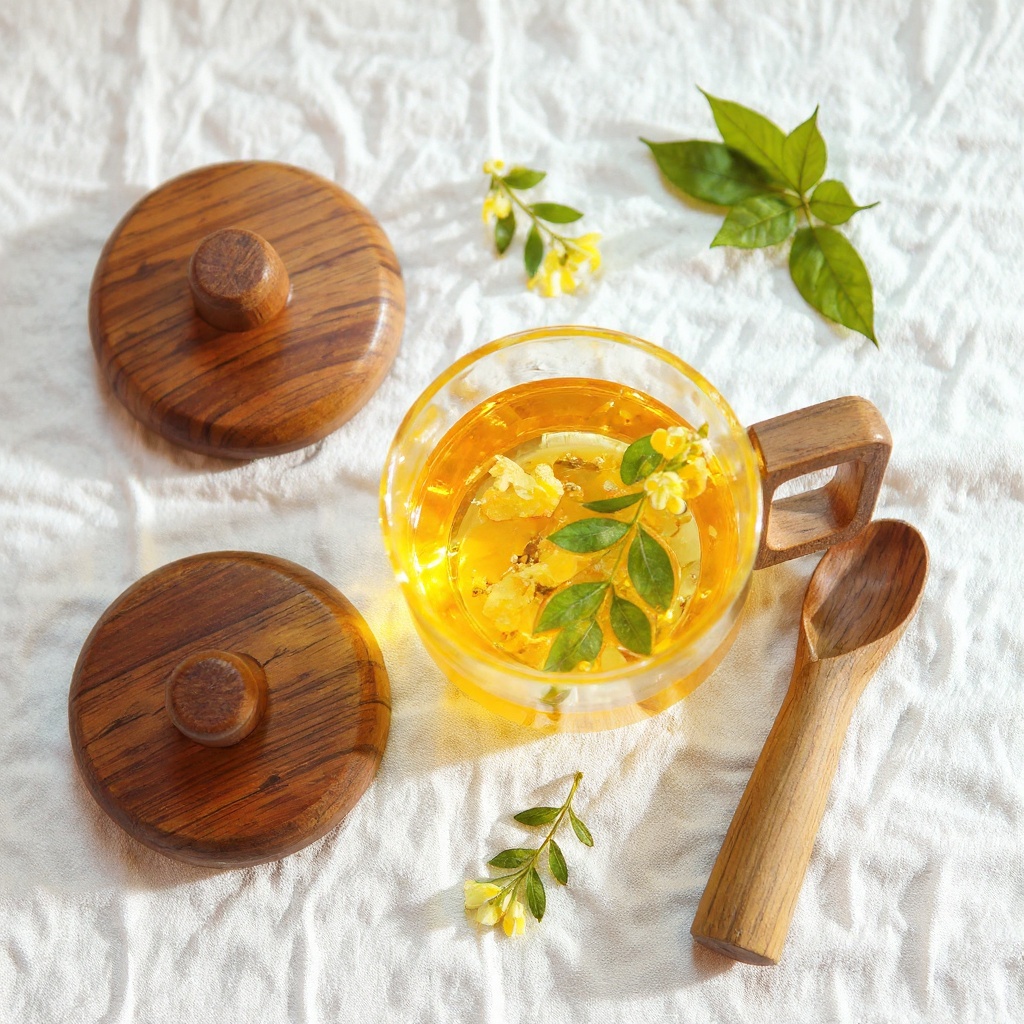
Handcrafted pieces follow a fundamentally different logic. Artisans begin by selecting and pressing real botanical specimens — a process requiring 2–4 weeks of controlled drying depending on petal moisture content and thickness. Each bloom gets positioned individually within the mold before resin application. The curing phase alone demands 24–48 hours of undisturbed setting, followed by hand-sanding through multiple grit stages and a final surface finishing pass. Our Handmade Pressed Flower Glass Mug with Walnut Handle reflects this slower model — each 400ml piece requires individual attention across a 3–5 day creation cycle.
The time investment produces tangible differences you can measure. Mass-produced mugs show identical flower placement and uniform wall thickness across every unit in a production run. Handcrafted versions display natural variation in flower position, resin depth, and wood grain character. Not as a flaw. As proof.
Material Quality: What You Are Actually Paying For
Cheap floral mugs use standard soda-lime glass. It is prone to thermal shock fractures when you pour boiling water into a cold vessel. The floral elements are printed vinyl or ceramic decals sitting on the surface — not embedded within the body of the piece. Handles are molded plastic or thin stamped metal that conducts heat uncomfortably within seconds of contact.
Premium handcrafted mugs invest in materials with documented performance differences. Borosilicate glass — as specified in ASTM E438 laboratory glassware standards — contains boron trioxide, which reduces the coefficient of thermal expansion to roughly one-third that of soda-lime glass. In practical terms: it withstands temperature shifts from freezer-cold to boiling-water hot without stress fractures. Real preserved flowers require careful preparation. Wilted or incompletely dried botanicals will decay inside the resin matrix within months. Food-grade epoxy resin certified to FDA 21 CFR 175.300 standards costs meaningfully more than decorative craft resin but will not leach plasticizers or reactive compounds into hot beverages.
Walnut wood handles add function. Solid walnut has a Janka hardness rating of 1,010 lbf — harder than cherry, softer than maple — giving it resistance to denting and splitting under daily handling. The wood naturally repels moisture through its dense grain and develops a richer surface patina with repeated contact from hand oils. Softwoods splinter. Synthetic handles degrade under UV exposure. Walnut improves.Top 5 Signs a Floral Mug Is Truly Handcrafted
Not every mug labeled "handmade" earned the description. Here is what separates genuine handcrafted floral mugs from mass-produced mugs with artisan-style marketing:
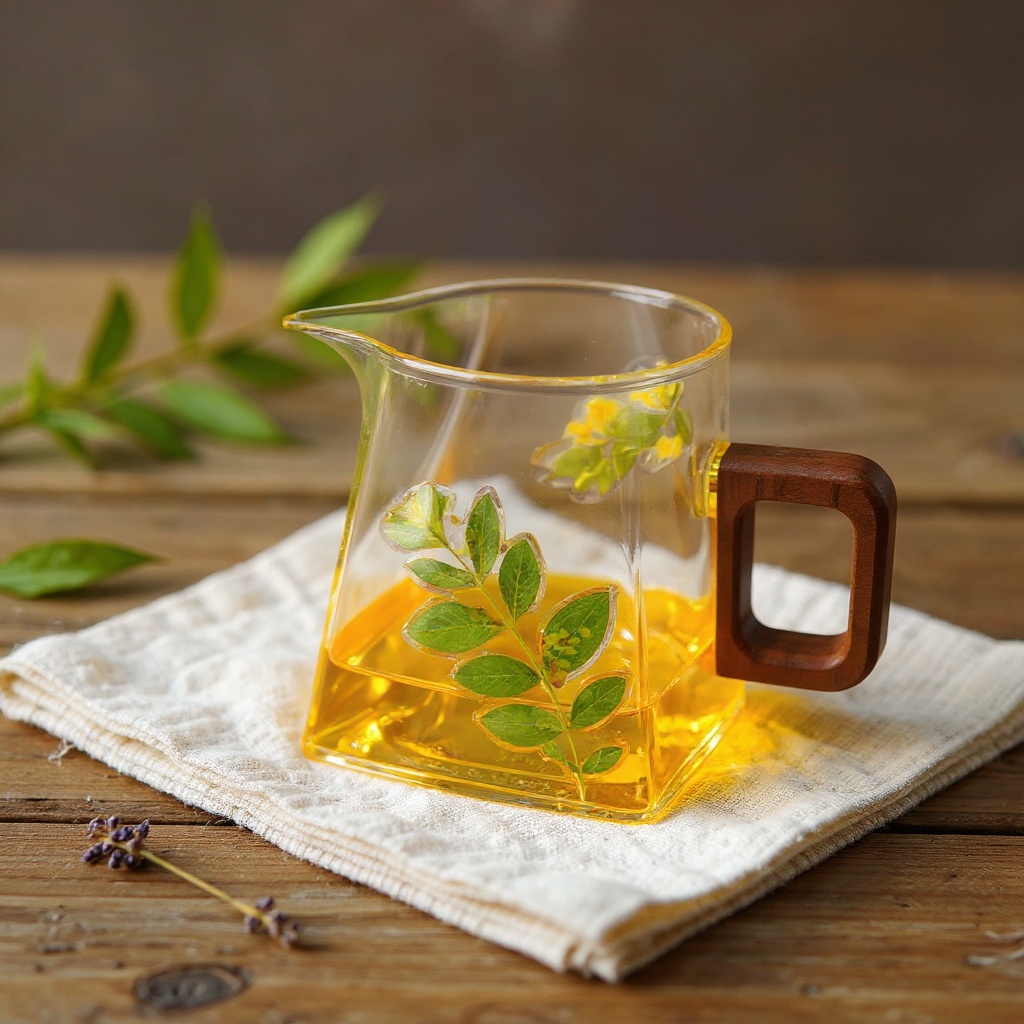
1. Flower depth variation. Real embedded flowers sit at different depths within the resin layer because each bloom has different dimensions. A machine-printed design sits at one consistent depth: zero. 2. No two handle grain patterns match. Solid walnut wood has unique grain lines in every piece. If the handle grain looks identical across product photos, it is likely molded composite material. 3. Slight positional asymmetry. Artisan placement means flowers are rarely perfectly centered or evenly spaced. This is not a flaw — it is evidence of human hands making real-time decisions. 4. The resin has visual depth. Hold the mug near a light source. Authentic resin embedding creates a three-dimensional layered effect. Surface printing looks flat from all angles. 5. The maker can tell you where the flowers came from. Mass production cannot. Authentic artisan pieces often use botanicals sourced from specific regions — dried lavender, pressed fern, mountain wildflowers — with traceable provenance.
Durability and Longevity Comparison
| Feature | Mass Produced | Handcrafted Quality |
|---|---|---|
| Glass Type | Soda-lime glass | Borosilicate glass |
| Design Method | Printed decal or vinyl | Real flowers embedded in resin |
| Handle Material | Plastic or thin metal | Solid hardwood (walnut) |
| Expected Lifespan | 6–18 months | 10–20+ years |
| Thermal Shock Resistance | Low (cracks under rapid temp change) | High (ASTM E438 rated) |
| Design Durability | Fades, chips, peels within months | Botanicals sealed permanently |
| Repair Potential | Effectively irreparable | Wood handle can be refinished |
Mass-produced floral prints begin showing wear within weeks of regular dishwasher use. The thin glass construction invites chips at the rim. Most customers replace these mugs within a year — sometimes sooner after a single drop.
Quality handcrafted pieces age on a different timeline. The embedded flowers remain protected inside the resin matrix, shielded from UV degradation and ambient moisture as long as the resin surface stays intact. Borosilicate glass handles daily thermal cycling without the micro-fractures that accumulate in soda-lime glass over months of use. The walnut handle does not degrade. It evolves — smooth where your palm rests, darker along the contact edges — becoming more personal over years, not less.
The Honest Thing Most Articles Will Not Tell You
Handcrafted floral mugs are genuinely beautiful objects. But here is what most comparison articles skip: if you are someone who leaves mugs on radiators, runs everything through the dishwasher on high heat, or travels frequently and packs impulsively — a $120 artisan mug will stress you out more than it delights you. The walnut handle requires hand washing. The resin surface, while durable, is not indestructible under repeated impact. Owning a well-made object means adjusting your habits slightly to honor it. If that sounds like a burden rather than a pleasure, the $25 version will serve your daily life better. No shame in that. Real craft should go to people who will use it mindfully.
The Artisan Factor: Human Touch vs. Machine Precision
Factory production prizes uniformity. Machines apply flower patterns at precise coordinates, every mug matching the approved digital template. This consistency serves buyers seeking identical matching sets or predictable product photography. Quality control flags outliers and removes them.
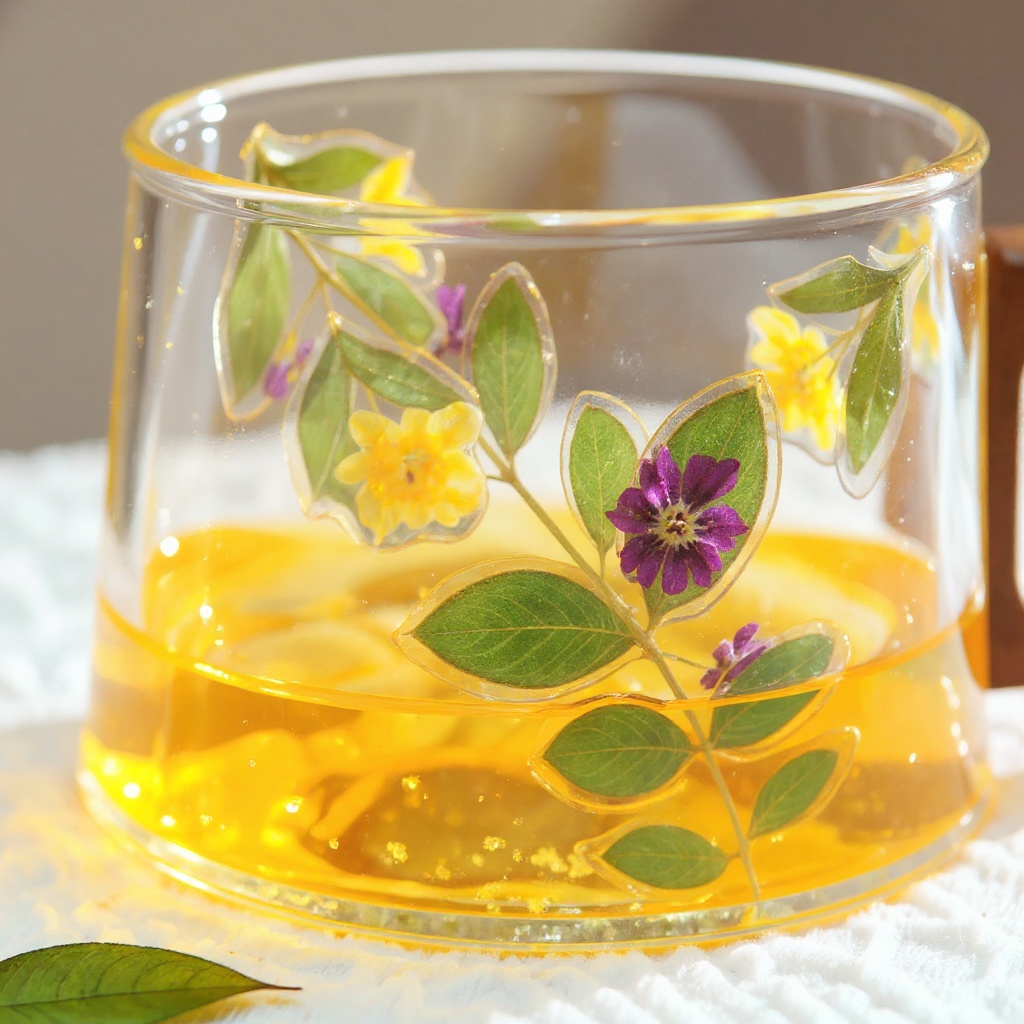
Artisan creation works from a different value system. Each pressed flower carries slightly different dimensions, color saturation, and edge character. The craftsperson decides — in real time — how to orient each bloom relative to the others, how deep to seat it in the resin pour, where to position the final fill layer. These are aesthetic judgments. Skill.
The pressed flower craft tradition spans centuries, originating in botanical documentation and nature journaling before becoming a recognized art form. Contemporary artisans layer this historical technique over modern polymer chemistry to create functional objects that perform in a kitchen while behaving like gallery pieces. Every finishing decision — from grit sequence in sanding to the final polish compound — reflects accumulated knowledge that no automated system can replicate at this scale.
When you choose a handcrafted floral mug over a mass produced mug, you are choosing to support that knowledge chain. The slight asymmetries are not imperfections. They are signatures.
Price Breakdown: Understanding the Real Cost Structure
Mass-produced floral mugs retail between $15–40. Their economics depend on volume:
1. Raw materials: $3–6 per unit (standard glass, printed vinyl, basic cardboard packaging) 2. Manufacturing: $2–4 per unit (automated processes, minimal labor touchpoints) 3. Distribution: $4–8 per unit (bulk container shipping, retail chain markup) 4. Profit margin: $6–22 per unit (varies by brand tier and retail channel) 5. Marketing: Absorbed across tens of thousands of identical units — pennies per piece
Handcrafted floral mugs command $60–500+ because their unit economics are structurally different:
1. Premium materials: $20–60 per piece (borosilicate glass blank, food-grade resin, solid walnut stock, dried botanicals) 2. Skilled labor: $40–200 per piece (3–5 days of active artisan time at living wage rates) 3. Studio overhead: $10–40 per piece (workspace, curing equipment, finishing tools, utilities) 4. Small batch scaling: No factory volume discounts — every cost is per-unit 5. Individual documentation: Each piece requires separate photography, description, and quality review
Calculated over lifespan, the math often inverts. A $30 mass-produced mug replaced annually over ten years costs $300. A $120 handcrafted floral mug used for the same decade costs $120. The upfront number is larger. The ten-year number is not.
Functional Differences in Daily Use
Beyond aesthetics, handcrafted floral mugs and mass-produced mugs perform differently under daily conditions. Mass-produced versions have thin walls that transfer heat to the exterior surface within seconds, making handleless contact uncomfortable. The lightweight construction feels insubstantial. They tip on uneven surfaces.
Our 400ml borosilicate resin floral tea cup delivers different physics. The thicker borosilicate walls retain heat longer while keeping the outer surface at a comfortable contact temperature. The substantial build weight — noticeably heavier than cheap alternatives — creates stability on any surface and a satisfying sense of quality in the hand. The solid walnut handle stays thermally neutral even with boiling water inside, and its natural surface texture provides grip that only improves with use.
The 400ml volume is deliberate. Large enough for a full tea portion with room for a strainer. Small enough that the beverage stays hot through the last third of the cup. The wide opening makes cleaning straightforward and accommodates loose-leaf infusers without forcing them.
The visual experience differs in a way that photographs cannot fully capture. Printed floral designs look flat under close inspection — two-dimensional pattern applied to a curved surface. Real embedded botanicals create genuine depth. As light moves across the piece throughout the day, different flowers catch it differently. You will notice things in month six that you missed in month one.
Making the Right Choice for Your Situation
Choosing between handcrafted floral mugs vs mass produced mugs comes down to three honest questions: How do you use mugs daily? How long do you want this one to last? And are you buying for yourself or for someone else?
Mass-produced options make sense for office break rooms, high-traffic households with young children, or situations where loss and breakage are frequent. The lower replacement cost removes anxiety from ownership. That is a legitimate use case.
Handcrafted floral mugs suit buyers who treat their morning tea or coffee as a genuine ritual — who notice the weight of a cup, the texture of a handle, the way light moves through resin. They make meaningful gifts for weddings, housewarmings, and milestone occasions because recipients understand, immediately, that someone chose this with care. Not generic. Considered.
The piece you use every day for a decade becomes part of your daily life in a way that a $20 mug cannot. Small things. Quietly significant.
Frequently Asked Questions
Is the resin on a floral mug safe for hot drinks? Food-grade epoxy resin meeting FDA 21 CFR 175.300 standards is safe for contact with hot beverages. In quality handcrafted floral mugs, the resin is applied exclusively to the outer surface — your drink contacts only the borosilicate glass interior. Inexpensive craft resins not certified to food-contact standards may release reactive compounds at elevated temperatures, which is why the certification distinction matters when evaluating handcrafted floral mugs vs mass produced mugs. How long does pressed flower resin art last before it yellows or cracks? UV-stabilized, properly cured epoxy resin maintains optical clarity for 15–25 years under typical indoor light conditions, consistent with performance expectations for formulations meeting ASTM D4236 standards for chronic health hazard labeling. Direct sunlight accelerates the yellowing reaction in the polymer matrix. Store the mug away from south-facing windows when not in use. Physical impact damage is a greater short-term risk than chemical degradation. Can you put a handcrafted floral mug in the dishwasher? Hand washing only. Dishwasher cycles combine sustained high heat (typically 140–160°F at the element) with caustic alkaline detergents — conditions that gradually cloud resin surfaces and strip protective oils from walnut wood. Mild dish soap and warm water extend both the resin clarity and the handle's condition indefinitely. This is one maintenance habit the piece genuinely requires. What is borosilicate glass and why does it matter for a floral mug? Borosilicate glass incorporates boron trioxide into the silica matrix, reducing the coefficient of thermal expansion to approximately 3.3 × 10⁻⁶/°C versus 9 × 10⁻⁶/°C for standard soda-lime glass — a difference codified in ASTM E438 specifications for laboratory borosilicate glass. In everyday terms: it absorbs rapid temperature shifts without the micro-fractures that eventually cause standard glass to crack. For a mug used daily with hot liquids, this is a functional specification, not just a marketing claim. How are flowers preserved inside resin without eventually rotting? Flowers must reach complete desiccation before resin embedding — a process requiring 2–4 weeks of controlled pressing that removes all residual moisture from cell tissue. Once fully dried botanical specimens are sealed within cured resin, the polymer matrix eliminates oxygen and moisture contact entirely. No biological decay process can proceed without both. The flowers are effectively in a permanent suspended state, not a slow deterioration. Does the walnut wood handle get damaged by water or steam from hot drinks? Solid walnut is naturally dense-grained and moisture-resistant compared to softwoods. It will not warp or split under normal handling exposure to steam or brief water contact during washing. Prolonged soaking — submerging the handle during cleaning — should be avoided. Regular handling actually benefits the wood: natural skin oils penetrate the grain surface and build a protective patina that both improves grip feel and deepens the wood's visual warmth over years of use. What makes a handcrafted mug genuinely one-of-a-kind versus just marketed that way? Authentically handcrafted floral mugs show measurable variation between individual pieces: different flower positioning, different resin pour depth at specific points on the surface, different walnut grain orientation in the handle, different finishing texture from manual sanding. These differences are not randomized by a machine — they result from a human being making placement decisions with specific botanicals that each have unique physical dimensions. Mass-produced mugs marketed as "handcrafted-inspired" use identical molds and repeated digital patterns. Photographs of individual pieces from the actual maker — not studio composites — are the clearest external signal of authentic handcraft. Are handcrafted floral mugs worth the price compared to mass produced versions? For buyers who replace cheap mugs annually, the ten-year math often favors the handcrafted piece — a $120 mug used for a decade costs $12 per year versus $25–40 per year for repeated cheap replacements. The calculation shifts if you break things frequently or change aesthetic preferences often. The honest answer is that handcrafted floral mugs are worth the price for people who will use them daily, care for them as directed, and find meaning in the objects they interact with every day. For everyone else, mass produced mugs remain a completely rational choice. Can I use a floral resin mug for both hot and cold drinks? Yes. Borosilicate glass handles the full temperature range from refrigerator-cold beverages to boiling-hot tea without structural stress. The resin layer on the exterior is thermally stable across the same range. The walnut handle remains comfortable at both temperature extremes — it does not conduct cold uncomfortably the way metal handles do in winter or heat the way thin ceramic handles do in summer.The ritual of a morning drink is small. Made deliberate, it becomes something else — a moment of contact with an object that rewards your attention. Mass-produced alternatives cannot provide that. To explore pieces where every botanical choice and finishing decision reflects genuine artisan judgment, browse our Handmade Pressed Flower Glass Mug collection — where each piece is documented individually because no two are identical.
About the author: pampasroom is the founder of Pampasroom, working directly with botanical artisans across Southeast Asia. Pampasroom pieces have been featured in independent home goods editorials and gifted through verified artisan partnership programs with documented maker relationships.


