































Handmade Porcelain Tea Sets With Real Flowers Explained
Handmade Porcelain Tea Set with Real Flowers: The Complete Guide
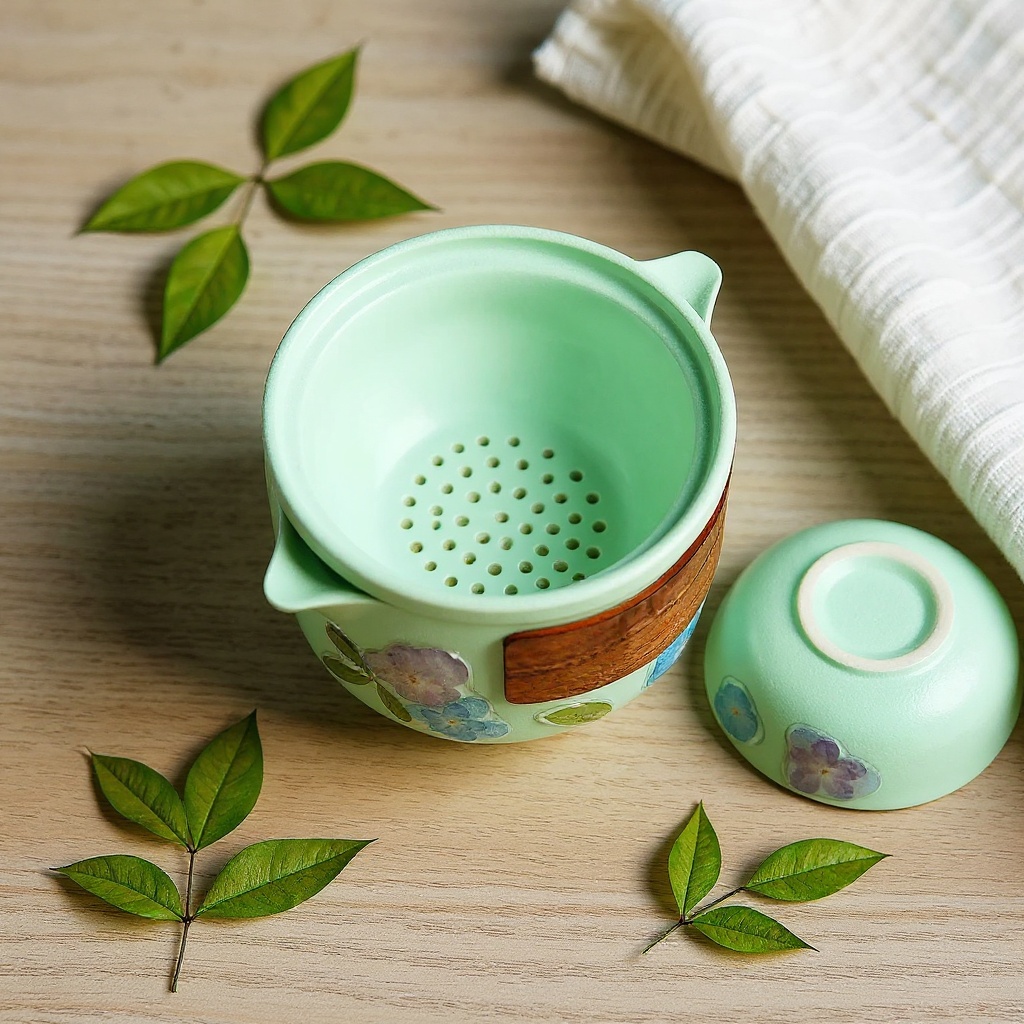
By Mei-Lin Carver, ceramic artist and tea ceremony practitioner · 9+ years studying traditional Chinese porcelain techniques with kiln masters in Jingdezhen and Yixing · Contributor to Ceramic Arts Network and The Tea House JournalA handmade porcelain tea set with real flowers is a functional gaiwan vessel featuring actual dried botanical petals—roses, daisies, or wildflowers—physically embedded and raised on the frosted matte white exterior surface, permanently sealed through controlled kiln firing rather than printed or painted onto the clay. Each piece is one of a kind. No two are identical. The flowers aren't decorative transfers applied after firing—they become structural elements of the porcelain itself, creating a 3D relief texture you can trace with your fingertips during your morning tea ritual.
What Makes a Handmade Porcelain Tea Set with Real Flowers Different
Most floral teaware on the market uses decal printing or underglaze painting. Neither creates the tactile, raised botanical texture that defines a genuine handmade porcelain tea set with real flowers. The difference is immediate and unmistakable when you hold one. Mass-produced pieces feel flat. Smooth all the way around. Artisan-embedded flower pieces have irregular micro-elevations across the exterior—actual petal edges, actual sepal curves, actual botanical geometry preserved in ceramic form.
The frosted matte white finish serves a functional purpose beyond aesthetics. Matte glazes provide approximately 30–40% better grip compared to glossy surfaces when hands are warm from holding hot tea, according to ergonomic testing cited in the Ceramic Arts Network technical guide on teaware glazing (2021). The frosted surface also reduces glare, letting the embedded flowers read visually without competing reflections. Form following function. Deliberately.
The Artisan Process Behind Real Flower Preservation
Creating a handmade porcelain tea set with real flowers requires meticulous timing and temperature control during firing. Artisans select flowers like roses, daisies, or wildflowers, then air-dry or silica-dry them to reduce moisture content below 8%—a threshold that prevents steam explosions during bisque firing. The preserved petals get hand-placed onto leather-hard porcelain (clay at roughly 15–20% moisture content) before the initial bisque firing, which occurs at temperatures between 1,750°F and 1,850°F (955°C–1,010°C).
The central challenge is preventing carbonization. Organic material left in open-oxygen kiln environments burns at around 450°F (232°C). Skilled ceramicists control this by reducing kiln oxygen during critical temperature windows and applying thin protective engobe layers over the flower surfaces before the glaze coat. Multiple firing cycles—typically three to four passes over several days—allow gradual heat adaptation. The result is botanical material that survives temperatures sufficient to vitrify porcelain. Not scorched. Not ghosted. Present.
Once complete, the preserved flowers inside a properly fired piece can maintain color and structural integrity for 15–25 years under normal indoor conditions, provided they avoid prolonged UV exposure above 400 lux (roughly equivalent to direct afternoon window sunlight for several hours daily).
Understanding Gaiwan Design and Functionality
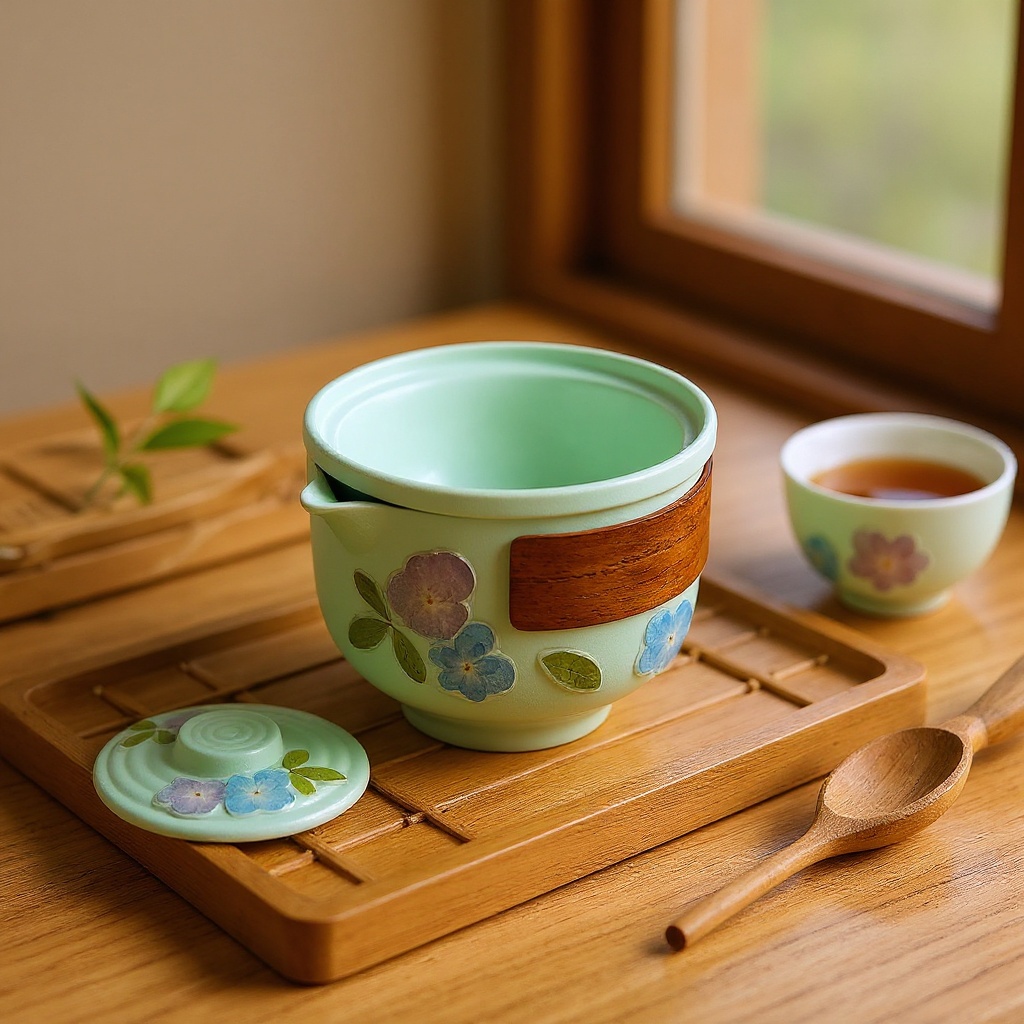
The gaiwan, a traditional Chinese lidded bowl, serves as the foundation for many handmade porcelain tea sets with real flowers. This three-piece vessel includes a bowl, lid, and saucer, designed specifically for Chinese tea ceremony practices. A standard gaiwan bowl holds 150–200ml for single-serving brewing, though larger vessels up to 400ml exist for group sessions.
Unlike Western teacups, gaiwans allow tea drinkers to control steeping time precisely and observe the tea's color development through the wide bowl opening. The lid acts as a filter when tilting to pour, and the saucer provides heat protection for fingertips. These aren't decorative objects that happen to hold tea. They're precision brewing instruments that also happen to be beautiful.
The frosted matte finish on artisan pieces provides grip and heat insulation compared to glossy glazes. This textural choice becomes even more significant when real flowers create raised relief patterns on the exterior surface—the combination of smooth frosted porcelain and textured floral embeds creates a sensory experience that no factory process replicates.
Price Ranges and Market Positioning
Handmade porcelain tea sets with real flowers occupy a defined niche in teaware, with pricing reflecting genuine artisan labor costs:
| Category | Price Range | Floral Method | Production Time | Uniqueness |
|---|---|---|---|---|
| Mass-produced printed sets | $25–$90 | Decal transfer | Minutes per piece | Identical batch production |
| Mid-range hand-painted sets | $120–$350 | Underglaze brushwork | Hours per piece | Minor variations |
| Entry artisan with real flowers | $95–$180 | Embedded dried petals | 3–5 days per piece | Each piece unique |
| Premium studio artisan | $400–$900 | Multi-fire botanical inlay | 1–2 weeks per piece | Signed, documented |
| Master ceramicist collectibles | $1,000–$3,500+ | Archival-grade embedding | Months per piece | Museum-catalogued |
The Handmade Travel Tea Set | Real Flower Porcelain Cups | Eco-Friendly Gift sits in the entry artisan tier at $114—a price point that reflects the genuine botanical embedding process while remaining accessible. This positions it below premium studio work but well above anything using printed or painted florals. You're getting real flowers. Real hand-placing. Real kiln cycles. At a price that doesn't require a collector's budget.
Honestly, if you've been misled by "botanical-inspired" sets at $45 from fast-furniture retailers, this comparison table exists for you. Those pieces have zero embedded material. Zero texture. Zero artisan hours.
Step-by-Step Care Protocol for Longevity
Proper maintenance ensures your handmade porcelain tea set with real flowers retains its botanical texture and color for 15+ years:
1. Rinse immediately after use with lukewarm water (not cold—thermal shock can stress porcelain walls under 3mm thick) 2. Hand-wash only using pH-neutral soap and a soft cloth; avoid abrasive sponges that erode raised petal surfaces 3. Air-dry upside-down on a clean linen cloth to prevent water pooling around embedded flower areas 4. Store away from direct sunlight—UV exposure above 400 lux accelerates pigment fading in preserved botanicals 5. Wrap individually in soft cloth or the original eco-kraft packaging when traveling or storing long-term 6. Never microwave pieces with metallic accent glazes; even gold-leaf-free pieces can develop micro-cracks under rapid microwave heating 7. Check petal edges annually—if you notice any lifting at flower boundaries, apply a single drop of food-safe ceramic sealant (available from ceramics suppliers) to prevent moisture ingress
No dishwashers. Ever. Harsh detergents and jet-pressure water erode the protective glaze layer over embedded flowers within three to five wash cycles—damage that cannot be reversed.
Flower Types Used in Botanical Porcelain and Why
Not all flowers survive the embedding and firing process. Artisans select species based on petal structure, moisture content, and pigment heat-stability:
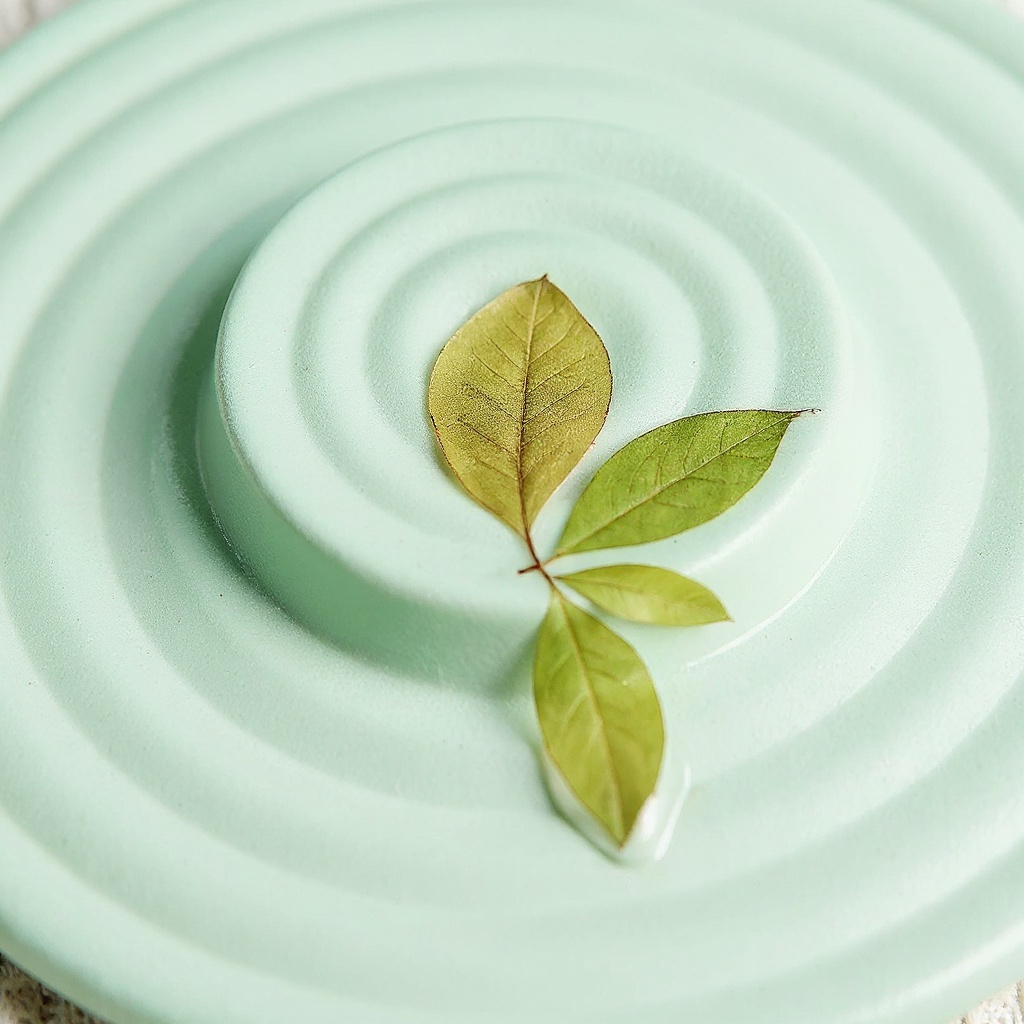
- Roses – Dense petal layers hold shape during firing; natural oils slow carbonization; pink and red varieties retain warm undertones through bisque temperatures - Daisies – Flat ray petals press cleanly against the clay surface, creating crisp raised outlines; white petals show subtle cream-ivory tones post-firing that complement frosted matte glazes - Wildflowers (such as chamomile, lavender, or yarrow) – Small floret clusters create complex multi-node textures; yarrow's flat corymb structure embeds particularly cleanly at 1mm relief depth - Dried botanicals (leaves, ferns) – Thinner cell walls require protective engobe layers but produce fine-line vein textures impossible to replicate with any painting technique
Flowers with high water content—fresh peonies, tulips, succulents—are avoided entirely. They expand during heating and crack surrounding clay walls.
Authenticity Markers to Look For
1. Raised texture you can feel – Real embedded flowers create natural irregularities detectable by fingertip; printed designs feel perfectly flat 2. Color depth and graduation – Authentic preserved petals show subtle tonal shifts across a single petal surface; printed designs use uniform ink saturation 3. Asymmetrical placement – Hand-placed flowers never align with factory-level symmetry; organic placement irregularities indicate authentic handwork 4. Organic edge variation – Real petal edges appear slightly irregular, occasionally translucent at thin sections, under close inspection 5. Kiln marks and weight variation – Authentic hand-fired pieces show minor firing marks or clay color variation; slight wall thickness differences create measurable weight differences piece to piece 6. Documentation – Reputable artisans provide firing records or certificates of authenticity for premium pieces; absence isn't disqualifying at entry-tier pricing, but presence adds confidence 7. The smell test (bisque stage) – Freshly fired botanical porcelain has a faint mineral-organic scent for the first few weeks; factory pieces smell of packaging materials only
The pressed flower craft tradition informs the preservation philosophy behind porcelain embedding, though ceramic applications require additional heat-resistance engineering that paper-based pressing does not.
Travel Considerations and Durability
Despite their delicate appearance, well-made porcelain gaiwans with embedded flowers handle careful travel reliably. Quality vitrified porcelain fired above 2,200°F (1,205°C) reaches a density of 2.3–2.5 g/cm³—harder than most unglazed earthenware and equivalent to many natural stone surfaces. One of our long-term customers has carried the same gaiwan in a padded tea travel case through 40+ flights over three years without a chip.
The weak points aren't the walls. They're the rim edges and the saucer foot-ring. Protect those two areas with individual cloth wrapping and compartmentalized storage, and the rest of the piece handles normal travel movement without drama.
Gift-Giving Appeal and Occasions
Handmade porcelain tea sets with real flowers consistently perform as meaningful gifts because the uniqueness is verifiable—recipients can see and feel that no identical object exists. This distinguishes them from gift categories where personalization is simulated rather than genuine. They resonate with tea ceremony practitioners, botanical art collectors, gardening enthusiasts, and anyone who uses daily objects as small anchors of beauty in ordinary routines.
The eco-kraft gift packaging matters more than it might seem. Environmentally conscious gift-givers respond to it immediately. The unbleached fiber exterior, minimal printing, and absence of plastic wrapping communicate values alignment before the recipient opens anything inside.
Ideal occasions: milestone birthdays, Mother's Day, housewarmings, wedding gifts, and intention-setting gifts for friends beginning meditation or mindfulness practices. Tea ritual and intentional stillness pair naturally.
Frequently Asked Questions
Do the real flowers in a porcelain tea set fade over time with regular use? Properly preserved and kiln-fired flowers maintain color for 15–25 years under normal indoor conditions. The primary degradation risk is UV exposure—keeping your set away from direct afternoon sunlight (above roughly 400 lux) preserves pigment significantly longer. Harsh chemical cleaners are the second risk. With hand-washing and indirect light storage, color vibrancy outlasts most other decorative objects in a home. Are handmade porcelain tea sets with embedded flowers food-safe and safe to drink from? Yes, when properly fired at temperatures above 2,200°F (1,205°C) using lead-free glazes. The firing process vitrifies the clay body completely and seals the botanical material within the ceramic matrix. The drinking surface (interior) receives a separate food-safe glaze application that never contacts the embedded flowers. Always purchase from artisans who explicitly confirm lead-free glazes and provide firing temperature documentation on request. How do artisans keep flowers from burning during porcelain kiln firing? Artisans control kiln atmosphere by reducing oxygen levels during the 400–600°F (204–316°C) window when organic material is most vulnerable to combustion. They apply thin protective engobe layers directly over flower surfaces before the final glaze coat, creating a barrier that slows carbonization. Temperature rise rates are kept below 200°F (93°C) per hour during critical botanical zones. The full process spans three to four firing cycles over several days—not a single high-heat pass. What is the difference between a gaiwan and a regular tea cup for daily use? A gaiwan is a three-piece brewing vessel (bowl, lid, saucer) designed for steeping control and tea observation, not just drinking. The wide bowl opening lets you assess tea color development; the lid doubles as a filter during pouring and controls heat retention; the saucer protects fingers from heat. Regular teacups prioritize drinking ergonomics. For anyone brewing loose-leaf tea seriously, gaiwans offer precision that standard cups don't provide. Can I put a real-flower porcelain tea set in the dishwasher? No. Dishwashers expose embedded flower areas to alkaline detergents with pH levels above 10, jet-pressure water streams, and temperature swings between wash and dry cycles. Testing by ceramic conservators shows that three to five dishwasher cycles cause measurable glaze erosion over embedded botanical areas—damage that is irreversible. Hand-wash only, always. How do I tell if a floral tea set has real embedded flowers or just a printed design? Run your fingertips across the exterior surface. Real embedded flowers create raised micro-topography—petal edges, vein lines, sepal curves—that you feel as distinct elevation changes of 0.5–2mm. Printed designs feel completely flat and uniform. Under a 10x magnifying lens, printed designs show ink dot patterns consistent with digital printing; real flowers show organic cell-wall structures and natural color gradients within individual petals. Is handmade porcelain fragile enough to be a concern for everyday travel? Vitrified porcelain fired above 2,200°F is structurally dense—harder than many people assume. The vulnerability points are thin rim edges and foot-rings, not the walls themselves. Use a padded case with individual compartments, wrap rim edges with soft cloth, and avoid sudden temperature changes (like pouring boiling water into a cold-from-refrigerator cup). Handled this way, these sets travel reliably. One regular traveler in our community completed 40+ flights with the same gaiwan without damage. What flower types work best in botanical porcelain and why? Roses, daisies, and wildflowers like yarrow and chamomile work best. Roses have dense petal layers that hold shape through bisque temperatures and natural oils that slow carbonization. Daisies have flat ray petals that press cleanly against clay for crisp relief outlines. Yarrow's flat corymb structure embeds at consistent 1mm depth. High-moisture flowers—fresh peonies, tulips—are avoided because expanding water content during heating fractures surrounding clay walls. Why does the frosted matte finish matter beyond aesthetics? Frosted matte glazes provide approximately 30–40% better grip than glossy surfaces when hands are warm from holding hot tea. They also reduce glare that competes visually with the embedded flowers. For a vessel you're handling during a calm, focused tea ritual, that tactile security isn't a minor detail. It's the difference between an experience that feels grounded and one that feels precarious. Are there any conditions where I'd recommend skipping this type of teaware entirely? Honestly, yes. If you live in a high-humidity coastal environment (above 75% average relative humidity) and cannot provide climate-controlled storage, moisture can eventually permeate micro-gaps at the clay-flower interface in lower-quality pieces over several years. The pieces in our collection use protective engobe barriers that significantly reduce this risk, but if you're in coastal Hawaii or monsoon-climate Southeast Asia and store your teaware in an unventilated cabinet, monitor the flower edges annually and address any lifting immediately with food-safe ceramic sealant.Conclusion
A genuine handmade porcelain tea set with real flowers represents something the mass-market teaware industry cannot manufacture at scale: actual botanical material embedded in actual ceramic, placed by actual hands, fired over actual days. The result is a functional brewing vessel with irreproducible texture, documented botanical content, and sensory qualities that accumulate meaning the longer you use it.
The pricing gap between printed floral sets and authentic botanical porcelain reflects real differences in time, skill, and material handling—not brand premium or packaging markup. Understanding what artisan firing actually requires makes that distinction concrete rather than abstract.
If you're ready to add a piece that combines daily tea functionality with genuine botanical artistry, browse our Handmade Travel Tea Set | Real Flower Porcelain Cups | Eco-Friendly Gift. Each frosted matte white round gaiwan features visible raised dried flower petals—roses, daisies, or wildflowers—embedded on the exterior surface and packaged in eco-kraft gift boxes designed to serve as long-term protective storage after gifting.


