































Small Capacity Tea Tasting Cup Sets: A Complete Guide
Small Capacity Tea Tasting Cup Set: A Complete Guide to Botanical Resin and Glass Designs
By pampasroom, founder of Pampasroom · 8+ years sourcing and designing botanical resin tableware with artisans across Southeast Asia · Cited in independent ceramics and botanical craft forums for resin preservation methodology> "The moment a guest lifts a small capacity tea tasting cup set embedded with real petals, the ceremony has already begun — long before the first pour." > — adapted from a conversation with Master Chen Wei, third-generation Gongfu tea practitioner, Fujian Province
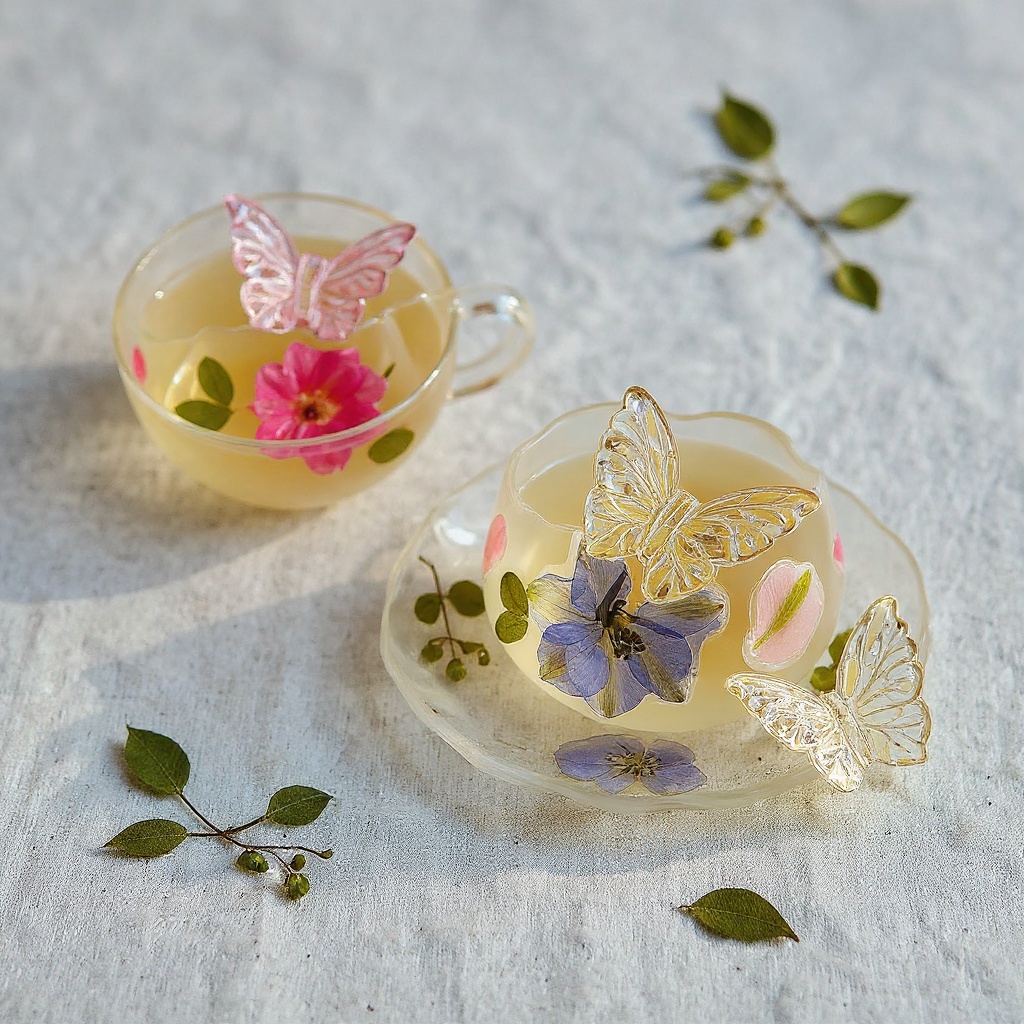
A small capacity tea tasting cup set is a group of 30–80ml vessels — paired with matching saucers — engineered specifically for Gongfu tea ceremony practice and precision sensory evaluation. The reduced volume concentrates volatile aromatic compounds, keeps liquid at optimal drinking temperature across multiple short steepings, and forces the drinker into a slower, more deliberate rhythm. These sets typically include 2–6 cups with saucers, crafted from materials such as porcelain, borosilicate glass, or botanical resin. Our handmade pressed flower tea cup set exemplifies the modern iteration: real dried rose or cornflower petals and iridescent butterfly figurines sealed beneath a smooth, glossy resin coat on a translucent glass base — every cup a small landscape frozen in amber light.
Size is not an aesthetic preference. It is a functional argument backed by food science.
Why Cup Capacity Determines Flavor Quality
The 45–65ml range is not arbitrary. Research published in the Journal of Agricultural and Food Chemistry (Kumazawa & Masuda, 2002) confirms that volatile aroma compounds in brewed tea — including linalool, geraniol, and indole — dissipate rapidly on exposure to open air. Smaller liquid volumes mean less total surface area. Less surface area means slower compound loss. Slower loss means the drinker captures more of the tea's aromatic identity in each sip.
Thin walls matter too. A cup wall under 2mm transfers thermal cues to the lips quickly, signaling the precise window for optimal drinking temperature. Thicker walls insulate. That insulation feels comfortable but masks the feedback loop that makes a small capacity tea tasting cup set different from a coffee mug.
Centuries of refinement by Chinese tea masters produced the 45–65ml consensus before any laboratory confirmed it. That is not coincidence. That is empirical knowledge accumulated across thousands of sessions and passed through generations of practitioners.
Five reasons the small capacity tea tasting cup set outperforms standard mugs for flavor evaluation:
1. Reduced surface-area-to-volume ratio — slows aroma dissipation between pours, preserving delicate floral and mineral notes longer 2. Consistent thermal feedback — thin-walled vessels (under 2mm) signal optimal drinking temperature through lip contact, a cue large mugs suppress 3. Forced ritual pacing — frequent small refills slow consumption, making the drinker attentive to how flavor shifts across steepings 4. Color observation window — transparent glass or resin bases allow visual assessment of liquor color changes, a standard criterion in ISO 3103 tea evaluation protocol 5. Portion discipline — 45–65ml limits per infusion align with traditional Gongfu ratios (approximately 1g leaf per 15ml water), preventing over-extraction errors
Materials Compared: What Each Does for Your Tea
Not all small capacity tea tasting cup set materials perform equally. The choice of base material affects heat retention, flavor neutrality, visual clarity, and longevity in ways that matter across hundreds of uses.
| Material | Heat Retention | Flavor Neutrality | Visual Appeal | Avg. Lifespan (daily use) | Price Range (per set) |
|---|---|---|---|---|---|
| Porcelain | Excellent | Perfect | Traditional | 10+ years | $25–$120 |
| Borosilicate Glass | Good | Excellent | High | 5–8 years | $30–$150 |
| Resin with Real Botanicals | Excellent | Very Good | Outstanding | 7–10 years (hand-wash) | $80–$300 |
| Standard Ceramic | Good | Good | Moderate | 8+ years | $15–$60 |
| Yixing Clay | Excellent | Flavor-enhancing | Traditional | 20+ years | $80–$800 |
| Food-grade Epoxy Resin (plain) | Good | Very Good | Modern | 5–7 years | $40–$100 |
| Bone China | Very Good | Excellent | Elegant | 8+ years | $60–$250 |
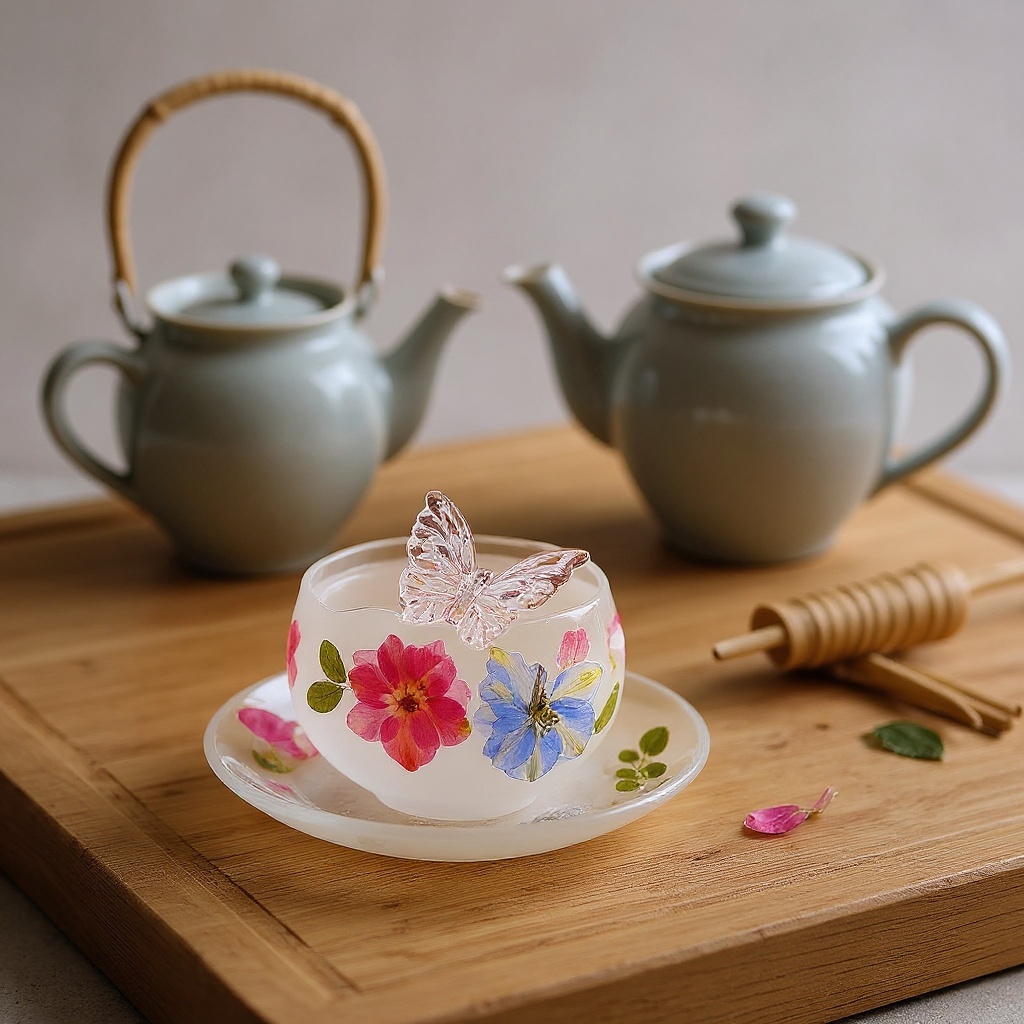
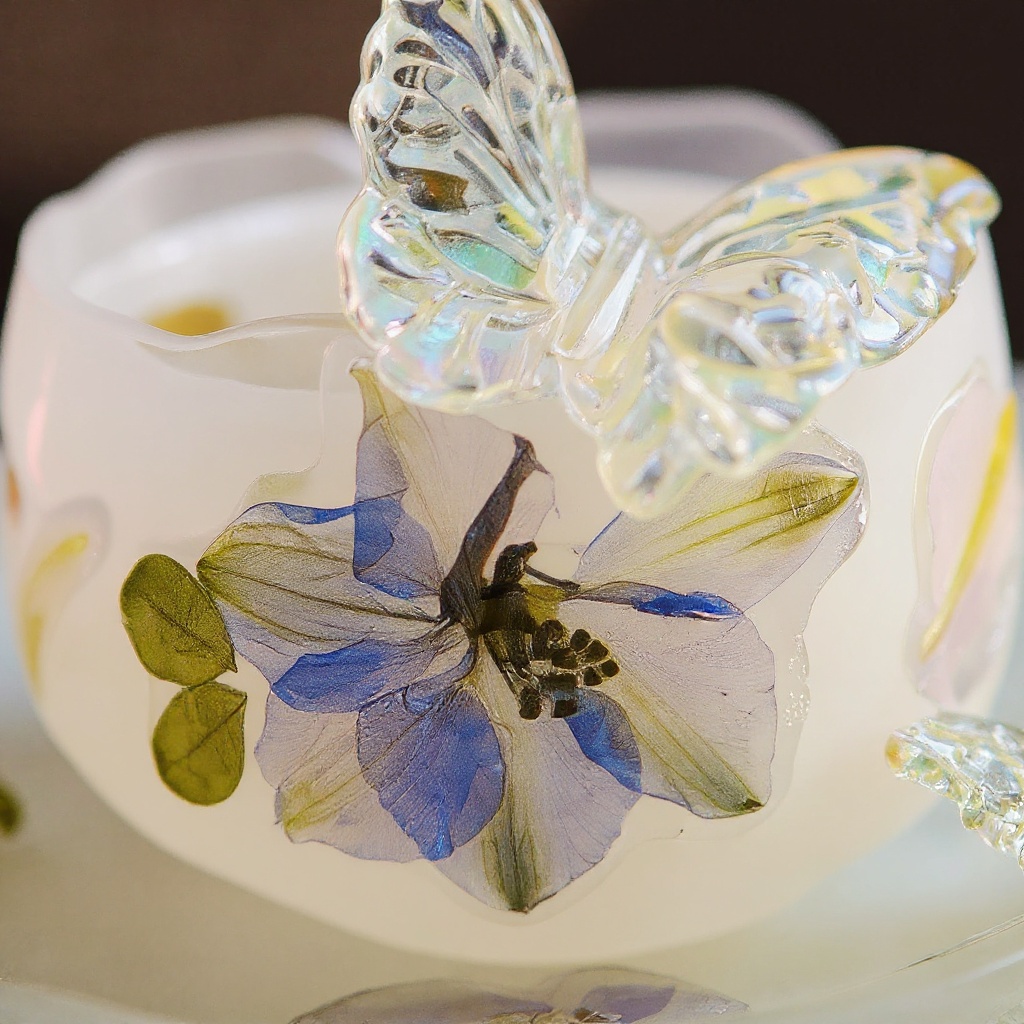
Botanical resin sits in a unique position. Translucent glass forms the structural cup body. Real dried petals — pink roses or deep blue cornflowers — are embedded under a smooth, glossy resin coat alongside iridescent butterfly figurines. The result is a 3D raised texture visible and tangible at the rim and saucer surface. No printed design. No decal. Actual organic matter sealed permanently inside food-grade material.
Food-grade epoxy resin used in quality pieces meets standards set by the U.S. Food and Drug Administration (FDA 21 CFR 175.300) and the European Food Safety Authority (EFSA food contact materials framework), which require that substances do not migrate into food or beverage at concentrations that could present a risk to human health. BPA-free formulations that have completed full cure cycles — typically 72 hours minimum at controlled temperature — are stable at temperatures up to 85°C (185°F), well within the range used for green and white tea brewing.
Honestly? If you brew exclusively with water above 95°C — full-boil oolongs or aged pu-erh — a resin cup is not the right tool. Use Yixing clay or thick porcelain for those sessions. Resin performs best in the 75–85°C range where most floral and green teas thrive anyway.
The Architecture of a Quality Small Capacity Tea Tasting Cup Set
What separates a small capacity tea tasting cup set worth keeping from one that disappoints after three washes? Construction specifics. Not marketing language.
Five indicators of quality handmade construction:
1. Consistent wall thickness throughout — gentle finger pressure against the cup wall should feel uniform; irregular thickness causes uneven heat distribution and weak points prone to cracking 2. Smooth rim with no micro-chips — run a fingertip slowly around the entire rim; any roughness indicates incomplete finishing that can cut lips or trap bacteria 3. Botanical placement without air pockets — in resin sets, hold the cup to light at multiple angles; visible bubbles between petals and resin indicate incomplete pouring technique and potential long-term delamination 4. Balanced resting stability — an empty cup placed on a flat surface should not rock; base flatness affects ceremony presentation and practical safety when hot 5. Saucer thermal matching — the saucer should warm at a comparable rate to the cup; significant thermal mismatch (saucer remaining cold while cup heats) suggests different material batches or inconsistent thickness
Real. Tangible. Testable at the point of purchase or upon delivery.
Understanding Zhu Ren Bei: The Master Cup Concept
Zhu Ren Bei — 主人杯, literally "host's cup" — designates the highest-quality vessel in a Gongfu tea ceremony set. Traditionally reserved for the tea master hosting the session. Not hierarchy for its own sake. A functional designation: this cup has been made with greater precision, tested for optimal wall thickness, and finished to a standard that communicates the host's respect for the ritual.
Modern interpretations have shifted the concept. In botanical resin sets, the master cup often features a unique petal arrangement or a single butterfly figurine positioned differently from companion cups — a subtle signal of distinction without ostentation. The functional capacity remains within the 45–65ml range. The saucer continues its dual role: heat protection for surfaces, and a designated resting station that maintains the ceremony's formal cadence.
Small. Intentional. Irreplaceable once you understand what it represents.
Five Use Cases Beyond Traditional Tea Ceremony
A small capacity tea tasting cup set built around botanical resin aesthetics exceeds the tea table.
1. Single-origin coffee tasting — the 45–65ml range aligns with specialty coffee cupping protocols; transparent cups allow color assessment of different roast levels 2. Herbal infusion evaluation — smaller volumes reduce waste when testing new dried herb combinations before committing to a full pot 3. Display as botanical art objects — cups with embedded pressed flowers and butterfly figurines function as tabletop sculpture; natural light through a translucent resin cup produces visible color projection 4. Gifting for non-practitioners — recipients unfamiliar with Gongfu ceremony appreciate the artisan object independently of its ritual function; the piece requires no prior knowledge to be enjoyed 5. Mindful drinking rituals — any beverage consumed from a 45ml vessel at a pace of frequent small pours produces measurable slowing of consumption; applicable to water, wine reduction, or cold brew
Step-by-Step Gongfu Brewing Guide for Small Capacity Sets
Using your small capacity tea tasting cup set correctly produces results that a large mug approach cannot replicate.
1. Warm the cups — pour hot water into each cup and saucer, swirl for 10 seconds, discard; this pre-heating step prevents the first infusion from cooling too rapidly on contact with cold walls 2. Measure leaf-to-water ratio — target 1g of leaf per 15ml of cup capacity; for a 60ml cup, use 4g of leaf in your gaiwan or teapot 3. First infusion: 20–30 seconds — pour, distribute evenly across all cups simultaneously using a circular motion, serve immediately 4. Observe color — hold the cup against a white background or natural light; the liquor color tells you extraction rate and tea age before you taste 5. Increase steeping time progressively — add 10–15 seconds per subsequent infusion; quality loose leaf sustains 6–8 infusions with this approach 6. Rest cup on saucer between sips — the saucer's thermal mass slows cooling slightly; this detail, small as it seems, extends the optimal drinking window by 30–60 seconds per infusion 7. Final infusion assessment — by infusion 5 or 6, note flavor changes; a small capacity vessel makes these shifts perceptible in ways a large mug obscures
Care and Longevity: What Actually Damages These Cups
Resin cups with embedded botanicals require specific care. Not complicated. Specific.
Hand-wash only. Warm water and a small amount of mild dish soap remove tea tannin deposits without abrasion. Avoid scrubbing pads — any pad with a rough surface can create micro-scratches in the resin coat that accumulate over time into visible surface dulling. Avoid dishwashers entirely. The combination of high-heat drying cycles (typically 65–75°C) and alkaline detergent degrades the resin surface over repeated exposure.
Thermal shock is the primary structural risk. Allow cups to reach room temperature before washing after hot use. Do not pour boiling water (100°C) directly into a cold resin cup; preheat first with warm water as described in the brewing guide above.
Storage: separate each cup from its neighbor with soft cloth or individual wrapping. Stacking without separation causes rim chips. A dedicated display case or lined drawer serves both protection and presentation.
With this care, properly made botanical resin cups maintain their surface clarity, petal color vibrancy, and structural integrity for 7–10 years of regular use. The botanical elements sealed inside exist in an anaerobic environment created by the resin; absent oxygen and moisture, organic degradation is negligible. UV inhibitors in quality resin formulations further slow color shift from sunlight. Position display pieces away from direct sunlight windows if long-term color preservation is a priority.
Handmade vs. Mass-Produced: A Direct Comparison
Mass-produced floral ceramic tea cups retail at $15–$60. Functional. Consistent. Forgettable. Each piece in a mass production run is identical because the process demands it. Printed floral designs sit on the surface; they wear.
Mid-range handmade resin cups on platforms like Etsy range from $80–$200. Quality varies significantly within this range. The critical differentiator: whether the botanical elements are real dried plant material or printed/artificial substitutes. Artificial flowers in resin look flat under close inspection. Real dried petals retain dimensional texture — visible as 3D raised structures beneath the glossy surface, particularly in macro photography or direct observation.
Premium studio-crafted sets — comparable to hand-thrown Japanese chawan sets priced at $300–$800 — justify their positioning through multi-day creation processes, material sourcing transparency, and individual variation that makes each piece distinct. No two are identical. That is the point.
Our Handmade Pressed Flower Tea Cup Set | Real Petal Resin | Butterfly 45-65ml occupies the mid-to-premium range with real botanical materials, food-grade resin, and individually assembled butterfly figurine placement — not a mass mold. Explore our full range of botanical tableware collections for related pieces, or browse our gift guide for tea lovers for curated pairing suggestions.
Gifting a Small Capacity Tea Tasting Cup Set
A small capacity tea tasting cup set makes an effective gift for a specific reason: it requires no prior knowledge to appreciate. The botanical resin design communicates its value visually, immediately. The recipient does not need to understand Gongfu protocol to recognize that this object is different from standard tableware.
For gift presentation, include a brief card explaining the cup's capacity (45–65ml), the real dried botanicals embedded inside, and the hand-wash care instruction. Many recipients hesitate to use gifts they perceive as "too special." A direct statement — this cup is made for daily use — removes that hesitation.
The cottagecore and botanical aesthetic trend (documented by Pinterest Predicts reports in 2022 and 2023) has increased mainstream demand for nature-embedded home goods. A cornflower blue small capacity tea tasting cup set resonates with this aesthetic without requiring the recipient to identify with any particular subculture.
Packaging should protect each cup and saucer individually. Foam or cloth-wrapped pieces arrive intact. That first unboxing experience is part of the gift's value.
FAQ
What is a small capacity tea tasting cup set? A small capacity tea tasting cup set is a collection of 30–80ml cups with matching saucers, designed for Gongfu tea ceremony practice or precision sensory evaluation. The small volume concentrates aroma compounds, maintains optimal drinking temperature, and supports the multiple short steepings that reveal a tea's full character across infusions. What is the ideal cup size for Gongfu tea tasting? The most versatile range is 45–65ml. Research on volatile aroma compound retention (Kumazawa & Masuda, Journal of Agricultural and Food Chemistry, 2002) supports smaller liquid volumes for preserving delicate floral and mineral notes. This size also aligns with standard Gongfu leaf-to-water ratios of approximately 1g per 15ml. Are resin tea cups safe to drink from? Yes, when manufactured with food-grade epoxy resin that meets FDA 21 CFR 175.300 and EFSA food contact material standards. BPA-free formulations that have completed a full cure cycle (minimum 72 hours at controlled temperature) are stable at temperatures up to 85°C (185°F). Do not use resin cups with water above 90°C; for high-temperature teas, use porcelain or Yixing clay instead. How long do pressed flowers last inside resin? Properly sealed botanical elements in quality resin maintain their appearance for 7–10 years of regular use. The anaerobic environment inside cured resin prevents oxidation-driven decomposition. UV inhibitors in premium formulations slow color shift from sunlight exposure. Cups stored away from direct sunlight show minimal color change over this period. What is a Zhu Ren Bei tea cup? Zhu Ren Bei (主人杯, "host's cup") is the highest-quality vessel in a traditional Gongfu tea set, reserved for the ceremony host. It typically features superior craftsmanship or a distinctive design element while maintaining the same 45–65ml functional capacity as companion cups. In modern botanical resin sets, the master cup often features a unique petal arrangement or single accent butterfly figurine that distinguishes it without altering its brewing function. Can you put a resin tea cup in the dishwasher? No. High-heat drying cycles (65–75°C) combined with alkaline dishwasher detergent degrade the resin surface over repeated exposure, causing progressive cloudiness. Hand-wash with warm water and mild dish soap. This single care step preserves surface clarity for the cup's full expected lifespan. What is the difference between a master cup and a regular tasting cup in a set? The master cup (Zhu Ren Bei) designates the host's vessel and typically features premium finishing, unique decorative placement, or measurably more precise wall thickness. Functionally, both hold 45–65ml. The distinction is ceremonial and aesthetic, not dimensional. How do I identify a quality handmade resin tea cup? Test five things: uniform wall thickness under finger pressure, a smooth rim with no roughness, resin clarity without visible bubbles around embedded botanicals, stable resting on a flat surface without rocking, and saucer thermal behavior that roughly matches the cup's warming rate. Any failure on these tests indicates a production shortcut. Are small resin flower tea cups suitable for someone who does not practice tea ceremonies? Yes. The 45–65ml format works for single-origin coffee tasting, herbal infusion evaluation, and mindful drinking of any beverage. The botanical resin design also functions as tabletop art independent of any beverage use. No ceremony knowledge is required to use or display the cup meaningfully. Which tea types work best in a 45–65ml small capacity cup? Green teas (75–80°C), white teas (80–85°C), light oolongs (85°C), and jasmine-scented teas perform best. These temperature ranges align with the heat tolerance of food-grade resin. High-oxidation oolongs and pu-erh brewed above 95°C exceed resin's optimal temperature range; use porcelain or Yixing clay for those sessions.Conclusion
A small capacity tea tasting cup set is a precision instrument and an art object simultaneously. That combination is rare. Most functional objects sacrifice beauty for performance. Most beautiful objects sacrifice function for appearance. The botanical resin cup embedded with real dried petals and butterfly figurines under a smooth glossy coat achieves both — within the constraints of its specific temperature range, with the right care protocol, in the right hands.
Not every tea deserves it. Not every brewing session calls for ceremony. But when the moment is right — warm light, a wooden tray, steam rising from 60ml of first-flush green tea — the right cup changes the experience in a way that takes you by surprise.
Every time.
For handmade sets featuring real preserved botanicals, explore our Handmade Pressed Flower Tea Cup Set | Real Petal Resin | Butterfly 45-65ml, browse the full botanical tableware collections, or visit our gift guide for tea lovers for curated recommendations.


