































Preserved Flower Resin Cup: The Housewarming Gift That Lasts
Preserved Flower Resin Cup Housewarming Gift: Timeless Elegance in Every Steep
By pampasroom, founder of Pampasroom · 8+ years developing botanical resin preservation techniques and eco-resin product standards · Collaborated with artisan studios across Southeast Asia on handcrafted drinkware designA preserved flower resin cup housewarming gift delivers something most gifts can't: daily function wrapped in lasting, irreplaceable beauty. Real dried daisies — raised, tactile, visible beneath a clear eco-resin layer — make every tea session feel intentional. The flowers won't wilt. They won't fade the way a bouquet does by Tuesday. Choose a set with genuine botanicals, heat-resistant borosilicate glass, and food-safe eco-resin, and you're giving something that will sit on their tea table for a decade or more. Quality artisan sets range from $57 to $200, with gaiwan and fair cup combinations offering the most visual impact and practical versatility.
Why Real Preserved Flowers Change Everything
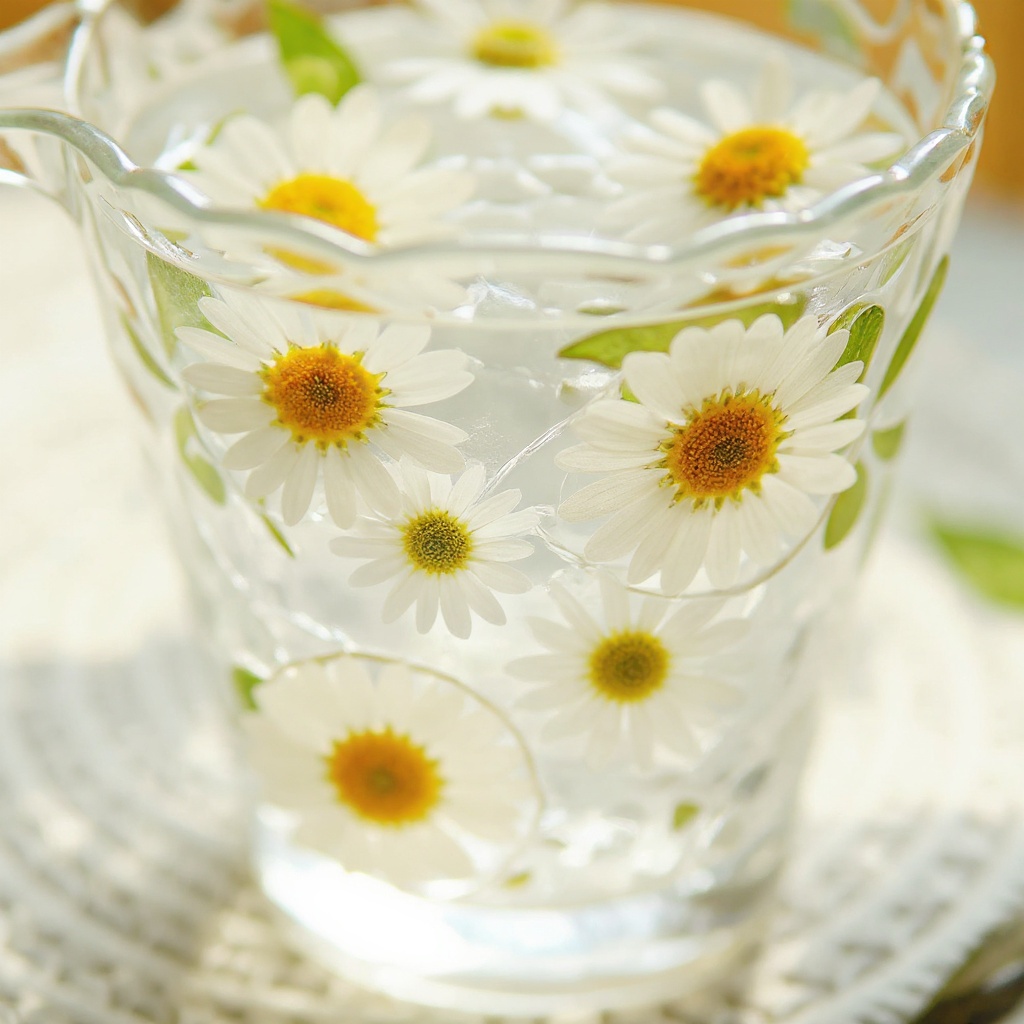
Most floral tea sets fake it. Printed decals. Painted designs. Plastic inserts molded to approximate petals. None of those survive close inspection, and none of them feel like anything under your fingertips. Real preserved daisies embedded in clear eco-resin create a raised relief surface with actual texture — you can trace the petal edges, feel the slight curve of each bloom, sense the difference between a natural object and a simulation.
This matters for a gift. The person receiving it will notice immediately. They'll hand it to someone else and say, "feel this." That moment doesn't happen with a decal.
According to pressed flower craft traditions, properly preserved botanicals maintain their structural integrity and color for decades when sealed against moisture and oxygen. Real flowers also show natural color variation — no two daisies are identical in tone or shape — which means no two cups are identical either. Mass-produced floral glass sets on Amazon typically retail between $18 and $75, relying on printed imagery that can chip or yellow within two to three years. Mid-range handmade options on Etsy range from $80 to $200, though many still use artificial elements that only look convincing in product photography. The difference collapses the moment you hold the real thing.
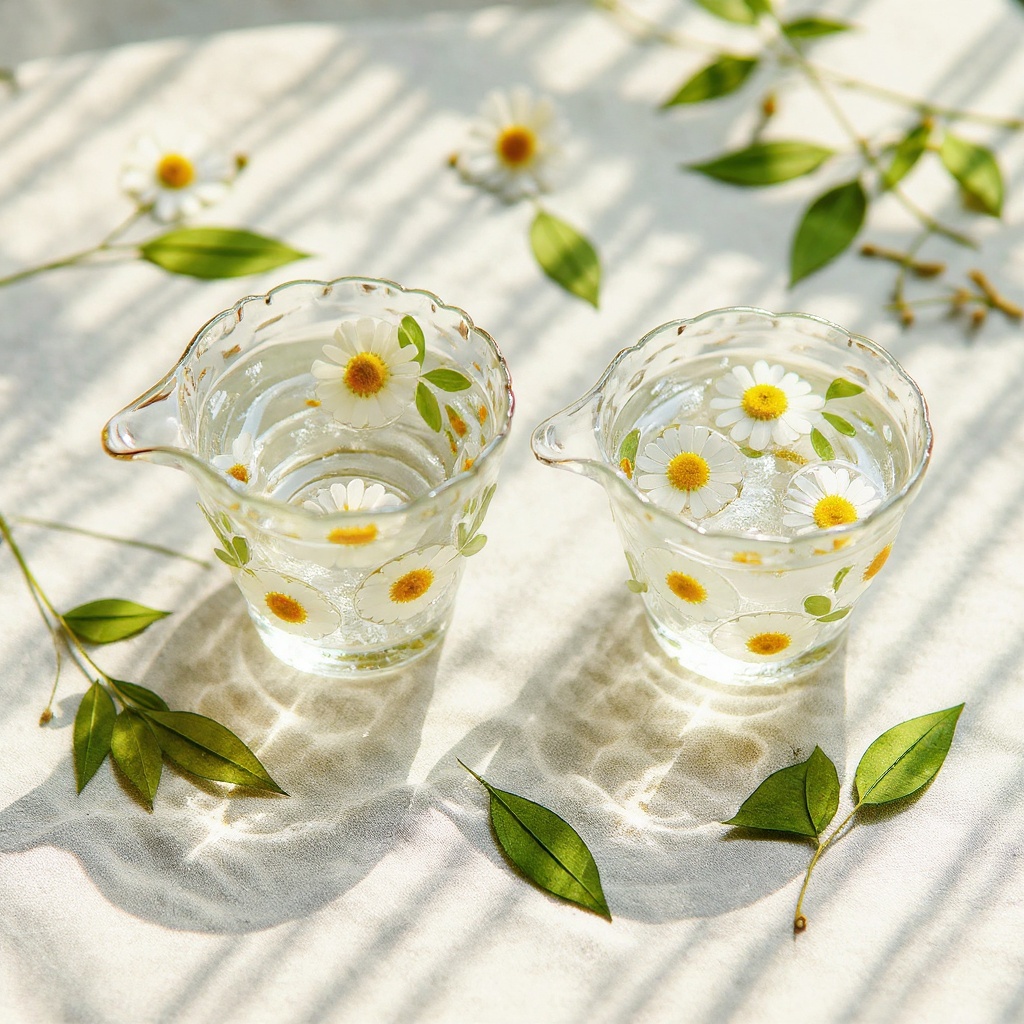
Understanding Gaiwan and Fair Cup Sets
A gaiwan isn't just a prettier teacup. It's a three-part brewing vessel — bowl, lid, saucer — designed for precise steeping control and multiple short infusions. The lid regulates temperature. The saucer keeps your fingers safe from heat. The shape allows you to tilt and pour without burning yourself, which takes about three tries to master and then becomes second nature.
The fair cup (sometimes called a pitcher or serving vessel) is equally important. Brewed tea goes from the gaiwan into the fair cup before serving, ensuring every cup poured has the same flavor concentration. Without it, the tea kept steeping and the last pour would be undrinkably strong.
For a housewarming gift, a gaiwan and fair cup set offers something a single teacup can't: a complete ritual. The 400ml capacity handles multiple guests. Even if the recipient has never heard of gongfu brewing, they can use the gaiwan like a standard teacup and grow into the traditional Chinese tea culture techniques later. The learning curve is gentle. The reward is substantial.
Heat Resistance and Food Safety — The Part Most Listings Skip
Honestly, most sellers don't explain this clearly enough, and some preserved flower resin cups on the market shouldn't be used with hot liquids at all. Here's what to verify before you buy.
Borosilicate glass handles thermal shock far better than standard soda-lime glass. A well-made gaiwan uses borosilicate as its base, rated for liquids up to approximately 200°F (93°C). The eco-resin coating applied over the exterior must be food-contact safe — not just food-adjacent, but specifically formulated for surfaces that come into contact with heat and steam.
Traditional epoxy resins frequently contain bisphenol A (BPA). A 2020 review published in Chemosphere documented BPA leaching from epoxy-lined containers when exposed to temperatures above 70°C, raising concerns for hot-beverage applications. Eco-resins use plant-derived components to eliminate BPA while maintaining structural clarity. They cure at lower temperatures too, which preserves the natural pigments in dried daisy petals that high-heat curing would destroy.
One honest caveat worth knowing: if you live in a climate with sustained indoor temperatures above 95°F — think an uninsulated apartment in a tropical city with no air conditioning — some softer eco-resin formulations may show minor surface softening over years of exposure. It's rare. But it's real, and most articles won't tell you that.
| Feature | Eco-Resin | Traditional Epoxy |
|---|---|---|
| BPA-Free | Yes | Often No |
| Food Safety Rating | Designed for contact | Varies by formula |
| UV Yellowing Resistance | Good (moderate UV) | Excellent |
| Surface Hardness | Medium (Shore D ~75) | High (Shore D ~85) |
| Curing Temperature | Low — preserves flower color | High — risks color degradation |
| Thermal Limit (exterior) | ~95°F sustained ambient | ~110°F sustained ambient |
| Cost to Produce | Higher | Lower |
The 3-5 Day Artisan Process
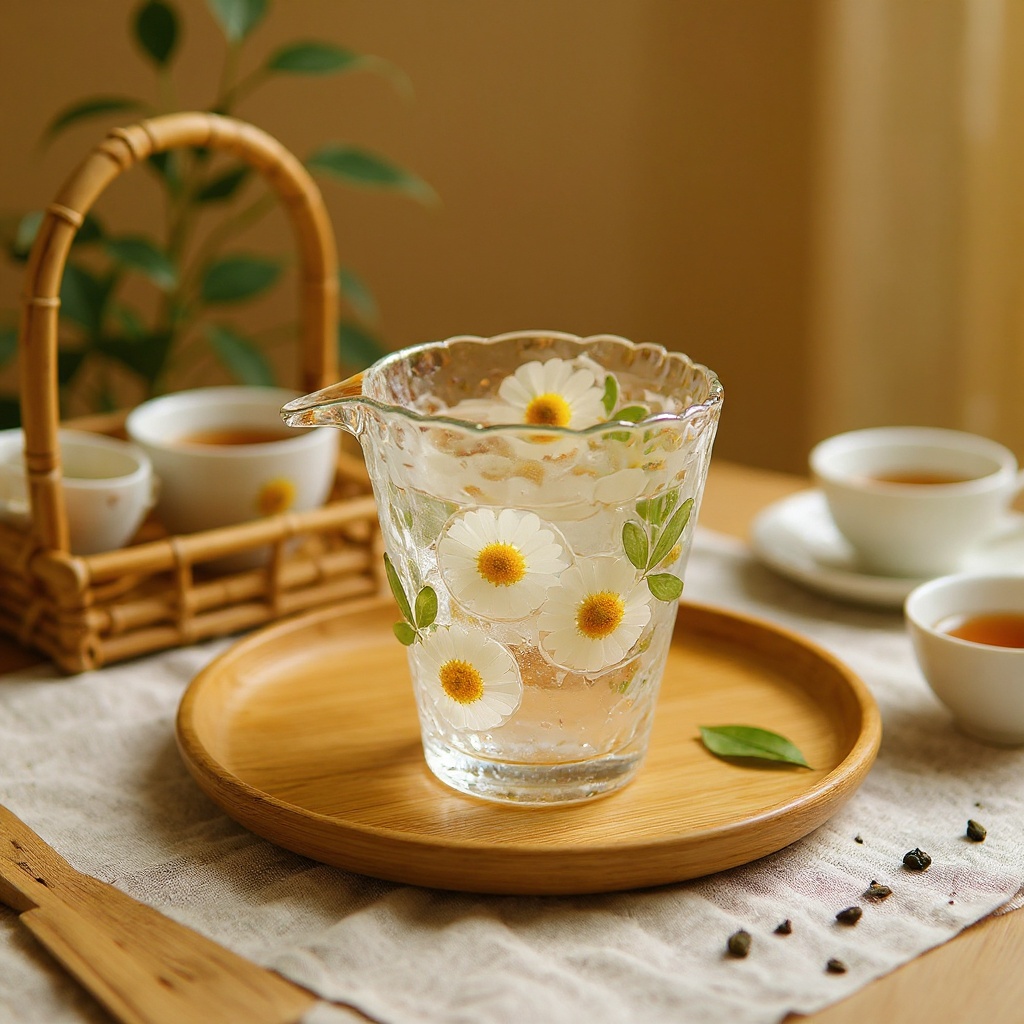
Each preserved flower resin cup takes three to five days to make. Not because the equipment is slow. Because the process demands it.
First, each real dried daisy is selected and positioned individually on the glass surface. Placement isn't random — artisans consider balance, symmetry, and which petals will catch light when the cup holds liquid. Then comes the resin application. Multiple thin layers rather than a single thick pour. Each layer must cure before the next begins, because rushing creates air bubbles trapped beneath petal surfaces that compromise both clarity and structural integrity.
Several days. Multiple curing cycles. One cup.
This is why the price reflects what it is. You're not paying a markup on a factory item. You're paying for skilled time, botanical sourcing, and the kind of attention that makes every cup slightly different from the last. Our Handcrafted Gaiwan Fair Cup Set with Real Preserved Daisy flowers follows this exact multi-layer process, with each set taking a minimum of four days from botanical placement to final quality check.
Color Palettes and Décor Pairing
Preserved daisy resin sets come in three primary color directions, and the right choice depends entirely on the recipient's home aesthetic.
Pink daisy varieties create a soft, warm atmosphere. They suit cottagecore interiors, maximalist shelving arrangements, and spaces already layered with textiles and botanical prints. Blue-toned florals read calmer — more spa than sitting room — and work particularly well in modern minimalist spaces where a single statement object carries the visual weight of an entire shelf. Yellow daisies bring cheerfulness without effort. Kitchen windowsills. Breakfast tables. Any space that faces morning light.
The neutral transparency of clear eco-resin means the cup adapts rather than competes. It doesn't demand to be the center of everything. It earns attention quietly, every time someone picks it up.
Tea Pairings That Honor the Vessel
Any tea works in a gaiwan. But some pairings create a complete sensory experience that makes the botanical aesthetic feel intentional rather than accidental.
1. Jasmine Dragon Pearls — Floral aromatics mirror the embedded daisies; the green tea base stays approachable for new gongfu brewers 2. White Peony (Bai Mu Dan) — Delicate enough that the cup's visual beauty isn't competing with a dominant flavor 3. Chamomile Herbal Blend — Creates direct thematic harmony between the liquid and the flowers in the glass 4. Oolong Varieties — Medium oxidation levels suit the moderate brewing temperatures these vessels handle with confidence 5. Rose Bud Tea — Combines visual and aromatic florals for a complete sensory pairing 6. Lavender Earl Grey — Bergamot and lavender complement the soft daisy palette without overpowering it 7. Chrysanthemum Tea — Another botanical tea that creates natural thematic resonance with the preserved flowers
Gift Presentation Worth Matching
A preserved flower resin cup housewarming gift arrives as functional art. The presentation should reflect that. Quality artisan sets come in protective packaging that lets the craftsmanship speak before the recipient even touches the cup. Look for sets that include care instructions written for someone who's never owned a resin vessel — not just a list of don'ts, but context for why each guideline exists.
Complementary additions that enhance rather than overwhelm: a small selection of premium loose-leaf teas, a bamboo tea tray, or a soft microfiber cloth designed for resin surfaces. These additions frame the preserved flower resin cup housewarming gift as a complete tea ritual invitation rather than a single decorative object.
Care Steps for Lasting Beauty
Proper care extends the life of preserved flower resin cups well beyond a decade. Research on sealed resin enclosures, including manufacturer specifications from leading eco-resin producers like Entropy Resins, indicates minimal degradation over 10-plus years when basic UV and temperature guidelines are followed. Here's what that looks like in practice:
1. Hand wash only — Use lukewarm water (under 110°F) and mild dish soap; avoid abrasive sponges that scratch resin surfaces 2. Dry with a soft cloth — Pat dry immediately after rinsing; don't let water pool around the resin-glass seam 3. Store away from direct sunlight — Prolonged UV exposure gradually shifts both resin clarity and flower pigment; a cabinet or shaded shelf extends vibrancy significantly 4. Remove mineral deposits gently — A diluted white vinegar solution (1 part vinegar to 4 parts water) dissolves hard water buildup without attacking the resin structure; rinse thoroughly afterward 5. Polish monthly — A soft microfiber cloth restores surface gloss without chemical cleaners 6. Avoid ammonia-based products — Glass cleaners containing ammonia cloud eco-resin over time; skip them entirely 7. Never microwave — Resin-coated vessels aren't rated for microwave use; heat tea separately if reheating is needed
With this routine, your preserved flower tea set becomes a daily ritual object that ages with the relationship it was meant to honor.
Conclusion
A preserved flower resin cup housewarming gift solves a problem most givers face: finding something beautiful enough to feel special, functional enough to be used daily, and durable enough to outlast the occasion that prompted the gift. Real daisies under clear eco-resin. Borosilicate glass that handles hot tea without hesitation. A gaiwan-and-fair-cup format that introduces a complete brewing ritual. This isn't a shelf decoration that collects dust. It's the cup they'll reach for every morning.
If you want to give something that earns its place in someone's new home — actually earns it, through daily use and quiet beauty — browse our Handcrafted Gaiwan Fair Cup Set with Real Preserved Daisy flowers and find the color palette that fits them best.
FAQ
Are preserved flowers in a resin tea cup safe for hot liquids?Yes, when the set uses food-contact-grade eco-resin and a borosilicate glass base. The resin forms a sealed exterior layer; it never contacts the liquid directly. Borosilicate glass handles temperatures up to 200°F (93°C) without thermal shock. The critical check is whether the manufacturer explicitly rates the eco-resin for food-contact surfaces — not just "non-toxic," but specifically cleared for surfaces near food and heat. Always follow the brand's temperature guidelines for exterior resin exposure.
How long do preserved flowers in eco-resin actually last before fading?Proper eco-resin enclosures — sealed against moisture and air — protect dried botanicals from the two primary degradation forces. Entropy Resins and similar eco-resin manufacturers document minimal structural degradation over 10-plus years under normal indoor conditions. Color may shift very gradually over decades, particularly with sustained UV exposure, but pieces kept away from direct sunlight retain their appearance well beyond 10 years. No preservation method is permanent at the molecular level, but sealed eco-resin comes close for practical household timescales.
Can a resin-coated glass cup go in the dishwasher?No. Dishwasher cycles reach 140–160°F with high-alkalinity detergents. At sustained temperatures above 130°F, even medium-hardness eco-resin (Shore D hardness ~75) can begin to cloud or develop micro-stress fractures at the glass-resin bond line. Hand washing in water under 110°F with mild neutral soap preserves both the resin clarity and the structural integrity of the flower-to-resin interface. This is a firm guideline, not a conservative suggestion.
What is a gaiwan, and do I need the fair cup that comes with it?A gaiwan is a three-part Chinese brewing vessel — bowl, lid, saucer — designed for controlled short-steep brewing. The lid manages temperature and acts as a filter when pouring. The fair cup decants the brewed tea before serving, equalizing flavor concentration across every cup poured. Technically, you can use the gaiwan alone like a standard teacup. But the fair cup is what makes hosting practical and what makes the set feel complete. If the gift recipient ever brews for more than one person, they'll use both pieces regularly.
How do I know if the flowers in a resin set are real or fake?Real preserved flowers create measurable differences you can detect without expertise. First, run a fingertip across the surface: genuine botanical relief feels irregular, with petal edges at slightly different heights — typically 1–3mm of variation across a single flower. Artificial flowers molded into resin tend to feel uniformly smooth with perfectly consistent relief. Second, look at petal edges under direct light: real flowers show translucent petal tips, visible venation, and organic color gradients from center to edge. Printed or plastic flowers show uniform color blocks without structural depth. Third, no two real-flower cups look identical side by side; replicated artificial designs are consistent across the product line.
Is eco-resin meaningfully different from standard epoxy for a food-contact vessel?Yes, in ways that matter for this application specifically. Standard epoxy resins often contain BPA, and a 2020 review in Chemosphere documented BPA migration from epoxy-coated containers at temperatures above 70°C — well within the range of hot tea service. Eco-resins replace petrochemical components with plant-derived alternatives, eliminating BPA and related bisphenols. They also cure at lower temperatures, which protects natural flower pigments during the manufacturing process. The trade-off is slightly lower hardness, but for a vessel used daily for tea rather than industrial purposes, eco-resin is the appropriate choice.
What tea types work best for someone new to gaiwan brewing?Start forgiving. Jasmine green tea and white peony oolong tolerate wide temperature ranges and don't punish slight over-steeping the way more delicate teas do. Chamomile herbal blends are entirely caffeine-free and create natural thematic harmony with the daisy flowers in the resin. Avoid very delicate teas like gyokuro or aged pu-erh until temperature and timing feel intuitive. The gaiwan's design actually makes learning faster than using a standard teapot — the feedback loop between pour and flavor is immediate and adjustable.


