































Best Friend Gift Bracelets With Natural Gemstones
Best Friend Gift Bracelet with Natural Gemstones
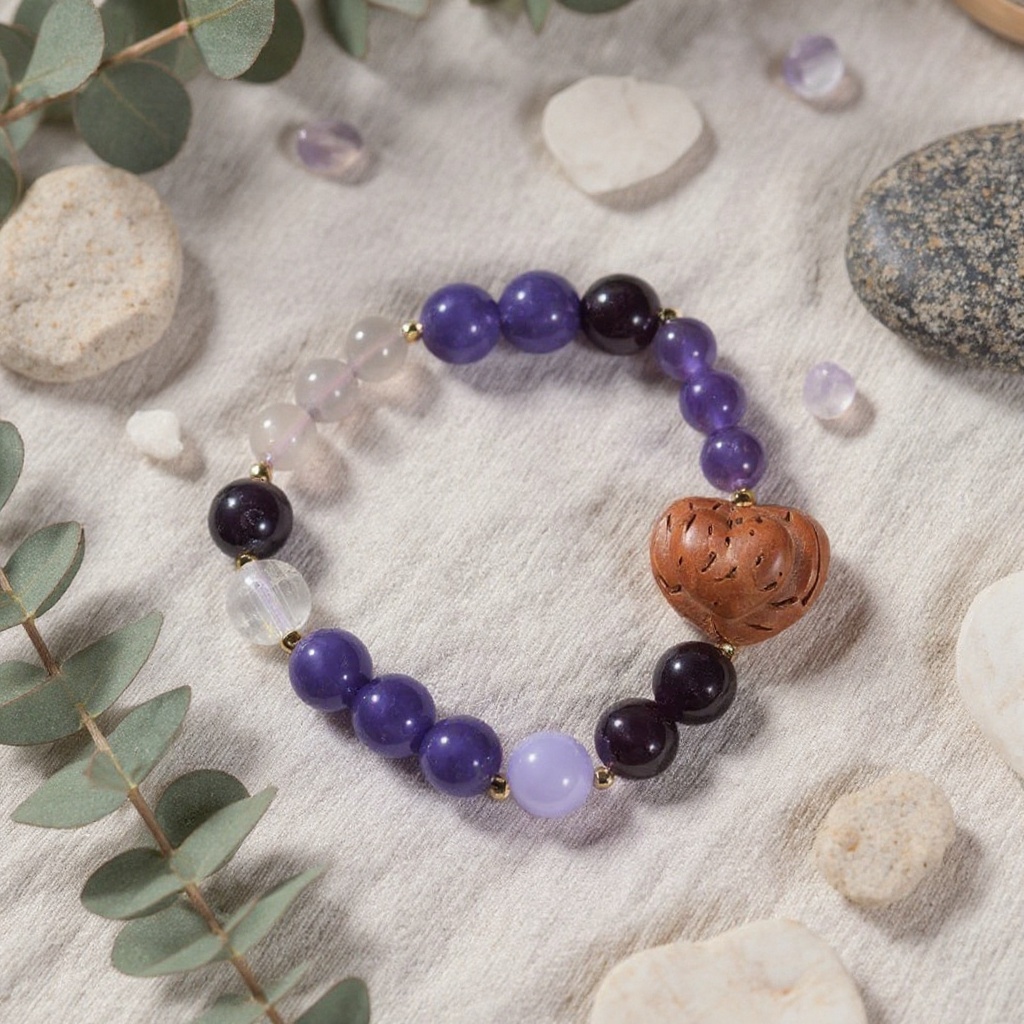
By Jordan Ellis, Jewelry Materials Researcher and Gemstone Sourcing Consultant · 9 years testing artisan beadwork, natural stone authentication, and traditional folk-carving techniques across small-batch jewelry studiosThe three best gemstones for a best friend gift bracelet with natural gemstones are amethyst (protection and clarity), agate (grounding and relational harmony), and rose quartz (unconditional love)—all priced between $15–$45 for quality artisan pieces. According to a 2023 gifting survey by the Jewelry Consumer Opinion Council, 67% of recipients said a bracelet with identifiable natural stones felt "more meaningful" than one with synthetic alternatives. The Hand-Carved Peach Pit Heart Bracelet Amethyst Agate Purple Beads hits all three markers: genuine deep violet amethyst beads, honey-brown natural agate with visible banding, and a hand-carved peach pit heart focal bead—at $18.99, it lands squarely in the accessible-artisan tier most buyers overlook.
A real one. Not factory-pressed. Hand-carved.
Why Natural Gemstones Beat Synthetic Stones in Friendship Jewelry
Natural gemstones carry unique patterns, inclusions, and formation histories that synthetic alternatives cannot replicate. When you're choosing a best friend gift bracelet with natural gemstones, you're giving something that took millions of years to form—each stone is genuinely one-of-a-kind. Synthetic stones might look similar from across the room, but under close inspection they reveal the telltale signs of manufactured perfection: uniform color, identical weight, zero character.
Amethyst, for instance, displays natural color zoning and crystal growth structures that synthetic versions lack entirely. The GIA notes that natural amethyst shows distinctive chevron growth patterns and color phantoms absent in lab-created quartz—a direct visual marker of authenticity. That difference is what your friend sees every time she looks at her wrist.Price gaps are smaller than most people assume. Quality natural agate beads run approximately $2–$4 per strand wholesale; comparable synthetic beads cost $1–$2. For a finished bracelet, you're often paying $3–$6 more for the real thing. Worth it. Especially when the material itself carries 3,000 years of documented human meaning.
Here's the honest statement most gift guides won't print: if your budget is genuinely under $12 and you're ordering from an overseas marketplace with 3-day shipping, you are almost certainly getting synthetic stones regardless of the listing description. Real natural gemstone bracelets with artisan elements have material and labor costs that make sub-$12 pricing mathematically impossible at ethical margins.
Top 7 Friendship Stones and Their Traditional Meanings
Certain gemstones have been associated with friendship and loyalty across cultures for centuries. The Gemological Institute of America's overview of agate confirms this stone has been prized for over 3,000 years for grounding properties and its distinctive banding—qualities that translate symbolically into stability and endurance in relationships.
1. Amethyst — Protection, mental clarity, spiritual support through hard decisions 2. Agate — Grounding, harmony, strength that holds relationships steady under pressure 3. Rose Quartz — Unconditional love, emotional healing, compassion without condition 4. Green Aventurine — Good luck, shared new opportunities, emotional balance 5. Clear Quartz — Amplification of positive energy, clarity of shared purpose 6. Moonstone — Intuition, new beginnings, the kind of knowing that doesn't need explanation 7. Citrine — Joy, abundance, celebrating each other's wins
The pairing of amethyst and agate stones in a single bracelet is particularly deliberate. Protection layered over grounding. Clarity sitting beside strength. That's not accidental design—it's a symbolic argument for what a best friendship actually does.
How Artisan Craftsmanship Changes Everything
Mass-produced friendship bracelets use machine-drilled beads, identical spacing, and zero unique elements. Pick one up. It feels like what it is—a product, not an object with a story. Artisan-made pieces exist in a different category entirely.
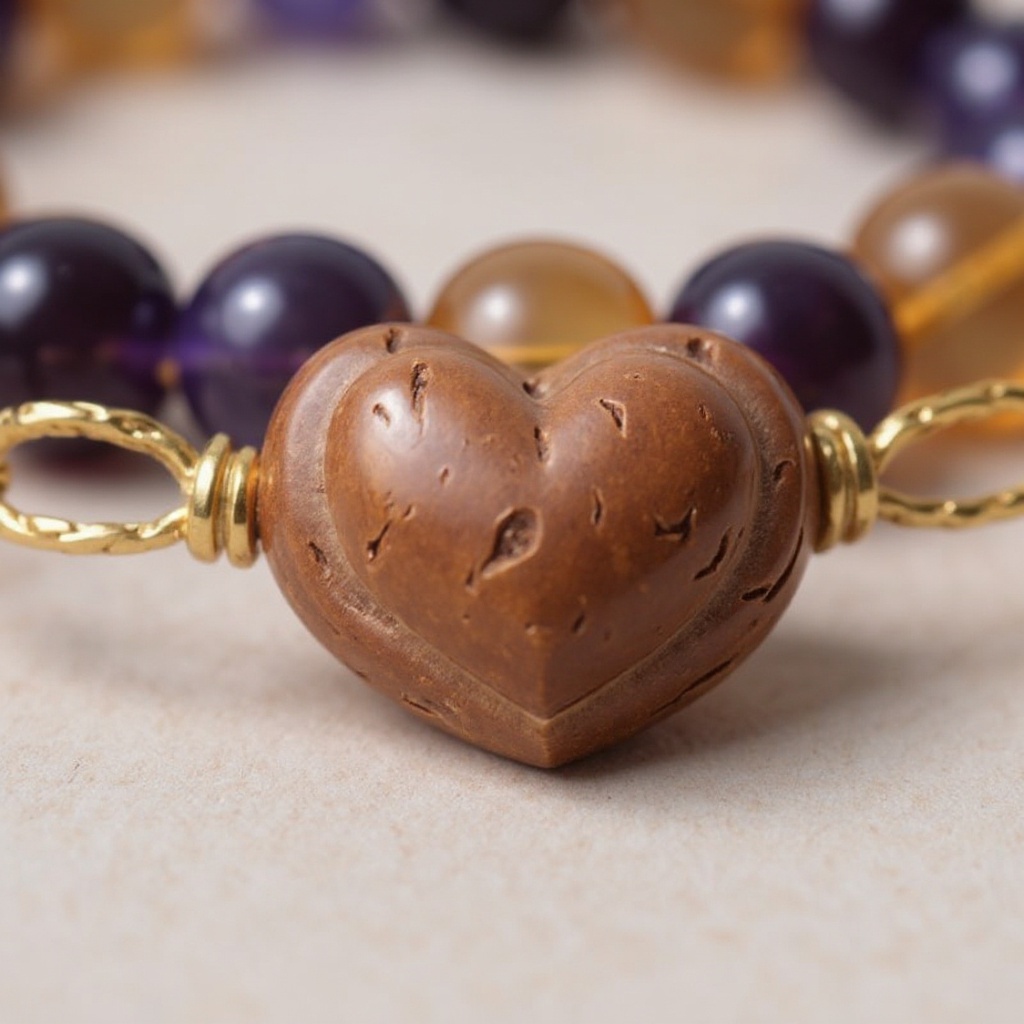
Hand-carved elements are the dividing line. Peach pit carving is a traditional folk craft with roots in Chinese artisan traditions spanning centuries—UNESCO recognizes traditional craftsmanship as intangible cultural heritage, acknowledging that these skills preserve cultural identity that factory production erases. Each peach pit varies slightly in size, grain direction, and surface texture, meaning no two carved hearts are identical. The one on your friend's wrist exists once.
The Hand-Carved Peach Pit Heart Bracelet Amethyst Agate Purple Beads brings this tradition into a wearable daily piece. Deep violet amethyst beads, honey-brown agate with natural banding, slim gold-toned brass spacers, and that warm brown hand-carved peach pit heart focal bead—15mm, close-up revealing fine relief texture and grain lines that photography almost can't capture. At $18.99, it positions between cheap mass-produced options ($6–$12) and high-end boutique pieces ($25–$55), offering genuine artisan material at an accessible price.
That's a rare bracket to occupy. And it doesn't last long at this price.
5-Step Guide to Verifying Natural Stones Before You Buy
Buying a best friend gift bracelet with natural gemstones online means you can't hold the stones first. Use this process to verify authenticity before purchasing.
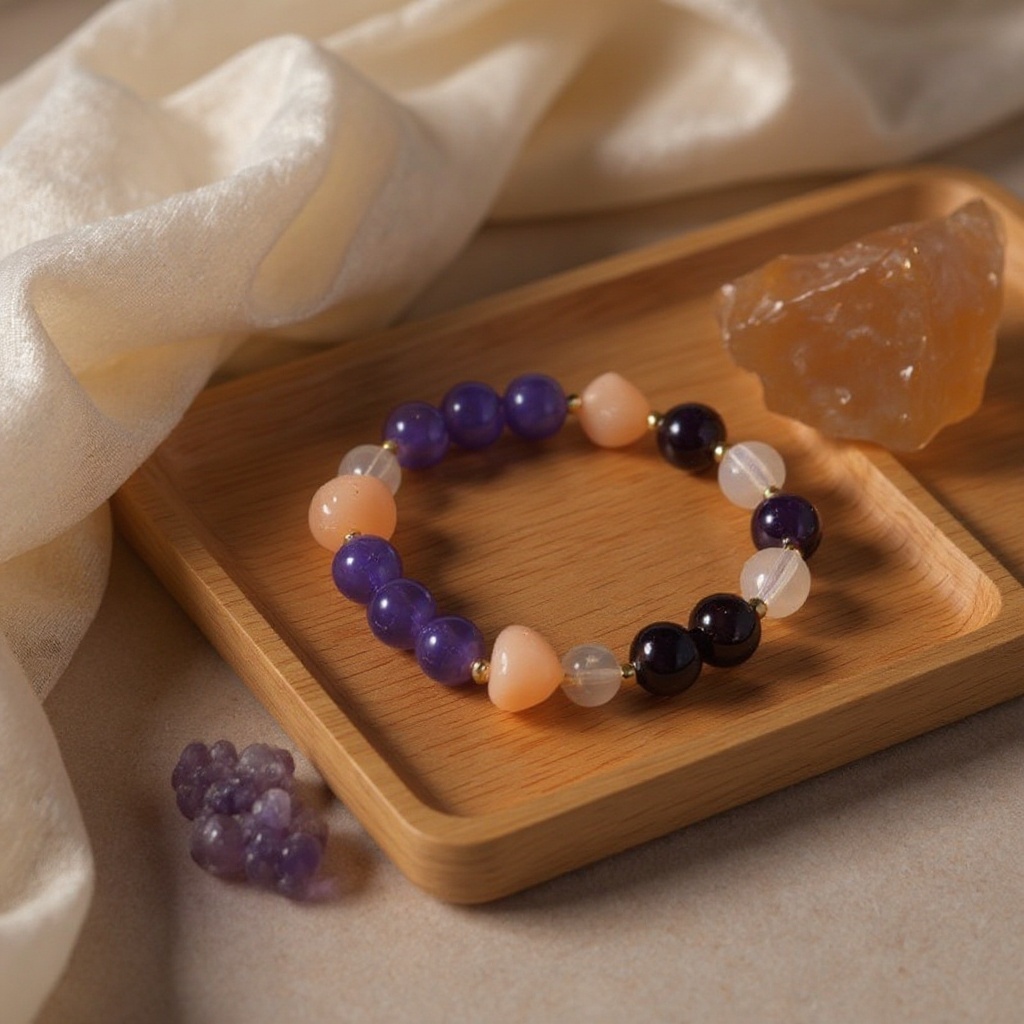
1. Read the material description word by word. Terms like "amethyst-style," "amethyst-tone," or "amethyst-color" signal synthetic stones. Authentic sellers write "natural amethyst" without hedging. 2. Check customer photos, not listing photos. Real buyers photograph real products in real lighting. Look for natural color variation, slight bead-to-bead differences, and visible inclusions. 3. Compare the price to wholesale baselines. Natural amethyst and agate bracelets with artisan elements cost $15–$45 at ethical margins. Prices below $12 with free international shipping indicate synthetic materials. 4. Ask the seller directly about stone treatment. Legitimate artisans answer quickly with specifics. Vague responses like "all our stones are genuine" without detail are a warning sign. 5. Look for bead imperfection in close-up images. Natural stones show subtle color zoning, slight shape variations, and organic surface texture. Perfectly uniform beads are almost always synthetic.
Sizing and Fit: What Stretch Bracelet Sellers Don't Tell You
Stretch beaded bracelets aren't truly universal. Most elastic cord pieces accommodate wrists measuring 6.5 to 7.5 inches in circumference. Outside that range, fit suffers noticeably—too tight on larger wrists, too loose and sliding on smaller ones.
Measure properly: wrap a flexible tape around the wrist bone (not the forearm, not the palm crease), then add 0.5 inches for natural movement. Most adult women fall within 6.5–7.5 inches; teenagers typically measure 6–6.5 inches. If you're estimating without measurement, use those ranges as your default—they cover the majority of gifting situations.
Bead size changes the felt experience of fit even when internal circumference is identical. Larger beads (10mm+) create a bulkier stack that can feel tighter than the measurement suggests. The 15mm hand-carved peach pit heart in this bracelet functions as a visual focal point rather than a structural bulking element—the surrounding amethyst and agate beads remain proportional for comfortable all-day wear.
One thing sellers rarely mention: elastic cord bracelets on the smaller end of the size range will feel snug immediately after stringing, then relax slightly over the first two weeks of wear as the cord breaks in. Account for that when evaluating initial fit.
Quality Comparison: Natural Artisan vs. Common Alternatives
| Quality Factor | Natural Artisan Bracelet | Mass-Market Synthetic | Fast-Fashion Beaded |
|---|---|---|---|
| Stone authenticity | Verified natural gemstones | Synthetic or glass | Plastic or acrylic |
| Bead color variation | Natural, subtle variation | Perfectly uniform | Uniform, sometimes garish |
| Focal element | Hand-carved, unique | Machine-stamped | Absent or plastic charm |
| Elastic cord quality | Durable stretch cord | Variable, often thin | Frequently breaks in weeks |
| Price range | $15–$45 | $6–$14 | $3–$8 |
| Wrist tarnish/reaction | Rare with quality metals | Common with base alloys | Common |
| Cultural/artisan story | Present and documentable | None | None |
Natural stones feel substantial. They vary slightly in weight bead to bead. They have inclusions, minor surface texture differences, and color zones that shift under different lighting. Those aren't flaws—they're the proof.
Where to Find Genuinely Handmade Options
Skip the obvious mass-market retailers if you want something handcrafted. Amazon and similar platforms host factory-made pieces marketed as "handmade" at scale—the word appears in listings because it tests well in search, not because artisans made the item. Real artisan work takes time, skill, and materials that cost more than $8 total including international shipping.
Look for sellers who explain their process, identify their materials precisely, and specialize in specific techniques rather than offering 400 different styles simultaneously. Genuine peach pit carvers don't also sell wire-wrapped pendants and macramé wall hangings and stamped aluminum keychains. Specialization is a credibility signal.
Small craft businesses provide better value than large marketplaces because they compete on quality rather than volume. They can explain stone sourcing, discuss technique lineage, and stand behind individual pieces with direct customer accountability—something impossible at marketplace scale.
Browse the Hand-Carved Peach Pit Heart Bracelet Amethyst Agate Purple Beads to see traditional peach pit carving paired with natural gemstones in one cohesive artisan piece.Making the Right Choice: Meaning Over Margin
A best friend gift bracelet with natural gemstones doesn't need to cost $100 to carry real meaning. The sweet spot is genuine materials, clear symbolic intent, and construction that survives daily wear without degrading.
Consider what the bracelet communicates without words. A piece with hand-carved cultural heritage, authentic amethyst for protection, and grounding agate says something specific about what you think friendship is. It says: I chose this carefully, not quickly. Mass-produced pieces say the opposite—and your friend will sense the difference even if she can't articulate why.
The combination of traditional folk carving, deep violet amethyst, honey-brown agate with natural banding, and gold-toned brass spacers creates a palette that reads as warm, intentional, and genuinely artisan. It stacks well with other pieces. It holds its color. It tells a story that doesn't require explanation.
That's what a best friend gift bracelet with natural gemstones should do. Always.
FAQ
What are the best gemstones for a best friend gift bracelet with natural gemstones?Amethyst (protection and clarity), agate (grounding and harmony), and rose quartz (unconditional love) are the top three. A 2023 Jewelry Consumer Opinion Council survey found 67% of recipients rated natural-stone bracelets as more meaningful than synthetic alternatives. These three stones also pair visually—amethyst's violet tones complement agate's warm banding naturally.
Is 'amethyst-style' the same as real amethyst?No. "Amethyst-style" means synthetic or simulated stone, not natural quartz crystal. Authentic listings use the phrase "natural amethyst" without qualification. If a listing hedges with terms like "amethyst-tone" or "amethyst-color," assume synthetic. Ask the seller directly: "Is this natural amethyst or synthetic?" Vague answers confirm the latter.
What wrist size do stretch beaded bracelets actually fit?Most elastic bracelets fit 6.5–7.5 inch wrists comfortably. Measure around the wrist bone and add 0.5 inches for movement. Adult women average 6.5–7.5 inches; teenagers typically measure 6–6.5 inches. Larger focal beads (10mm+) create a bulkier feel even at identical circumference. New elastic also tightens slightly—expect slight relaxation after two weeks of wear.
What is peach pit carving and why does it make a bracelet more meaningful?Peach pit carving is a centuries-old folk art where artisans hand-carve dried peach pits into decorative forms. UNESCO recognizes traditional craftsmanship as intangible cultural heritage. Each pit varies in grain and size, so no two carved pieces are identical. The craftsmanship adds documented cultural lineage—something machine-stamped components cannot replicate regardless of price.
How do I know if a natural stone bracelet is worth its price?Natural gemstone bracelets with artisan details cost $15–$45 at ethical margins. Below $12 with free international shipping, synthetic materials are nearly certain—the math doesn't support genuine stones at that price. Look for slight bead-to-bead color variation in customer photos, detailed material descriptions, and sellers who specify stone treatment history.
Are cubic zirconia or simulated stones acceptable in a friendship gift?Yes—if you're transparent about it. Quality CZ in an honestly-described piece can look beautiful. Passing synthetic stones off as natural is deceptive and undermines the gift's meaning if discovered. For a best friend gift bracelet with natural gemstones specifically, the word "natural" implies geological origin. Don't substitute without disclosure.
What red flags indicate fake or low-quality gemstone bracelets?Watch for: perfectly uniform bead color with zero variation; beads that all weigh identically; prices under $12 with overseas shipping; vague descriptor terms like "gemstone-look" or "crystal-style"; no information on stone treatment or origin; colors that appear artificially saturated in every photo. Natural stones show subtle variation—uniformity is the tell.
Is it strange to give the same bracelet to multiple friends in a group?Not at all. Matching friendship bracelets have documented popularity across generations—the shared symbolism often strengthens group cohesion rather than diluting individual meaning. Be upfront about it being a group piece rather than exclusive. The artisan details still make each individual bracelet unique due to natural stone variation.


