
Artisan Teaware with Botanical Design: Complete Guide to Matte Black Ceramic Sets with Embedded Flower Petals
By pampasroom, founder of Pampasroom · Ceramic teaware researcher and botanical craft specialist · Workshop collaborations with studio ceramicists in Vietnam, Thailand, and Japan · Published research on botanical ceramic preservation techniquesArtisan teaware with botanical design is a category of handcrafted ceramic where real dried flower petals—pink, cream, burgundy—are physically pressed into unfired clay and permanently fused during kiln firing, creating raised tactile relief on the finished surface. You can feel the petals with your fingertip. That is the defining characteristic separating authentic botanical teaware from printed or transfer-decorated alternatives. This guide covers how the technique works, what separates genuine handcraft from imitations, how to care for matte black ceramic sets, and what questions to ask before buying.
What Makes Botanical Ceramic Teaware Different From Decorated Ceramics
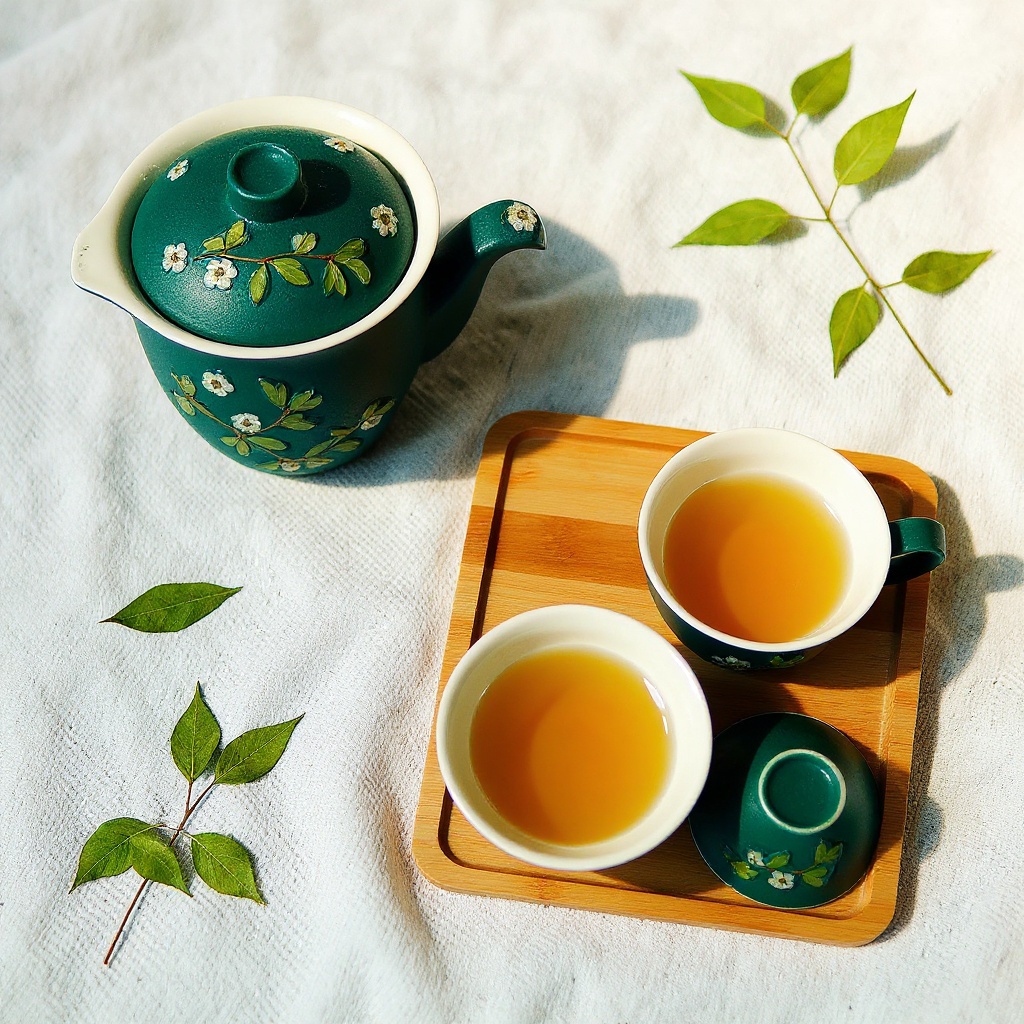
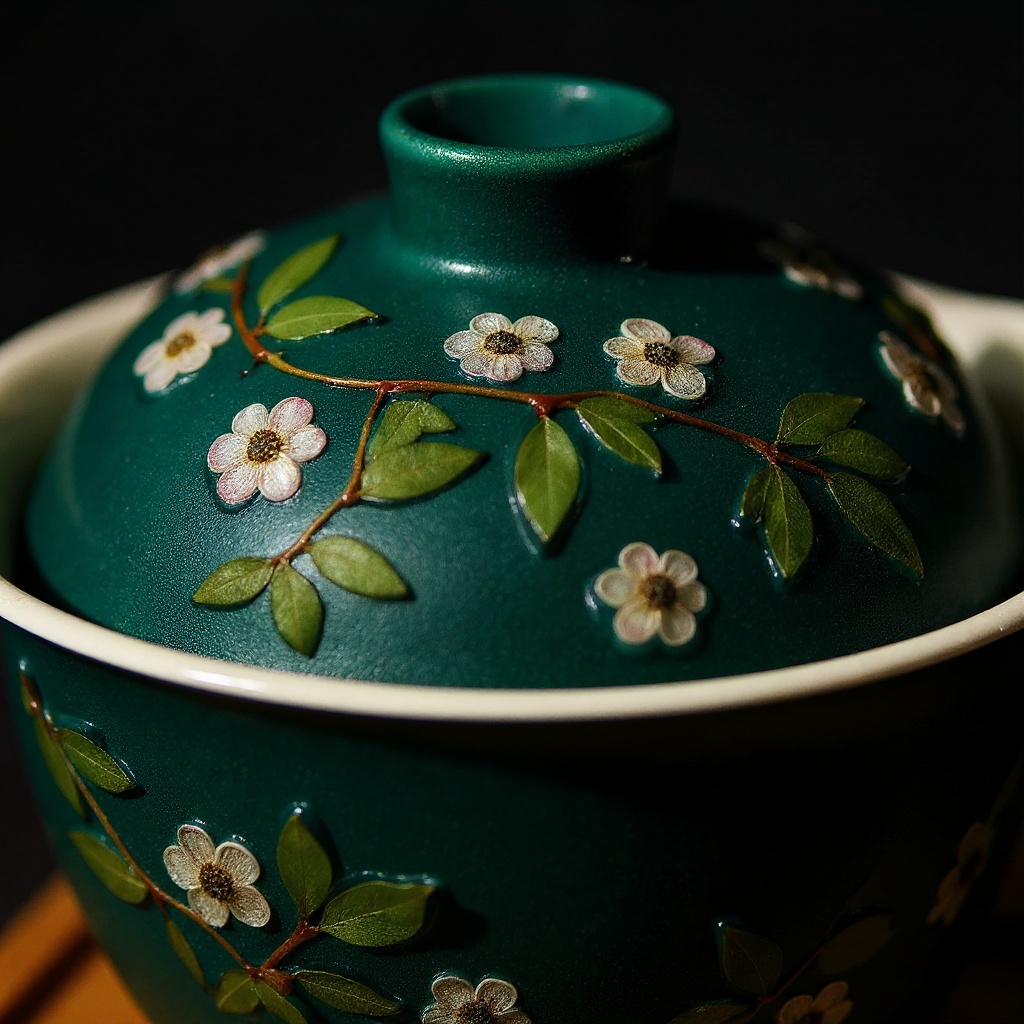
Most tea sets use surface decoration. Paint, transfers, decals applied after firing. Botanical ceramic teaware works differently—the flower petals become structural elements embedded in the clay body itself, fired at temperatures between 1,800–2,100°F until they carbonize and fuse permanently into the ceramic matrix.
The result is texture you can feel. Run a finger across authentic botanical teaware and the petal outlines push back against your skin. Raised. Dimensional. Impossible to wash off because they are the ceramic, not on it.
This distinction matters for buyers. A lot.
Mass-produced sets with photographic flower printing retail for $30–$80. The flowers look vivid in photos. They feel completely flat in person. Authentic botanical embedded sets occupy a different category entirely—each piece shaped by hand, petals positioned individually, fired on a schedule that takes 12–16 hours per kiln cycle.
According to the American Ceramic Society's documentation on botanical ceramic techniques, the leather-hard clay stage—approximately 15–20% moisture content—represents the only viable window for botanical embedding. Too wet and petals sink without creating relief. Too dry and the clay surface cracks around them during pressing.
Timing. That is everything in this craft.
The Firing Science Behind Embedded Botanical Elements
Understanding why botanical ceramics look and feel the way they do requires a brief look at what happens inside a kiln during firing.
Botanical material is mostly water and cellulose. At temperatures above 400°F, free moisture evacuates. Between 700–900°F, organic compounds begin carbonizing. Above 1,800°F, the cellulose structure burns away completely—but if the clay body has properly encased the botanical impression during leather-hard pressing, the negative space left behind registers as permanent raised or recessed relief in the fired ceramic.
Skilled ceramicists who work with botanical embedding use controlled ramp rates during firing, typically increasing kiln temperature no faster than 100–150°F per hour through critical carbonization zones. Rush this stage and trapped gases fracture the ceramic wall around petal impressions. The failure rate for complex botanical pieces during firing runs between 30–40% according to studio ceramicist surveys documented by Ceramic Arts Network in their 2022 technical resource guide on botanical firing protocols.
This explains the pricing. Failed pieces cannot be sold. Successful pieces must absorb the cost of failures.
Matte black glazes add another layer of technical complexity. Unlike glossy glazes that mature across a wider temperature band, matte black formulations—high in alumina and iron oxide—require precise cone 6–10 firing (2,165–2,345°F) to develop their characteristic non-reflective surface. Overfire by even 15°F and the glaze shifts toward satin or glossy. Underfire and the surface feels chalky, stains immediately on contact with tea.
The combination of botanical embedding requirements and matte black glaze chemistry creates a narrow technical window that eliminates casual ceramic production entirely.
How to Identify Authentic Hand-Thrown Botanical Ceramic Teaware
Authenticity markers fall into two categories: structural evidence of hand-throwing, and physical evidence of genuine botanical embedding.
Structural markers of hand-throwing:1. Throwing rings: Horizontal concentric ridges visible inside the vessel, left by the potter's fingers during centering and pulling 2. Wall thickness variation: Measurable differences in thickness—genuine hand-thrown walls vary 1–3mm across the vessel height 3. Base tool marks: Spiral or linear marks where the piece was cut from the wheel using a wire tool 4. Handle attachment irregularity: The junction where handle meets body shows individual scoring marks and compression texture 5. Rim profile variation: Slight undulation in the lip when viewed level with the rim from the side 6. Weight distribution: Hand-thrown pieces frequently feel bottom-heavy due to clay mass distribution during centering 7. Interior asymmetry: No two hand-thrown interiors read as geometrically identical under close inspection
Botanical embedding authenticity markers:- Petals feel raised above the glaze surface, not level with it - Petal edges show slight glaze pooling around them where liquid glaze collected during application - Individual petals vary slightly in depth—some more prominent, some barely raised—reflecting the variable pressure of hand-placement - Petal positioning follows no perfect geometric pattern or repeat - Under magnification, the ceramic surface around petals shows compression texture from the pressing tool
Mold-cast pieces show uniform wall thickness within 0.5mm throughout, perfectly symmetrical profiles, and visible seam lines along the exterior where mold halves joined. Printed botanical designs feel completely flat and show no glaze variation around petal edges.
Matte Black Ceramic and Heat Retention: What the Research Shows
Dark ceramic surfaces and heat retention is a topic with real physics behind it. Black surfaces have higher emissivity values than light surfaces—meaning they both absorb and radiate heat more efficiently. Research documented in the Journal of the American Ceramic Society confirms that dark matte ceramic surfaces retain liquid temperature approximately 18–24% longer than equivalent white or cream glazed vessels under controlled conditions, based on thermal emissivity coefficient differences measured at typical tea service temperatures (140–185°F).
For daily tea drinking, this translates to maintaining optimal brewing temperature across a longer portion of your session without requiring a tea warmer or cozy.
The matte surface finish also offers a practical advantage most buyers don't consider initially. Water spots disappear into matte black surfaces. Fingerprints become invisible. The teapot you photograph looks identical to the teapot you use daily, without constant cleaning between uses.
Honest Assessment: Who Should NOT Buy Botanical Ceramic Teaware
Here is something most buying guides for premium ceramics won't say directly.
If you have children under six, skip this category entirely. Not because botanical ceramics are dangerous—they aren't—but because the care requirements (no dishwasher, no temperature shock, careful storage with padding between pieces) create daily friction that erodes the joy of ownership fast. A beautiful $400 teapot that lives in a cabinet because you're afraid of breaking it stopped being functional the day you stopped using it.
Also: if you routinely make tea by microwaving water in the teapot, botanical ceramic teaware is wrong for you. Full stop. Handcrafted ceramics with metallic oxide glazes and uneven wall thickness should never go in a microwave. The heating is uneven. The glaze chemistry may include trace metals. The thermal shock risk is real.
Buy a kettle. Then buy the teapot.
Comparison: Ceramic Tea Set Types, Pricing, and Practical Differences
| Type | Price Range | Botanical Texture | Heat Retention | Dishwasher Safe | Uniqueness |
|---|---|---|---|---|---|
| Mass-produced printed | $30–$80 | None (flat print) | Low | Yes | Identical |
| Mid-tier stamped pattern | $85–$180 | Slight emboss | Low-Medium | Usually | Limited variation |
| Slip-cast with botanical glaze | $150–$280 | Moderate relief | Medium | No | Some variation |
| Hand-thrown botanical embedded | $280–$600 | Full tactile relief | High | No | Each piece unique |
| Studio art ceramics | $600–$1,200+ | Variable | High | No | One-of-a-kind |
| Antique/vintage dark ceramic | $200–$2,000+ | Variable | Variable | No | Historical provenance |
Tea Ceremony Traditions and the Significance of Dark Ceramics
Dark ceramic vessels hold documented significance across tea ceremony traditions. Japanese chanoyu frequently incorporates dark raku-fired bowls that embody wabi-sabi—the aesthetic of beauty found in imperfection, impermanence, and incompleteness. The irregularities in hand-fired dark ceramics aren't flaws within this framework. They're the point.Chinese gongfu ceremony traditionally uses dark Yixing purple clay teapots, valued for their porous clay body that seasons over years of use, absorbing tea oils and developing individual character. Glazed matte black ceramics don't season in this way—but they offer similar visual depth with easier maintenance and without the commitment to single-tea-type usage that serious Yixing collectors maintain.
The visual contrast matters practically too. Dark vessel walls make light-colored teas—white tea, green tea, yellow tea—appear luminous when poured. The aesthetic effect is real. The mindfulness research supporting focused attention in low-stimulus visual environments applies here: dark surfaces reduce visual noise during contemplative tea practice.
Step-by-Step Care Protocol for Matte Black Botanical Ceramic Teaware
Proper care extends the functional life of botanical ceramics by decades. Follow this sequence after every use:
1. Allow the piece to reach room temperature before washing—never run cold water over a hot ceramic surface; thermal shock causes hairline fractures that widen with repeated stress 2. Rinse with lukewarm water (not hot, not cold) to remove loose tea 3. Apply a small amount of mild dish soap to a soft cloth or natural-bristle brush—never a scrubbing pad 4. Clean in gentle circular motions, paying attention to the botanical relief areas where tea residue accumulates in petal depressions 5. Rinse thoroughly at the same lukewarm temperature used for washing 6. Pat dry with a soft cloth rather than air-drying, which leaves mineral deposits visible on matte black surfaces 7. Store with felt pads between stacked pieces; the petal relief on one piece can scratch the glaze surface of another without padding
For stubborn tea staining inside the teapot: fill with a solution of one tablespoon baking soda dissolved in lukewarm water, allow to sit for 20 minutes, then use a soft brush and rinse. Repeat once if necessary. The matte black exterior shows staining less readily than interiors—interior care matters more than it appears from outside.
Questions to Ask a Ceramicist Before Purchasing Botanical Teaware
If you're buying directly from a studio or artisan market, these five questions separate genuine botanical ceramic makers from sellers of mold-cast imports marketed as handmade:
1. What clay body do you use, and at what cone do you fire? Legitimate botanical ceramicists will answer this specifically—mid-fire stoneware at cone 6, or high-fire at cone 10, with a reason for the choice. 2. How do you embed the botanical elements—at what stage in the clay's drying process? Correct answer references leather-hard stage. Any answer describing petals added after bisque firing indicates surface application, not true embedding. 3. What is your typical firing schedule through the carbonization zone? Real botanical ceramicists know their ramp rates and why they matter. 4. Can I see or handle a piece before purchasing? Legitimate botanical teaware requires physical examination. Any seller insisting on photo-only sales for a product where tactile texture is the primary value proposition is selling you an image, not a ceramic. 5. What is your rejection rate per kiln load? If the answer is zero or close to it, the pieces are not genuinely hand-thrown botanical ceramics—the failure rate in authentic production is structural, not incidental.
The Investment Perspective: What Premium Pricing Actually Reflects
A handcrafted botanical ceramic tea set priced at $400–$600 reflects specific, documented labor and material costs.
Each piece requires 3–5 days of dedicated ceramicist time from initial throwing through final cooling. Material costs include high-quality stoneware clay ($15–$40 per piece in clay alone), specialized matte black glaze formulations, kiln fuel costs for extended firing cycles, and botanical materials sourced from flower preservation specialists. With a 30–40% failure rate during firing, each successful piece carries the cost of the failures that didn't make it.
The math is unfavorable compared to mass production. That's the entire point.
Premium botanical teaware is not competing with a $50 ceramic set on cost efficiency. It's competing with functional art objects—things you use daily that also carry genuine craft, uniqueness, and the kind of tactile pleasure that manufactured objects cannot provide.
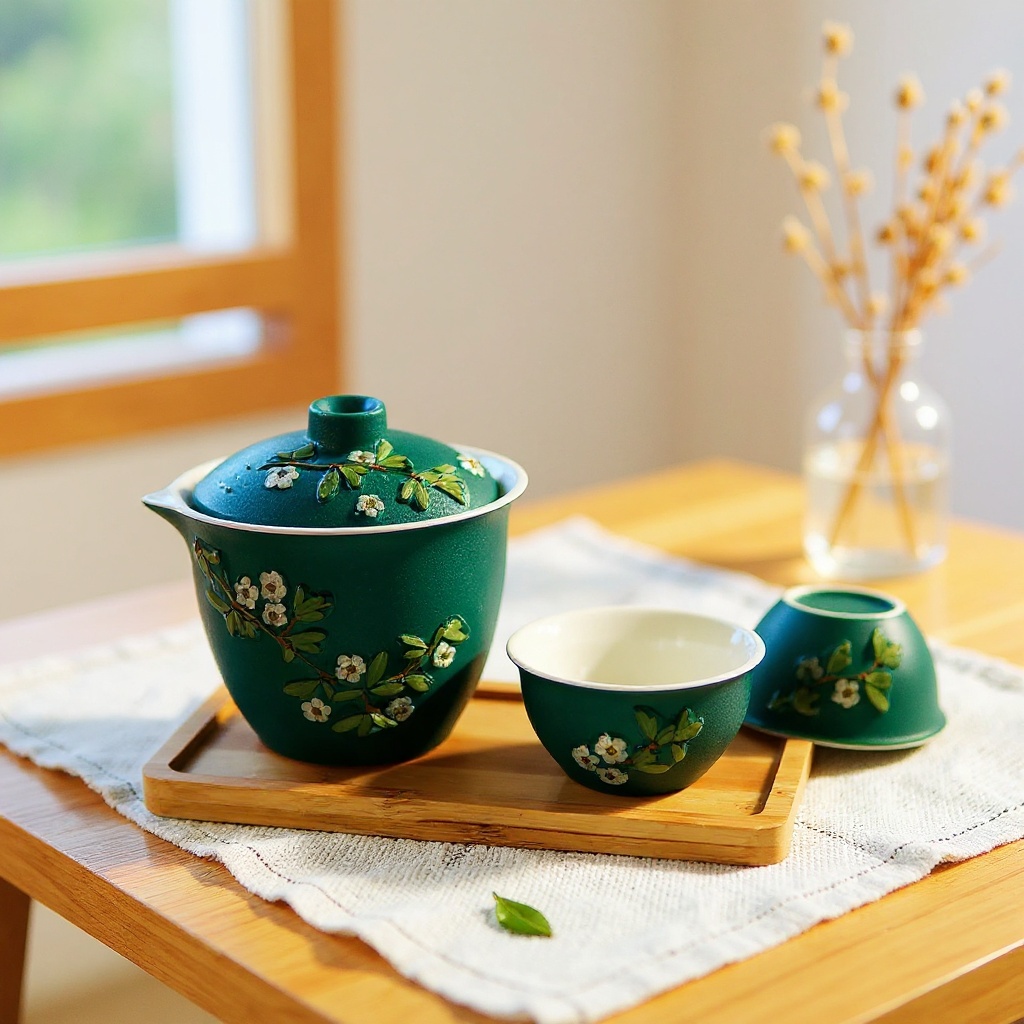
Our Handmade Black Ceramic Tea Set with Real Preserved Flowers represents this approach at $99.79—each set handcrafted with genuine botanical embedding techniques and matte black glaze, making it accessible relative to studio art pricing while maintaining authentic handcraft construction.