































Handmade Ruyao Teapot With Real Flowers Explained
Handmade Ruyao Teapot With Real Flowers Explained
By Lin Wei, ceramic researcher and teaware collector with 10+ years studying Song Dynasty glaze traditions, Longquan kiln techniques, and Chinese botanical ceramics. Contributor to The Ceramics Journal and Tea Culture Quarterly.A handmade ruyao teapot with real flowers permanently fuses dried botanical elements — petals, leaves, stems — beneath a clear protective glaze during high-temperature kiln firing, producing functional celadon art where no two pieces are identical. The pale blue-green celadon finish, distinctive ice crack glaze pattern, and tactile floral relief transform daily tea rituals into something closer to a moving meditation. Unlike printed or painted floral designs, the actual plant matter becomes part of the ceramic structure. Embedded. Permanent. Irreplaceable.
How Real Flowers Get Embedded Into Ruyao Ceramics
Creating a handmade ruyao teapot with real flowers takes artisans 3–5 days per piece, requiring the kind of precise timing and temperature judgment that no automated system can replicate.
Shaping and Preparing the Clay Body
The potter begins by shaping the teapot body — typically around 400ml — from porcelain clay with a mineral composition sourced from specific deposits in regions like Longquan or Jingdezhen, both historically linked to celadon production since the Song Dynasty (960–1279 CE). The clay dries slowly, sometimes over 24 hours, to prevent stress fractures before any botanical work begins.
Placing the Botanical Elements
Once leather-hard, pressed flower petals and leaves are positioned individually on the surface using a light organic adhesive that burns away during firing. The artisan makes compositional decisions in real time — where one petal overlaps another, how a leaf curves around the teapot's shoulder, which negative spaces to leave open. These decisions cannot be standardized. They are the entire point.
Firing Sequence and Glaze Application
A clear protective glaze is applied over the botanical elements. The piece then undergoes bisque firing at approximately 1,000°C, setting the form while preserving floral shapes within the glaze layer. According to ceramic materials science, at this stage the organic compounds begin carbonizing rather than combusting entirely because the overlying glaze restricts oxygen flow — a process ceramic scholars refer to as "reduction carbonization." The signature celadon glaze follows, achieving its characteristic blue-green color through iron oxide content (typically 1–3%) reacting under controlled atmospheric conditions during the final firing at approximately 1,260–1,300°C. This final firing melts the glaze completely, producing the ice crack pattern as the glaze contracts at a different rate than the clay body beneath it, permanently sealing the flowers inside.
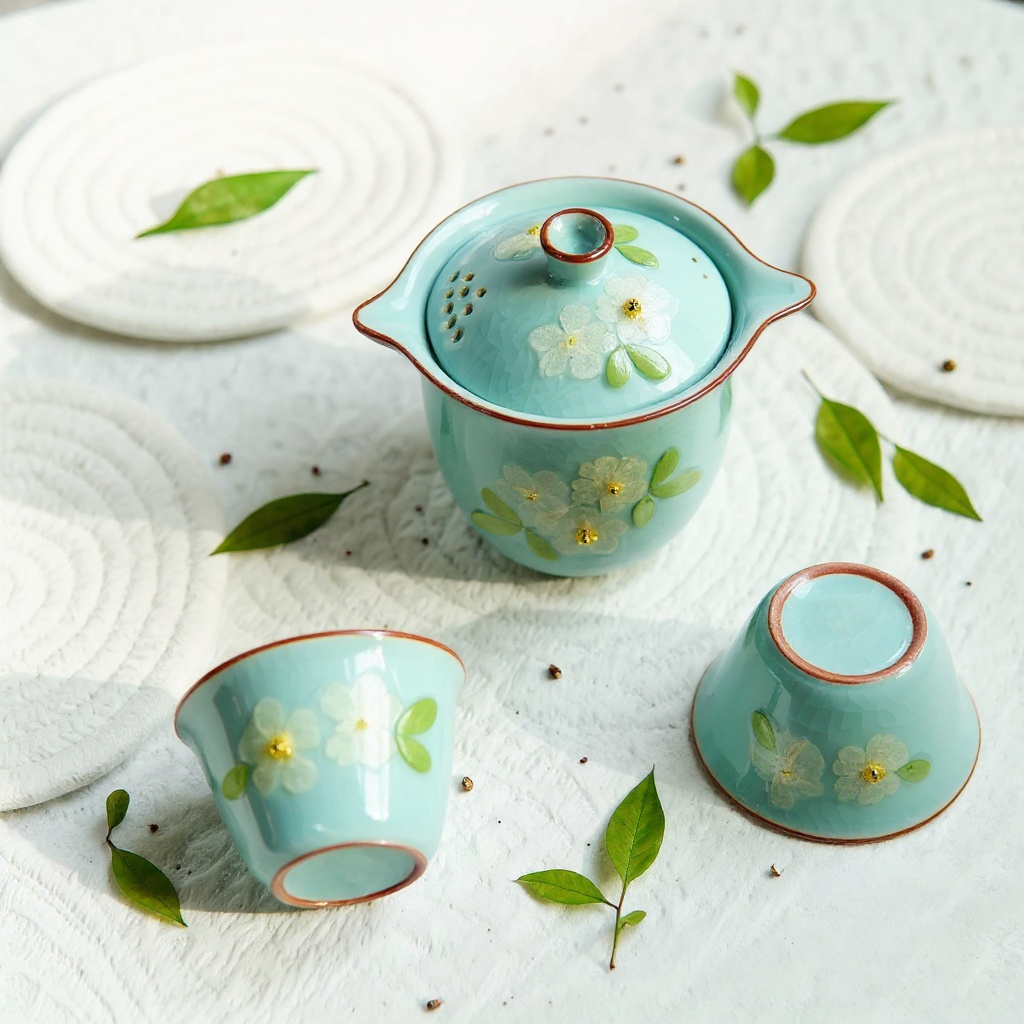
What makes each handmade ruyao teapot with real flowers singular isn't only the random crack pattern. It's how organic petal shapes interact with flowing glaze under heat — some flowers creating raised relief areas you can feel with your fingertips, others appearing to float just beneath the surface like pressed botanical specimens behind museum glass.
Understanding Ice Crack Glaze and Its Durability
The ice crack glaze defining authentic celadon ceramics is not structurally compromised. Not even close.
Why the Cracks Don't Leak
Hairline crazing patterns form naturally as glaze cools and contracts at a slightly different rate than the clay body — a phenomenon documented in ceramic science literature as "thermal expansion mismatch." The cracks are surface-level decorative effects. They don't penetrate through the clay wall. The high-temperature firing produces a glass-like barrier rated as food-safe and watertight by traditional ceramic standards maintained since the Song Dynasty, over 1,000 years of verified production history across Longquan and later Jingdezhen kilns.
Temperature Stability During Use
The ceramic body and glaze reach thermal equilibrium during firing, meaning normal brewing temperatures won't cause new cracks or alter existing ones. That said — avoid pouring boiling water directly into a cold, dry teapot. Pre-warm it first with hot water. This protects against thermal shock and, more importantly, actually improves tea flavor extraction by stabilizing brewing temperature from the first pour.
Honest Assessment Most Reviews Won't Give You
Honestly, if you buy a "ruyao" teapot for under $40 online with no artisan documentation, you're almost certainly getting a factory-molded piece with painted or transfer-printed crack patterns and no real botanical elements at all. The ice crack glaze and flower embedding process described here cannot be industrialized without destroying both. Premium pricing on genuine pieces isn't markup. It's math.
Why Handmade Celadon Commands Premium Pricing
The price gap between mass-produced tea sets and genuine handmade ruyao teaware reflects intensive labor, specialized materials, and multi-day kiln schedules that factories structurally cannot replicate.
| Production Method | Price Range | Creation Time | Key Characteristics | Flower Method |
|---|---|---|---|---|
| Mass Production | $30–$150 | Hours (molded) | Uniform, printed designs | None or decal |
| Mid-Range Artisan | $150–$400 | 1–2 days | Hand-thrown, painted glazes | Painted or printed |
| Authentic Ruyao | $100–$800+ | 3–5 days | Real flowers, ice crack glaze | Embedded under glaze |
| Studio Collector | $500–$2,000 | 1–2 weeks | Named artisan, documented kiln | Hand-positioned real botanicals |
| Museum/Archive Quality | $2,000+ | Weeks | Master artisan, rare clay deposits | Archival documentation |
Our Handmade Ruyao Ice Crack Teapot Set | Real Pressed Flowers | Celadon Art at $114.22 positions itself at the lower boundary of authentic ruyao pricing — accessible for what is genuinely collector-grade craftsmanship.
The labor intensity of embedding real flowers explains most of the premium. Each petal requires individual placement. The firing schedule requires human monitoring to prevent botanical materials from burning away entirely. And the specific clay body mineral content needed to produce celadon's blue-green color costs significantly more than standard stoneware clays. Kilns firing at 1,280°C consume substantially more energy per load than lower-fired pottery. The economics are unambiguous.
Caring for Your Botanical Celadon Teaware
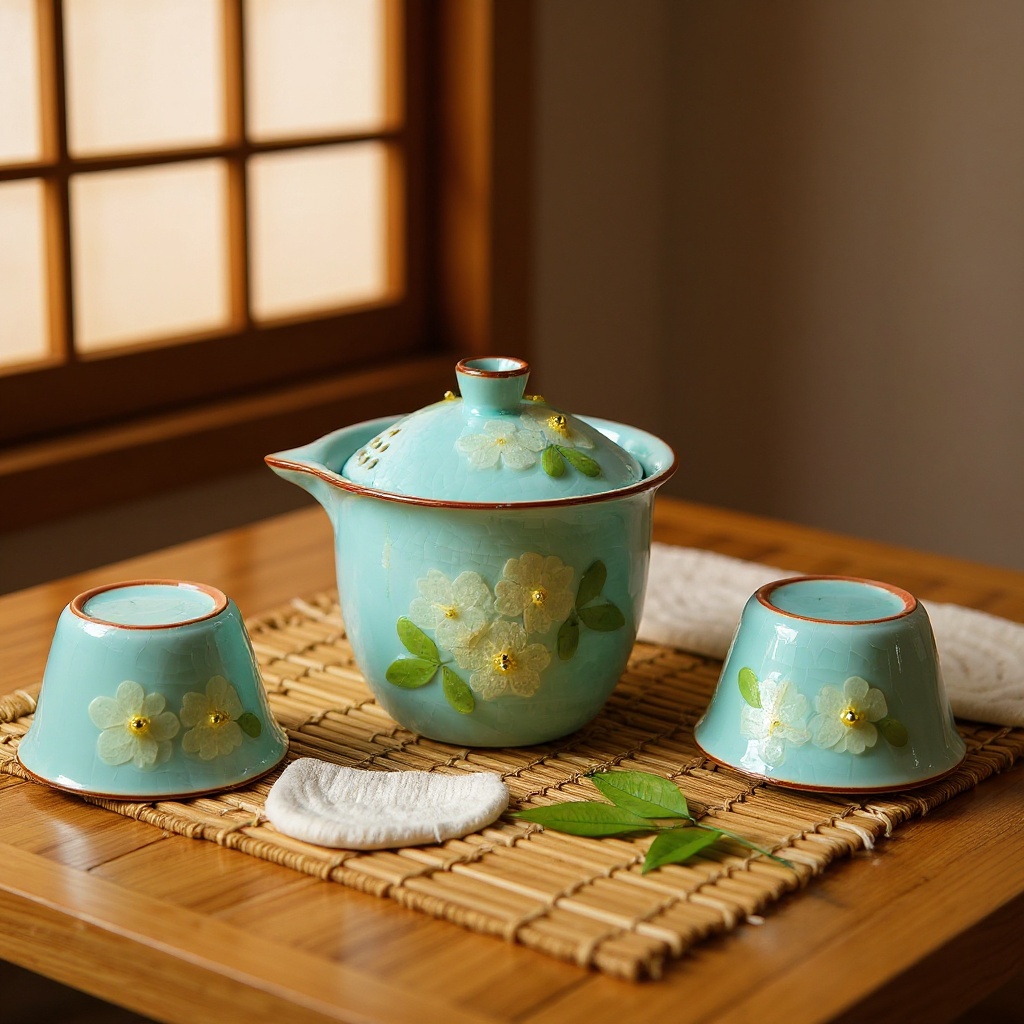
Proper care keeps a handmade ruyao teapot with real flowers beautiful and functional for decades. The embedded flowers are permanently sealed under glass. They won't fade or flake with normal use.
Step-by-Step Care Routine
1. Rinse after every use — warm water, no soap required for light tea residue 2. Hand wash only — soft sponge, mild dish soap, never abrasive scrubbers 3. No dishwasher — harsh detergents and water pressure degrade glaze luster over time 4. No microwave — rapid uneven heating stresses the ceramic body 5. Remove tea staining with a paste of baking soda and water, applied gently and rinsed thoroughly 6. Pre-warm before brewing — pour hot water in and out before adding tea leaves 7. Air dry completely before storage to prevent moisture retention in any surface variation
The natural patina that develops with regular use — a subtle deepening of the glaze's character — is considered a positive quality marker in traditional Chinese ceramics culture. The Japanese concept of wabi-sabi applies directly here: the teapot that shows its history of use is more beautiful, not less.
Best Teas for Ruyao Ceramic Brewing
Glazed celadon maintains a neutral surface — unlike unglazed clay teapots that absorb and blend flavors over time — making a handmade ruyao teapot with real flowers compatible with any tea type without cross-contamination concerns.
That said, certain teas particularly complement the thermal properties and aesthetic of celadon:
1. White teas — subtle flavors benefit from stable temperature; nothing is masked 2. Green teas — celadon's heat retention prevents over-steeping during short infusions 3. Oolong varieties — the ~400ml capacity is designed for multiple short steepings 4. Floral herbal blends — visually and aromatically aligned with the embedded flower design 5. Jasmine tea — a traditional pairing with celadon in tea ceremony culture documented as far back as the Ming Dynasty 6. Dragon Well (Longjing) green — canonical Chinese tea matching the ceramic heritage 7. Chamomile — the ritual slowness of herbal brewing matches celadon's meditative aesthetic
The 80–90ml matching cups are sized for traditional Chinese gongfu tea service, where small portions allow you to observe how tea character evolves through sequential infusions. This format keeps temperature stable between sips and extends the ritual. Unhurried. Intentional. Worth doing properly.
Darker teas — black, pu-erh, heavily roasted oolongs — work perfectly well in celadon. Their robust flavors won't be harmed by the neutral glaze surface. They simply won't showcase celadon's thermal nuance as clearly as delicate teas do.
Authenticating Genuine Versus Mass-Produced Pieces
With authentic ruyao teaware commanding premium prices, distinguishing genuine artisan work from factory items labeled "handcrafted" is a practical skill worth developing.
Authentication Checklist
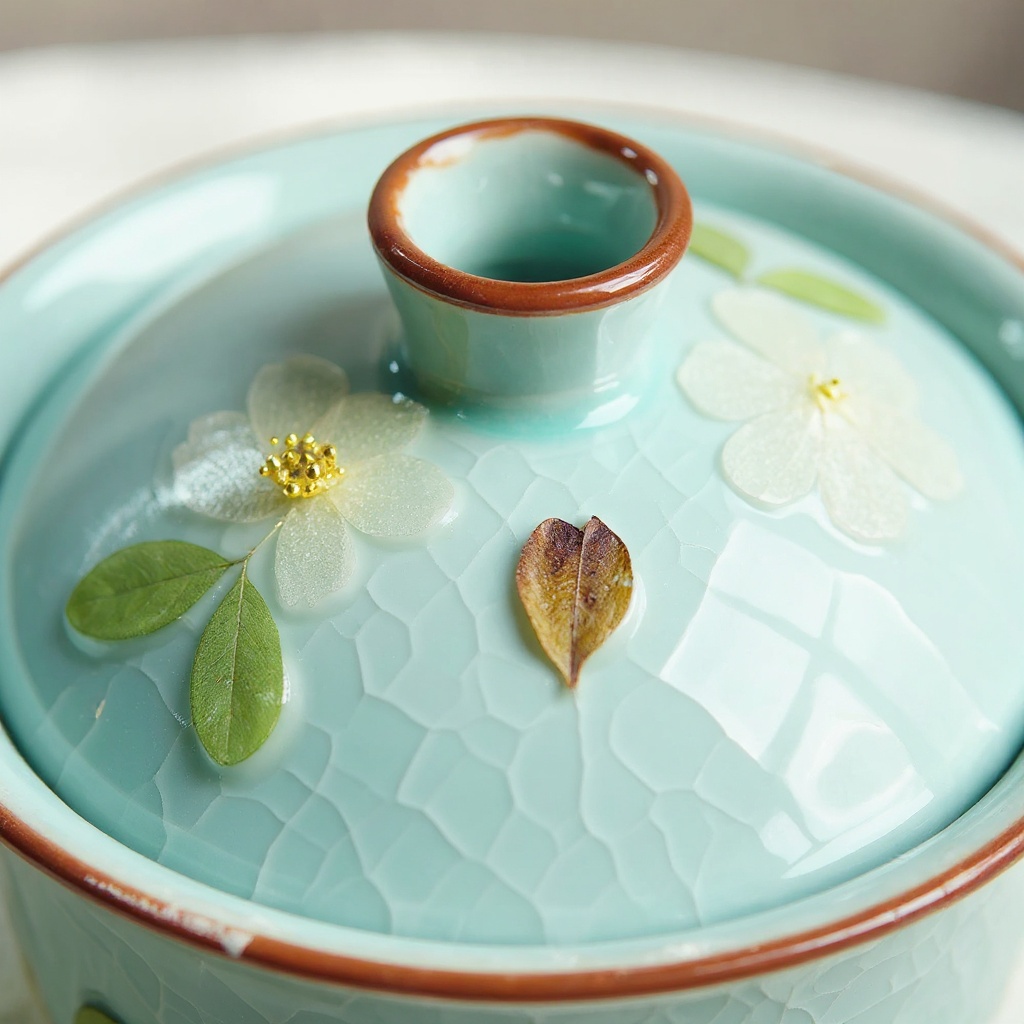
- Subtle shape irregularity — a genuine piece may sit fractionally uneven on a flat surface; factory molds achieve perfect symmetry - Organic flower placement — real artisan work shows overlapping, directional, non-repetitive botanical compositions - Unique crack pattern — authentic celadon shows random crazing that follows no grid; identical patterns across multiple pieces indicate transfer printing - Weight variation when tapped — hand-thrown walls have slight thickness variation; tap different zones and listen for tonal shifts - Base and foot ring finishing — genuine pieces show tool marks or subtle irregularities on the unglazed foot ring - Artisan documentation — reputable sellers provide kiln region, artisan name, or production documentation
Genuine handmade ruyao pieces show human imperfection at every point of examination. Not because the artisan was careless. Because those variations are structurally inseparable from the hand-making process itself.
FAQ
Are the real flowers inside the teapot actually preserved, or do they burn away during firing?The flowers are permanently preserved within the glaze structure through a process ceramic materials scientists call reduction carbonization. At firing temperatures of approximately 1,280°C, the overlying glaze layer restricts oxygen flow to the botanical material underneath, causing the plant matter to carbonize — chemically altering molecular structure — rather than combust entirely. The visible forms are the actual carbonized flower structures, stabilized within vitrified glaze. Structurally intact. Chemically stable. Permanent.
Will the ice crack glaze on a Ruyao teapot leak or let water seep through?No. The crazing pattern is a surface phenomenon caused by thermal expansion mismatch between glaze and clay body during cooling — documented in ceramic science literature and observed across Longquan celadon production since the Song Dynasty (960–1279 CE). The cracks do not penetrate the clay wall. The fired glaze layer is a continuous vitrified barrier, food-safe and watertight.
Is Ruyao celadon food-safe for daily hot tea brewing?Yes. High-fired celadon at 1,260–1,300°C produces a non-porous, chemically inert glaze surface that does not leach harmful substances into liquids. This food-safety standard has been verified through continuous functional use of celadon teaware across China and Japan for over a millennium. The embedded botanical elements are fully encapsulated beneath this glaze layer and present no health risk.
How do I tell if a Ruyao teapot is genuinely handmade or factory-produced?Examine six specific markers: subtle shape irregularity, non-repetitive organic flower placement, unique random crack pattern, tonal variation when tapping different wall areas, tool marks on the unglazed foot ring, and seller-provided artisan or kiln documentation. Factory pieces achieve perfect symmetry; genuine hand-thrown pieces do not. If crack patterns appear identical across multiple pieces in a seller's listing, that is definitive evidence of printed or transferred crazing effects.
Why does a handmade celadon teapot cost significantly more than a standard Chinese teapot set?The 3–5 day creation timeline, specialized porcelain clay body with iron oxide content required for celadon color, high-temperature firing at approximately 1,280°C, hand-placement of real botanical elements, and continuous artisan judgment throughout the process create costs that mass production structurally cannot match. Factory sets priced at $30–$150 use molded clay, lower firing temperatures, and printed or decal floral designs. The materials alone for authentic ruyao cost more than the retail price of mass-produced alternatives.
Can I put a Ruyao teapot in the dishwasher or microwave?No to both. Dishwasher detergents and water pressure degrade celadon glaze luster over repeated cycles and can exploit microscopic stress points in the crazing pattern. Microwave heating creates rapid, uneven temperature gradients that stress the ceramic body — thermal shock risk without the benefit of the pre-warming technique that actually improves tea brewing. Hand wash with a soft sponge. Pre-warm with hot water before adding tea. Both methods protect the teapot and improve the brewing result simultaneously.
Do the pressed flowers in the glaze fade over time with regular use?No. The carbonized plant matter sealed within vitrified glaze is chemically stable at normal brewing temperatures (typically 70–100°C for tea). Fading requires photochemical degradation (UV exposure) or chemical solvent contact — neither applies to materials encapsulated beneath high-fire glaze. Normal brewing and hand washing will not affect their appearance. The glaze surface itself may develop a subtle patina with extended use, considered a desirable quality in traditional celadon culture.
What tea type best protects the glaze during regular use?All tea types are safe for the glaze — the vitrified celadon surface is chemically inert and non-porous, unlike unglazed clay teapots that absorb tea oils over time. Delicate teas like white, green, and light oolong most clearly showcase celadon's thermal stability. Robust teas like black or pu-erh work equally well functionally. The glaze does not discriminate. Neither should you.
Is there any tea type I should avoid in a Ruyao teapot?No specific tea type damages glazed celadon. However, if you use the teapot for strongly scented teas like spiced chai blends with milk, clean it thoroughly before switching to delicate teas — not because of glaze interaction, but because residual aromatic compounds on the interior surface can transfer subtly to subsequent brews. The glaze itself is neutral; your cleaning habits determine flavor purity.
When you're ready to transform your daily tea ritual into a mindful botanical art experience, a genuine handmade ruyao teapot with real flowers offers both functional excellence and singular visual beauty that mass-produced alternatives cannot approach. Browse our Handmade Ruyao Ice Crack Teapot Set | Real Pressed Flowers | Celadon Art to experience authentic celadon craftsmanship for yourself.


