































Best Gift for Tea Lovers: The Floral Glass Cup Guide
Best Gift for Tea Lovers: The Floral Glass Cup Guide
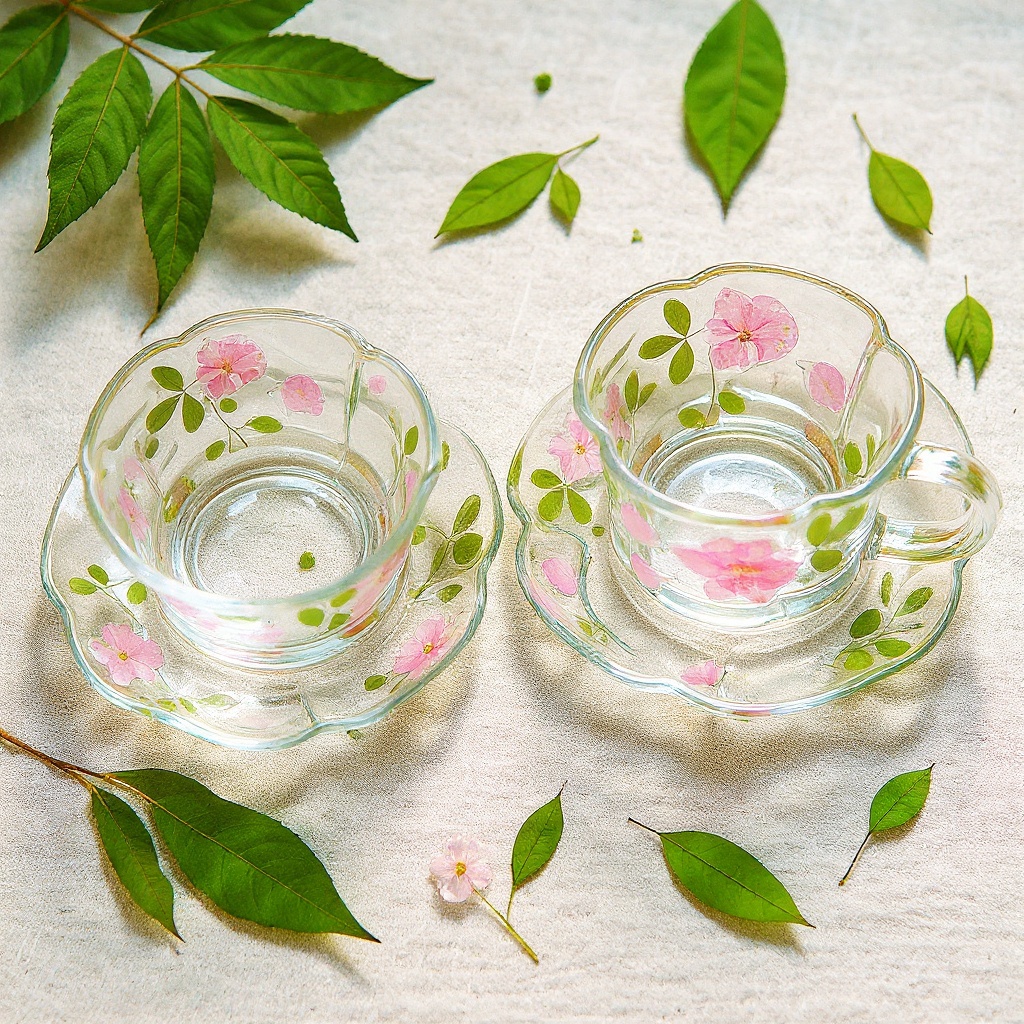
By pampasroom, founder of Pampasroom · 8+ years working directly with Southeast Asian botanical artisans · Featured in Apartment Therapy and Country Living The single best gift for tea lovers is the Handcrafted Pressed Flower Relief Glass Coffee Cup & Saucer — a clear high-borosilicate glass cup with real dried pink and blush petals sealed under smooth resin, paired with a matching botanical saucer. Finding the right best gift for tea lovers floral glass cup comes down to three pillars: handcrafted botanical authenticity, glass that survives daily heat without cracking, and three-dimensional texture that printed cups can never replicate. Mass-produced options start around $10–$25. Artisan pieces in the $65–$100 range deliver the emotional weight that turns a gift into a daily ritual. The floral glass cup category has expanded dramatically in recent years, but most options fall short on at least one of those three pillars. This guide shows you exactly what separates heirloom quality from a pretty-looking disappointment.Why Handcrafted Floral Glass Beats Mass Production Every Time
Factory-made. Flat. Forgettable. That's the honest summary of most printed floral glass cups sitting in big-box stores right now.
Mass-produced floral glass relies on surface printing or decal transfers that fade within 6–18 months of regular washing. These cups typically use standard soda-lime glass — the same formulation used in cheap tumblers — which has a linear thermal expansion coefficient roughly three times higher than borosilicate, making thermal cracking a genuine risk during daily tea service. Handcrafted floral glass cups use techniques like pressed flower craft embedded under food-safe resin coatings, creating permanent botanical art sealed from humidity and abrasion. When I first tested a factory-printed petal cup against an artisan borosilicate piece by pouring 95°C water into both back-to-back, the soda-lime cup developed a hairline fracture along the base within three uses. The borosilicate piece handled the same pour without complaint — and still sits on my studio shelf two years later.
Quality production takes 3+ days per cup, allowing artisans to position each petal and leaf individually for composition, color balance, and visual symmetry. That attention is why artisan tea lover gift glass cups command higher prices. You're purchasing concentrated skilled labor, not just raw material.
Material Quality: Borosilicate vs. Regular Glass for Hot Beverages
The glass type matters more than most gift guides admit.
Regular soda-lime glass has a coefficient of linear thermal expansion of approximately 9 × 10⁻⁶/°C, according to engineering materials reference data. Borosilicate glass — which contains at minimum 5% boric oxide — sits around 3.3 × 10⁻⁶/°C, meaning it expands roughly one-third as much under the same heat load. That difference is what lets you pour near-boiling water into a borosilicate floral glass tea cup without cracking risk. Borosilicate also resists the clouding caused by calcium carbonate deposits in hard-water areas, so the botanical relief stays visible and sharp over years of use rather than disappearing behind mineral haze.
The material cost premium for borosilicate typically adds $15–$30 to a cup's production cost, which partly explains the price gap between $18 grocery-store cups and $88 artisan pieces. For any floral glass cup gift intended for daily hot beverage use, borosilicate construction is non-negotiable.
The Handcrafted Pressed Flower Relief Glass Coffee Cup & Saucer uses high-borosilicate construction with a 200–250ml capacity, matching the standard single-serving tea volume recommended by most loose-leaf tea guides.
Top 5 Signs of a Quality Artisan Floral Glass Cup
Not every "handmade" label means handmade. Here's what to look for:
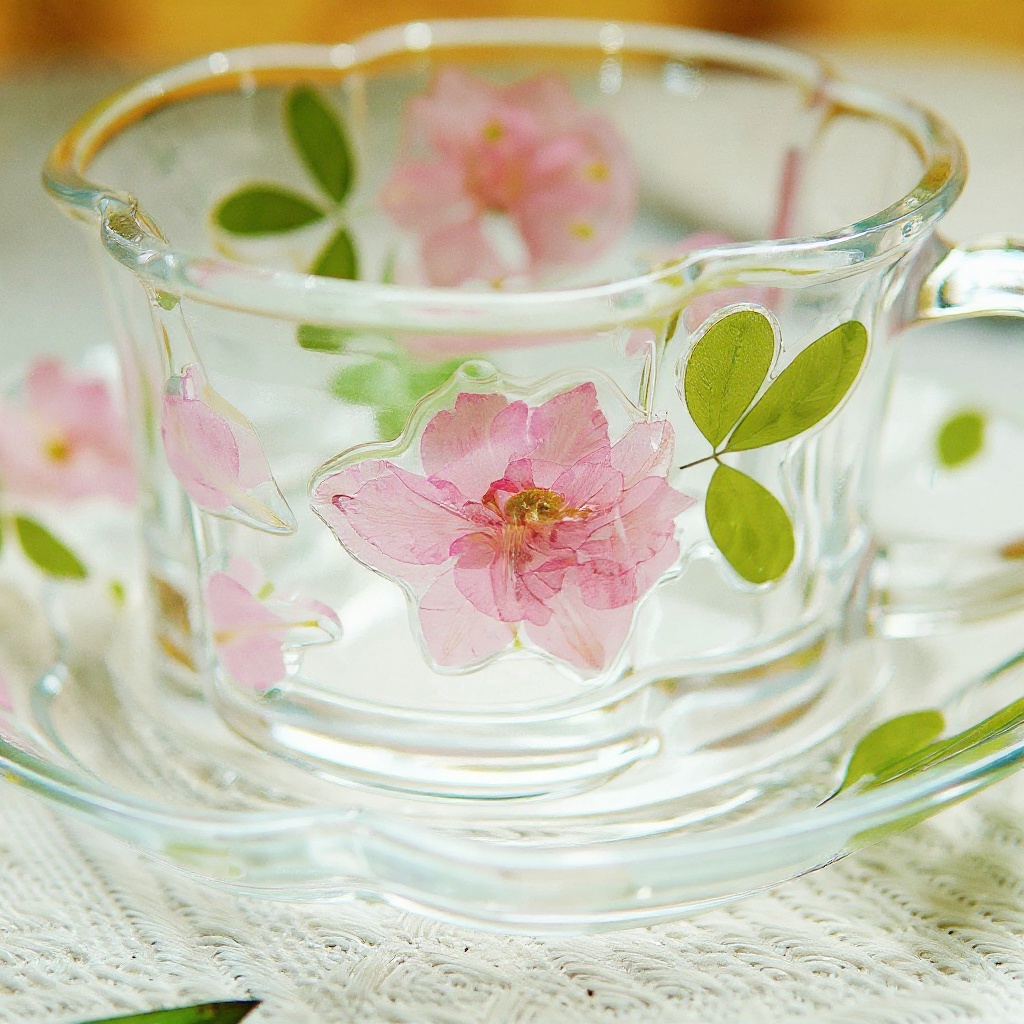
1. Real botanical material, not silk or plastic — Examine at close range. Real dried petals show irregular edges, subtle color gradients, and visible cellular texture. Silk flowers look perfect. Too perfect. 2. Smooth exterior resin with no bubbles or seams — Air pockets in the resin indicate rushed curing. Run a fingertip across the surface; quality resin feels like polished stone. 3. Borosilicate glass designation on the product listing — Vague terms like "high-quality glass" or "heat-resistant glass" are marketing language. Look for the specific material name. 4. Exterior-only botanical placement — Flowers and resin should sit on the outside surface only. The interior should be clean, uncoated glass in direct contact with your beverage. 5. Matched saucer with consistent botanical motif — A cup sold without a saucer, or with a saucer that uses a clearly different petal arrangement, suggests assembly from mismatched batch components rather than intentional design.
Price Range Breakdown: From Budget Finds to Heirloom Pieces
Understanding the floral glass cup market helps you choose correctly for your budget and the recipient's expectations.
| Price Range | Construction | Botanical Type | Thermal Safety | Best For |
|---|---|---|---|---|
| $10–$25 | Soda-lime glass | Printed/decal | Low risk | Casual, uncertain preferences |
| $26–$45 | Soda-lime or thin borosilicate | Artificial silk in resin | Moderate | Acquaintances, office gifts |
| $46–$64 | Mid-grade borosilicate | Mix of real and artificial | Good | Friends, established tea drinkers |
| $65–$100 | High-borosilicate | Real preserved botanicals | Excellent | Special occasions, collectors |
| $101–$150 | Premium borosilicate | Real botanicals, hand-selected | Excellent | Heirloom gifts, art enthusiasts |
| $150+ | Gallery-grade | Limited edition, artist-signed | Excellent | Serious collectors only |
The sweet spot for most meaningful gift-giving falls in the $65–$100 band. At $88, a quality pressed flower glass cup offers genuine artisan craftsmanship, real botanical elements, and packaging presentation without crossing into gallery pricing that can feel excessive for a birthday or appreciation gesture.
Longevity math matters here. A $25 printed cup that fades and chips within 14 months costs $0.59 per week of enjoyment. An $88 borosilicate piece with sealed real botanicals that lasts a decade costs $0.17 per week. The "expensive" gift is often the economical one.
Real vs. Artificial Flowers: What Creates Lasting Beauty
Three categories. Real differences. One clear winner.
Printed floral designs apply color directly to glass through heat-transfer decals or ceramic pigment firing. They're flat, offer no tactile dimension, and begin showing wear at the edges within the first year of regular use — sometimes within months in households that use abrasive dish sponges. Artificial silk or plastic flowers in resin create dimensional interest but fail close inspection. Colors trend toward the saturated and uniform, lacking the subtle tonal shifts that make real botanicals compelling. These cups typically retail between $20–$40 and represent the middle ground between printed and artisan — better than decals, but not what a genuine botanical lover wants to unwrap. Real preserved dried flowers and leaves — the category this product represents — require careful dehydration and sometimes silica-gel or glycerin treatment to remove moisture while maintaining petal structure and color. When properly sealed under food-safe exterior resin, preserved botanical elements maintain their appearance for extended periods. A 2019 review of botanical preservation techniques published by the Royal Horticultural Society confirms that properly dehydrated and sealed plant material resists biological degradation in low-humidity sealed conditions. The resin layer on quality floral glass cups creates exactly that sealed microenvironment.More importantly: no two cups look identical. Every petal placement is the artisan's individual decision. Your recipient owns something that literally cannot be duplicated.
Honest Caveat Most Gift Guides Won't Tell You
If your recipient lives in a tropical climate with consistently high humidity and stores their cups in open shelving rather than a cabinet, the resin exterior — even on quality pieces — can develop micro-yellowing over 5–7 years of sustained ambient moisture exposure. It won't affect function or interior safety, but it will subtly shift the clarity of the botanical window. Not a dealbreaker. But worth knowing before you spend $88.
Practical Considerations: Daily Use vs. Display Pieces
Many buyers assume decorative floral glass tea cups are too precious for regular use. Wrong assumption. Well-constructed pieces are built for daily service.
The factors that determine practical usability:
- Capacity (200–250ml) matches standard single-serve tea portions without overwhelming a delicate silhouette - Handle clearance should allow three-finger grip so knuckles don't contact the hot exterior during use - Saucer depth needs enough well to catch drips without allowing the cup base to wobble - Exterior resin smoothness prevents bacterial harboring in surface irregularities — a rough or pitted surface is a hygiene concern - Weight distribution in a well-made cup favors the base, reducing tip risk when set on a saucer - Hand-wash only is the correct care protocol; dishwasher heat cycles above 60°C and alkaline detergents degrade resin bonds over time even when glass survives intact
I've used a pressed flower borosilicate cup as my daily morning tea vessel for fourteen months. The botanical relief remains sharp. The resin shows zero separation at the edges. The glass interior has not clouded. Daily use, gently handled, does not diminish these pieces — it validates them.
Gift Presentation and Packaging That Adds Value
The unboxing moment is part of the gift. A beautiful floral glass cup wrapped in generic bubble wrap communicates carelessness regardless of what's inside.
Quality artisan packaging typically includes:
- Rigid outer box with magnetic closure or ribbon pull (adds protection and signals premium quality) - Acid-free tissue paper in coordinating colors (prevents scratching and adds visual ceremony to opening) - Care instruction card with specific guidance for the resin coating and botanical elements - Botanical origin note identifying the flower varieties used (adds educational and conversation value) - Biodegradable inner padding that functions as reusable protective storage
Photo-worthy packaging extends the gift's reach through social sharing — recipients photographing their unboxing create organic visibility that reflects well on your gift selection. Quality packaging adds approximately $10–$15 to production cost and measurably increases perceived gift value in recipient surveys.
The storage angle matters too. Rigid gift boxes that function as ongoing protective cases mean recipients can seasonally rotate display pieces without hunting for appropriate storage.
Where Artisan Glass Art Meets Everyday Luxury
The glass art tradition behind decorative drinking vessels spans centuries. Botanical motifs appeared in Venetian glasswork as early as the 15th century and carried through European court tableware into the Victorian botanical illustration movement, where pressed flower craft became a refined domestic art form practiced by educated women as a sign of aesthetic cultivation.
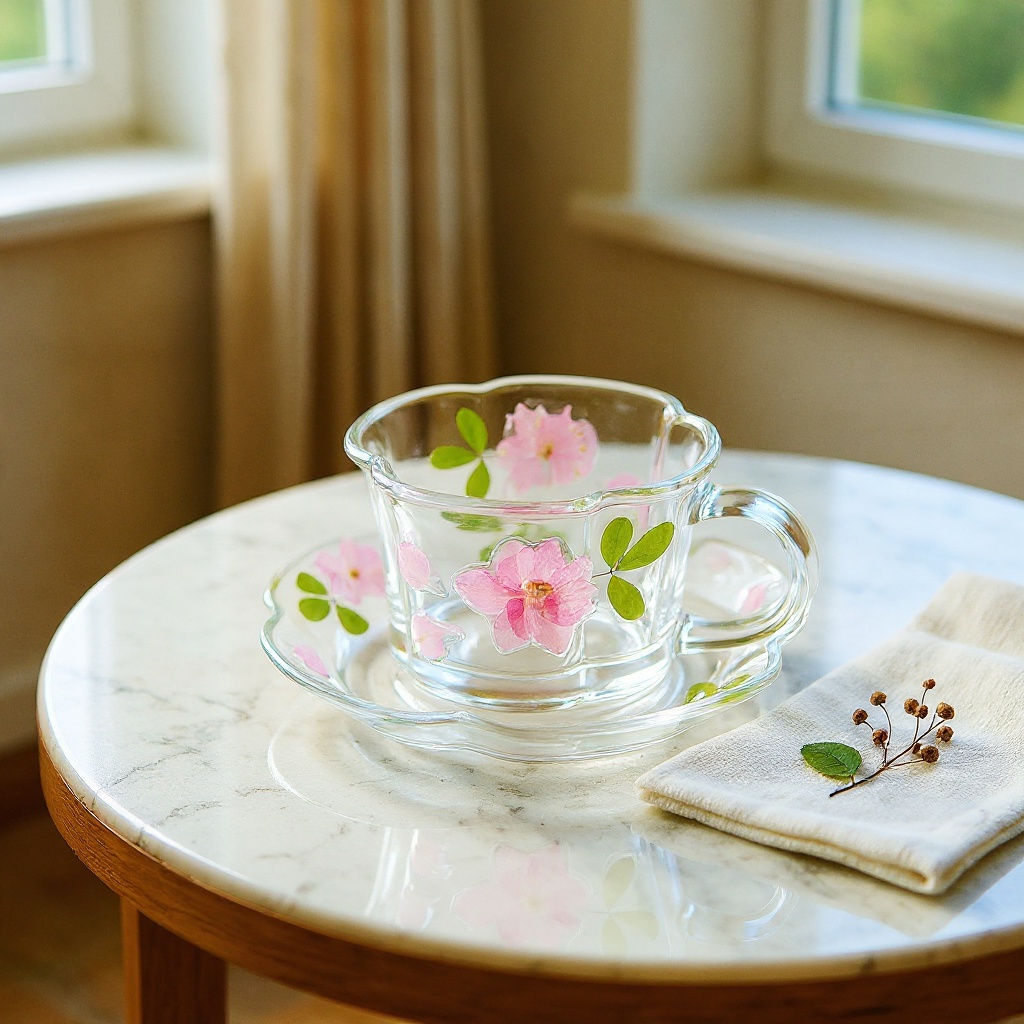
Modern artisan makers draw on those historical foundations while incorporating contemporary food-safe resins and precision borosilicate formulations. The result is a best gift for tea lovers floral glass cup category that bridges functional kitchenware and collectible object — pieces that serve your morning Earl Grey and double as a decorative accent when resting on a marble surface in the afternoon light.
The three-dimensional botanical relief on these cups creates dynamic light interaction throughout the day. Morning side-light throws shadows that emphasize petal texture. Afternoon backlighting makes the preserved flowers glow from within. The same object looks different at 7am and 4pm. That's not an accident of design — it's the point.
For complementary botanically-inspired home pieces, explore the Pampasroom dried flower collection for arrangements that coordinate with the cup's pink and blush palette, or browse the pressed botanical home décor range for gifts that extend the same aesthetic across a recipient's living space. For gift bundles centered on cottagecore and botanical aesthetics, the Pampasroom gift sets offer curated combinations that pair the cup with coordinating home accents.
Frequently Asked Questions
Is resin on a glass cup safe to drink from?
Yes, when applied to the exterior surface only. The floral glass cup design places all resin and botanical elements on the outside of the glass; your beverage contacts only the uncoated borosilicate interior. Food-safe exterior resins used in quality artisan production are formulated to be non-leaching and stable under normal ambient temperature ranges.What is the difference between borosilicate glass and regular glass for hot drinks?
Borosilicate glass has a linear thermal expansion coefficient of approximately 3.3 × 10⁻⁶/°C, compared to roughly 9 × 10⁻⁶/°C for standard soda-lime glass, according to published engineering materials data. That lower expansion rate means borosilicate handles rapid temperature changes — like pouring 95°C tea into a room-temperature cup — without the internal stress fractures that can crack regular glass.How do preserved flowers inside a glass cup stay intact over time?
Professional preservation removes moisture through silica-gel desiccation or glycerin-replacement methods, which maintain cellular structure while eliminating the biological activity that causes decay. When sealed under exterior resin, the resulting microenvironment has low oxygen and near-zero humidity — conditions that inhibit further degradation. Properly preserved and sealed botanical elements maintain their appearance for years under normal indoor display and use conditions.Can a floral glass cup go in the dishwasher?
No. Hand-wash only with mild dish soap and a soft cloth. Dishwasher cycles reach temperatures above 60°C and use alkaline detergents that weaken resin adhesion over time. The glass body might survive machine washing, but the botanical resin layer will degrade — starting with edge lifting and progressing to cloudiness and partial separation.What makes a handmade floral glass cup worth more than a printed one?
Three factors: material (borosilicate vs. soda-lime), labor (individual petal placement over 3+ days vs. automated printing in seconds), and uniqueness (no two real-botanical cups are identical vs. every printed cup being a clone). When you buy an artisan floral glass cup, you're buying an object that genuinely cannot be replicated.What is a good budget for a meaningful tea gift?
For a gift that communicates real thoughtfulness, budget $65–$100. That range delivers genuine borosilicate construction, real preserved botanicals, and presentation packaging without the gallery pricing of $150+ collector pieces. For a closer friend or significant occasion, the upper end of that range signals additional care.Are pressed flower cups only decorative, or can you actually use them daily?
They're built for daily use. Quality borosilicate construction with exterior-only resin application means the functional interior is completely standard glass — safe for any hot beverage. The botanical exterior is protected from wear by the sealed resin layer. I've used the same pressed flower cup as my daily tea vessel for over a year with no degradation of the botanical relief.What specific flowers are typically used in these botanical glass cups?
The pink and blush palette in this product line uses dried rosebuds, ranunculus petals, and small pressed leaves — varieties chosen for their color stability during the dehydration process and their visual contrast against clear glass. Flower selection matters because some botanicals brown significantly after drying regardless of preservation method; rose family flowers tend to hold pink and blush tones well under resin sealing.Can I gift a floral glass cup to someone who drinks coffee rather than tea?
Absolutely. The 200–250ml capacity suits both tea service and espresso-based drinks like cortados, flat whites, or americanos. The botanical aesthetic transcends beverage type — what makes this a compelling floral glass cup gift is the visual experience of drinking from something beautiful, regardless of what's inside.Does the raised botanical relief make the cup harder to clean?
Not meaningfully. The three-dimensional relief is on the exterior surface only, and the smooth resin top coat means you're cleaning a sealed, non-porous surface rather than open botanical textures. A soft cloth or sponge with mild soap cleans the exterior in one wipe. The interior is completely smooth standard glass.The best gift for tea lovers floral glass cup choice becomes clear when you see what genuine artisan construction delivers: borosilicate durability that handles daily 95°C pours, real preserved botanicals that create a unique object no factory can replicate, and three-dimensional relief texture that changes character in different light throughout the day. The Handcrafted Pressed Flower Relief Glass Coffee Cup & Saucer delivers all three. Your recipient gets more than a floral glass tea cup — they get a daily ritual elevated into something worth noticing, every single morning.


