































Dust-Proof Lid Glass Tumblers With Flower Art Explained
Dust Proof Lid Glass Tumbler with Flower Art: Complete Guide
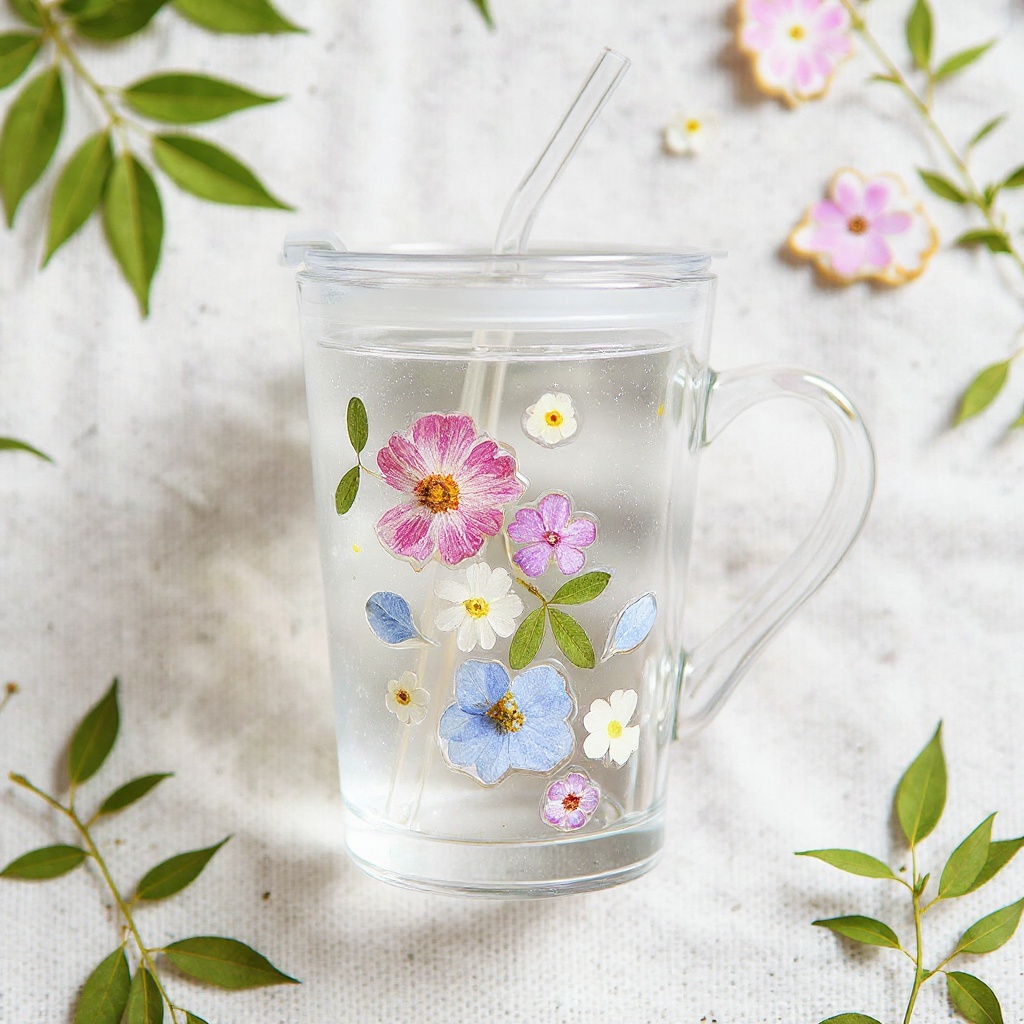
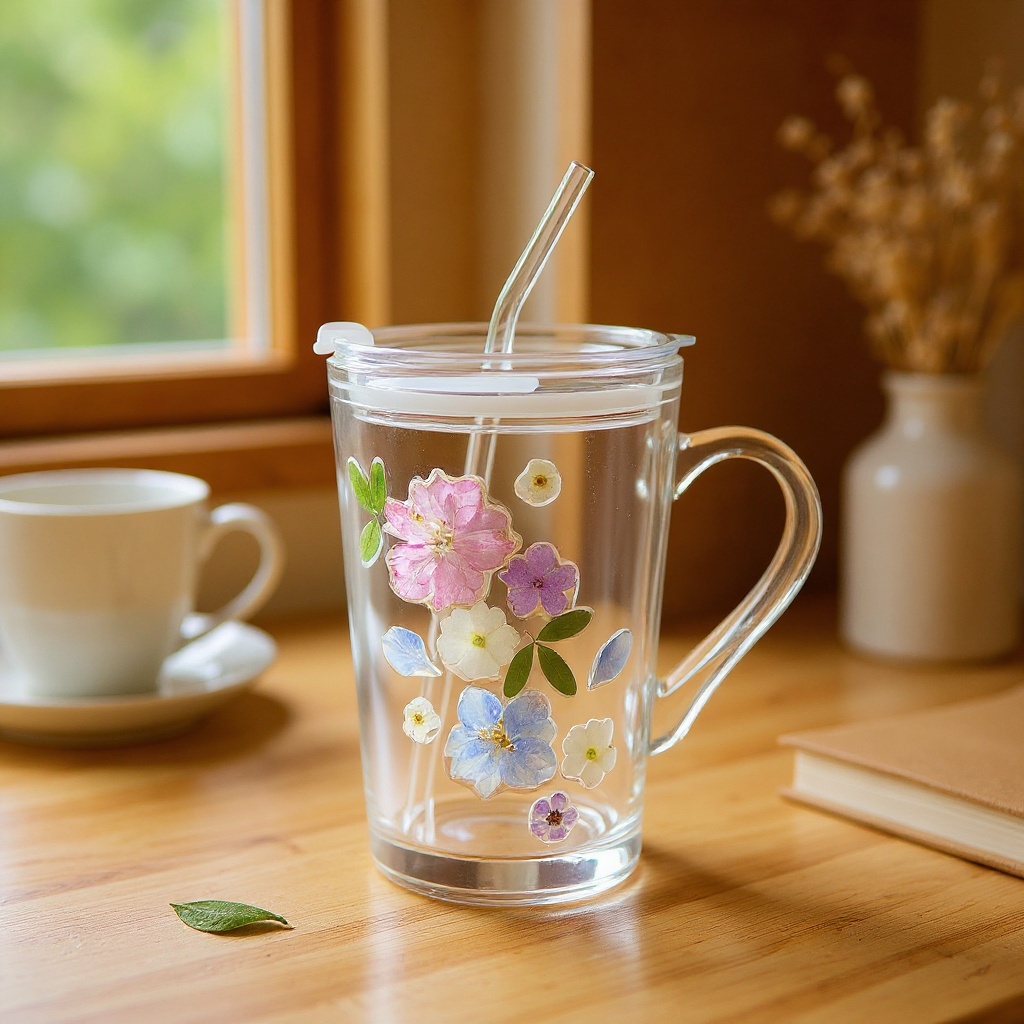
By pampasroom, founder of Pampasroom · 8+ years working directly with Southeast Asian botanical artisans and resin craft studios in Chiang Mai and Bali · Research-backed by material science data from resin manufacturers including Entropy Resins and ArtResin product documentationA dust proof lid glass tumbler with flower art is a functional drinkware piece featuring real pressed botanicals — pansies, daisies, and wildflowers — permanently embedded under an eco-resin exterior coat on heat-resistant clear glass. The flowers sit proud of the glass surface, creating visibly raised, tactile textures you can trace with a fingertip. A matching dust-proof lid seals the top. A transparent glass straw inserts through a designated port. Unlike printed floral cups, authentic pressed flower craft preserves real botanical structures in three dimensions, with natural pigment gradations in pink, purple, yellow, and white that no inkjet process replicates. These tumblers serve as daily drinkware and as functional botanical art objects simultaneously.
Not the right fit for everyone. If you want grab-and-go spill-proof convenience above all else, a stainless steel travel tumbler will serve you better. This guide is for people who want to understand exactly what a dust proof lid glass tumbler with flower art is, how it works, and whether the investment makes sense for their lifestyle.
What "Dust-Proof Lid" Actually Means on a Glass Tumbler
The term matters. A dust-proof lid on a glass tumbler creates a sealed barrier preventing airborne particles from entering your beverage. This is categorically different from a spill-proof lid. Dust-proof lids prioritize clean containment — keeping desk debris, kitchen air particles, and lint out of your drink during extended sitting periods. Spill-proof lids prioritize liquid retention during movement.
Most dust-proof lid mechanisms use one of two systems: silicone gasket compression or precision-threaded closures. The gasket system works by compressing a rubber ring against the tumbler rim when the lid is pressed or twisted into position, creating a 360-degree particle barrier. Threaded closures achieve the same seal through mechanical engagement between lid and rim threading. Professional workspace environments and open-plan kitchens benefit most from dust-proof systems, where drinks sit unattended for stretches of an hour or more.
The straw port maintains the seal when closed. Open it, insert the glass straw, drink. Close it, and the seal reforms. Simple mechanics, reliably executed.
| Feature | Dust-Proof Lid | Spill-Proof Lid | Standard Open Lid | Vented Lid |
|---|---|---|---|---|
| Particle barrier | Full seal | Partial | None | Minimal |
| Spill resistance | Low-moderate | High | None | Low |
| Straw compatibility | Yes (port) | Often yes | Yes | Yes |
| Beverage temperature retention | Good | Better | Poor | Moderate |
| Disassembly for cleaning | Multi-component | Multi-component | Simple | Simple |
| Ideal use | Desk/home sitting | Commuting | Immediate consumption | Gym/outdoor |
| Gasket replacement needed | Annually | Annually | N/A | N/A |
Real Pressed Flowers vs. Printed Floral Designs: The Texture Test
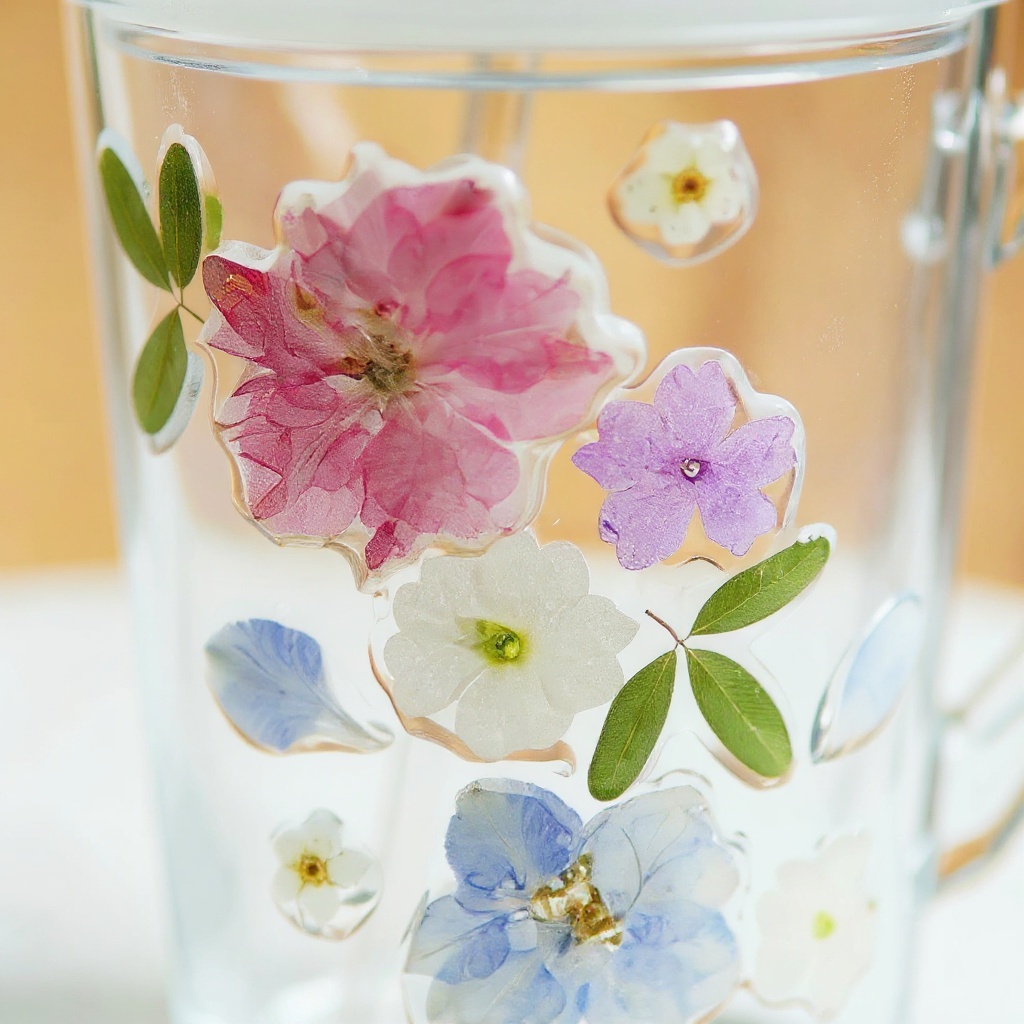
Run your hand along the exterior of an authentic pressed flower tumbler and you feel it immediately. Raised. Textured. Individual petals create subtle ridges under the epoxy resin coat. Stem thickness varies. Petal edges have micro-curves. The surface is a topographic record of real botanical material.
Printed floral designs feel like nothing. Completely flat. The ink sits on the surface rather than under a dimensional resin layer, which means high-heat dishwasher cycles and prolonged UV exposure cause visible degradation — fading, peeling, and color shift — within 18 months of regular use in most documented cases. Authentic pressed flower resin pieces, when stored away from sustained direct sunlight, maintain color integrity significantly longer because the resin acts as a UV-filtering encapsulation layer that slows photooxidation of the preserved plant pigments.
Each handcrafted piece requires a multi-stage process across several days: flower selection, pressing and drying, positional arrangement on glass, and layered resin application with cure time between coats. No two pieces are identical. Natural pigment gradations in the pansies, daisies, and wildflowers — the organic bleeding at petal edges, the variation between individual flowers of the same species — ensure compositional uniqueness at every production unit.
| Feature | Real Pressed Flowers (Eco-Resin) | Printed Floral Designs |
|---|---|---|
| Surface texture | Raised, three-dimensional | Completely flat |
| Color variation | Natural organic gradations | Uniform printed tones |
| Long-term durability | Years when UV-protected | Fades/peels within 18 months |
| Uniqueness | No two pieces identical | Repeating mass patterns |
| Price range | $30–$80 handmade | $15–$40 commercial |
| Production method | Multi-day handcraft | Automated manufacturing |
| Environmental footprint | Eco-resin formulations available | Conventional chemical inks |
Honestly, if you live in a climate with year-round intense humidity above 85% RH — coastal tropics, monsoon zones — the resin-glass thermal cycling from condensation and ambient heat may cause micro-stress at the resin-glass interface over time. Not an immediate failure. But worth knowing before you invest.
Glass Construction and Heat Resistance: What the Materials Actually Do
Quality dust proof lid glass tumblers use borosilicate glass for the vessel body. Borosilicate's low coefficient of thermal expansion — approximately 3.3 × 10⁻⁶/°C compared to soda-lime glass at 9 × 10⁻⁶/°C — means it resists thermal shock from temperature differentials up to 120–150°C without fracture. That's the laboratory-grade standard. The same glass type used in Pyrex measuring cups and scientific beakers.
The exterior eco-resin coat changes the heat tolerance picture. According to technical data published by resin manufacturers including ArtResin, most room-temperature cure epoxy and bio-based resin formulations begin softening at 50–65°C heat deflection temperatures under load. This means the inner glass can technically handle near-boiling liquids, but sustained heat at the exterior resin surface above 60°C risks dimensional softening of the botanical preservation layer. Moderately warm beverages — tea or coffee that has cooled to drinking temperature, typically 50–55°C — are appropriate. Freshly boiled water poured directly in is not.
The transparent clarity of the glass itself matters aesthetically. You see the liquid. You see the botanical exterior through clear walls. The whole visual system — flowers on the outside, liquid on the inside, soft natural light filtering through — creates the warm botanical lifestyle aesthetic these tumblers are designed for.
Our Handmade Pressed Flower Glass Tumbler 400ml | Real Floral Art | Eco Resin Straw Cup uses heat-resistant formulations selected specifically for daily beverage use at normal drinking temperatures.
Daily Care Without Damaging the Flower Art
The textured exterior is the vulnerability point. Raised botanical surfaces trap soap residue between petal formations. Abrasive cleaning materials scratch resin. Dishwasher cycles combine three damaging forces simultaneously — heat above 60°C, caustic detergent chemistry, and high-pressure water jets — creating an environment that can cloud resin, thermally stress the glass-resin interface, and degrade the gasket seal. Never.
Hand-washing works. Reliably. The process takes 90 seconds with the right approach.
Cleaning process for pressed flower resin tumblers:1. Rinse immediately after use — beverage residues set into textured surfaces faster than on smooth glass 2. Fill basin with lukewarm water (not hot) and a few drops of mild dish soap 3. Use a soft-bristled toothbrush in gentle circular motions around raised flower areas 4. Rinse with clean lukewarm water, confirming all soap residue is removed from petal crevices 5. Disassemble the lid into individual components — body, gasket ring, straw port — and wash each separately 6. Clean the straw port channel with a flexible straw brush 7. Air dry completely before reassembling; trapped moisture under the gasket promotes mold in the groove 8. Store upright to prevent gasket deformation under lid weight 9. Inspect the gasket groove for beverage residue buildup weekly if used daily
Replace silicone gaskets annually. They compress and lose seal integrity over time regardless of how carefully you clean them. Replacement gaskets cost under $2 and take 30 seconds to swap. Worth it.
Glass Straw Inspection and Safety: A Checklist
Glass straws are safer than their fragility reputation suggests when made from borosilicate. The same thermal and mechanical resilience that makes borosilicate glass standard in laboratory equipment applies here. But inspection before each use is non-negotiable.
A cracked glass straw used under suction pressure is a real hazard. The transparency advantage — you can see every hairline crack — is what makes glass safer than metal or bamboo alternatives in this specific regard.
How to inspect a glass straw before use: 5 steps1. Hold the straw horizontally at eye level under natural window light 2. Rotate slowly 360 degrees, looking for any linear fractures running along the length 3. Check both ends under magnification if needed — chips at rim edges are the most common damage point from drawer storage 4. Run a fingertip along both ends to feel for sharp micro-chips that aren't visually obvious 5. If any doubt exists about structural integrity, replace the straw — borosilicate straws cost $3–$8 individually
Clean glass straws with purpose-made straw brushes, not standard pipe cleaners. Pipe cleaners have metal wire cores that scratch the interior. Soak smoothie or milk residues for 10–15 minutes before brushing. The transparency shows you exactly when cleaning is complete. Dry upright in a straw drying stand to prevent water spots from settling at the curve.
Why Handmade Flower Art Tumblers Cost More (And What You're Actually Paying For)
The price gap between mass-produced printed tumblers ($15–$40) and authentic pressed flower pieces ($30–$80+) reflects production reality, not marketing positioning. Real.
Each piece requires individual flower sourcing, selection for color and condition, pressing and drying time (typically 2–4 weeks for optimal moisture removal before resin application), compositional arrangement on the glass exterior, and multi-stage resin layering with full cure time between coats. Floral design principles — color balance, visual weight distribution, compositional balance from multiple viewing angles — require artistic judgment that automated manufacturing cannot replicate.
The pink, purple, yellow, and white flower palette used in these tumblers must be coordinated not just for a single viewing angle but as a wraparound composition seen from every direction the tumbler rotates in your hand. That's a design problem that takes training and experience to solve well.
Gift-giving context amplifies the value of uniqueness. A pressed flower tumbler given as a bridesmaid gift or milestone birthday present carries the verifiable fact that no one else owns exactly that piece. That specificity matters to the person receiving it in a way that a mass-produced item simply cannot replicate, regardless of how attractive the pattern.
Frequently Asked Questions
Can you put hot drinks in a dust proof lid glass tumbler with flower art?Beverages at comfortable drinking temperature — typically 50–55°C — are appropriate. The borosilicate glass body handles higher temperatures without issue, but the exterior eco-resin coat has a heat deflection threshold around 60–65°C per manufacturer technical data (ArtResin, Entropy Resins documentation). Tea or coffee cooled for 4–5 minutes after brewing is fine. Freshly boiled water poured directly into the tumbler risks softening the resin layer and potentially affecting the embedded flower preservation. The practical guideline: if you can hold your hand comfortably against the glass exterior, the temperature is appropriate for the resin.
Do real pressed flowers in resin tumblers eventually fade or turn brown?The resin encapsulation layer significantly slows photooxidation — the chemical process that causes most flower browning. Research on pressed flower preservation documents that properly resin-sealed specimens maintain color stability for multiple years when protected from sustained UV exposure. Direct sunlight is the primary accelerant of fading. Store the tumbler away from south-facing windowsills during hours of peak sun intensity. The natural pigment gradations in pink, purple, yellow, and white botanicals will remain true to their pressed color much longer under resin than they would unprotected.
Is a dust-proof lid the same as a spill-proof lid?No, and the distinction is practically important. Dust-proof lids create a particle seal that prevents debris from contaminating a stationary drink. They are not engineered to retain liquid under gravitational force if the tumbler tips over. Spill-proof lids add locking mechanisms or valve systems specifically designed to retain liquid during movement and accidental knockover. A dust proof lid glass tumbler with flower art is designed for home and desk use, not commute or gym scenarios where liquid retention under motion is the priority.
How do you clean the textured resin exterior without scratching it?Lukewarm water with mild dish soap and a soft-bristled toothbrush. That's the complete answer. Abrasive sponges scratch resin. Steel wool destroys it. Harsh chemicals including bleach, ammonia-based cleaners, and acetone dissolve or cloud epoxy resin chemistry. Work the toothbrush in gentle circular motions around the raised flower formations, rinse completely, and air dry. Dishwashers are incompatible with resin-coated drinkware — the temperature, detergent chemistry, and water pressure combination damages the coating consistently.
Are glass straws safe, and how should you maintain them?Borosilicate glass straws are mechanically safe when structurally intact. The critical safety practice is pre-use inspection — hold the straw under natural light and rotate it 360 degrees looking for hairline fractures, then run fingertips along both ends to detect rim chips. Damaged straws should be replaced rather than used under suction pressure. Clean with flexible soft-bristled straw brushes (not wire-core pipe cleaners), soak residue-heavy deposits for 10 minutes before brushing, and dry upright. Borosilicate replacements cost $3–$8 individually.
Why are handmade flower art tumblers so much more expensive than printed floral cups?Production complexity. Authentic pressed flower tumblers require real botanical sourcing, weeks of proper pressing and drying before resin work begins, multi-stage resin layering with cure intervals between coats, and individual artistic composition for each piece. No two pieces are identical. Printed alternatives use automated inkjet or screen-printing processes on standard glass forms at production volumes that reduce per-unit cost to the $15–$40 range. The premium for genuine pressed flower craft ($30–$80+) reflects materials, time, and artistic labor rather than brand margin.
Can I put a pressed flower resin tumbler in the dishwasher?No. Dishwasher cycles damage resin-coated drinkware through three simultaneous mechanisms: thermal stress from water temperatures exceeding the resin's heat deflection threshold (60–65°C), chemical interaction between caustic dishwasher detergents and cured epoxy chemistry, and high-pressure water jets that can force moisture into micro-gaps at the glass-resin interface. The result is clouding, surface hazing, or delamination of the resin coat. Hand-wash only with lukewarm water and mild soap.
How fragile are the pressed flowers once embedded in resin — can they fall out?Once encapsulated under fully cured eco-resin, pressed flowers are permanently integrated into the coating and will not separate, shift, or fall out under normal use conditions. The resin penetrates plant tissue during cure and creates a solid unified layer. The vulnerability is impact fracture — dropping the tumbler on hard tile or stone can crack the resin coat, potentially exposing embedded flower edges at the fracture point. Normal handling and transport carry no risk of botanical separation. Treat it with the same reasonable care you'd extend to any glass drinkware.
What is the best way to display a pressed flower tumbler when not in use?A linen or marble surface near indirect natural light shows the botanical aesthetic to best effect without the UV exposure risk of direct sun. The soft natural window light that filters through sheer curtains or bounces off a north-facing windowsill creates the warm, diffuse illumination that makes the translucent glass and embedded botanicals most visually compelling. Avoid positioning on surfaces that receive direct afternoon sun for more than 30 minutes daily if preservation longevity is a priority.
The Honest Bottom Line on Dust Proof Lid Glass Tumblers With Flower Art
A dust proof lid glass tumbler with flower art is a specific object for a specific kind of person. It is not the most portable drinkware. It is not the most spill-resistant. It requires hand-washing, gasket maintenance, and storage consideration. Daily.
What it is: a piece of functional botanical art that serves your desk ritual, your morning tea ceremony, your kitchen counter aesthetic, and your gift-giving occasions with something that mass manufacturing genuinely cannot replicate. The raised textures under your fingertips. The organic color variation between petals. The visual warmth of real preserved pansies, daisies, and wildflowers seen through clear glass with liquid inside.
Those things are real. And for the right person, entirely worth it.
When you're ready to see the full range, our Handmade Pressed Flower Glass Tumbler 400ml | Real Floral Art | Eco Resin Straw Cup offers the complete botanical drinkware experience in a 400ml, 10cm format ready for daily use.


