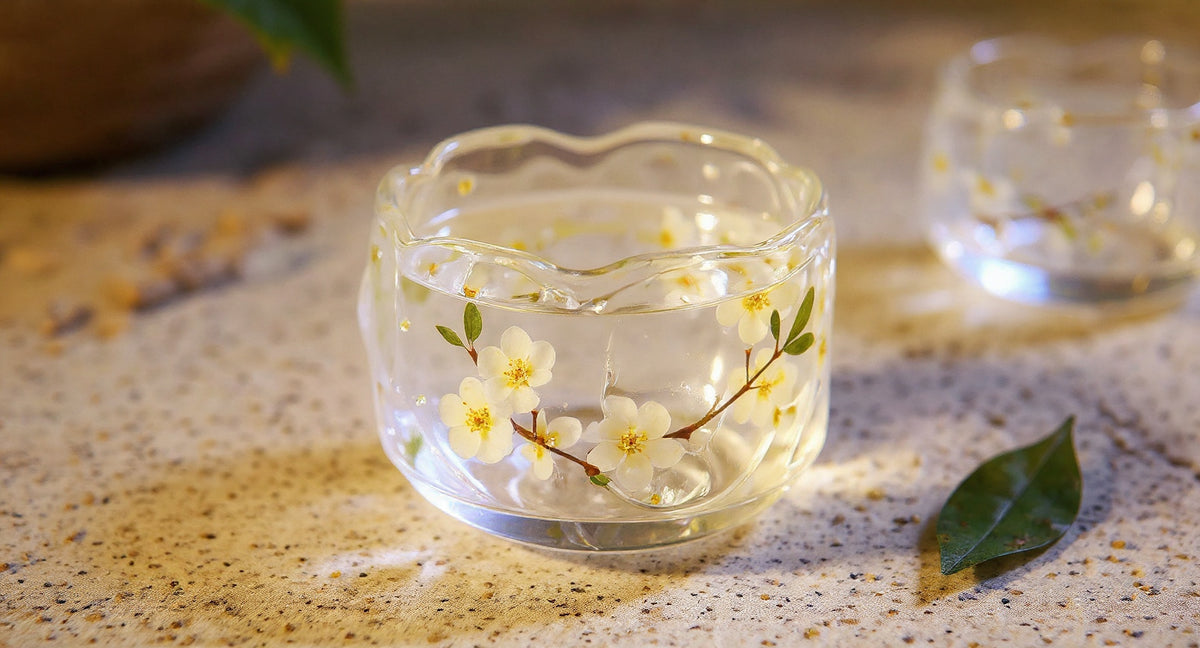
An eco resin floral gongfu cup is a small clear cylindrical glass cup, approx. 60ml, with real white plum blossoms and tiny green leaves embedded on its exterior beneath a smooth transparent resin coating. The botanicals create a tactile floral relief rather than a printed pattern. Its suitability for hot tea depends on the finished cup’s temperature limits and whether resin reaches the interior or drinking rim; those details aren’t established in the supplied listing.
Glass holds the tea inside. The exterior carries the flowers. Both matter, but they need different checks before this cup becomes part of a tea routine.
Small pours. Real botanical detail. Some care required.
What the product information establishes
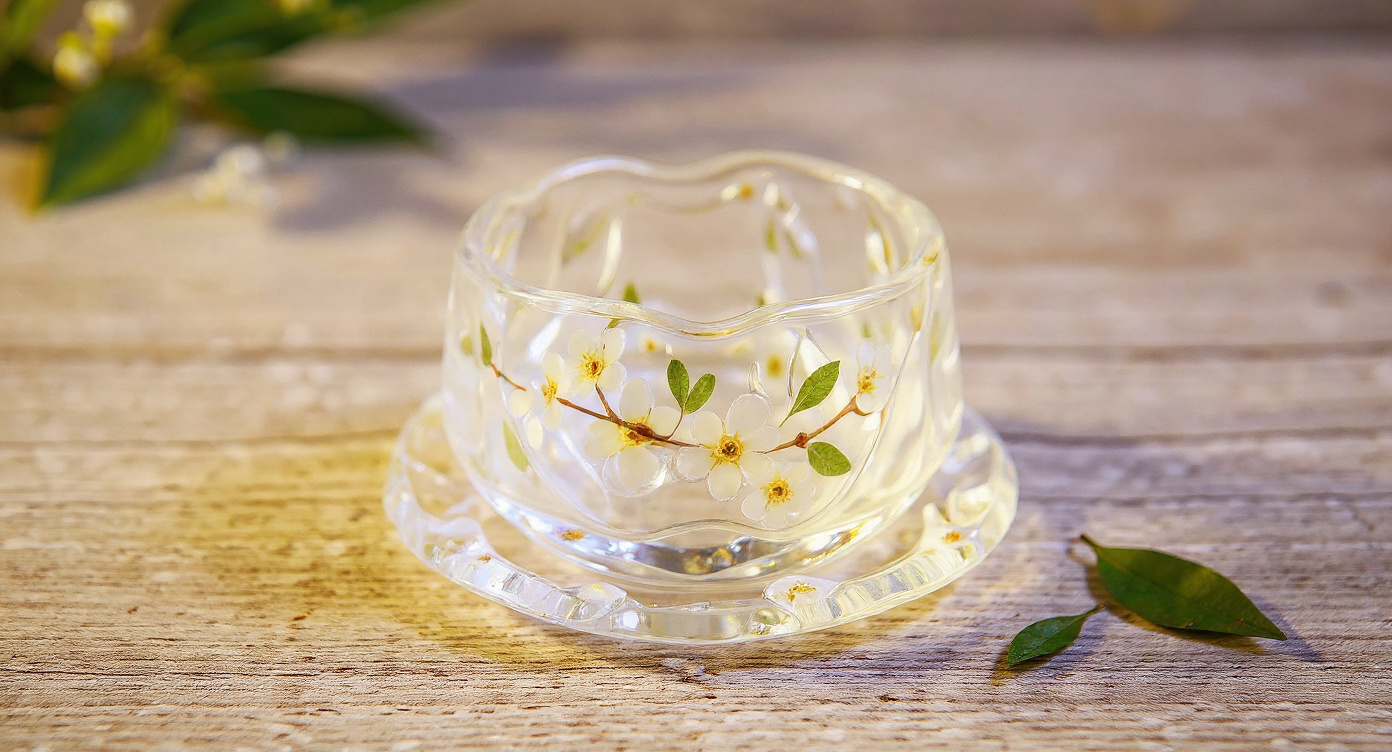
This is a glass serving cup with an exterior botanical coating, not a vessel made from solid resin. White plum blossoms and tiny green leaves remain visible through the transparent surface. The coating covers the plant material while retaining a raised floral effect; the flowers themselves aren’t an exposed surface to scrub.
The product’s visual setting is restrained: natural wood or stone, soft diffused natural light, and a warm neutral background. That presentation suits its delicate appearance, but a photograph can’t establish rim clearance, coating chemistry, or heat tolerance.
| Product detail | Supplied information | What remains unconfirmed |
|---|---|---|
| Shape and capacity | Small clear cylindrical cup, approx. 60ml | Exact dimensions and capacity measurement method |
| Drinking vessel | Heat-resistant glass | Glass composition and finished-cup temperature rating |
| Botanical decoration | Real white plum blossoms and tiny green leaves on the exterior | Preservation process and expected color changes |
| Exterior finish | Smooth transparent resin coating with tactile floral relief | Resin identity, curing requirements, and coating thickness |
| Drinking surfaces | Botanicals and coating described as exterior decoration | Confirmation that the interior and drinking rim are uncoated |
| Listed price | $71.18 | Current checkout price and any additional charges |
The 60ml pearl plum flower glass master cup offers this specific combination of clear glass, preserved botanicals, and exterior resin relief. Its construction is clear enough to describe. Its hot-drink limits still need confirmation.
What “eco resin” does—and doesn’t—tell you
“Eco resin” isn’t a temperature rating. It also doesn’t identify the formulation, establish food-contact suitability, or explain how the finished object should be disposed of.
The FTC’s guidance on environmental marketing claims cautions against broad, unqualified environmental-benefit claims. This is general guidance about claim substantiation, not an assessment of this cup. A useful product explanation would identify the specific property behind the wording, such as documented material content, rather than leave “eco” standing alone.
Food-contact claims need a separate check. The FDA’s food-contact substances guidance explains the framework for substances used in food-contact materials. It does not certify this cup or establish that an unspecified resin is suitable for hot drinks.
For a technical reference, 21 CFR § 175.300 addresses certain resinous and polymeric coatings under defined requirements. Finding that regulation—or a resin supplier mentioning it—isn’t enough to establish compliance for a finished botanical cup. The formulation, applicable conditions, and actual contact surfaces still matter.
The maker perspective here includes one hands-on experience: when I sealed my first batch of preserved blooms into a heat-resistant glass cup. That experience isn’t a temperature test or a compliance certificate. Craft knowledge and documented suitability answer different questions.
Questions to ask before serving hot tea
Ask for finished-product guidance, not reassurance about glass or resin in isolation. Heat travels through the cup. An exterior coating can become warm even when it doesn’t touch the drink.
1. Where does the resin stop? Request confirmation that the interior and drinking rim are uncoated, supported by a close-up image or construction description. 2. What serving conditions are permitted? Ask for the finished cup’s maximum serving temperature and restrictions on sudden temperature changes. A glass rating alone doesn’t answer this. 3. Which resin is used? Request its identity, technical documentation, curing requirements, and confirmation that the finished coating meets those requirements. 4. What supports any food-contact claim? Ask which surfaces and conditions the documentation covers. Room-temperature use and hot-drink use shouldn’t be treated as interchangeable. 5. How should the complete cup be cleaned? Request instructions covering detergent, immersion, dishwasher use, and treatment of the resin edge. 6. What supports the environmental wording? Ask for the specific material property and evidence behind “eco resin,” along with realistic disposal guidance.
No home boiling-water experiment can replace those answers. A coating that doesn’t smell or soften during a trial hasn’t passed a food-contact assessment.
If the seller can’t confirm suitable serving conditions and an uncoated drinking rim, decorative use is the more cautious choice. That’s a limitation, not a verdict that the product is unsafe.
Does approx. 60ml make sense for your tea routine?
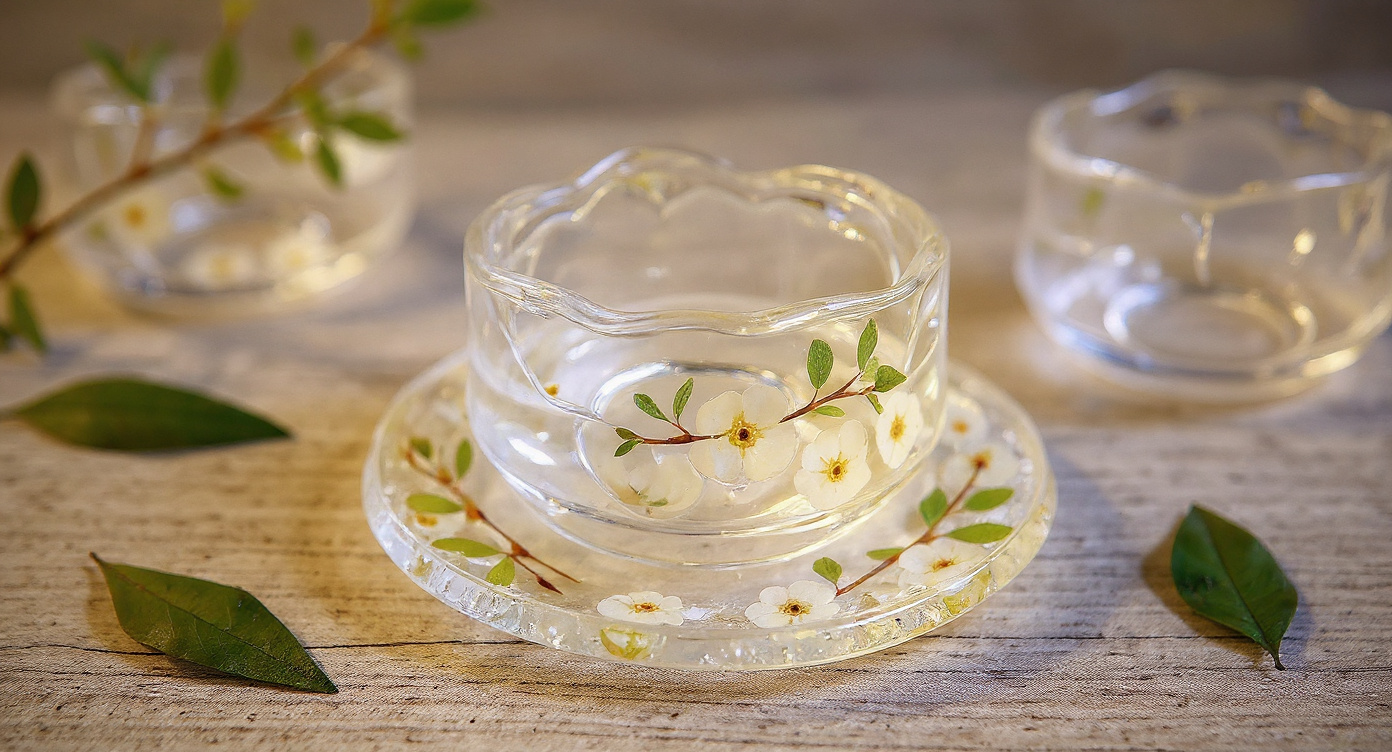
A small cup suits repeated pours. At approx. 60ml, this vessel can serve modest portions during a gongfu session rather than hold a mug-sized drink. It’s a serving cup, not a reason to assume tea leaves should steep inside it.
Leave room below the rim. There’s no need to fill the cup to its stated capacity, and a lower fill makes carrying it less awkward while keeping the drink farther from the edge.
Here’s the honest trade-off: if dishwasher convenience and a substantial single pour are your priorities, this floral cup is the wrong fit based on its small capacity and unconfirmed machine-washing suitability. A simpler vessel deserves consideration.
| Cup option | Capacity | Decoration or construction | Price |
|---|---|---|---|
| Pampasroom featured floral gongfu cup | Approx. 60ml | Clear cylindrical glass; real white plum blossoms and tiny green leaves under exterior transparent resin | $71.18 |
| Printed floral glass cup | varies by seller | varies by seller | varies by seller |
| Other botanical resin cup | varies by seller | varies by seller | varies by seller |
| Undecorated glass tea cup | varies by seller | varies by seller | varies by seller |
The comparison doesn’t establish that another cup is safer or easier to maintain. Those details depend on the individual product. It shows what is known about this piece without inventing alternatives’ specifications.
Conservative care while specific instructions are unavailable
Gentle hand-washing is a precaution, not a verified manufacturer-approved procedure. Obtain the finished cup’s instructions before routine beverage use, especially if hot tea is planned.
Once the intended use is confirmed, these handling principles avoid unnecessary stress:
1. Let the cup cool before washing. Don’t transfer it from hot tea into cold water. “Heat-resistant” doesn’t establish resistance to every temperature change. 2. Use mild detergent and a soft cloth. Clean the glass interior without applying abrasive pressure to the coated exterior. 3. Avoid prolonged soaking. Immersion resistance hasn’t been documented for the finished coating. 4. Rinse and dry with a soft towel. Let remaining moisture evaporate before enclosed storage. 5. Keep vessels from rubbing together. Don’t nest or stack this cup unless the seller permits it. 6. Inspect the glass and coating. Stop beverage use if there are chips, cracks, lifting resin, persistent tackiness, or a new odor, and contact the seller.
No scouring pads. No improvised solvent cleaning.
Dishwasher, microwave, oven, and freezer suitability aren’t established. Don’t borrow instructions from plain glassware: this object includes preserved plant material and an exterior resin layer. For stubborn tea residue, request an approved cleaning method rather than testing bleach, abrasive paste, or very hot soaking water.
Will the blossoms and coating stay unchanged?
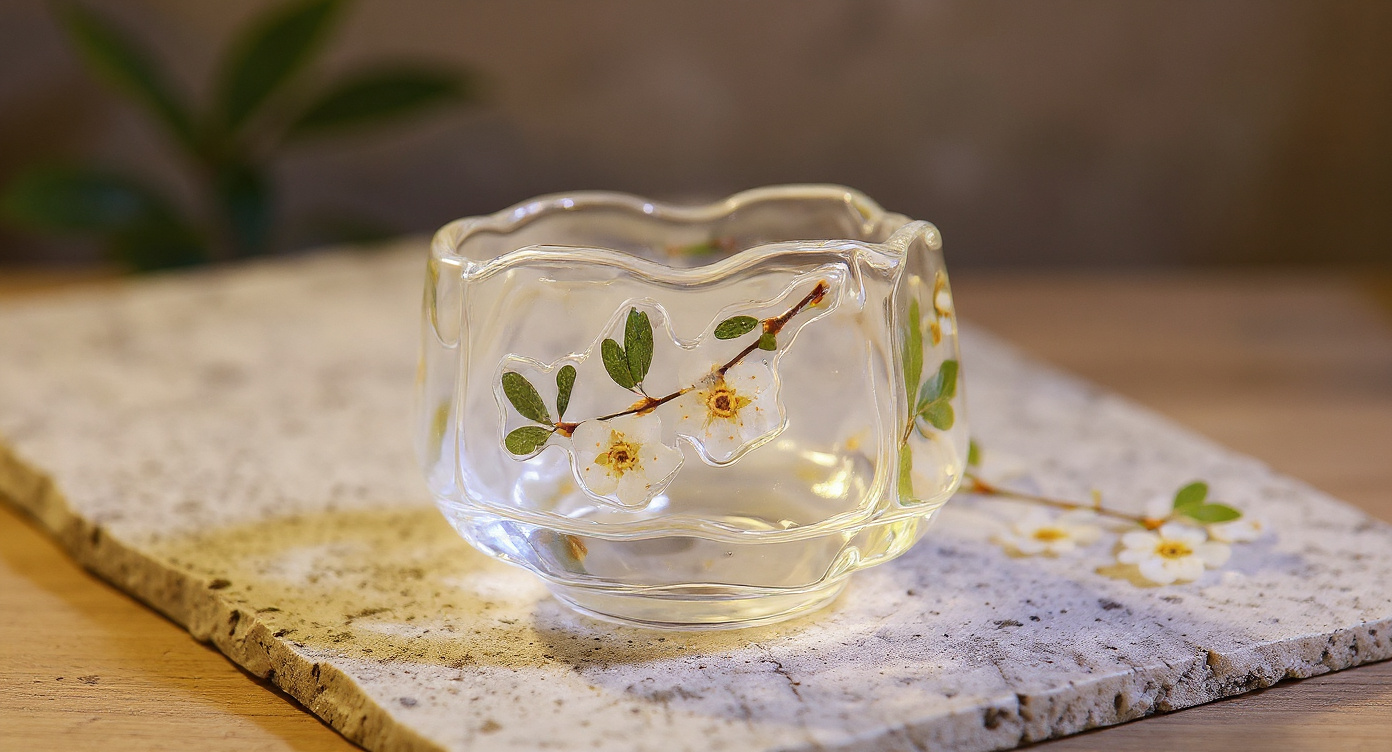
No permanent-color claim is supported by the supplied information. The preserved blossoms and the transparent coating are separate materials, and neither has a documented aging or light-exposure result here.
Store the cup away from prolonged direct sunlight and strong heat sources as a precaution. Soft natural light is suitable for showing the white flowers against wood or stone; permanent storage beside a sunny window is a different exposure.
The distinction matters. A serene photograph isn’t a durability test.
There’s no defensible lifespan to quote from the available specifications. Ask the maker what appearance changes to expect and how coating defects are handled. Lifting, cracks, or persistent softness shouldn’t be waved away as handmade character.
FAQ
Is this cup made from resin or glass?
The drinking vessel is clear cylindrical glass. Real white plum blossoms and tiny green leaves are embedded on the exterior under a smooth transparent resin coating. Calling it a resin cup without that distinction can suggest the wrong construction.
Are the flowers real, or are they printed?
They’re real preserved white plum blossoms with tiny green leaves. The exterior decoration forms tactile floral relief beneath the transparent coating, rather than a flat printed image. The preserved material isn’t intended to be exposed to scrubbing.
Is the resin food-safe?
The supplied information doesn’t identify the resin or provide applicable compliance documentation. Exterior placement helps define what to investigate, but confirmation of an uncoated interior and drinking rim is still needed. “Eco” doesn’t answer the food-contact question.
Can boiling water go straight into it?
That use hasn’t been established. The glass is described as heat-resistant, but neither a numerical glass rating nor a finished-cup temperature limit was supplied. Confirm serving conditions before using it for hot tea; don’t test boiling water as a substitute for documentation.
Can it go in the dishwasher?
Dishwasher suitability is unconfirmed. Gentle hand-washing is the conservative option pending product-specific instructions. The resin-and-botanical exterior means plain-glass care guidance doesn’t establish suitability for this finished cup.
Is approx. 60ml enough for tea?
It suits small, repeated servings rather than a substantial single drink. For gongfu-style pours, that size has a purpose. This won’t work if the aim is to replace a large everyday mug without frequent refilling.
Will the white flowers fade or the resin yellow?
Neither permanent color retention nor resistance to coating discoloration has been documented. Avoid unnecessary sunlight and heat as precautions, and ask about expected aging. No specific fading timeline can be supported from the supplied details.
What should happen if the coating becomes sticky?
Stop using the cup for drinks and contact the seller. Persistent tackiness or lifting needs assessment, not stronger cleaning. Don’t patch the coating with general craft resin and assume the cup is suitable for beverage use again.
Choose the botanical detail with its limits in view
At the supplied price of $71.18, the reason to consider this cup is its specific craft construction: real white plum blossoms and tiny green leaves preserved as exterior relief on a small clear glass vessel. Not proven dishwasher convenience. Not a documented environmental advantage.
For Pampasroom, trust depends on keeping that distinction visible. Confirm the rim construction, serving limits, resin information, and care instructions before buying for regular hot-tea use.
See the Handmade Glass Tea Cup Real Pearl Plum Flowers | Eco Resin 60ml Gongfu Master Cup | Botanical Gift, then match its confirmed use conditions to the way you drink tea.