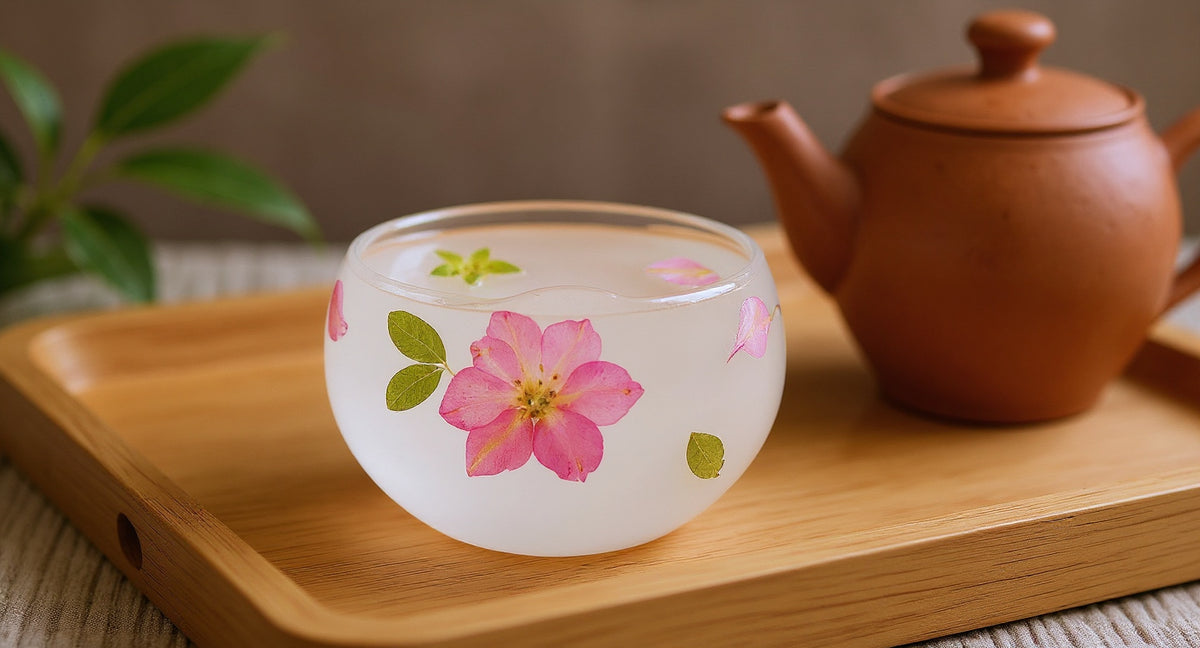
A resin art tea cup with real petals is a glass drinking vessel decorated with preserved botanical material beneath an exterior resin layer. This cherry blossom version is a small, translucent 60ml glass cup with vivid real petals and green leaves embedded under a smooth, glossy eco-resin finish. Hot-tea suitability needs a separate answer: the supplied description identifies heat-resistant glass, but doesn't provide a temperature rating for the finished glass-and-resin cup.
Small cup. Real botanical detail.
Soft pink and white blossoms stand against clear glass, with overlapping petals creating a delicate three-dimensional depth effect. On a wooden tea tray beside a clay teapot, warm natural light makes that layering easier to see without turning the cup into something it isn't.
It's not a printed floral mug. Nor is it a vessel made from solid resin.
What the product specifications establish
The Handmade Cherry Blossom Glass Tea Cup | Real Flower Eco Resin | 60ml Master Cup Gift combines a glass body, real cherry blossom petals, green leaves, and an exterior resin coating. The supplied description also identifies hand-blown construction.
Those details explain its appearance and format. They don't establish every condition of use.
| Product detail | Supplied information | What it means for the buyer |
|---|---|---|
| Capacity | 60ml | A small tea serving, not a mug-sized drink |
| Glass body | Translucent, hand-blown, heat-resistant glass | Glass composition and thermal-shock rating aren't supplied |
| Botanical decoration | Real cherry blossom petals and green leaves | Actual plant material rather than a printed pattern |
| Exterior finish | Smooth, glossy eco-resin layer | Resin formulation and coating boundary at the rim aren't supplied |
| Appearance | Pink and white floral tones, clear glass, layered petal depth | A botanical display that remains visible through the finish |
| Listed price | $71.22, rounded from the supplied figure | Currency and current checkout price need confirmation |
The distinction between the glass body and the resin finish matters. Tea sits inside the glass, while the exterior layer holds the floral decoration. However, exterior placement doesn't establish whether resin reaches the lip-contact area or tolerates repeated exposure to heat travelling through the glass.
My craft reference point is when I sealed my first batch of preserved blooms into a heat-resistant glass cup. That experience isn't a substitute for finished-product testing, and no documented durability findings are supplied for this model.
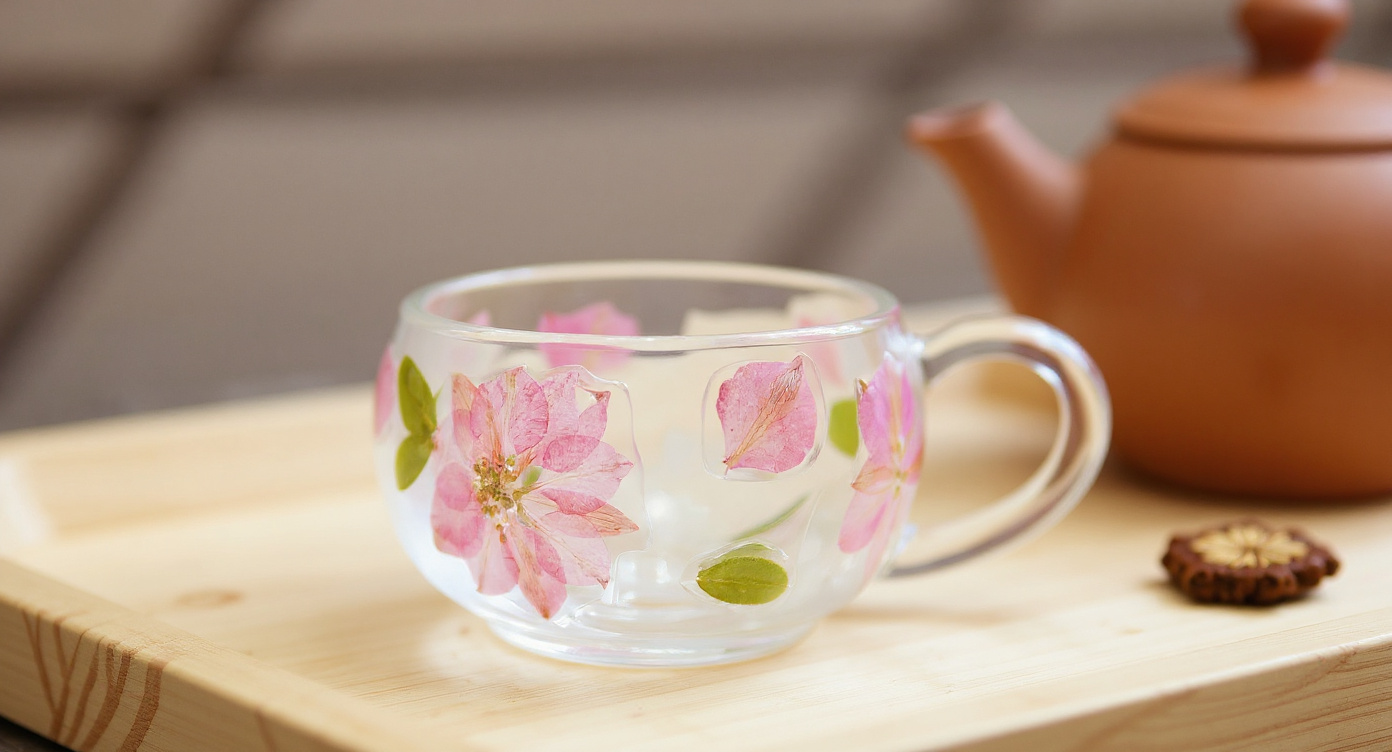
Can this cherry blossom cup hold hot tea?
Hot-tea use remains unconfirmed at a stated temperature. The glass is described as heat-resistant, but the available information doesn't identify an approved beverage temperature for the assembled cup, its resin formulation, or its precise rim boundary.
A material description isn't a test report.
The FDA's guidance on food-contact substances provides relevant regulatory background for materials intended to contact food. It does not certify this cup or establish a safe temperature for its exterior coating.
Before using it for hot tea, request these product-specific details:
1. Approved beverage temperature. Ask for the limit applicable to the finished cup, including repeated use, rather than a rating for glass or resin in isolation. 2. Coating boundary at the rim. Confirm whether lips, tea, or liquid running over the edge can contact resin. 3. Glass composition and thermal guidance. Heat-resistant glass still needs instructions addressing abrupt temperature changes. 4. Applicable food-contact documentation. Where a coated surface can contact lips or tea, ask what documentation covers the cured material and intended use. 5. Permitted cleaning methods. Request instructions for detergent, soaking, and appliance use, plus advice for cracks or a lifting coating edge.
Until those answers are available, don't assume boiling-water pours, microwave heating, or dishwasher cycles are permitted. A decorative place on a tea tray remains an option without making an unsupported drinking-use claim.
An honest buying rule: if the recipient needs a low-maintenance hot-drink cup and these specifications remain unavailable, choose a plain vessel with documented use and care limits instead. Real flowers don't outweigh missing practical information.
Why the 60ml format matters
The capacity changes the purchase. This is a cup for a small pour, not a long drink carried through a morning.
The product is described as a master cup, or Zhu Ren Bei. Its 60ml format can suit an individual place in a small-serving tea setup, subject to confirmation of hot-use limits. The gongfu tea ceremony reference provides background on that separate tea tradition; it isn't evidence of this product's safety or historical authenticity.
Cherry blossoms also have cultural associations with transience, discussed in the reference on cherry blossom symbolism. That can give a floral gift meaning, but combining cherry blossoms with a gongfu-style setting doesn't make this a traditional Japanese tea vessel.
A contemporary botanical piece.
For a gift, explain the capacity before discussing symbolism. Someone who loves the flowers may still dislike the serving size, and neither decorative appeal nor hand-blown construction solves that mismatch.
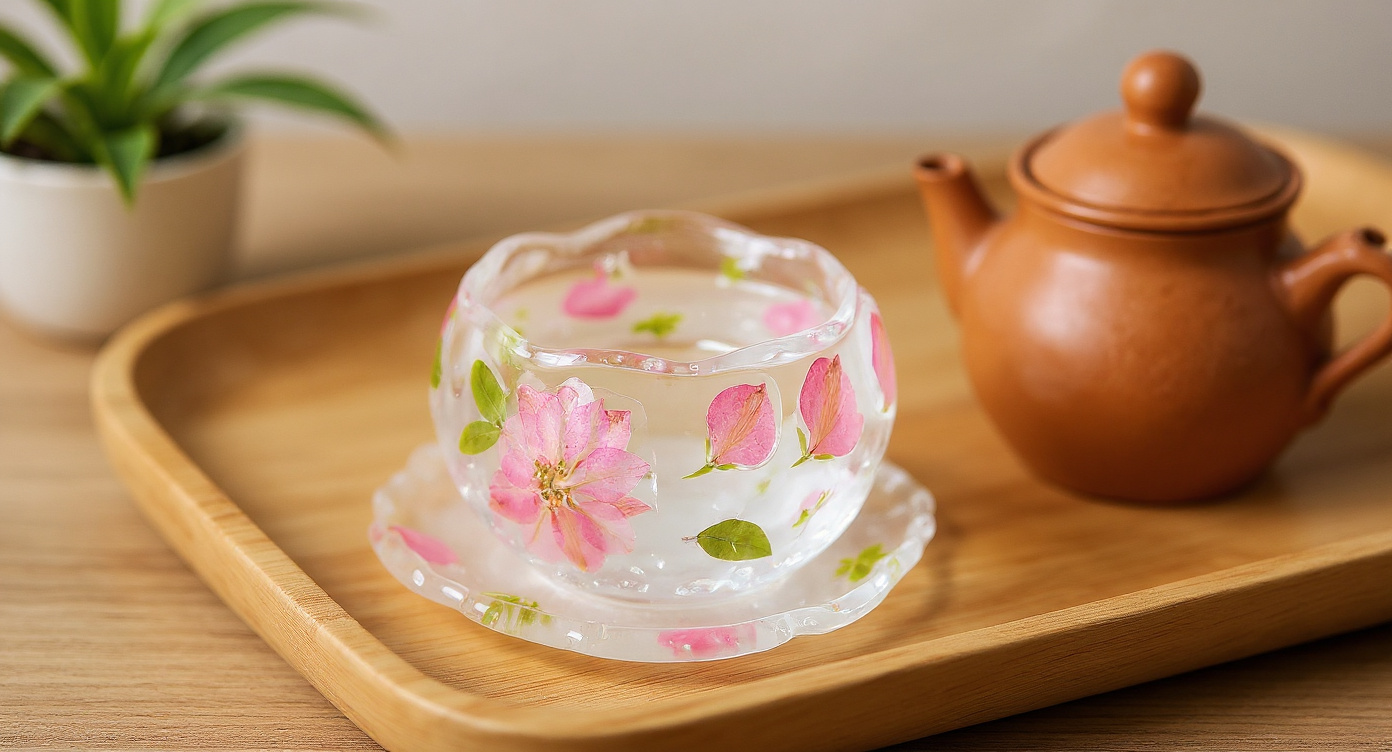
Care: what to confirm, and what to avoid
No maker-approved cleaning procedure is supplied. The following is a conservative care checklist, not a verified instruction sheet for this resin formulation. Product-specific guidance should take precedence.
1. Check the finish before use. If the coating cracks, lifts, becomes sticky, or develops a persistent odour, stop drinking use and request assessment. 2. Confirm the washing instructions. Gentle hand washing with mild detergent and a soft cloth is a cautious starting point, but detergent and water-exposure limits still need confirmation. 3. Avoid abrasive cleaning. Don't use scouring pads, scraping tools, or solvents on the decorated exterior. Ask about an approved method if tea residue remains. 4. Don't leave it soaking. Avoid prolonged immersion unless the maker permits it, and dry the cup after an approved wash. 5. Choose sheltered storage. Limit prolonged direct sunlight as a precaution for preserved botanical colour. This isn't a guarantee against fading.
Heat deserves the same restraint. Don't improvise a prewarming temperature or routine without guidance for the finished vessel. Even heat-resistant glass doesn't establish what the resin layer can tolerate.
No promised lifespan.
The supplied information includes no fade-resistance results, repeated-heat testing, or warranty against resin cracking. Don't sand or recoat a damaged finish at home; an unverified repair changes the materials and may change contact surfaces.
How it compares with other floral cups
The useful comparison is construction and care, not a vague ranking of craftsmanship. A printed floral cup and a real-petal glass cup offer different things.
The table below compares categories, not matched listings. No dated competitor examples are supplied, so unsupported marketplace price ranges have been removed.
| Cup category | Price | Construction information | Practical distinction |
|---|---|---|---|
| This cherry blossom glass cup | $71.22; currency unconfirmed | 60ml glass with real petals, green leaves, and exterior eco-resin | Small format; finished-product heat and cleaning limits need confirmation |
| Printed floral ceramic cups | varies by seller | Floral ceramic; other specifications vary by seller | Botanical appearance without the supplied real-petal construction |
| Other handmade resin cups | varies by seller | varies by seller | Contact surfaces and heat limits require listing-specific checks |
| Gallery artisan ceramics and luxury tea ware | varies by seller | varies by seller | Price alone doesn't establish durability or suitability |
If easy care is the priority, preserved-flower decoration may be the wrong trade-off. If the recipient values real plant material and small tea servings, the construction offers a concrete reason to consider it.
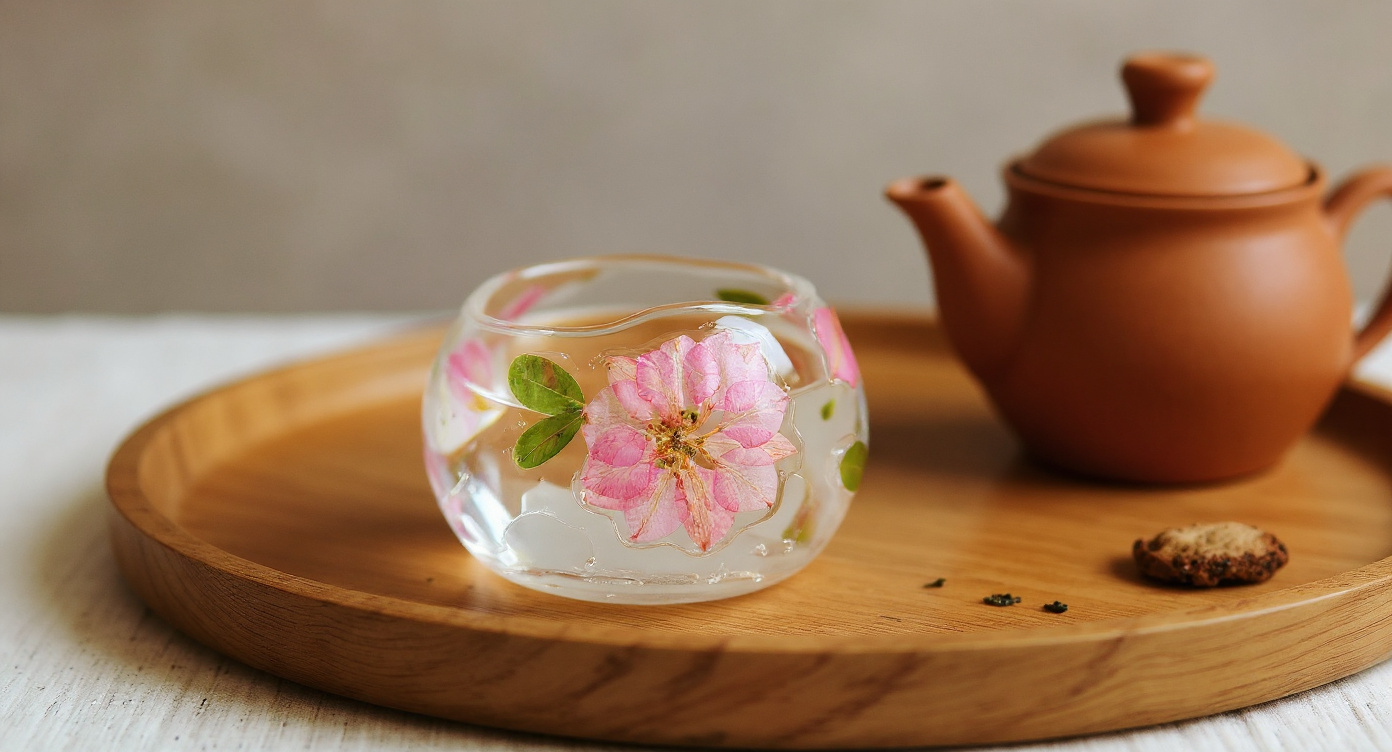
What does “eco resin” establish?
“Eco resin” is part of the supplied product description. It doesn't, by itself, establish biodegradability, recyclability, food-contact suitability, or resistance to hot tea.
The FTC's summary of the Green Guides explains why broad environmental claims need qualification. For this cup, a useful explanation would identify the resin formulation and the specific environmental attribute being claimed.
The Pampasroom studio website is an additional internal starting point for product information. It isn't a substitute for a material specification or a care sheet applicable to this cup.
FAQ
Are the flowers real?
Yes. The supplied product identity specifies real cherry blossom petals and green leaves embedded beneath an exterior eco-resin layer. The pink and white floral decoration isn't described as a print or artificial flower insert.
Is the cup made from resin or glass?
The cup body is glass. Resin forms the smooth, glossy exterior layer around the botanical decoration. The supplied information doesn't establish where that coating ends near the drinking rim.
Can it hold boiling-hot tea?
A boiling-water rating isn't supplied. Although the glass is described as heat-resistant, the approved beverage temperature for the finished glass-and-resin cup remains unconfirmed. Get that specification before using boiling-hot tea.
Can it go in the dishwasher or microwave?
Neither appliance is approved in the supplied information. Don't use dishwasher cycles or microwave heating unless the maker provides instructions permitting them for this finished cup.
Will the petals fade or the resin crack?
Those outcomes can't be ruled out from the available specifications. No fade-resistance results, repeated-heat testing, or guaranteed lifespan are supplied. Gentle care and sheltered storage are precautions, not durability promises.
Is 60ml enough for everyday tea?
It can fit small tea servings, but it won't replace a large mug. For a gift, check whether the recipient enjoys that format. Hot-use suitability still depends on confirmation of the finished cup's limits.
Does “eco resin” mean food-safe?
No. An environmental description doesn't establish food-contact suitability. Relevant documentation depends on the resin formulation, its cured condition, contact surfaces, and intended conditions of use.
Is this Pampasroom cup a practical gift?
It can be a good fit for someone who values real flowers, a 60ml serving, and careful handling. If the recipient expects appliance-friendly drinkware or documented boiling-water use, resolve those requirements before buying.
Choose it for the materials, with clear expectations
The 60ml Handmade Cherry Blossom Glass Tea Cup with real flower eco resin has a clear identity: translucent glass, preserved cherry blossom petals, green leaves, and a glossy exterior finish with visible floral depth.
That is enough to explain its appeal. It isn't enough to promise unrestricted hot-tea use, permanent colour, or effortless care.
Confirm the temperature limit, rim boundary, and cleaning instructions before choosing it as drinkware. Then give it to someone who wants this small botanical object, rather than someone who needs it to behave like an ordinary mug.