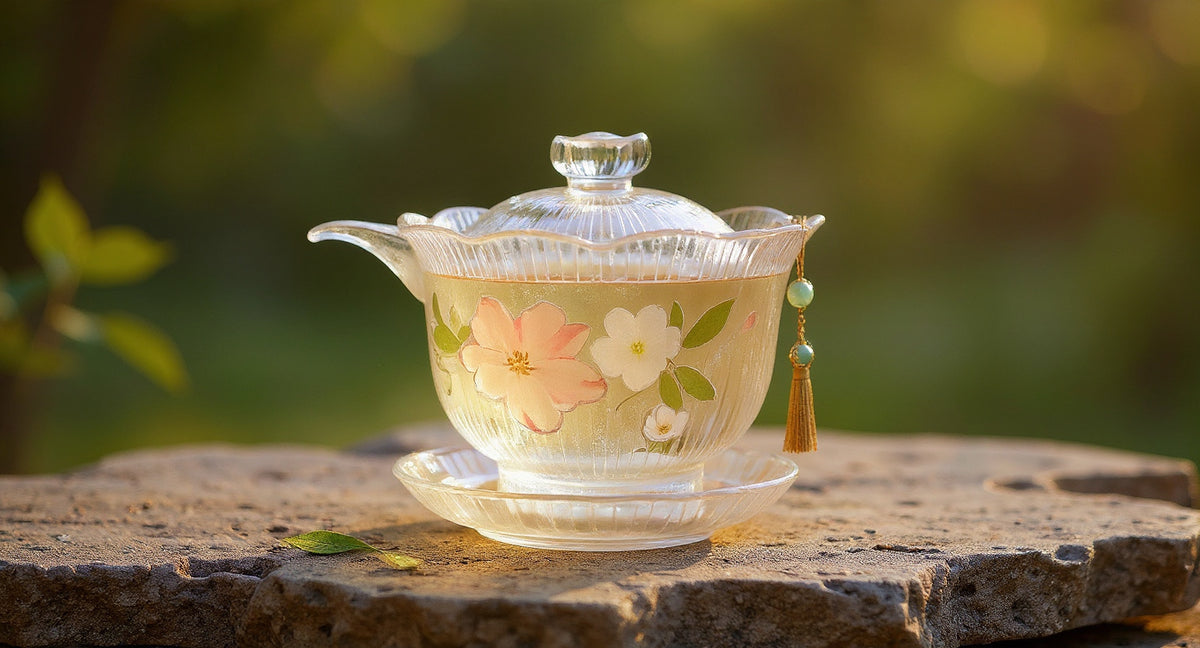
A floral glass teacup 400ml can make a slower tea ritual practical, but its suitability for hot drinks depends on the glass, the resin’s location and the maker’s care instructions. Real preserved flowers add individuality; they don’t establish food safety, and “eco-resin” isn’t a substitute for evidence about contact with hot tea.
The useful distinction is between a cup made to drink from and a decorative object that happens to hold liquid. For a botanical glass set, check the drinking surface first, then the preservation method, cleaning restrictions and included accessories. Craftsmanship matters. So does being able to wash the cup without damaging it.
What 400ml means for a daily tea ritual
A stated capacity of 400ml is 0.4 litres. That’s the cup’s listed capacity, not a recommendation to fill it to the rim. Leave enough space to lift and move it comfortably, especially when the drink is hot. The information available doesn’t distinguish between brimful capacity and a recommended serving volume.
For an unhurried personal tea session, the appeal is straightforward: one vessel holds the drink while the matching saucer gives it a dedicated resting place. There’s no need to promise that a particular cup produces meditation or wellness benefits. A deliberate routine can simply involve preparing tea, setting aside distractions and taking time to drink it.
Capacity also changes how the cup fits into a tea practice. A 400ml vessel suits a substantial individual serving better than a sequence of very small tasting pours. The breadth of practices covered by Chinese tea culture is a useful reminder that there isn’t one universal vessel size or serving method for tea. Choose the cup around the way the tea will actually be prepared and served.
The set includes a saucer, but an infuser, lid or teapot isn’t listed among its supplied components. If loose-leaf tea needs to be strained, plan for a separate brewing or filtering method. Don’t assume the cup is intended for heating water directly, either: “heat-resistant” describes a material property, not permission to use a hob or microwave.
Real pressed flowers are a material claim, not a safety claim
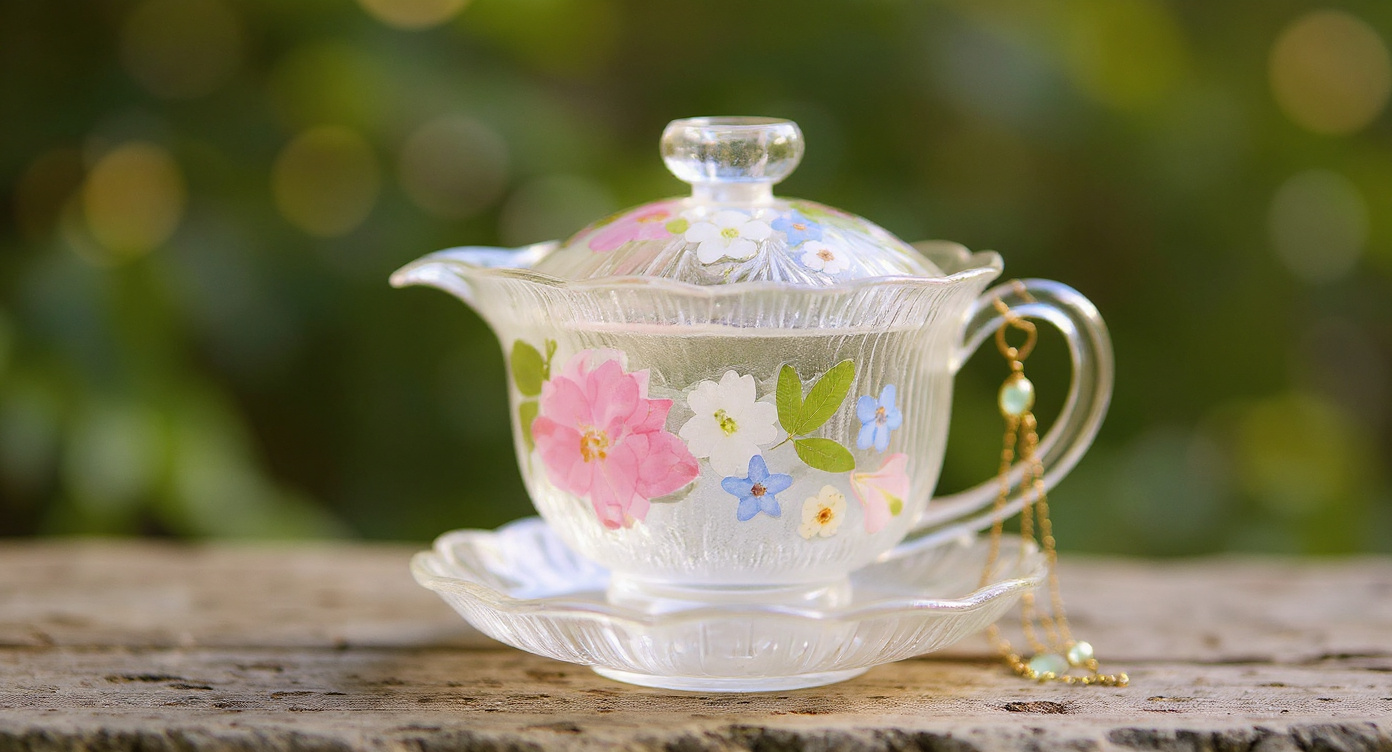
The difference between preserved botanical material and a printed floral motif is substantive. Pressed flower craft involves drying and flattening plant material for preservation and use in crafted objects. A printed image reproduces a flower; a preserved petal is plant material incorporated into the piece.
The Handmade Lotus Glass Tea Set Real Pressed Flowers | Zen Botanical Teacup 400ml | Tassel is specified as a 400ml heat-resistant glass teacup with real hand-pressed preserved flower petals sealed in eco-resin. It includes a matching floral saucer and a detachable handcrafted Yingluo jeweled tassel. The product information states that no two pieces are identical.
That individuality is a reasonable reason to choose preserved flowers over a repeatable printed design. It isn’t a reason to overlook construction details. The important question is how the glass, flowers and resin relate to the surfaces touched by tea and by the mouth. The description identifies the materials, but doesn’t provide a technical cross-section showing that arrangement.
For a gift, variation between pieces should be understood as part of the purchase rather than a defect in matching. Exact botanical species, preservation treatments and replacement-component availability aren’t specified. If a particular flower matters to the recipient, ask for confirmation rather than inferring its identity.
The Yingluo tassel is a detachable handcrafted accessory, not a brewing component. Its name alone doesn’t establish a specific historical provenance or ceremonial function. The practical advantage is its removability: it can be kept away from the drink and from washing water. Don’t use it to lift the cup.
Resin placement matters more than the word “eco”
Start with the wetted surface. Does hot tea touch only glass, or can it contact resin at the interior, rim, joints or any repaired area? Those are different constructions, and they require different supporting information. A clear answer about placement is more useful than broad reassurance about natural materials.
“Eco-resin” is the material description supplied for this set. It doesn’t identify the resin formulation, curing method, permitted service temperature or suitability for repeated hot-drink contact. No food-contact certificate or migration-test report is supplied in the available product information. That gap shouldn’t be converted into either a safety endorsement or a claim that the cup is unsafe.
Be careful with regulatory shorthand. The FDA’s explanation of Generally Recognized as Safe, or GRAS concerns substances under their intended conditions of use. It isn’t a blanket certification for this finished cup, and it doesn’t demonstrate that an unspecified resin is suitable for repeated contact with hot tea. Documentation needs to match the material and the intended use.
The glass deserves the same precision. The set is described as heat-resistant, but its glass composition isn’t specified. Borosilicate glass is known for low thermal expansion and resistance to thermal shock; that general property doesn’t establish that this teacup is borosilicate. Nor would confirmation of borosilicate alone settle the care requirements of attached resin and decorative components.
Before using the cup for hot tea, request answers to these questions:
1. Which material forms the entire interior drinking surface, including the rim? 2. Can tea or the mouth contact any resin, and what documentation covers that contact? 3. What maximum liquid temperature does the maker permit for the assembled cup? 4. Are prewarming, sudden temperature changes or particular drinks restricted? 5. Which washing methods are approved for the cup, saucer and detachable tassel? 6. What should happen if resin lifts, a joint loosens or the glass develops a chip?
If the intended hot-drink use remains unconfirmed, don’t treat the word “teacup” as sufficient evidence. Keep it out of hot-drink service until the construction and permitted conditions are clear.
Gentle cleaning protects more than the glass
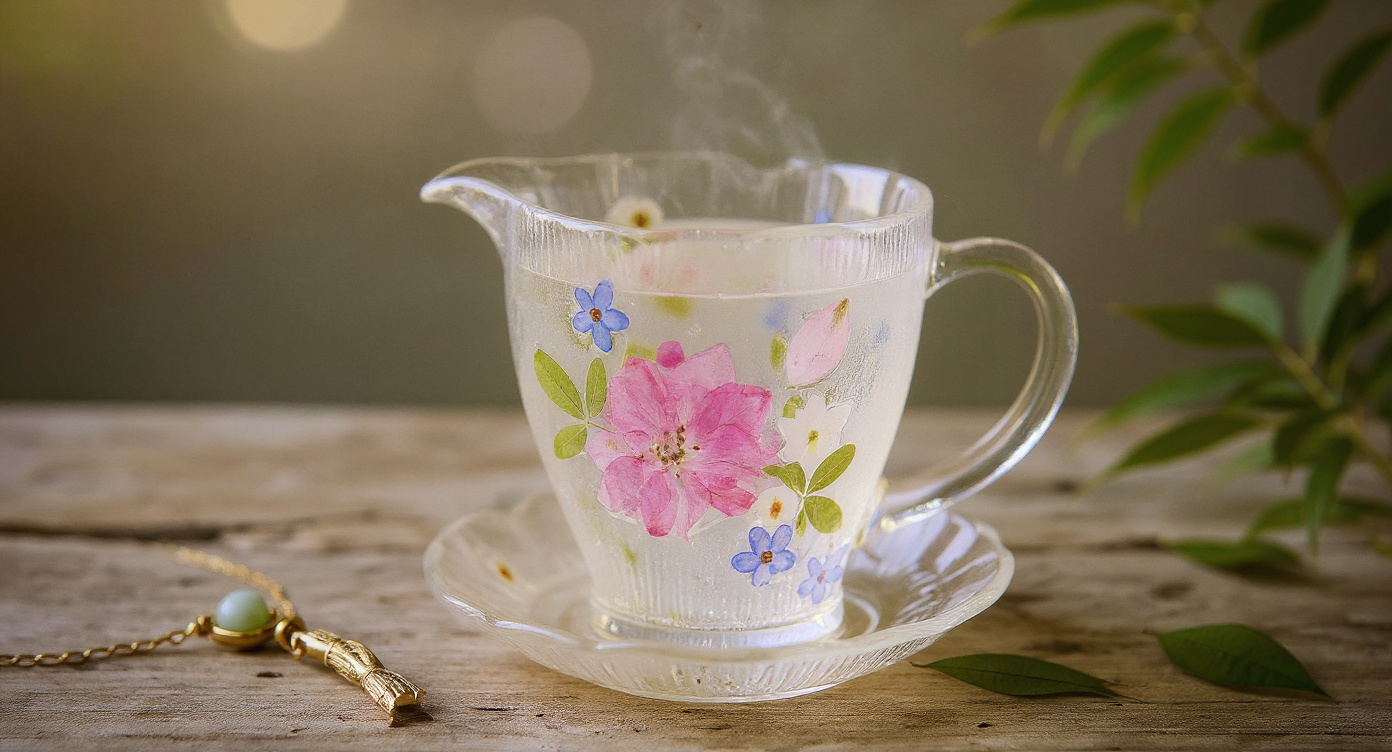
The safest care advice is specific to the complete object, not just its glass body. Resin, attachment points and a handcrafted tassel may have different tolerances from the glass itself. Dishwasher suitability, microwave use and prolonged soaking aren’t confirmed in the available information.
Until detailed instructions are available, avoid the dishwasher, microwave, freezer and direct heat. These are conservative precautions, not claims that a particular failure will occur. A heat-resistant glass description doesn’t establish that the whole assembled set tolerates every appliance or temperature change.
Once the maker confirms hand-washing is appropriate, use a restrained routine:
1. Remove the detachable tassel before filling or washing the cup, and store it away from splashes. 2. Let the vessel cool before cleaning rather than moving it straight from hot tea into cold water. 3. Wash with a soft cloth or non-abrasive sponge and a mild detergent approved for the materials. 4. Keep soaking brief unless the care instructions explicitly allow prolonged immersion. 5. Rinse away detergent, then dry gently without pulling on attached components. 6. Check the rim, interior and material boundaries for chips, cracks or separation before the next use. 7. Store the cup and saucer without hard objects pressing against them; don’t assume they’re designed for stacking.
Persistent tea staining isn’t a reason to reach immediately for abrasive powder, bleach or solvent cleaners. Ask which treatment is permitted first. A cleaning method suitable for an undecorated glass tumbler may not suit a glass-and-resin object.
Stop using the cup for drinks if it develops a chipped rim, a crack, lifting material or an unexplained sticky surface. Don’t attempt a drinking-surface repair with household glue or hobby resin. A repair introduces another material whose suitability for the intended contact would need to be established.
Compare preservation, practicality and the complete set
The sensible comparison isn’t simply handmade versus mass-produced. It’s whether the features being paid for matter in daily use, and whether the construction is documented well enough for that use. A botanical set can offer meaningful craft value while still requiring more careful handling than a simpler cup.
| Option | Flower or decoration claim | What needs checking | Price basis |
|---|---|---|---|
| Handmade Lotus glass tea set | Real hand-pressed preserved petals sealed in eco-resin | Resin placement, hot-drink limits and care instructions; stated capacity is 400ml | Confirm current product-page price |
| Printed floral glass cup | Printed decoration rather than preserved plant material | Decoration location, glass type and permitted washing method | varies by seller |
| Other preserved-flower cup | Verify that plant material is genuine and preserved | Whether resin contacts the drink; included components | varies by seller |
| Artisan ceramic teacup | Materials and decoration depend on the individual piece | Food-contact suitability, capacity and care requirements | varies by seller |
The Lotus set includes two accessories: a matching saucer and a detachable handcrafted tassel. That matters when comparing it with a cup sold alone. It doesn’t establish a monetary value for either accessory, and no labour breakdown is available to support a precise craftsmanship premium.
A floral glass teacup 400ml is more likely to justify a premium when the buyer values genuine preserved petals, accepts variation between pieces and wants the complete set. For someone who prioritises confirmed dishwasher use or easy replacement, a simpler vessel with explicit appliance instructions may be the more practical choice.
For gifting, answer the maintenance question before the presentation question. A distinctive object becomes an awkward present if the recipient can’t tell whether hot tea is permitted or how to clean it. Request the care instructions with the purchase, and check the current listing for price and availability rather than relying on an old quotation.
FAQ: buying and caring for a botanical teacup
Are the flowers real or printed?
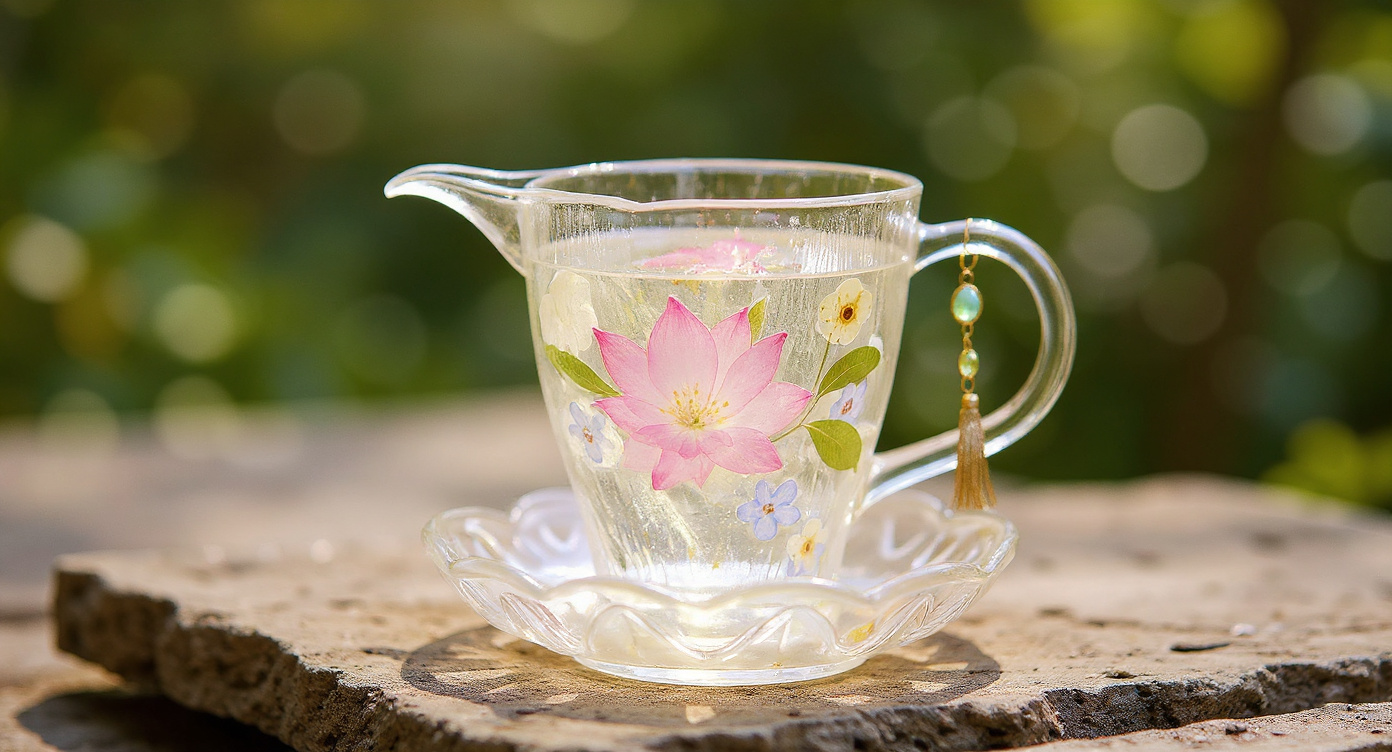
The product specification states that the set contains real hand-pressed preserved flower petals sealed in eco-resin, rather than printed floral decoration. Individual botanical species aren’t identified in the available information. If species or plant provenance matters, request details before ordering.
Is the eco-resin safe for hot tea?
That can’t be established from the term “eco-resin” alone. Confirm whether resin contacts the tea or the mouth, then request documentation covering that material under the intended conditions. No specific food-contact certificate is supplied in the available product information.
Does heat-resistant mean it’s borosilicate glass?
No. “Heat-resistant” is the stated description, while the glass composition is unspecified. Don’t infer borosilicate construction or a maximum temperature from that wording. The relevant limit must apply to the assembled cup, including its resin and attachments.
Can it go in the dishwasher or microwave?
Neither use is confirmed. Keep it out of both unless the maker explicitly permits them for the complete set. Removing the tassel doesn’t, by itself, establish that the remaining glass-and-resin components are appliance-safe.
Can boiling water be poured straight into it?
The available information doesn’t supply a maximum liquid temperature or instructions for filling with boiling water. Ask for the permitted temperature and any prewarming guidance. Don’t substitute assumptions about ordinary tea glass for instructions covering this construction.
Does 400ml mean a full 400ml serving?
The listed capacity is 400ml, but the measurement method isn’t specified. It may not represent a comfortable working fill. Leave room below the rim for movement and ask whether the stated figure is brimful capacity if an exact serving volume matters.
What comes with the teacup?
The stated set includes the 400ml cup, a matching floral saucer and a detachable handcrafted Yingluo jeweled tassel. An infuser, lid and teapot aren’t listed. Confirm packaging, gift options and any additional components directly rather than assuming they’re included.
Will every set be identical?
No. The product information states that no two pieces are identical. That supports its appeal as an individual handmade object, but exact flower selection and the degree of variation aren’t specified. For a coordinated pair or a particular botanical preference, ask what can be confirmed before purchase.
A considered purchase starts with clear material answers
This set’s strongest stated distinction is genuine preserved plant material combined with a usable 400ml vessel and matching accessories. Its weakest documented area is the detail needed to assess resin contact, hot-liquid limits and cleaning. Both belong in the buying decision.
Don’t pay a premium on the strength of an environmental adjective alone. Pay attention to the preserved-flower claim, the included components, the individual variation and the maker’s answers about use. For regular hot tea, clear instructions are part of the product’s practical value, not an optional extra.
If the concern is finding a meaningful botanical gift without sacrificing confidence about daily use, the Handmade Lotus Glass Tea Set Real Pressed Flowers | Zen Botanical Teacup 400ml | Tassel is a natural option to consider once those material and care questions are resolved. See the 400ml handmade lotus tea set with preserved flowers and detachable tassel, check the current purchase details and request the instructions that will let it become part of a calm, repeatable tea routine.