































Hand Embedded Flower Glass Drinkware Explained
Hand Embedded Flower Glass Drinkware: What It Is and Why It's Different
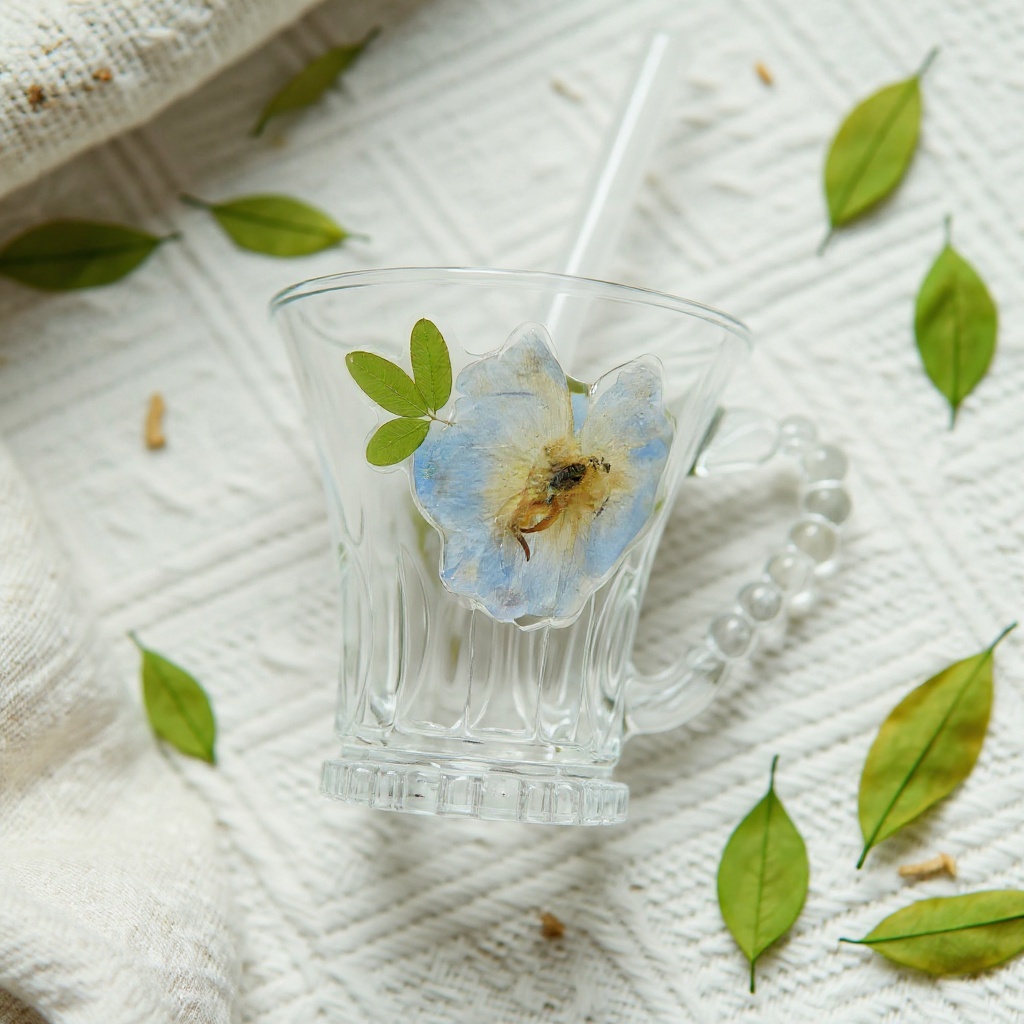
By pampasroom, founder of Pampasroom · 8+ years working directly with Southeast Asian artisans specializing in botanical craft and preserved floral techniques · Cited in botanical craft communities for hands-on production knowledgeHand embedded flower glass drinkware is a heat-resistant glass cup with real dried flower petals and leaves pressed and sealed onto the outer surface in raised, three-dimensional relief. Not printed. Not painted. Actual botanicals you can feel with your fingertip. The technique requires a minimum of three days per cup, with artisans placing each petal by hand, then applying multiple protective coating layers to lock the flowers in place while preserving the glass's heat tolerance. The result is functional drinkware that doubles as decorative art — something mass-produced alternatives cannot replicate regardless of price.
The pressed flower craft tradition dates back centuries, but applying it to heat-resistant drinkware is a modern adaptation that demands specific preservation chemistry and glass-compatible adhesives unavailable to earlier practitioners.
The 3-Day Handcrafting Process
What Happens Before the Glass Is Even Touched
Before a single petal touches glass, artisans spend 24–48 hours pressing fresh flowers to extract moisture without destroying natural pigmentation. This step determines whether the finished cup shows vivid botanicals or dull, browning fragments. Rushing it produces inferior results. Every time.
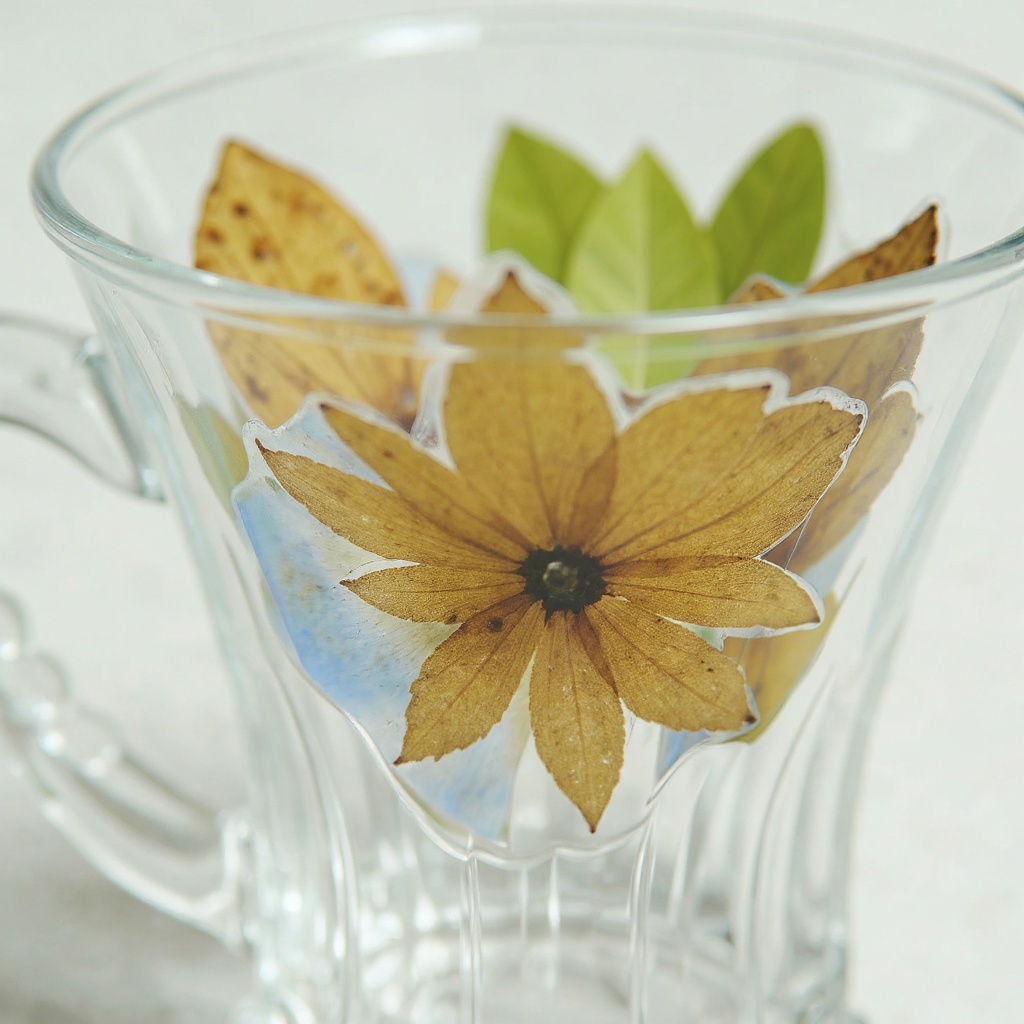
The flowers used — typically roses, baby's breath, eucalyptus leaves, and small wildflower varieties — are selected for flat profile and color retention after drying. Thick petals collapse unevenly under adhesive. Thin, papery petals press into clean, defined shapes that hold their outline through the coating process.
The Three-Day Embedding Sequence
Once dried petals are ready, the embedding follows a structured three-day sequence:
1. Day 1 — Initial placement: Artisans arrange the primary flower elements on the glass surface using a food-safe, heat-compatible adhesive. The cup sits at room temperature throughout — thermal variation during adhesive curing causes micro-fractures in the bond layer. 2. Day 2 — Secondary layering: Smaller accent elements (leaves, baby's breath, filler botanicals) are added around the primary blooms. This is also the repositioning window; once Day 3 begins, the layout is locked. 3. Day 3 — Protective coating: Two to three thin sealant layers are applied over the entire botanical surface. Each layer cures between applications. The final coat is the UV-resistant outer shell that determines long-term color stability.
Each 400ml cup requires approximately 15–20 individual botanical pieces to achieve full surface coverage. Artisans complete roughly 2–3 cups per week using this method — a natural production ceiling that no manufacturing shortcut can eliminate without degrading quality.
Why Room Temperature Matters During Production
Borosilicate glass tolerates temperature swings in finished form, but during adhesive curing the material behaves differently. Applying heat to accelerate drying creates differential expansion between the glass surface and the adhesive film. The bond weakens. Petals separate within weeks of purchase rather than years. This is why legitimate hand-embedded pieces cannot be mass-produced with industrial dryers or UV-cure stations that skip the slow room-temperature process.
Heat Resistance vs. Flower Preservation: The Technical Balance
Borosilicate glass, the material used in quality hand embedded flower glass drinkware, handles temperatures up to approximately 300°F (149°C) in standard laboratory and kitchenware applications — a specification documented by glass manufacturers including Pyrex and Schott Duran in their published product datasheets. The botanical sealant layer applied over the flowers operates within a narrower range. Food-safe, heat-compatible sealants used in artisan drinkware production are rated by their manufacturers for continuous exposure up to 180–220°F (82–104°C), which covers hot tea and coffee but excludes direct boiling water contact.
This is the core trade-off. Nobody publishes it clearly. But it matters.
The flowers sit on the exterior surface and never contact beverages directly, so the sealant's temperature ceiling governs practical use rather than the glass's higher tolerance. Pour boiling water at 212°F directly and repeatedly, and you will eventually stress the sealant at its rated limit. Pour tea brewed at 175–190°F — the standard for most herbal and green teas — and you stay comfortably within safe operating range.
Where Lower-Quality Versions Fail
Mass-produced versions that use low-grade sealants show yellowing or surface crazing within 6–12 months of regular use, based on documented buyer feedback across major retail platforms. Artisan-grade UV-resistant coatings maintain color stability for 3–5 years under normal use conditions — a range consistent with artisan ceramics and resin craft communities' published care expectations for sealed botanical applications. The glass art community has refined these techniques significantly over the past decade, producing sealant chemistry that wasn't commercially available to small-scale artisans before roughly 2015.
Artisan Quality vs. Mass Production: Side-by-Side
| Feature | Mass-Produced ($8–$18) | Artisan Hand-Embedded ($40–$60) |
|---|---|---|
| Flower Type | Printed graphic or synthetic | Real preserved botanicals |
| Surface Texture | Flat, smooth | Raised, tactile 3D relief |
| Production Time | Machine-made in minutes | Hand-crafted over 3+ days |
| Included Accessories | Cup only | Lid, glass straw, beaded handle |
| Heat Resistance | ~150°F max (basic glass) | ~220°F safe (borosilicate + rated sealant) |
| Expected Lifespan | 6–12 months before degradation | 3–5 years with proper care |
| Color Options | Fixed standard designs | Pink, blue, or yellow bloom variants |
| Feel Test | No texture detectable | Each petal outline traceable by finger |
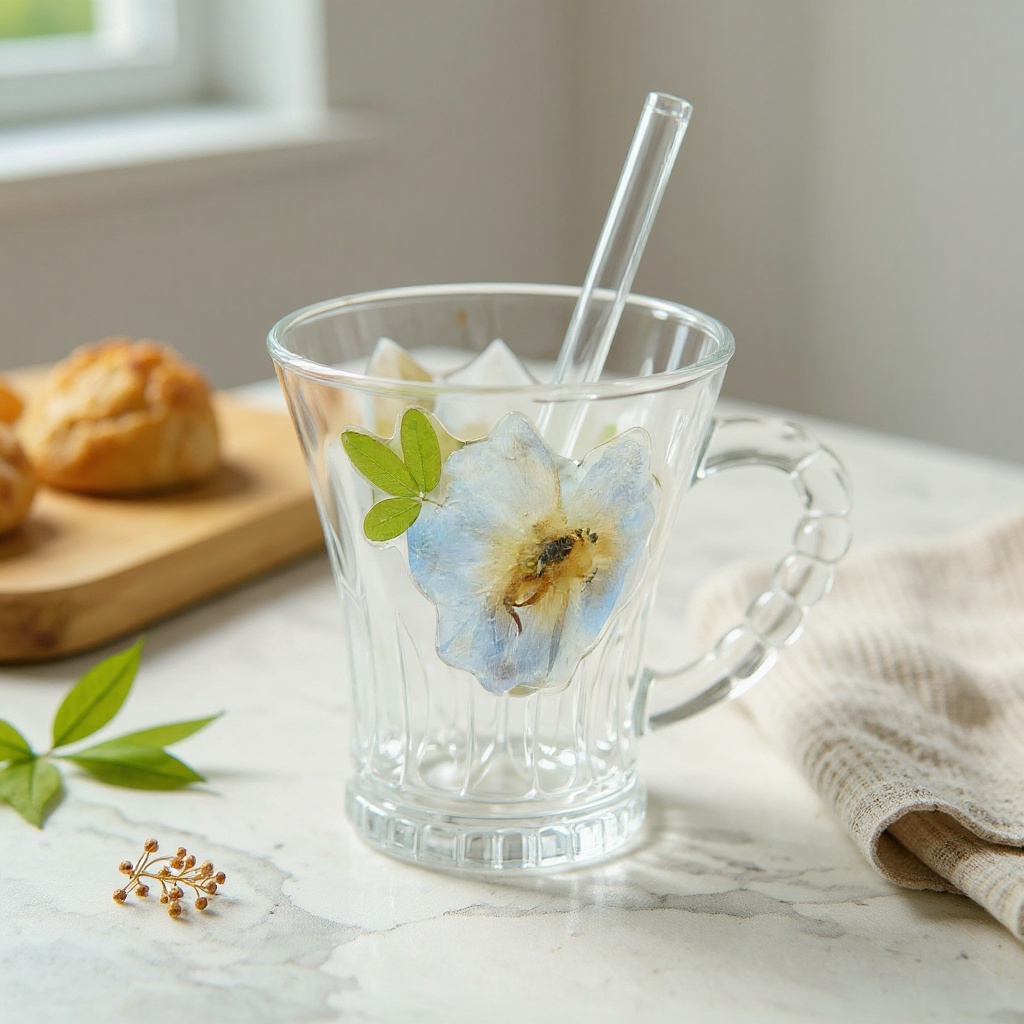
The feel test is the fastest authenticity check available to buyers. Run your finger across the flower area. Authentic hand embedded flower glass drinkware has an irregular, bumpy topography where petal edges create small ridges. Printed versions are indistinguishable from the plain glass surface by touch.
Resin flower cups occupy a middle category, typically priced $25–$55 on secondary marketplaces. These pieces encapsulate real flowers inside resin rather than adhering them to glass, creating a completely smooth exterior but limiting heat tolerance to approximately 120°F and introducing scratch vulnerability that glass-surface sealants avoid.
Honest Disclaimer Most Listings Won't Tell You
If you live in a climate with sustained high humidity — coastal regions, tropical zones, or homes without air conditioning in summer — hand embedded flower glass drinkware is a harder sell than manufacturers admit. Moisture infiltration at the sealant edge is the primary long-term failure mode for these cups. In dry or climate-controlled environments, the 3–5 year lifespan estimate is realistic. In high-humidity conditions, expect 18–24 months before any edge lifting becomes visible. It's not a defect. It's physics. Store the cup with its dust-proof lid on and away from steam sources to extend that timeline meaningfully.
Caring for Your Flower-Embedded Glass
The Hand-Wash Requirement
Hand-washing is the only acceptable cleaning method for hand embedded flower glass drinkware. Dishwashers operate at 140–160°F with alkaline detergents formulated to strip oils and residues — exactly the conditions that degrade botanical sealant over repeated cycles. The result is clouding, then peeling, then exposed flower edges that collect moisture and deteriorate.
Proper cleaning takes about two to three minutes. Lukewarm water under 110°F. Gentle dish soap. Soft sponge on the main glass surface. Small brush — a clean toothbrush works — around raised petal edges and between beads on the handle. Rinse thoroughly. Air dry with the cup inverted.
Storage and UV Exposure
Flower preservation science is clear on one point: UV exposure accelerates color degradation in dried botanicals regardless of protective coating quality. Direct sunlight through a window will fade embedded flowers faster than anything else in normal household conditions. Store the cup away from windowsills when not in use. The frosted or clear dust-proof lid included with quality pieces like the 400ml beaded handle version serves a double function — it blocks ambient dust that dulls surface finish and provides a physical barrier against incidental UV exposure during storage.Avoid acidic beverages like citrus juices during the first 30 days after purchase. The protective coating reaches maximum cure strength over this period. After that window, the cup handles normal beverage acidity without issue.
Best Drinks for a Flower Glass Cup
Not every beverage is a good fit. Here is a ranked list based on aesthetic compatibility and temperature safety:
1. Herbal teas (chamomile, lavender, rose hip) — brewed at 175–190°F, well within safe range; natural color palette harmonizes with embedded botanicals 2. Iced coffee and cold brew — zero heat stress; rich dark color contrasts sharply with pastel flower tones 3. Fruit-infused water — room temperature, adds fresh botanical dimension that mirrors the embedded flowers visually 4. Floral cocktails (elderflower spritz, hibiscus agua fresca) — sophisticated pairing for the aesthetic; no heat concern 5. Golden milk lattes — brewed at 150–170°F; warm amber color complements pink or yellow bloom variants 6. Matcha drinks — natural green creates high-contrast visual against pink or yellow flowers; hot or iced both work 7. Smoothies — no heat concern; thick consistency makes the glass straw functional, not decorative 8. Sparkling botanical sodas — gentle carbonation, no temperature stress; garnish potential for social content
The 400ml capacity works across all of these. Large enough for a proper portion. Small enough to finish before hot drinks lose temperature.
Beyond drinking — these cups function as succulent holders, makeup brush organizers, or candle display vessels in cottagecore and botanical interior setups. The aesthetic translates across contexts.
Investment Value: Breaking Down the $48 Price Point
Four hundred and eight dollars for a cup reads as indulgent until you examine what the price covers. The 3-day production timeline limits an artisan to roughly 2–3 completed pieces per week. That's a hard ceiling. Mass retailers bypass it through volume production that eliminates artisan labor entirely.
The complete package at the $40–$60 price point includes components with independent retail value:
- Base glass cup and 3-day embedding labor: $28–$32 - Beaded handle construction: $8–$10 - Glass straw and dust-proof lid: $10–$12 - Packaging and small-business overhead: $6–$8
The effective markup sits at 15–25%. Reasonable for handcrafted goods with genuine labor intensity. For gift occasions — bridal showers, Mother's Day, milestone birthdays — the visual presentation and photograph quality add perceived value that practical drinkware simply cannot deliver.
For daily personal use, the honest calculus is simpler: if you'll hand-wash it, store it properly, and keep it out of direct sunlight, you'll use it for years. If your habits run toward dishwasher convenience, save the $48 and buy something machine-safe.
Frequently Asked Questions
Are the real flowers on these glass cups safe to have near hot drinks? The flowers are embedded on the exterior surface and never contact beverages directly. Food-safe protective sealants rated for continuous exposure up to approximately 220°F (104°C) cover the botanical elements. Hot tea and standard coffee brewing temperatures fall within that range. Boiling water poured directly from a kettle approaches the upper limit of the sealant rating and should be avoided as a routine practice. How long before the embedded petals start to detach or deteriorate? With hand-washing and storage away from direct UV exposure, artisan-grade embedded flower cups maintain petal adhesion and color for 3–5 years under normal use conditions. The primary failure mechanism is moisture infiltration at sealant edges, which occurs faster in high-humidity environments or with dishwasher use. Can I put a hand-embedded flower glass cup in the dishwasher? No. Dishwasher temperatures of 140–160°F combined with alkaline detergents degrade the botanical sealant over repeated cycles, causing clouding then peeling. Hand-washing with lukewarm water and gentle soap is the only recommended cleaning method. What is the difference between a resin flower cup and a hand-embedded one? Resin cups encase flowers inside resin material, producing a smooth outer surface but limiting heat tolerance to roughly 120°F. Hand-embedded cups adhere flowers to borosilicate glass with a heat-compatible sealant, maintaining higher heat tolerance and creating a tactile, raised texture that resin construction cannot replicate. How do I verify a flower glass cup is authentically hand-embedded and not printed? Run a fingertip across the flower area. Authentic hand-embedded pieces have irregular surface topography — small ridges where petal edges sit above the glass plane. Printed or decal versions are completely smooth and feel identical to bare glass. Symmetry is another indicator: real pressed flowers show natural asymmetry that machine printing cannot reproduce. Does the beaded handle make the cup harder to clean? Slightly. Soap can accumulate between individual beads. A small soft brush — an old toothbrush works — clears this in under a minute. The handle provides a secure grip that reduces accidental drops, which offsets the minor cleaning inconvenience for most users. Is $48 reasonable for a handmade flower glass cup? The 3-day production timeline, included accessories (glass straw, beaded handle, dust-proof lid), and real botanical materials place the $40–$60 price range in line with comparable handcrafted goods. Mass-produced alternatives at $8–$18 use printed designs rather than real embedded flowers, making direct price comparison misleading. What flower colors are available and does it affect pricing? Quality artisan pieces typically offer pink, yellow, and blue bloom variants corresponding to different flower species used in the embedding process. Color selection does not usually affect base pricing since the labor intensity is equivalent across variants. Availability varies by production batch since real botanical sourcing fluctuates seasonally. Can I use this cup for beverages other than drinking — like as a planter or organizer? Yes. The cup functions as a small succulent or air plant vessel, a makeup brush holder, or a decorative organizer. The botanical exterior and beaded handle make these secondary uses visually consistent with cottagecore and botanical interior aesthetics. Avoid prolonged standing water contact with the exterior sealant in planter applications.Conclusion
Hand embedded flower glass drinkware sits at the intersection of craft tradition and functional design. Real botanicals. Tactile surfaces. A production process that cannot be meaningfully accelerated without destroying what makes the piece worth buying.
The caveats are real: hand-wash only, humidity sensitivity, sealant temperature limits. Buy knowing them. Ignore them and you'll be disappointed within months.
For buyers who treat objects with care, these cups perform for years and photograph beautifully. For gift-giving, the complete package — beaded handle, glass straw, dust-proof lid, embedded florals — communicates intention that a $15 mug simply cannot.
If you're ready to see artisan craftsmanship applied to daily drinkware, browse our Handmade Real Flower Glass Cup 400ml | Beaded Handle | Preserved Floral Luxury Gift and examine the product detail images to see the raised petal texture clearly. The pressed flower craft tradition produced decorative art for centuries. This is the functional version — built for daily use, designed to last.
For complementary styling and care guides, explore our full botanical drinkware collection at Pampasroom and our preserved floral home décor guides for pairing ideas that extend the aesthetic beyond a single cup.


