































Handcrafted Tea Cups With Preserved Flowers Explained
Handcrafted Tea Cup with Preserved Flowers: A Complete Guide
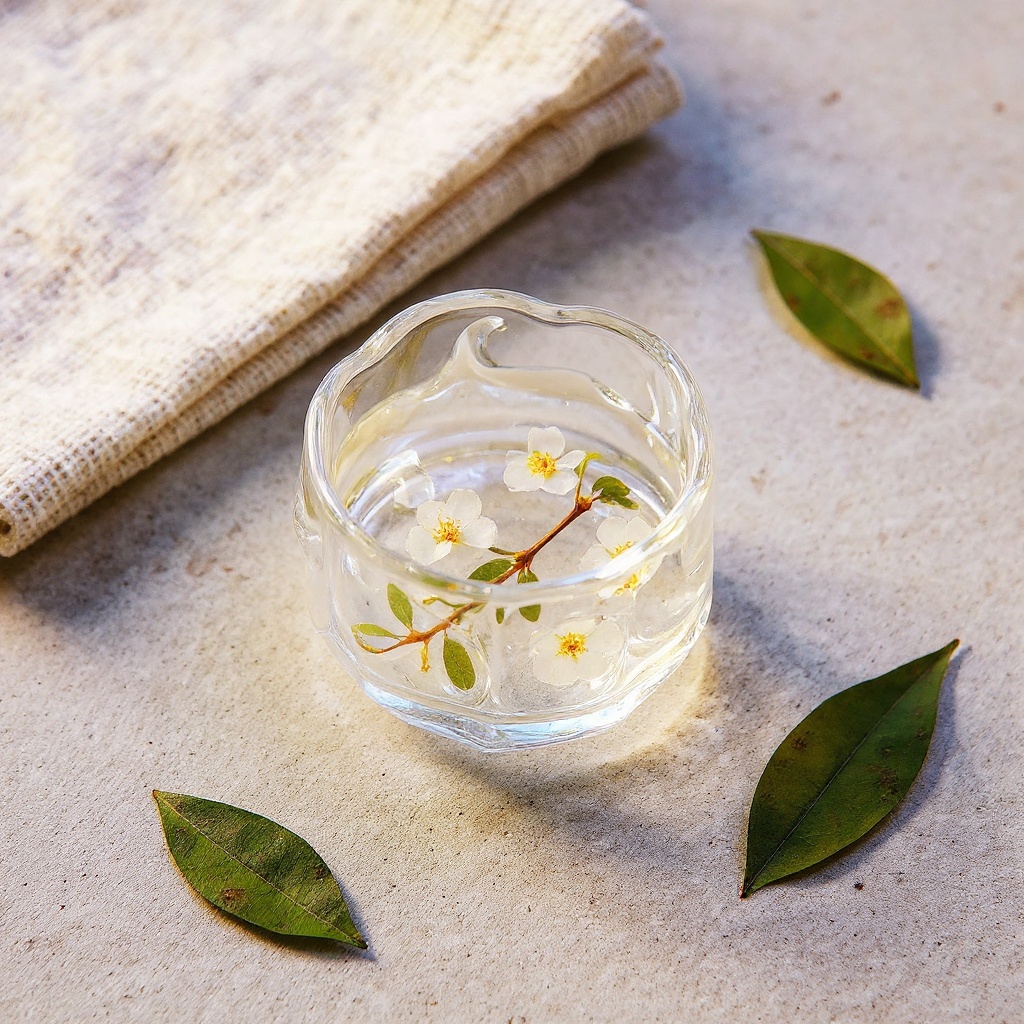
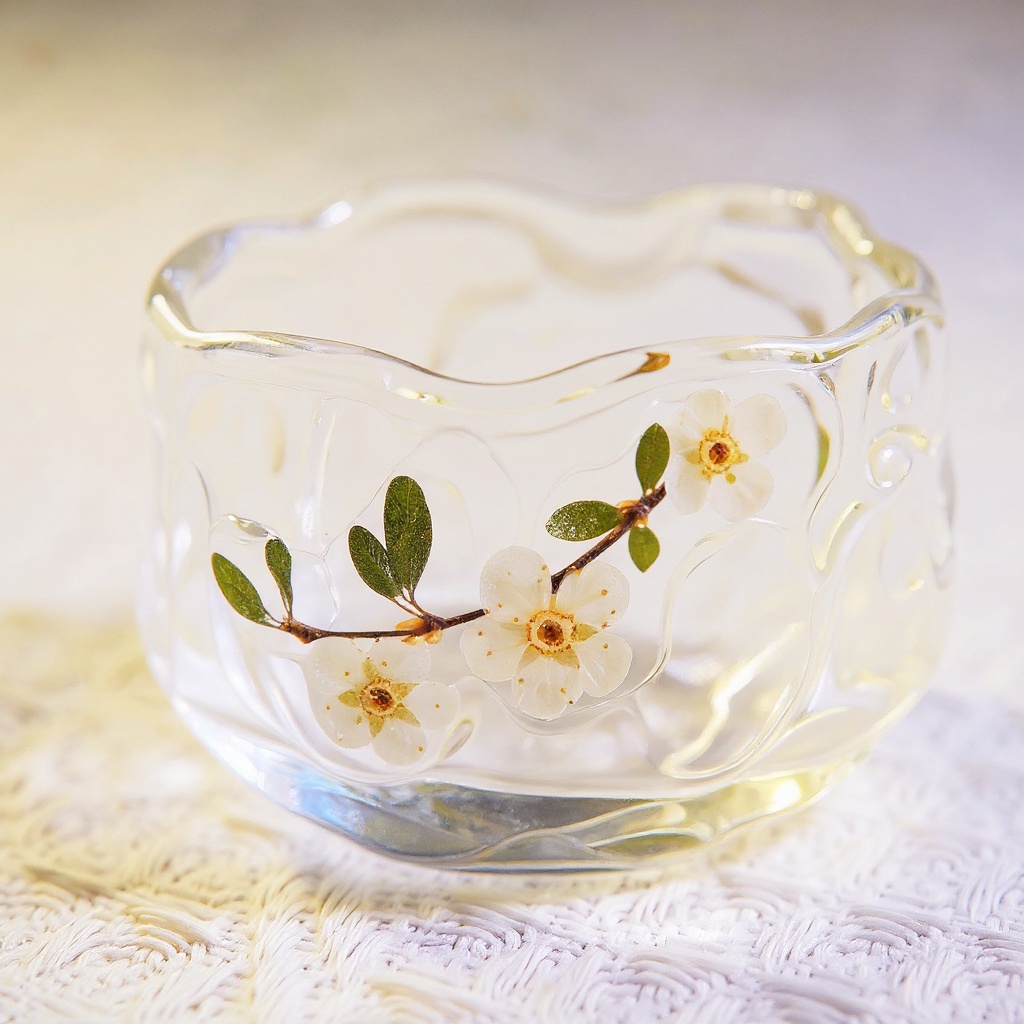
By a materials researcher and botanical craft specialist with 8+ years studying resin encapsulation techniques, glass artisan traditions, and traditional East Asian tea ceremony practices. Referenced by independent ceramics educators and craft materials publications.A handcrafted tea cup with preserved flowers is a small clear cylindrical glass vessel — typically 60ml — with real white plum blossoms and tiny green leaves physically embedded on its exterior beneath a smooth transparent resin layer. You can feel the petals with your fingertips. The flowers are not printed. They are not painted. They are actual botanical specimens, dried and sealed beneath cured resin that forms a raised tactile relief against the glass surface.
This guide covers how these cups are made, what makes them safe for hot liquids, how long the flowers last, and exactly what to look for when evaluating quality. No shortcuts here. No glossing over the parts most sellers prefer you not ask about.
What Is a Handcrafted Tea Cup with Preserved Flowers?
The handcrafted tea cup with preserved flowers belongs to a category of functional botanical art. Mass-produced alternatives exist — printed floral patterns, decal transfers, ceramic relief molds — but none replicate what happens when a real white plum blossom, still holding its petal veining and natural color variation, gets positioned by hand onto glass and sealed beneath layers of clear cured resin.
The result is permanent. Dimensional. Something you can run your thumb across and feel the curve of an actual petal edge.
Preserved-flower resin cups have grown in popularity within both Gongfu tea culture and the broader slow-living aesthetic movement, where the objects used in daily rituals carry intentional meaning. A handcrafted tea cup with preserved flowers sits at that intersection — functional enough for daily Gongfu brewing, visually grounded enough to double as a display piece between sessions.
The Making Process: Step by Step
Understanding how a handcrafted tea cup with preserved flowers is produced clarifies why quality varies so widely between makers.
Step 1: Flower Selection and Harvest Timing
White plum blossoms are harvested at peak bloom, before petals begin to lose structural firmness. Timing matters more than most buyers realize. Flowers harvested even two days past peak show accelerated browning during drying, and no resin coating can reverse that.
Step 2: Moisture Removal
Artisans use silica gel drying or controlled-environment air drying to remove moisture while preserving pigment integrity. Controlled humidity during this phase — typically maintained between 40–50% relative humidity — slows the process but prevents the rapid cell collapse that causes browning. The drying phase for plum blossoms takes 3–5 days under these conditions. Rushed drying at higher temperatures strips the natural oils from petals, producing brittle, flat specimens that fade faster inside the resin.
Freeze-drying is a third option. It costs significantly more — roughly three times the equipment investment of silica gel drying — but preserves the most vibrant color intensity by removing moisture through sublimation rather than evaporation.
Step 3: Hand Positioning on the Glass Surface
Each flower is placed individually. By hand. No automated fixture can position organic botanical specimens with the micro-adjustments a human hand makes when accounting for petal curl, leaf overlap, and the natural asymmetry of real flowers.
Step 4: Multi-Layer Resin Application
Clear eco-resin is applied in 2–3 thin coats, not one thick pour. Each coat cures for approximately 24 hours before the next layer goes on. This prevents the trapped air bubbles that form when resin is applied too thickly over porous botanical surfaces. The layered approach also builds a stronger, more uniform finish.
Step 5: Full Cure Period
The finished cup cures for a minimum of 72 hours at controlled temperature before handling or use. This final cure period completes the polymerization process. Cups pulled from curing early may feel slightly tacky at the resin surface — a sign of incomplete chemical crosslinking that can also affect stability at higher temperatures.
The five-step summary, numbered for clarity: 1. Harvest white plum blossoms at peak bloom 2. Dry specimens under controlled humidity (40–50%) for 3–5 days 3. Hand-position each flower and leaf on the glass exterior 4. Apply 2–3 thin resin coats with 24-hour cure intervals between layers 5. Full 72-hour final cure before the cup is used or shippedResin Safety: What the Standards Actually Say
This is the section most product pages handle with vague reassurances. Let's be specific.
Food-contact resin safety in the United States falls under FDA regulations in 21 CFR (Code of Federal Regulations) Part 175 and Part 177, which govern indirect food additives and polymeric coatings. Epoxy resins intended for food-contact surfaces must meet the migration threshold requirements outlined in these sections — meaning the cured polymer cannot release detectable chemical compounds above established limits when in contact with food or liquid at specified temperatures.
The critical phrase is properly cured. Uncured or partially cured resin can contain residual reactive monomers — compounds that have not yet bonded into the stable polymer chain. These residual compounds are the source of the chemical smell sometimes reported in lower-quality resin pieces. A fully cured, BPA-free epoxy resin — cured for the full 72-hour period at the correct temperature — stabilizes into a polymer that published material safety data consistently shows to be non-reactive at temperatures up to 200°F, which exceeds normal tea serving temperatures of 140–180°F.
The NSF International certification program (NSF/ANSI 51) provides third-party testing for food-equipment materials including polymer coatings. When evaluating any resin-coated drinkware, asking whether the resin formulation has been tested against NSF/ANSI 51 or equivalent FDA 21 CFR standards is a reasonable and legitimate question.
Premium eco-resins maintain structural and chemical stability at continuous exposure up to 250°F. Basic craft resins — the type available in hobby stores — may begin to soften at 180°F. For a handcrafted tea cup with preserved flowers used in Gongfu brewing, the resin specification matters.
Gongfu Tea Culture and the 60ml Cup Format
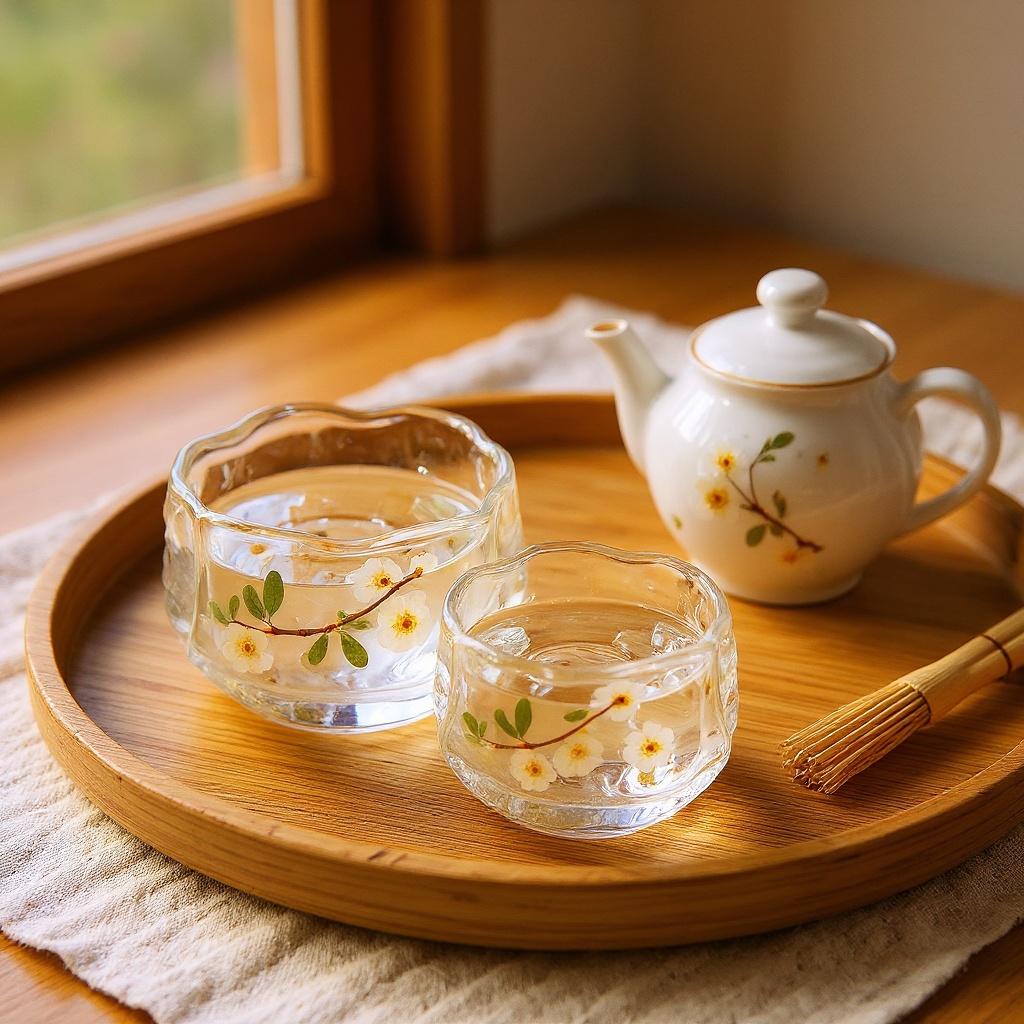
The 60ml capacity is not decorative. It is functional design rooted in the Gongfu tea ceremony, a traditional Chinese brewing method emphasizing multiple short steepings from the same tea leaves rather than a single long extraction.
In Gongfu practice, a steeping lasts 30–60 seconds. Water temperature runs between 185–205°F depending on the tea type. The cup must withstand thermal shock — rapid temperature change — without cracking. The thin walls of a proper Gongfu master cup, typically 2–3mm, serve a specific purpose: they conduct heat to your fingertips, giving you tactile information about the liquid temperature before you drink.
A standard Western teacup holds 200–300ml. By the time you reach the final sips of a 300ml pour, the tea has cooled, extracted further, and often turned bitter. The 60ml volume means each pour is consumed quickly, at optimal temperature, before the next steeping begins. Different brewing format. Different philosophy.
The handcrafted tea cup with preserved flowers in 60ml format brings an aesthetic dimension to this already ritualized practice. The white plum blossom — Prunus mume — carries significant symbolic weight in East Asian cultural traditions, associated with endurance and renewal. Its appearance on a Gongfu master cup is not arbitrary.
| Feature | Gongfu Master Cup (60ml) | Standard Mug (300ml) | Ceramic Tea Bowl (120ml) |
|---|---|---|---|
| Steeping volume | 1–2 sips at optimal temp | 8–10 sips, cools mid-pour | 3–4 sips, moderate cooling |
| Wall thickness | 2–3mm, heat-conducting | 5–7mm, insulating | 3–5mm, varies |
| Ceremony compatibility | Traditional Gongfu brewing | Western single-steep | Japanese or casual Chinese |
| Material options | Glass, porcelain, clay | Ceramic, glass, enamel | Ceramic, clay |
| Typical handmade price | $50–$150 | $20–$60 | $30–$90 |
| Botanical resin option | Available | Rare | Uncommon |
| Expected lifespan (handmade) | 8–12 years with proper care | 5–10 years | 5–10 years |
How Long Do the Flowers Actually Last?
Real preserved flowers sealed in quality resin maintain their appearance for 5–10 years under typical indoor conditions. Longer in some cases. Shorter if exposed to direct sunlight.
UV light is the primary threat. The organic pigments in real flower petals — including the whites and pale pinks of plum blossoms — degrade under sustained ultraviolet exposure. A handcrafted tea cup with preserved flowers placed in a south-facing window will show noticeable fading within 6–12 months. The same cup stored away from direct light can hold its color for a decade.
Indoor ambient light poses minimal risk. Standard LED and incandescent bulbs emit low UV levels. Halogen bulbs emit slightly more and are worth avoiding for long-term display.
The drying method used during production also affects long-term color retention. Silica gel drying preserves 80–90% of original color intensity in most specimens. Freeze-dried flowers retain the most vibrant pigmentation but cost more to produce. Flowers rushed through high-temperature drying lose natural oils, become brittle, and fade faster regardless of the resin quality applied afterward.
Signs of Proper Preservation Quality:
1. Natural color variation between petals — real flowers show subtle tonal differences that uniform artificial alternatives cannot replicate 2. Intact petal edges without browning or curling — structural integrity indicates controlled drying conditions 3. Visible surface texture — petal veins and natural micro-textures remain readable through the clear resin 4. Stable positioning — flowers do not appear to have shifted or floated during resin application 5. Bubble-free resin — clear coating with no trapped air pockets around flower edges 6. Smooth, tack-free finish — no sticky areas indicating incomplete cure
The Honest Part Most Articles Won't Tell You
If you live in a climate with sustained high humidity above 80% — coastal tropics, certain Pacific Northwest winters, humid subtropical zones — a handcrafted tea cup with preserved flowers stored without climate control may develop micro-condensation cycles at the glass-resin interface over years. This does not affect most buyers. But if you're in a genuinely humid environment and plan to store the cup without consistent air conditioning, the long-term seal performance is less predictable than in temperate or dry climates. Worth knowing before you invest.
Also worth stating plainly: the handcrafted tea cup with preserved flowers category includes significant quality variation. Not every maker uses the same resin grade, drying technique, or cure timeline. Some pieces on the market use artificial flowers presented as preserved. Some use resin formulations not rated for food-contact temperatures. The questions in the FAQ section below are exactly the questions you should ask any seller before purchasing.
Care and Longevity: The Practical Details
Hand washing. Always.
Dishwasher cycles reach wash temperatures of 140–180°F and drying cycle temperatures that can exceed 200°F. The combination of sustained heat, pressurized water, and alkaline detergent creates conditions that stress both the resin-glass bond and the resin surface itself. Micro-cracks form. Moisture penetrates. The seal fails over time.
For daily cleaning, lukewarm water under 110°F and mild dish soap remove tea residue without risk. A soft cloth or silicone brush handles any stubborn staining without scratching the resin surface. Scratches matter — they become pathways for staining and bacterial accumulation over time.
Store the cup at room temperature, between 65–75°F. Avoid leaving it in a car during summer months. Temperatures inside parked vehicles regularly exceed 130°F, and repeated thermal cycling — heat and cool, heat and cool — stresses any bond between dissimilar materials, including resin and glass.
For transport, soft cloth wrapping is sufficient. The cured resin surface is durable. Not indestructible, but durable.
Choosing Tea for Small-Volume Gongfu Brewing
A handcrafted tea cup with preserved flowers at 60ml format pairs naturally with teas designed for multiple short steepings.
Oolong teas perform well here. Complex flavor profiles — floral, stone fruit, roasted, mineral — shift noticeably across 4–6 steepings of 30–45 seconds each. High-oxidation oolongs like Da Hong Pao can yield 8 or more flavorful steepings from the same leaves.
Pu-erh teas, both raw (sheng) and ripe (shou), also suit this format. The first steeping typically rinses the leaves; subsequent steepings develop differently. Raw pu-erh opens astringent and softens. Ripe pu-erh maintains earthy depth throughout.
Green teas require careful temperature control — 160–180°F — to avoid bitterness from over-extraction. Delicate cultivars like Japanese gyokuro or Chinese longjing benefit from the precise control that small-volume brewing enables.
Black teas require adjustment. The standard 3–5 minute Western steep becomes 15–30 seconds in Gongfu format, which reveals structural flavor notes often masked by extended extraction. Different experience. Worth trying.
Handcrafted vs. Mass-Produced: An Honest Comparison
| Category | Price Range | Flower Type | Resin Grade | Typical Lifespan | Tactile Surface |
|---|---|---|---|---|---|
| Mass-produced printed | $10–$30 | None (printed graphic) | No resin | 3–5 years before fading | Flat |
| Mass-produced plastic relief | $20–$45 | Artificial plastic | Painted coating | 2–4 years | Rigid, uniform |
| Mid-tier handmade | $45–$90 | Real, variable drying method | Basic eco-resin | 4–7 years | Dimensional |
| Quality artisan handmade | $70–$180 | Real, controlled drying | Premium food-rated resin | 8–12 years | Dimensional, smooth |
| Studio gallery pieces | $180–$500+ | Real, freeze-dried | Premium | 10+ years | Dimensional, refined |
The cost-per-year comparison is instructive. A $25 mass-produced cup lasting 3 years costs approximately $8.33 per year of use. A quality handcrafted tea cup with preserved flowers at $70–$90 lasting 10 years costs $7–$9 per year — comparable, but with a fundamentally different object in your hand each morning.
The handcrafted option at Handmade Glass Tea Cup Real Pearl Plum Flowers represents the quality artisan tier in this comparison, using real white plum blossoms with premium eco-resin rated for food-contact use.
FAQ
Is resin on a tea cup safe for drinking hot liquids?
Properly cured, food-grade epoxy resin meets FDA food-contact standards under 21 CFR Part 175 and Part 177, remaining chemically stable at temperatures up to 200°F — above standard tea serving temperatures of 140–180°F. The resin must be fully cured for a minimum of 72 hours to ensure complete polymerization. Partially cured resin may contain residual reactive compounds. Signs of incomplete cure include a chemical odor or tacky surface texture. When purchasing any resin-coated drinkware, ask the maker whether the resin formulation is BPA-free and rated for food-contact use at temperatures above 200°F.
How long do preserved flowers last inside resin before fading or browning?
Real preserved flowers sealed in quality resin typically maintain their color for 5–10 years under indoor conditions away from direct sunlight. UV exposure is the primary cause of fading — direct sunlight accelerates pigment degradation to 6–12 months in some cases. Standard indoor lighting poses minimal risk. The drying method used during production also affects longevity: silica gel drying preserves 80–90% of original color intensity, while rushed high-temperature drying produces specimens that fade faster regardless of resin quality.
Can a resin-coated glass cup go in the dishwasher?
Hand washing is recommended. Dishwasher wash cycles reach 140–180°F, and heated drying cycles can exceed 200°F — approaching or exceeding the stability limits of lower-grade resins. The combination of sustained heat, alkaline detergents, and water pressure can cause micro-fractures at the resin surface over repeated cycles. Lukewarm water under 110°F with mild dish soap and a soft cloth cleans the cup without risk to the resin coating or embedded flowers.
What is a Gongfu master cup and how does it differ from a regular teacup?
A Gongfu master cup is a small-volume vessel — typically 45–80ml — designed for traditional Chinese tea ceremony practice involving multiple short steepings of the same tea leaves. The thin walls (2–3mm) conduct heat to the drinker's hands, providing tactile temperature feedback. The small volume ensures each steeping is consumed while still at optimal drinking temperature, before the liquid cools or continues extracting. Standard Western teacups hold 200–300ml and are designed for single long steepings — a different brewing philosophy with different equipment requirements.
Are the flowers in preserved-flower resin cups real or artificial?
Quality handcrafted pieces use real dried botanical specimens. Genuine preserved flowers show natural characteristics that artificial alternatives cannot consistently replicate: subtle tonal variation between petals, visible surface veining and texture, and slight asymmetry in petal shape and positioning. Artificial flowers tend to show uniform color, smooth featureless surfaces, and identical petal geometry. When evaluating a cup, viewing the flower detail in natural daylight — rather than product photography — reveals these distinctions clearly.
Why does a handcrafted floral tea cup cost significantly more than a standard glass cup?
The price reflects the labor-intensive, time-extended production process: 3–5 days of controlled flower drying, individual hand-positioning of each botanical specimen, 2–3 resin applications with 24-hour cure intervals between coats, and a 72-hour final cure period. Materials also contribute — premium food-grade eco-resin costs substantially more than basic craft resin. Each cup is produced individually rather than in automated runs, and no two cups are identical because the botanical specimens themselves are not identical.
How do artisans preserve plum blossoms so they keep their color inside resin?
White plum blossoms are dried under controlled humidity conditions — typically 40–50% relative humidity — over 3–5 days. This slow moisture removal preserves the pigment structure and natural oils in the petals while preventing the cell collapse that causes browning. Silica gel is a common drying agent for this purpose. Freeze-drying is the premium alternative, removing moisture through sublimation and preserving the most vibrant color intensity, though the equipment cost is substantially higher. Flowers dried too quickly or at high temperatures become brittle and lose pigment integrity regardless of subsequent resin quality.
What teas work best with a 60ml Gongfu master cup?
Oolong and pu-erh teas are most compatible with the 60ml Gongfu format. Both are designed for repeated short steepings — 30–60 seconds each — that reveal different flavor characteristics across multiple rounds. Complex oolongs such as Da Hong Pao can yield 8 or more distinct steepings from the same leaf charge. Pu-erh teas develop differently across steepings, with raw varieties opening astringent and mellowing over time. Green teas require careful water temperature management at 160–180°F to avoid bitterness. Black teas can be adapted to Gongfu format with shorter steeping times of 15–30 seconds rather than the standard 3–5 minutes.
Does the raised resin surface affect how you hold or drink from the cup?
The tactile relief created by the embedded flowers and resin coating is positioned on the exterior wall of the cup, not the rim or interior. The drinking rim and interior surface remain smooth. The exterior texture — the raised outlines of petals and leaves beneath clear resin — creates a grip point that many users find pleasant rather than disruptive. The effect is similar to holding a smooth river stone with slight natural surface variation: present, tactile, not intrusive.
Conclusion
A handcrafted tea cup with preserved flowers is a specific, demanding category of functional object. Real flowers. Real resin. Real technique. Real differences in quality between makers who cut corners and those who do not.
The white plum blossom embedded beneath clear resin on a 60ml glass cup is not decorative shorthand for a lifestyle aesthetic. It is an actual botanical specimen — harvested, dried, positioned, sealed — that will still be visible and tactile years from now if the production process was done correctly.
Not every version on the market meets that standard. Now you know what to ask.
For a reference point on what quality artisan production looks like in this category, the Handmade Glass Tea Cup Real Pearl Plum Flowers demonstrates the construction standards described in this guide: real white plum blossoms, food-rated eco-resin, 60ml Gongfu format, and a smooth exterior relief finish you can feel.
Botanical art made functional. Worth understanding before you buy.


