































Heat Resistant Porcelain Travel Tea Cups Explained
Heat Resistant Porcelain Travel Tea Cup: What Actually Matters
By pampasroom, founder of Pampasroom · 8+ years developing botanical porcelain teaware · Studied ceramic material properties at the intersection of traditional East Asian firing techniques and contemporary botanical preservation methodsA heat resistant porcelain travel tea cup can safely handle boiling water without cracking when the ceramic body is fired at temperatures between 2,300°F and 2,400°F (1,260°C–1,315°C) and built with walls thick enough to distribute thermal stress evenly across the surface. These are the non-negotiable specs. The key factors are proper porcelain composition, adequate wall thickness (typically 3–4mm), and quality glazing that prevents thermal shock from fracturing the structure during daily use. Many mass-produced cups cut corners on firing schedules and kaolin ratios, leading to hairline cracks or sudden breaks the moment you pour hot tea.
Porcelain's heat resistance comes from kaolin clay content and the firing process. High-quality pieces undergo multiple firings that create a vitrified, non-porous matrix capable of withstanding surface temperature changes up to 300°F (149°C) without cracking, per ASTM C554 standard test methodology for thermal shock resistance of porcelain. This makes genuine fired porcelain more reliable than low-fire ceramics or bone china blends for travel tea brewing.
Not magic. Just chemistry and heat.
Understanding Porcelain Heat Resistance vs. Thermal Shock Resistance
Heat resistance and thermal shock resistance are not the same property, though people conflate them constantly. Heat resistance means the material withstands high temperatures without structural breakdown — the maximum sustained heat the cup handles before the glaze crazes or the body deforms. Porcelain fired to vitrification maintains its structural integrity well above any tea brewing temperature, since water boils at 212°F (100°C) and even the most aggressive ceremonial teas brew below 205°F.
Thermal shock resistance is entirely different. It describes how well the material handles sudden temperature changes — the rapid thermal expansion that occurs when you pour 212°F water into a cup sitting at 68°F room temperature. According to ceramic engineering literature reviewed by the American Ceramic Society, the critical factor is the material's coefficient of thermal expansion (CTE): lower CTE values mean less dimensional change per degree, which reduces the internal stress that causes cracking. High-fired porcelain achieves low CTE values precisely because the vitrification process transforms the clay matrix into a glass-ceramic composite that expands and contracts as a unified structure rather than as separate, competing phases.
The practical difference is real. A cup might handle boiling water poured slowly just fine, then shatter with a direct high-volume pour from the kettle. You need both properties. For travel, where brewing conditions are unpredictable, thermal shock resistance often matters more than raw heat resistance.
Wall Thickness and Comfort: The Numbers Behind the Feel
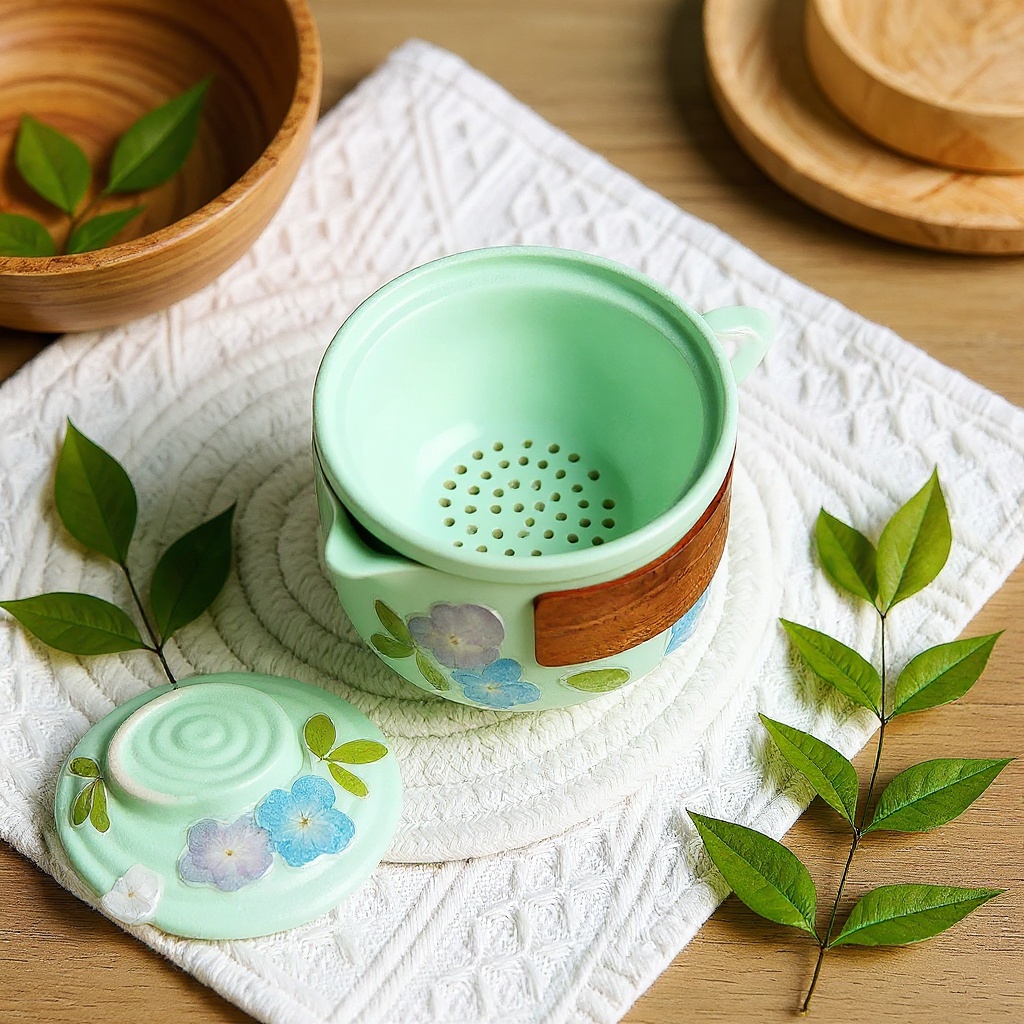
Wall thickness governs both heat resistance and how the cup feels in your hand. Too thin — under 2mm — and the cup becomes fragile and transfers heat to your fingers fast enough to be painful. Too thick — over 6mm — and it becomes heavy, heat distribution slows, and the cup stops feeling like a tea vessel and starts feeling like a paperweight. The sweet spot for travel porcelain sits between 3mm and 4mm.
At 3mm, quality porcelain provides solid thermal buffering while keeping total weight under 120g for most standard 150–200ml gaiwan sizes. Your fingers stay comfortable even with very hot tea. The cup heats evenly without localized hot spots that can stress the glaze. Many artisan pieces — including our Handmade Travel Tea Set with real flower porcelain cups — achieve this thickness through careful hand-shaping rather than pressure casting, which allows the potter to feel and adjust the wall as it forms.
Thicker walls also retain heat longer. A 4mm porcelain gaiwan cup keeps tea warm for 15–20 minutes longer than a comparable thin-walled stoneware mug under identical ambient conditions — a figure consistent with thermal mass calculations based on porcelain's specific heat capacity of approximately 0.19 cal/g°C. That matters when you're traveling and reheating isn't an option.
Porcelain Wall Thickness Comparison
| Thickness | Thermal Protection | Finger Comfort | Weight (150ml cup) | Travel Suitability | Durability |
|---|---|---|---|---|---|
| 2–2.5mm | Poor | Burns fingers | ~60–75g | Display only | Fragile |
| 3–3.5mm | Good | Comfortable | ~90–110g | Daily travel | Good |
| 4–4.5mm | Excellent | Comfortable | ~115–140g | Frequent travel | Excellent |
| 5–5.5mm | Excellent | Slightly heavy | ~145–170g | Home/desk use | Very Good |
| 6mm+ | Excellent | Clunky | 180g+ | Not recommended | Good |
Gaiwan Cups for Travel: The Honest Trade-Off
Honestly, a traditional gaiwan is not a great travel vessel. There. Most articles won't say that.
The wide, shallow bowl design and separate lid that make gaiwan cups ideal for Chinese tea ceremony — controlled steeping, easy leaf inspection, lid-assisted pouring — also make them genuinely awkward in a bag. The separate lid can shift, the open rim chips easily, and the wide mouth loses heat faster than a narrower travel mug. If you primarily brew tea while commuting on trains or hiking, a lidded travel tumbler with an infuser will serve you better.
That said, for tea enthusiasts who want the full gaiwan experience at a desk, a hotel room, or a slow outdoor morning — the modern travel-adapted gaiwan is a real product category and it works. A well-made travel gaiwan typically features 150–400ml capacity, a reinforced rim with slightly increased thickness at the lip (the most vulnerable point), and a lid design fitted closely enough that it won't shift in a padded case. The frosted matte finish on botanical porcelain gaiwans provides measurably better grip than glossy glaze alternatives — important when handling any hot vessel.
For this type of use. Specifically. The gaiwan format is worth it.
Real Flower Preservation in Porcelain: Heat Resistance and Longevity
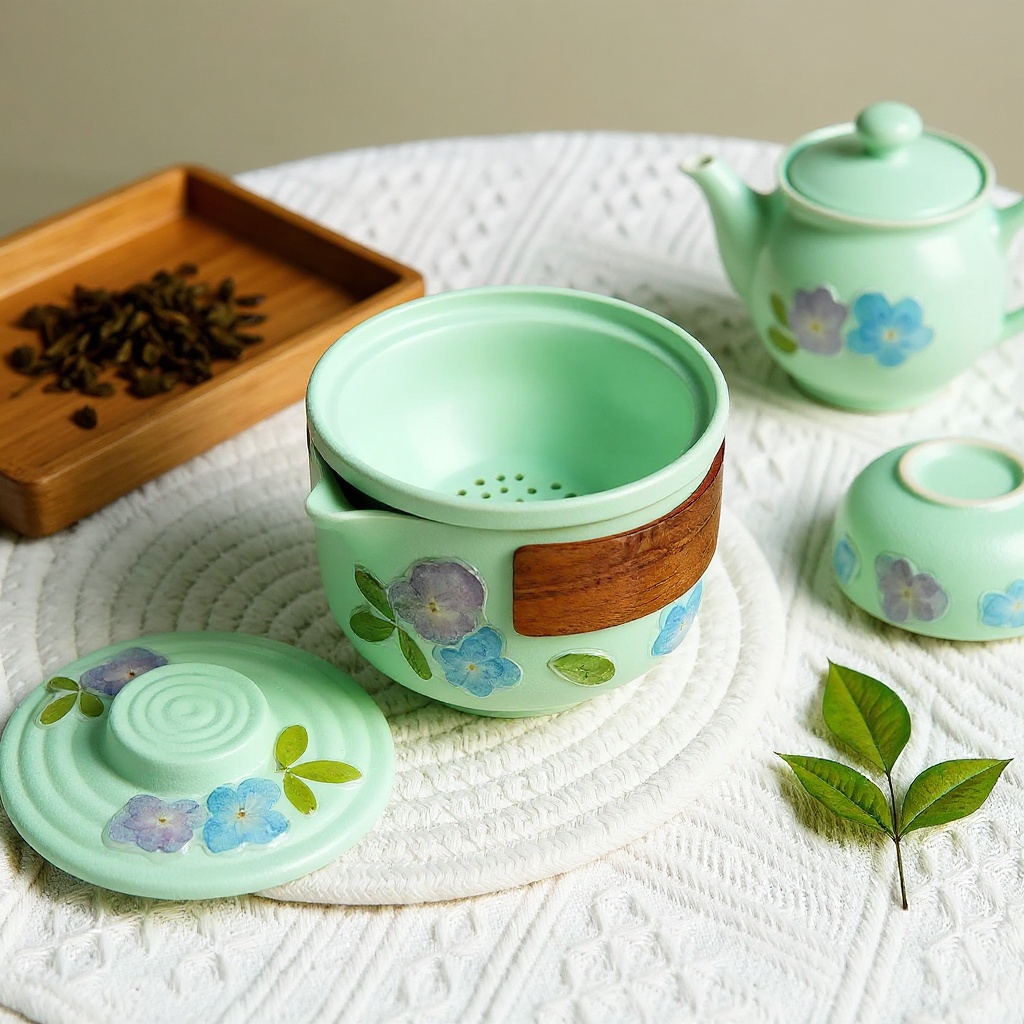
Pressed flower craft embedded in porcelain raises immediate questions about durability under heat. Properly preserved flowers embedded within the porcelain body — not surface-applied — maintain color and three-dimensional structure for decades when the glazing and firing process fully encases them. The flowers used in quality botanical porcelain, including roses, daisies, and wildflowers, are first dehydrated to below 5% moisture content to prevent steam expansion during firing, then stabilized with a ceramic-compatible consolidant before being set into the clay body.The critical word is embedded. Full encasement means the porcelain surrounds the botanical material on all sides. Tea heat cannot affect the flowers because the fired porcelain body acts as complete thermal and atmospheric insulation — no oxygen reaches the organic material, which is why color retention holds even after years of use with boiling water.
Cheap alternatives use screen-printed floral patterns or surface-applied decals that sit above the glaze rather than within the porcelain structure. These fade within months. You can identify them immediately: the design has no tactile dimension, no raised relief, no variation in depth across the petal surfaces.
How to Verify Authentic Flower Preservation
1. Run your finger across the surface — real embedded flowers create raised, three-dimensional relief you can feel distinctly 2. Look for natural color variation — authentic petals show gradient shifts across the surface, not flat uniform color 3. Examine the edges under light — real preserved flowers have crisp, detailed petal edges rather than slightly blurred print margins 4. Check the depth of integration — flowers should appear to emerge from within the porcelain, not sit on top of the glaze 5. Assess the matte finish quality — genuine botanical pieces use frosted matte glazes that allow flower texture to read through, not glossy coatings that flatten the relief 6. Look for placement variation — hand-positioned flowers show slight asymmetries and rotational differences between individual cups, unlike machine-applied patterns 7. Inspect under magnification — real plant structures show cell-level detail at the stem and petal junctions
A Step-by-Step Guide to Evaluating a Heat Resistant Porcelain Travel Tea Cup Before Buying
1. Check the firing temperature specification — look for documentation showing 2,300°F (1,260°C) or above; anything lower indicates earthenware or mid-fire stoneware, not true vitrified porcelain 2. Measure or estimate wall thickness — hold the cup at eye level and examine the rim profile; quality travel gaiwans show 3–4mm at the rim and consistent thickness down the body 3. Verify food safety certification — look for FDA compliance documentation for lead and cadmium limits (FDA CPG Sec. 545.450 sets the standard for ceramic importware), or equivalent CE marking for EU markets 4. Test the glaze surface — draw a fingernail across an undecorated interior surface; a properly fired glaze produces no scratching and feels glass-smooth 5. Confirm botanical authenticity — use the tactile test described above; real embedded flowers are immediately distinguishable from printed alternatives 6. Assess packaging integrity — a quality heat resistant porcelain travel tea cup shipped without proper cushioning arrives damaged; eco-kraft gift box packaging with internal foam or tissue separation is a proxy indicator of maker quality standards 7. Request or review test documentation — reputable artisan producers can provide kiln firing logs or third-party metal leaching test results on request
Cleaning and Maintenance for Textured Botanical Surfaces
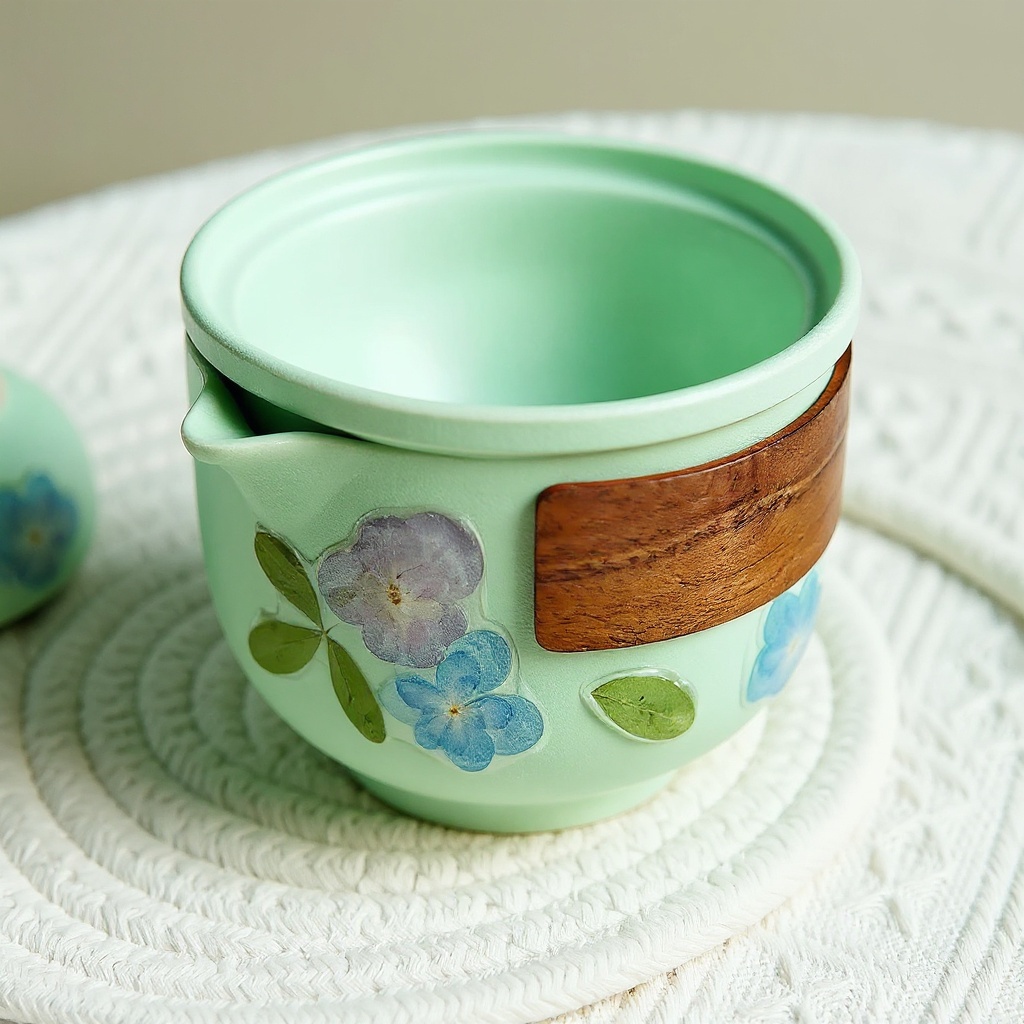
Textured porcelain requires a different cleaning approach than smooth-walled cups. Raised botanical elements trap tea oils and mineral deposits in the relief channels. Aggressive scrubbing removes them but risks abrading the frosted matte finish and, over time, wearing down the surface consolidant layer that protects preserved flower edges.
Soak first. Always soak first.
Warm water and mild pH-neutral dish soap handle 90% of daily cleaning needs. Soak for 5–10 minutes to soften any residue, then work around raised areas with a soft-bristle brush — a dedicated tea brush or a clean mascara brush both work. Avoid steel wool, melamine foam ("magic eraser" type products), or abrasive powder cleansers, which microscopically scratch the frosted surface and dull the finish permanently.
For mineral deposits from hard water, a 1:3 solution of white vinegar and warm water dissolves calcium carbonate buildup without harsh chemicals. Apply, let sit for 10 minutes, work gently around textured areas with a soft brush, then rinse thoroughly with clean water. The mild acidity is safe for properly fired glaze but rinse completely — residual vinegar affects tea flavor in subsequent brews.
Handmade vs. Factory Production: Where Quality Actually Diverges
Handmade porcelain is not automatically better. That's the honest version of this comparison that most brand-produced articles skip.
The real quality advantage of handmade porcelain in botanical gaiwan cups is dimensional control. An experienced potter adjusting wall thickness by feel during throwing can optimize the 3–4mm sweet spot more consistently across the body's curved surface than a pressure-casting mold designed around average specifications. Hand-positioning of dried botanicals also allows for placement decisions that machine processes cannot replicate — depth variation, angle, layering of multiple species.
Factory production offers consistency in glaze chemistry and firing schedules that individual studio potters sometimes can't match without significant kiln infrastructure. A high-end factory using the correct firing protocols and verified clay bodies can produce heat resistant porcelain travel tea cups that equal or exceed studio quality in thermal performance. The difference shows up in the decorative integration and tactile character of the finished piece, not necessarily in raw heat resistance numbers.
Our eco-friendly travel tea set uses a hybrid approach: hand-throwing and botanical placement by individual artisans, with firing in a controlled kiln environment that maintains consistent temperature profiles across each batch.
Food Safety and Quality Verification
Verifying food safety in porcelain means going past marketing language to actual certification data. The FDA's Compliance Policy Guide Section 545.450 establishes maximum extractable lead limits for ceramic articles used with food and beverages: 0.5 parts per million (ppm) for cups and mugs. Cadmium limits are set at 0.25 ppm for the same category. These are the numbers that matter. "Food safe" as an unqualified marketing claim means nothing without documentation showing metal leaching test results below these thresholds.
For products entering the EU market, Regulation (EC) No 1935/2004 on materials intended to contact food sets the applicable framework, with specific ceramic article standards under Directive 84/500/EEC providing the lead and cadmium migration limits. CE marking on ceramic food contact articles indicates compliance testing against these standards.
Proper glazing is the functional mechanism behind food safety. Glazes fired to full maturity at the correct temperature form a continuous, non-porous glass layer that cannot leach metals into beverages under normal use temperatures. Underfired glazes — which can result from insufficient kiln time, uneven kiln loading, or incorrect temperature calibration — may appear visually complete but contain microscopic channels that compromise both safety and long-term durability.
FAQ
Q: Can you pour boiling water directly into a heat resistant porcelain travel tea cup without it cracking?A: Yes, when the cup meets the correct specifications: wall thickness of 3–4mm, firing temperature above 2,300°F (1,260°C), and a vitrified clay body with low thermal expansion coefficient. These properties, assessed against ASTM C554 methodology, allow direct pours from a boiling kettle without thermal shock cracking. The one exception: avoid pouring boiling water into a cup that has been refrigerated or frozen, as the extreme cold-to-hot differential exceeds even well-made porcelain's thermal shock tolerance.
Q: What is the difference between heat resistant and thermal shock resistant in a porcelain cup?A: Heat resistance describes the maximum temperature the porcelain can sustain without structural breakdown — well above any tea brewing scenario for properly fired vitrified porcelain. Thermal shock resistance describes tolerance for sudden temperature changes, which is the relevant property for tea use. When you pour 212°F water into a 68°F cup, the rapid expansion event is what causes cracking in lower-quality pieces. Both properties are needed for a reliable heat resistant porcelain travel tea cup, but thermal shock resistance is the more practically demanding specification.
Q: How thick should porcelain walls be for a travel gaiwan cup to feel comfortable in the hand?A: The 3–4mm range provides the optimal combination of thermal buffering, weight, and durability for travel use. At 3mm, a 150ml gaiwan cup weighs approximately 90–110g — light enough for daily carry. At 4mm, heat retention improves measurably and the cup withstands light impact better, at the cost of adding 20–30g. Below 3mm, finger comfort drops significantly with hot tea, and durability in a travel context becomes a real concern.
Q: Are gaiwan cups practical for travel or are they too delicate?A: Traditional thin-walled antique gaiwans are genuinely not designed for travel — this is worth stating clearly. However, modern travel-adapted gaiwans with reinforced rims, 3–4mm walls, fitted lids, and frosted matte finishes for grip are a legitimate product category. They work well in controlled travel situations: hotel rooms, office desks, outdoor seating. They are not ideal for in-bag commuting unless in a purpose-built padded case.
Q: Do real flowers embedded in porcelain fade when the cup is used with hot tea repeatedly?A: No, when the botanical material is fully embedded within the porcelain body rather than surface-applied. Complete encasement by the fired clay and glaze layers blocks both oxygen and light from reaching the organic material — the two primary drivers of color degradation. Tea heat at 212°F cannot penetrate the porcelain barrier to affect the preserved flowers. Surface-applied floral decals, by contrast, sit above the glaze and do fade with heat and washing.
Q: What is the safest cleaning method for a porcelain cup with raised botanical texture?A: Soak in warm water with pH-neutral dish soap for 5–10 minutes, then use a soft-bristle brush (tea brush or similar) to work gently around raised floral relief areas. For mineral deposits from hard water, a 1:3 white vinegar to water solution left for 10 minutes dissolves calcium buildup safely. Avoid abrasive cleaners, steel wool, or melamine foam products, which permanently dull the frosted matte finish.
Q: Is handmade porcelain more heat resistant than factory-made porcelain?A: Not automatically. Heat resistance depends on firing temperature, clay body composition, and wall thickness — variables that both studio potters and factories can control or fail to control. The genuine advantage of handmade botanical porcelain is dimensional consistency and decorative integration, not raw thermal performance. A well-run factory using correct firing protocols can match or exceed a studio potter's thermal specifications. The botanical detail and tactile character of hand-positioned real flowers is where handmade production meaningfully differentiates.
Q: How do I verify that a porcelain tea cup is genuinely food safe and not just labeled that way?A: Request documentation showing metal leaching test results below FDA CPG Sec. 545.450 thresholds (0.5 ppm lead, 0.25 ppm cadmium for cups and mugs) or EU Directive 84/500/EEC equivalent results. Credible producers can provide these on request. Vague "food safe" marketing language without test data is insufficient. Additionally, confirm the glaze was fired to full maturity — a properly fired glaze is completely smooth and glass-hard with no surface porosity.
Q: What should I look for in the eco-kraft gift box packaging when buying a botanical gaiwan cup?A: Quality packaging for a heat resistant porcelain travel tea cup should include internal cushioning that prevents the cup and lid from contacting each other during shipping, tissue paper or foam padding around raised floral surfaces to prevent abrasion, and a secure closure that doesn't require excessive force to open. The eco-kraft box itself should feel substantial — thin recycled cardboard that flexes under light pressure indicates the maker prioritized appearance over protection.
Conclusion
A heat resistant porcelain travel tea cup that also carries real preserved botanical detail is a specific, demanding object to make well. The thermal performance requirements — 2,300°F+ firing, 3–4mm walls, low thermal expansion coefficient, food-safe glaze chemistry per FDA and EU standards — don't become easier just because the cup is beautiful. The best pieces satisfy both dimensions without compromise.
For tea enthusiasts seeking that balance, browse our Handmade Travel Tea Set featuring real flower porcelain cups — each piece combining verified thermal construction with genuine embedded botanical preservation, packaged in eco-kraft gift boxes designed to protect what's inside.
Beauty that performs. That's the standard.


