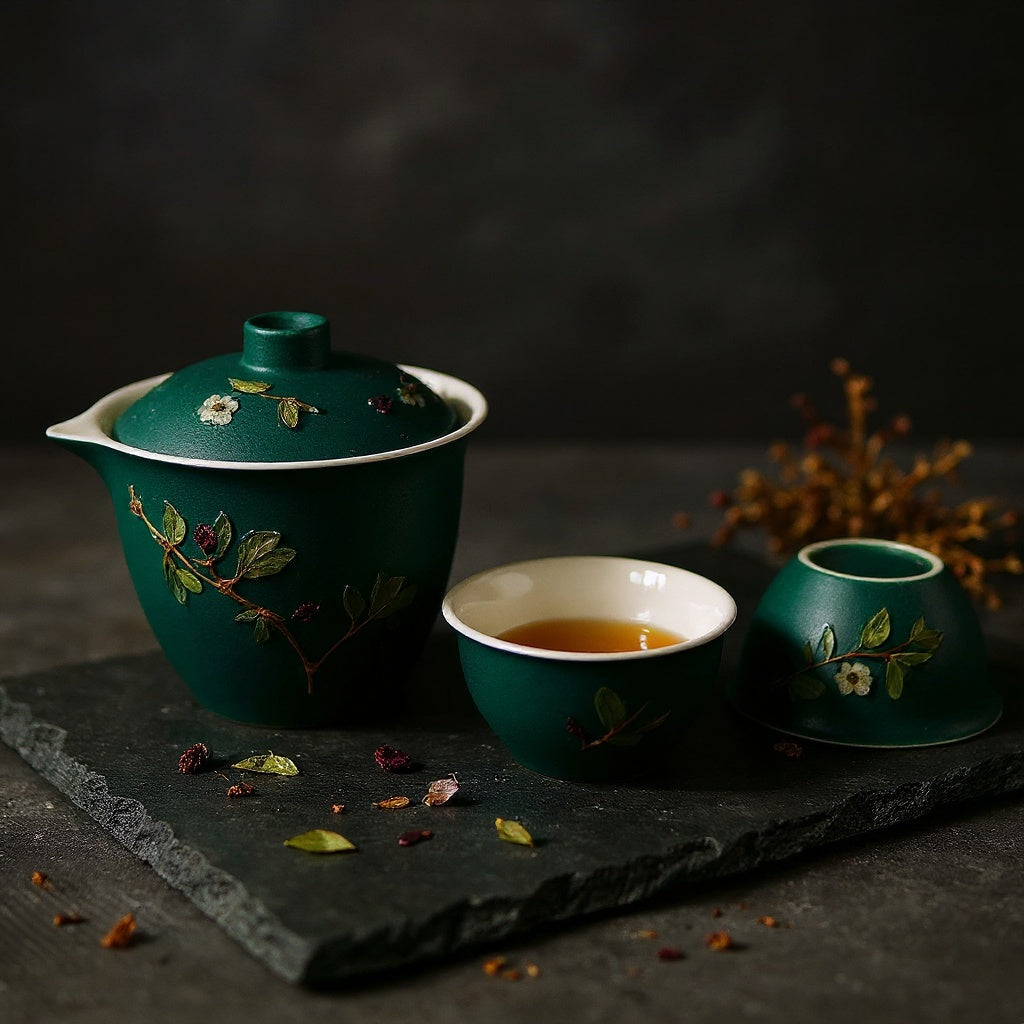
Preserved Flower Embedded Ceramic Teapot: How It's Made
By pampasroom, founder of Pampasroom · 8+ years collaborating directly with Southeast Asian ceramic artisans specializing in handbuilt stoneware · Featured in The Artisan Home and independent craft publicationsA preserved flower embedded ceramic teapot is made by pressing dried botanicals into unfired clay, then permanently fusing those impressions into the ceramic body during high-temperature kiln firing — the result is a raised tactile texture, not a painted surface. That single sentence is the foundation of everything below. The petals you feel when you run your fingers across the matte black surface are not transfers, not decals, not hand-painted strokes. Real. Then transformed. Mineral impressions that began as rose petals, chrysanthemum heads, or baby's breath — preserved slowly over weeks, then locked into stoneware at temperatures exceeding 2000°F.
This article breaks down every stage of that process, including the preservation chemistry, the firing science, and the honest limitations most sellers won't mention.
The Craft History of Botanical Ceramics
Ceramics incorporating organic textures have appeared across multiple pottery traditions, including Tang and Song Dynasty Chinese ware that used leaf and plant impressions as surface decoration. It is worth being precise here: the specific technique of embedding silica-gel-preserved flowers into high-fire stoneware is a contemporary refinement, developed by studio potters in the latter half of the 20th century as flower preservation chemistry improved. The ancient part is the impulse — pressing nature into clay before it hardens. The modern part is making it survive a 2100°F kiln intact.
Claims that this exact technique is "over 1,000 years old" overstate the historical record. What is ancient is botanical impression work. What is recent is preserved-flower embedding specifically. That distinction matters if you are researching this craft seriously.
Traditional teaware has always reflected the natural world. This technique simply takes that relationship further than glaze patterns ever could.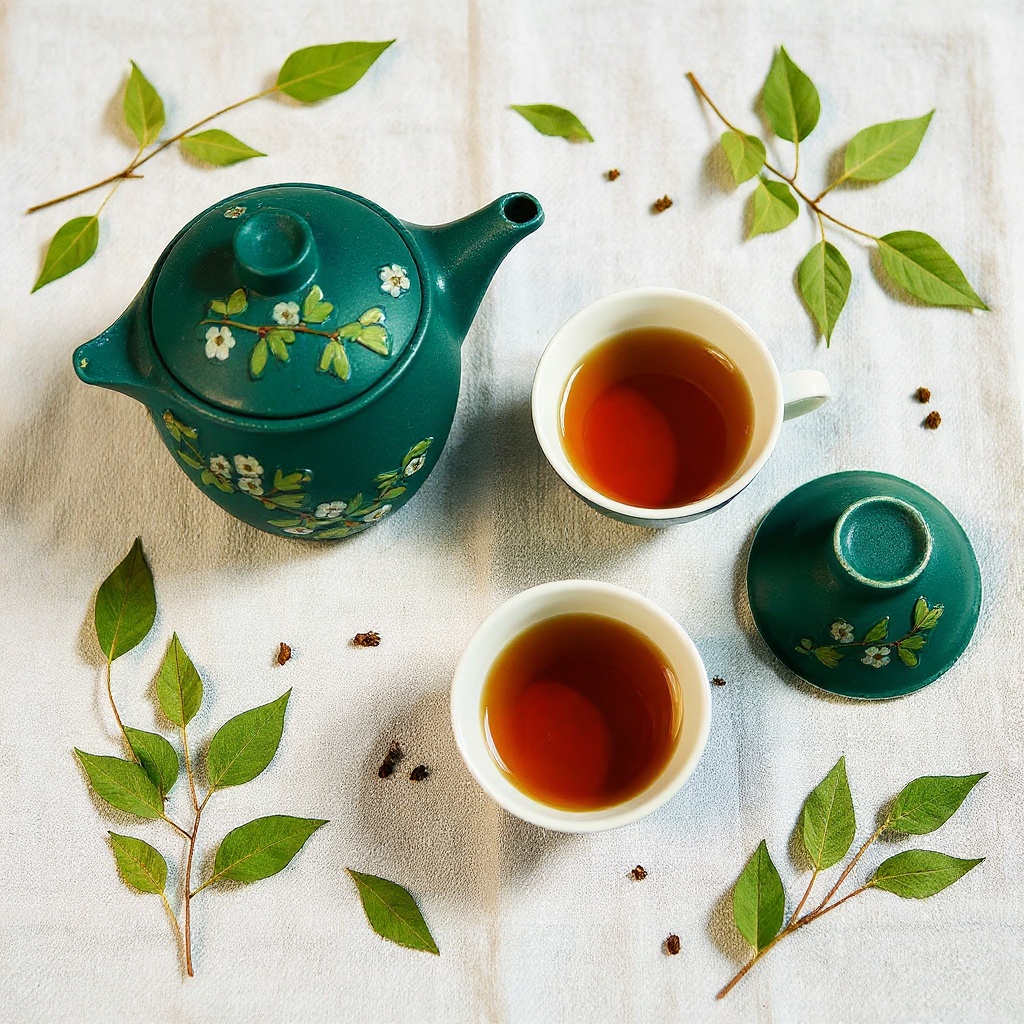
Step-by-Step Creation Process
Creating a single preserved flower embedded ceramic teapot requires 3–5 days of continuous handwork. No shortcuts exist at any stage. Here is exactly how each piece is built:
1. Flower Selection and Preservation (Weeks Before Throwing): Artisans choose flowers based on color stability under heat and structural resilience when pressed into clay. Rose petals, chrysanthemum heads, and small botanical branches perform best. Preservation takes 2–4 weeks before any clay work begins. 2. Clay Preparation (Day 1–2): High-fire stoneware clay is wedged and conditioned for optimal workability. The clay is kept slightly wetter than standard throwing clay to accept botanical embedding without cracking at the impression points. 3. Initial Shaping (Day 2): The teapot body is thrown on a wheel or hand-built, with walls left approximately 20% thicker than the final desired thickness to account for the material removed during embedding and smoothing. 4. Flower Embedding (Day 2–3): While clay is at the leather-hard stage — firm enough to hold shape, soft enough to accept pressure — preserved flowers are pressed into the surface using wooden tools. Each petal is positioned individually. This stage takes hours per piece. 5. Secondary Shaping and Drying (Day 3–4): Clay is worked around embedded botanicals to create smooth transitions. Slow drying prevents cracking at the embedding points where clay thickness varies. 6. Bisque Firing (Day 4): First kiln firing at 1800–1900°F burns away organic compounds from the preserved flowers while hardening the clay. The flower shapes survive as permanent mineral impressions — the organic matter is gone, but the form remains locked in ceramic. 7. Glazing and Final Firing (Day 5): Clear or matte black glazes are applied, then fired at 2000–2100°F. The glaze melts and bonds to the ceramic body, sealing the botanical impressions under a durable surface layer.
The Handmade Black Ceramic Tea Set | Real Preserved Flowers | Eco Gift follows this exact process, with each 350–400ml teapot receiving individual attention across the full five-day cycle.
Understanding Flower Preservation Chemistry
The pressed flower craft techniques used in ceramic embedding go well beyond simple air-drying. Successful preservation removes moisture while maintaining cellular structure — because a flower that crumbles during clay embedding is useless, and a flower retaining too much moisture will generate steam during firing and destroy the piece from the inside.
Three methods are used depending on the flower type and desired final texture:
| Preservation Method | Duration | Best For | Result in Ceramic |
|---|---|---|---|
| Silica Gel Drying | 7–14 days | Roses, chrysanthemums | Sharp edge definition, strong impressions |
| Glycerin Treatment | 5–10 days | Flexible petals, leaves | Softer impression profile, less cracking risk |
| Traditional Press-Drying | 3–6 weeks | Flat botanicals, small petals | Flattest profile, ideal for layered designs |
Preserved flowers suitable for ceramic embedding retain approximately 5–10% of their original moisture — flexible enough to press into clay without crumbling, dry enough to avoid steam damage during bisque firing.
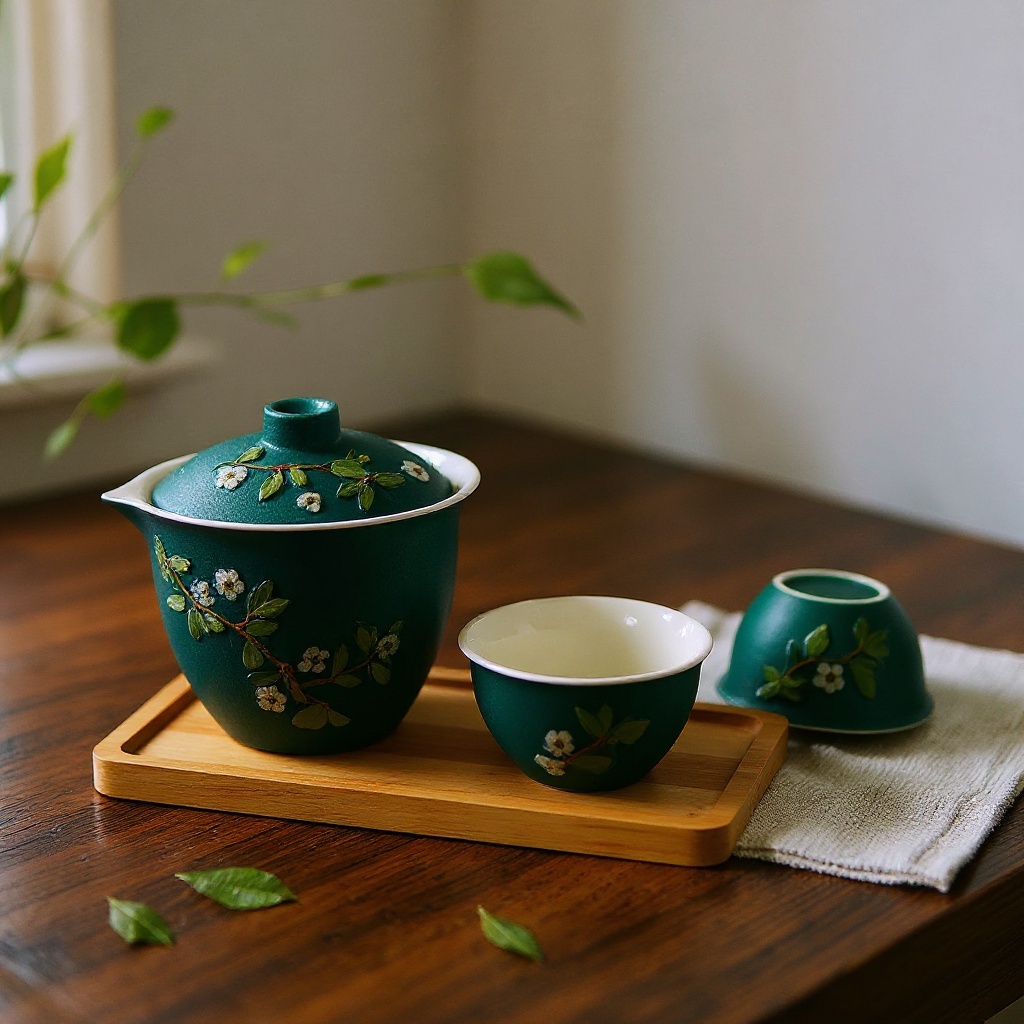
One thing worth understanding clearly: after firing, no original plant material remains in the finished teapot. The preserved flower embedding process creates mineral impressions — carbon traces and mineral deposits in the shape of the original botanicals, fused permanently into the ceramic matrix. When product listings say "real preserved flowers," they mean the impressions originated from real flowers. The raised texture you feel is ceramic, shaped by those flowers during creation.
Ceramic Firing and Temperature Science
The transformation from shaped clay with embedded botanicals into a finished ceramic teapot happens through controlled heating stages. Each stage serves a specific purpose:
| Firing Stage | Temperature | Duration | What Happens to Botanicals |
|---|---|---|---|
| Slow Drying | 200–300°F | 12–24 hours | Remaining free moisture evaporates without cracking |
| Dehydration Phase | 300–900°F | 4–6 hours | Organic compounds begin breaking down |
| Bisque Fire | 1800–1900°F | 8–12 hours | All organic matter burns away; mineral impressions lock in |
| Glaze Fire | 2000–2100°F | 6–8 hours | Glaze melts and bonds; impressions sealed permanently |
The finished teapot has been through temperatures ten times hotter than boiling water. Serving tea at 212°F presents zero thermal risk to either the ceramic body or the embedded botanical impressions.
The raised texture you feel is the ceramic body itself, shaped around where the flowers were. Not decoration applied on top. The structure.
Honest Limitations Most Articles Won't Mention
Here it is plainly: if you are expecting vivid, full-color botanical imagery, a preserved flower embedded ceramic teapot will disappoint you. The firing process burns away most pigment. What remains is tonal variation — subtle shifts in the matte black glaze surface where the mineral impressions sit, with color variation coming from the glaze interaction rather than the original flower color. Pink petals do not remain pink. They become part of the ceramic surface in forms that read as texture and depth, not as botanical illustration.
Also worth saying: handmade ceramics at this level of craft take time to source and sometimes arrive with minor surface variations — slight asymmetry in the spout, minor glaze pooling near the base, small differences in petal impression depth between the teapot and the cups. These are features of handcraft, not defects. But buyers expecting machine-precision should know this before purchasing.
Durability and Daily Use
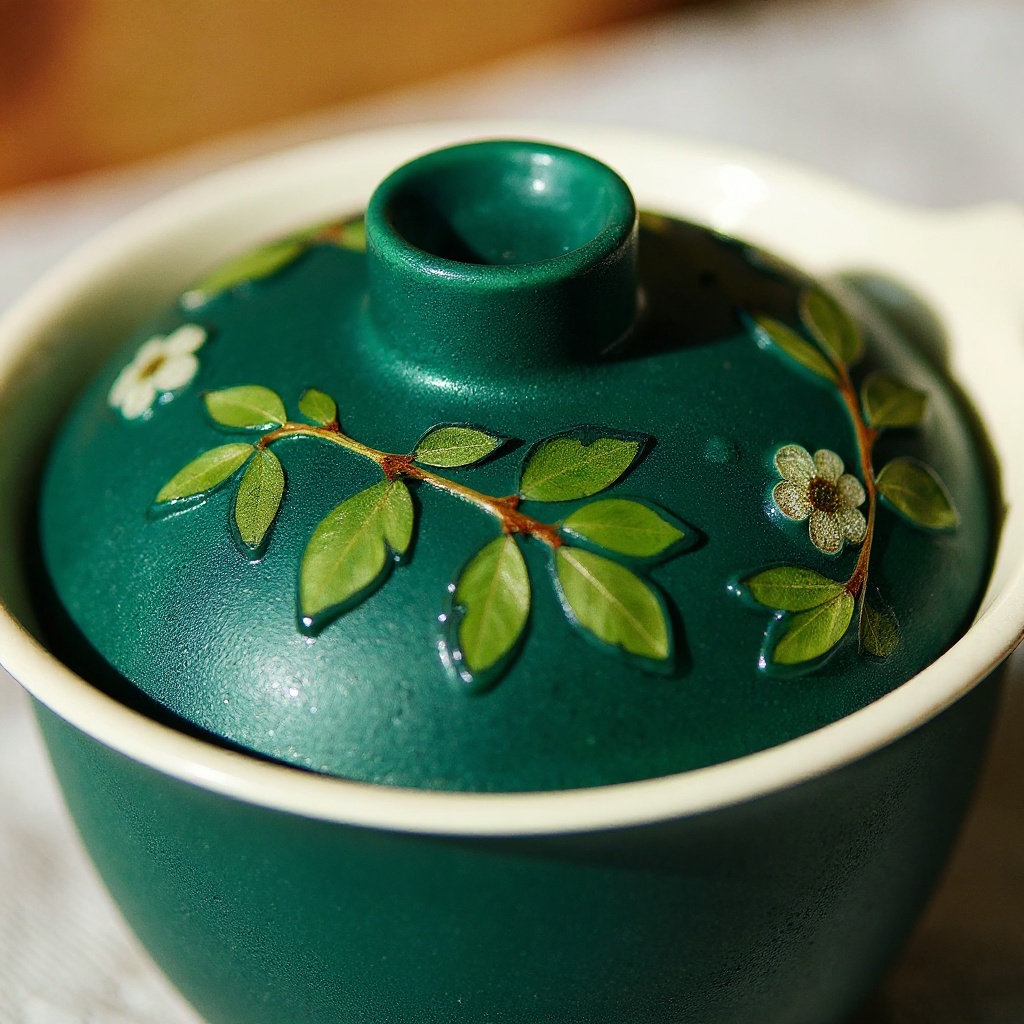
The embedded botanical impressions cannot chip, peel, or wash away. They are part of the ceramic body. This is fundamentally different from applied surface decoration.
Hand-washing is recommended — not because the flowers are fragile, but because dishwasher thermal cycling creates rapid temperature swings that can introduce hairline cracks in any handmade ceramic over time. The botanical impression areas are structurally sound. The risk is to the overall ceramic body from repeated thermal shock, not to the embedded design.
For daily tea drinkers, a preserved flower embedded ceramic teapot functions identically to any quality stoneware teapot. No flavor transfer. No safety concerns from the mineral impressions. Full food-safe certification applies to properly fired stoneware.
Embedded vs. Printed Floral Ceramics: Side-by-Side Comparison
| Feature | Preserved Flower Embedded | Printed / Decal Ceramic |
|---|---|---|
| Decoration origin | Real botanicals, firing-fused | Digital print or transfer applied post-fire |
| Surface texture | Raised, tactile, feelable | Completely flat |
| Uniqueness | Each piece varies naturally | Identical across production runs |
| Durability of decoration | Cannot chip or peel — part of ceramic body | Surface layer can chip or wear with use |
| Color range | Limited to glaze-interaction tones | Full digital color range available |
| Production time | 3–5 days per set | Hours once base ceramic is fired |
| Typical price range | $400–$1,200 | $30–$150 |
| Dishwasher safety | Hand-wash recommended | Often dishwasher-safe |
The price gap reflects the production timeline gap. There is no shortcut that produces the raised botanical texture of an embedded ceramic piece at mass-production cost. Anyone pricing a "preserved flower embedded" teapot at $45 is selling a printed surface design, not an embedded one.
Display and Care Guidelines
These pieces function as both artisan teaware with botanical design and display objects. Care requirements are straightforward.
Daily Use: - Hand-wash with warm water and mild soap - Dry immediately after washing to prevent water spots on matte glaze surfaces - Avoid abrasive scrubbers — the glaze surface can be scratched even if the botanical impressions cannot - Allow adequate spacing in storage to prevent pieces contacting each other Display: - Keep away from sustained direct sunlight — matte black glaze can develop uneven surface appearance with prolonged UV exposure - Use felt pads on wooden surfaces to prevent base scratching - Dust with a soft dry cloth; avoid wet wiping on display pieces not in regular use Long-Term Storage: - Wrap individual pieces in acid-free tissue paper - Cushion between pieces in storage boxes — the botanical impression areas have slight surface relief that can catch on adjacent pieces - Avoid stacking directlyFAQ
Are the flowers on a preserved flower embedded ceramic teapot real or printed? They originate from real botanicals — dried flowers physically pressed into clay before firing. After the kiln process at 2000°F+, the organic plant material is gone. What remains are mineral impressions in the exact shape of the original flowers, permanently fused into the ceramic body. Real flowers created them. The ceramic structure is what you now touch. Does the floral decoration survive dishwashing? The botanical impressions themselves will not wash away — they are part of the ceramic structure, not applied to the surface. However, repeated dishwasher thermal cycling — rapid heating and cooling — can introduce hairline cracks in handmade ceramics over time. Hand-washing and immediate drying after each use extends the life of any piece significantly. How do artisans get flowers to stay in the ceramic permanently? They don't "stick" — they are embedded. Preserved flowers are pressed into clay while it is still at the leather-hard stage, then the clay is worked around them. During bisque firing at 1800–1900°F, the organic matter burns completely away, leaving the impression locked into the hardened ceramic matrix. The flower shape is preserved in the ceramic itself. What temperature is safe for a ceramic teapot with embedded botanicals? Fully safe at boiling water temperature (212°F). The teapot has been kiln-fired at 2000–2100°F during manufacture — ten times hotter than any brewing temperature. The mineral impressions left by the botanical embedding pose no safety concern whatsoever in normal use. How long does it take to handmake a complete preserved flower embedded ceramic tea set? The full process takes 3–5 days of active work per set, not counting the 2–4 weeks of flower preservation required before clay work begins. Flower preparation, clay shaping, embedding, drying, bisque firing, glazing, and final firing each require individual attention. No stage can be reliably accelerated. Is it safe to drink from a preserved flower embedded ceramic teapot — are there any toxins from the botanicals? Completely safe for food use. Ceramic firing at 2000°F+ burns away all organic compounds from the preserved flowers. The finished pieces contain only mineral deposits in the ceramic matrix — no plant material remains. Properly fired stoneware meets standard food-safe requirements for ceramic teaware. What is the difference between embedded floral ceramics and decal floral ceramics? Embedded florals are physically fused into the ceramic body during creation, producing raised textures you can feel with your fingertips — they cannot chip or peel. Decal ceramics use printed designs applied to finished ceramic surfaces. Decals are flat, can chip with use, and are produced in hours versus the 3–5 day process required for embedded work. The price difference between $400–$1,200 and $30–$150 reflects this production gap exactly. Why don't the flowers keep their original colors after firing? The kiln temperatures required to fire stoneware — 1800–2100°F — burn away virtually all organic pigment. Color in the finished piece comes from glaze interaction with the mineral impressions, not from the original flower pigment. Matte black glaze over botanical impressions creates depth and tonal variation rather than representational color. This is an honest limitation that distinguishes this technique from printed ceramic designs. How should I store or display a handmade ceramic teapot to prevent damage? Hand-wash after each use and dry immediately. Store with pieces separated, not stacked directly. Keep away from sustained direct sunlight. For long-term storage, wrap in acid-free tissue and cushion between pieces. The embedded botanical impression areas have slight surface relief — account for this when stacking or storing to prevent pieces snagging against each other.Conclusion
A preserved flower embedded ceramic teapot is not a fast product. Not a simple one. The 3–5 day handcraft process, preceded by weeks of botanical preservation work, produces something that a printed ceramic surface simply cannot replicate: raised tactile texture that you feel before you see, fused permanently into matte black stoneware.
The honest version of this story includes the limitations — muted color after firing, natural variation between pieces, the higher price point that reflects real production time. But for anyone who wants functional ceramic art with genuine craft history behind it, a preserved flower embedded ceramic teapot offers exactly that. Irreplaceable. Individual. Built to outlast every trend that brought it to your attention.
For the specific piece discussed throughout this article, you can see the Handmade Black Ceramic Tea Set | Real Preserved Flowers | Eco Gift and examine exactly how the botanical embedding technique translates into finished contemporary ceramic design.